
Project
Shutterstock.
Pollution of the Motagua River in Guatemala: The Poqomam Maya people’s quest for environmental justice
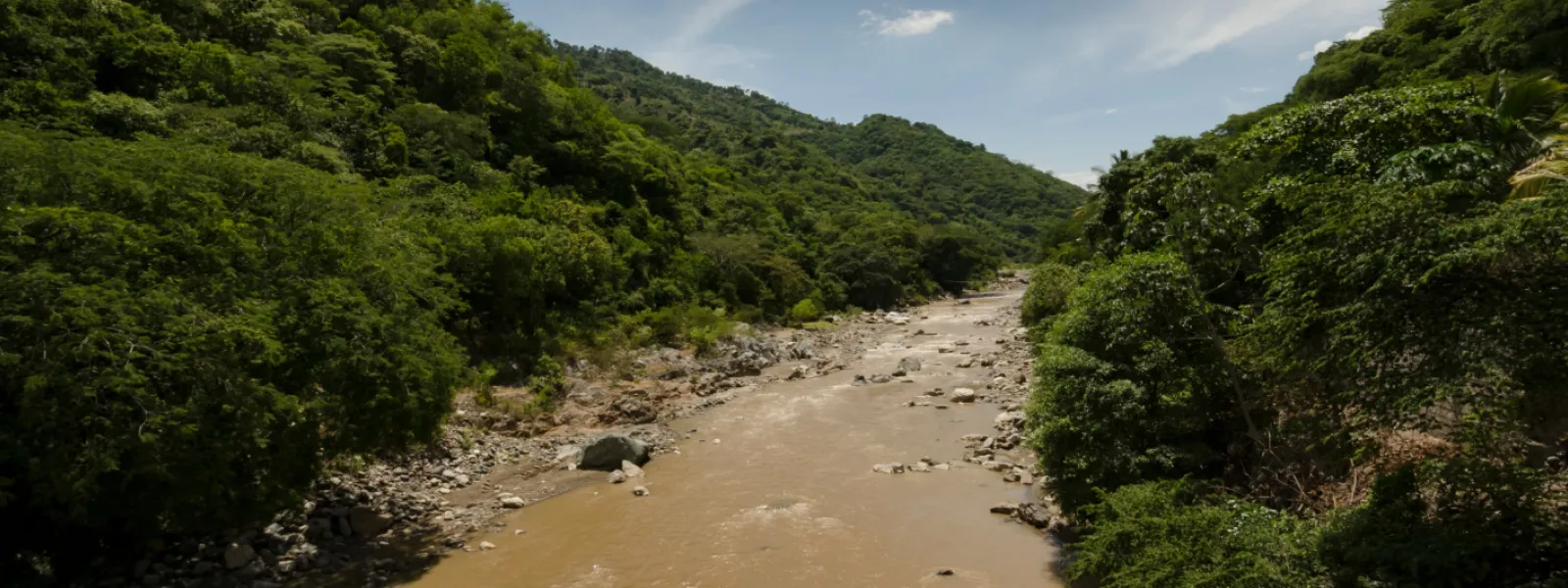
The Motagua River basin—Guatemala’s largest and most important river—is severely polluted with wastewater, solid waste, and other types of debris.
This is a cross-border issue because the Motagua’s polluted waters flow into the Caribbean Sea, reach the coast of Honduras, and threaten the Mesoamerican Reef System.
For decades, this has violated the rights to health, water, development, and a healthy environment of all the people living in the river basin.
In June 2025, the Poqomam Maya community of Santa Cruz Chinautla—supported by AIDA, the Indigenous Peoples’ Law Firm, and allied organizations—achieved an unprecedented legal victory to halt degradation in the basin. In response to the lawsuit it filed, a Guatemalan court ordered the municipality of Chinautla to comply with a series of obligations to curb the pollution of the area’s rivers and soil.
The government's response to the ruling has so far been limited to technical working group meetings. Meanwhile, the community continues to work toward the proper implementation of the ruling and to take other actions to defend its territory and its rights.
Background
The Motagua River, which is 486 km long, flows through 96 municipalities and 14 departments in Guatemala. It originates in Quiché, a department located in the northwest, and empties into the Caribbean Sea.
Polluting activities occur throughout the entire basin, including sub-basins and micro-basins. The largest volume of pollution comes from Guatemala City, the country’s capital, and is carried by the waters of the Las Vacas River, which in turn receives a large amount of waste from the Chinautla River.
The Chinautla River, which flows through the municipality of the same name, carries solid waste from a landfill located in Zone 3 of the capital—where trash from at least 14 municipalities in the department of Guatemala is dumped—as well as sewage generated by some 500,000 people living in the northern part of the capital, which undergoes no prior treatment.
Other sources of pollution include the numerous illegal dumps in the municipality of Chinautla, the waste that private vehicles and garbage trucks dump along the banks of its rivers, as well as the sand-mining companies—which began setting up operations in the area between 1996 and 1997—whose activities weaken the rivers' basins, causing solid waste to be more easily carried away by the river currents.
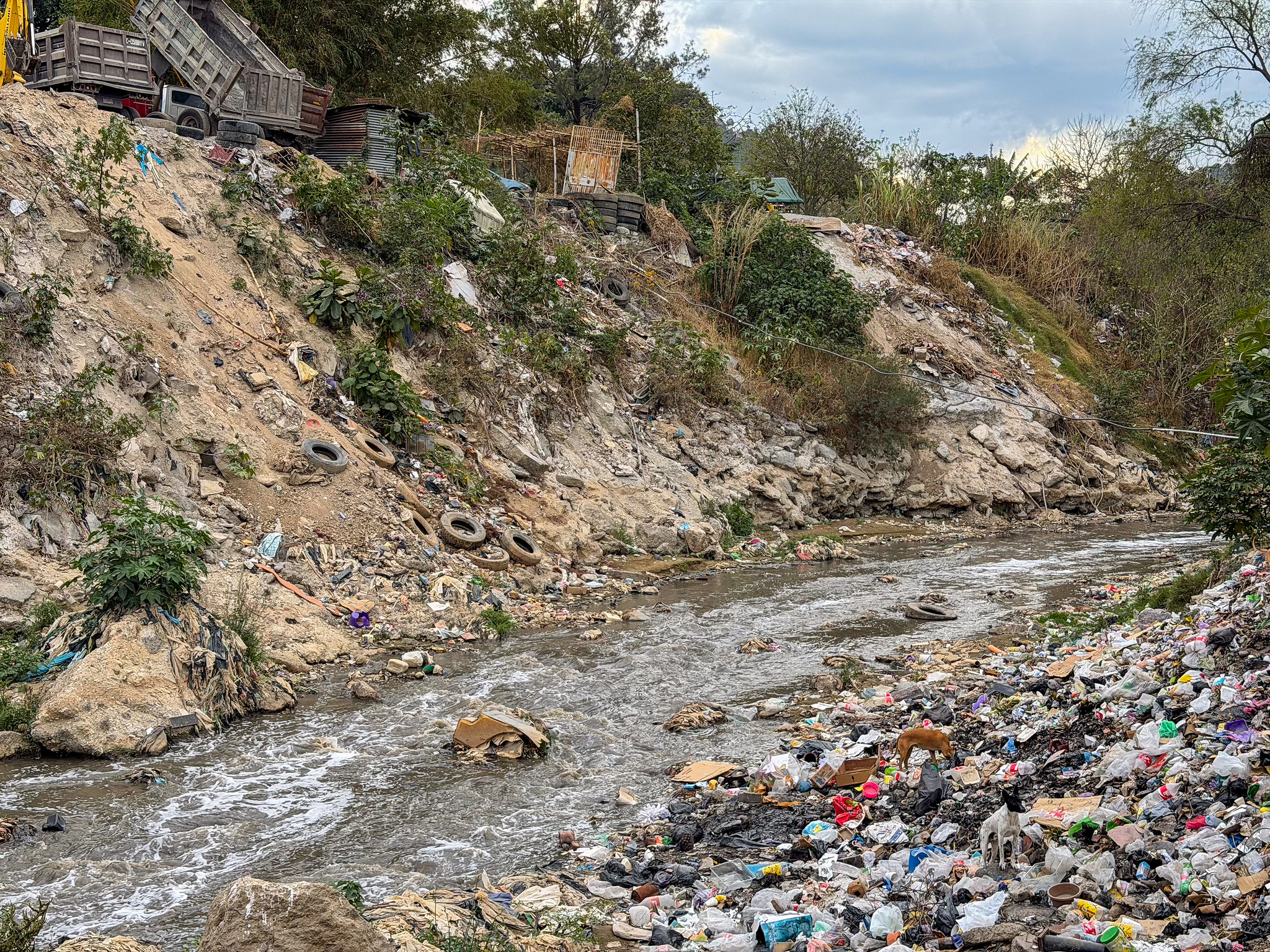
Photo: Mayela Sánchez García.
The situation extends beyond national borders. Every year, the Motagua River discharges some 20,000 metric tons of plastic into the Caribbean Sea, making it one of the rivers that contributes the most plastic pollution to the ocean worldwide, according to estimates contained in a 2025 report by the Inter-American Commission on Human Rights (IACHR).
The river flows into the Mesoamerican Reef at its mouth, so pollution also threatens to degrade one of the largest and most biodiverse transboundary reefs on the planet, which spans the territorial waters of Belize, Guatemala, Honduras, and Mexico.
In addition, the contaminated water reaches the coast of Honduras and spreads into Amatique Bay, located along the eastern coast of Guatemala, affecting the Caribbean Sea.
The roots of this chronic, cross-border problem are structural. Data from the Integrated Environmental Management of the Motagua River Basin project, funded by the United Nations Development Program (UNDP), show that in Guatemala, 66% of municipal solid waste is not collected, and there is no guarantee that the remaining 34% is disposed of properly. Furthermore, of all landfills nationwide, 88.32% are illegal or lack municipal authorization.
In other words, the core issues that need to be addressed are the mismanagement of solid waste and water resources in Guatemala; noncompliance with existing regulations on wastewater discharge and the disposal and treatment of solid waste and residues; and the lack of a water law.
The Poqomam Maya people's quest for justice
The rivers of Santa Cruz Chinautla, a community of the Poqomam Maya people located just twelve kilometers from Guatemala City, have become conduits of pollution that are degrading the Motagua River.
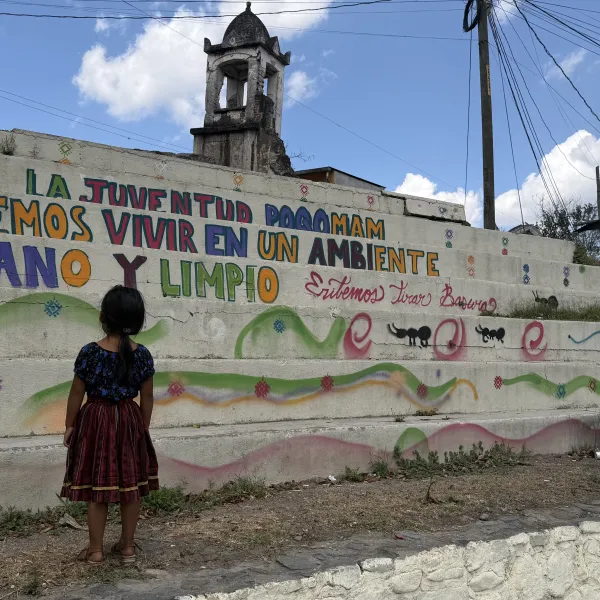
For decades, the local population has seen its health and livelihoods—including pottery, one of the main economic activities and a source of identity—damaged due to the lack of waste management in the municipality of Chinautla and the urban area of the country’s capital, as well as the activities of sand-mining companies.
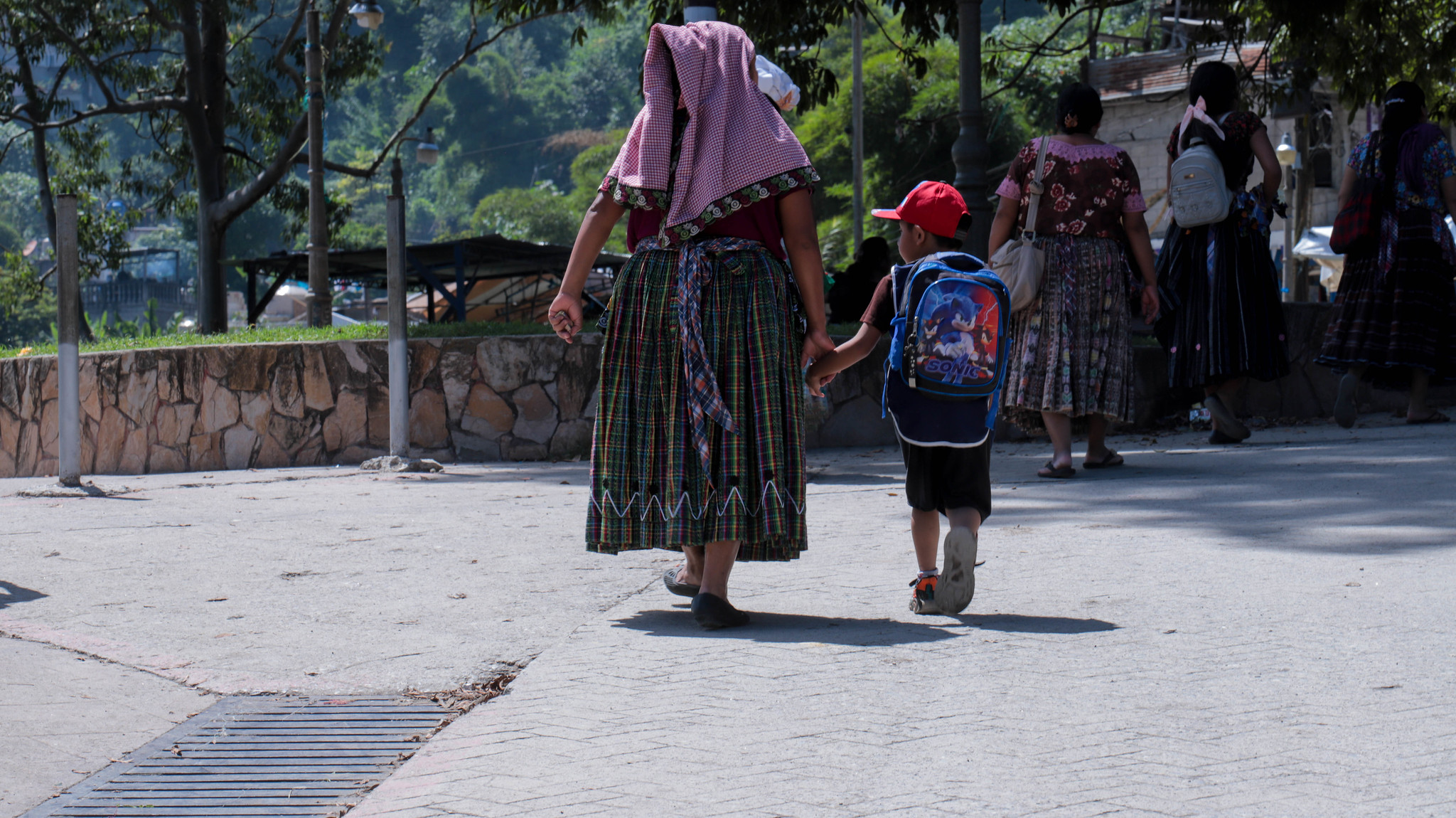
Photo: Mario Winter.
Voices for the Motagua River: Olga Vázquez.
Voices for the Motagua River: Nazario Pascual.
In early 2000, the Maya community organized to stop sand mining on their territory. At that time, the companies held mining permits that remained valid through 2021 and 2022. And although the permits expired, some companies continued to operate after requesting extensions. In June 2022, the indigenous authorities of the Poqomam people began a sit-in protest in front of the Piedrinera San Luis company, which they maintained for four years.
In July 2024, the Special Rapporteur on Economic, Social, Cultural, and Environmental Rights of the IACHR visited Santa Cruz Chinautla. During his visit, traditional authorities and community members spoke about the environmental, water-related, health, economic, and cultural impacts of the pollution in their rivers.
That same year, in October, the community—with support from AIDA, the Indigenous Peoples’ Law Firm, and partner organizations—filed a lawsuit (petition for amparo) against the municipality of Chinautla over its failure to take measures to address the contamination of its rivers and soil caused by improper solid waste management and the existence of illegal landfills.
AIDA’s scientific team, together with local residents and community authorities, collected key information on illegal landfills in the area. This community science initiative supported the litigation by highlighting the severity of the pollution, demonstrating the ongoing use of such practices, and providing evidence of the municipal authorities’ failure to fulfill their legal obligations regarding waste management.
Learn more about this community science initiative.
In June 2025, the Poqomam community won the support of the Guatemalan justice system when a constitutional court ordered the municipality of Chinautla to effectively address the claims in the lawsuit aimed at stopping the pollution of the rivers and soil in Santa Cruz Chinautla.
This is the first time a Guatemalan court has recognized a community's right to a healthy environment and its central role in finding solutions.
Find out the details of the legal victory.
Current situation
Since the ruling was issued, the municipality of Chinautla has held a series of “technical working groups” with representatives from the central government, civil society, and the community. A smaller group of technical experts was later created to develop a work plan with clear goals. Several months have passed without the municipality convening these working groups.
Furthermore, in December 2025, the IACHR noted in its report Human Rights Situation in Guatemala that the Motagua River basin is facing a severe pollution crisis that has had profound impacts on biodiversity and has resulted in systematic violations of the human rights of local communities, including the Maya Poqomam people.
And in May 2026, the Ministry of the Environment and Natural Resources revoked the license of the sand mining company Piedrinera San Luis for "failure to comply with environmental commitments."
AIDA continues to monitor the implementation of the court ruling to ensure the right to a healthy environment for the Poqomam Maya community and all those living in the Motagua River basin. Meanwhile, the residents of Santa Cruz Chinautla remain organized and mobilized to improve their environment and defend their rights.
Related projects

Moving towards clean food production, without glyphosate
By Sofía García, AIDA intern, and Johans Isaza, former AIDA intern In recent decades, the practice of healthy eating, and with it the quality of the food we eat, has gained particular relevance in western society. Many have grown concerned about industrial food production and its negative impacts on the environment and public health. In response, environmental organizations, ethnic communities, rural farmers, international organizations and even some governments have spoken of the need to move towards an agro-ecological model. This model implies the development of sustainable agricultural practices to optimize food production, and do so without the use of agrotoxins, while also promoting social justice and recognizing ancestral knowledge and traditional practices. The serious harms of glyphosate, a popular herbicide In recent weeks, public debate around glyphosate—the most widely used agrotoxin in the world—has regained prominence in Mexico and Colombia. Glyphosate is used most frequently and intensively in the large-scale cultivation of genetically modified crops. In Mexico, roughly 45 percent of glyphosate usage is focused on transgenic soybean, corn, canola and cotton crops. The rest goes to the sowing of sugar cane and to forestry or fruit production. In Colombia, glyphosate is used primarily on cotton, corn, rice, tomato, sugar cane and palm plantations, as well as in the pastures where cattle are raised. Though a visible tool of the war on drugs, until 2013 less than 5 percent of total glyphosate usage in Colombia was destined to eradicate crops of illicit use. As a non-selective herbicide, glyphosate not only affects the crop to which it is applied. Retained in the most superficial layers of the soil, it throws entire ecosystems out of balance and harms the health of the plants and animals that depend on them. What’s more, glyphosate use affects biodiversity in a variety of ways and causes both direct and indirect short and long-term impacts. It damages aquifers, causing harm to aquatic organisms; can be deadly for some species of amphibians; causes biological malformations in animals like rats; reduces nutrient absorption in plants, increasing their likelihood of becoming sick or attracting pests; and affects pollination processes, which are fundamental for life on this planet. When looking at the harms of glyphosate, we mustn’t fail to mention the serious social damages it causes as it filters into bodies of water, and becomes present in the food we consume on a daily basis. Since 2015, the World Health Organization has classified glyphosate as a probable carcinogen (placing it in the second strongest category of evidence on a four-tier scale). Several studies have shown that glyphosate can irritate the eyes and skin, damage the respiratory system at the lung level, cause dizziness, lower blood pressure and destroy red blood cells. The negative impacts of glyphosate use can result in the violation of various human rights, among them the rights to a healthy environment, to water, to health, to life and to integrity. Its use in indigenous and traditional lands may also violate the rights to cultural identity and territory. The transition to sustainable agriculture Though evidence exists of glyphosate’s negative environmental and health impacts, it is not irrefutable. There is no scientific certainty that glyphosate impacts the environment or harms human health and wellbeing. There is also no scientific certainty that the herbicide is harmless. What is certain is that the above-described impacts are sufficient to necessitate the application of the precautionary principle. According to this principle, in cases that threaten serious and irreversible damage, and in the absence of scientific certainty, States have the obligation to adopt necessary and effective measures to prevent environmental degradation. There’s no justification for postponing the measures necessary to mitigate the harms supposedly caused by glyphosate, until it is proven with absolute scientific certainty that glyphosate is not harmful. Ongoing discussions in Mexico and Colombia provide an opportunity to reflect on our forms of food production and encourage a shift towards the agro-ecological model. The future of agriculture could be one that seeks wellbeing and prosperity, and promotes clean food production. To this end, it’s essential that governments implement regulations to protect and ensure the return of native seeds, gradually eliminate agro-industrial technologies, and promote a return to the use of natural pesticides. Public policies must be implemented that respect both farmers and the environment. The transition must include an intercultural approach that includes dialogue with and exchanges between rural farmers, indigenous peoples and scientists. Achieving such a system would contribute to a more peaceful coexistence with other forms of life, and a healthier planet for present and future generations.
Read more
Championing Lake Poopó’s recovery to protect the life it holds
Calixta Mamani thinks with nostalgia of the tall, green cattails growing along the shores of Lake Poopó, in the arid central plateau of the Bolivian Andes. She once used the reeds as feed for her livestock. "Now, everything has dried up,” she reflected. “There is no life here, the land no longer produces." She thinks also of the birds—Titicaca grebes and Andean flamingos—and of the fish that were once so abundant in the area. "Now you don't see them anymore,” she lamented. “Everything, our culture, is gone." The losses described by Calixta represent a plundering. The indigenous and rural communities living near Lake Poopó have been deprived, not only of their primary water source, but of their livelihood, their way of life, and their culture. Bolivia's second largest lake, Poopó has been damaged by the diversion of rivers, the climate crisis, and mining activities—which have continued despite the pandemic—to the point of putting at risk all the life systems that depend on it. Calixta is a member of the National Network of Women in Defense of Mother Earth (RENAMAT), an organization that defends the rights of indigenous and peasant women against the destructive impacts of extractive industries in the regions of Oruro, La Paz, and Potosí. Responsible for grazing the animals, food preparation, and other household tasks, Calixta and other local women live with the lake on a daily basis. As a result, they more acutely suffer the effects of its degradation. It’s because of the respectful relationship they have with Mother Earth and Mother Water that the communities around Lake Poopó are fighting to save it. Decades of Pollution According to a report by the Collective for the Coordination of Socio-Environmental Actions (Colectivo CASA), complaints related to Lake Poopó’s contamination by mining activities date back to 1981, when researchers revealed that 120 lead, tin, and gold mines were discharging their waste directly into its waters. The situation, which has continued over the years, has led to sedimentation. This means that considerable amounts of cadmium, zinc, arsenic, and lead have become sediment in the lake, making its waters unsuitable for human and animal consumption and of limited use for crop irrigation. "With the passage of time and the advance of mining, the exploitation of minerals has intensified,” said Petrona Lima, from Ayllu San Agustín de Puñaca, municipality of Poopó, in a testimony collected by the Center for Andean Communication and Development (CENDA). “Little by little all this has been disappearing, water veins have been cut, and everything has come to be as it is now; it looks like everything is burned." In an effort to preserve its biodiversity—which includes endemic and migratory birds and the largest number of flamingos in the Bolivian highlands—in 2002 Lake Poopó, along with Lake Uru Uru, was declared a Wetland of International Importance under the Ramsar Convention. Despite this protection, the ecosystem remains in serious danger. In December 2015, water levels in Poopó reduced to such an extent that the body of water actually disappeared—an event considered one of Bolivia’s greatest environmental catastrophes. Although the lake managed to recover its flow during the rainy season, the situation remains critical in the dry months. The Climate Crisis and River Diversion The degradation of the lake is also a result of the global climate crisis, which brings intense droughts and increased temperatures. If the global average temperature increased by 0.8°C due to climate change, in Lake Poopó the increase was 2.5°C, according to information published in 2015, accelerating the evaporation of its waters. Another major source of the degradation of these high-Andean lakes is the diversion of two of the rivers that feed it: the Desaguadero and Mauri rivers. The former has decreased due to mining and agricultural operations, while the later, located on the border with Peru, has been diverted. Currently threatening the Poopó Basin is the implementation of the second phase of a canal project that would divert more than 500 liters of water per second from the Mauri River to feed the agro-industry in Tacna, Peru. The implementation of the project’s first phase was one of the primary causes of the lake’s disappearance in 2015. Defending Their Source of Life Rural communities, the Aymara and Quechua peoples, the Uru Murato—among Bolivia’s oldest native nations—all depend on the Poopó and Uru Uru lakes. The Uru Murato used to live from fishing, but the contamination of Poopó has forced them to migrate to work in the salt mines. In addition to causing serious environmental damages, what’s happening to this ecosystem is a serious violation of affected peoples’ rights to water, health, territory, food, and work. That’s why AIDA and local organizations have joined forces to defend Lake Poopó, its biodiversity, and the communities that depend on it. In July of last year, we asked the Ramsar Convention Secretariat to send a mission of experts to the country to assess the health of Lakes Poopó and Uru Uru and make recommendations to the government for their recovery. This month, we launched the campaign #LagoPoopóEsVida to make the situation visible and to draw the attention of national and international authorities to the risks facing the lakes and its people. Protecting Lake Poopó would be tantamount to saving lives and preserving one of Bolivia’s cultural cornerstones.
Read more
The unbridled use of disposable plastic: A new global crisis
The massive spread of COVID-19 has created a global health crisis, leaving millions of people sick and thousands dead. Due to the nature of the disease and the ease of contagion, protective and biosecurity measures have been implemented on a massive scale. These include confinement and safe distancing, constant disinfection of hands and surfaces, and the use disinfectant bottles, bags, and personal protective equipment like mouthpieces, masks, gloves, and other objects. Unfortunately, plastic—single-use plastic, in particular—is the primary material used to make these objects, which implies an indiscriminate increase in the use and disposal of this material. The processes needed to manage those single-use plastics have become another major challenge in the face of a crisis that is collapsing economies and health systems. It’s clear that our greatest global concern is to defeat the pandemic, and prevent more deaths and infections. But also of concern are the side effects it’s producing, like the backsliding of global efforts to reduce plastic waste and prevent environmental damage. Before the pandemic, contamination by plastic waste was already considered one of the main threats to the environment and biodiversity. According to a recent study, only 9 percent of the plastic produced worldwide is recycled. The rest is left as accumulated waste that damages ecosystems, mainly the oceans, and the species that live in them. Plastic pollution directly affects thousands of species, like marine mammals or birds that get entangled in the waste. Other species confuse the debris with food, as is the case with fish and sea turtles. Our greatest global concern right now must be overcoming the pandemic and preventing further death and infection. But let’s also be aware that, because of it, we’re moving backwards in the reduction of plastic waste and the prevention of the damages it causes. Backsliding in the Regulation of Plastics In December 2018, the European Union's parliament approved a ban on single-use plastics, which was due to come into effect next year. However, due to the pandemic, the plastic products industry has asked the European Commission to delay the implementation of the standard by at least one year. Although many countries had committed themselves to reducing the use of plastics this year, the pandemic has forced some of them to postpone such plans. In California, the governor temporarily lifted the ban on single-use grocery bags because of the risk of transmission through reusable bags. In Thailand, where single-use bags had been banned since January, officials expect up to a 30 percent increase in their use. According to that country's Environment Institute, 62 percent more plastic was consumed in Bangkok in April compared to the previous year, most of it being food packaging, which is difficult to recycle. In Latin America, the situation is similar. In the Mexican state of Jalisco, an era free from plastic bags and disposable straws was set to begin in January 2020, after a rule banning their use came into force. When the pandemic struck, the ban was abandoned and consumption of these products by establishments and citizens was only 10 percent less than last year, according to recent data. Greenpeace denounced the plastic industry in Mexico for seeking to reverse local bans using the argument that plastic is the ideal material to avoid COVID-19 infections. The environmental organization warned that nothing replaces continuous hand washing and surface disinfection. It explained that using disposable plastic containers, utensils, and cutlery neither guarantees hygiene nor prevents infection since the virus can remain on these surfaces for two to six days. The Importance of Debate and Seeking Alternatives Before the pandemic, there was greater social awareness of the need to reduce the use of plastics, especially single-use plastics. However, the need to contain the spread of the virus and industry strategies to capitalize on the health concerns of the population have led to the re-emergence of plastic as an indispensable material. Now more than ever, we must take care of each other. We also must protect the natural world that sustains life. The pandemic has exposed our weaknesses, and one of them is vulnerability to pollution. It’s possible that when containment measures are lifted or relaxed we’ll find that our dependence on plastic has increased significantly and that our planet is in more danger than before. We must continue the global debate on plastics and work together to find effective alternatives, taking into account the economic recovery of the sectors most affected by the crisis. Some urgent actions that could be taken in short and medium term include: Promoting environmental awareness and responsible consumption, encouraging non-healthcare workers to use reusable personal protection items made from environmentally friendly materials. Adopting best practices for recycling and policies against pollution by plastics at the national level, as part of a global action plan. Promoting the development of the circular economy, which aims to eliminate waste through the continuous reuse of resources. Requiring companies to make greater investments in sustainability, ensuring compliance with their environmental policies and corporate social responsibility. Encouraging investment in the research and development of alternative materials, which are more biodegradable and recyclable, as well as progress in the design of new, less contaminating, chemical additives. When it comes to plastics, we cannot control everything. But these actions can help give the new normal a more sustainable form.
Read more