
Project
Shutterstock.
Pollution of the Motagua River in Guatemala: The Poqomam Maya people’s quest for environmental justice
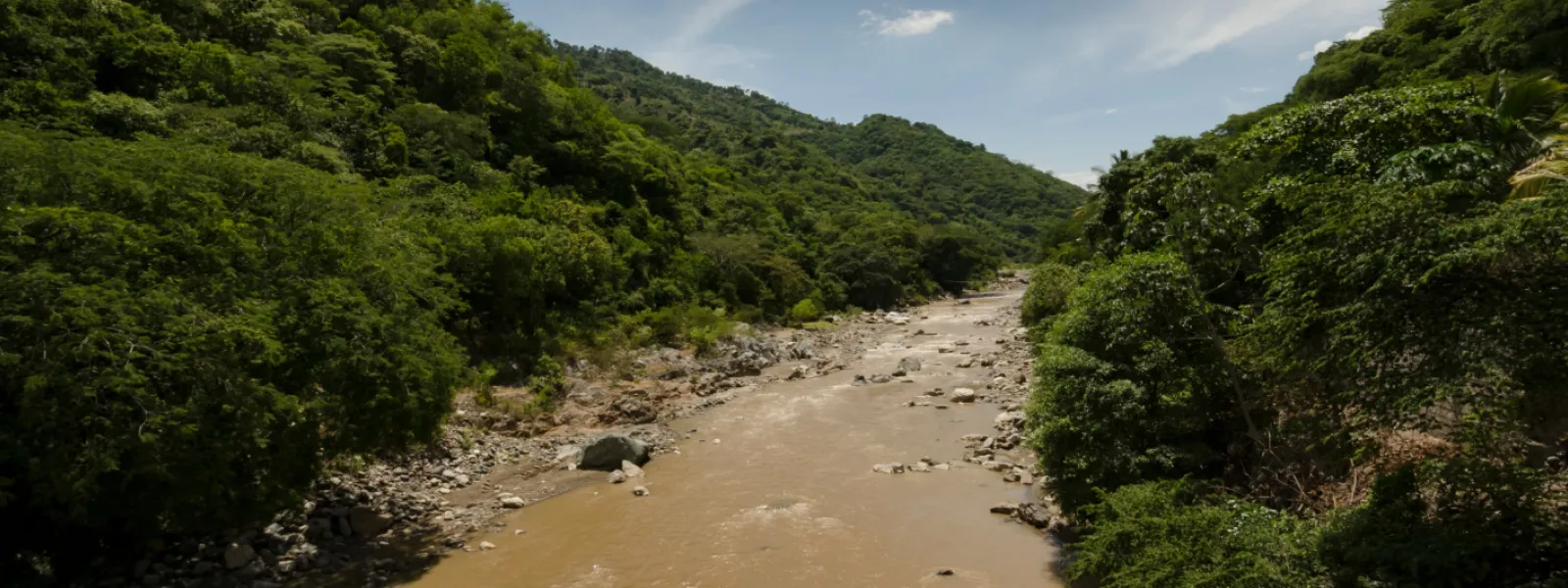
The Motagua River basin—Guatemala’s largest and most important river—is severely polluted with wastewater, solid waste, and other types of debris.
This is a cross-border issue because the Motagua’s polluted waters flow into the Caribbean Sea, reach the coast of Honduras, and threaten the Mesoamerican Reef System.
For decades, this has violated the rights to health, water, development, and a healthy environment of all the people living in the river basin.
In June 2025, the Poqomam Maya community of Santa Cruz Chinautla—supported by AIDA, the Indigenous Peoples’ Law Firm, and allied organizations—achieved an unprecedented legal victory to halt degradation in the basin. In response to the lawsuit it filed, a Guatemalan court ordered the municipality of Chinautla to comply with a series of obligations to curb the pollution of the area’s rivers and soil.
The government's response to the ruling has so far been limited to technical working group meetings. Meanwhile, the community continues to work toward the proper implementation of the ruling and to take other actions to defend its territory and its rights.
Background
The Motagua River, which is 486 km long, flows through 96 municipalities and 14 departments in Guatemala. It originates in Quiché, a department located in the northwest, and empties into the Caribbean Sea.
Polluting activities occur throughout the entire basin, including sub-basins and micro-basins. The largest volume of pollution comes from Guatemala City, the country’s capital, and is carried by the waters of the Las Vacas River, which in turn receives a large amount of waste from the Chinautla River.
The Chinautla River, which flows through the municipality of the same name, carries solid waste from a landfill located in Zone 3 of the capital—where trash from at least 14 municipalities in the department of Guatemala is dumped—as well as sewage generated by some 500,000 people living in the northern part of the capital, which undergoes no prior treatment.
Other sources of pollution include the numerous illegal dumps in the municipality of Chinautla, the waste that private vehicles and garbage trucks dump along the banks of its rivers, as well as the sand-mining companies—which began setting up operations in the area between 1996 and 1997—whose activities weaken the rivers' basins, causing solid waste to be more easily carried away by the river currents.
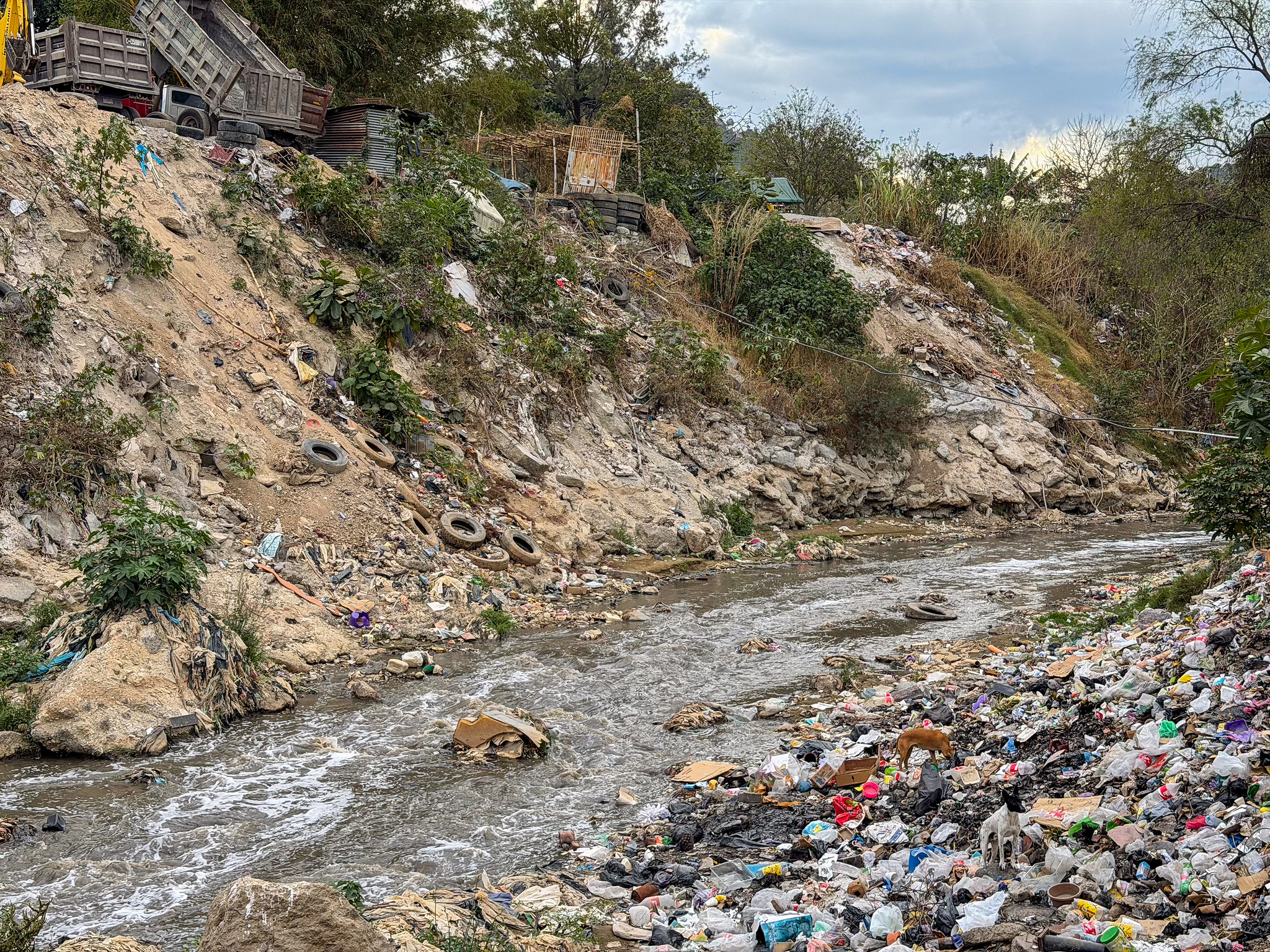
Photo: Mayela Sánchez García.
The situation extends beyond national borders. Every year, the Motagua River discharges some 20,000 metric tons of plastic into the Caribbean Sea, making it one of the rivers that contributes the most plastic pollution to the ocean worldwide, according to estimates contained in a 2025 report by the Inter-American Commission on Human Rights (IACHR).
The river flows into the Mesoamerican Reef at its mouth, so pollution also threatens to degrade one of the largest and most biodiverse transboundary reefs on the planet, which spans the territorial waters of Belize, Guatemala, Honduras, and Mexico.
In addition, the contaminated water reaches the coast of Honduras and spreads into Amatique Bay, located along the eastern coast of Guatemala, affecting the Caribbean Sea.
The roots of this chronic, cross-border problem are structural. Data from the Integrated Environmental Management of the Motagua River Basin project, funded by the United Nations Development Program (UNDP), show that in Guatemala, 66% of municipal solid waste is not collected, and there is no guarantee that the remaining 34% is disposed of properly. Furthermore, of all landfills nationwide, 88.32% are illegal or lack municipal authorization.
In other words, the core issues that need to be addressed are the mismanagement of solid waste and water resources in Guatemala; noncompliance with existing regulations on wastewater discharge and the disposal and treatment of solid waste and residues; and the lack of a water law.
The Poqomam Maya people's quest for justice
The rivers of Santa Cruz Chinautla, a community of the Poqomam Maya people located just twelve kilometers from Guatemala City, have become conduits of pollution that are degrading the Motagua River.
For decades, the local population has seen its health and livelihoods—including pottery, one of the main economic activities and a source of identity—damaged due to the lack of waste management in the municipality of Chinautla and the urban area of the country’s capital, as well as the activities of sand-mining companies.
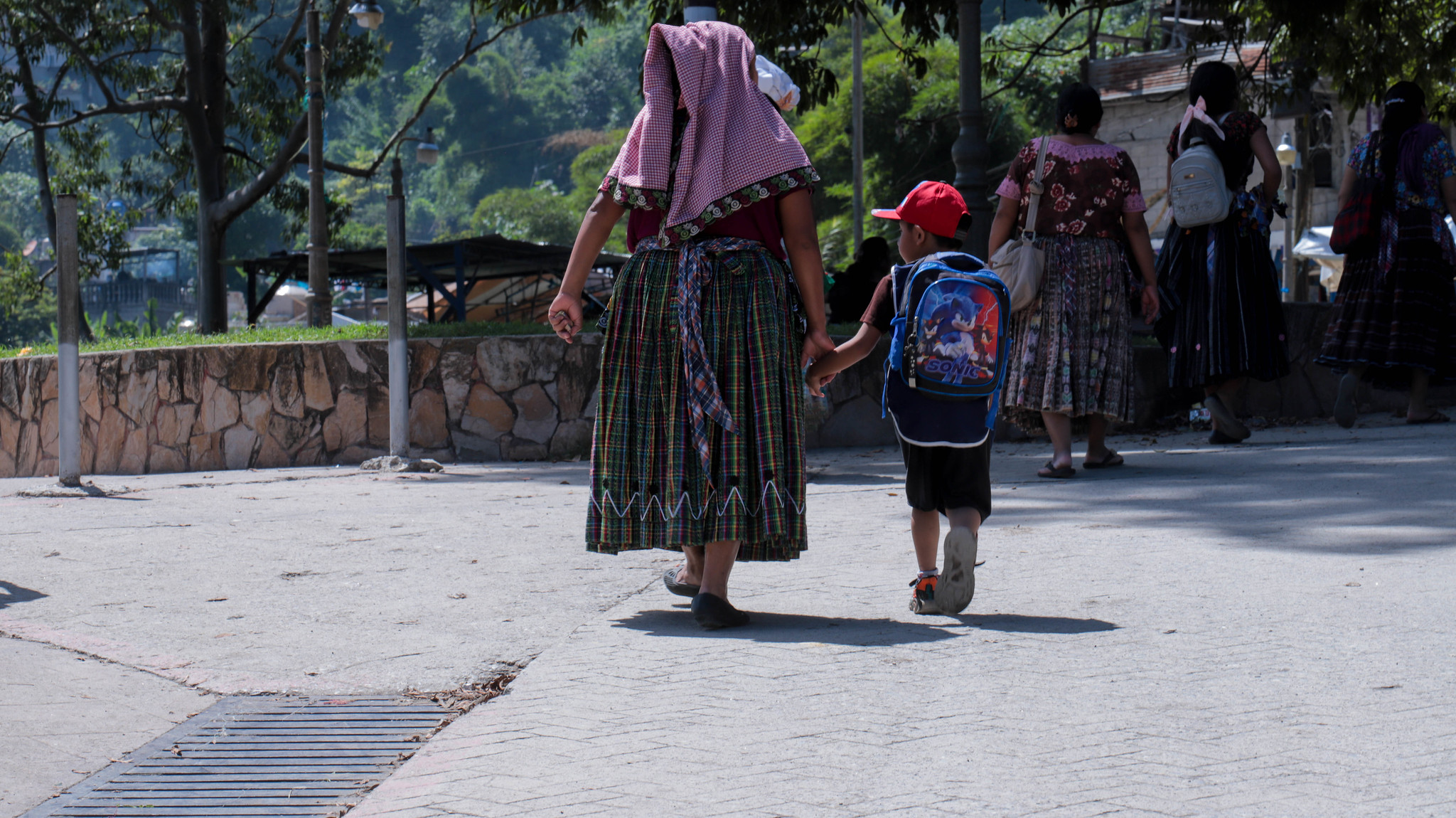
Photo: Mario Winter.
Voices for the Motagua River: Olga Vázquez.
Voices for the Motagua River: Nazario Pascual.
In early 2000, the Maya community organized to stop sand mining on their territory. At that time, the companies held mining permits that remained valid through 2021 and 2022. And although the permits expired, some companies continued to operate after requesting extensions. In June 2022, the indigenous authorities of the Poqomam people began a sit-in protest in front of the Piedrinera San Luis company, which they maintained for four years.
In July 2024, the Special Rapporteur on Economic, Social, Cultural, and Environmental Rights of the IACHR visited Santa Cruz Chinautla. During his visit, traditional authorities and community members spoke about the environmental, water-related, health, economic, and cultural impacts of the pollution in their rivers.
That same year, in October, the community—with support from AIDA, the Indigenous Peoples’ Law Firm, and partner organizations—filed a lawsuit (petition for amparo) against the municipality of Chinautla over its failure to take measures to address the contamination of its rivers and soil caused by improper solid waste management and the existence of illegal landfills.
AIDA’s scientific team, together with local residents and community authorities, collected key information on illegal landfills in the area. This community science initiative supported the litigation by highlighting the severity of the pollution, demonstrating the ongoing use of such practices, and providing evidence of the municipal authorities’ failure to fulfill their legal obligations regarding waste management.
Learn more about this community science initiative.
In June 2025, the Poqomam community won the support of the Guatemalan justice system when a constitutional court ordered the municipality of Chinautla to effectively address the claims in the lawsuit aimed at stopping the pollution of the rivers and soil in Santa Cruz Chinautla.
This is the first time a Guatemalan court has recognized a community's right to a healthy environment and its central role in finding solutions.
Find out the details of the legal victory.
Current situation
Since the ruling was issued, the municipality of Chinautla has held a series of “technical working groups” with representatives from the central government, civil society, and the community. A smaller group of technical experts was later created to develop a work plan with clear goals. Several months have passed without the municipality convening these working groups.
Furthermore, in December 2025, the IACHR noted in its report Human Rights Situation in Guatemala that the Motagua River basin is facing a severe pollution crisis that has had profound impacts on biodiversity and has resulted in systematic violations of the human rights of local communities, including the Maya Poqomam people.
And in May 2026, the Ministry of the Environment and Natural Resources revoked the license of the sand mining company Piedrinera San Luis for "failure to comply with environmental commitments."
AIDA continues to monitor the implementation of the court ruling to ensure the right to a healthy environment for the Poqomam Maya community and all those living in the Motagua River basin. Meanwhile, the residents of Santa Cruz Chinautla remain organized and mobilized to improve their environment and defend their rights.
Related projects
Colombia: Holding virtual hearings violates communities' right to participation
In the context of the pandemic, and since the beginning of Colombia's obligatory isolation, businessmen have asked the Colombian government to "simplify environmental procedures." On April 3, 25 entrepreneurs sent a letter to President Iván Duque asking for the simplification of processes including prior consultation, environmental licenses and royalities. One of the first measures undertaken was the attempt to simplify the prior consultation, proposing to make it virtual. In response, indigenous communities and the Ombudsman's Office requested that the Ministry of the Interior respect human rights and reverse the measure, which it did. However, the quest to change the way consultations are conducted continues. At the request of the Ministry of the Environment, the National Environmental Licensing Authority (ANLA) is promoting several virtual environmental hearings, even proposing they be held on radio and digital platforms such as Facebook and YouTube. These are hearings to address key environmental issues in the country. The problem is that communication on these platforms is unilateral, denounced the organization DeJusticia, thus eliminating the possibility of discussing technical issues, and presenting an obstacle for those with limited access to the Internet. On April 13, 2020, ANLA issued Resolution 642, which opened the way for virtual participation processes. Days later, the licensing authority scheduled a virtual hearing to discuss a very important issue for the region: the return of aerial spraying with glyphosate, a toxic herbicide. The hearing, scheduled for May 27, was intended to address the modification of the glyphosate environmental management plan. But, thanks to a legal action, on May 18 a judge from the department of Nariño suspended the hearing. As evidenced, there exists an ongoing intention to carry out similar proposals during the pandemic. Many have been halted by the early warnings of citizens, judicial actions or statements by control authorities. On 20 May, the Administrative Court of Santander ordered the Ministry of the Environment to plan virtual working groups. It has also called for a virtual public hearing on the Santurbán páramo, where a mega-mining project threatens to harm this strategic ecosystem, which is vital for local water supply and the mitigation of the climate crisis. Holding virtual hearings implies a damage to the rural, indigenous and urban communities affected by a project, and to Colombian society in general. In addition to being in the midst of the worst crisis in recent history, these communities lack access to the internet and the basic necessities that could guarantee their virtual participation. In Colombia, and across the region, the rights of access to information, justice and participation are among the most violated. We must stand at high alert so that the pandemic does not become an excuse to continue abusing them. All remaining proposed virtual proceedings must be immediately suspended, until there exists guarantees for the due exercise of the right to participation and the exercise of national and international oversight in these matters.
Read more
COVID-19 Response: The importance of providing special protection to indigenous peoples and Afro-descendants
Indigenous and afro-descendant peoples in Latin America and the Caribbean have been essential actors in the protection of nature, of key ecosystems and, in short, of the lives of all beings that inhabit the planet. At the same time, they have historically suffered discrimination, exclusion and the violation of their rights, seeing their survival threatened. According to the International Labor Organization’s report, Towards an Inclusive, Sustainable and Fair Future, Latin America is the region with the highest proportion of indigenous and tribal groups living in extreme poverty. In the context of global health crisis caused by the COVID-19 pandemic, the vulnerability of indigenous and afro-descendant peoples in the region has increased for at least three reasons. 1. The pandemic aggravates the lack of access of ethnic communities to their economic, social, cultural and environmental rights Both the United Nations and the Inter-American Human Rights System have drawn attention to the indivisibility and interdependence of all human rights. However, ethnic communities have historically faced the absence of guarantees for the enjoyment of their economic, social, cultural and environmental rights. Many of these peoples do not have effective access to health, sanitation and social security services. And due to deforestation and the advance of the agricultural frontier in their territories, they face increasing challenges in ensuring their food sovereignty, confronting new diseases, and adjusting their traditional medicine systems. In addition, several of them have serious problems accessing indispensable goods such as water and food. The barriers to accessing these services under quality conditions have become greater with the current health crisis, making these populations more vulnerable and putting their very survival at risk. This is an overwhelming reality for the region. In a recent statement, the Inter-American Commission on Human Rights (IACHR) expressed its concern by stating that, at the local level, "pandemic processes produce disproportionate impacts on populations with greater difficulties in accessing health structures and health care technologies within countries, such as indigenous peoples…” At the regional level, COICA (Coordinating Body of Indigenous Organizations of the Amazon Basin) declared a state of emergency in the face of the health crisis. In Guatemala, the International Commission of Jurists denounced that indigenous peoples "face the risk of suffering the destructive effects of the COVID-19 pandemic, due to historical and systematic discrimination against them" and that in the current crisis "they do not have access to clear and simple information on how to protect themselves from the pandemic and how to be protected during the emergency by the Health System." Indigenous leaders in Peru denounced food shortages and deficiencies in health care, calling for the supply of essential items in communities and the definition of protocols for carrying supplies. In Colombia, the National Indigenous Organization of Colombia (ONIC) reported that more than 191,000 indigenous families are at risk of infection and that for nearly 513,000 families the humanitarian crisis due to the pandemic is imminent. In addition, the National Conference of Afro-Colombian Organizations said that their population is at high risk and that "the majority of Afro-descendant territories do not have a network of equipment and personnel that would allow them to properly attend to potential affected persons." The situation in Brazil is the same. Out of 471 indigenous lands, 13 have critical vulnerability indexes regarding the pandemic. In the states of the Legal Amazon, 239 indigenous lands have intense or high vulnerability indexes. In general, the index varies between moderate, high, intense and critical. In addition, less than 10% of Brazilian municipalities with indigenous lands have beds available in the Intensive Care Unit and the indigenous health system only treats common diseases. Without guidance from the health departments, many indigenous groups are taking preventive measures on their own to prevent the pandemic from reaching their territories. Such measures include voluntary isolation, hygiene campaigns, and suspension of large mobilizations, events and travel; there has even been a closure of traffic between villages to prevent the spread of the disease. 2. Ethnic communities require differentiated measures, but the response of States remains insufficient In various countries of the region, indigenous communities are reporting that the measures taken by authorities in response to the pandemic have been precarious and culturally inadequate because they do not consider the uses and customs of these peoples. The IACHR and the Rapporteurship on Economic, Social, Cultural, and Environmental Rights have reiterated that States must adopt culturally appropriate, timely, and effective responses to guarantee the rights of indigenous peoples in the face of the pandemic. The IACHR reminded States of their obligation to provide "special protection" to the indigenous population, as well as " the importance of providing them clear information about the pandemic in their traditional language, whenever possible.” It also referred to Afro-descendant and tribal communities, highlighting the need for their situation “to be made visible in the context of this pandemic, especially to include an ethnic-racial perspective with an intersectional approach in all response measures implemented both in the level national, as in the regional responses that can be articulated.” In Mexico, the Mayan Community Collective of Hopelchén publicly denounced the Mexican government for the lack of implementation of an official strategy to inform Mayan indigenous peoples about the risks they face in the face of the health crisis. In Ecuador, the WHO warned of the lack of protocols for indigenous peoples and nationalities in the face of the pandemic. It noted that it is essential that social food programs reach these communities and the rural sector, and that prevention campaigns reach them in their own languages. The situation is aggravated by the poor connectivity of many of these peoples, who lack land, air and/or river routes. This hinders their mobility and access to social services, the internet and information about the pandemic, including state measures taken and self-care actions to be implemented. 3. The territorial rights of indigenous and Afro-descendant communities continue to be violated In the midst of the sanitary emergency and the confinement decreed in several countries of the region, governments and other actors have adopted measures or promoted initiatives that ignore the right to prior consultation, cause the relaxation of environmental requirements for high-impact development projects, and favor the lack of effective guarantees for citizen participation in environmental matters. In Colombia, the national government promoted virtual prior consultations. The National Commission on Indigenous Territories and several human rights organizations rejected the initiative, which was finally repealed. However, concern persists over the request made by businesspeople to the government for the relaxation of environmental permits in the country, a vital instrument for protecting the environment and indigenous territories. In Brazil, the pandemic's threats to indigenous communities are compounded by the invasion of indigenous territories and increased violence and threats to their leaders. In Roraima, Mato Grosso and Bahia, indigenous peoples blocked roads and built barriers to prevent invaders from entering their lands. These risks also come from the State. The National Indian Foundation (FUNAI) published an administrative act promoting the recognition of boundaries of private property on indigenous lands. This is intended to allow the issuance of property titles to invaders on indigenous lands, legitimizing their actions. In Mexico, organizations and communities denounced the federal government’s continuation of the so-called "Mayan train" project despite the fact that its construction is non-essential in the context of the pandemic. The project puts at risk the population in charge of its construction and prevents access to information and justice for communities given the suspension of deadlines in state institutions and the impossibility of resorting to appropriate judicial mechanisms. In Bolivia, the National Coordinator for the Defense of Indigenous and Peasant Territories and Protected Areas stated that indigenous peoples are vulnerable not only to the coronavirus, but also to what will come next: "a big hole in the global economy" and, therefore, "an excuse for more attacks on nature, indigenous territories and the natural protected areas where they are located.” On this issue, the IACHR reiterated to the States " the importance of recognizing the territorial rights of collective property to the Afro-descendant communities and guaranteeing them the effective right to free, prior and informed consent and consultation, respecting their free self-determination.” It also urged States to " refrain from promoting legislative initiatives or projects that affect ethnic territories during the duration of this pandemic, due to the impossibility of carrying out said consultation processes.” Towards emergency health care that respects the rights of indigenous peoples and people of African descent Indigenous peoples and people of African descent represent one of the continent's most important assets. Their millenary residence and their worldview—which respects nature and the beings that inhabit it—have been and are an invaluable legacy. They will be an indispensable element in promoting reflections on the global health and ecological crises that we face. The contributions of ethnic communities and their ancestral knowledge, which have transcended time and contributed to the survival of the planet, are essential for the implementation of preventative and care measures related to the pandemic. This is what the President of the Permanent Forum on Indigenous Issues emphasized: “Indigenous peoples can contribute to seeking solutions. Their good practices of traditional healing and knowledge, such as sealing off communities to prevent the spread of diseases and of voluntary isolation, are being followed throughout the world today.” Protecting these peoples so that the pandemic does not threaten their lives and integrity is a moral and historic duty, and an international obligation of all States. It is therefore imperative that States: Promote special care plans and emergency protocols for ethnic communities and other vulnerable populations, with a human rights approach and from a differential perspective. Support the initiatives that some Afro-descendent peoples and indigenous communities have taken to deal with the crisis of the pandemic on the basis of self-government and autonomy, including strategies of voluntary isolation, the use of traditional medicine and the conduct of internal information and communication campaigns. Refrain from promoting measures that disregard the territorial rights of indigenous peoples and people of African descent. AIDA urged States to suspend the approval of environmental and other official permits for sensitive projects unrelated to the response to the health crisis, until human rights can be adequately guaranteed. Suspend prior consultations until conditions are in place to guarantee the rights of indigenous peoples. Suspend bills and initiatives that weaken the integrity of indigenous territories, as well as the progress of any development project or extractive activity on indigenous or Afro-descendant lands that could have negative effects on the life or integrity of these peoples.
Read more
Applauding the exclusion of Eletrobras from Norwegian oil fund
The Council on Ethics, which governs the world's largest sovereign wealth fund, recommended the exclusion due to the participation of the Brazilian state-owned company in the Belo Monte hydroelectric project, which is associated with serious human rights violations against indigenous peoples. On May 13, the Norwegian oil fund, considered the world's largest sovereign wealth fund, excluded twelve companies from its investment portfolio for ethical reasons, including Brazil's Eletrobras for its participation in the Belo Monte hydroelectric project. The fund is managed by the public bank Norges Bank Investment Management, which follows the recommendations made each year by the Ethics Council to ensure that investments meet certain criteria. The Council noted that the Belo Monte project, run by the Norte Energia consortium - of which Eletrobras is a part - caused "greater pressure on indigenous lands, the disintegration of the social structures of indigenous peoples and the deterioration of their ways of life" with the forced displacement of some 20,000 people. AIDA - as part of a joint civil society effort - informed the Council of the situation of the indigenous and riverine populations affected by the project, its social and environmental impacts, the operational situation of the dam, and the current status of national and international legal actions brought against the project. We believe the Council's decision should be applauded because it discourages the continuation of unsustainable and ill-named development projects that threaten the survival of indigenous and traditional peoples, as is the case with Belo Monte. It is essential that banks, international financial institutions and monetary funds take into account the likely impacts of the projects they finance. Supporting socially and environmentally sustainable projects instead of initiatives that prioritize economic benefit over the protection of human rights and the environment demonstrates responsible and ethical investment. PRESS CONTACT Victor Quintanilla, [email protected], +5215570522107
Read more