
Project
Shutterstock.
Pollution of the Motagua River in Guatemala: The Poqomam Maya people’s quest for environmental justice
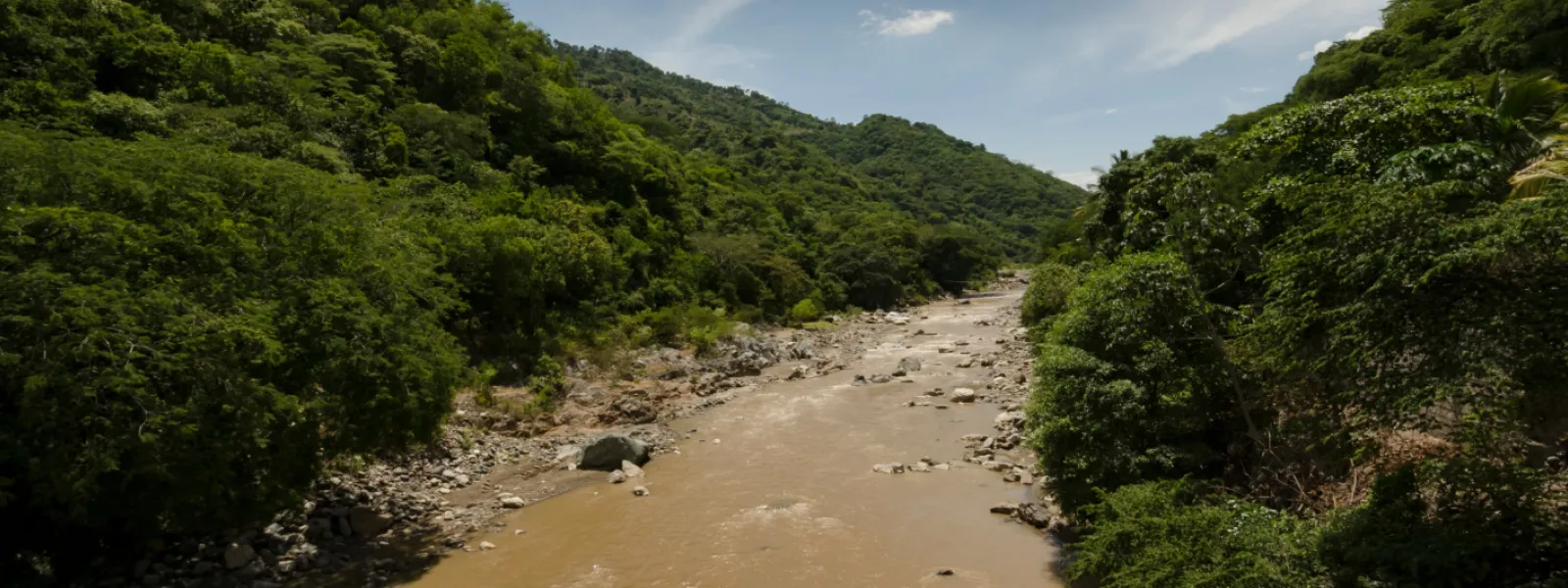
The Motagua River basin—Guatemala’s largest and most important river—is severely polluted with wastewater, solid waste, and other types of debris.
This is a cross-border issue because the Motagua’s polluted waters flow into the Caribbean Sea, reach the coast of Honduras, and threaten the Mesoamerican Reef System.
For decades, this has violated the rights to health, water, development, and a healthy environment of all the people living in the river basin.
In June 2025, the Poqomam Maya community of Santa Cruz Chinautla—supported by AIDA, the Indigenous Peoples’ Law Firm, and allied organizations—achieved an unprecedented legal victory to halt degradation in the basin. In response to the lawsuit it filed, a Guatemalan court ordered the municipality of Chinautla to comply with a series of obligations to curb the pollution of the area’s rivers and soil.
The government's response to the ruling has so far been limited to technical working group meetings. Meanwhile, the community continues to work toward the proper implementation of the ruling and to take other actions to defend its territory and its rights.
Background
The Motagua River, which is 486 km long, flows through 96 municipalities and 14 departments in Guatemala. It originates in Quiché, a department located in the northwest, and empties into the Caribbean Sea.
Polluting activities occur throughout the entire basin, including sub-basins and micro-basins. The largest volume of pollution comes from Guatemala City, the country’s capital, and is carried by the waters of the Las Vacas River, which in turn receives a large amount of waste from the Chinautla River.
The Chinautla River, which flows through the municipality of the same name, carries solid waste from a landfill located in Zone 3 of the capital—where trash from at least 14 municipalities in the department of Guatemala is dumped—as well as sewage generated by some 500,000 people living in the northern part of the capital, which undergoes no prior treatment.
Other sources of pollution include the numerous illegal dumps in the municipality of Chinautla, the waste that private vehicles and garbage trucks dump along the banks of its rivers, as well as the sand-mining companies—which began setting up operations in the area between 1996 and 1997—whose activities weaken the rivers' basins, causing solid waste to be more easily carried away by the river currents.
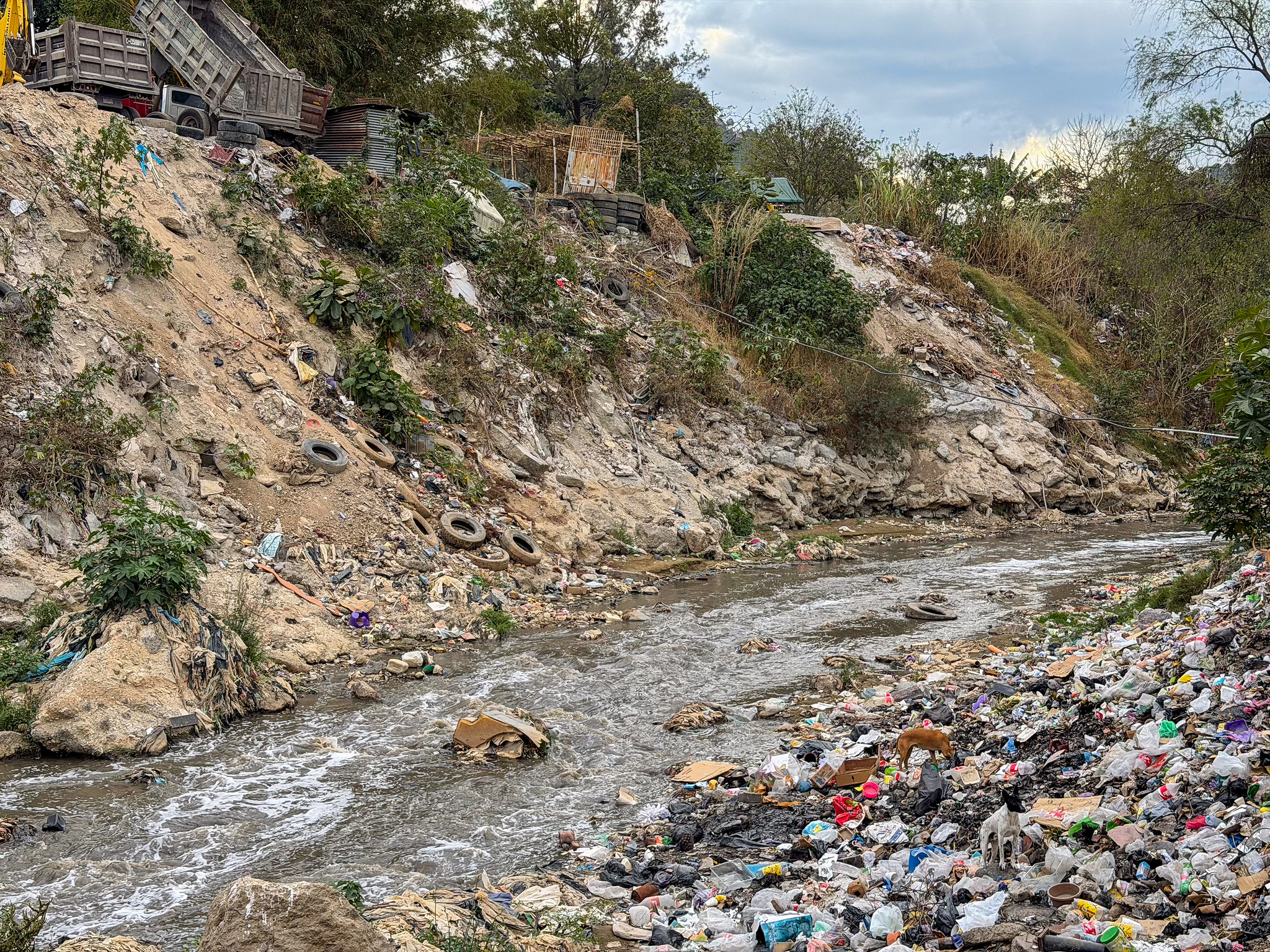
Photo: Mayela Sánchez García.
The situation extends beyond national borders. Every year, the Motagua River discharges some 20,000 metric tons of plastic into the Caribbean Sea, making it one of the rivers that contributes the most plastic pollution to the ocean worldwide, according to estimates contained in a 2025 report by the Inter-American Commission on Human Rights (IACHR).
The river flows into the Mesoamerican Reef at its mouth, so pollution also threatens to degrade one of the largest and most biodiverse transboundary reefs on the planet, which spans the territorial waters of Belize, Guatemala, Honduras, and Mexico.
In addition, the contaminated water reaches the coast of Honduras and spreads into Amatique Bay, located along the eastern coast of Guatemala, affecting the Caribbean Sea.
The roots of this chronic, cross-border problem are structural. Data from the Integrated Environmental Management of the Motagua River Basin project, funded by the United Nations Development Program (UNDP), show that in Guatemala, 66% of municipal solid waste is not collected, and there is no guarantee that the remaining 34% is disposed of properly. Furthermore, of all landfills nationwide, 88.32% are illegal or lack municipal authorization.
In other words, the core issues that need to be addressed are the mismanagement of solid waste and water resources in Guatemala; noncompliance with existing regulations on wastewater discharge and the disposal and treatment of solid waste and residues; and the lack of a water law.
The Poqomam Maya people's quest for justice
The rivers of Santa Cruz Chinautla, a community of the Poqomam Maya people located just twelve kilometers from Guatemala City, have become conduits of pollution that are degrading the Motagua River.
For decades, the local population has seen its health and livelihoods—including pottery, one of the main economic activities and a source of identity—damaged due to the lack of waste management in the municipality of Chinautla and the urban area of the country’s capital, as well as the activities of sand-mining companies.
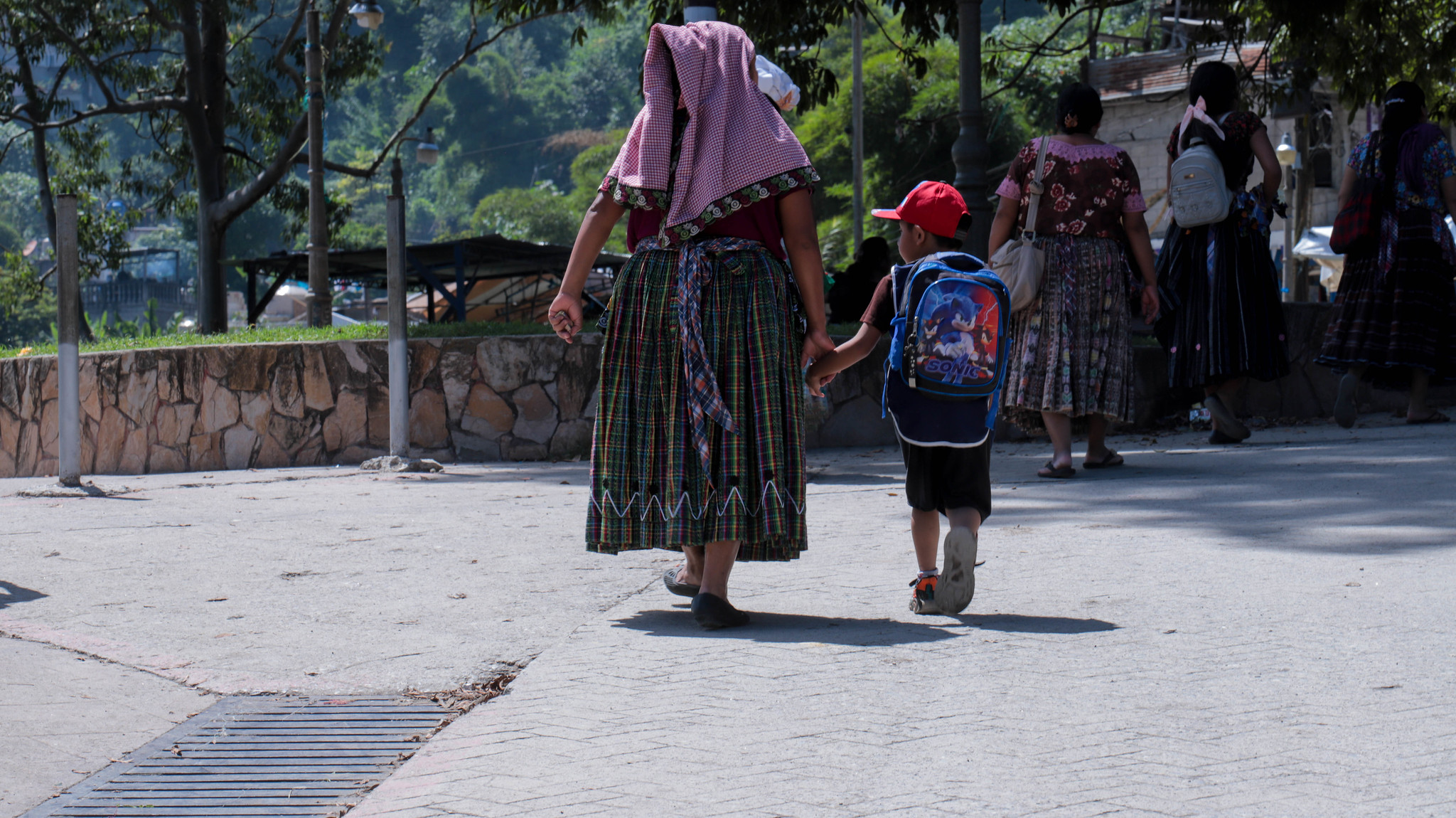
Photo: Mario Winter.
Voices for the Motagua River: Olga Vázquez.
Voices for the Motagua River: Nazario Pascual.
In early 2000, the Maya community organized to stop sand mining on their territory. At that time, the companies held mining permits that remained valid through 2021 and 2022. And although the permits expired, some companies continued to operate after requesting extensions. In June 2022, the indigenous authorities of the Poqomam people began a sit-in protest in front of the Piedrinera San Luis company, which they maintained for four years.
In July 2024, the Special Rapporteur on Economic, Social, Cultural, and Environmental Rights of the IACHR visited Santa Cruz Chinautla. During his visit, traditional authorities and community members spoke about the environmental, water-related, health, economic, and cultural impacts of the pollution in their rivers.
That same year, in October, the community—with support from AIDA, the Indigenous Peoples’ Law Firm, and partner organizations—filed a lawsuit (petition for amparo) against the municipality of Chinautla over its failure to take measures to address the contamination of its rivers and soil caused by improper solid waste management and the existence of illegal landfills.
AIDA’s scientific team, together with local residents and community authorities, collected key information on illegal landfills in the area. This community science initiative supported the litigation by highlighting the severity of the pollution, demonstrating the ongoing use of such practices, and providing evidence of the municipal authorities’ failure to fulfill their legal obligations regarding waste management.
Learn more about this community science initiative.
In June 2025, the Poqomam community won the support of the Guatemalan justice system when a constitutional court ordered the municipality of Chinautla to effectively address the claims in the lawsuit aimed at stopping the pollution of the rivers and soil in Santa Cruz Chinautla.
This is the first time a Guatemalan court has recognized a community's right to a healthy environment and its central role in finding solutions.
Find out the details of the legal victory.
Current situation
Since the ruling was issued, the municipality of Chinautla has held a series of “technical working groups” with representatives from the central government, civil society, and the community. A smaller group of technical experts was later created to develop a work plan with clear goals. Several months have passed without the municipality convening these working groups.
Furthermore, in December 2025, the IACHR noted in its report Human Rights Situation in Guatemala that the Motagua River basin is facing a severe pollution crisis that has had profound impacts on biodiversity and has resulted in systematic violations of the human rights of local communities, including the Maya Poqomam people.
And in May 2026, the Ministry of the Environment and Natural Resources revoked the license of the sand mining company Piedrinera San Luis for "failure to comply with environmental commitments."
AIDA continues to monitor the implementation of the court ruling to ensure the right to a healthy environment for the Poqomam Maya community and all those living in the Motagua River basin. Meanwhile, the residents of Santa Cruz Chinautla remain organized and mobilized to improve their environment and defend their rights.
Related projects
The importance of the “how” in the energy transition
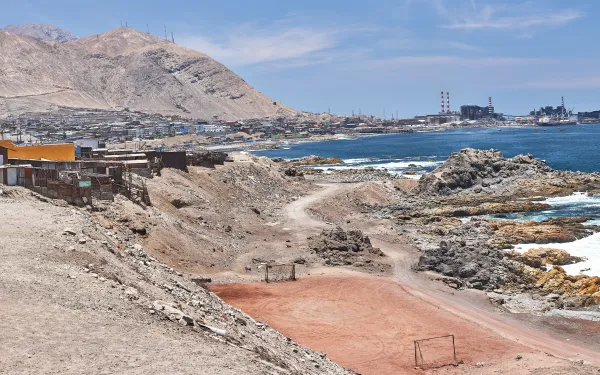
Of the global carbon dioxide (CO2) emissions from fossil fuels, one of the main causes of the climate crisis, nearly half come from coal use. Latin America is no stranger to the problem because it participates in both coal burning and the extraction of the mineral, which, after export, is used as a fossil fuel source in other parts of the world.In this context, the closure of coal-fired power plants—as is happening in Chile—is both great news and an opportunity to steer the energy transition toward justice.But in a just energy transition, the "how" matters: every step toward defossilization must ensure energy systems based on non-conventional renewable sources, respect for the environment and human rights, and responsible closure and exit processes. Thus, the Chilean case, which we explain below, is an important example of why the region needs to implement responsible decarbonization. When decarbonization causes more pollutionIn early 2024, AES Andes SA closed the Norgener thermoelectric power plant in Tocopilla, a coastal city in northern Chile. As part of the closure process, the company rapidly burned the 94,000 tons of coal it had stored at the plant, affecting a city already saturated with pollution and publicly recognized as an environmental sacrifice zone.The population of Tocopilla was exposed to potential health effects, including impacts on the respiratory system, increased risk of heart attacks, and—in children—perinatal disorders, developmental disorders, and impaired lung function, among others.The forced burning of coal was authorized by the National Electricity Coordinator (CNE)—the agency responsible for managing the various energy sources that enter the national electricity system—and displaced the use of renewable energy. To stop the burning, AIDA, Greenpeace, and Chile Sustentable, together with local communities, filed an appeal with the Santiago Court of Appeals to halt it, but the court's decision came after the coal had already been burned. Furthermore, the court ruled that the case should be reviewed by a specialized court in a more lengthy proceeding. A bad precedent for Chile and for the continentBy authorizing the burning of the remaining coal from the Norgener thermoelectric plant, the National Electricity Coordinator made an exception to the law governing the order of energy dispatch. Shortly thereafter, in September 2024, the agency issued an internal procedure to order the early closure of power plants. Although it is an attempt to streamline the closure process, the measure opens the door for other companies with coal-fired power plants in the process of closing to replicate what happened at Norgener: burn their remaining coal under the argument of “emptying stock” and generate energy that enters the national electricity system with priority, once again displacing energy from renewable sources. In Chile, the National Electricity Coordinator decides which unit dispatches its energy to the system at any given time based on a criterion of increasing economic merit, according to which the energy with the lowest variable cost enters first. However, the internal procedure stipulates—without sufficient regulatory backing—that the agency may authorize dispatching energy outside economic order so that coal-fired power plants consume their remaining fuel before closing. In response, AIDA, Greenpeace, Chile Sustentable, and MUZOSARE (Women in Sacrifice Zones in Resistance) filed a complaint on February 6, 2026, with the Superintendency of Electricity and Fuels against the Coordinator and his advisors for approving and implementing the measure. The complaint represents an opportunity to do things right: for the sector's regulatory body to ensure that the planning for the closure of thermoelectric power plants does not end up rewarding poor coal inventory management at the expense of communities' health and a just energy transition. What the energy transition needsIn 2019, the Chilean government committed to closing all coal-fired power plants in the country by 2040. Since that public announcement, the timeline has been accelerated. But the urgency of decarbonization should not be used to favor companies operating thermoelectric plants or to harm communities near polluting industries. Doing so weakens Chile's climate leadership and sets a bad example for any decarbonization process in the region. In a just energy transition, companies along the entire coal and other fossil fuel supply chain have an obligation to ensure the responsible closure and exit of their operations. The energy transition is not merely a change in technologies; it is an opportunity to rethink energy and development models and to correct injustices. This requires clear and appropriate rules that promote energy system security, competition, and a healthy environment.
Read more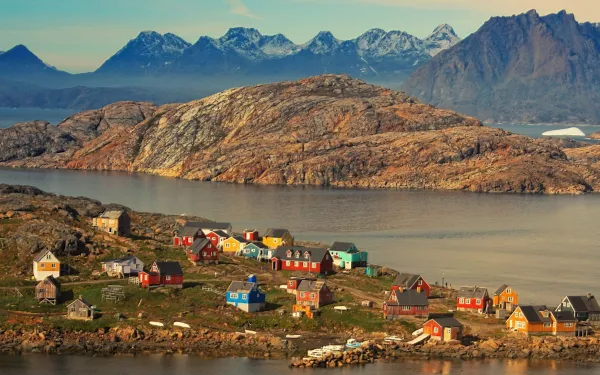
5 key facts about “rare” earth elements
In recent weeks, you have probably read or heard the term "rare" earth elementsContrary to what their name suggests, they are more common in everyday life than you might think. In fact, many of the technological innovations we use daily would not be possible without them.So why are they being talked about so much right now?Because today, "rare" earth elements and other minerals considered "critical" are at the center of disputes over their control, given their usefulness in the manufacture of technologies for the energy transition and for the military industry.But aside from the geopolitical tensions surrounding the issue, there are basic questions that arise when we hear this term, which is why we answer them here.By understanding where the raw materials behind the technologies we use come from, we can also rethink the kind of future we want. What are "rare" earth elements?There are 17 metallic elements, similar in their geochemical properties, used in many of today's technologies, from cell phones to electric cars.They include the 15 lanthanides of the periodic table of chemical elements—lanthanum, cerium, praseodymium, neodymium, promethium, samarium, europium, gadolinium, terbium, dysprosium, holmium, erbium, thulium, ytterbium, and lutetium—as well as scandium and yttrium.Promethium is usually excluded from this group because under normal conditions its half-life is short. Are they really rare?Contrary to what one might think, they are not "rare" in abundance, but rather in concentration. In other words, deposits with high concentrations are rare, making their exploitation and processing difficult. As a result, most of the world's supply comes from a few sources.But when they were discovered (in the 18th and 19th centuries), they were less well known than other elements. The most abundant "rare" earth elements are similar in concentration in the Earth's crust to common industrial metals (chromium, nickel, copper, zinc, molybdenum, tin, tungsten, or lead). Even the two least abundant rare earth elements (thulium and lutetium) are almost 200 times more common than gold. What are "rare" earth elements used for?They have unusual fluorescent, magnetic, and conductive properties, making them attractive for a wide range of applications.They are present in everyday objects such as smartphones, screens, and LED lights.In renewable energy, they are used to manufacture wind turbines and electric cars.Its most specialized uses include medical devices and military weapons. Where are they?They exist in various parts of the world, but just because a country has reserves does not mean that it exploits them. The countries with the largest reserves are:China: 44 million tons.Brazil: 21 million tons.India: 6.9 million tons.Australia: 5.7 million tons.Russia: 3.8 million tons.Vietnam: 3.5 million tons.United States: 1.9 million tons.Greenland: 1.5 million tons.In Latin America, besides Brazil, other countries where "rare" earth elements have been identified are Argentina, Chile, Bolivia, Colombia, and Peru. Why is there so much talk about them now?The energy transition is intensifying competition for access to raw materials—including rare earth elements—needed for renewable energy technologies.To promote and facilitate access to these and other resources, some countries and international organizations refer to them as "critical."But they are not only important for renewable energy. "Rare" earth elements are also key to the military industry.Because global supply is concentrated in a few sources, there is growing interest among some countries in the Global North in controlling access to these resources. What are the impacts of their exploitation?The extraction of "rare" earth elements is mainly carried out in open-pit mines, which have serious environmental and social impacts:Water, air, and soil pollution.Heavy use of water and toxic chemicals.Radioactive waste.Loss of biodiversity.Health risks.Forced displacement of communities.Increased risk of economic inequality. "Rare" earth elements and other minerals considered "critical" are at the center of current debates over who controls their exploitation and production.As these are natural resources, often found in indigenous territories and critical ecosystems, a more urgent discussion is what kind of progress we want: one that encourages the excessive exploitation of resources, or one that respects the environment and people? If you would like to learn more about this topic, here are the links to the sources we consulted:- USGS, Rare Earths Statistics and Information: https://www.usgs.gov/centers/national-minerals-information-center/rare-earths-statistics-and-inform… - USGS, "Fact Sheet: Rare Earth Elements-Critical Resources for High Technology": https://pubs.usgs.gov/fs/2002/fs087-02/ - Science History Institute, History and Future of Rare Earth Elements: https://www.sciencehistory.org/education/classroom-activities/role-playing-games/case-of-rare-earth… - USGS, "The Rare Earth Elements-Vital to Modern Technologies and Lifestyles": https://pubs.usgs.gov/fs/2014/3078/pdf/fs2014-3078.pdf - Institute for Environmental Research and Education, "What Impacts Does Mining Rare Earth Elements Have?": https://iere.org/what-impact-does-mining-rare-earth-elements-have/#environmental_impact_studies- Latin America’s opportunity in critical mineralsfor the clean energy transition: https://www.iea.org/commentaries/latin-americas-opportunity-in-critical-minerals-for-the-clean-ener…- U.S. Geological Survey, Mineral Commodity Summaries, January 2025 : https://pubs.usgs.gov/periodicals/mcs2025/mcs2025-rare-earths.pdf pg 145
Read more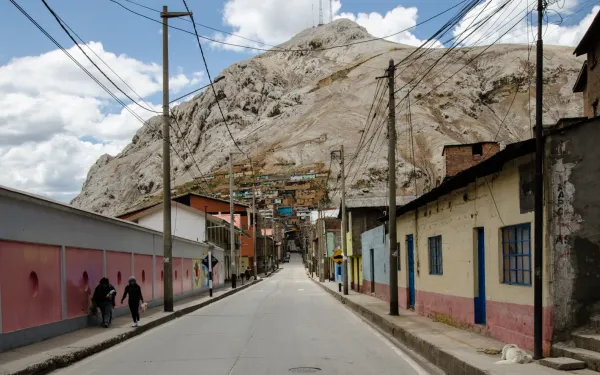
Victims in La Oroya call on the President of Peru to comply with the Inter-American Court ruling after nearly two years of delays
The group of victims recognized by the international court emphasizes the urgency of implementing the ruling on issues related to ending pollution in the city of La Oroya, providing comprehensive and specialized medical care, and paying compensation. La Oroya, Peru. Victims of decades of pollution caused by the operations of the La Oroya Metallurgical Complex sent a letter to the President of the Republic on December 19, 2025, urgently requesting compliance with the Inter-American Court of Human Rights' ruling ordering the Peruvian State to adopt comprehensive measures of justice and reparation. In the letter, part of the group of 80 victims recognized by the international court in the La Oroya v. Peru case, the group emphasizes compliance with the ruling on issues related to pollution prevention in the city, comprehensive and differentiated medical care, and the payment of compensation."Mr. President, do we have to wait another 20 years to obtain some kind of reparation? Since we began this long struggle, seven people from this group of victims have died without obtaining justice. Two of them, including a minor, died as a result of health damage caused by pollution in La Oroya, as the Inter-American Court of Human Rights confirmed in its ruling," the victims point out.Their request comes after almost two years of delays in the effective implementation of the ruling, notified on March 22, 2024, and after the Inter-American Court of Human Rights notified its interpretative judgment in November last year, in which it referred only to certain specific aspects of the original judgment that required further clarification to facilitate its execution. These points relate to health care measures, the relocation of affected persons, follow-up deadlines, compensation, and the acknowledgment of responsibility and a public apology.However, both the victims and the organizations supporting their struggle emphasize that, as established by the Inter-American Court, all orders in the original judgment are in force and fully enforceable from the moment they were issued in March 2024, with no legal impediment to immediate compliance.An essential step in achieving this is the urgent publication of the resolution determining jurisdiction by the Attorney General's Office."The victims have resorted to all legal and institutional mechanisms to access justice and see their rights restored. Today, preventing the population of La Oroya from continuing to be exposed to environmental pollution, guaranteeing comprehensive health care for those who have been affected by toxic metals, and ensuring the payment of compensation ordered by the Court are necessary and fully implementable steps for the Peruvian State to comply not only with its international obligations, but also with its fundamental duty to protect the life, health, and dignity of the people who inhabit its territory," said Rosa Peña, senior attorney at the Interamerican Association for Environmental Defense (AIDA). Christian Huaylinos, from the legal department of the Pro Human Rights Association (APRODEH), highlighted the importance of implementing the ruling throughout the country: "Several of the provisions ordered by the Court are relevant at the national level, meaning that they benefit Peruvian citizens in general in relation to pollution from mining and metallurgical activities. These include harmonizing national-level air quality regulations, guaranteeing respect for human rights and due diligence, and designing and implementing an air and water quality information system in areas of Peru with greater mining and metallurgical activity. In this regard, achieving timely and efficient compliance by the State represents the significance of the case for the benefit of all Peruvians."The victims emphasize that, given the clarifications made by the Inter-American Court in its interpretative judgment, there is no justification for the institutional delays that for more than two decades have prevented access to justice and reparation for the families affected by the pollution generated by the La Oroya Metallurgical Complex.This case has become one of the most important precedents in Latin America for protecting the rights to a healthy environment, clean air, and health, especially for communities exposed to highly polluting business operations. After more than 20 years of struggle, the victims hope that the Peruvian State will finally guarantee the justice and reparation ordered by the Inter-American Human Rights System. The victims, the population of La Oroya, and the organizations involved in the case reiterate their willingness to collaborate with the responsible institutions to ensure the effective implementation of all measures and to move toward comprehensive reparation and non-repetition.Press contactVíctor Quintanilla (Mexico), AIDA, [email protected], +521 5570522107
Read more