
Project
Shutterstock.
Pollution of the Motagua River in Guatemala: The Poqomam Maya people’s quest for environmental justice
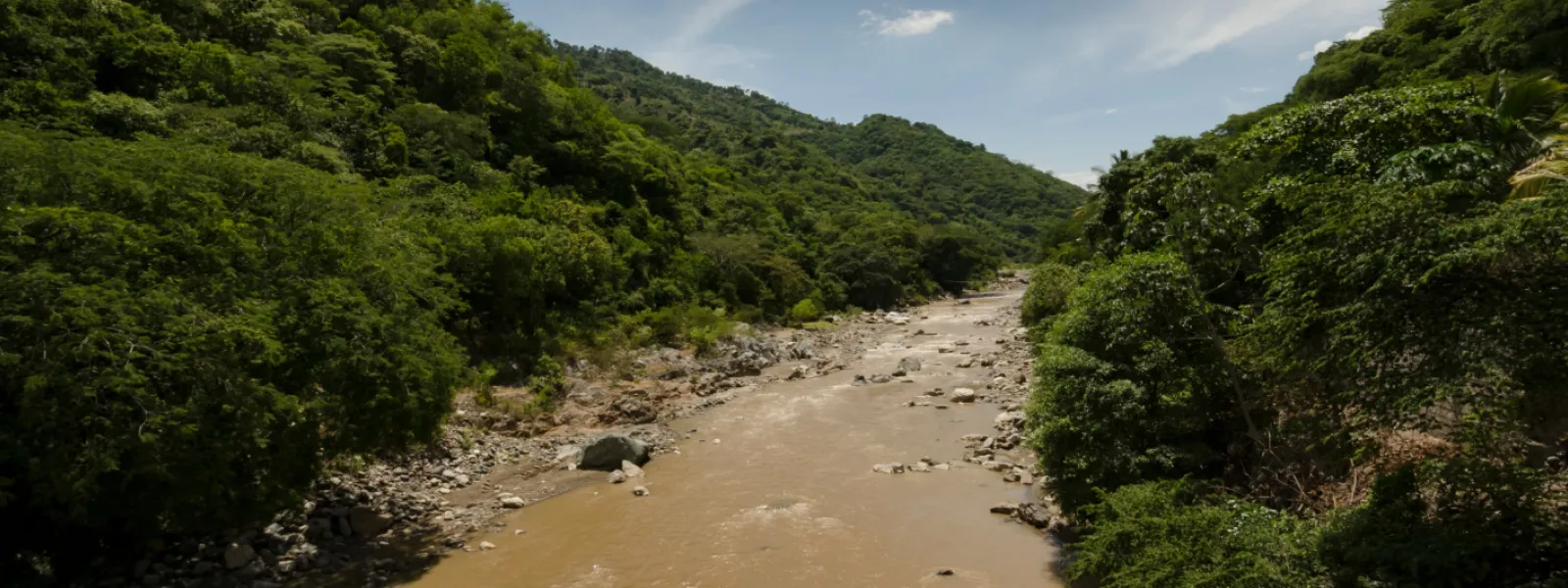
The Motagua River basin—Guatemala’s largest and most important river—is severely polluted with wastewater, solid waste, and other types of debris.
This is a cross-border issue because the Motagua’s polluted waters flow into the Caribbean Sea, reach the coast of Honduras, and threaten the Mesoamerican Reef System.
For decades, this has violated the rights to health, water, development, and a healthy environment of all the people living in the river basin.
In June 2025, the Poqomam Maya community of Santa Cruz Chinautla—supported by AIDA, the Indigenous Peoples’ Law Firm, and allied organizations—achieved an unprecedented legal victory to halt degradation in the basin. In response to the lawsuit it filed, a Guatemalan court ordered the municipality of Chinautla to comply with a series of obligations to curb the pollution of the area’s rivers and soil.
The government's response to the ruling has so far been limited to technical working group meetings. Meanwhile, the community continues to work toward the proper implementation of the ruling and to take other actions to defend its territory and its rights.
Background
The Motagua River, which is 486 km long, flows through 96 municipalities and 14 departments in Guatemala. It originates in Quiché, a department located in the northwest, and empties into the Caribbean Sea.
Polluting activities occur throughout the entire basin, including sub-basins and micro-basins. The largest volume of pollution comes from Guatemala City, the country’s capital, and is carried by the waters of the Las Vacas River, which in turn receives a large amount of waste from the Chinautla River.
The Chinautla River, which flows through the municipality of the same name, carries solid waste from a landfill located in Zone 3 of the capital—where trash from at least 14 municipalities in the department of Guatemala is dumped—as well as sewage generated by some 500,000 people living in the northern part of the capital, which undergoes no prior treatment.
Other sources of pollution include the numerous illegal dumps in the municipality of Chinautla, the waste that private vehicles and garbage trucks dump along the banks of its rivers, as well as the sand-mining companies—which began setting up operations in the area between 1996 and 1997—whose activities weaken the rivers' basins, causing solid waste to be more easily carried away by the river currents.
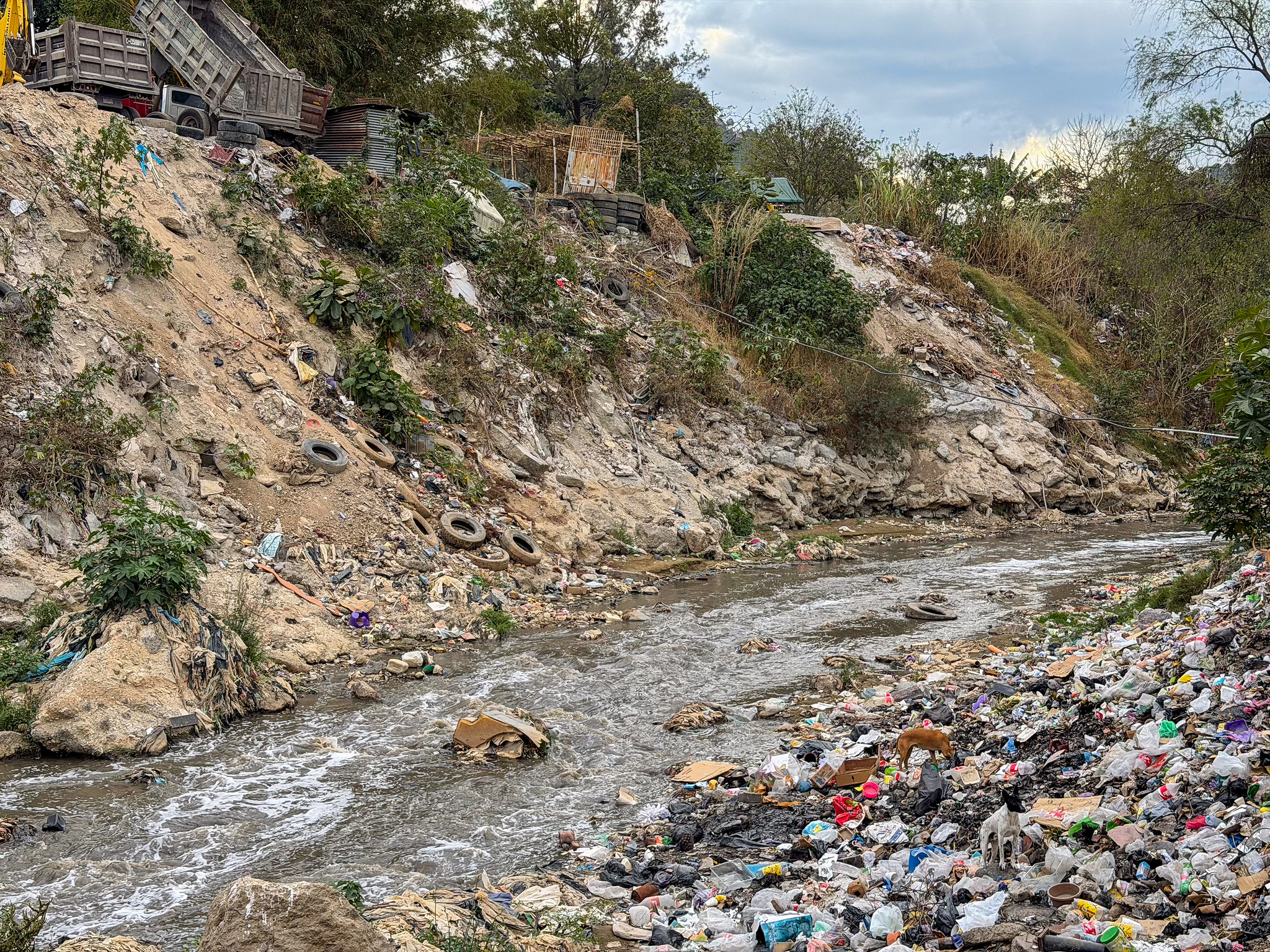
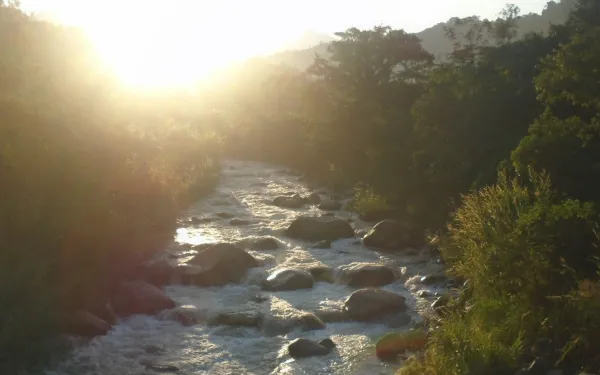
Photo: Mayela Sánchez García.
The situation extends beyond national borders. Every year, the Motagua River discharges some 20,000 metric tons of plastic into the Caribbean Sea, making it one of the rivers that contributes the most plastic pollution to the ocean worldwide, according to estimates contained in a 2025 report by the Inter-American Commission on Human Rights (IACHR).
The river flows into the Mesoamerican Reef at its mouth, so pollution also threatens to degrade one of the largest and most biodiverse transboundary reefs on the planet, which spans the territorial waters of Belize, Guatemala, Honduras, and Mexico.
In addition, the contaminated water reaches the coast of Honduras and spreads into Amatique Bay, located along the eastern coast of Guatemala, affecting the Caribbean Sea.
The roots of this chronic, cross-border problem are structural. Data from the Integrated Environmental Management of the Motagua River Basin project, funded by the United Nations Development Program (UNDP), show that in Guatemala, 66% of municipal solid waste is not collected, and there is no guarantee that the remaining 34% is disposed of properly. Furthermore, of all landfills nationwide, 88.32% are illegal or lack municipal authorization.
In other words, the core issues that need to be addressed are the mismanagement of solid waste and water resources in Guatemala; noncompliance with existing regulations on wastewater discharge and the disposal and treatment of solid waste and residues; and the lack of a water law.
The Poqomam Maya people's quest for justice
The rivers of Santa Cruz Chinautla, a community of the Poqomam Maya people located just twelve kilometers from Guatemala City, have become conduits of pollution that are degrading the Motagua River.
For decades, the local population has seen its health and livelihoods—including pottery, one of the main economic activities and a source of identity—damaged due to the lack of waste management in the municipality of Chinautla and the urban area of the country’s capital, as well as the activities of sand-mining companies.
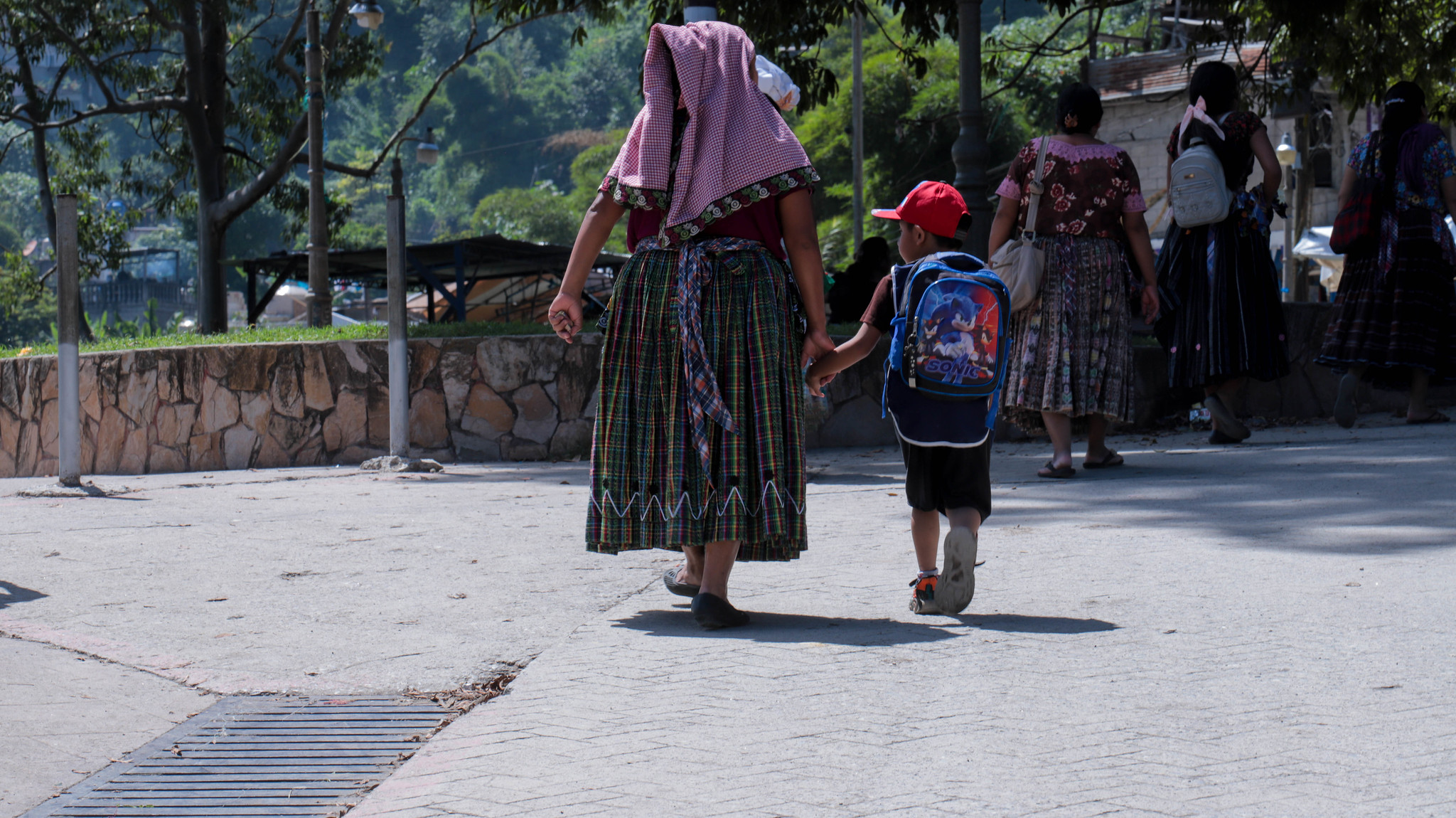
Photo: Mario Winter.
Voices for the Motagua River: Olga Vázquez.
Voices for the Motagua River: Nazario Pascual.
In early 2000, the Maya community organized to stop sand mining on their territory. At that time, the companies held mining permits that remained valid through 2021 and 2022. And although the permits expired, some companies continued to operate after requesting extensions. In June 2022, the indigenous authorities of the Poqomam people began a sit-in protest in front of the Piedrinera San Luis company, which they maintained for four years.
In July 2024, the Special Rapporteur on Economic, Social, Cultural, and Environmental Rights of the IACHR visited Santa Cruz Chinautla. During his visit, traditional authorities and community members spoke about the environmental, water-related, health, economic, and cultural impacts of the pollution in their rivers.
That same year, in October, the community—with support from AIDA, the Indigenous Peoples’ Law Firm, and partner organizations—filed a lawsuit (petition for amparo) against the municipality of Chinautla over its failure to take measures to address the contamination of its rivers and soil caused by improper solid waste management and the existence of illegal landfills.
AIDA’s scientific team, together with local residents and community authorities, collected key information on illegal landfills in the area. This community science initiative supported the litigation by highlighting the severity of the pollution, demonstrating the ongoing use of such practices, and providing evidence of the municipal authorities’ failure to fulfill their legal obligations regarding waste management.
Learn more about this community science initiative.
In June 2025, the Poqomam community won the support of the Guatemalan justice system when a constitutional court ordered the municipality of Chinautla to effectively address the claims in the lawsuit aimed at stopping the pollution of the rivers and soil in Santa Cruz Chinautla.
This is the first time a Guatemalan court has recognized a community's right to a healthy environment and its central role in finding solutions.
Find out the details of the legal victory.
Current situation
Since the ruling was issued, the municipality of Chinautla has held a series of “technical working groups” with representatives from the central government, civil society, and the community. A smaller group of technical experts was later created to develop a work plan with clear goals. Several months have passed without the municipality convening these working groups.
Furthermore, in December 2025, the IACHR noted in its report Human Rights Situation in Guatemala that the Motagua River basin is facing a severe pollution crisis that has had profound impacts on biodiversity and has resulted in systematic violations of the human rights of local communities, including the Maya Poqomam people.
And in May 2026, the Ministry of the Environment and Natural Resources revoked the license of the sand mining company Piedrinera San Luis for "failure to comply with environmental commitments."
AIDA continues to monitor the implementation of the court ruling to ensure the right to a healthy environment for the Poqomam Maya community and all those living in the Motagua River basin. Meanwhile, the residents of Santa Cruz Chinautla remain organized and mobilized to improve their environment and defend their rights.
Related projects
How much water is used to produce energy?
Water and energy go hand in hand. Processes such as gas extraction, oil refining, and hydroelectric power plant operations all require water. Thus, as energy demand increases, so does the need for water to generate it.This leads to environmental and social impacts, including the depletion of water sources and the pollution of rivers, lakes, and other bodies of water.Understanding the connection between water and energy production gives us a broader perspective on what our water consumption entails.Conserving water also means reducing our energy consumption, exploring more sustainable energy generation options, and demanding that energy be produced in a clean and fair manner. The water footprint of energyWater is essential for energy production. But not all sources consume the same amount of water, so their environmental impact varies. To generate 1 megawatt—enough to power 1,000 homes for one hour—here is how many liters of water are consumed by different sources of electricity: But water use goes beyond that. In addition to electricity generation, the energy sector uses freshwater—with various socio-environmental impacts—in its various production processes: Conventional thermoelectric power plantsIn these plants, water is heated to high temperatures—by burning coal, gas, or oil—to produce steam, which drives turbines to generate electricity.Water is also used in thermal power plants to cool the power-generating units. Hydroelectric power plantsThey use the force of water to drive turbines that generate electricity. By damming or diverting the natural flow of rivers, streams, and lakes, they fragment habitats, leading to the displacement and decline of species. They also impact water quality.Furthermore, they cause the forced displacement of communities living near water sources and who depend on them. Fuel extraction and productionWater is used in coal mining and in drilling wells for oil and gas. In many cases, these processes generate wastewater.Water is also needed to refine oil and gas before they can be used as fuels. Coal miningIn addition to using water to extract the mineral, it can be used—along with chemicals—to remove sulfur and impurities before combustion. Coal mining using explosives generates debris that can contaminate local water sources and even block them. Coal can be transported to the power plant using a method that pumps the finely ground coal mixed with water through pipes. Hydraulic fracturing (fracking)In this technique, a mixture consisting of more than 90% water, along with chemicals and sand, is injected at high pressure into underground rock formations to fracture them and access the oil or gas they contain.The wastewater from this mixture remains underground and can contaminate the groundwater that feeds nearby aquifers. Renewable energySolar photovoltaic and wind power do not use water to operate, but they require supplies and materials whose production requires water.A notable example is lithium, which is used to manufacture the batteries that store the energy generated by these sources. Its extraction involves massive water consumption from salt flats, one of its primary sources:2,000 liters of water for every ton of lithium produced in evaporation ponds.Water is used to extract lithium carbonate and separate it from the remaining compound.Water is lost during brine pumping. Understanding how much water is needed to generate the energy we use gives us a broader perspective on the water our energy consumption entails.Reducing our energy needs and promoting sustainable and equitable energy production are also ways to conserve water. If you'd like to learn more about this topic, here is a list of the sources we consulted: - "How It Works: Water for Electricity", Union of Concerned Scientists.- "El uso del agua: una planta de energía termoeléctrica", USGS.- "¿Por qué la termoeléctrica no es energía limpia?", J. Soto, Greenpeace.- "How much water does the typical hydraulically fractured well require?", U.S. Geological Survey.- "Hydraulic Fracturing and its Impact on Water Resources", Water Footprint Calculator.- "The intensification of the water footprint of hydraulic fracturing", Science Advances.- "Efectos del represamiento de ríos en países de América Latina y el Caribe sobre la biodiversidad, el agua, la alimentación y la energía", A. Stehr, CEPAL.- "Las represas y su impacto en la naturaleza", WWF.- "¿Qué es el litio, para qué sirve y de dónde se extrae en la Argentina?", Florencia Ballarino, Chequeado.- "El impacto de la minería de litio en los Humedales Altoandinos", Wetlands International.- "'Triángulo de litio: la amenaza a los salares de Bolivia, Chile y Argentina", Rodolfo Chisleanchi, Mongabay Latam. Data on water consumption in electricity generation obtained from: - "A simple model to help understand water use at power plants", A. Delgado y H. J. Herzog, MIT.- "How it Works: Water for Natural Gas", Union of Concerned Scientists.- "Hidropower Explained", U.S. Energy Information Administration.- "How it Works: Water for Nuclear", Union of Concerned Scientists.- "Geothermal Energu Factsheet", University of Michigan.- "Life cycle water use for electricity generation: a review and harmonization of literature estimates", J. Meldrum y otros, Environmental Research Letters.
Read more
Closure and Responsible Exit
A requirement for environmental and climate justice in Latin America No natural resource (material or energy) extraction project lasts forever. Its useful life is subject to many variables, including endogenous factors -such as the amount of resource reserves or the extraction rate- and exogenous factors -such as decisions to address the climate crisis, the decrease in demand, financial problems, etc.- that condition the moment in which the project must close or the moment in which an actor in its value and supply chain must leave. Regardless of the length of the project's useful life or how it may be affected, a responsible closure process with the natural environment and society must be contemplated, which must be desired and promoted by all the stakeholders involved.This issue is even more relevant in the context of the climate crisis we are experiencing, which makes it urgent to implement measures to manage it in the short, medium and long term. Many of the actions required to meet greenhouse gas (GHG) mitigation targets are related to energy transition, which implies, in general terms, at least two things: 1) the substitution of fossil fuel extraction and use projects and 2) the promotion of low-emission renewable energies, which are associated with mineral extraction. In both scenarios, closure and exit issues are of great importance.In both extraction and generation projects, the role of their promoters, whether public or private, is essential. Likewise, the obligation of supervision and oversight of the States is very important for the protection and guarantee of the rights of those who may be affected. On occasions, the responsibility of the exit includes other key actors that are part of the value and supply chains of the projects: investors, insurers, distributors and buyers, among others.In Latin America, there have been important advances in regulating aspects related to the authorization, start-up and implementation of mining and energy projects. In these phases, environmental principles such as prevention and precaution, as well as rights such as prior consultation and free, prior and informed consent, and access rights, have played a crucial role in determining the viability and progress of projects, as well as in protecting and guaranteeing the rights of communities in the region. However, experience has shown that there are significant challenges for the closure and exit processes to be responsible with the ecosystems and communities involved. Indeed, the lack of a closure process, as well as the lack of clarity about the obligations surrounding the social transition processes and overcoming the conditions of economic dependence, are complex obstacles that can exacerbate environmental and social impacts. This report arises from the idea of proposing approaches based on law and science to address the closure and responsible exit of projects. To this end, we at the Interamerican Association for Environmental Defense (AIDA), in the period 2022-2024, interviewed various stakeholders and systematized 12 cases that exemplify the problematic situation of multiple fossil fuel extraction, mineral and power generation projects, which are in the closure phase or in exit processes in different countries of the region. These cases highlight the current challenges and legal, technical and administrative gaps regarding closure and exit in specific contexts.With this publication, we seek to provide answers to the following questions: what is meant by project closure and exit, what is the basis for closure and exit obligations under international law, what should closure and exit look like, who should be involved in these processes, and how should the social, environmental, economic and human rights challenges and impacts that arise from them be addressed? Read and download the report
Read more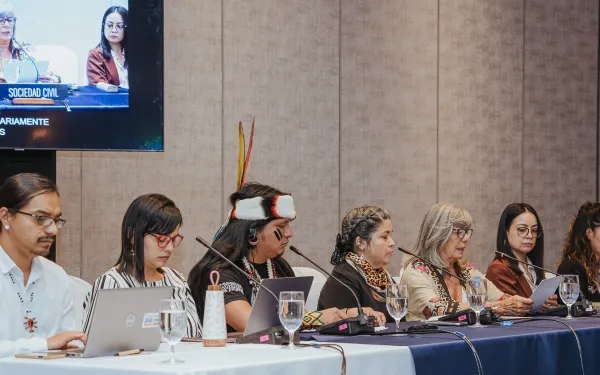
When environmental defenders in Latin America take the stage at key international forums
By Víctor Quintanilla and Mayela Sánchez García* The voices of communities across Latin America and the Caribbean are powerful, especially when they call for environmental protection amid multiple, growing threats.Often, this demand falls on deaf ears among those who deliver justice at the national or local level.This trend makes it necessary to turn to complementary avenues of international justice.One such platform is provided by the Inter-American Commission on Human Rights (IACHR), an international body with a critical mandate: the promotion and protection of human rights on the continent.As an organization driven by the mission of guaranteeing the right to a healthy environment in Latin America and the Caribbean, the IACHR serves as a key forum for highlighting environmental issues that affect human rights in the region. We do this in alliance with communities and partner organizations. This allows the voices of local communities to be heard by an international body capable of urging the continent’s governments to change their practices and strengthen their standards for protecting populations affected by environmental degradation. Testimonies calling for a responsible phase-out of fossil fuelsBringing the voices of communities before the IACHR is also an opportunity to highlight regional patterns of risk and human rights violations.So it was on March 10, when representatives from communities in Colombia, Chile, Ecuador, and the Dominican Republic testified before the Commission about how decades of fossil fuel extraction and use have seriously violated human rights such as the right to a healthy environment, the right to health, and the right to access information and participate in environmental matters."Our region doesn’t just need to decarbonize its energy system; it also needs to address the historical injustice that our communities have endured," said Yaneth Ortiz, a representative of the Wayuu indigenous people of La Guajira, a region in northern Colombia that has been severely impacted by the operations of the Carbones del Cerrejón mining project.Their messages were heard by the IACHR during a public hearing titled "Human rights situation related to fossil fuel extraction," held as part of its 195th Period of Sessions.Community representatives also noted that, in the current context of the energy transition, these violations and risks have become more severe."Our children are getting sick in their own schools. Despite all this, there are no clear parties to blame and no structural solutions… For us, this decarbonization process [in Chile] has been insufficient and lacking in transparency," said Katta Alonso, speaking on behalf of the Chilean organization Mujeres en Zonas de Sacrificio en Resistencia. The local experiences shared highlighted the urgency of implementing just transitions, which entail the responsible phase-out of fossil fuel projects throughout the region.Meanwhile, Juan Bay, president of the Waorani Nationality of Ecuador (NAWE), stated: "We have not been consulted in a prior, free, and informed manner regarding oil exploration on our territory, nor regarding the establishment of the protected area. We now demand that our rights be respected in the process of closing down oil operations and in the environmental and social remediation."AIDA requested the hearing in collaboration with the communities and partner organizations. "We explained the risks and human rights violations faced by various communities in the context of the closure and irresponsible exit of coal, gas, and oil extraction and combustion projects," explains Rosa Peña, AIDA’s attorney.The Commission views the purpose of these hearings as gathering information on human rights issues in specific countries or regionally, in order to issue recommendations to governments aimed at ensuring respect for and the enjoyment of human rights.Before each session, it receives a huge number of requests to address various human rights issues across the continent during the hearings—issues that go beyond just the environment or climate."This is how we got here, after convincing the Commission of the importance of approaching this issue from a human rights perspective and of listening to the communities," says Liliana Ávila, director of AIDA’s Human Rights and Environment Program.Over the years, AIDA has developed significant expertise and leadership in successfully bringing cases before the Inter-American Commission on Human Rights (IACHR) and the Inter-American Court of Human Rights—the two pillars of the Inter-American Human Rights System, a mechanism of the Organization of American States—to achieve regional impact in the protection of a healthy environment, in partnership with local communities. Voices against the damage caused by illegal miningAlso, during the 195th Period of Sessions of the IACHR, we participated in the ex officio hearing titled "Impacts of illegal mining on economic, social, cultural and environmental rights," convened by the Commission itself.Our contribution joined other voices in highlighting why this activity is now one of the most alarming phenomena on the continent, given its severe impact on ecosystems and human rights. In Latin America, gold mining fuels illegal extraction that violates numerous rights, primarily those of indigenous peoples and traditional communities. At the hearing, we proposed relevant measures to the Commission to address the issue from a regional perspective.At AIDA, we seek to amplify the strength of local communities and their people, bringing their wisdom to decision-making forums with the potential to transform realities and build a better future for the continent. *Víctor Quintanilla-Sangüeza is AIDA’s Content Coordinator, and Mayela Sánchez García is the organization’s digital community specialist.
Read more