
Project
Shutterstock.
Pollution of the Motagua River in Guatemala: The Poqomam Maya people’s quest for environmental justice
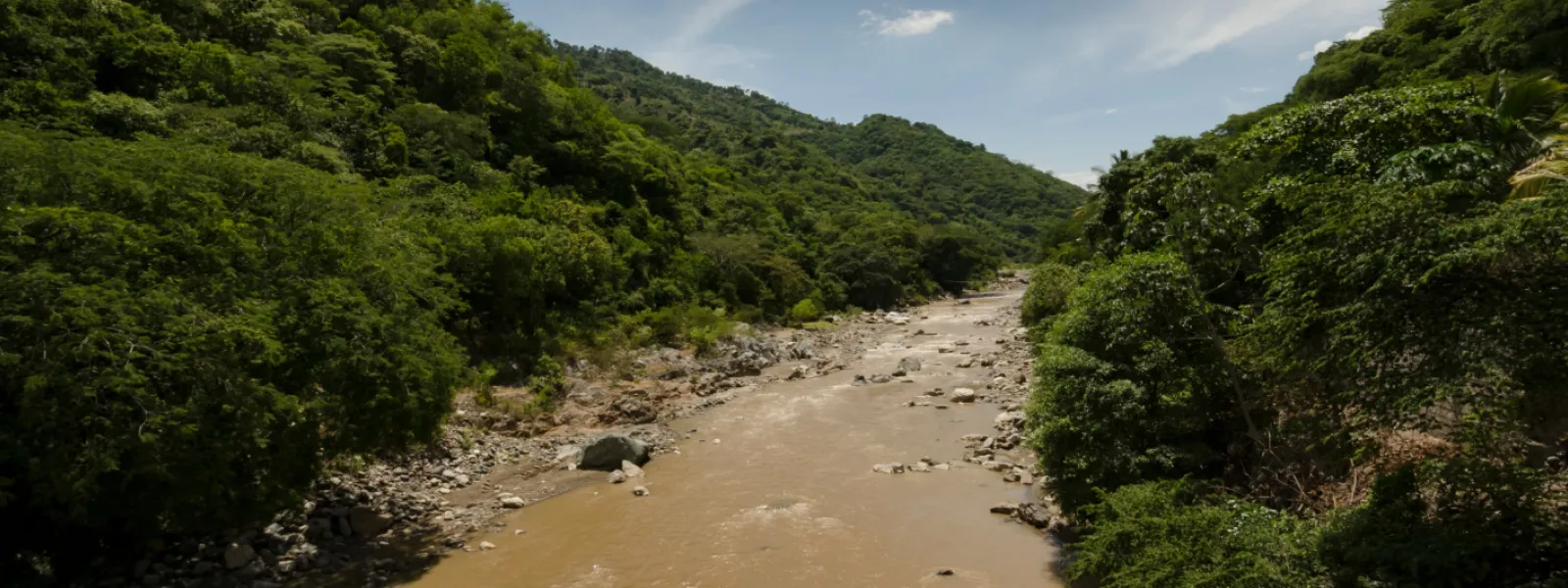
The Motagua River basin—Guatemala’s largest and most important river—is severely polluted with wastewater, solid waste, and other types of debris.
This is a cross-border issue because the Motagua’s polluted waters flow into the Caribbean Sea, reach the coast of Honduras, and threaten the Mesoamerican Reef System.
For decades, this has violated the rights to health, water, development, and a healthy environment of all the people living in the river basin.
In June 2025, the Poqomam Maya community of Santa Cruz Chinautla—supported by AIDA, the Indigenous Peoples’ Law Firm, and allied organizations—achieved an unprecedented legal victory to halt degradation in the basin. In response to the lawsuit it filed, a Guatemalan court ordered the municipality of Chinautla to comply with a series of obligations to curb the pollution of the area’s rivers and soil.
The government's response to the ruling has so far been limited to technical working group meetings. Meanwhile, the community continues to work toward the proper implementation of the ruling and to take other actions to defend its territory and its rights.
Background
The Motagua River, which is 486 km long, flows through 96 municipalities and 14 departments in Guatemala. It originates in Quiché, a department located in the northwest, and empties into the Caribbean Sea.
Polluting activities occur throughout the entire basin, including sub-basins and micro-basins. The largest volume of pollution comes from Guatemala City, the country’s capital, and is carried by the waters of the Las Vacas River, which in turn receives a large amount of waste from the Chinautla River.
The Chinautla River, which flows through the municipality of the same name, carries solid waste from a landfill located in Zone 3 of the capital—where trash from at least 14 municipalities in the department of Guatemala is dumped—as well as sewage generated by some 500,000 people living in the northern part of the capital, which undergoes no prior treatment.
Other sources of pollution include the numerous illegal dumps in the municipality of Chinautla, the waste that private vehicles and garbage trucks dump along the banks of its rivers, as well as the sand-mining companies—which began setting up operations in the area between 1996 and 1997—whose activities weaken the rivers' basins, causing solid waste to be more easily carried away by the river currents.
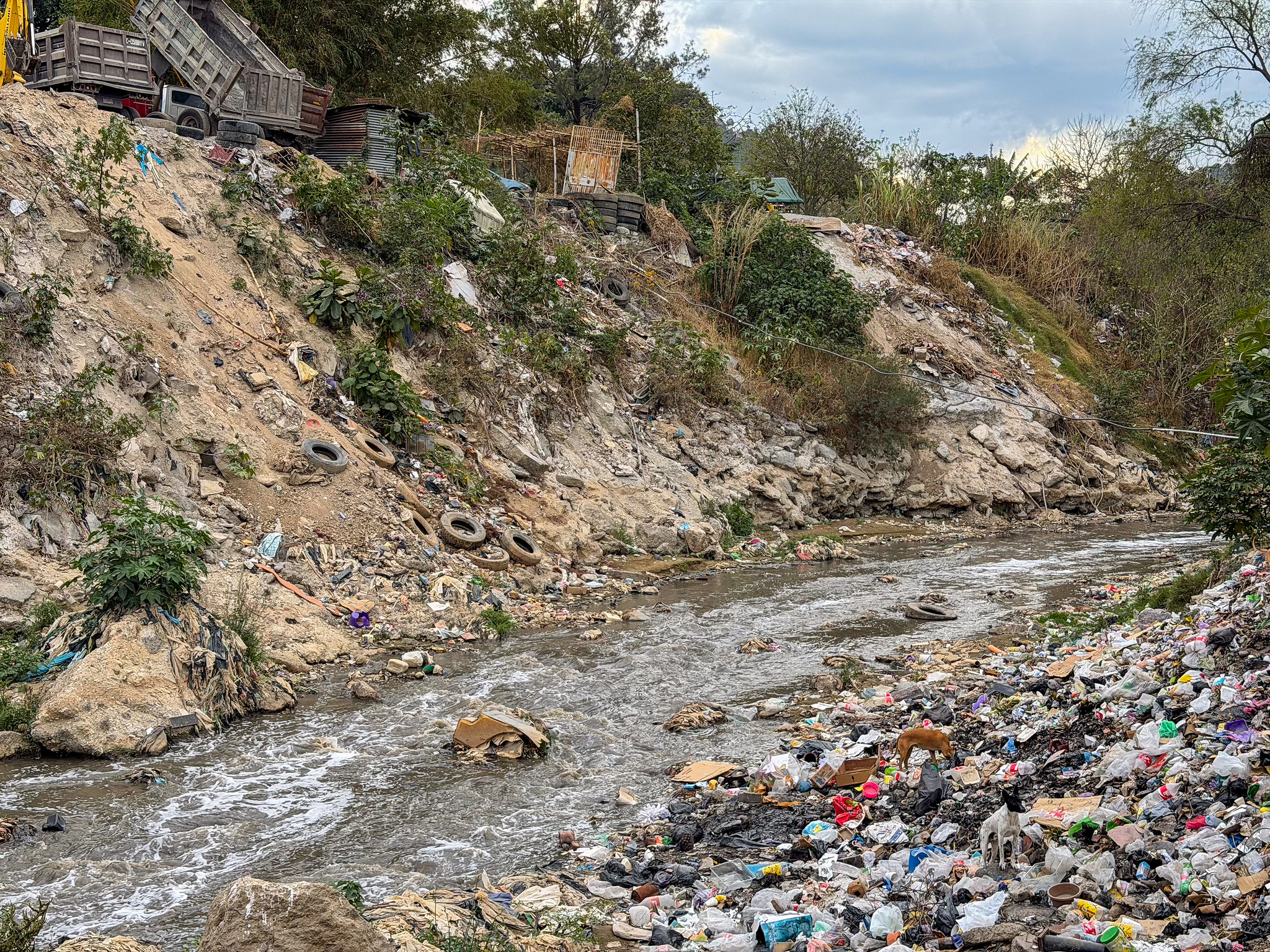
Photo: Mayela Sánchez García.
The situation extends beyond national borders. Every year, the Motagua River discharges some 20,000 metric tons of plastic into the Caribbean Sea, making it one of the rivers that contributes the most plastic pollution to the ocean worldwide, according to estimates contained in a 2025 report by the Inter-American Commission on Human Rights (IACHR).
The river flows into the Mesoamerican Reef at its mouth, so pollution also threatens to degrade one of the largest and most biodiverse transboundary reefs on the planet, which spans the territorial waters of Belize, Guatemala, Honduras, and Mexico.
In addition, the contaminated water reaches the coast of Honduras and spreads into Amatique Bay, located along the eastern coast of Guatemala, affecting the Caribbean Sea.
The roots of this chronic, cross-border problem are structural. Data from the Integrated Environmental Management of the Motagua River Basin project, funded by the United Nations Development Program (UNDP), show that in Guatemala, 66% of municipal solid waste is not collected, and there is no guarantee that the remaining 34% is disposed of properly. Furthermore, of all landfills nationwide, 88.32% are illegal or lack municipal authorization.
In other words, the core issues that need to be addressed are the mismanagement of solid waste and water resources in Guatemala; noncompliance with existing regulations on wastewater discharge and the disposal and treatment of solid waste and residues; and the lack of a water law.
The Poqomam Maya people's quest for justice
The rivers of Santa Cruz Chinautla, a community of the Poqomam Maya people located just twelve kilometers from Guatemala City, have become conduits of pollution that are degrading the Motagua River.
For decades, the local population has seen its health and livelihoods—including pottery, one of the main economic activities and a source of identity—damaged due to the lack of waste management in the municipality of Chinautla and the urban area of the country’s capital, as well as the activities of sand-mining companies.
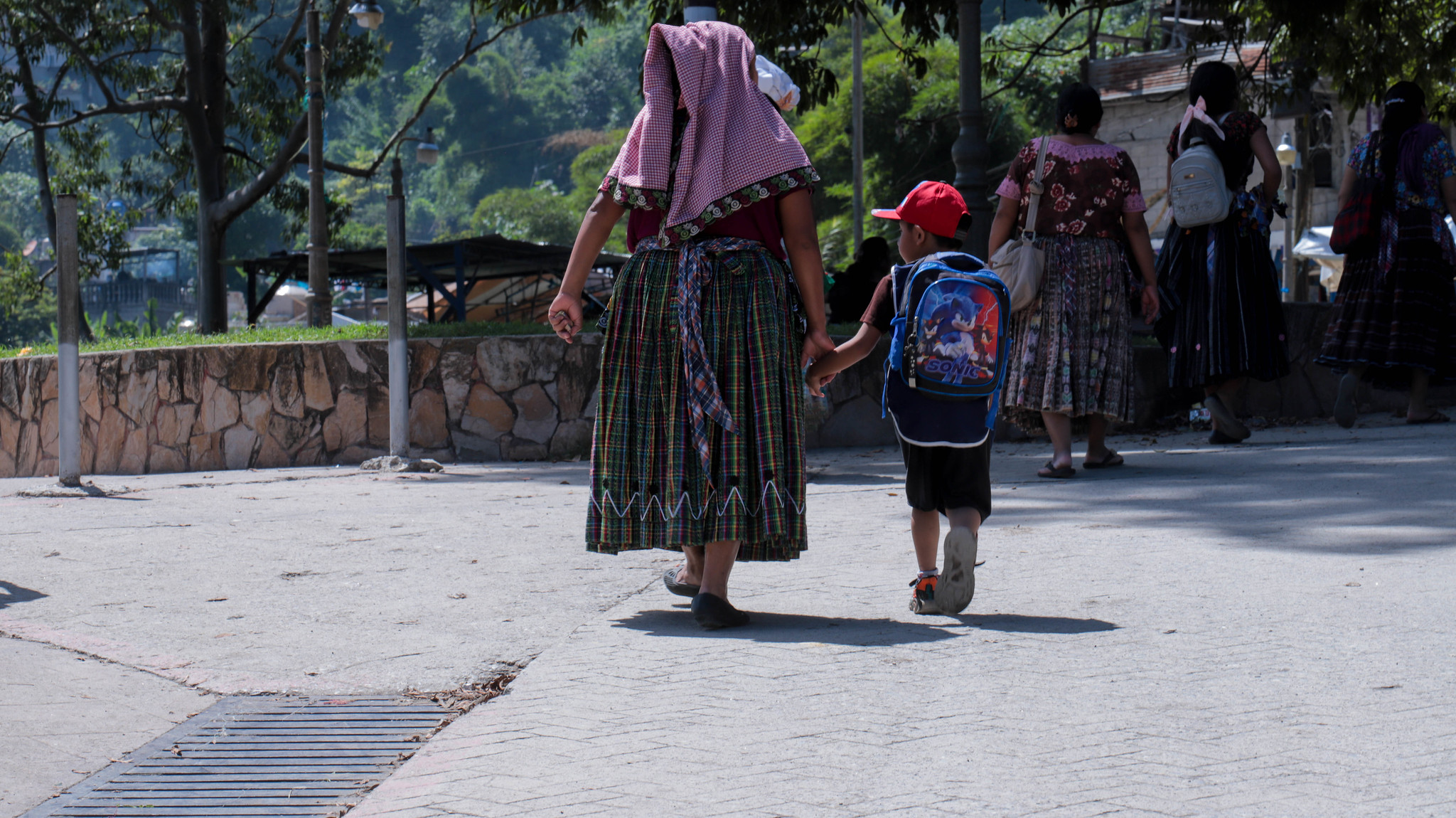
Photo: Mario Winter.
Voices for the Motagua River: Olga Vázquez.
Voices for the Motagua River: Nazario Pascual.
In early 2000, the Maya community organized to stop sand mining on their territory. At that time, the companies held mining permits that remained valid through 2021 and 2022. And although the permits expired, some companies continued to operate after requesting extensions. In June 2022, the indigenous authorities of the Poqomam people began a sit-in protest in front of the Piedrinera San Luis company, which they maintained for four years.
In July 2024, the Special Rapporteur on Economic, Social, Cultural, and Environmental Rights of the IACHR visited Santa Cruz Chinautla. During his visit, traditional authorities and community members spoke about the environmental, water-related, health, economic, and cultural impacts of the pollution in their rivers.
That same year, in October, the community—with support from AIDA, the Indigenous Peoples’ Law Firm, and partner organizations—filed a lawsuit (petition for amparo) against the municipality of Chinautla over its failure to take measures to address the contamination of its rivers and soil caused by improper solid waste management and the existence of illegal landfills.
AIDA’s scientific team, together with local residents and community authorities, collected key information on illegal landfills in the area. This community science initiative supported the litigation by highlighting the severity of the pollution, demonstrating the ongoing use of such practices, and providing evidence of the municipal authorities’ failure to fulfill their legal obligations regarding waste management.
Learn more about this community science initiative.
In June 2025, the Poqomam community won the support of the Guatemalan justice system when a constitutional court ordered the municipality of Chinautla to effectively address the claims in the lawsuit aimed at stopping the pollution of the rivers and soil in Santa Cruz Chinautla.
This is the first time a Guatemalan court has recognized a community's right to a healthy environment and its central role in finding solutions.
Find out the details of the legal victory.
Current situation
Since the ruling was issued, the municipality of Chinautla has held a series of “technical working groups” with representatives from the central government, civil society, and the community. A smaller group of technical experts was later created to develop a work plan with clear goals. Several months have passed without the municipality convening these working groups.
Furthermore, in December 2025, the IACHR noted in its report Human Rights Situation in Guatemala that the Motagua River basin is facing a severe pollution crisis that has had profound impacts on biodiversity and has resulted in systematic violations of the human rights of local communities, including the Maya Poqomam people.
And in May 2026, the Ministry of the Environment and Natural Resources revoked the license of the sand mining company Piedrinera San Luis for "failure to comply with environmental commitments."
AIDA continues to monitor the implementation of the court ruling to ensure the right to a healthy environment for the Poqomam Maya community and all those living in the Motagua River basin. Meanwhile, the residents of Santa Cruz Chinautla remain organized and mobilized to improve their environment and defend their rights.
Related projects

Neither AngloGold Ashanti nor Mineros S.A.: Cajamarca is a municipality free of large-scale mining
Even if the companies change, the decision of Cajamarca's citizens remains the same: to defend their territory against large-scale mining. Bogotá / Cajamarca. Following the announcement by Mineros S.A. that it has signed an agreement to acquire 100% of the shares of AngloGold Ashanti Colombia S.A.S. in the La Colosa mining project in Cajamarca, the Legal Coalition for the Defense of Cajamarca (1) reiterates a clear message: Cajamarca has already decided, and its territory must remain free of large-scale mining. For more than a decade, we have been engaged in mobilization, legal defense, and advocacy efforts to protect Cajamarca from the La Colosa mining project promoted by AngloGold Ashanti. Thanks to this collective defense of the territory and environmental regulations, exploration activities for this project are currently suspended. Since 2017, the citizens of Cajamarca have spoken out emphatically through a public consultation, in which 98% of voters rejected mining activities in the municipality. This result has full legal effect, as confirmed by two Colombian judges, and represented a milestone in participation and environmental democracy in Colombia, as well as a clear expression of the territory's desire to protect water, the municipality's agricultural vocation, and the region's strategic ecosystems. In this context, the change of ownership of the project from AngloGold Ashanti to Mineros S.A. does not change the reality of the territory or the position of the communities. Although the companies may change, Cajamarca's decision remains the same: to defend its territory against large-scale mining. Furthermore, neither of these two companies has the necessary environmental permits to reactivate the La Colosa project, yet they insist on disregarding the community's autonomous and legitimate decisions. The announcement of this transaction comes just days after the Cajamarca City Council approved a municipal agreement initiated by citizens that declared 33 properties belonging to AngloGold Ashanti as areas of public utility and social interest. This decision reaffirms the municipality's institutional commitment to protecting the territory. The organizations that have signed this statement reiterate that Cajamarca is not and will not be a mining territory. Whether it be AngloGold, Mineros S.A., or any other company, large-scale mining has no place in the municipality. We will continue to take all necessary social, legal, and political actions to defend the territory and ensure that Cajamarca's decision is respected. #LaConsultaSeRespeta (1) The Coalition is made up of the Cajamarca Youth Socio-Environmental Collective (COSAJUCA), the SIEMBRA Socio-Legal Center, the Mining Studies Research Group at the University of Antioquia, the Inter-American Association for Environmental Defense (AIDA), the Public Action Group Legal Clinic (GAP) of the Faculty of Jurisprudence of the University of Rosario, the Legal Clinic on Law and Territory of the Javeriana University, the Colombian Commission of Jurists (CCJ), and Sibelys Mejía Rodríguez (independent researcher).Press contactsRobinson Mejía | COSAJUCA | [email protected] | 300 218 36 41 Sara Sofia Moreno | SIEMBRA | [email protected] | 300 568 33 33 | Lorena Zárate | AIDA | [email protected] | +52 553902 7481Laura Becerra | CCJ | [email protected] | 313 475 5815
Read more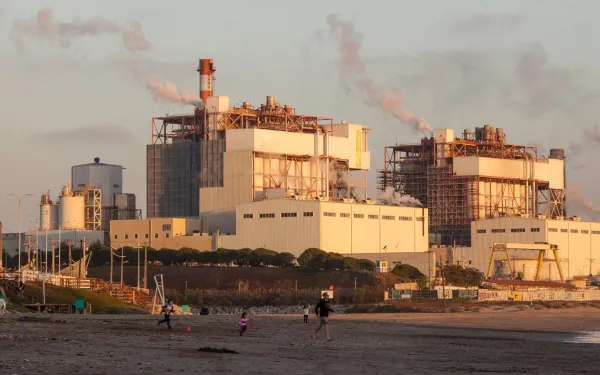
Organizations and communities call on the IACHR to take action against human rights violations caused by fossil fuel projects
At a public hearing, they highlighted the impacts and risks to Latin American communities resulting from decades of extraction, commercialization, and use of coal, oil, and gas, as well as from irresponsible closure and exit of projects in the context of the energy transition.Guatemala City. Representatives of organizations and communities in Latin America called on the Inter-American Commission on Human Rights (IACHR) to address human rights violations resulting from the operation and closure of fossil fuel projects (coal, gas, and oil) in the region.They did so at a public hearing in which—based on emblematic cases in Colombia, Chile, Ecuador, and the Dominican Republic—they presented evidence to the Commission of human rights violations and risks of violations resulting from decades of extraction, commercialization, and use of fossil fuels without complying with socio-environmental standards. They also warned of violations already occurring in the irresponsible closure and exit from projects within the framework of energy transition policies.The cases presented included the Carbones de Cerrejón project in La Guajira, northern Colombia, which is the largest open-pit coal mine in Latin America; the Punta Catalina Thermoelectric Power Plant, located in the southern region of the Dominican Republic and fueled by Colombian coal; the Quintero and Puchuncaví Thermoelectric Complex, located in a bay in Chile recognized as an environmental sacrifice zone and where 14 polluting industries converge; the Norgener thermoelectric power plant in Tocopilla, Chile, whose closure process included the forced and accelerated burning of 94,000 tons of coal that were in storage; and oil exploitation in the Amazon, including that installed in the Yasuní National Park in Ecuador, declared a Biosphere Reserve by UNESCO.The hearing—held during the 195th Session of the IACHR—was granted to the Interamerican Association for Environmental Defense (AIDA), the Waorani Nationality (Ecuador), the La Guajira le Habla al País Platform (Colombia) (1), communities of Tocopilla and the association Mujeres de Zona de Sacrificio Quintero-Puchuncaví en Resistencia (Chile), and the National Committee to Combat Climate Change (Dominican Republic).During the session, organizations and communities also presented information demonstrating that Latin America lacks regulatory frameworks to ensure the closure and exit of fossil fuel projects with a human rights approach. In this context, and based on the cases described and the trends identified, they requested that the Commission:Establish standards to guide States in fulfilling their obligations to respect and guarantee human rights throughout the entire project life cycle, ensuring early identification of impacts, prevention of harm, definition of responsibilities, and reparation for damages.Define standards and criteria to guide States in adopting preventive, corrective, and impact mitigation measures in relation to human rights, including comprehensive closure plans, the safe dismantling of infrastructure, environmental remediation, and the monitoring of risks to health and ecosystems.Promote regulatory frameworks that require companies to plan for project closure, including establishing responsibilities for environmental and social liabilities, financial guarantees for closure, and mechanisms to prevent the abandonment of operations or the transfer of assets without fulfilling closure obligations.Incorporate differentiated approaches that address the disproportionate impacts on indigenous peoples, Afro-descendant communities, rural communities, and other groups in vulnerable situations.Strengthen guarantees of access to information, effective participation, and access to environmental justice throughout the project cycle, ensuring that affected communities participate in an informed manner in the design, implementation, and oversight of closure and transition processes.Guide States in the creation of oversight, monitoring, and accountability mechanisms to monitor operational, closure, and post-closure processes; define corporate and State responsibilities; and prevent asset transfers or other corporate restructuring as a means of evading responsibilities.Urge States to anticipate and manage the social, economic, cultural, and environmental risks of the gradual replacement of fossil fuels, including measures to address the economic dependence of territories, protect communities' livelihoods, and avoid the impacts of abrupt or poorly managed closure processes.Organizations and communities argued before the IACHR that there is a growing regional risk that the closure and exit processes of fossil fuel projects will be carried out irresponsibly. In several cases, companies abandon operations, cede or transfer assets, return concessions, and cease operations without ensuring the proper management of the socio-environmental impacts generated over many years. These practices can leave impacts unaddressed or unrepaired, while blurring the responsibilities of public and private actors, thereby deepening the risks to human rights and territories.They emphasized that Amazonian states must adopt regional cooperation measures and guarantee the comprehensive protection of the Amazon—one of the most important ecosystems on the planet due to its biodiversity and role in climate regulation—in the face of the closure and exit of hydrocarbon extraction projects. (1) The platform is made up of Wayuu indigenous communities and Afro-descendants from La Guajira, the Center for Research and Popular Education Program for Peace (Cinep/PPP), Censat Agua Viva, and the José Alvear Restrepo Lawyers' Collective (CAJAR).Press contactLorena Zárate | AIDA | [email protected] | +52 553902 7481
Read more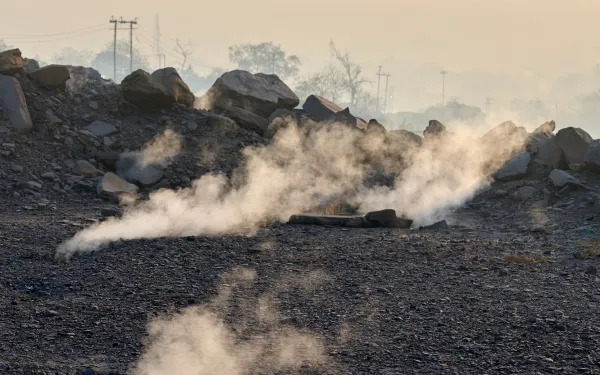
Coal, a dirty and obsolete fuel
Historically, coal has been identified as an important source of non-renewable energy. It was the fuel that powered the Industrial Revolution, transforming the world's production methods, and for a long time, it was the main fuel for transportation, electricity generation, and heating.But it is time to leave that era behind. Today, we know that coal is the fossil fuel that generates the highest carbon dioxide (CO2) emissions, one of the main greenhouse gases driving global warming, with effects such as melting glaciers and rising sea levels.In addition to climate and environmental arguments, there are economic, political, and human rights reasons to end the extraction and burning of this fuel.To better understand why coal is so polluting and what its impacts are on the environment and health, we have taken a closer look. Getting to know coalCoal is a rock formed from plant remains that were buried in layers of sediment and did not decompose due to the absence of oxygen.Over millions of years, through geological processes, this organic matter was exposed to high temperatures and pressures. The result was a material composed mainly of carbon.The energy in coal is released during combustion. When burned, coal generates heat. In thermoelectric plants, this heat is used to generate steam and produce electricity.When coal is burned to produce heat or electricity, it releases large amounts of carbon dioxide and, in smaller amounts, methane and nitrous oxide into the atmosphere.All these gases harm the environment and human health. Why is it so polluting?Coal has an impact from the moment it is extracted, as open-pit coal mining involves excavating and removing large amounts of earth to reach the coal-rich layers.This means destroying landscapes, razing vegetation and animals, and even causing the forced displacement of populations.Coal mining also pollutes water and soil at extraction sites, both through mining the mineral and through the waste it generates.But the chain of impacts does not end there. During coal combustion, large amounts of CO2 are generated, the main gas responsible for global warming.At the same time, other gases are released during its extraction, handling, and combustion:Methane, which has a global warming potential up to 30 times greater than CO2 over a 100-year period.Nitrous oxide, whose global warming potential over a 100-year period is up to 273, and whose lifetime in the atmosphere extends up to 109 years. In addition to greenhouse gases, coal combustion also releases other pollutants, such as nitrogen oxides, sulfur dioxide, and black carbon (soot), which affect air quality and have indirect effects on the climate, including altering precipitation patterns and contributing to acid rain. What damage does it cause to health?Despite the known environmental and health impacts of coal, for many economies it remains a reliable and cheap energy source.Following the decline in coal consumption during the COVID-19 pandemic, global demand for coal has grown by more than 1.2 billion tons since 2020, according to the International Energy Agency's Coal 2024 analysis.Despite increased electricity generation from renewable sources, major consumers such as China and India continue to rely on coal.In Latin America, the future of coal is uncertain. On the one hand, the region continues to extract coal for export or for burning to generate energy. The most emblematic case is Colombia, the world's fifth-largest coal exporter.On the other hand, there are efforts towards decarbonization, such as in Chile, where coal-fired power generation has caused serious health and environmental impacts in so-called “sacrifice zones.”The government proposed a plan to have the entire National Electric System generate 100% clean energy by 2050. However, the recent accelerated burning of surplus coal at a thermoelectric plant, as part of its closure process, has put the spotlight on how this decarbonization is being carried out.As a coal-producing and consuming region, Latin America has a share of responsibility in global efforts to curb coal mining and burning and instead promote energy systems based on non-conventional renewable sources that are sustainable over time and respectful of the environment and people.Ending the coal era is possible. It is time to do so.
Read more