
Project
Shutterstock.
Pollution of the Motagua River in Guatemala: The Poqomam Maya people’s quest for environmental justice
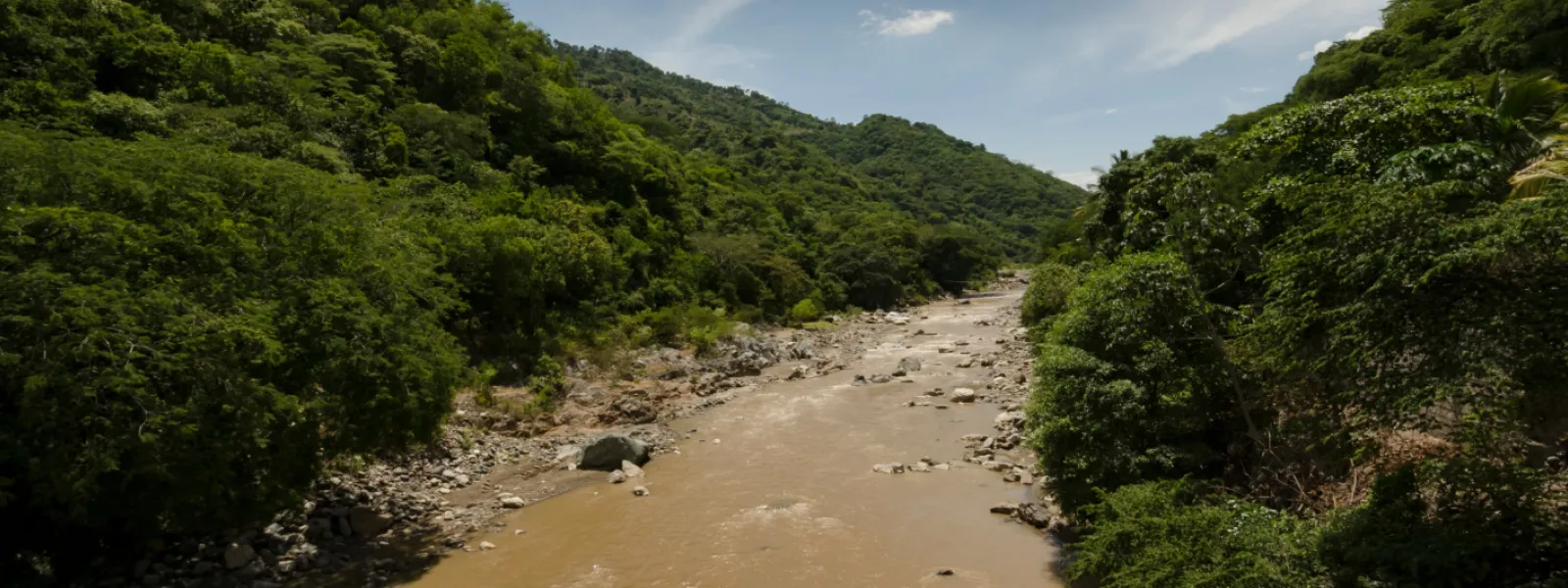
The Motagua River basin—Guatemala’s largest and most important river—is severely polluted with wastewater, solid waste, and other types of debris.
This is a cross-border issue because the Motagua’s polluted waters flow into the Caribbean Sea, reach the coast of Honduras, and threaten the Mesoamerican Reef System.
For decades, this has violated the rights to health, water, development, and a healthy environment of all the people living in the river basin.
In June 2025, the Poqomam Maya community of Santa Cruz Chinautla—supported by AIDA, the Indigenous Peoples’ Law Firm, and allied organizations—achieved an unprecedented legal victory to halt degradation in the basin. In response to the lawsuit it filed, a Guatemalan court ordered the municipality of Chinautla to comply with a series of obligations to curb the pollution of the area’s rivers and soil.
The government's response to the ruling has so far been limited to technical working group meetings. Meanwhile, the community continues to work toward the proper implementation of the ruling and to take other actions to defend its territory and its rights.
Background
The Motagua River, which is 486 km long, flows through 96 municipalities and 14 departments in Guatemala. It originates in Quiché, a department located in the northwest, and empties into the Caribbean Sea.
Polluting activities occur throughout the entire basin, including sub-basins and micro-basins. The largest volume of pollution comes from Guatemala City, the country’s capital, and is carried by the waters of the Las Vacas River, which in turn receives a large amount of waste from the Chinautla River.
The Chinautla River, which flows through the municipality of the same name, carries solid waste from a landfill located in Zone 3 of the capital—where trash from at least 14 municipalities in the department of Guatemala is dumped—as well as sewage generated by some 500,000 people living in the northern part of the capital, which undergoes no prior treatment.
Other sources of pollution include the numerous illegal dumps in the municipality of Chinautla, the waste that private vehicles and garbage trucks dump along the banks of its rivers, as well as the sand-mining companies—which began setting up operations in the area between 1996 and 1997—whose activities weaken the rivers' basins, causing solid waste to be more easily carried away by the river currents.
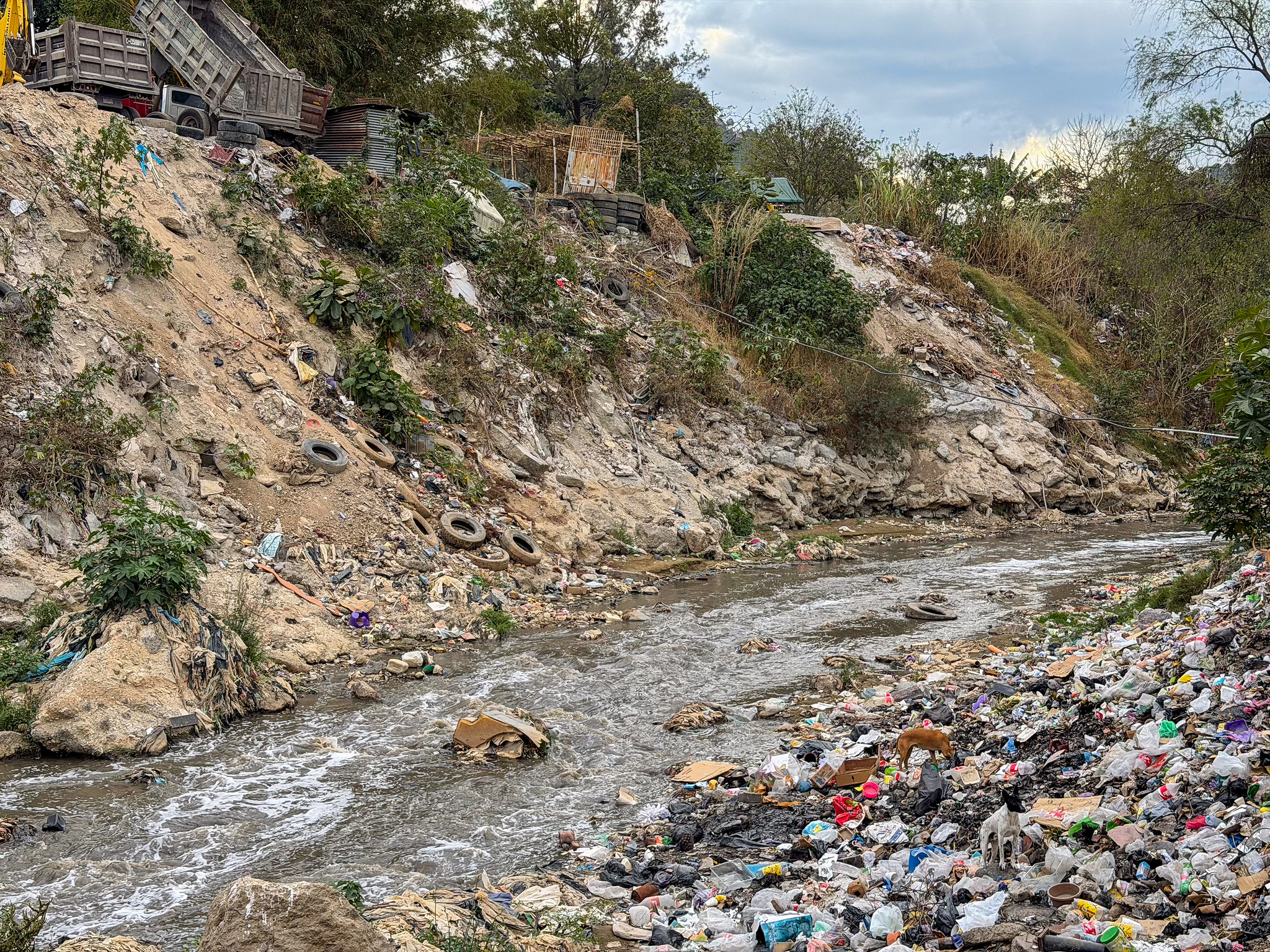
Photo: Mayela Sánchez García.
The situation extends beyond national borders. Every year, the Motagua River discharges some 20,000 metric tons of plastic into the Caribbean Sea, making it one of the rivers that contributes the most plastic pollution to the ocean worldwide, according to estimates contained in a 2025 report by the Inter-American Commission on Human Rights (IACHR).
The river flows into the Mesoamerican Reef at its mouth, so pollution also threatens to degrade one of the largest and most biodiverse transboundary reefs on the planet, which spans the territorial waters of Belize, Guatemala, Honduras, and Mexico.
In addition, the contaminated water reaches the coast of Honduras and spreads into Amatique Bay, located along the eastern coast of Guatemala, affecting the Caribbean Sea.
The roots of this chronic, cross-border problem are structural. Data from the Integrated Environmental Management of the Motagua River Basin project, funded by the United Nations Development Program (UNDP), show that in Guatemala, 66% of municipal solid waste is not collected, and there is no guarantee that the remaining 34% is disposed of properly. Furthermore, of all landfills nationwide, 88.32% are illegal or lack municipal authorization.
In other words, the core issues that need to be addressed are the mismanagement of solid waste and water resources in Guatemala; noncompliance with existing regulations on wastewater discharge and the disposal and treatment of solid waste and residues; and the lack of a water law.
The Poqomam Maya people's quest for justice
The rivers of Santa Cruz Chinautla, a community of the Poqomam Maya people located just twelve kilometers from Guatemala City, have become conduits of pollution that are degrading the Motagua River.
For decades, the local population has seen its health and livelihoods—including pottery, one of the main economic activities and a source of identity—damaged due to the lack of waste management in the municipality of Chinautla and the urban area of the country’s capital, as well as the activities of sand-mining companies.
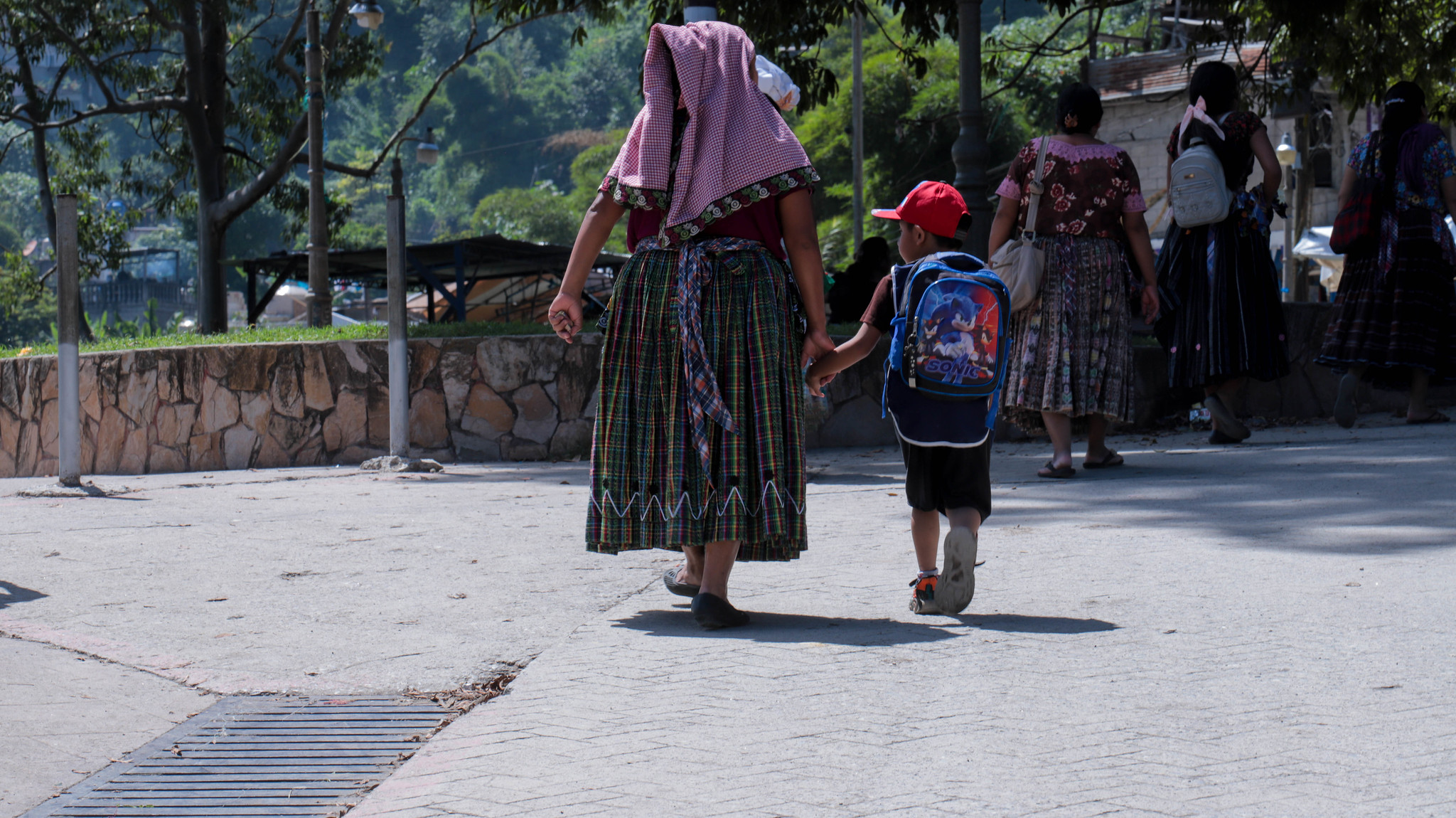
Photo: Mario Winter.
Voices for the Motagua River: Olga Vázquez.
Voices for the Motagua River: Nazario Pascual.
In early 2000, the Maya community organized to stop sand mining on their territory. At that time, the companies held mining permits that remained valid through 2021 and 2022. And although the permits expired, some companies continued to operate after requesting extensions. In June 2022, the indigenous authorities of the Poqomam people began a sit-in protest in front of the Piedrinera San Luis company, which they maintained for four years.
In July 2024, the Special Rapporteur on Economic, Social, Cultural, and Environmental Rights of the IACHR visited Santa Cruz Chinautla. During his visit, traditional authorities and community members spoke about the environmental, water-related, health, economic, and cultural impacts of the pollution in their rivers.
That same year, in October, the community—with support from AIDA, the Indigenous Peoples’ Law Firm, and partner organizations—filed a lawsuit (petition for amparo) against the municipality of Chinautla over its failure to take measures to address the contamination of its rivers and soil caused by improper solid waste management and the existence of illegal landfills.
AIDA’s scientific team, together with local residents and community authorities, collected key information on illegal landfills in the area. This community science initiative supported the litigation by highlighting the severity of the pollution, demonstrating the ongoing use of such practices, and providing evidence of the municipal authorities’ failure to fulfill their legal obligations regarding waste management.
Learn more about this community science initiative.
In June 2025, the Poqomam community won the support of the Guatemalan justice system when a constitutional court ordered the municipality of Chinautla to effectively address the claims in the lawsuit aimed at stopping the pollution of the rivers and soil in Santa Cruz Chinautla.
This is the first time a Guatemalan court has recognized a community's right to a healthy environment and its central role in finding solutions.
Find out the details of the legal victory.
Current situation
Since the ruling was issued, the municipality of Chinautla has held a series of “technical working groups” with representatives from the central government, civil society, and the community. A smaller group of technical experts was later created to develop a work plan with clear goals. Several months have passed without the municipality convening these working groups.
Furthermore, in December 2025, the IACHR noted in its report Human Rights Situation in Guatemala that the Motagua River basin is facing a severe pollution crisis that has had profound impacts on biodiversity and has resulted in systematic violations of the human rights of local communities, including the Maya Poqomam people.
And in May 2026, the Ministry of the Environment and Natural Resources revoked the license of the sand mining company Piedrinera San Luis for "failure to comply with environmental commitments."
AIDA continues to monitor the implementation of the court ruling to ensure the right to a healthy environment for the Poqomam Maya community and all those living in the Motagua River basin. Meanwhile, the residents of Santa Cruz Chinautla remain organized and mobilized to improve their environment and defend their rights.
Related projects
The home stretch of COP30: Shadows, contradictions, and some glimmers of hope
The first week is over, and the political phase of the 30th United Nations Climate Change Conference (COP30) has begun in Belém do Pará, Brazil. These are the days when decisions must be made.A COP had not been held in a country where public protest is possible since 2021 — and people have certainly made their voices heard. On Saturday, a massive demonstration took place: thousands demanded climate justice in the streets, to the rhythm of Amazonian drums. There was also a theatrical "funeral for fossil fuels," reminiscent of Tim Burton, with monsters and somber widows bidding farewell to an era that must be buried.But it has not all been carnival. Indigenous leaders blocked access to the event several times and even entered the "blue zone" — the restricted area — en masse, denouncing the exploitation of their territories. Their discontent is absolute. Although COP authorities met with the group, they soon sent a letter to the Brazilian government requesting increased security and the dispersal of protests. Human rights and environmental organizations have warned about the risks of criminalizing protest and the harmful message this sends about the role of Indigenous peoples.These protests reflect communities that ended up being a minority in an event that promised to be inclusive. There was also widespread criticism of the disproportionately large number of fossil fuel industry representatives involved in negotiations — a dynamic that makes the path toward climate justice even more complicated.Finally, advisory opinions (AOs) must not be left out of this review. While not formally on the agenda, they have made a strong impact. Their central message is powerful: international cooperation is not optional — it is a legal obligation. It is no surprise, then, that the theme keeps resurfacing: in side events, in constant references by civil society and some national delegations, and in cross-cutting mentions across debates on finance, adaptation, and transition. The AOs are not merely being cited; they are being embraced. Momentum is building to fully unleash their potential at this COP and beyond. Negotiations: Four key issues in “presidential consultations”The COP Presidency acted quickly with a novel approach: to adopt the agenda without delays, it set aside four complex issues and moved them into “presidential consultations.”Article 9.1 — Public Funding from Developed Countries. The debate centers on whether climate financing should come only from public sources or also from private sources, as well as on accountability and reporting standards. Developed nations — which are legally obligated to provide this financing — are resisting, while vulnerable countries urgently need the funds to survive the climate crisis.Unilateral Climate-Related Trade Measures. These include policies such as carbon border taxes. They are considered unfair or protectionist, especially by Global South countries with less capacity to reduce emissions. Negotiations aim to prevent arbitrary trade barriers while respecting climate action.NDCs and Ambition. According to the latest NDC synthesis report, there is a significant gap between current commitments and what is required to stay below 1.5°C. Many negotiators argue that agreeing on concrete measures to close that gap is essential, but large emitters continue to resist.Synthesis of Climate Transparency Reports. Under the Paris Agreement’s Enhanced Transparency Framework, countries must periodically report emissions, actions taken, and financial support provided or received. At COP30, the debate centers on how to make these synthesis reports more robust, comprehensive, and useful. The consultations have been tense and slow. On Sunday, the Presidency published a "summary note" outlining possible pathways, and today a draft decision was released, though reactions are still forthcoming. In the coming days, closed-door sessions will continue and could lead to various outcomes. Based on the draft, it seems increasingly likely that COP30 will end with a “cover decision” consolidating all progress and addressing these complex matters. The final scope will depend heavily on what happens during the next four days. A just energy transition: Promises and a mechanism that worksThe Belém Action Mechanism for a Just Transition is a new institutional arrangement under the UNFCCC, championed by NGOs and Global South countries. Its objective is to bring order to the currently fragmented landscape of just transition efforts. The mechanism would coordinate initiatives, systematize knowledge, and provide quality financing and support — essentially evolving the Just Transition Work Program discussed since COP27.Civil society, particularly the Climate Action Network (CAN), has invested enormous effort in developing a strong decision that advances the creation of this mechanism. The G77 + China — the largest negotiating bloc of developing countries — supported this proposal, earning CAN’s "Ray of Light" award, given to actors making significant contributions to climate justice.Some developed countries presented less ambitious proposals, but even that confirms that convergence is drawing closer. Civil society remains optimistic that a concrete, positive outcome will be achieved — and ready to celebrate it. A path to phase out fossil fuelsThis story began in 2023 at COP28 in Dubai, when, for the first time, the idea of phasing out fossil fuels appeared in an official COP text.Now, at the opening of COP30, Brazilian President Luiz Inácio Lula da Silva explicitly referenced a "route" for the energy transition, while Environment Minister Marina Silva has worked to reinforce the political momentum. Meanwhile, Colombia issued a declaration referencing the advisory opinions and seeking international support for the initiative. Several industrialized countries have revived their position through the Beyond Oil and Gas Alliance.Today, 63 countries support a commitment to "Transition Away from Fossil Fuels." However, this is not yet part of the formal negotiation agenda — initiatives remain fragmented, and efforts proceed in parallel. What could emerge is a concrete action plan, a dedicated section in the final decision, or perhaps a roadmap for a future roadmap. The alternative is that it remains a voluntary coalition of willing countries pushing the idea forward. Climate finance: The central — and most complicated — issueFinance remains the central issue at this COP, and perhaps the most complex. Several deeply interconnected discussions are underway:Article 9.1: Developing countries insist that public financing from developed nations is a binding obligation that cannot be replaced by private investment.Adaptation: A strong consensus is forming to triple the adaptation finance goal (to about USD 120 billion annually) while improving transparency and direct access to funds.The Baku–Belém Roadmap: This initiative seeks to scale up global climate finance to USD 1.3 trillion per year by 2035 through a combination of public, multilateral, and private flows.Loss and Damage Facility: The fund is technically operational but not fully capitalized. New contributions from Spain and Germany are welcome — but insufficient to meet global needs.Tropical Forests Forever Facility: Brazil has proposed this as an “investment model” for tropical forest countries. Civil society has expressed serious concerns: the model depends heavily on volatile market investments and lacks safeguards to ensure the protection of local communities and ecosystem integrity. Adaptation progress, but under the shadow of chronic underfundingDiscussions on adaptation are unfolding on two parallel fronts:Indicators for the Global Goal on Adaptation. Ten years after the Paris Agreement, there is still no consensus on how to track adaptation progress. A working group narrowed approximately 9,000 proposed indicators down to about 100, but technical and political challenges persist. Some African and Arab countries have asked to postpone final adoption until they have the financial resources and capacity to implement them. A prevailing sentiment is: "no indicators without funding" — adopting metrics without support would repeat past mistakes.Adaptation finance. Although adaptation financing is not formally included within the Global Goal on Adaptation, the two issues are inseparable. Without adequate financial support, indicators alone will be ineffective. Following the agreement on a new climate finance goal at COP29, the current debate focuses on aligning that goal with adaptation needs — especially through technology transfer, capacity building, and direct-access funding channels. Substantial gaps remain, and negotiations continue to hinge on how to categorize financial flows (private vs. public, domestic vs. international).
Read more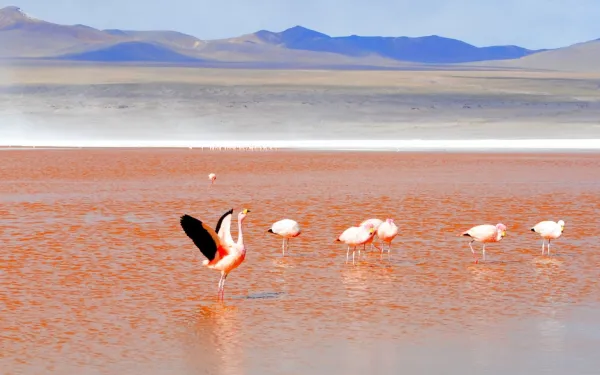
Justice for Andean Wetlands and Indigenous Peoples in Climate Action
The growing global demand for transition minerals—including lithium, copper, and nickel—driven by the current energy transition model, but also by the expansion of the digital economy, data infrastructure, and the military and aerospace industries, is causing irreversible ecological damage and violating fundamental human rights across the territories of the Global South. Latin America is the most biodiverse region on the planet and one of the most culturally diverse regions in the world. It is home to numerous Indigenous peoples who inhabit and safeguard these territories.At the same time, the region holds significant mineral deposits, placing it at the center of the growing global interest in mineral extraction. This demand intersects with fragile ecosystems, unique biodiversity and the territories of traditional and Indigenous communities, including the Amazon and the high Andean wetlands, which are crucial for climate adaptation due to their role in water regulation, and in mitigation, as they act as carbon sinks.Intensive mining in these ecosystems exacerbates climate vulnerability and fosters socio-environmental conflicts, compromising the ecological and cultural integrity of these ecosystems and communities. The push to expand extraction contradicts multilateral environmental protection frameworks and the climate and biodiversity commitments adopted by the States Parties. This trend jeopardizes the possibility of a just and equitable transition, reproducing the same patterns of inequality and climate harm that current policies claim to overcome. In this context, the Alliance for Andean Wetlands calls on States Parties to the UNFCCC to ensure: 1. Human rights and justice must be at the center of any transition and of all strategies for climate change adaptation and mitigation, including the rights of communities living in territories where the transition minerals are located.Human rights are essential to ensuring a just, equitable and people-centred process. States must guarantee the right to self-determination of Indigenous peoples, recognized worldwide as guardians of natural systems. This must encompass their right to define their own development priorities and to exercise Free, Prior and Informed Consent (FPIC), as well as the unequivocal obligation of States to respect their decisions, particularly their right to say “no” to projects that threaten their integrity and that of their territories. States must also ensure protection of environmental defenders, and guarantee public access to information, participation and justice on decisions about transitions that might affect the environment and human rights. These guarantees are crucial for the case of so-called transition minerals, like lithium and copper, found in the high Andean wetlands, ecosystems that are fundamental to life, ecological and climate balance, and the livelihoods of the communities that inhabit them. 2. Respect of planetary boundaries and the protection of the integrity of ecosystems, particularly those that play essential roles in climate adaptation and mitigation.Keeping ecosystems such as Andean wetlands, which are of high ecosystemic and cultural value, free from high-impact activities is a priority for climate and ecological justice. Because lithium mining is water mining, it drains already scarce water sources and severely affects surrounding ecosystems, leaving lasting environmental damage.To preserve the high Andean wetlands and their contributions on which life in the region and on the planet depends, States must fully respect and comply with international environmental law; adopt and strengthen effective protection measures (including the establishment of “no-go zones”, protected areas, ICCAs); and apply robust and science-based environmental planning instruments that seek to prevent environmental damage (i.e. environmental strategic and cumulative impact assessment, environmental impact assessment).Effective environmental protection also requires up-to-date knowledge of ecosystem structure, functioning, and contributions, developed through collective and democratic processes, integrating traditional knowledge and practices of Indigenous Peoples and local communities. Parties should systematically incorporate scientific advances and traditional knowledge into climate-related decisions, including the design and implementation of their Nationally Determined Contributions (NDCs) and related roadmaps, to ensure commitments reflect the realities of the territories they aim to protect. 3. Support for socio-ecological transitions for the Global South.Countries in the Global South need enough fiscal and policy space to devise pathways out of fossil fuels that do not reproduce existing asymmetries and inequalities, or further extractivism. This calls for socio-ecological transitions that protect local economies while ensuring economic diversification, energy access, and energy sufficiency, respect for biodiversity, and human rights.These transition paths should be planned, implemented and monitored in a participatory manner, ensuring intersectional, intercultural and intergenerational participation. The Just Transition Work Programme (JTWP) under the UNFCCC provides a crucial space to integrate these concerns into global climate governance. It must ensure that the transition towards decarbonization also addresses material demand, territorial justice, and the rights of affected communities. Incorporating the realities of mineral extraction and socio-ecological transitions from the Global South within this programme is essential to achieve a truly just transition. 4. Traceability of the projections and uses of mineral demand and commitment of Global North countries to rapidly adopt policies aimed at reducing the consumption of primary minerals and energy.The current production and consumption model of industrialized countries disproportionately affects territories in the Global South by exacerbating environmental degradation and the violation of human rights, deepening North– South inequalities. In order to tackle the triple planetary crisis, unsustainable demand for raw materials and energy has to be addressed by binding targets on demand reduction that take into account planetary boundaries. Parties have the opportunity to include them in policy instruments such as Nationally Determined Contributions (NDC) and Long Term Strategies (LTS).These must be implemented through sufficiency and efficiency measures, as well as global and fair circular economy policies. This should involve considering alternatives to mobility beyond individual EVs. 5. Adequate, quality, accessible and additional financial and technical support, based on needs and priorities, so that the energy and socio-ecological transitions of the Global South are truly just and equitable.Such financing must be sustainable in time and of quality, that is, non-debt-creating and aligned with countries’ priorities, and accessible to enable progressive and sustained climate action. It should also address opportunities and conditions for instruments that foster fair transitions, including debt relief mechanisms and debt swaps. Furthermore, it remains important to discourage the use of trade regimes (including ISDS mechanisms) as pressure tools against countries in the Global South when they seek to regulate their mineral resources and establish no-go zones and other safeguards to protect human rights and environmental integrity. Download the document
Read more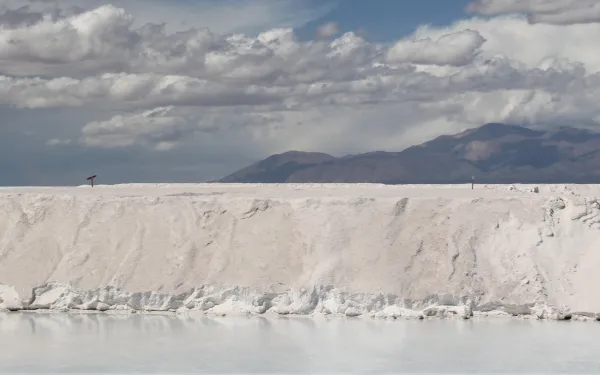
Call for a paradigm shift in EU Raw Materials Policies from a Latin American perspective
The growing global demand for transition minerals—including lithium, copper, and nickel—driven by the current energy transition model, but also by the expansion of the digital economy, data infrastructure, and the military and aerospace industries, is causing irreversible ecological damage and violating fundamental human rights across the territories of the Global South. Latin America is the most biodiverse region on the planet and one of the richest regions in cultural diversity. It is home to numerous indigenous peoples who inhabit and safeguard these territories. At the same time, it contains significant mineral deposits, creating an intersection between the growing global interest in mineral extraction and fragile ecosystems and territories of traditional and indigenous communities, such as the Amazon and the Andean wetlands. This scenario exacerbates climate vulnerability and creates the conditions for the emergence of socio-environmental conflicts, compromising the ecological and cultural integrity of these territories. The push for scaling up extraction contradicts multilateral frameworks as well as climate and biodiversity commitments that the EU has subscribed to. This tendency bears the risk of reproducing the same patterns of global inequality and climate damage these policies claim to overcome. The Alliance for Andean Wetlands calls on the European Union to adopt measures for a paradigm shift towards Raw Materials Policies that do not perpetuate inequalities and harm people and ecosystems, by: 1. Ensuring full compliance with its binding international human rights obligations and maintaining its high standards of human rights and environmental due diligence. The current debates on deregulation raise concerns about the EU's seriousness in implementing human rights and environmental safeguards along minerals value chains and in global gateway projects. In this context, the EU should not support: (i) the weakening of the provisions of the Corporate Sustainability Due Diligence Directive (CSDDD), an essential lever for holding EU companies accountable for their activities within and outside the region; and (ii) the privatisation of the implementation of international human rights and environmental standards. All forms of corporate self-regulation, such as multi-stakeholder initiatives, industry schemes, or third-party audits, are insufficient to demonstrate compliance with these standards and may undermine states' and companies' obligations. In this regard, legal frameworks should be sufficient to guarantee that corporations are held liable throughout the supply chain of critical minerals according to EU directives. This is a particularly sensitive question as it also challenges the existing regional human rights system, represented by the Inter-American Court of Human Rights, which has produced valuable precedents and jurisprudence on the matter for the past 45 years. 2. Guaranteeing maximum transparency, access to information, and inclusive participation of affected communities and civil society in the Global South. Ensuring early and effective involvement of civil society and indigenous and local communities affected by strategic projects, strategic partnerships, global gateway, and other initiatives. This involves guaranteeing the right to self-determination; to free, prior, and informed consent (FPIC) of indigenous peoples, and the respect for their right to say ‘no’ (RTSN). Undermining the voices from local communities and civil society increases social, ecological, and operational risks, especially mining projects likely to entail cumulative or long-term environmental impacts, particularly those involving extraction methods with potentially significant adverse effects on water, such as direct lithium extraction (DLE) or evaporation techniques. In contrast, including them is not only ethical but also essential for a just transition, the long-term viability of projects, and for preventing companies from facing future legal liabilities. 3. Challenging the projections of transition raw materials demand and rapidly adopting policies to reduce the production and consumption of primary minerals in the EU. The EU should set binding, ambitious, and measurable targets on energy and material reduction, taking into account planetary boundaries. In addition, conducting a prior, comprehensive, and independent strategic assessment of minerals needs and of alternatives to their extraction is essential to uphold the principle of proportionality, achieve climate objectives through less harmful means, and avoid irreversible damage to communities and ecosystems. Moreover, the EU should also foster more comprehensive circular economy strategies that take into account local economies and the biophysical limits of the ecosystems. Download the document
Read more