
Project
Alberto Peña Kay
Protecting the Santurban páramo from mining's damage
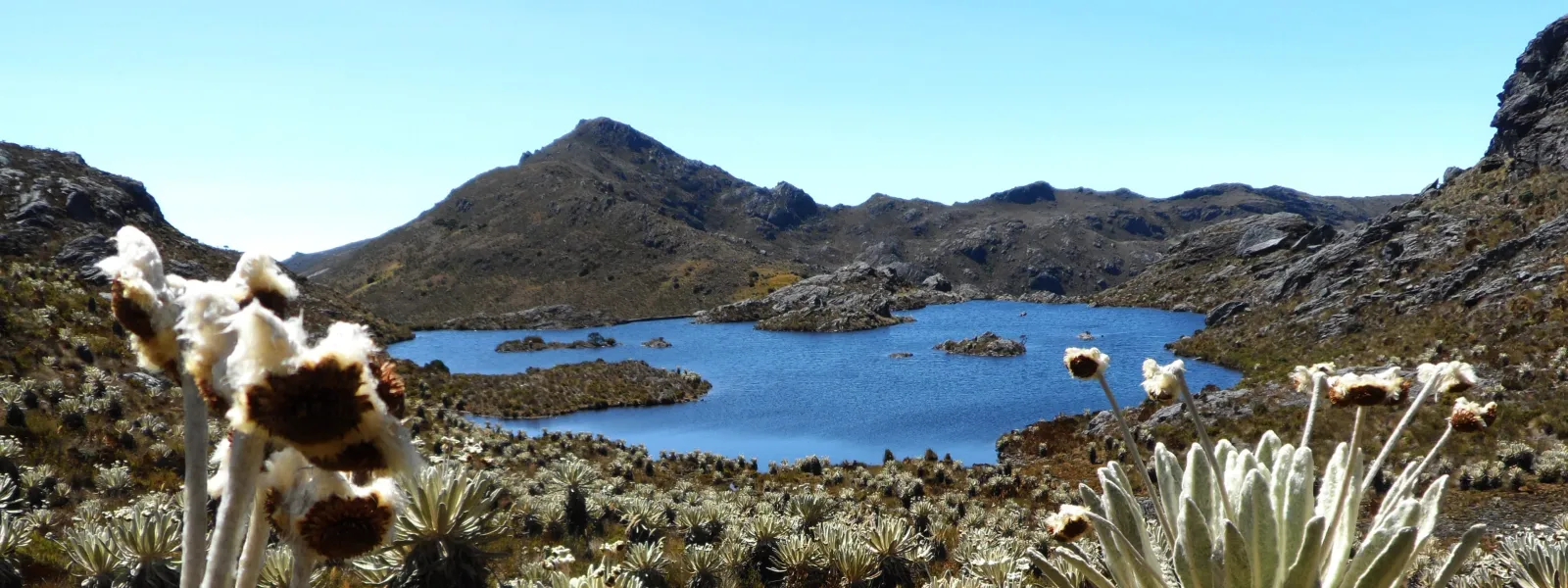
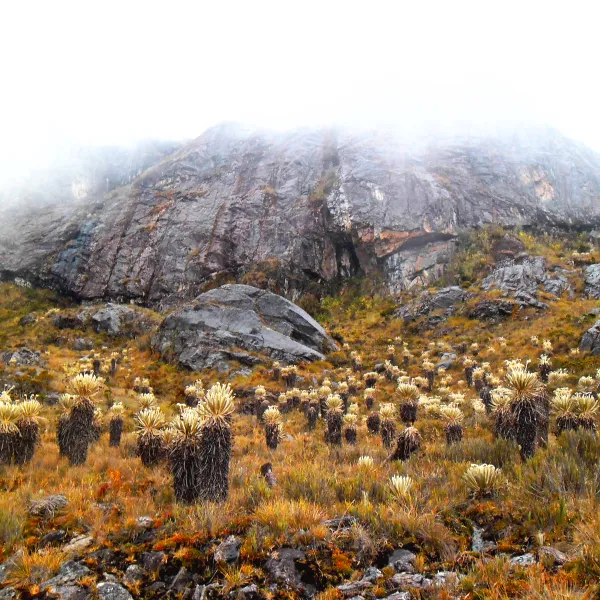
In the Andean region, high-mountain ecosystems known as páramos capture water from the fog and supply it to the lowlands. One such ecosystem is the Santurbán páramo, which provides fresh water to more than two million people in Colombia.
Santurbán, like the other páramos on the continent, also captures large amounts of carbon, making it a key ally in mitigating the climate crisis. It is also a refuge for hundreds of endangered species, including the iconic spectacled bear.
The land in and around the páramo contains gold and other minerals. This has put Santurbán in the spotlight of the multinational mining industry, which for decades has sought to establish large-scale projects in the ecosystem that threaten to degrade it.
The Committee for the Defense of Water and the Santurbán Páramo—a coalition of environmental advocates—has thwarted these ongoing attempts, with support from AIDA and other civil society organizations.
Background
The Santurbán páramo is located in the heart of the Eastern Cordillera of the Colombian Andes, in the departments of Santander and Norte de Santander, at an elevation ranging from 2,200 to 4,290 meters above sea level.
It covers an area of 129,743 hectares and is home to 57 lakes. It serves as a habitat for 457 plant species and 293 species of vertebrate fauna.
There are mineral deposits in Santurbán, primarily gold, but also silver and copper. This explains the region’s mining tradition, particularly in the part of the páramo located in Santander, in the province of Soto Norte. The communities in the area have built their culture and identity around gold mining, which is mainly artisanal and small-scale.
But since the 1990s, the gold deposits in the páramo have also attracted foreign mining conglomerates seeking to develop large-scale projects. This has raised concerns among the population that relies on the Santurbán water sources, who have mobilized in defense of water, their land, and life.
Although national and international regulations prohibit mining in páramos, the Colombian government has granted mining concessions to transnational corporations in Santurbán.
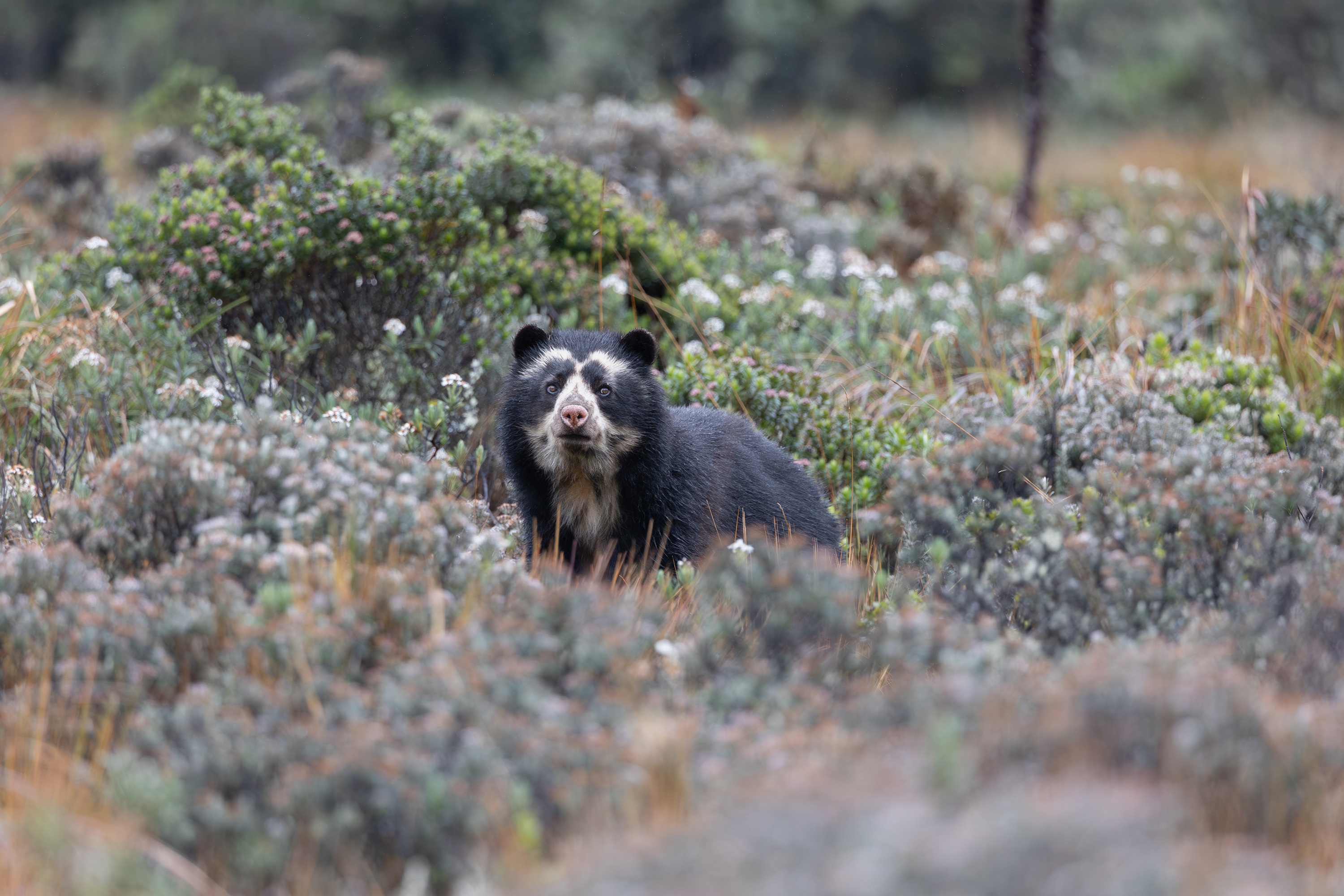
Photo: Keishpixl / Pixabay.
The long struggle to protect the páramo
One of the companies that sought to develop large-scale mining in Santurbán is Eco Oro Minerals Corp.—formerly Greystar Resources—a Canadian company that intended to establish the Angostura open-pit mine there to extract gold and silver. Between 1994 and 1995, the company acquired its mining titles and conducted exploration. And in 2010, it applied for a mining permit.
That was the year AIDA became involved in defending the ecosystem, supporting the Committee for the Defense of Water and the Santurbán Páramo. Our legal work helped convince the Colombian government to deny the mine an environmental permit in May 2011.
In January 2013, the government designated a portion of the páramo (11,700 hectares) as a Regional Natural Park. That year—together with the committee and partner organizations—we carried out a campaign and advocacy efforts to urge the government to recognize the entire Santurbán area as a páramo ecosystem through a delimitation based on scientific criteria. In December 2014, the Ministry of the Environment established a delimitation that protected 76% of the páramo (98,954 hectares).
Furthermore, as a result of a litigation supported by AIDA, in February 2016, Colombia’s highest court reaffirmed that mining in páramos is prohibited.
That same year, in December, the International Finance Corporation (IFC), the World Bank Group’s private sector arm, decided to divest from Eco Oro Minerals. This achievement was the result of a process that began in 2012, when the committee—advised and supported by AIDA and international partner organizations—filed a complaint before an independent accountability mechanism, which concluded that the IFC’s investment in the Angostura project failed to take into account the project’s social and environmental impacts, thereby contradicting the financial institution’s internal policies.
Also in 2016, Eco Oro Minerals filed an arbitration claim against the Colombian government with the International Centre for Settlement of Investment Disputes (ICSID), arguing that it had been adversely affected by government decisions aimed at protecting the country’s páramos, including the delimitation of Santurbán.
In 2017, the Constitutional Court invalidated the delimitation because the affected communities were not consulted. The high court ordered that a participatory delimitation be carried out.
And that year, a new threat to Santurbán emerged when the Canadian multinational Aris Mining applied for an environmental permit for Soto Norte, a gold mining project located near the páramo. Following citizen protests and technical objections, in October 2020, the National Environmental Licensing Authority shelved the project.
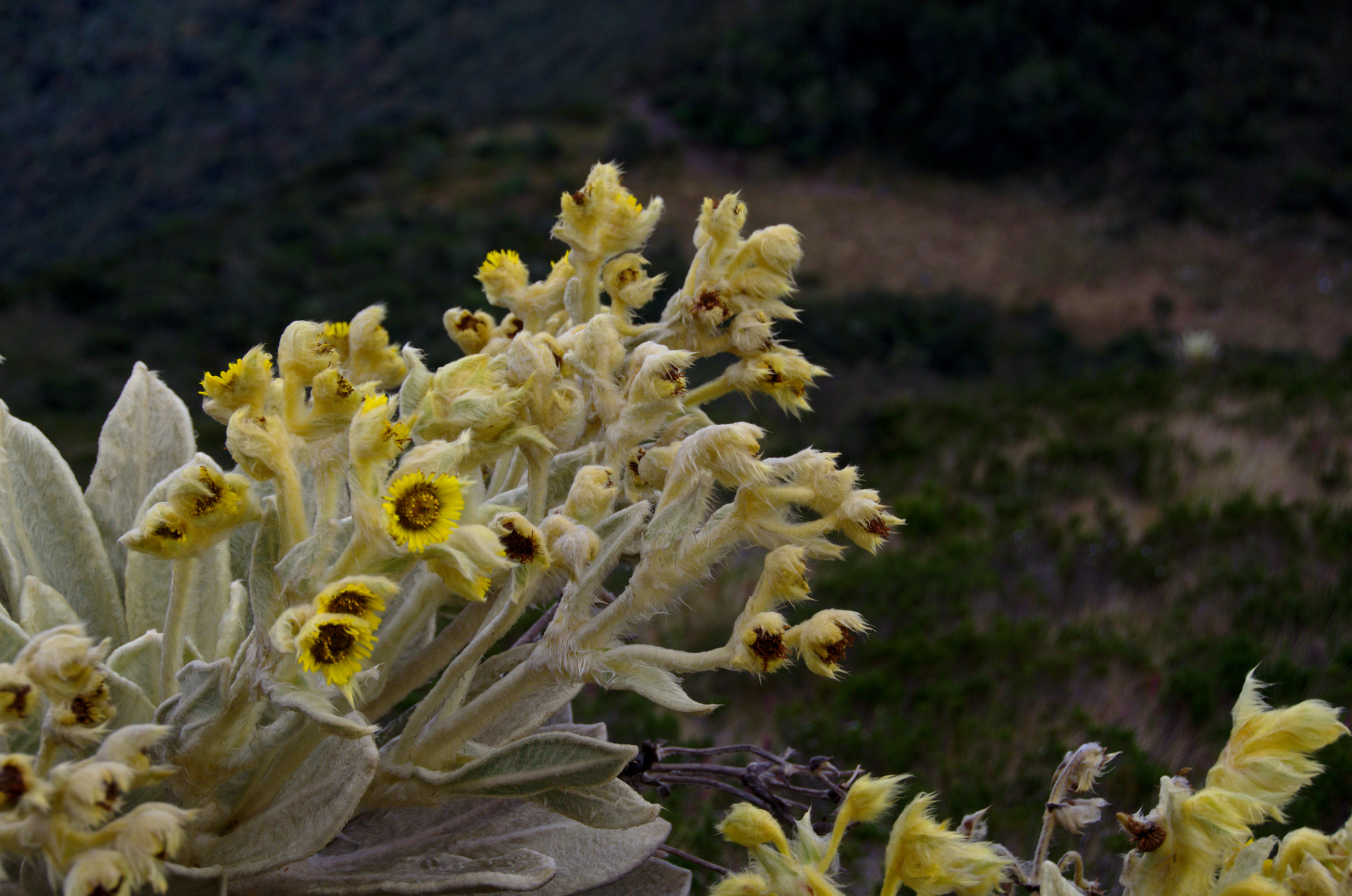
Photo: Aztlec.
Current situation
In March 2025, the Colombian government designated the western flank of the Santurbán massif as a temporary renewable natural resource reserve area, delimiting and protecting an area of 75,344.65 hectares. This resulted in a two-year suspension of the Soto Norte project. However, Aris Mining's contract to formalize Calimineros' small-scale mining activities through the purchase and processing of mineralized material remains in effect.
In addition, the Canadian mining company continues to move the project forward. In September 2025, it released its prefeasibility study, revising the mine’s original design.
Meanwhile, members of the Committee for the Defense of Water and the Santurbán Páramo face threats and stigmatization because of their work. In March 2025, UN Special Rapporteurs and the Working Group on Business and Human Rights denounced these incidents in communications sent to the governments of Colombia, Canada, and the United Arab Emirates, as well as to the companies Aris Mining and MDC Industry Holding Company LLC, the former co-owner of the Soto Norte project.
Regarding the arbitration claim filed by Eco Oro Minerals, in July 2024, ICSID ruled in favor of the Colombian government and rejected the Canadian company’s claim for USD 1.1 billion in compensation.
Concerning the delimitation of Santurbán, in July 2026, the Ministry of the Environment issued a resolution introducing the concept of "progressive delimitation." On that basis, the government proposes to progressively demarcate the páramo, covering 29,199 hectares across 19 municipalities—those where the participatory agreements required by the Constitutional Court in its 2017 ruling have already been finalized. It also proposes two measures on the creation and expansion of reserves to restrict mining in the ecosystem.
Learn more about the impacts of mining on the páramos of Latin America (in Spanish).
Partners:
Related projects

The IPCC climate report: science has spoken and we must act now
The international scientific community has spoken: the only thing that can save us from a climate catastrophe is a radical and immediate change. The next 11 years are the most important in the history of the planet, in terms of climate change. Our response to their message will determine our future. In its most recent analysis, the Intergovernmental Panel on Climate Change (IPCC) of the United Nations establishes the impacts that could occur if the planet’s average temperature increases by more than 2°C, and compares those with what would happen if we stop warming, or at least keep it below 1.5°C. The 2016 Paris Agreement, an international accord to curb climate change, aims to keep warming well below 2°C with respect to pre-industrial levels, and to continue global efforts to limit it to 1.5°C. The impacts of global warming The IPCC experts’ conclusions are piercing. Those extra 0.5°C would be lethal for millions of people and their ways of life. If the Earth warms 2°C or more, we would experience: more frequent and intense heat waves, droughts and floods; sea level rise of an extra 10 centimeters, implying coastal flooding and filtration of salt water into agricultural areas and freshwater sources—a matter of life and death for roughly 10 million people; double the risk of habitat loss for plants and vertebrates, and triple the risk for insects, considering more than 100 thousand species which were studied; the disappearance of more than 99% of coral reefs, while 10 to 30 percent of what remains could be saved if we were to stabilize the planet’s temperature below 1.5°C; an increase in the range of mosquitoes that transmit diseases such as malaria and dengue; and the devastation of crops and livestock, severely affecting global food security. So, how are we doing now? Not so well. The planet has already warmed 1°C since preindustrial times, and in 2017 the emissions responsible for warming increased again. The commitments nations made to comply with the Paris Agreement are insufficient. Settling on that level of ambition would take us to 3°C warming by 2030, a reality with unimaginable consequences. Changing our climate destiny Let’s talk about solutions. Ensuring that the planet’s warming doesn’t exceed 1.5°C is possible, but it will require unprecedented action. Emissions must lower by 45 percent between 2010 and 2030, and we must achieve carbon neutrality by 2050. That means not emitting more than what the world’s forests and natural carbon sinks can absorb. This will require that: the most polluting industries, particularly those producing fossil fuels, implement radical changes; renewable energy is the norm by 2050, accounting for between 70 and 85 percent of total energy production; coal-fired power plants disappear; transportation runs with clean, renewable electricity; and we expand, maintain, and care for forests and other natural carbon sinks, which are responsible for removing emissions from the atmosphere. The IPCC report also recognizes a monumental opportunity: the mitigation of short-lived climate pollutants (SLCPs)—including black carbon or soot, methane, hydrofluorocarbons and tropospheric ozone. More climatically intense than carbon dioxide, SLCPs are responsible for half of global warming. Because of their short duration in the atmosphere, they could play a key role in reducing warming in the short term. In addition, the reduction of SLCPs brings important benefits for human well-being, including the reduction of pollution that affects public health and better yield of crops. But few countries have included the reduction of short-lived climate pollutants in their national commitments on climate change. At AIDA we’re working so that Latin American nations advance in the control of these emissions. As the region with the greatest potential for renewable energies, Latin America has the opportunity to be an example for the rest of the planet. The threats facing the region are great and avoiding them is well worth the effort. Climate change threatens to shake us from our very roots—melting Andean glaciers, increasing droughts and floods, diminishing freshwater supplies, driving species to extinction, increasing wildfires, favoring the spread of invasive species, losing corals and marine biodiversity, affecting food security, and wreaking havoc on people’s health and livelihoods. The outlook is clear: maintaining global warming below 1.5°C is not an easy task, but science holds it’s possible. We have the scientific knowledge, and the technological and financial capacity to achieve this goal. The responsibility now lies with governments, decision-makers and the private sector—together they must drive unprecedented changes. We must remember that implementing these changes is not just possible, it’s desirable. A world with fewer emissions is a cleaner and a fairer world for us and for future generations. What’s not to like?
Read moreThe IPCC climate report: science has spoken and we must act now
The international scientific community has spoken: the only thing that can save us from a climate catastrophe is a radical and immediate change. The next 11 years are the most important in the history of the planet, in terms of climate change. Our response to their message will determine our future. In its most recent analysis, the Intergovernmental Panel on Climate Change (IPCC) of the United Nations establishes the impacts that could occur if the planet’s average temperature increases by more than 2°C, and compares those with what would happen if we stop warming, or at least keep it below 1.5°C. The 2016 Paris Agreement, an international accord to curb climate change, aims to keep warming well below 2°C with respect to pre-industrial levels, and to continue global efforts to limit it to 1.5°C. The impacts of global warming The IPCC experts’ conclusions are piercing. Those extra 0.5°C would be lethal for millions of people and their ways of life. If the Earth warms 2°C or more, we would experience: more frequent and intense heat waves, droughts and floods; sea level rise of an extra 10 centimeters, implying coastal flooding and filtration of salt water into agricultural areas and freshwater sources—a matter of life and death for roughly 10 million people; double the risk of habitat loss for plants and vertebrates, and triple the risk for insects, considering more than 100 thousand species which were studied; the disappearance of more than 99% of coral reefs, while 10 to 30 percent of what remains could be saved if we were to stabilize the planet’s temperature below 1.5°C; an increase in the range of mosquitoes that transmit diseases such as malaria and dengue; and the devastation of crops and livestock, severely affecting global food security. So, how are we doing now? Not so well. The planet has already warmed 1°C since preindustrial times, and in 2017 the emissions responsible for warming increased again. The commitments nations made to comply with the Paris Agreement are insufficient. Settling on that level of ambition would take us to 3°C warming by 2030, a reality with unimaginable consequences. Changing our climate destiny Let’s talk about solutions. Ensuring that the planet’s warming doesn’t exceed 1.5°C is possible, but it will require unprecedented action. Emissions must lower by 45 percent between 2010 and 2030, and we must achieve carbon neutrality by 2050. That means not emitting more than what the world’s forests and natural carbon sinks can absorb. This will require that: the most polluting industries, particularly those producing fossil fuels, implement radical changes; renewable energy is the norm by 2050, accounting for between 70 and 85 percent of total energy production; coal-fired power plants disappear; transportation runs with clean, renewable electricity; and we expand, maintain, and care for forests and other natural carbon sinks, which are responsible for removing emissions from the atmosphere. The IPCC report also recognizes a monumental opportunity: the mitigation of short-lived climate pollutants (SLCPs)—including black carbon or soot, methane, hydrofluorocarbons and tropospheric ozone. More climatically intense than carbon dioxide, SLCPs are responsible for half of global warming. Because of their short duration in the atmosphere, they could play a key role in reducing warming in the short term. In addition, the reduction of SLCPs brings important benefits for human well-being, including the reduction of pollution that affects public health and better yield of crops. But few countries have included the reduction of short-lived climate pollutants in their national commitments on climate change. At AIDA we’re working so that Latin American nations advance in the control of these emissions. As the region with the greatest potential for renewable energies, Latin America has the opportunity to be an example for the rest of the planet. The threats facing the region are great and avoiding them is well worth the effort. Climate change threatens to shake us from our very roots—melting Andean glaciers, increasing droughts and floods, diminishing freshwater supplies, driving species to extinction, increasing wildfires, favoring the spread of invasive species, losing corals and marine biodiversity, affecting food security, and wreaking havoc on people’s health and livelihoods. The outlook is clear: maintaining global warming below 1.5°C is not an easy task, but science holds it’s possible. We have the scientific knowledge, and the technological and financial capacity to achieve this goal. The responsibility now lies with governments, decision-makers and the private sector—together they must drive unprecedented changes. We must remember that implementing these changes is not just possible, it’s desirable. A world with fewer emissions is a cleaner and a fairer world for us and for future generations. What’s not to like?
Read moreThe IPCC climate report: science has spoken and we must act now
The international scientific community has spoken: the only thing that can save us from a climate catastrophe is a radical and immediate change. The next 11 years are the most important in the history of the planet, in terms of climate change. Our response to their message will determine our future. In its most recent analysis, the Intergovernmental Panel on Climate Change (IPCC) of the United Nations establishes the impacts that could occur if the planet’s average temperature increases by more than 2°C, and compares those with what would happen if we stop warming, or at least keep it below 1.5°C. The 2016 Paris Agreement, an international accord to curb climate change, aims to keep warming well below 2°C with respect to pre-industrial levels, and to continue global efforts to limit it to 1.5°C. The impacts of global warming The IPCC experts’ conclusions are piercing. Those extra 0.5°C would be lethal for millions of people and their ways of life. If the Earth warms 2°C or more, we would experience: more frequent and intense heat waves, droughts and floods; sea level rise of an extra 10 centimeters, implying coastal flooding and filtration of salt water into agricultural areas and freshwater sources—a matter of life and death for roughly 10 million people; double the risk of habitat loss for plants and vertebrates, and triple the risk for insects, considering more than 100 thousand species which were studied; the disappearance of more than 99% of coral reefs, while 10 to 30 percent of what remains could be saved if we were to stabilize the planet’s temperature below 1.5°C; an increase in the range of mosquitoes that transmit diseases such as malaria and dengue; and the devastation of crops and livestock, severely affecting global food security. So, how are we doing now? Not so well. The planet has already warmed 1°C since preindustrial times, and in 2017 the emissions responsible for warming increased again. The commitments nations made to comply with the Paris Agreement are insufficient. Settling on that level of ambition would take us to 3°C warming by 2030, a reality with unimaginable consequences. Changing our climate destiny Let’s talk about solutions. Ensuring that the planet’s warming doesn’t exceed 1.5°C is possible, but it will require unprecedented action. Emissions must lower by 45 percent between 2010 and 2030, and we must achieve carbon neutrality by 2050. That means not emitting more than what the world’s forests and natural carbon sinks can absorb. This will require that: the most polluting industries, particularly those producing fossil fuels, implement radical changes; renewable energy is the norm by 2050, accounting for between 70 and 85 percent of total energy production; coal-fired power plants disappear; transportation runs with clean, renewable electricity; and we expand, maintain, and care for forests and other natural carbon sinks, which are responsible for removing emissions from the atmosphere. The IPCC report also recognizes a monumental opportunity: the mitigation of short-lived climate pollutants (SLCPs)—including black carbon or soot, methane, hydrofluorocarbons and tropospheric ozone. More climatically intense than carbon dioxide, SLCPs are responsible for half of global warming. Because of their short duration in the atmosphere, they could play a key role in reducing warming in the short term. In addition, the reduction of SLCPs brings important benefits for human well-being, including the reduction of pollution that affects public health and better yield of crops. But few countries have included the reduction of short-lived climate pollutants in their national commitments on climate change. At AIDA we’re working so that Latin American nations advance in the control of these emissions. As the region with the greatest potential for renewable energies, Latin America has the opportunity to be an example for the rest of the planet. The threats facing the region are great and avoiding them is well worth the effort. Climate change threatens to shake us from our very roots—melting Andean glaciers, increasing droughts and floods, diminishing freshwater supplies, driving species to extinction, increasing wildfires, favoring the spread of invasive species, losing corals and marine biodiversity, affecting food security, and wreaking havoc on people’s health and livelihoods. The outlook is clear: maintaining global warming below 1.5°C is not an easy task, but science holds it’s possible. We have the scientific knowledge, and the technological and financial capacity to achieve this goal. The responsibility now lies with governments, decision-makers and the private sector—together they must drive unprecedented changes. We must remember that implementing these changes is not just possible, it’s desirable. A world with fewer emissions is a cleaner and a fairer world for us and for future generations. What’s not to like?
Read more