
Project
Alberto Peña Kay
Protecting the Santurban páramo from mining's damage
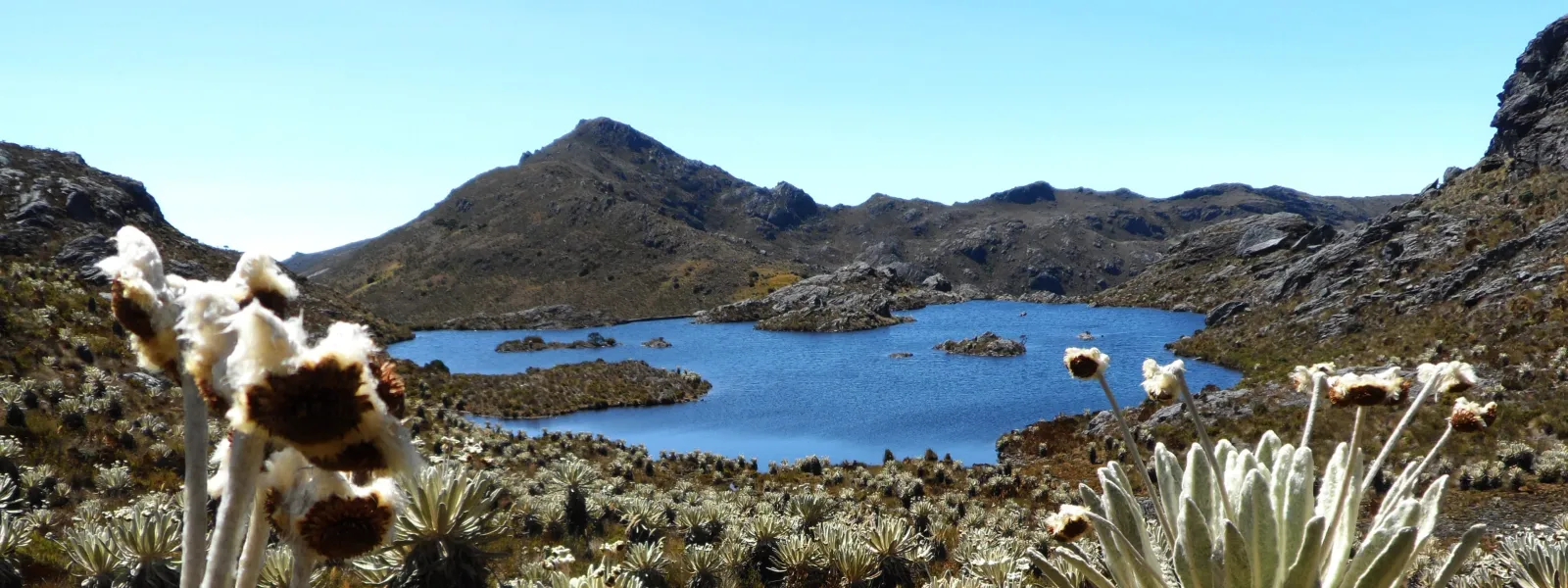
In the Andean region, high-mountain ecosystems known as páramos capture water from the fog and supply it to the lowlands. One such ecosystem is the Santurbán páramo, which provides fresh water to more than two million people in Colombia.
Santurbán, like the other páramos on the continent, also captures large amounts of carbon, making it a key ally in mitigating the climate crisis. It is also a refuge for hundreds of endangered species, including the iconic spectacled bear.
The land in and around the páramo contains gold and other minerals. This has put Santurbán in the spotlight of the multinational mining industry, which for decades has sought to establish large-scale projects in the ecosystem that threaten to degrade it.
The Committee for the Defense of Water and the Santurbán Páramo—a coalition of environmental advocates—has thwarted these ongoing attempts, with support from AIDA and other civil society organizations.
Background
The Santurbán páramo is located in the heart of the Eastern Cordillera of the Colombian Andes, in the departments of Santander and Norte de Santander, at an elevation ranging from 2,200 to 4,290 meters above sea level.
It covers an area of 129,743 hectares and is home to 57 lakes. It serves as a habitat for 457 plant species and 293 species of vertebrate fauna.
There are mineral deposits in Santurbán, primarily gold, but also silver and copper. This explains the region’s mining tradition, particularly in the part of the páramo located in Santander, in the province of Soto Norte. The communities in the area have built their culture and identity around gold mining, which is mainly artisanal and small-scale.
But since the 1990s, the gold deposits in the páramo have also attracted foreign mining conglomerates seeking to develop large-scale projects. This has raised concerns among the population that relies on the Santurbán water sources, who have mobilized in defense of water, their land, and life.
Although national and international regulations prohibit mining in páramos, the Colombian government has granted mining concessions to transnational corporations in Santurbán.
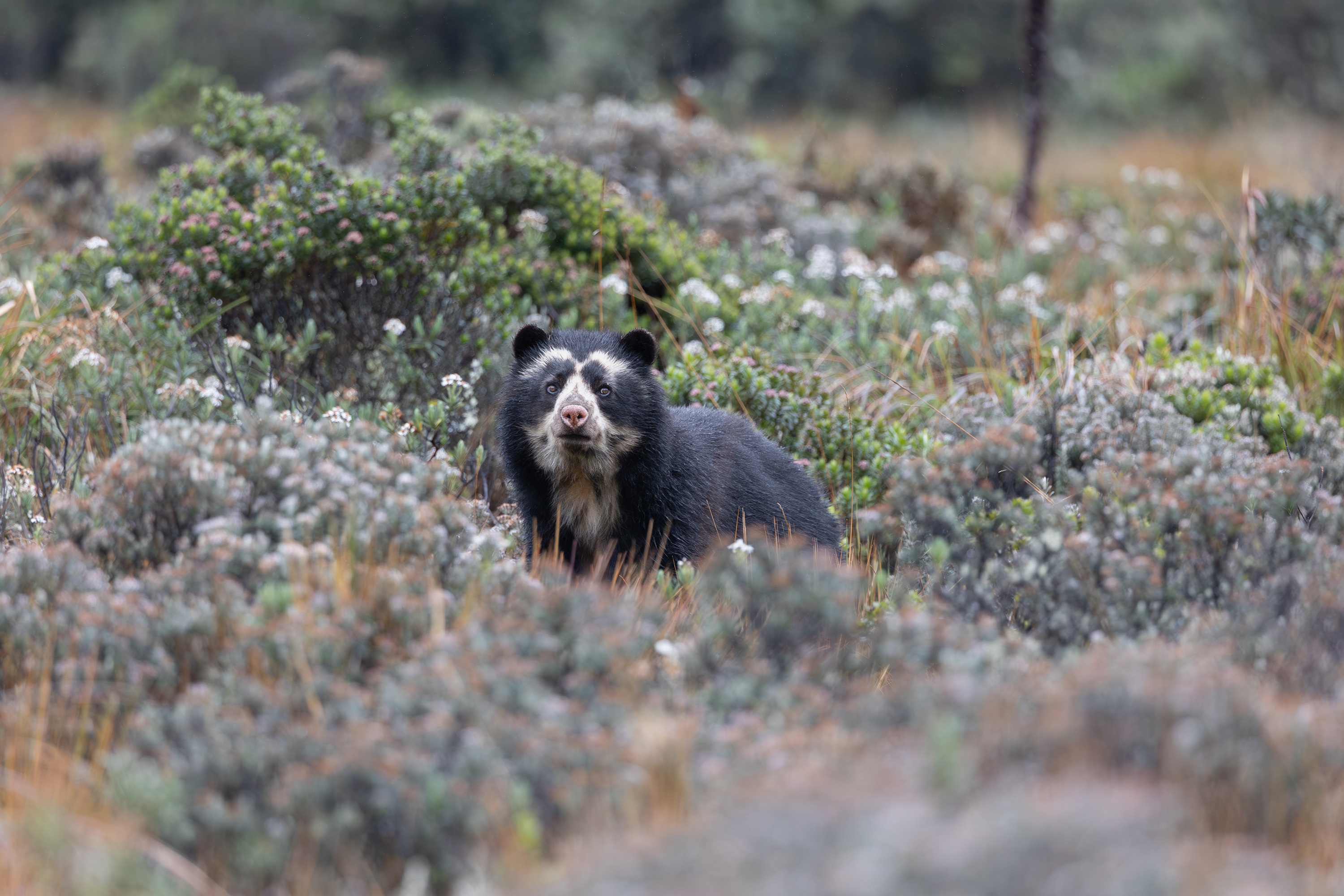
Photo: Keishpixl / Pixabay.
The long struggle to protect the páramo
One of the companies that sought to develop large-scale mining in Santurbán is Eco Oro Minerals Corp.—formerly Greystar Resources—a Canadian company that intended to establish the Angostura open-pit mine there to extract gold and silver. Between 1994 and 1995, the company acquired its mining titles and conducted exploration. And in 2010, it applied for a mining permit.
That was the year AIDA became involved in defending the ecosystem, supporting the Committee for the Defense of Water and the Santurbán Páramo. Our legal work helped convince the Colombian government to deny the mine an environmental permit in May 2011.
In January 2013, the government designated a portion of the páramo (11,700 hectares) as a Regional Natural Park. That year—together with the committee and partner organizations—we carried out a campaign and advocacy efforts to urge the government to recognize the entire Santurbán area as a páramo ecosystem through a delimitation based on scientific criteria. In December 2014, the Ministry of the Environment established a delimitation that protected 76% of the páramo (98,954 hectares).
Furthermore, as a result of a litigation supported by AIDA, in February 2016, Colombia’s highest court reaffirmed that mining in páramos is prohibited.
That same year, in December, the International Finance Corporation (IFC), the World Bank Group’s private sector arm, decided to divest from Eco Oro Minerals. This achievement was the result of a process that began in 2012, when the committee—advised and supported by AIDA and international partner organizations—filed a complaint before an independent accountability mechanism, which concluded that the IFC’s investment in the Angostura project failed to take into account the project’s social and environmental impacts, thereby contradicting the financial institution’s internal policies.
Also in 2016, Eco Oro Minerals filed an arbitration claim against the Colombian government with the International Centre for Settlement of Investment Disputes (ICSID), arguing that it had been adversely affected by government decisions aimed at protecting the country’s páramos, including the delimitation of Santurbán.
In 2017, the Constitutional Court invalidated the delimitation because the affected communities were not consulted. The high court ordered that a participatory delimitation be carried out.
And that year, a new threat to Santurbán emerged when the Canadian multinational Aris Mining applied for an environmental permit for Soto Norte, a gold mining project located near the páramo. Following citizen protests and technical objections, in October 2020, the National Environmental Licensing Authority shelved the project.
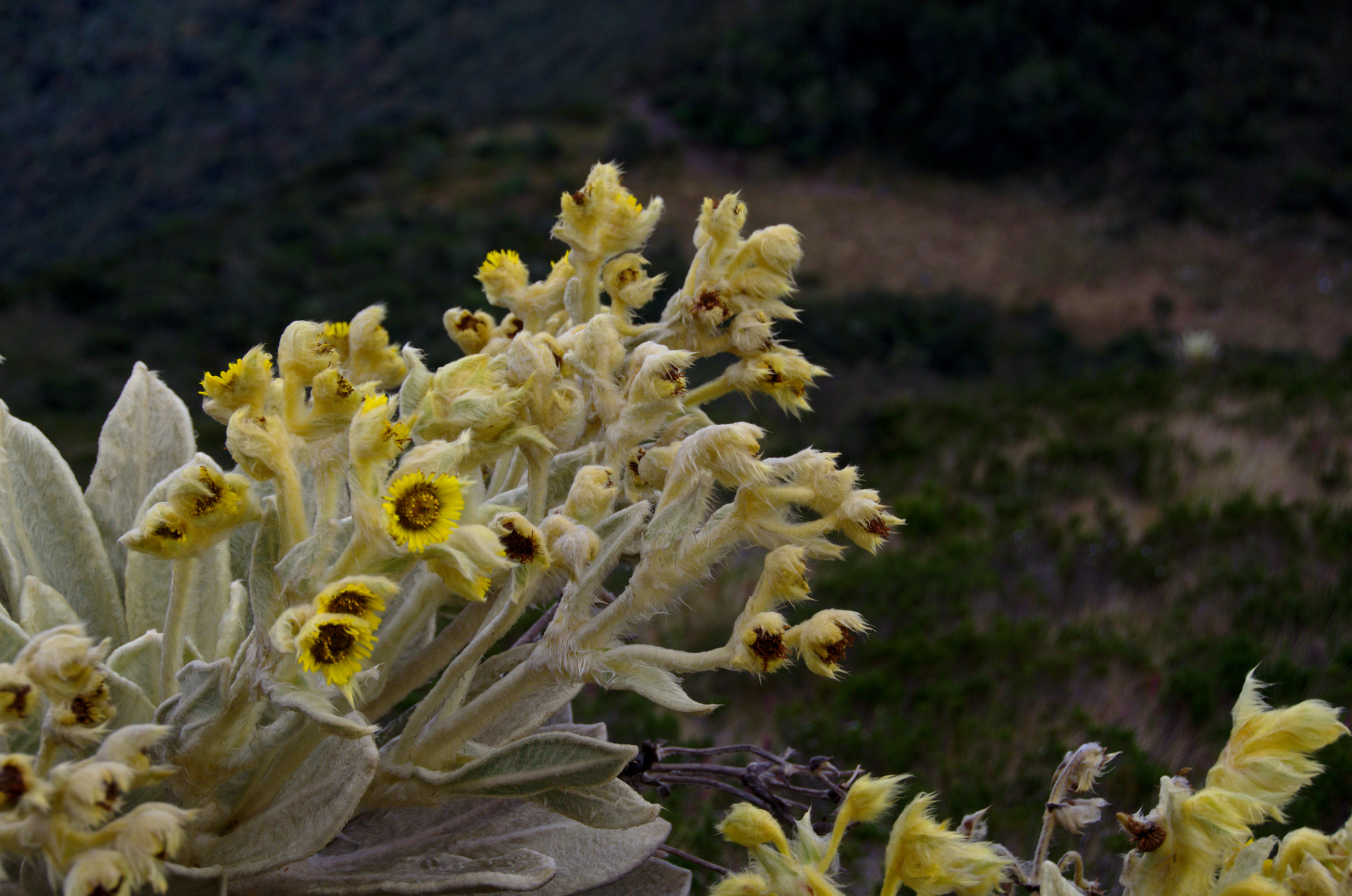
Photo: Aztlec.
Current situation
In March 2025, the Colombian government designated the western flank of the Santurbán massif as a temporary renewable natural resource reserve area, delimiting and protecting an area of 75,344.65 hectares. This resulted in a two-year suspension of the Soto Norte project. However, Aris Mining's contract to formalize Calimineros' small-scale mining activities through the purchase and processing of mineralized material remains in effect.
In addition, the Canadian mining company continues to move the project forward. In September 2025, it released its prefeasibility study, revising the mine’s original design.
Meanwhile, members of the Committee for the Defense of Water and the Santurbán Páramo face threats and stigmatization because of their work. In March 2025, UN Special Rapporteurs and the Working Group on Business and Human Rights denounced these incidents in communications sent to the governments of Colombia, Canada, and the United Arab Emirates, as well as to the companies Aris Mining and MDC Industry Holding Company LLC, the former co-owner of the Soto Norte project.
Regarding the arbitration claim filed by Eco Oro Minerals, in July 2024, ICSID ruled in favor of the Colombian government and rejected the Canadian company’s claim for USD 1.1 billion in compensation.
Concerning the delimitation of Santurbán, in July 2026, the Ministry of the Environment issued a resolution introducing the concept of "progressive delimitation." On that basis, the government proposes to progressively demarcate the páramo, covering 29,199 hectares across 19 municipalities—those where the participatory agreements required by the Constitutional Court in its 2017 ruling have already been finalized. It also proposes two measures on the creation and expansion of reserves to restrict mining in the ecosystem.
Learn more about the impacts of mining on the páramos of Latin America (in Spanish).
Partners:
Related projects
We all deserve to breathe clean air
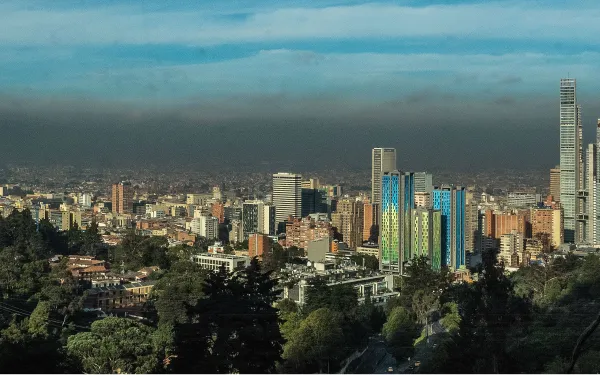
I was born and raised in Bogota, Colombia’s bustling capital city. When I was a child, I grew accustomed to the chaos of the streets—thousands of cars and buses spewing black smoke into the air, the endless honking of horns. It was normal to see massive smokestacks and smell bad odors. I thought all cities were that way, and that nature and clean air only existed in places far from home. I was used to having health problems: headaches, rashes, eye and throat irritation, coughs and hay fever. I never questioned why my sisters and I were constantly fighting these “environmental allergies.” Pollution even prevented me from enjoying the outdoors. I couldn’t easily walk or ride my bike, for example, because my lungs struggled from the soot emitted by passing trucks and buses. There were days I had to leave my house wearing a mask, and times when we were forbidden from playing outside due to the pollution. Air pollution: a silent killer As an adult, I realized that environmental allergies are not the norm. Often, they are caused by constantly breathing in black carbon, ozone, sulfur dioxide and other pollutants that cars, buses and factories emit into the atmosphere each day. I realized that air pollution is a serious threat to quality of life and to a person’s health, especially among the most vulnerable, like our children and the elderly. According to the World Health Organization, millions of people die each year from illnesses related to air pollution. In Latin America, it is the number one environmental health risk, and causes more than 150,000 premature deaths per year. Cities like Mexico City, Monterrey (Mexico), Cochabamba (Bolivia), Santiago de Chile, Lima (Peru), Medellin (Colombia), San Salvador (El Salvador) and Bogota have the highest levels of air pollution in the region. When cities are allowed to expand without regulation, population skyrockets—and with it, so do the number of cars and trucks and factories. I worry about the future of my family in that scenario. I don’t want the air we breathe to negatively impact our health. My husband, who is not from Bogota, moved there to be with me. One year later, he was diagnosed with asthma. When my daughter was just two months old, she had a respiratory infection that put her in intensive care for several days. The cause of both their illnesses: the city’s poor air quality. Stopping the contamination The majority of the world’s population lives in cities. And while we can’t expect our cities to be pristine, natural ecosystems, they should provide people with the minimal conditions they need to lead dignified, healthy lives. That’s why AIDA works to improve air quality in Latin America, advocating for the protection of our children and other populations highly vulnerable to atmospheric contamination. We are raising awareness among policy makers about the importance of regulating short-lived climate pollutants (SLCPs), which stay in the atmosphere for a relatively short period of time. Unlike carbon dioxide, which can stay in the atmosphere for centuries, SLCPs remain in the air from a few days to a few decades. SLCPs include soot (also known as black carbon) and methane gas. These contaminants are major contributors to climate change, degrade air quality and have serious impacts on food security and human health. Effectively reducing them could significantly improve air quality and advance the fight against climate change in the short-term. Through our experience in international law, we’re seeking ways to regulate these short-lived pollutants across Latin America. Because having clean air to breath is one of life’s basic needs. Clean air shouldn’t be a luxury.
Read more
Infographic: Advisory Opinion 23
The Inter-American Court of Human Rights, the Observatory of the Inter-American Human Rights System of the UNAM (OSIDH), the Due Process Foundation (DPLF), AIDA and the Institute of Constitutional Studies of the State of Querétaro present this infographic on the Court's Advisory Opinion 23. The main objective is to make available to all interested persons the main points and standards developed by the Court regarding the obligations of States regarding the environment and its relationship with human rights. We hope that this joint initiative will contribute to the full validity and guarantee of economic, social, cultural and environmental rights in the region. Advisory Opinion 23, issued on November 15, 2017, establishes a historical precedent for the protection of human rights in the continent. Download the infographic in Spanish Download the infographic in Portuguese Download the infographic in French Advisory Opinion (full text) English Spanish
Read more
Argentina’s approval of fracking wells violates international obligations
The authorization of four fracking wells within the Vaca Muerta shale deposit poses a risk to vital water sources and violates the rights of Mapuche communities. In support of an amparo filed to invalidate the project’s approval, AIDA presented evidence detailing Argentina’s failure to comply with international environmental and human rights obligations. Mendoza, Argentina. Argentina violated international environmental and human rights obligations when it authorized the development of four fracking wells in indigenous territory. The wells would damage vital water sources and violate the rights of Mapuche communities, AIDA explained in an amicus brief presented before the Supreme Court of Mendoza Province. The brief supports an amparo seeking to invalidate the project’s approval, filed by the Environment and Natural Resources Foundation (FARN, for its initials in Spanish). “Fracking was authorized in Mendoza without any environmental impact assessment,” explained AIDA Attorney Claudia Velarde. “In fact, the project was presented for authorization as ‘infrastructure adaptation’ and the environmental authority granted the permits in a record time of just six days.” The wells are located within Vaca Muerta, the largest non-conventional deposit of shale gas in Latin America. Mapuche indigenous communities—recognized by the National Institute of Indigenous Affairs—live in the project area and, as such, have the right to prior consultation; operators must receive their free, prior and informed consent for any activity affecting their territory. The energy company El Trebol S.A. failed to recognize that right when assessing the project. As a result, the project’s authorization violates Convention 169 of the International Labor Organization, the United Nations Declaration on the Rights of Indigenous Peoples, and the American Declaration on the Rights of Indigenous People—all international standards recognized by Argentina. “The chemicals used in fracking can contaminate both surface and groundwater, including, in this case, those of the Llancanelo lagoon, a wetland of international importance under the Ramsar Convention, a treaty ratified by the government of Argentina,” said Velarde. “The site is a zone of passage and rest for more than 130 species of resident and migratory birds.” In addition, fracking activities require large amounts of water, while Mendoza has for years suffered from drought, a problem only aggravated by climate change. Finally, the brief emphasizes that there is neither detailed geological data of the zone nor quality information on the dynamics of the groundwater. “Faced with this scientific uncertainty, authorities have an obligation to apply the precautionary principle,” Velarde explained. “An activity as potentially harmful as fracking must be rejected unless those seeking to implement it can prove that it will not cause serious and irreversible damage to the environment.” Press contact: Victor Quintanilla (Mexico), AIDA, [email protected], +5215570522107
Read more