
Project
Alberto Peña Kay
Protecting the Santurban páramo from mining's damage
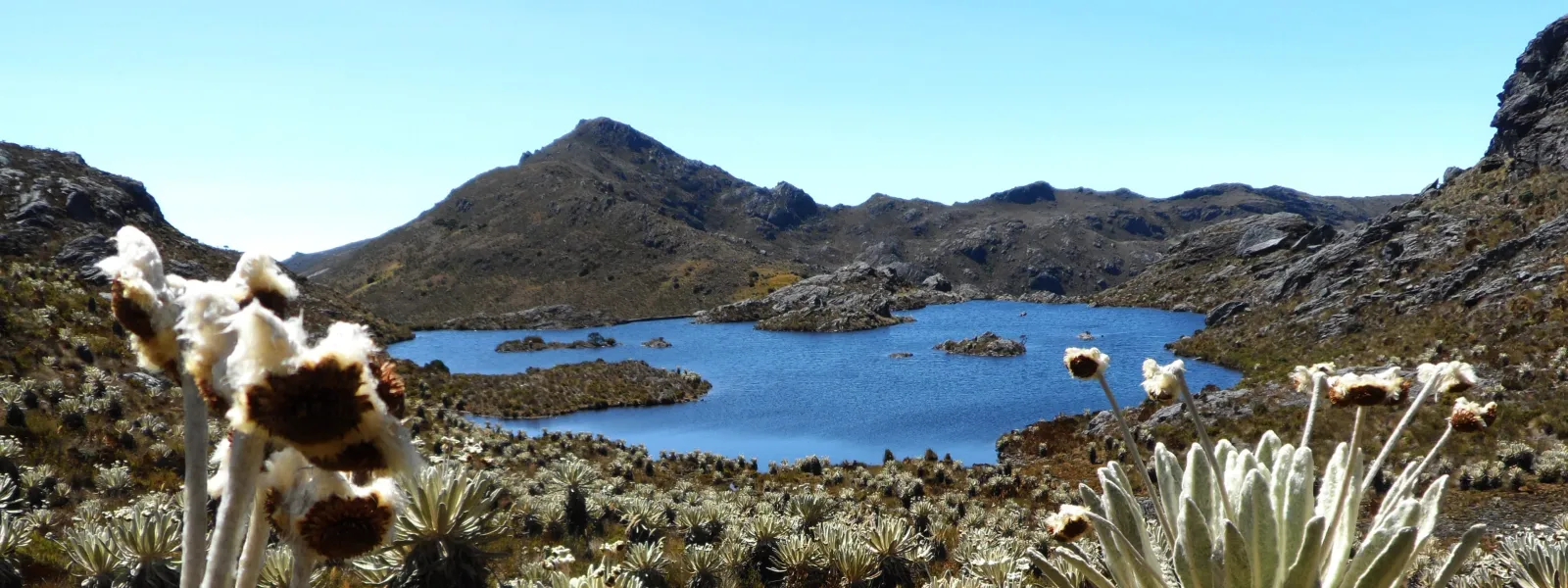
In the Andean region, high-mountain ecosystems known as páramos capture water from the fog and supply it to the lowlands. One such ecosystem is the Santurbán páramo, which provides fresh water to more than two million people in Colombia.
Santurbán, like the other páramos on the continent, also captures large amounts of carbon, making it a key ally in mitigating the climate crisis. It is also a refuge for hundreds of endangered species, including the iconic spectacled bear.
The land in and around the páramo contains gold and other minerals. This has put Santurbán in the spotlight of the multinational mining industry, which for decades has sought to establish large-scale projects in the ecosystem that threaten to degrade it.
The Committee for the Defense of Water and the Santurbán Páramo—a coalition of environmental advocates—has thwarted these ongoing attempts, with support from AIDA and other civil society organizations.
Background
The Santurbán páramo is located in the heart of the Eastern Cordillera of the Colombian Andes, in the departments of Santander and Norte de Santander, at an elevation ranging from 2,200 to 4,290 meters above sea level.
It covers an area of 129,743 hectares and is home to 57 lakes. It serves as a habitat for 457 plant species and 293 species of vertebrate fauna.
There are mineral deposits in Santurbán, primarily gold, but also silver and copper. This explains the region’s mining tradition, particularly in the part of the páramo located in Santander, in the province of Soto Norte. The communities in the area have built their culture and identity around gold mining, which is mainly artisanal and small-scale.
But since the 1990s, the gold deposits in the páramo have also attracted foreign mining conglomerates seeking to develop large-scale projects. This has raised concerns among the population that relies on the Santurbán water sources, who have mobilized in defense of water, their land, and life.
Although national and international regulations prohibit mining in páramos, the Colombian government has granted mining concessions to transnational corporations in Santurbán.
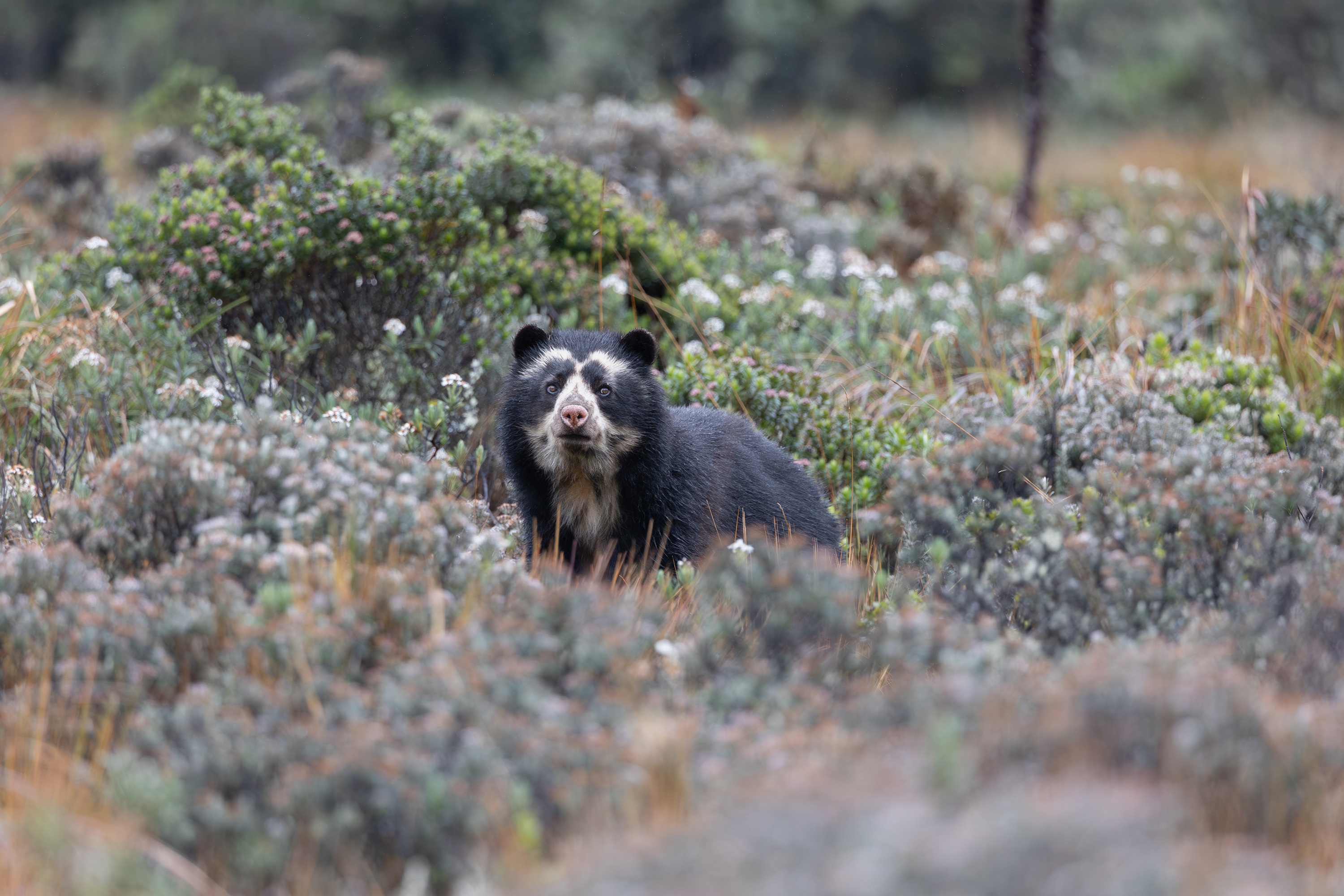
Photo: Keishpixl / Pixabay.
The long struggle to protect the páramo
One of the companies that sought to develop large-scale mining in Santurbán is Eco Oro Minerals Corp.—formerly Greystar Resources—a Canadian company that intended to establish the Angostura open-pit mine there to extract gold and silver. Between 1994 and 1995, the company acquired its mining titles and conducted exploration. And in 2010, it applied for a mining permit.
That was the year AIDA became involved in defending the ecosystem, supporting the Committee for the Defense of Water and the Santurbán Páramo. Our legal work helped convince the Colombian government to deny the mine an environmental permit in May 2011.
In January 2013, the government designated a portion of the páramo (11,700 hectares) as a Regional Natural Park. That year—together with the committee and partner organizations—we carried out a campaign and advocacy efforts to urge the government to recognize the entire Santurbán area as a páramo ecosystem through a delimitation based on scientific criteria. In December 2014, the Ministry of the Environment established a delimitation that protected 76% of the páramo (98,954 hectares).
Furthermore, as a result of a litigation supported by AIDA, in February 2016, Colombia’s highest court reaffirmed that mining in páramos is prohibited.
That same year, in December, the International Finance Corporation (IFC), the World Bank Group’s private sector arm, decided to divest from Eco Oro Minerals. This achievement was the result of a process that began in 2012, when the committee—advised and supported by AIDA and international partner organizations—filed a complaint before an independent accountability mechanism, which concluded that the IFC’s investment in the Angostura project failed to take into account the project’s social and environmental impacts, thereby contradicting the financial institution’s internal policies.
Also in 2016, Eco Oro Minerals filed an arbitration claim against the Colombian government with the International Centre for Settlement of Investment Disputes (ICSID), arguing that it had been adversely affected by government decisions aimed at protecting the country’s páramos, including the delimitation of Santurbán.
In 2017, the Constitutional Court invalidated the delimitation because the affected communities were not consulted. The high court ordered that a participatory delimitation be carried out.
And that year, a new threat to Santurbán emerged when the Canadian multinational Aris Mining applied for an environmental permit for Soto Norte, a gold mining project located near the páramo. Following citizen protests and technical objections, in October 2020, the National Environmental Licensing Authority shelved the project.
Photo: Aztlec.
Current situation
In March 2025, the Colombian government designated the western flank of the Santurbán massif as a temporary renewable natural resource reserve area, delimiting and protecting an area of 75,344.65 hectares. This resulted in a two-year suspension of the Soto Norte project. However, Aris Mining's contract to formalize Calimineros' small-scale mining activities through the purchase and processing of mineralized material remains in effect.
In addition, the Canadian mining company continues to move the project forward. In September 2025, it released its prefeasibility study, revising the mine’s original design.
Meanwhile, members of the Committee for the Defense of Water and the Santurbán Páramo face threats and stigmatization because of their work. In March 2025, UN Special Rapporteurs and the Working Group on Business and Human Rights denounced these incidents in communications sent to the governments of Colombia, Canada, and the United Arab Emirates, as well as to the companies Aris Mining and MDC Industry Holding Company LLC, the former co-owner of the Soto Norte project.
Regarding the arbitration claim filed by Eco Oro Minerals, in July 2024, ICSID ruled in favor of the Colombian government and rejected the Canadian company’s claim for USD 1.1 billion in compensation.
Concerning the delimitation of Santurbán, in July 2026, the Ministry of the Environment issued a resolution introducing the concept of "progressive delimitation." On that basis, the government proposes to progressively demarcate the páramo, covering 29,199 hectares across 19 municipalities—those where the participatory agreements required by the Constitutional Court in its 2017 ruling have already been finalized. It also proposes two measures on the creation and expansion of reserves to restrict mining in the ecosystem.
Learn more about the impacts of mining on the páramos of Latin America (in Spanish).
Partners:
Related projects
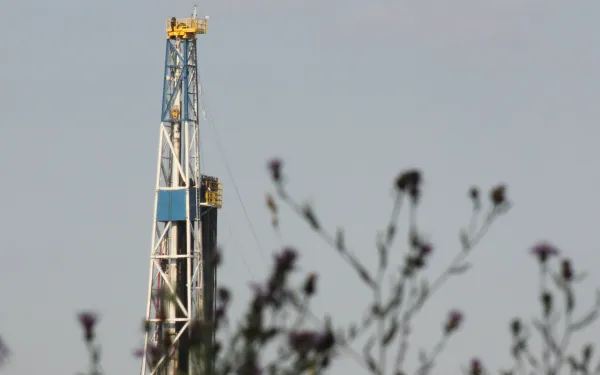
Inter-American Commission to analyze fracking’s impacts on human rights
The Inter-American Commission on Human Rights will hold an informative hearing on October 3, 2018 to better understand the situation of fracking in the Americas and the human rights violations it’s causing. The hearing is being held in response to a request brought forth by 126 Latin American organizations, united in the Latin American Alliance on Fracking. The hearing will take place in Boulder, Colorado during the Commission’s 169th period of sessions. In it, human rights defenders and representatives of affected communities will present detailed information on the documented human rights impacts, as well as the potential risks, of fracking in Latin America. The Alliance seeks to propose a series of recommendations to the Commission and governments of the region in order to guarantee human rights when faced with the exploitation of unconventional hydrocarbon reserves. According to the hearing request, there are approximately 5,000 fracking wells throughout Latin America. In Argentina, there are roughly 2,000 wells. In Chile, according to official data, 182 wells have been approved, the large majority in Tierra del Fuego. In Mexico, there are more than 3,350 fracking wells, although the signatory organizations indicated there are challenges in terms of access to this information. In Brazil and Colombia, contracts have been signed that allow for exploration and exploitation. In Bolivia, prospecting and sample studies of unconventional deposits have begun. Organizations from Argentina, Bolivia, Brazil, Colombia, Costa Rica, Chile, Ecuador, Mexico, Paraguay, Peru and Uruguay signed the request for a hearing before the Commission in July. “Fracking’s advance in Latin America is being carried out blindly because neither the chemicals used, nor their synergistic effects, nor the actual and potential risks, nor the effectiveness of mitigation measures are known with any certainty,” explained Claudia Velarde, attorney with the Interamerican Association for Environmental Defense (AIDA). “What is known is the damage fracking causes to the environment, the quantity and quality of water, and the impacts it has on health and human rights.” While fracking is promoted across Latin America, various nations, states and provinces of Europe, the Americas and Oceania have banned the technique due to the negative impacts it has had on the environment and public health. The request to the Commission emphasizes, “none of the nations where fracking has been implemented have a comprehensive knowledge of the irreversible damage it causes to the environment and the lives of individuals and communities. However, abundant scientific evidence exists on fracking’s negative impacts due to the extensive use of the technique in the United States.” Follow news from the hearing with the hashtag #AméricaSinFracking PRESS CONTACT Victor Quintanilla, AIDA (Mexico), [email protected], +521 5570522107
Read more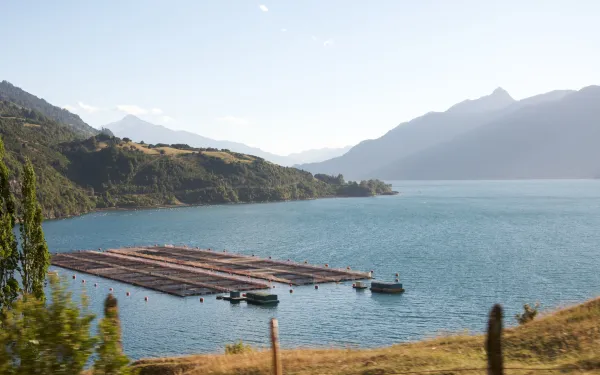
Calling on Chile to stop salmon industry’s impact on Patagonia
AIDA alerted six international treaties to the damages the salmon industry is causing to Chilean Patagonia, and requested that they visit the Magallanes region to investigate the impacts and urge the Chilean government to protect the region. Santiago, Chile. In an Urgent Alert to international authorities, the Interamerican Association of Environmental Defense (AIDA) requested that experts visit the Magallanes region of Chilean Patagonia—where the expansion of the salmon industry is causing serious environmental damage—and asked them to urge the government to adopt appropriate measures to address them. “These six treaties were signed and ratified by Chile to protect its natural wealth, including the endemic species of the Magallanes region,” said Florencia Ortuzar, AIDA attorney. “The government is violating these agreements by failing to prevent the salmon industry from damaging the country’s marine environments.” The document details the principal damages caused by the salmon farms in Magallanes, among them: contamination of the seabed from large amounts of fish feces, excess chemical waste, and the over-saturation of waters with fish, all of which create oxygen-free dead zones where marine life cannot survive. The alert was sent to authorities in charge of the Convention on Biological Diversity, the Convention on the Conservation of Migratory Species of Wild Animals, the International Whaling Commission, the Inter-American Convention for the Protection and Conservation of Sea Turtles, the United Nations Convention on the Law of the Sea, and the Antarctic Treaty. The situation was also reported to the Food and Agriculture Organization of the United Nations and the World Health Organization. The Magallanes region is home to many protected species, including the blue whale, the sperm whale, the Magellanic penguin, the elephant seal, the leatherback turtle, the Southern dolphin and the Chilean dolphin. A remote and pristine area, Magallanes is poorly studied and it is thus virtually impossible to understand the consequences of the industry’s current and potential impacts. “More than half the farms operating in Magallanes are causing a total or partial lack of oxygen in the waters,” explained Ortuzar. “This demonstrates that the salmon concessions are being granted without the scientific support needed to guarantee they won’t cause environmental damage.” Another problem raised in the alert is the excessive use of antibiotics in Chilean salmon farms—higher than that of any other salmon-producing nation. This excessive use provokes antimicrobial resistance in humans, a problem that has been recognized by the World Health Organization as a serious threat to global public health. In the alert, AIDA requested the international authorities: support the Chilean State in the investigation of the salmon industry’s real and potential impacts on Patagonia; remind Chile of its obligations under the treaties; investigate the damage described; and, when needed, request the application of sanctions and the suspension or cancellation of concessions in Magallanes. Consult the Urgent Alert. Find more information on the case here. press contact Victor Quintanilla (Mexico), AIDA, [email protected], +521 5570522107
Read more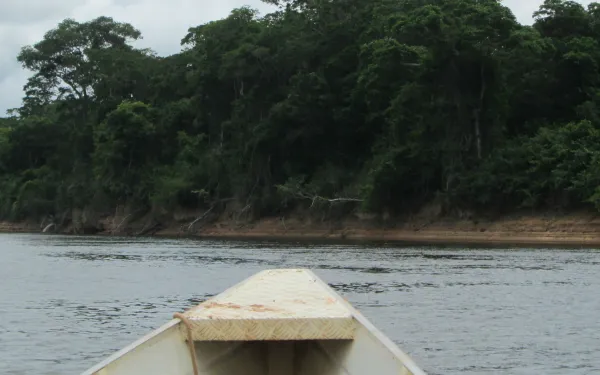
In Xingu management plan, Brazil leaves communities without water
The proposed Xingu River management plan puts at risk the people, plants and animals of the Amazon region. AIDA requested that the Inter-American Commission on Human Rights urge Brazil to stop the plan and establish a socially and environmentally appropriate alternative. Washington, D.C. and Altamira, Brazil. By authorizing the construction of the Belo Monte Dam in the heart of the Amazon, the Brazilian government endorsed a management plan for the flow of the Xingu River that would leave the indigenous and riverine communities of the area without the water they need to survive. The plan is in a testing phase but is expected to be implemented next year, once all the turbines of the hydroelectric plant are installed. The Interamerican Association of Environment Defense (AIDA) sent a report to the Inter-American Commission on Human Rights detailing the serious socio-environmental risks of the plan. In it, we requested that the Commission urge Brazil to stop the plan’s implementation and create an alternative plan that guarantees biodiversity and protects the communities’ ways of life. “The authorized plan for the management of the river’s flow threatens the existence of indigenous and riverine communities, and places at risk of extinction the fish and the forests—natural resources on which the physical and cultural lives of the communities depend,” said Liliana Ávila, Senior AIDA Attorney. The plan, called a consensual hydrogram, establishes the volume of water that will pass through a specific part of the river, called the Vuelta Grande, and the part that will be diverted for energy production. It is intended to artificially reproduce the natural flow of the river in times of flood and drought. Norte Energía, the consortium in charge of the dam, proposes an average minimum flow rate of 4,000 cubic meters per second over the course of a year, and 8,000 cubic meters per second for the following year, beginning in 2019. It proposes a minimum flow rate of 700 cubic meters per second for the dry season. The report sent to the Commission, however, details scientific and social evidence that demonstrates that these water levels are significantly lower than the historical river flow and do not guarantee that fish and alluvial forests can survive the proposed reduction in the short- and medium-term. The evidence—which includes information from both the Brazilian Institute of the Environment and Renewable Natural Resources and community monitoring—also shows that some aquatic species, such as chelonians, can only feed and reproduce with minimum flows of 13,000 cubic meters per second in times of flooding, and that the volume proposed for the dry season could make the river unnavigable. “The management plan did not take into account the monitoring done by the Juruna people in collaboration with the Federal University of the State of Pará and the Socio-environmental Institute (ISA),” said AIDA attorney Marcella Ribeiro. “In 2016, with water levels higher than those proposed, communities were already reporting the mass die-off of fish.” AIDA sent the report to the Commission as part of a formal complaint against the Brazilian State for the human rights violations caused by the dam’s construction. In May, together with partner organizations, we presented our final arguments in the case, evidencing damages already caused, including the forced displacement of indigenous and riverine communities, the massive death of fish, differentiated damages to men and women, and threats to the survival of the communities. Find more information on the case here. press contacts Victor Quintanilla (Mexico), AIDA, [email protected], +521 5570522107 Isabel Harari (Brazil), ISA, [email protected], +5561998261213
Read more