
Project
Alberto Peña Kay
Protecting the Santurban páramo from mining's damage
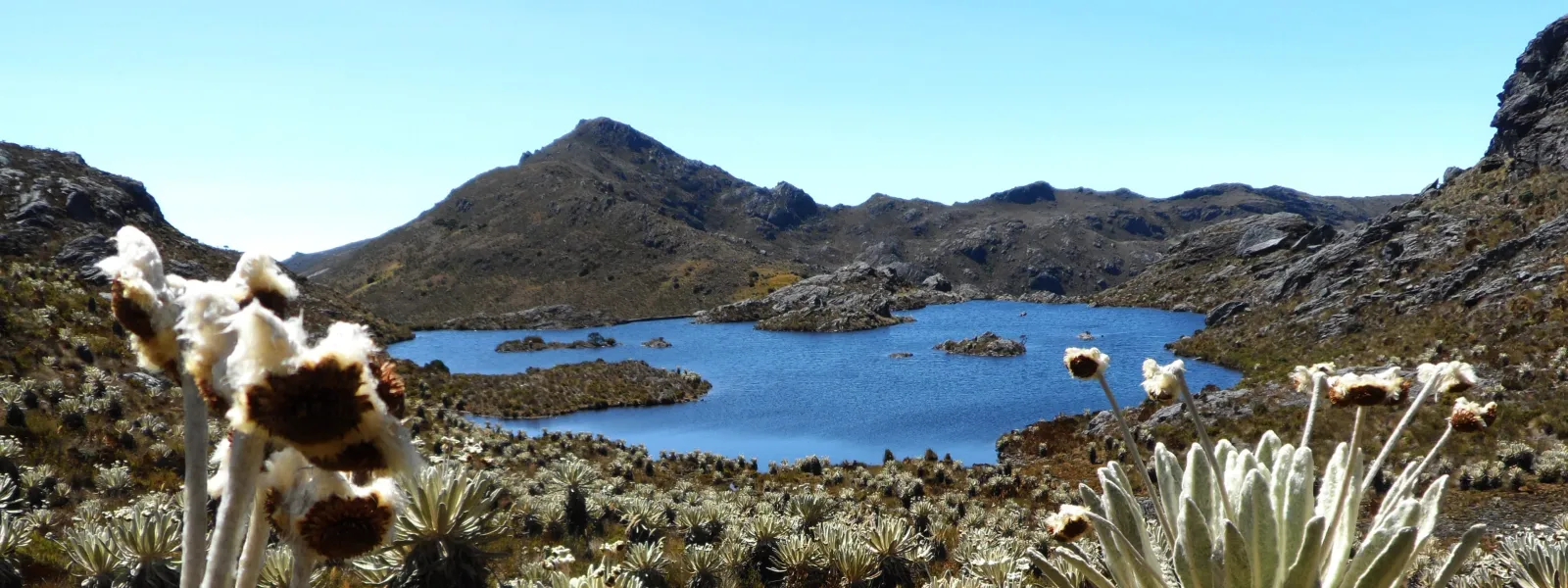
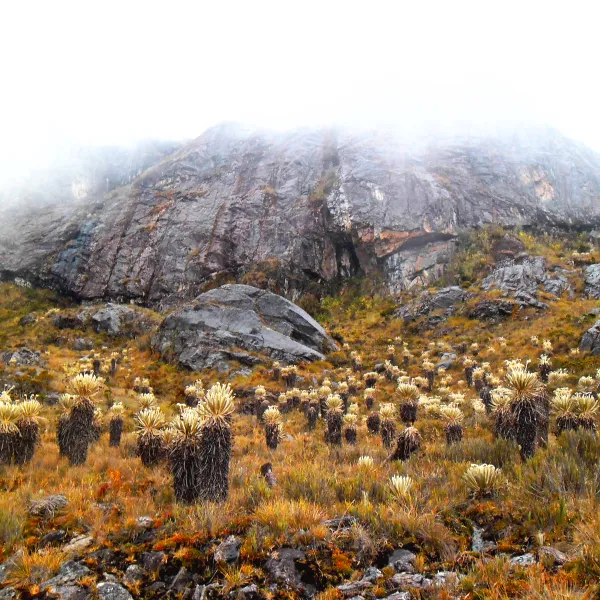
In the Andean region, high-mountain ecosystems known as páramos capture water from the fog and supply it to the lowlands. One such ecosystem is the Santurbán páramo, which provides fresh water to more than two million people in Colombia.
Santurbán, like the other páramos on the continent, also captures large amounts of carbon, making it a key ally in mitigating the climate crisis. It is also a refuge for hundreds of endangered species, including the iconic spectacled bear.
The land in and around the páramo contains gold and other minerals. This has put Santurbán in the spotlight of the multinational mining industry, which for decades has sought to establish large-scale projects in the ecosystem that threaten to degrade it.
The Committee for the Defense of Water and the Santurbán Páramo—a coalition of environmental advocates—has thwarted these ongoing attempts, with support from AIDA and other civil society organizations.
Background
The Santurbán páramo is located in the heart of the Eastern Cordillera of the Colombian Andes, in the departments of Santander and Norte de Santander, at an elevation ranging from 2,200 to 4,290 meters above sea level.
It covers an area of 129,743 hectares and is home to 57 lakes. It serves as a habitat for 457 plant species and 293 species of vertebrate fauna.
There are mineral deposits in Santurbán, primarily gold, but also silver and copper. This explains the region’s mining tradition, particularly in the part of the páramo located in Santander, in the province of Soto Norte. The communities in the area have built their culture and identity around gold mining, which is mainly artisanal and small-scale.
But since the 1990s, the gold deposits in the páramo have also attracted foreign mining conglomerates seeking to develop large-scale projects. This has raised concerns among the population that relies on the Santurbán water sources, who have mobilized in defense of water, their land, and life.
Although national and international regulations prohibit mining in páramos, the Colombian government has granted mining concessions to transnational corporations in Santurbán.
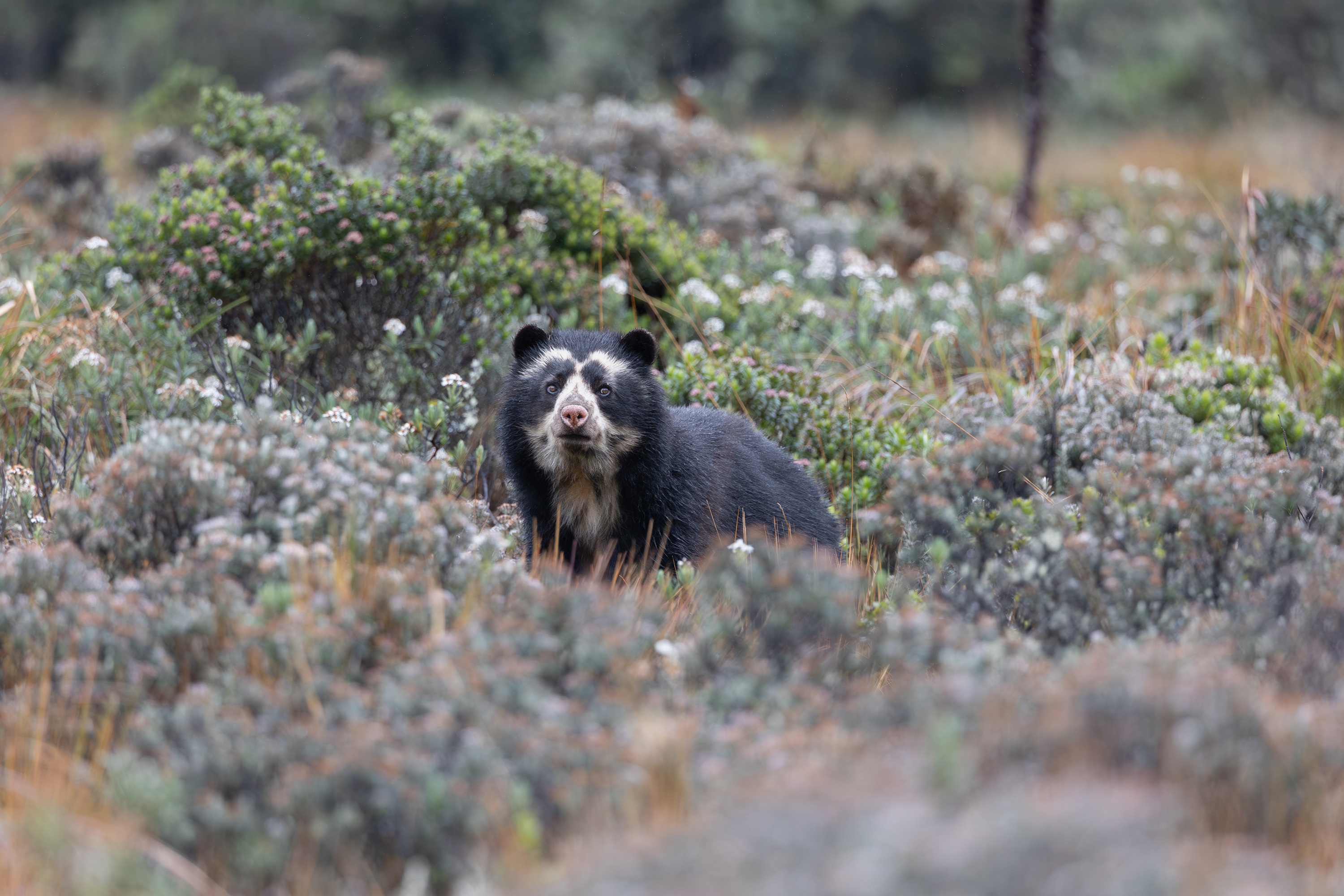
Photo: Keishpixl / Pixabay.
The long struggle to protect the páramo
One of the companies that sought to develop large-scale mining in Santurbán is Eco Oro Minerals Corp.—formerly Greystar Resources—a Canadian company that intended to establish the Angostura open-pit mine there to extract gold and silver. Between 1994 and 1995, the company acquired its mining titles and conducted exploration. And in 2010, it applied for a mining permit.
That was the year AIDA became involved in defending the ecosystem, supporting the Committee for the Defense of Water and the Santurbán Páramo. Our legal work helped convince the Colombian government to deny the mine an environmental permit in May 2011.
In January 2013, the government designated a portion of the páramo (11,700 hectares) as a Regional Natural Park. That year—together with the committee and partner organizations—we carried out a campaign and advocacy efforts to urge the government to recognize the entire Santurbán area as a páramo ecosystem through a delimitation based on scientific criteria. In December 2014, the Ministry of the Environment established a delimitation that protected 76% of the páramo (98,954 hectares).
Furthermore, as a result of a litigation supported by AIDA, in February 2016, Colombia’s highest court reaffirmed that mining in páramos is prohibited.
That same year, in December, the International Finance Corporation (IFC), the World Bank Group’s private sector arm, decided to divest from Eco Oro Minerals. This achievement was the result of a process that began in 2012, when the committee—advised and supported by AIDA and international partner organizations—filed a complaint before an independent accountability mechanism, which concluded that the IFC’s investment in the Angostura project failed to take into account the project’s social and environmental impacts, thereby contradicting the financial institution’s internal policies.
Also in 2016, Eco Oro Minerals filed an arbitration claim against the Colombian government with the International Centre for Settlement of Investment Disputes (ICSID), arguing that it had been adversely affected by government decisions aimed at protecting the country’s páramos, including the delimitation of Santurbán.
In 2017, the Constitutional Court invalidated the delimitation because the affected communities were not consulted. The high court ordered that a participatory delimitation be carried out.
And that year, a new threat to Santurbán emerged when the Canadian multinational Aris Mining applied for an environmental permit for Soto Norte, a gold mining project located near the páramo. Following citizen protests and technical objections, in October 2020, the National Environmental Licensing Authority shelved the project.
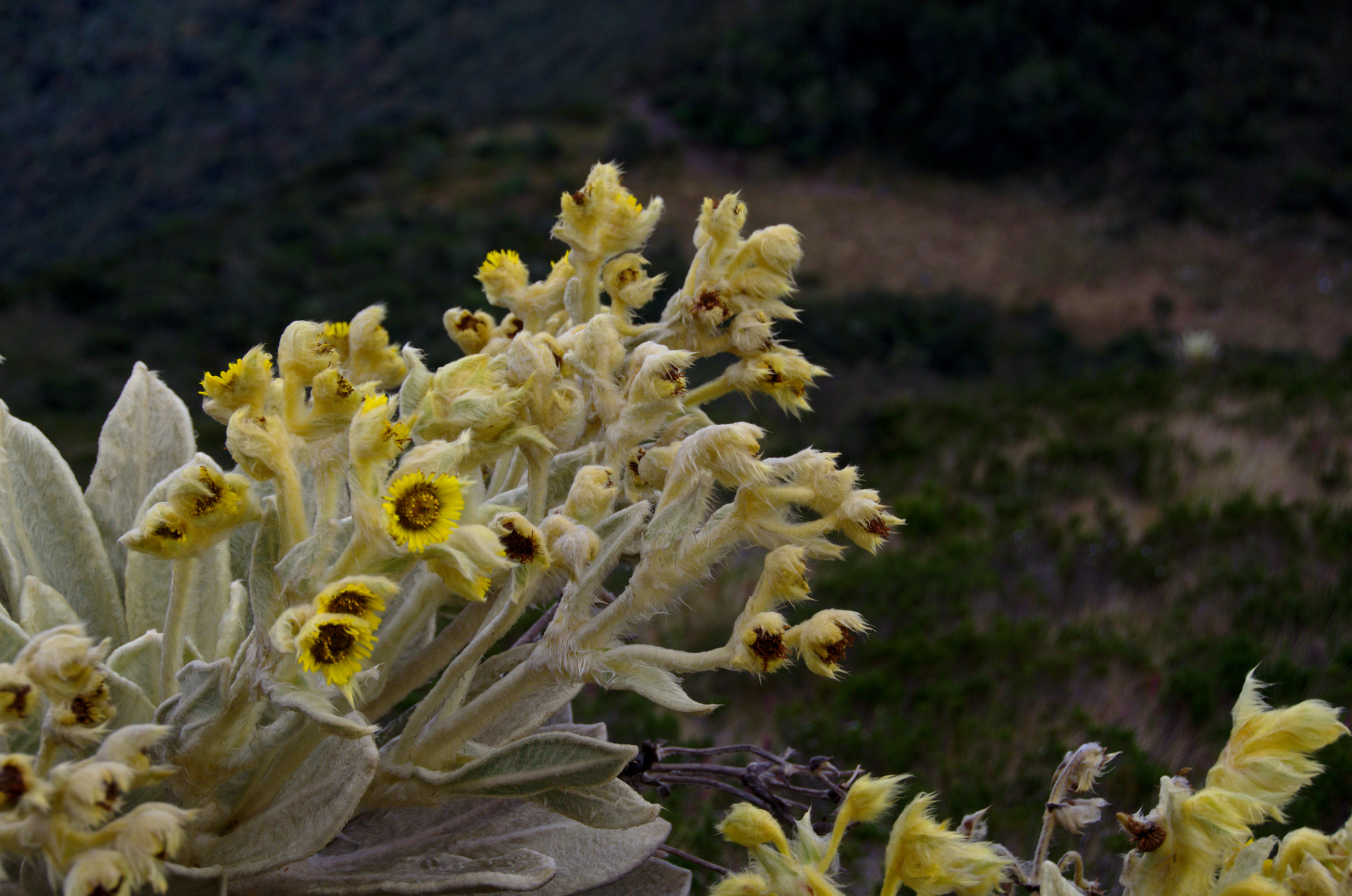
Photo: Aztlec.
Current situation
In March 2025, the Colombian government designated the western flank of the Santurbán massif as a temporary renewable natural resource reserve area, delimiting and protecting an area of 75,344.65 hectares. This resulted in a two-year suspension of the Soto Norte project. However, Aris Mining's contract to formalize Calimineros' small-scale mining activities through the purchase and processing of mineralized material remains in effect.
In addition, the Canadian mining company continues to move the project forward. In September 2025, it released its prefeasibility study, revising the mine’s original design.
Meanwhile, members of the Committee for the Defense of Water and the Santurbán Páramo face threats and stigmatization because of their work. In March 2025, UN Special Rapporteurs and the Working Group on Business and Human Rights denounced these incidents in communications sent to the governments of Colombia, Canada, and the United Arab Emirates, as well as to the companies Aris Mining and MDC Industry Holding Company LLC, the former co-owner of the Soto Norte project.
Regarding the arbitration claim filed by Eco Oro Minerals, in July 2024, ICSID ruled in favor of the Colombian government and rejected the Canadian company’s claim for USD 1.1 billion in compensation.
Concerning the delimitation of Santurbán, in July 2026, the Ministry of the Environment issued a resolution introducing the concept of "progressive delimitation." On that basis, the government proposes to progressively demarcate the páramo, covering 29,199 hectares across 19 municipalities—those where the participatory agreements required by the Constitutional Court in its 2017 ruling have already been finalized. It also proposes two measures on the creation and expansion of reserves to restrict mining in the ecosystem.
Learn more about the impacts of mining on the páramos of Latin America (in Spanish).
Partners:
Related projects
Yearning for better times for Nicaragua
Leaving your country behind is an act of courage, especially when you don’t have much. My grandparents were courageous—they fled Nicaragua’s armed conflict in the 1970s, arriving in Costa Rica with nothing but three children in their arms and the hope for a better future. Costa Rica treated them well, and their grandchildren have been able to lead lives of privilege and opportunity. But my grandmother has always dreamed of returning to her country one day. And although I feel proudly Costa Rican, I have learned to love Nicaragua too, especially after getting to know it. Since April, Nicaragua has been in the midst of an armed conflict that has given rise to a large-scale humanitarian crisis. As the conflict continues, the number of people trying to flee Nicaragua has grown, as have requests for asylum in Costa Rica. As of August, more than 300 people had been killed since the conflict began. Unfortunately, the crisis doesn’t seem to be coming to an end anytime soon. Given the urgency of the situation, in May the Inter-American Commission on Human Rights created a Rapid and Integrated Response Coordination Unit with the mission of paying special attention to the human rights situation in Nicaragua. That month, members of the Commission visited cities at the center of the conflict: Managua, Masaya, León and Matagalpa. The resulting report presents evidence of gross human rights violations that have occurred during the country’s social protests. Among those violated were the rights to life, physical integrity, health and medical treatment, freedom of expression and of the press, and freedom of movement. The Nicaraguan State is obligated to guarantee those rights under international law. Thanks to social media, it has been possible to stay informed of what’s been happening in Nicaragua, practically in real time. You can get constant information via Facebook or Twitter by searching the hashtag #SOSNicaragua. The Commission also regularly publishes information on Facebook and Twitter. If you’d like to do something for those affected by the conflict in Nicaragua, you can donate to the Nicaraguan Association for Human Rights or the non-profit organization SOS Human Rights Nicaragua from Costa Rica, which works to support Nicaraguans here in Costa Rica. My grandmother never saw a Nicaragua free of human rights violations. She has always wanted to return to the land where she grew, where her parents were born and where one of her sisters still lives. I hope that everyone who has had to flee Nicaragua during this conflict will be able to return and see their country free, while also fully enjoying their human rights. Hopefully, through democracy, peace will return to that beautiful nation.
Read more
World’s first legally binding treaty to protect the high seas: Landmark UN negotiations open
New York. Treaty negotiations to conserve and protect nearly two thirds of the ocean open today at the United Nations (UN) in what is widely regarded as the greatest opportunity in a generation to turn the tide on ocean degradation and biodiversity loss. Following over a decade of discussions at the UN, the two-week Intergovernmental Conference (IGC) is the first of a series of four negotiating sessions through 2020 for a new legally-binding treaty to protect marine biodiversity in areas beyond national jurisdiction*, commonly known as the high seas. The ocean beyond 200 nautical miles (370 kilometres) from a country’s shorelines is considered international waters – “the high seas” - and is globally shared. There is no overarching law in place to safeguard its biodiversity or its vital role in provisioning services – such as generating oxygen and regulating the climate. “The high seas cover half our planet and are vital to the functioning of the whole ocean and all life on Earth. The current high seas governance system is weak, fragmented and unfit to address the threats we now face in the 21st century from climate change, illegal and overfishing, plastics pollution and habitat loss. This is an historic opportunity to protect the biodiversity and functions of the high seas through legally binding commitments” said Peggy Kalas, Coordinator of the High Seas Alliance, a partnership of 40+ non-governmental organisations and the International Union for the Conservation of Nature (IUCN). The ocean’s key role in mitigating climate change, which includes absorbing 90% of the extra heat and 26% of the excess carbon dioxide created by human sources, has had a devastating effect on the ocean itself. Managing the multitude of other anthropogenic stressors exerted on it will increase its resilience to climate change and ocean acidification and protect unique marine ecosystems, many of which are still unexplored and undiscovered. Because these are international waters, the conservation measures needed can only be put into place via a global treaty. Professor Alex Rogers of Oxford University who has provided evidence to inform the UN process towards a treaty said: “The half of our planet which is high seas is protecting terrestrial life from the worst impacts of climate change. Yet we do too little to safeguard that or to protect the life within the ocean which is intrinsic to our collective survival. Protecting the biodiversity of the high seas by bringing good governance and law to the whole ocean is the single most important thing we can do to turn the tide for the blue heart of our planet.” Through the UN, states will discuss how to protect and conserve the high seas by establishing: Marine Protected Areas (MPAs): MPAs are widely acknowledged as essential for building ocean resilience, but without a treaty there is no mechanism to enable their creation on the high seas. Environmental Impact Assessments (EIAs): Although some activities are partially regulated in some areas of the high seas, there is no legal framework for conducting EIAs to guard against potential environmental harm. Benefit sharing and technological transfer: Many countries are concerned that they will not benefit from research into high seas species and will lose out on potentially vast new ocean genetic resources, such as discoveries of marine genetic resources (MGRs) that could provide new pharmaceuticals, nutraceuticals and other uses. The negotiations will also aim at improving mechanisms to build capacity and transfer technology in developing countries relating to the high seas. Gladys Martínez, senior attorney of the Interamerican Association for Environmental Defense (AIDA)’s Marine Program, said: “We’re hopeful that this intergovernmental conference will achieve important advances toward the creation of a treaty for the conservation and sustainable use of high seas biodiversity. We’re particularly pleased to see the commitment with which Latin American nations are approaching this important negotiation.” Notes to editors: * ‘Areas beyond national jurisdiction’ means the areas of ocean outside the EEZs and continental shelves of individual states i.e. in most cases beyond 200 nautical miles offshore. It includes, as well as the high seas, the deep sea Area as defined in Part XI of the United Nations Convention on the Law of the Sea (known as UNCLOS), which is the deep seabed beyond the continental shelves of coastal States. For more information see http://highseasalliance.org The process so far: Treaty timeline Press contacts Victor Quintanilla (Mexico), [email protected], +521 5570522107 Mirella von Lindenfels (at the UN during the negotiations), + 44 7717 844 352
Read more
We have to talk about the bees
When I was three years old, I threw rocks at a hive until I was attacked by an enraged swarm of bees. It was one of my first memories and, despite the pain it caused me, I harbor no resentment toward bees, wasps, or bumblebees. It was my fault, my mother told me. They were just defending themselves. She taught me about their stingers, the queen bee, and the honey the produce. She told me how they feed on pollen and flower nectar, something a three-year-old can understand. With time, I learned that plants like coffee, apples, and cotton all rely on pollination by bees to reproduce. Twenty-five years ago, the bees didn’t seem to be in any danger — they were everywhere in my small town in the state of Veracruz, Mexico. Later, I moved to Mexico City, where people “reported” bees to the Civil Protection agency, and firefighters were called in to kill them. To prevent attacks, the city made life difficult for bees: in city parks, trees and flowers were sprayed with chemicals and pesticides, and water sources were dried up. That tactic has spread to agricultural fields around the world. Today, it is rare to see bees, bumblebees, or wasps flying around those spaces. The problem with pesticides The problem with bees became visible around 2006, when beekeepers and farmers in the United States reported losing 70 percent of their bee colonies during one winter season. Until that point, keepers would lose around 15 percent of their colonies during the coldest months. But the decline of bee populations wasn’t isolated that season. Various European nations also began reporting losses in the early 2000’s. According to a European Union report published in 2014, the region loses a third of its bee population every year. Unfortunately, little data exists for Latin America and efforts to monitor bee populations have only just begun. We know that beekeepers in Mexico have reported losses of between 30 and 80 percent of their colonies. Chile reportedly loses nearly half its colonies in the winter, a percentage that was previously between 15 and 20 percent. The Abejas Vivas (Living Bees) collective has recorded the disappearance of more than 10,000 hives in Colombia, and some regions of Argentina have reported the sudden death of nearly 90 percent of their hives. Why should we care? Seventy-five percent of our food production relies on pollinators—vertebrates and invertebrates alike—including bees. The UN Food and Agriculture Organization (FAO) asked countries to adopt policies and food systems that are more favorable to pollinators. “We cannot continue focusing on growing our food production with processes based on the general use of pesticides and chemical products that threaten our crops and our pollinators,” said FAO Director José Graziano da Silvo. The sudden mass death of bees—known as Colony Collapse Disorder—is caused by a number of factors: an increasingly extreme and unstable global climate, the increased use of pesticides and fungicides, parasites like the varroa destructor (a mite that attacks bee hives), and the deterioration of ecosystems that bees rely on for food. Each of these factors creates stress for the bees. According to an article in Science, “exposure to chemicals and a lack of food can endanger bees’ immune systems, making them more susceptible to parasites.” Taking steps to protect bees In April, the European Union banned three neonicotinoide insecticides, which are commonly used for producing corn, cotton, and sunflowers. These pesticides are a risk to not just honeybees, but also to wild bees, other insects, and some larger animals. Of course the ban—a decision passed down by the European Food Safety Authority—has not made pesticide companies happy, but the European Union’s objective is critical: to guarantee food production in its member nations. In the United States, despite the fact that the Environmental Protection Agency has called for the protection of pollinators, the current government reversed the ban on certain insecticides in natural protected areas, a policy enacted by the previous administration. While scientists are working to better understand Colony Collapse Disorder, bees continue to die, putting our food security at greater risk. Many studies are focused on domesticated honeybees, whose columns are the easiest to count. But there exist around 20,000 species of pollinators—including wild bees, wasps, bumblebees, other insects, and vertebrates like birds and bats. There are few studies on the impacts of pesticides, changes in soil makeup, and climate variations on wild pollinating species, but these species are also likely to be at risk. Some plants depend exclusively on certain wild pollinators—plants like orchids, cacao (chocolate), coffee, and agave (tequila). That’s why we have to talk about the bees, and the other animals that help provide us with fruits, vegetables, and grains. Losing these species endangers the livelihoods of small-scale food producers, and a drop in food production would disproportionately affect society’s most vulnerable populations. What can we do? Twenty-five years ago, my mother planted flowers and told me that they would attract bees, which would ensure there would always be more flowers. Beyond the simple but meaningful act of sowing native flowers for local pollinators, we must demand that our food production systems respect the natural environment they depend on. And finally, it’s important to note that although bee deaths are caused by a number of different factors, human activity is the one thing they all have in common.
Read more