
Project
Alberto Peña Kay
Protecting the Santurban páramo from mining's damage
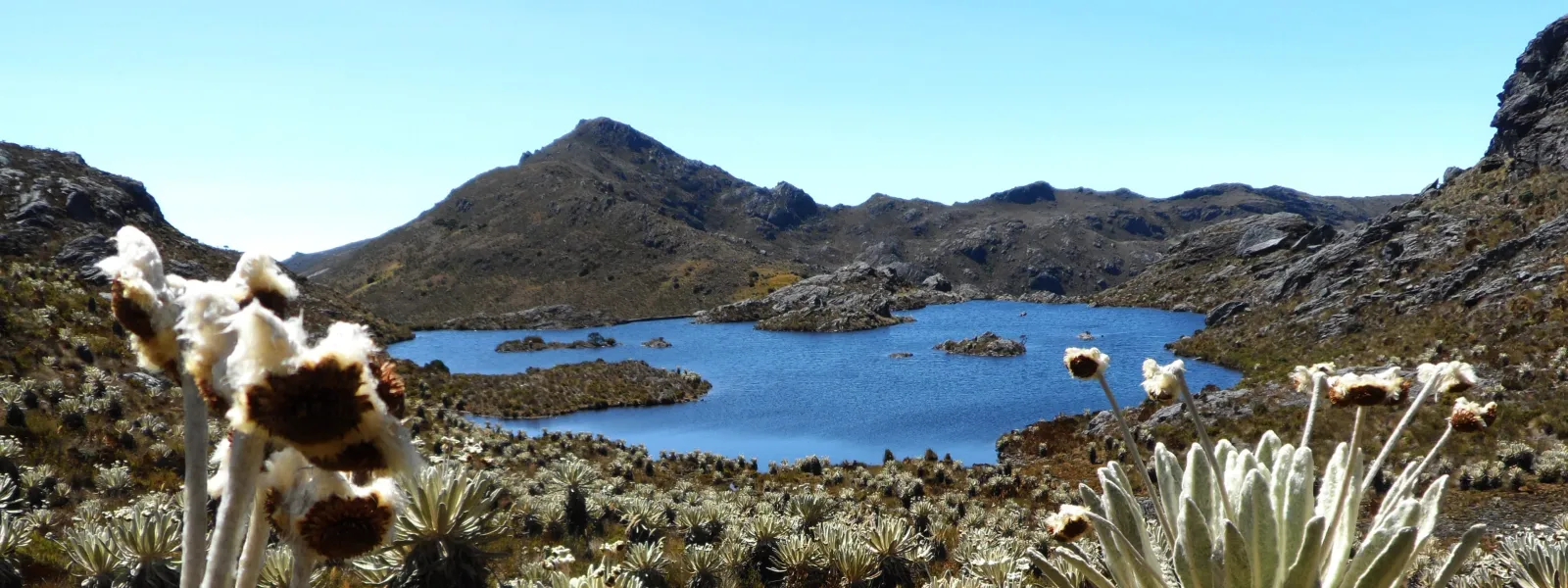
In the Andean region, high-mountain ecosystems known as páramos capture water from the fog and supply it to the lowlands. One such ecosystem is the Santurbán páramo, which provides fresh water to more than two million people in Colombia.
Santurbán, like the other páramos on the continent, also captures large amounts of carbon, making it a key ally in mitigating the climate crisis. It is also a refuge for hundreds of endangered species, including the iconic spectacled bear.
The land in and around the páramo contains gold and other minerals. This has put Santurbán in the spotlight of the multinational mining industry, which for decades has sought to establish large-scale projects in the ecosystem that threaten to degrade it.
The Committee for the Defense of Water and the Santurbán Páramo—a coalition of environmental advocates—has thwarted these ongoing attempts, with support from AIDA and other civil society organizations.
Background
The Santurbán páramo is located in the heart of the Eastern Cordillera of the Colombian Andes, in the departments of Santander and Norte de Santander, at an elevation ranging from 2,200 to 4,290 meters above sea level.
It covers an area of 129,743 hectares and is home to 57 lakes. It serves as a habitat for 457 plant species and 293 species of vertebrate fauna.
There are mineral deposits in Santurbán, primarily gold, but also silver and copper. This explains the region’s mining tradition, particularly in the part of the páramo located in Santander, in the province of Soto Norte. The communities in the area have built their culture and identity around gold mining, which is mainly artisanal and small-scale.
But since the 1990s, the gold deposits in the páramo have also attracted foreign mining conglomerates seeking to develop large-scale projects. This has raised concerns among the population that relies on the Santurbán water sources, who have mobilized in defense of water, their land, and life.
Although national and international regulations prohibit mining in páramos, the Colombian government has granted mining concessions to transnational corporations in Santurbán.

Photo: Keishpixl / Pixabay.
The long struggle to protect the páramo
One of the companies that sought to develop large-scale mining in Santurbán is Eco Oro Minerals Corp.—formerly Greystar Resources—a Canadian company that intended to establish the Angostura open-pit mine there to extract gold and silver. Between 1994 and 1995, the company acquired its mining titles and conducted exploration. And in 2010, it applied for a mining permit.
That was the year AIDA became involved in defending the ecosystem, supporting the Committee for the Defense of Water and the Santurbán Páramo. Our legal work helped convince the Colombian government to deny the mine an environmental permit in May 2011.
In January 2013, the government designated a portion of the páramo (11,700 hectares) as a Regional Natural Park. That year—together with the committee and partner organizations—we carried out a campaign and advocacy efforts to urge the government to recognize the entire Santurbán area as a páramo ecosystem through a delimitation based on scientific criteria. In December 2014, the Ministry of the Environment established a delimitation that protected 76% of the páramo (98,954 hectares).
Furthermore, as a result of a litigation supported by AIDA, in February 2016, Colombia’s highest court reaffirmed that mining in páramos is prohibited.
That same year, in December, the International Finance Corporation (IFC), the World Bank Group’s private sector arm, decided to divest from Eco Oro Minerals. This achievement was the result of a process that began in 2012, when the committee—advised and supported by AIDA and international partner organizations—filed a complaint before an independent accountability mechanism, which concluded that the IFC’s investment in the Angostura project failed to take into account the project’s social and environmental impacts, thereby contradicting the financial institution’s internal policies.
Also in 2016, Eco Oro Minerals filed an arbitration claim against the Colombian government with the International Centre for Settlement of Investment Disputes (ICSID), arguing that it had been adversely affected by government decisions aimed at protecting the country’s páramos, including the delimitation of Santurbán.
In 2017, the Constitutional Court invalidated the delimitation because the affected communities were not consulted. The high court ordered that a participatory delimitation be carried out.
And that year, a new threat to Santurbán emerged when the Canadian multinational Aris Mining applied for an environmental permit for Soto Norte, a gold mining project located near the páramo. Following citizen protests and technical objections, in October 2020, the National Environmental Licensing Authority shelved the project.
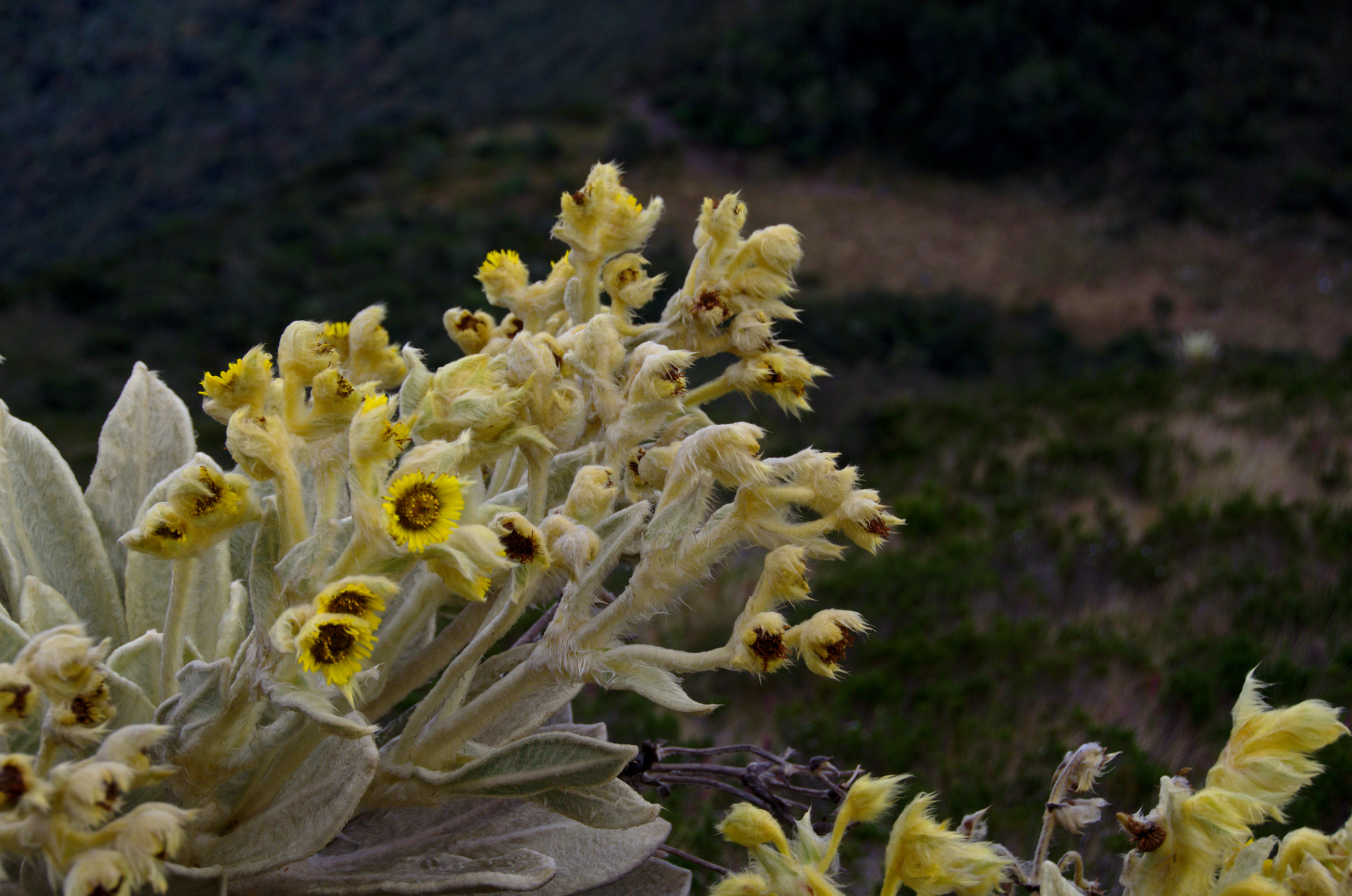
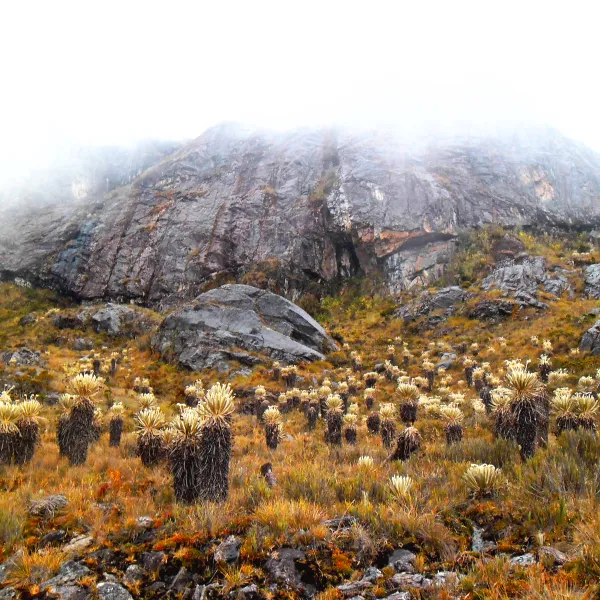
Photo: Aztlec.
Current situation
In March 2025, the Colombian government designated the western flank of the Santurbán massif as a temporary renewable natural resource reserve area, delimiting and protecting an area of 75,344.65 hectares. This resulted in a two-year suspension of the Soto Norte project. However, Aris Mining's contract to formalize Calimineros' small-scale mining activities through the purchase and processing of mineralized material remains in effect.
In addition, the Canadian mining company continues to move the project forward. In September 2025, it released its prefeasibility study, revising the mine’s original design.
Meanwhile, members of the Committee for the Defense of Water and the Santurbán Páramo face threats and stigmatization because of their work. In March 2025, UN Special Rapporteurs and the Working Group on Business and Human Rights denounced these incidents in communications sent to the governments of Colombia, Canada, and the United Arab Emirates, as well as to the companies Aris Mining and MDC Industry Holding Company LLC, the former co-owner of the Soto Norte project.
Regarding the arbitration claim filed by Eco Oro Minerals, in July 2024, ICSID ruled in favor of the Colombian government and rejected the Canadian company’s claim for USD 1.1 billion in compensation.
Concerning the delimitation of Santurbán, in July 2026, the Ministry of the Environment issued a resolution introducing the concept of "progressive delimitation." On that basis, the government proposes to progressively demarcate the páramo, covering 29,199 hectares across 19 municipalities—those where the participatory agreements required by the Constitutional Court in its 2017 ruling have already been finalized. It also proposes two measures on the creation and expansion of reserves to restrict mining in the ecosystem.
Learn more about the impacts of mining on the páramos of Latin America (in Spanish).
Partners:
Related projects
Why Brazil must respond for Belo Monte's human rights violations
We did it! We’re proud to say we recently submitted the final arguments in our case against Brazil before the Inter-American Commission on Human Rights. In them, we demonstrate the damages Belo Monte has caused to indigenous and traditional communities, and residents of Altamira, the city closest to the dam. We’re working for them—to bring the government of Brazil to justice. “Human rights violations are a daily occurrence for those of us affected by the dam,” explained Antônia Melo, coordinator of the Movimento Xingu Vivo para Sempre, a citizens’ collective formed in the face of the dam’s implementation. “It’s urgent that our petition before the Commission advance to sanction the government and guarantee our rights.” We argue that the damages to local communities resulted from a severe lack of foresight and inadequate evaluation, as well as from failure to comply with the conditions for operation established by the government. The many risks denounced prior to the dam’s construction have since become long-term damages—many of which have affected men and women, and youth and the elderly, in different ways. Our report documents the displacement of indigenous and traditional communities forced to leave their territories without adequate alternatives, placing their cultural survival at risk. Among the affected populations are communities dedicated to fishing, who have not yet been compensated for the loss of livelihood. The dam has caused mass die-offs of fish and, although authorities have imposed millions in fines, the report demonstrates that the underlying problem has not been resolved. Local communities now have limited use of the Xingu River as a source of food, sustenance, transportation and entertainment. We have also noted—among other serious harms—the disappearance of traditional trades, such as brickmakers and cart drivers, and of traditional cultural practices. Women, for example, have stopped giving birth in their homes and must now go to a hospital, a reality that has drastically worsened due to the oversaturation of health and education services in Altamira caused by the recent population surge. Our case is now in the hands of the Commission. They will prepare their own report, concluding whether or not human rights violations occurred as a result of the Belo Monte Dam. If violations did occur, they may issue recommendations for remediation. If Brazil fails to respond, the case may be referred to the Inter-American Court on Human Rights, which has the power to issue a ruling condemning Brazil. The completion of this report brings us—and, more importantly, the communities we represent—one big step closer to achieving justice for the many wrongs committed in the name of the Belo Monte Dam, and energy development in the Amazon.
Read more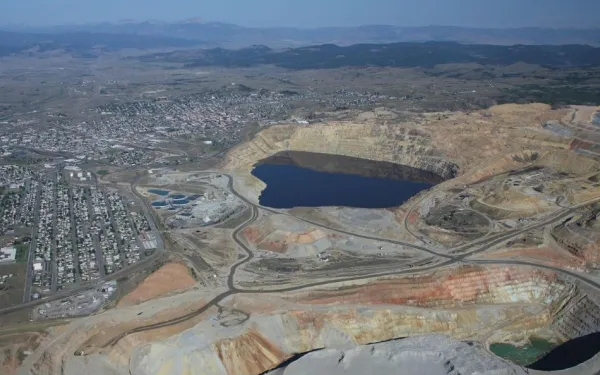
Understanding the true costs of mining in Latin America
Would you accept a business deal that offered you limited profits and infinite expenses? In Latin America, mining is strongly promoted as a source economic advancement. Governments tout extraction as a source of employment and funding for new hospitals, schools, roads and other infrastructure. Up to that point, it sounds like good business. But that’s only half of the story. What they don’t tell you about—in press releases or Environmental Impact Studies—is all of mining’s downsides, including impacts in perpetuity, environmental damage that persists for centuries or even millennia. Among mining’s many damages—rarely mentioned to the communities living alongside the projects—two stand out: Severe landscape modifications: for example, the excavation of an open-pit mine on a mountain or the filling of a valley with mining waste. Contamination of water sources: for example, acid generation and the release of toxic metals into reach rivers, streams and other water sources; or the increase of nitrates and ammonia derived from explosives. In countries like the United States, damages are discussed in environmental assessment processes and legislation exists on both assessment and mitigation mechanisms. In Latin America, promoters of large mining projects often fail to understand that the long-term costs of these mega-projects far outweigh their benefits, and extend far beyond the mine’s active life cycle. After their closure and abandonment, open-pit mines need constant maintenance to minimize the risk of collapse (which never disappears). Water sources must be continuously monitored and treated to avoid toxic contamination. Who will pay for mining’s damages? It’s often difficult to know who must assume mining’s costs because it depends on several different elements: legal frameworks, institutional strength, and social factors. In many countries, governments require mining companies to build and install monitoring and remediation systems (wells, water treatment plants and drains, for example). In other cases, they are asked to pay for the operating costs of these systems for a period of time. The most demanding countries request remediation insurance (i.e. Reclamation Bonds), as well as a contribution to financial funds whose yields will be destined for such measures. This is the case of the Superfund, which manages the remediation of approximately 1,341 industrial sites across the United States. But even so, these policies often underestimate long-term costs, leaving tax papers to cover the rest of the expense. According to the Center for Science in Public Participation, the government would have to pay between $3.8 and $20 billion dollars to remediate the damages of metal mines in the western United States. In other countries, environmental waste from mining doesn’t receive much attention. In Canada—often cited as an example to follow by governments of the region—the Tulsequah Chief mine in British Columbia has been releasing untreated acidic waters since 1957. Mining in Latin America Although many Latin American nations have regulations related to mining, most lack specific laws establishing standardized procedures for monitoring and repairing its damages. Some nations, like Bolivia and Colombia, even lack a legal definition for Mining Environmental Liability or debt for environmental damage. Faced with weak regulation, the closure of a mine is accompanied by isolated and ineffective actions—like simply planting greenery in the affected area. Since it’s not clear who should be held responsible, the few monitoring and remediation actions that exist often end up being abandoned. Another important factor in the region is that environmental damage comes not just from legal mining, but also from illegal and—in the case of Colombia, where mining’s profits are being used to fuel conflict—even criminal mining activities. In Chile, environmental deterioration is largely the product of legal metal mines that have been abandoned. In Bolivia it is most often the result of artisanal mining and cooperatives. In Colombia, illegal and small-scale mining spills mercury into the rivers. In Peru, gold mining causes serious damage to human health and the environment. Throughout Latin America, mining’s historical damages can be found in mineral deposits that date from the colonial age… yet our resources continue to be exploited. Why prevention is key The permanent scars mining leaves behind require constant attention and a level of financing that is impossible to guarantee over time. And given their severity, it’s only possible to partially mitigate, not completely remediate, the most serious damages. That’s why we’re promoting prevention, rather than remediation. Hand-in-hand with local organizations and communities, we’re working to ensure that mining projects are subject to adequate evaluation processes before they’re authorized, and that the risks they imply for communities and the environment are well understood. We advocate for evaluation based on the best available scientific information; we ask that it contemplate alternatives and be carried out independently to guarantee objective results. If the analysis finds that a project will generate perpetual damages that cannot be adequately managed, it must be rejected. We want decision-makers to understand: hard rock mining is not always good business and it always causes environmental harm. We’ll continue working to ensure governments across Latin America understand that fact.
Read more
Statement on the United States’ departure from the UN Human Rights Council
Today AIDA, as an organization that works to protect the right to a healthy environment in the Americas, released the following statement after the United States decided to withdraw from the United Nations Human Rights Council: We consider it a worrying and unfortunate maneuver that could isolate the United States from the international community and weaken its ability to positively influence human rights protection around the world. This decision sends a negative message, especially to countries with serious human rights situations, about which the United States has expressed concern. From our perspective, this decision shows that the administration has also ignored the thousands of people and organizations in the United States that have spoken out against internal policies, including those involving the separation of migrant families and climate change. It’s important to bear in mind that, despite their departure from the Council, the human rights situation in the United States may continue to be evaluated by that body, as it is for other nations that participate in the U.N. Faced with this decision, we urge other States to respond by demonstrating their leadership to ensure the effective protection of human rights globally. The importance of human rights isn’t about a political perspective, isn’t about a party, is about decency and humanity. PRESS CONTACT: Víctor Quintanilla (Mexico), AIDA, [email protected], +521 5570522107
Read more