
Project
Alberto Peña Kay
Protecting the Santurban páramo from mining's damage
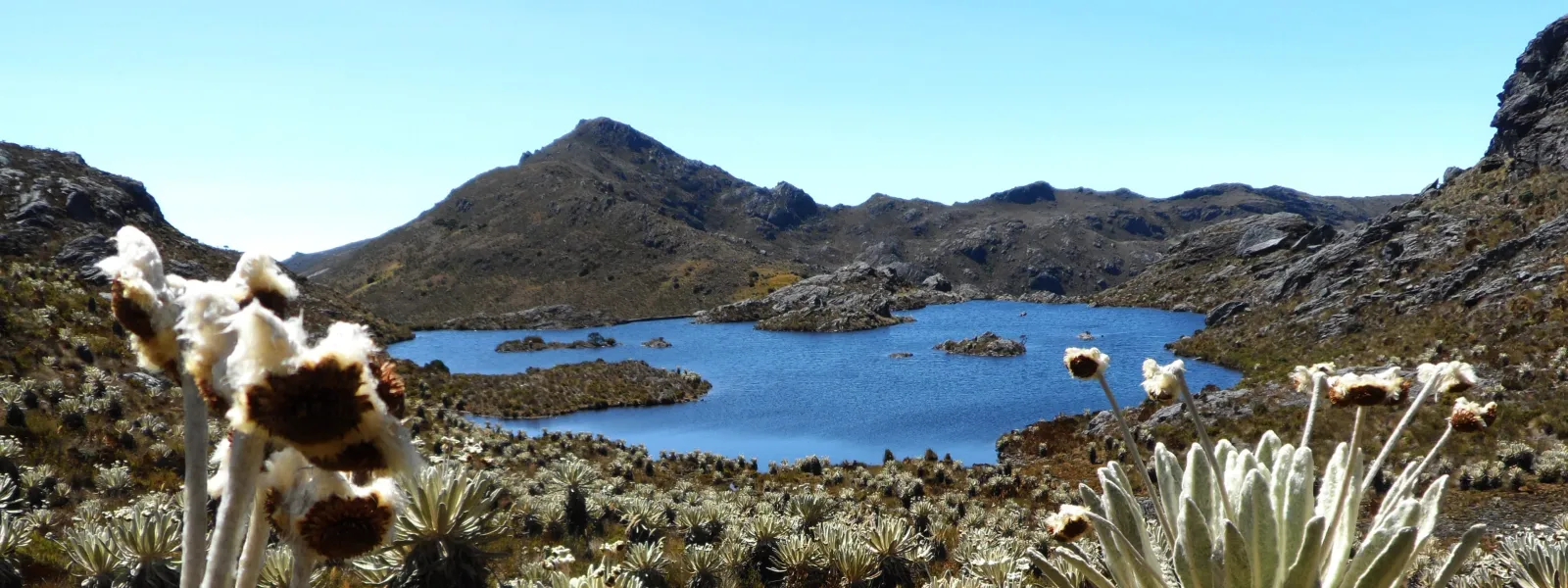
In the Andean region, high-mountain ecosystems known as páramos capture water from the fog and supply it to the lowlands. One such ecosystem is the Santurbán páramo, which provides fresh water to more than two million people in Colombia.
Santurbán, like the other páramos on the continent, also captures large amounts of carbon, making it a key ally in mitigating the climate crisis. It is also a refuge for hundreds of endangered species, including the iconic spectacled bear.
The land in and around the páramo contains gold and other minerals. This has put Santurbán in the spotlight of the multinational mining industry, which for decades has sought to establish large-scale projects in the ecosystem that threaten to degrade it.
The Committee for the Defense of Water and the Santurbán Páramo—a coalition of environmental advocates—has thwarted these ongoing attempts, with support from AIDA and other civil society organizations.
Background
The Santurbán páramo is located in the heart of the Eastern Cordillera of the Colombian Andes, in the departments of Santander and Norte de Santander, at an elevation ranging from 2,200 to 4,290 meters above sea level.
It covers an area of 129,743 hectares and is home to 57 lakes. It serves as a habitat for 457 plant species and 293 species of vertebrate fauna.
There are mineral deposits in Santurbán, primarily gold, but also silver and copper. This explains the region’s mining tradition, particularly in the part of the páramo located in Santander, in the province of Soto Norte. The communities in the area have built their culture and identity around gold mining, which is mainly artisanal and small-scale.
But since the 1990s, the gold deposits in the páramo have also attracted foreign mining conglomerates seeking to develop large-scale projects. This has raised concerns among the population that relies on the Santurbán water sources, who have mobilized in defense of water, their land, and life.
Although national and international regulations prohibit mining in páramos, the Colombian government has granted mining concessions to transnational corporations in Santurbán.
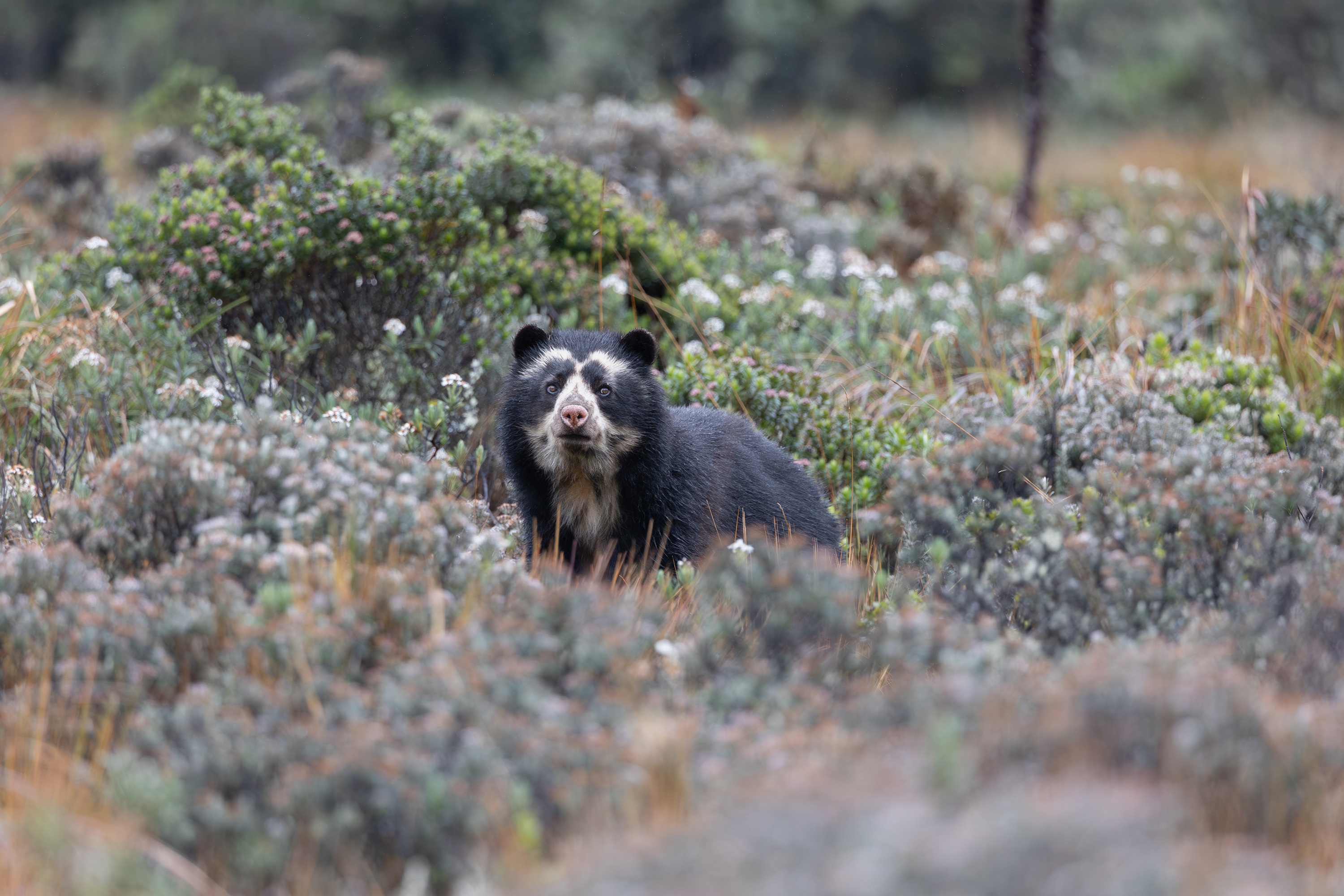
Photo: Keishpixl / Pixabay.
The long struggle to protect the páramo
One of the companies that sought to develop large-scale mining in Santurbán is Eco Oro Minerals Corp.—formerly Greystar Resources—a Canadian company that intended to establish the Angostura open-pit mine there to extract gold and silver. Between 1994 and 1995, the company acquired its mining titles and conducted exploration. And in 2010, it applied for a mining permit.
That was the year AIDA became involved in defending the ecosystem, supporting the Committee for the Defense of Water and the Santurbán Páramo. Our legal work helped convince the Colombian government to deny the mine an environmental permit in May 2011.
In January 2013, the government designated a portion of the páramo (11,700 hectares) as a Regional Natural Park. That year—together with the committee and partner organizations—we carried out a campaign and advocacy efforts to urge the government to recognize the entire Santurbán area as a páramo ecosystem through a delimitation based on scientific criteria. In December 2014, the Ministry of the Environment established a delimitation that protected 76% of the páramo (98,954 hectares).
Furthermore, as a result of a litigation supported by AIDA, in February 2016, Colombia’s highest court reaffirmed that mining in páramos is prohibited.
That same year, in December, the International Finance Corporation (IFC), the World Bank Group’s private sector arm, decided to divest from Eco Oro Minerals. This achievement was the result of a process that began in 2012, when the committee—advised and supported by AIDA and international partner organizations—filed a complaint before an independent accountability mechanism, which concluded that the IFC’s investment in the Angostura project failed to take into account the project’s social and environmental impacts, thereby contradicting the financial institution’s internal policies.
Also in 2016, Eco Oro Minerals filed an arbitration claim against the Colombian government with the International Centre for Settlement of Investment Disputes (ICSID), arguing that it had been adversely affected by government decisions aimed at protecting the country’s páramos, including the delimitation of Santurbán.
In 2017, the Constitutional Court invalidated the delimitation because the affected communities were not consulted. The high court ordered that a participatory delimitation be carried out.
And that year, a new threat to Santurbán emerged when the Canadian multinational Aris Mining applied for an environmental permit for Soto Norte, a gold mining project located near the páramo. Following citizen protests and technical objections, in October 2020, the National Environmental Licensing Authority shelved the project.
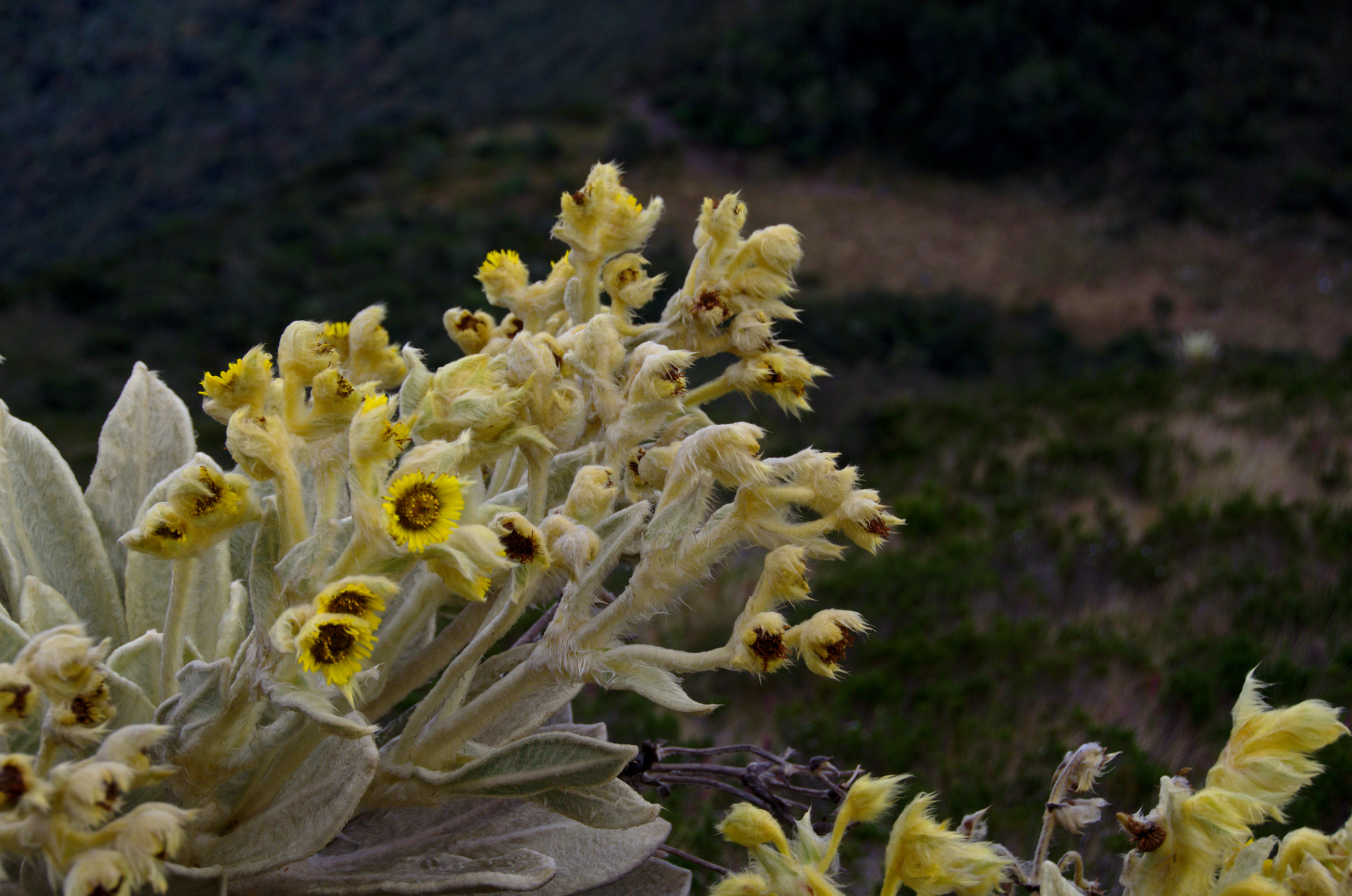
Photo: Aztlec.
Current situation
In March 2025, the Colombian government designated the western flank of the Santurbán massif as a temporary renewable natural resource reserve area, delimiting and protecting an area of 75,344.65 hectares. This resulted in a two-year suspension of the Soto Norte project. However, Aris Mining's contract to formalize Calimineros' small-scale mining activities through the purchase and processing of mineralized material remains in effect.
In addition, the Canadian mining company continues to move the project forward. In September 2025, it released its prefeasibility study, revising the mine’s original design.
Meanwhile, members of the Committee for the Defense of Water and the Santurbán Páramo face threats and stigmatization because of their work. In March 2025, UN Special Rapporteurs and the Working Group on Business and Human Rights denounced these incidents in communications sent to the governments of Colombia, Canada, and the United Arab Emirates, as well as to the companies Aris Mining and MDC Industry Holding Company LLC, the former co-owner of the Soto Norte project.
Regarding the arbitration claim filed by Eco Oro Minerals, in July 2024, ICSID ruled in favor of the Colombian government and rejected the Canadian company’s claim for USD 1.1 billion in compensation.
Concerning the delimitation of Santurbán, in July 2026, the Ministry of the Environment issued a resolution introducing the concept of "progressive delimitation." On that basis, the government proposes to progressively demarcate the páramo, covering 29,199 hectares across 19 municipalities—those where the participatory agreements required by the Constitutional Court in its 2017 ruling have already been finalized. It also proposes two measures on the creation and expansion of reserves to restrict mining in the ecosystem.
Learn more about the impacts of mining on the páramos of Latin America (in Spanish).
Partners:
Related projects
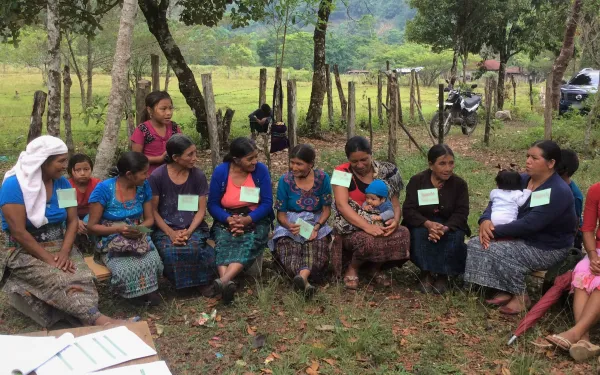
The women defending Guatemala’s rivers from large dams
When Maria gets up each morning, the first thing she does is open the tap in her house to see if there’s any water. If there is, she prepares coffee and, within a few hours, food for her family. Her house is alive with plants and animals. Dogs, cats and chickens surround her as she lights the wood stove, carrying her young son on her back. Maria lives in Ixquisis, a region of northwestern Guatemala near the Mexican border, in the department of Huehuetenango. There, water springs from the earth and large rivers like the Pojom and the Negro flow through the mountains. For Maria, the river is a special place. There, she meets with other women and washes clothes, a traditional activity for women in her community, most of whom are indigenous. Each afternoon, as the water flows steadily downstream, they talk about their families, their to-do lists, their joys and their worries. Last month, Maria joined with the other women of Ixquisis to speak about the threats the dams pose to their way of life. They were part of a workshop AIDA organized in collaboration with Protection International and the International Platform Against Impunity. Maria’s life has changed a lot since they started building the Pojom II and San Andrés dams, and she’s been losing sleep. Before the construction of the dams began, Maria used to fish. By submerging a basket in the river, she gathered—as if by magic—snails, shrimp and small fish. These are riches the river no longer provides. Instead, the once pristine river has become filled with garbage, rubble and other debris. The workers use its water to wash cars and machinery. “One day we will run out of water and we won’t be able to live,” Maria said, echoing the primary fear of the women of Ixquisis. “Our children will suffer.” Their fear is well founded. Many families like Maria’s already suffer from stomach and skin diseases that they associate with water pollution. Before the workshop, the women of Ixquisis hadn’t had the opportunity to speak publicly about the importance of water and the rivers in their lives. They hadn’t been able to explain how their rivers had changed since the dams’ construction began. They had also never been provided with information about the projects. But even without knowing the details of the dams, Maria and her neighbors understood that the water in their homes no longer arrived as cleanly or as regularly as before. Time and again, they have peacefully expressed their opposition to the dams. But their voices have been stigmatized and shaken by fear of reprisal. Before Maria walked calmly through her community, even at night. She now leaves the house in fear. But the people of Ixquisis have the support of people and organizations that work to protect the environment and human rights. The international organization Front Line Defenders, for example, recently awarded them the 2018 Award for Human Rights Defenders at Risk. One day after the women’s workshop, we organized a second meeting attended by the men of the region. The lack of water has affected their main subsistence activity: the cultivation of bananas, cardamom, vegetables and other products they take to market. Because their harvests have decreased, they must now work more hours to obtain the same profit. I learned a lot from Maria. Her strength, as well as that of all the residents of Ixquisis, comes from her respect for nature and all it offers them. I share that feeling and channel it into my work as an AIDA attorney, legally advising the men and women of Ixquisis on how to defend their territory. I work so that water will continue to flow from their taps, and so that they can one day walk again without fear, in search of a healthier future for their children.
Read moreThe women defending Guatemala’s rivers from large dams
When Maria gets up each morning, the first thing she does is open the tap in her house to see if there’s any water. If there is, she prepares coffee and, within a few hours, food for her family. Her house is alive with plants and animals. Dogs, cats and chickens surround her as she lights the wood stove, carrying her young son on her back. Maria lives in Ixquisis, a region of northwestern Guatemala near the Mexican border, in the department of Huehuetenango. There, water springs from the earth and large rivers like the Pojom and the Negro flow through the mountains. For Maria, the river is a special place. There, she meets with other women and washes clothes, a traditional activity for women in her community, most of whom are indigenous. Each afternoon, as the water flows steadily downstream, they talk about their families, their to-do lists, their joys and their worries. Last month, Maria joined with the other women of Ixquisis to speak about the threats the dams pose to their way of life. They were part of a workshop AIDA organized in collaboration with Protection International and the International Platform Against Impunity. Maria’s life has changed a lot since they started building the Pojom II and San Andrés dams, and she’s been losing sleep. Before the construction of the dams began, Maria used to fish. By submerging a basket in the river, she gathered—as if by magic—snails, shrimp and small fish. These are riches the river no longer provides. Instead, the once pristine river has become filled with garbage, rubble and other debris. The workers use its water to wash cars and machinery. “One day we will run out of water and we won’t be able to live,” Maria said, echoing the primary fear of the women of Ixquisis. “Our children will suffer.” Their fear is well founded. Many families like Maria’s already suffer from stomach and skin diseases that they associate with water pollution. Before the workshop, the women of Ixquisis hadn’t had the opportunity to speak publicly about the importance of water and the rivers in their lives. They hadn’t been able to explain how their rivers had changed since the dams’ construction began. They had also never been provided with information about the projects. But even without knowing the details of the dams, Maria and her neighbors understood that the water in their homes no longer arrived as cleanly or as regularly as before. Time and again, they have peacefully expressed their opposition to the dams. But their voices have been stigmatized and shaken by fear of reprisal. Before Maria walked calmly through her community, even at night. She now leaves the house in fear. But the people of Ixquisis have the support of people and organizations that work to protect the environment and human rights. The international organization Front Line Defenders, for example, recently awarded them the 2018 Award for Human Rights Defenders at Risk. One day after the women’s workshop, we organized a second meeting attended by the men of the region. The lack of water has affected their main subsistence activity: the cultivation of bananas, cardamom, vegetables and other products they take to market. Because their harvests have decreased, they must now work more hours to obtain the same profit. I learned a lot from Maria. Her strength, as well as that of all the residents of Ixquisis, comes from her respect for nature and all it offers them. I share that feeling and channel it into my work as an AIDA attorney, legally advising the men and women of Ixquisis on how to defend their territory. I work so that water will continue to flow from their taps, and so that they can one day walk again without fear, in search of a healthier future for their children.
Read more
The many reasons we care for our oceans
At AIDA, we work to protect our oceans. It’s not an easy task, especially considering the serious threats facing our vast seas—from warming waters to tons of plastic waste. But the members of our marine team believe it’s a valuable one. And they’re committed to conserving our region’s marine ecosystems, no matter what. Learn what motivates them. "Any effort I make to protect the oceans will benefit my children." Gladys Martinez, Senior Attorney "My greatest motivation is the thought that any work I do to protect the oceans will benefit my children and the other boys and girls on our planet, both present and future generations. To care for our oceans is to guarantee life, because our oceans truly are the lungs of our planet.” Playing in the sand, swimming, searching for fish among the rocks or walking on the beach at sunset… in all the most beautiful memories of Gladys' childhood, there is the sea. "It motivates me to know that we have the opportunity to change." Camilo Thompson, Legal Advisor "It motivates me to know that we have the opportunity to change, that respecting nature and caring for our ocean will bring a smile to our faces. The ocean brings us equilibrium. We cannot continue to destroy our corals, overexploit fish stocks or damage the coastal environments so closely linked to the sea. The opportunity for change is here and now. " Camilo currently lives very close to the sea, in La Paz, a coastal city of Baja California Sur, Mexico. He enjoys it very much. “I like to think I can help us understand all that our oceans provide us, and help to conserve the life within.” Magie Rodríguez, Legal Assistant “I’ve always been intrigued by the immensity of the oceans, and the relatively little we know about them. I like to think I can help us understand all that our oceans provide us, and help to conserve the life within. Although they make up the majority of our planet, for years we have neglected them, filling them with garbage and stripping them of their resources. Many fight to protect our terrestrial treasures, but few have turned their eyes to the seas.” When she was in grade school, Magie visited the beach where the Tarcoles River meets the sea. There she saw all that the most contaminated river in Central America carried to the sea. It was rght then she decided she had to do something to protect her country’s beaches from pollution and degradation. “I want future generations to enjoy the majesty of the oceans.” Maria José Gonzalez-Bernat, Scientific Advisor “I want future generations to enjoy the majesty of the oceans. It’s my greatest motivation. The oceans are one of the primary reserves of biodiversity on our planet, essential to maintaining its health. They’re a source of food and income for millions of people. Their social, environmental and economic importance motivates me to continue researching the oceans and finding new ways to promote their conservation and sustainable use. I will continue this work with governments, organizations and fishing communities alike.” One of Maria José’s most treasured memories is her first scuba diving trip. She can still see the different shades of blue and the many-hued plants and animals she visited below the surface.
Read more