
Project
Alberto Peña Kay
Protecting the Santurban páramo from mining's damage
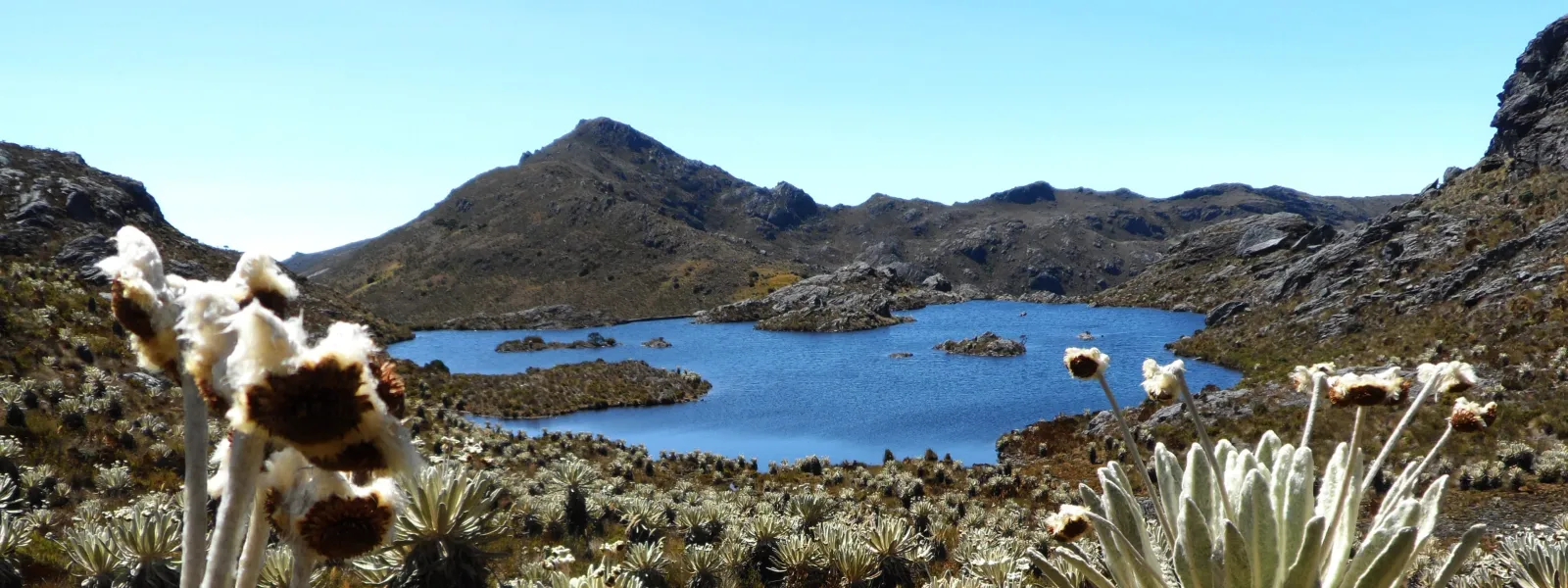
In the Andean region, high-mountain ecosystems known as páramos capture water from the fog and supply it to the lowlands. One such ecosystem is the Santurbán páramo, which provides fresh water to more than two million people in Colombia.
Santurbán, like the other páramos on the continent, also captures large amounts of carbon, making it a key ally in mitigating the climate crisis. It is also a refuge for hundreds of endangered species, including the iconic spectacled bear.
The land in and around the páramo contains gold and other minerals. This has put Santurbán in the spotlight of the multinational mining industry, which for decades has sought to establish large-scale projects in the ecosystem that threaten to degrade it.
The Committee for the Defense of Water and the Santurbán Páramo—a coalition of environmental advocates—has thwarted these ongoing attempts, with support from AIDA and other civil society organizations.
Background
The Santurbán páramo is located in the heart of the Eastern Cordillera of the Colombian Andes, in the departments of Santander and Norte de Santander, at an elevation ranging from 2,200 to 4,290 meters above sea level.
It covers an area of 129,743 hectares and is home to 57 lakes. It serves as a habitat for 457 plant species and 293 species of vertebrate fauna.
There are mineral deposits in Santurbán, primarily gold, but also silver and copper. This explains the region’s mining tradition, particularly in the part of the páramo located in Santander, in the province of Soto Norte. The communities in the area have built their culture and identity around gold mining, which is mainly artisanal and small-scale.
But since the 1990s, the gold deposits in the páramo have also attracted foreign mining conglomerates seeking to develop large-scale projects. This has raised concerns among the population that relies on the Santurbán water sources, who have mobilized in defense of water, their land, and life.
Although national and international regulations prohibit mining in páramos, the Colombian government has granted mining concessions to transnational corporations in Santurbán.

Photo: Keishpixl / Pixabay.
The long struggle to protect the páramo
One of the companies that sought to develop large-scale mining in Santurbán is Eco Oro Minerals Corp.—formerly Greystar Resources—a Canadian company that intended to establish the Angostura open-pit mine there to extract gold and silver. Between 1994 and 1995, the company acquired its mining titles and conducted exploration. And in 2010, it applied for a mining permit.
That was the year AIDA became involved in defending the ecosystem, supporting the Committee for the Defense of Water and the Santurbán Páramo. Our legal work helped convince the Colombian government to deny the mine an environmental permit in May 2011.
In January 2013, the government designated a portion of the páramo (11,700 hectares) as a Regional Natural Park. That year—together with the committee and partner organizations—we carried out a campaign and advocacy efforts to urge the government to recognize the entire Santurbán area as a páramo ecosystem through a delimitation based on scientific criteria. In December 2014, the Ministry of the Environment established a delimitation that protected 76% of the páramo (98,954 hectares).
Furthermore, as a result of a litigation supported by AIDA, in February 2016, Colombia’s highest court reaffirmed that mining in páramos is prohibited.
That same year, in December, the International Finance Corporation (IFC), the World Bank Group’s private sector arm, decided to divest from Eco Oro Minerals. This achievement was the result of a process that began in 2012, when the committee—advised and supported by AIDA and international partner organizations—filed a complaint before an independent accountability mechanism, which concluded that the IFC’s investment in the Angostura project failed to take into account the project’s social and environmental impacts, thereby contradicting the financial institution’s internal policies.
Also in 2016, Eco Oro Minerals filed an arbitration claim against the Colombian government with the International Centre for Settlement of Investment Disputes (ICSID), arguing that it had been adversely affected by government decisions aimed at protecting the country’s páramos, including the delimitation of Santurbán.
In 2017, the Constitutional Court invalidated the delimitation because the affected communities were not consulted. The high court ordered that a participatory delimitation be carried out.
And that year, a new threat to Santurbán emerged when the Canadian multinational Aris Mining applied for an environmental permit for Soto Norte, a gold mining project located near the páramo. Following citizen protests and technical objections, in October 2020, the National Environmental Licensing Authority shelved the project.
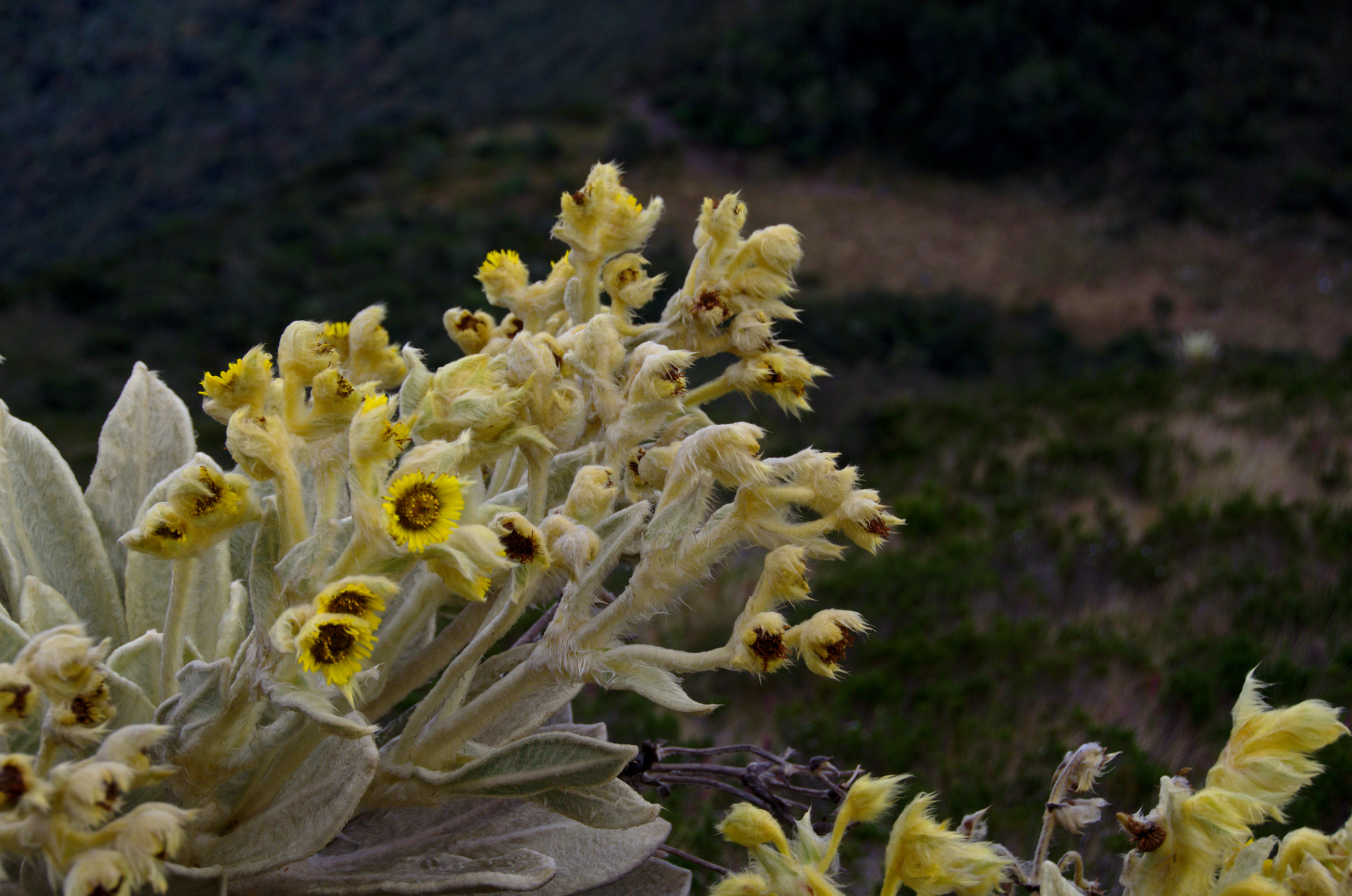
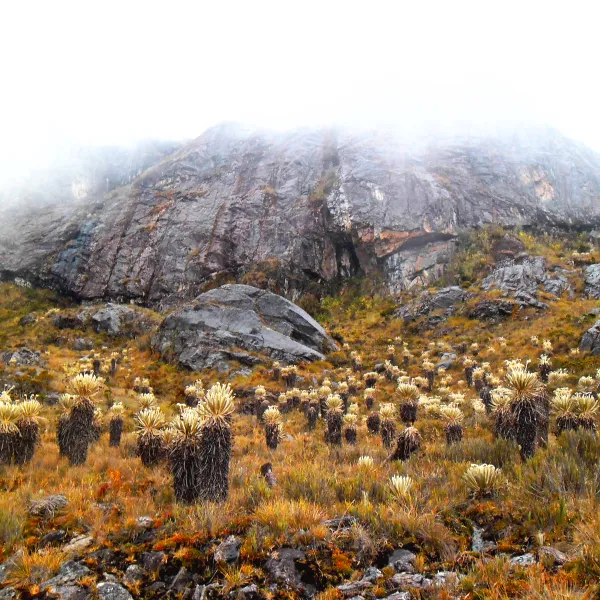
Photo: Aztlec.
Current situation
In March 2025, the Colombian government designated the western flank of the Santurbán massif as a temporary renewable natural resource reserve area, delimiting and protecting an area of 75,344.65 hectares. This resulted in a two-year suspension of the Soto Norte project. However, Aris Mining's contract to formalize Calimineros' small-scale mining activities through the purchase and processing of mineralized material remains in effect.
In addition, the Canadian mining company continues to move the project forward. In September 2025, it released its prefeasibility study, revising the mine’s original design.
Meanwhile, members of the Committee for the Defense of Water and the Santurbán Páramo face threats and stigmatization because of their work. In March 2025, UN Special Rapporteurs and the Working Group on Business and Human Rights denounced these incidents in communications sent to the governments of Colombia, Canada, and the United Arab Emirates, as well as to the companies Aris Mining and MDC Industry Holding Company LLC, the former co-owner of the Soto Norte project.
Regarding the arbitration claim filed by Eco Oro Minerals, in July 2024, ICSID ruled in favor of the Colombian government and rejected the Canadian company’s claim for USD 1.1 billion in compensation.
Concerning the delimitation of Santurbán, in July 2026, the Ministry of the Environment issued a resolution introducing the concept of "progressive delimitation." On that basis, the government proposes to progressively demarcate the páramo, covering 29,199 hectares across 19 municipalities—those where the participatory agreements required by the Constitutional Court in its 2017 ruling have already been finalized. It also proposes two measures on the creation and expansion of reserves to restrict mining in the ecosystem.
Learn more about the impacts of mining on the páramos of Latin America (in Spanish).
Partners:
Related projects

The flame that ignited Nicaragua’s protests
On April 3, a wildfire broke out in the Indio Maíz Biological Reserve in southeast Nicaragua. The government’s slow and inadequate response to the fire marked the beginning of a struggle that continues to this day—a struggle to uphold democracy and protect our rights. Using the hash tag #SOSIndioMaíz, hundreds of university students organized a peaceful protest to demand the government of President Daniel Ortega, in its eleventh year, act quickly to battle the blazes and save the reserve. The students gathered peacefully in the streets on April 12 and 13, but their protest was repressed by the police and para-police groups. Located along the border with Costa Rica, Indio Maíz is considered the second most important natural reserve in the country and one of the largest in Central America. According to experts, the site is vital for the maintenance of a unified block of tropical forest through which thousands of wild animals travel—it connects with Barra de Colorado National Wildlife Refuge and Tortuguero National Park, both in Costa Rica. Indio Maíz also protects several of Nicaragua’s most important water basins. Despite the reserve’s importance, the government waited three days to react to the fire. Then, it filled the area with military personnel and prevented independent media from entering. When the NGO Fundación del Río informed the people of the late response, the government threated to cancel their legal status. Costa Rica’s offer to send firefighters to help battle the blaze was rejected. What resulted was the destruction of more than 5,000 hectares of forest in the reserve’s core area, a disaster that nationally renowned scientist Jaimes Incer Barquero called “the most serious environmental problem in the history of Nicaragua.” The awakening of a nation Many of the young people who demanded the protection of Indio Maíz took to the streets again on April 18 to show their dissatisfaction with reforms to the Social Security Law, announced two days before. Environmentalists, pensioners, journalists, black and indigenous activists, and people from across the national spectrum joined them. The government’s repression was repeated and the message was clear: in Nicaragua protest was forbidden. The next day, April 19, the demonstrations grew exponentially. Thousands of people joined from every corner of the country. With the growing crowds, the government’s response intensified as well. A wave of state violence and repression has, as of May 21, left 76 people dead and 868 wounded, most in the context of the protests; five remain in critical condition. In addition, 438 people have been arrested, among them students, civilians, human rights defenders and journalists. The figures above come from the preliminary observations of the Inter-American Commission on Human Rights, which made a special visit to the country in May. Undoubtedly, as journalist Carlos Fernando Chamorro has stated, it has been “the worst bloodbath in the history of Nicaragua during peacetime.” Environmental defense in Nicaragua Over the last decade, environment struggles like that of Indio Maíz have been gaining strength across the nation. One of the most iconic has been the movement demanding the cancellation of the law that authorized the Interoceanic Grand Canal—the Antichannel Campesino Movement, led by the fearless Francisca Ramírez. The canal threatens to strip thousands of Nicaraguans of their land and put the country’s biodiversity at grave risk. In their five years of resistance, the movement has been victim to repression, threats and persecution. Another example can be found in the National Environmentalist Movement Against Industrial Mining. This year, in a public hearing for the Inter-American Commission on Human Rights, members denounced human rights violations and the criminalization of defenders in the context of extractive industries. These struggles have faced off against a State with corruption problems, weakened institutions, alliances with private economic interests, and little will to protect natural resources. Added to this are the criminalization of citizen protest and the persecution of people who speak out in defense of the environment and human rights. But Nicaragua has changed. The flames of Indio Maíz revived the people’s consciousness and ignited their desire for free manifestation, a right guaranteed by our Political Constitution (but denied by the current government’s reign). The peaceful protests of April and May are the result of a decade of abuses and the systematic denial of our rights. Nicaraguans are fighting today for the true democratization of our country, which I hope will come hand-in-hand with respect for our right to a healthy environment.
Read more
Did you know coral reefs produce medicine?
“How can coral reefs contribute to modern medicine?” I wondered as I spoke to a group of doctors and nurses working on liver disease in Mexico. My uncle is part of the organization (Amihigo) and has long been interested in my work as a marine attorney with AIDA. When I got back from the meeting, the information I found backed up our discussion and clarified the link between our two worlds: coral reefs are natural, underwater pharmacies. The plants and animals living in reefs have developed chemical compounds to protect themselves against predators, fight diseases, and prevent the excessive growth of competing organisms. Corals have been recognized as an important source of new drugs to treat cancer, arthritis, Alzheimer’s, bacterial infections, viruses and heart disease, among other serious illnesses, according to the US-based National Ocean Service. The pharmaceutical industry has found corals provide value in the development of new products. Certain corals, for example, stimulate the welding of broken bones. Components of a Caribbean sponge allow for the creation of Zidovudina, a medicine used to treat HIV. Despite these discoveries, the medical use of coral reefs is considered underdeveloped. As an environmental attorney, what I take away from this realization is that if coral reefs are not effectively preserved, their great potential for modern medicine will never be fully realized. It’s a real threat. Studies estimate that 30 percent of the world’s reefs are already seriously damaged, and that 60 percent could disappear by 2030 due to water pollution, destructive fishing methods, overfishing, and other unsustainable human activities. Compounding these is the growing threat of climate change. Several Latin American nations are blessed with large areas of coral reefs that provide environmental and social benefits. But many don’t do enough to protect that wealth. Mexico’s coastline extends for more than 11 thousand kilometers, featuring 5,100 square kilometers of islands, reefs and cays. Its coral reefs span six major regions: the Gulf of California and the Western Mexican Pacific Coast, the Revillagigedo Archipelago, the Marias Islands, the South Pacific Coast, the Gulf of Mexico Reef Corridor and the Campeche Bank, and the Mexican Caribbean. The loss and degradation of these rich reef systems is a growing problem across the country. Unsustainable and poorly planned urban and coastal development is causing sedimentation and pollution, resulting in the growth of microalgae that rob light and oxygen, effectively suffocating the corals. In the Veracruz Reef System, the largest in the Gulf of Mexico, the expansion of the Port of Veracruz is doing just that. To protect reefs, it’s imperative that governments act with caution when approving land use in urban development plans to avoid damaging coastal wetlands (lagoons, bays, mangroves, coastal dunes and sea grasses, among others), and that they adopt adequate measures for wastewater treatment. The protection and restoration of coral reefs and coastal wetlands should be prioritized over economic interests and short-term economic benefits. Effective reef conservation can also be supported by good regulation practices. Measures to protect key species such as the parrotfish from overfishing, for example, would go a long was to preserving the health of coral reefs. And we now know that the health of those reefs is directly tied to our own. It’s important the health industry—from doctors and patients to scientists and pharmacists—join the call to conserve our coral reefs, natural medicine banks that can help guarantee our rights to a dignified life and a healthy environment.
Read moreDid you know coral reefs produce medicine?
“How can coral reefs contribute to modern medicine?” I wondered as I spoke to a group of doctors and nurses working on liver disease in Mexico. My uncle is part of the organization (Amihigo) and has long been interested in my work as a marine attorney with AIDA. When I got back from the meeting, the information I found backed up our discussion and clarified the link between our two worlds: coral reefs are natural, underwater pharmacies. The plants and animals living in reefs have developed chemical compounds to protect themselves against predators, fight diseases, and prevent the excessive growth of competing organisms. Corals have been recognized as an important source of new drugs to treat cancer, arthritis, Alzheimer’s, bacterial infections, viruses and heart disease, among other serious illnesses, according to the US-based National Ocean Service. The pharmaceutical industry has found corals provide value in the development of new products. Certain corals, for example, stimulate the welding of broken bones. Components of a Caribbean sponge allow for the creation of Zidovudina, a medicine used to treat HIV. Despite these discoveries, the medical use of coral reefs is considered underdeveloped. As an environmental attorney, what I take away from this realization is that if coral reefs are not effectively preserved, their great potential for modern medicine will never be fully realized. It’s a real threat. Studies estimate that 30 percent of the world’s reefs are already seriously damaged, and that 60 percent could disappear by 2030 due to water pollution, destructive fishing methods, overfishing, and other unsustainable human activities. Compounding these is the growing threat of climate change. Several Latin American nations are blessed with large areas of coral reefs that provide environmental and social benefits. But many don’t do enough to protect that wealth. Mexico’s coastline extends for more than 11 thousand kilometers, featuring 5,100 square kilometers of islands, reefs and cays. Its coral reefs span six major regions: the Gulf of California and the Western Mexican Pacific Coast, the Revillagigedo Archipelago, the Marias Islands, the South Pacific Coast, the Gulf of Mexico Reef Corridor and the Campeche Bank, and the Mexican Caribbean. The loss and degradation of these rich reef systems is a growing problem across the country. Unsustainable and poorly planned urban and coastal development is causing sedimentation and pollution, resulting in the growth of microalgae that rob light and oxygen, effectively suffocating the corals. In the Veracruz Reef System, the largest in the Gulf of Mexico, the expansion of the Port of Veracruz is doing just that. To protect reefs, it’s imperative that governments act with caution when approving land use in urban development plans to avoid damaging coastal wetlands (lagoons, bays, mangroves, coastal dunes and sea grasses, among others), and that they adopt adequate measures for wastewater treatment. The protection and restoration of coral reefs and coastal wetlands should be prioritized over economic interests and short-term economic benefits. Effective reef conservation can also be supported by good regulation practices. Measures to protect key species such as the parrotfish from overfishing, for example, would go a long was to preserving the health of coral reefs. And we now know that the health of those reefs is directly tied to our own. It’s important the health industry—from doctors and patients to scientists and pharmacists—join the call to conserve our coral reefs, natural medicine banks that can help guarantee our rights to a dignified life and a healthy environment.
Read more