
Project
Alberto Peña Kay
Protecting the Santurban páramo from mining's damage
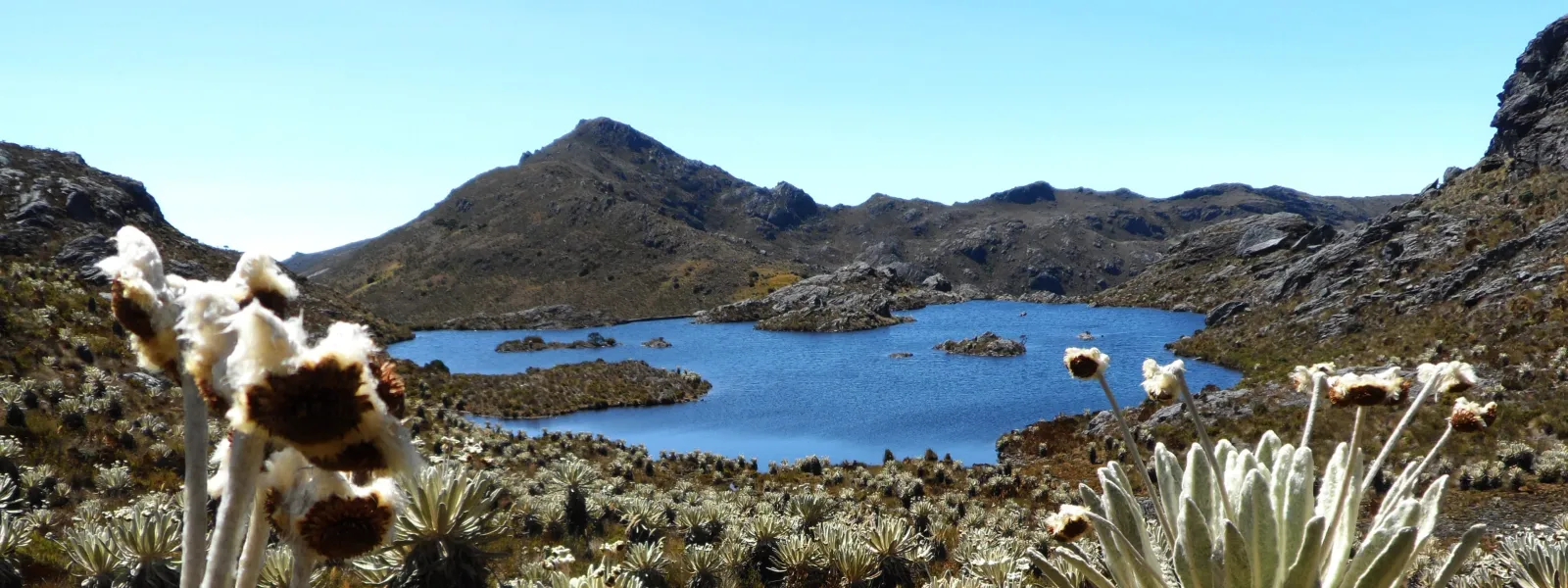
In the Andean region, high-mountain ecosystems known as páramos capture water from the fog and supply it to the lowlands. One such ecosystem is the Santurbán páramo, which provides fresh water to more than two million people in Colombia.
Santurbán, like the other páramos on the continent, also captures large amounts of carbon, making it a key ally in mitigating the climate crisis. It is also a refuge for hundreds of endangered species, including the iconic spectacled bear.
The land in and around the páramo contains gold and other minerals. This has put Santurbán in the spotlight of the multinational mining industry, which for decades has sought to establish large-scale projects in the ecosystem that threaten to degrade it.
The Committee for the Defense of Water and the Santurbán Páramo—a coalition of environmental advocates—has thwarted these ongoing attempts, with support from AIDA and other civil society organizations.
Background
The Santurbán páramo is located in the heart of the Eastern Cordillera of the Colombian Andes, in the departments of Santander and Norte de Santander, at an elevation ranging from 2,200 to 4,290 meters above sea level.
It covers an area of 129,743 hectares and is home to 57 lakes. It serves as a habitat for 457 plant species and 293 species of vertebrate fauna.
There are mineral deposits in Santurbán, primarily gold, but also silver and copper. This explains the region’s mining tradition, particularly in the part of the páramo located in Santander, in the province of Soto Norte. The communities in the area have built their culture and identity around gold mining, which is mainly artisanal and small-scale.
But since the 1990s, the gold deposits in the páramo have also attracted foreign mining conglomerates seeking to develop large-scale projects. This has raised concerns among the population that relies on the Santurbán water sources, who have mobilized in defense of water, their land, and life.
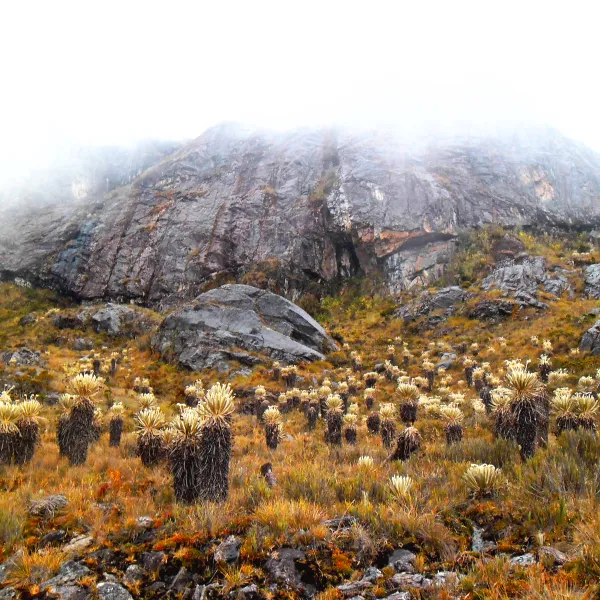
Although national and international regulations prohibit mining in páramos, the Colombian government has granted mining concessions to transnational corporations in Santurbán.
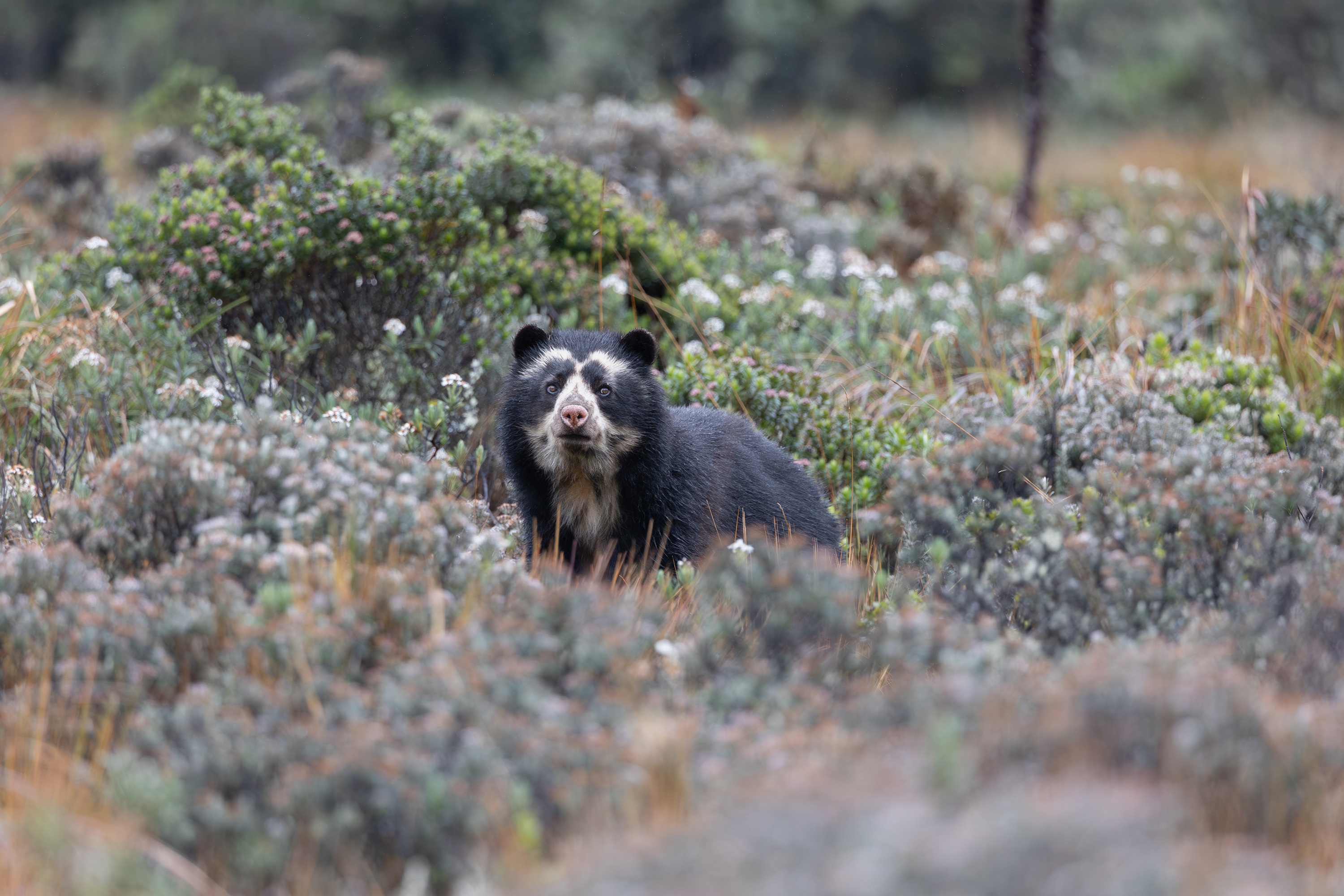
Photo: Keishpixl / Pixabay.
The long struggle to protect the páramo
One of the companies that sought to develop large-scale mining in Santurbán is Eco Oro Minerals Corp.—formerly Greystar Resources—a Canadian company that intended to establish the Angostura open-pit mine there to extract gold and silver. Between 1994 and 1995, the company acquired its mining titles and conducted exploration. And in 2010, it applied for a mining permit.
That was the year AIDA became involved in defending the ecosystem, supporting the Committee for the Defense of Water and the Santurbán Páramo. Our legal work helped convince the Colombian government to deny the mine an environmental permit in May 2011.
In January 2013, the government designated a portion of the páramo (11,700 hectares) as a Regional Natural Park. That year—together with the committee and partner organizations—we carried out a campaign and advocacy efforts to urge the government to recognize the entire Santurbán area as a páramo ecosystem through a delimitation based on scientific criteria. In December 2014, the Ministry of the Environment established a delimitation that protected 76% of the páramo (98,954 hectares).
Furthermore, as a result of a litigation supported by AIDA, in February 2016, Colombia’s highest court reaffirmed that mining in páramos is prohibited.
That same year, in December, the International Finance Corporation (IFC), the World Bank Group’s private sector arm, decided to divest from Eco Oro Minerals. This achievement was the result of a process that began in 2012, when the committee—advised and supported by AIDA and international partner organizations—filed a complaint before an independent accountability mechanism, which concluded that the IFC’s investment in the Angostura project failed to take into account the project’s social and environmental impacts, thereby contradicting the financial institution’s internal policies.
Also in 2016, Eco Oro Minerals filed an arbitration claim against the Colombian government with the International Centre for Settlement of Investment Disputes (ICSID), arguing that it had been adversely affected by government decisions aimed at protecting the country’s páramos, including the delimitation of Santurbán.
In 2017, the Constitutional Court invalidated the delimitation because the affected communities were not consulted. The high court ordered that a participatory delimitation be carried out.
And that year, a new threat to Santurbán emerged when the Canadian multinational Aris Mining applied for an environmental permit for Soto Norte, a gold mining project located near the páramo. Following citizen protests and technical objections, in October 2020, the National Environmental Licensing Authority shelved the project.
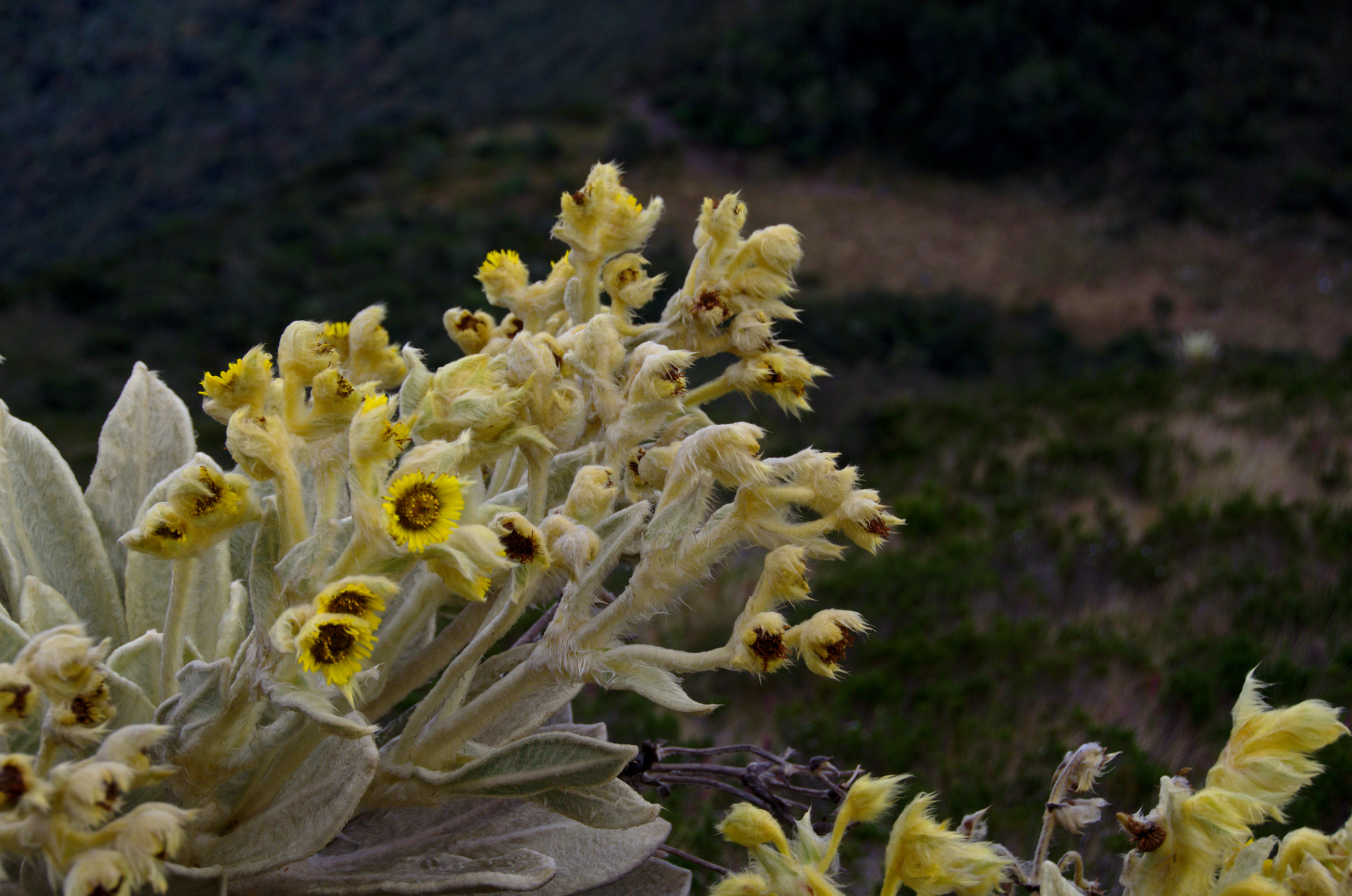
Photo: Aztlec.
Current situation
In March 2025, the Colombian government designated the western flank of the Santurbán massif as a temporary renewable natural resource reserve area, delimiting and protecting an area of 75,344.65 hectares. This resulted in a two-year suspension of the Soto Norte project. However, Aris Mining's contract to formalize Calimineros' small-scale mining activities through the purchase and processing of mineralized material remains in effect.
In addition, the Canadian mining company continues to move the project forward. In September 2025, it released its prefeasibility study, revising the mine’s original design.
Meanwhile, members of the Committee for the Defense of Water and the Santurbán Páramo face threats and stigmatization because of their work. In March 2025, UN Special Rapporteurs and the Working Group on Business and Human Rights denounced these incidents in communications sent to the governments of Colombia, Canada, and the United Arab Emirates, as well as to the companies Aris Mining and MDC Industry Holding Company LLC, the former co-owner of the Soto Norte project.
Regarding the arbitration claim filed by Eco Oro Minerals, in July 2024, ICSID ruled in favor of the Colombian government and rejected the Canadian company’s claim for USD 1.1 billion in compensation.
Concerning the delimitation of Santurbán, in July 2026, the Ministry of the Environment issued a resolution introducing the concept of "progressive delimitation." On that basis, the government proposes to progressively demarcate the páramo, covering 29,199 hectares across 19 municipalities—those where the participatory agreements required by the Constitutional Court in its 2017 ruling have already been finalized. It also proposes two measures on the creation and expansion of reserves to restrict mining in the ecosystem.
Learn more about the impacts of mining on the páramos of Latin America (in Spanish).
Partners:
Related projects
To keep corals healthy, we must protect herbivorous fish
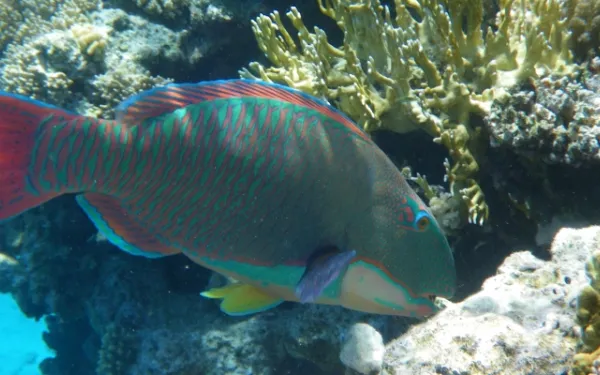
We all know coral reefs are fragile environments, highly vulnerable to climate change and pollution. But did you know they also had to compete for light and oxygen with the tiny macro-algae that cover their surface? That’s why some of corals' best friends are herbivorous fish—species like parrotfish and surgeonfish that feed on algae, helping to keep corals healthy. But in the Caribbean, unsustainable fishing practices are causing a decline in populations of parrotfish (and other herbivorous fish), putting the health of corals at risk. That’s why, in AIDA’s marine program, we’re launching a large-scale project dedicated to the conservation of herbivorous fish throughout Latin America—focused on the nations of Colombia, Costa Rica, Guatemala, Honduras, Mexico and Panama. Herbivorous fish conservation The parrotfish is one of the most important fish living in coral reefs. They spend most of the day nibbling on corals, cleaning algae from their surface. They also eat dead corals—those bits and pieces that protrude from the reef—and later excrete them as white sand. A key element to maintaining sustainable fisheries is catching only adult fish—those that have already matured and reproduced. But in the Caribbean right now, people are fishing juvenile parrotfish. Though not a commercial species, parrotfish are being captured because they’re some of the only fish left in the reef. The irresponsible nature of commercial fishing in the region has caused a drastic decline in both commercial and herbivorous fish. “A key element of maintaining a sustainable fishery is catching only adult fish, which have already matured and reproduced. But what’s happening in the Caribbean is the fishing of young parrotfish,” explained Magie Rodríguez, AIDA marine attorney. Most fishing is done with gillnets and hooks, which cause high levels of by-catch—unwanted populations of marine species caught in commercial fishing. Harpoons and traps are also used, which prevent younger, smaller fish from escaping and continuing their life cycle. Surgeonfish and damselfish are two other herbivorous fish—both small and quite beautiful—falling victim to irresponsible fishing practices. Their popularity in tropical home aquariums has led to a decline in their wild populations. Remember Dory, from Finding Nemo? She was a surgeonfish, and the movie’s popularity led to an increased demand for her species in aquariums. What the movie didn’t tell you is that the surgeonfish’s small, sharp teeth are highly adept at chewing algae, preventing the plantlife from essentially choking coral reefs of oxygen and light. Conservation strategies AIDA’s project for the conservation of herbivorous fish in the Caribbean is in its initial phases. Our objective is the implementation of diverse strategies, across the six Latin American nations, to protect these fish and, by extension, the reefs they call home. “To restore the balance of the coral ecosystem, it’s necessary to achieve the recovery not just of herbivorous fish populations, but also of commercial species,” Rodríguez said. So we’re talking not just about fishing bans, but also about the general adoption of sustainable fishing tools that take into account the tourism potential of coral reefs. The project will also contemplate adequate wastewater management strategies, consumer education, and collaboration between governments, NGOs, universities and scientists. Corals are, among other things, a source of economic income and food for coastal communities that live from fishing and tourism. Plus, they are natural barriers against storms and hurricanes. “Corals do a lot for us and we have to take care of them,” Rodríguez added. “We’ve come to find that the best thing we can do to keep corals healthy is to protect the herbivorous fish that call them home.”
Read moreTo keep corals healthy, we must protect herbivorous fish
We all know coral reefs are fragile environments, highly vulnerable to climate change and pollution. But did you know they also had to compete for light and oxygen with the tiny macro-algae that cover their surface? That’s why some of corals' best friends are herbivorous fish—species like parrotfish and surgeonfish that feed on algae, helping to keep corals healthy. But in the Caribbean, unsustainable fishing practices are causing a decline in populations of parrotfish (and other herbivorous fish), putting the health of corals at risk. That’s why, in AIDA’s marine program, we’re launching a large-scale project dedicated to the conservation of herbivorous fish throughout Latin America—focused on the nations of Colombia, Costa Rica, Guatemala, Honduras, Mexico and Panama. Herbivorous fish conservation The parrotfish is one of the most important fish living in coral reefs. They spend most of the day nibbling on corals, cleaning algae from their surface. They also eat dead corals—those bits and pieces that protrude from the reef—and later excrete them as white sand. A key element to maintaining sustainable fisheries is catching only adult fish—those that have already matured and reproduced. But in the Caribbean right now, people are fishing juvenile parrotfish. Though not a commercial species, parrotfish are being captured because they’re some of the only fish left in the reef. The irresponsible nature of commercial fishing in the region has caused a drastic decline in both commercial and herbivorous fish. “A key element of maintaining a sustainable fishery is catching only adult fish, which have already matured and reproduced. But what’s happening in the Caribbean is the fishing of young parrotfish,” explained Magie Rodríguez, AIDA marine attorney. Most fishing is done with gillnets and hooks, which cause high levels of by-catch—unwanted populations of marine species caught in commercial fishing. Harpoons and traps are also used, which prevent younger, smaller fish from escaping and continuing their life cycle. Surgeonfish and damselfish are two other herbivorous fish—both small and quite beautiful—falling victim to irresponsible fishing practices. Their popularity in tropical home aquariums has led to a decline in their wild populations. Remember Dory, from Finding Nemo? She was a surgeonfish, and the movie’s popularity led to an increased demand for her species in aquariums. What the movie didn’t tell you is that the surgeonfish’s small, sharp teeth are highly adept at chewing algae, preventing the plantlife from essentially choking coral reefs of oxygen and light. Conservation strategies AIDA’s project for the conservation of herbivorous fish in the Caribbean is in its initial phases. Our objective is the implementation of diverse strategies, across the six Latin American nations, to protect these fish and, by extension, the reefs they call home. “To restore the balance of the coral ecosystem, it’s necessary to achieve the recovery not just of herbivorous fish populations, but also of commercial species,” Rodríguez said. So we’re talking not just about fishing bans, but also about the general adoption of sustainable fishing tools that take into account the tourism potential of coral reefs. The project will also contemplate adequate wastewater management strategies, consumer education, and collaboration between governments, NGOs, universities and scientists. Corals are, among other things, a source of economic income and food for coastal communities that live from fishing and tourism. Plus, they are natural barriers against storms and hurricanes. “Corals do a lot for us and we have to take care of them,” Rodríguez added. “We’ve come to find that the best thing we can do to keep corals healthy is to protect the herbivorous fish that call them home.”
Read more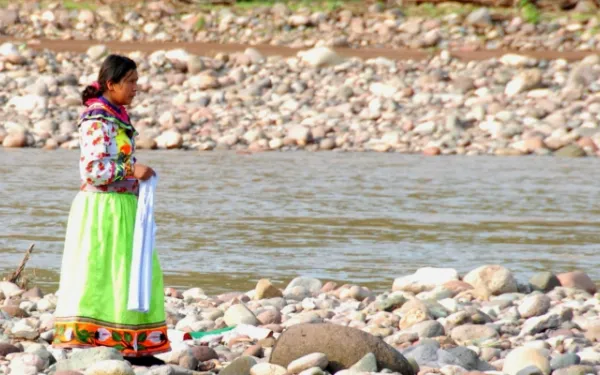
Women, water and life: the vital connection
As a woman and an environmental defender, I find it necessary to commemorate the role of women in the protection of our natural heritage. I feel a special pull toward making visible the links between environmental defense, courage, and gender. Women are the first victims of environmental deterioration, but they’re also the greatest protagonists in the defense and conservation of nature. Although it may seem like women and the environment are two different topics, there are subtle—but strong—links between the two, particularly when it comes to water. Women have an important relationship with water—they are both sources of life and fundamental to existence. It’s not surprising, then, that women can often be seen leading struggles in defense of water, especially within indigenous and rural populations. Joan Martínez Alier, professor of economics at the Autonomous University of Barcelona and an expert in political ecology, explained to Agencia EFE that often, socio-environmental conflicts involving mining or the privatization of water directly affect the survival of communities and, for that reason, women act in defense of water as they would in defense of their land or their family: bravely and completely. Little is known, however, about the knowledge and experience of women in water management. In many cases, especially in the Global South, the administration of water resources, as well as the elaboration and implementation of related policies, doesn’t take into account gender roles and lacks a differentiated approach. In rural Colombia, for example, women bring water to their homes from rivers or springs, boil it for use in the kitchen, and care for it. Despite their central role, they are not consulted when decisions are made locally or nationally about the water supply. It’s necessary to bring visibility to the role women play in water management, give equal recognition to the interests of men and women, and promote equal access to decision-making spaces. Only in that way can we advance towards greater equality. It’s important to remember that Latin America is one of the most dangerous regions in the world to be an environmental defender, and more dangerous still for women. Many women, who fight silently from their communities or from their leadership roles, have suffered the violence and injustice that comes with defending what is theirs. I must take a moment now to remember and honor Berta Cáceres, the indigenous activist and leader of the Civil Council of Popular and Indigenous Organizations of Honduras (COPINH), who dedicated her life to the defense of the Gualcarque River. Berta was murdered in March 2016, after years of threats stemming from her opposition of the Agua Zarca Dam. She may be gone, but her spirit, and her commitment to justice, is still very much alive. I’d also like to mention my colleagues, courageous friends, and allies who through their struggles are shaping a more just and equitable world. They believe, with all their hearts, that gender justice comes hand-in-hand with environmental justice. In our current reality, equality, more than a starting point, is a goal we must work towards. Concrete actions are needed to counterbalance the discrimination that affects us all. That’s why it is fundamental to incorporate the gender approach in any plan, program, project or mechanism of public administration. As the World Bank mentions in a 2002 report, the way to ensure both men and women benefit more equitably from policies is to make their needs and experiences an integral part of them. Life depends on women, as it does on water. That’s why we proudly act as stubborn defenders of not just water, but of all natural resources and of those who depend on them. Although not always visible, our struggle is as present as the water that travels in so many ways across our planet. It’s important that we come together in support of one another—in our victories and our defeats. May we continue sharing our fears and our fights and, above all else, may we never abandon the defense of our territory—because it defines us and to it we owe everything. I’ve always thought that water has the face of a woman. Every day now, I see it more clearly.
Read more