
Project
Alberto Peña Kay
Protecting the Santurban páramo from mining's damage
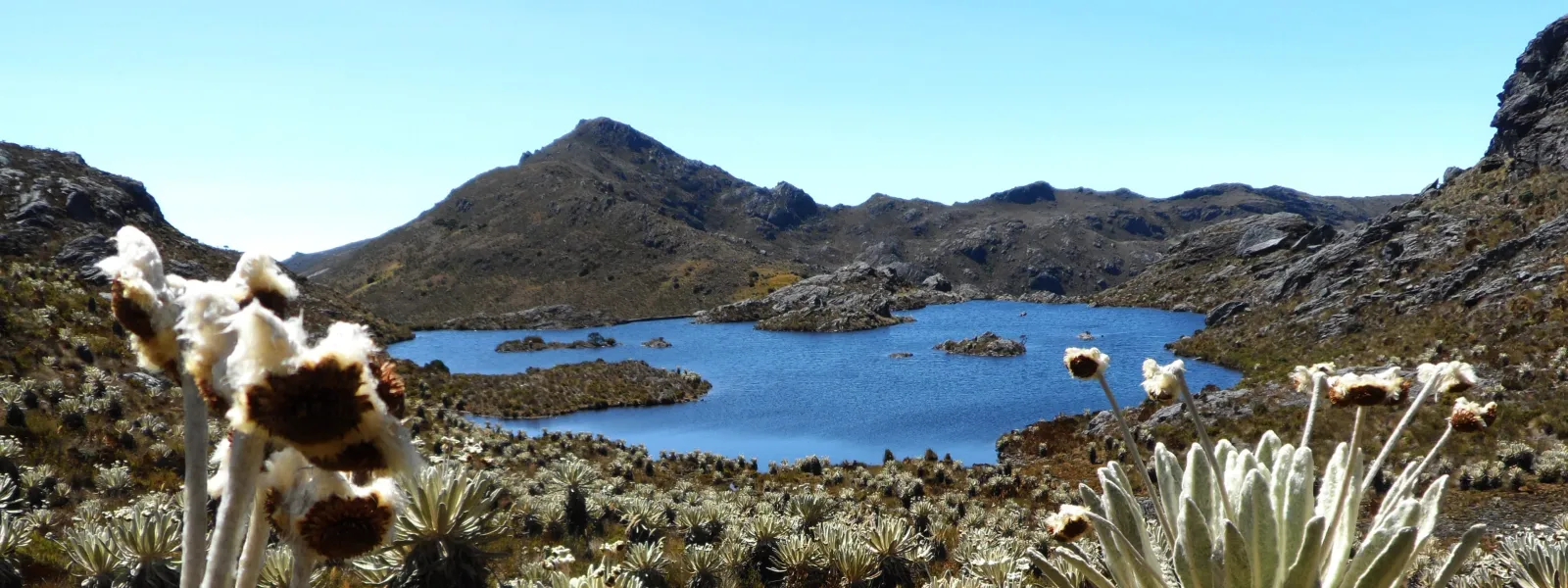
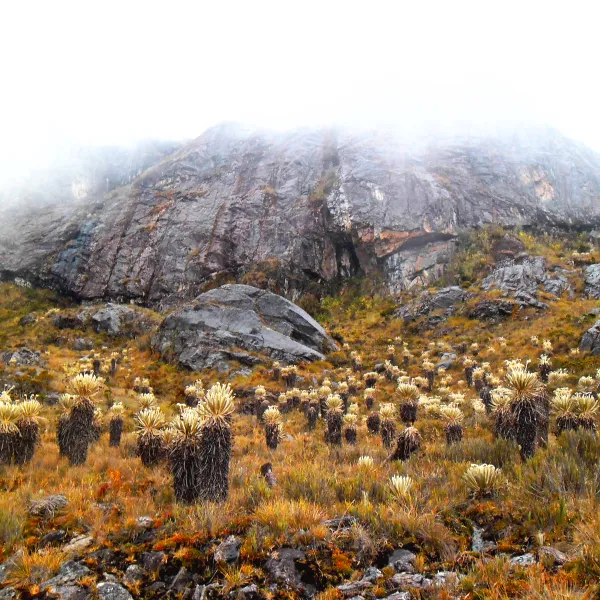
In the Andean region, high-mountain ecosystems known as páramos capture water from the fog and supply it to the lowlands. One such ecosystem is the Santurbán páramo, which provides fresh water to more than two million people in Colombia.
Santurbán, like the other páramos on the continent, also captures large amounts of carbon, making it a key ally in mitigating the climate crisis. It is also a refuge for hundreds of endangered species, including the iconic spectacled bear.
The land in and around the páramo contains gold and other minerals. This has put Santurbán in the spotlight of the multinational mining industry, which for decades has sought to establish large-scale projects in the ecosystem that threaten to degrade it.
The Committee for the Defense of Water and the Santurbán Páramo—a coalition of environmental advocates—has thwarted these ongoing attempts, with support from AIDA and other civil society organizations.
Background
The Santurbán páramo is located in the heart of the Eastern Cordillera of the Colombian Andes, in the departments of Santander and Norte de Santander, at an elevation ranging from 2,200 to 4,290 meters above sea level.
It covers an area of 129,743 hectares and is home to 57 lakes. It serves as a habitat for 457 plant species and 293 species of vertebrate fauna.
There are mineral deposits in Santurbán, primarily gold, but also silver and copper. This explains the region’s mining tradition, particularly in the part of the páramo located in Santander, in the province of Soto Norte. The communities in the area have built their culture and identity around gold mining, which is mainly artisanal and small-scale.
But since the 1990s, the gold deposits in the páramo have also attracted foreign mining conglomerates seeking to develop large-scale projects. This has raised concerns among the population that relies on the Santurbán water sources, who have mobilized in defense of water, their land, and life.
Although national and international regulations prohibit mining in páramos, the Colombian government has granted mining concessions to transnational corporations in Santurbán.
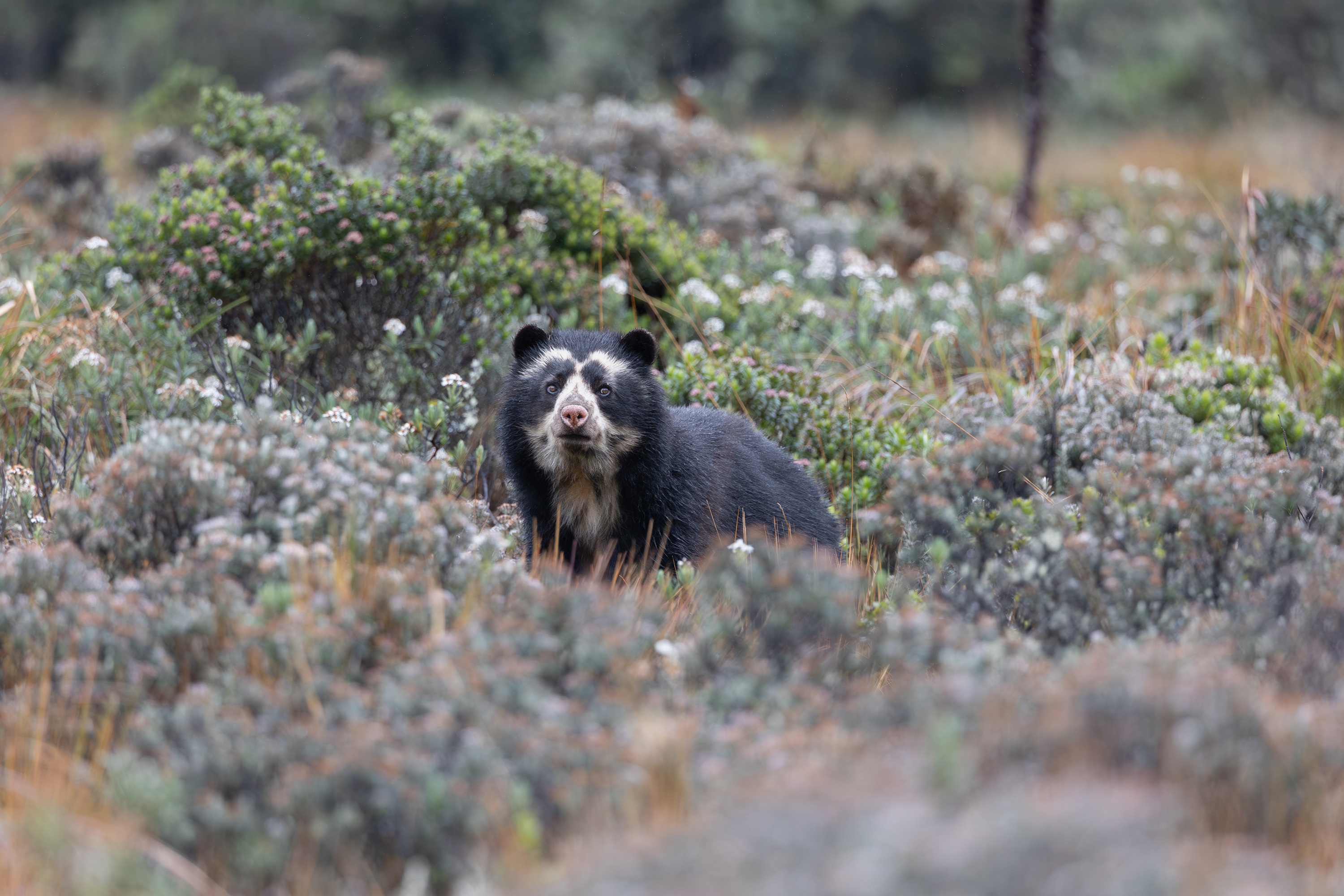
Photo: Keishpixl / Pixabay.
The long struggle to protect the páramo
One of the companies that sought to develop large-scale mining in Santurbán is Eco Oro Minerals Corp.—formerly Greystar Resources—a Canadian company that intended to establish the Angostura open-pit mine there to extract gold and silver. Between 1994 and 1995, the company acquired its mining titles and conducted exploration. And in 2010, it applied for a mining permit.
That was the year AIDA became involved in defending the ecosystem, supporting the Committee for the Defense of Water and the Santurbán Páramo. Our legal work helped convince the Colombian government to deny the mine an environmental permit in May 2011.
In January 2013, the government designated a portion of the páramo (11,700 hectares) as a Regional Natural Park. That year—together with the committee and partner organizations—we carried out a campaign and advocacy efforts to urge the government to recognize the entire Santurbán area as a páramo ecosystem through a delimitation based on scientific criteria. In December 2014, the Ministry of the Environment established a delimitation that protected 76% of the páramo (98,954 hectares).
Furthermore, as a result of a litigation supported by AIDA, in February 2016, Colombia’s highest court reaffirmed that mining in páramos is prohibited.
That same year, in December, the International Finance Corporation (IFC), the World Bank Group’s private sector arm, decided to divest from Eco Oro Minerals. This achievement was the result of a process that began in 2012, when the committee—advised and supported by AIDA and international partner organizations—filed a complaint before an independent accountability mechanism, which concluded that the IFC’s investment in the Angostura project failed to take into account the project’s social and environmental impacts, thereby contradicting the financial institution’s internal policies.
Also in 2016, Eco Oro Minerals filed an arbitration claim against the Colombian government with the International Centre for Settlement of Investment Disputes (ICSID), arguing that it had been adversely affected by government decisions aimed at protecting the country’s páramos, including the delimitation of Santurbán.
In 2017, the Constitutional Court invalidated the delimitation because the affected communities were not consulted. The high court ordered that a participatory delimitation be carried out.
And that year, a new threat to Santurbán emerged when the Canadian multinational Aris Mining applied for an environmental permit for Soto Norte, a gold mining project located near the páramo. Following citizen protests and technical objections, in October 2020, the National Environmental Licensing Authority shelved the project.
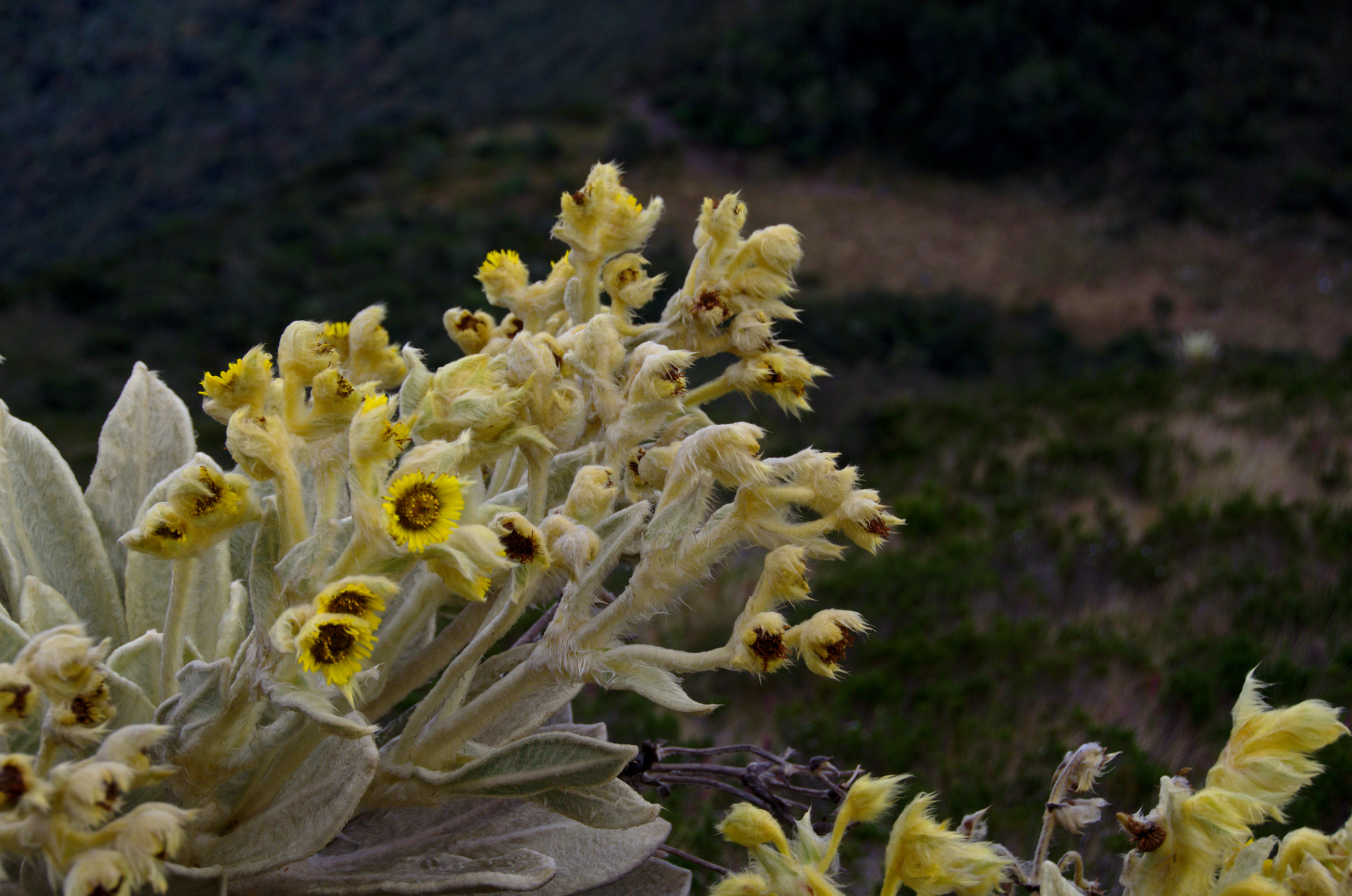
Photo: Aztlec.
Current situation
In March 2025, the Colombian government designated the western flank of the Santurbán massif as a temporary renewable natural resource reserve area, delimiting and protecting an area of 75,344.65 hectares. This resulted in a two-year suspension of the Soto Norte project. However, Aris Mining's contract to formalize Calimineros' small-scale mining activities through the purchase and processing of mineralized material remains in effect.
In addition, the Canadian mining company continues to move the project forward. In September 2025, it released its prefeasibility study, revising the mine’s original design.
Meanwhile, members of the Committee for the Defense of Water and the Santurbán Páramo face threats and stigmatization because of their work. In March 2025, UN Special Rapporteurs and the Working Group on Business and Human Rights denounced these incidents in communications sent to the governments of Colombia, Canada, and the United Arab Emirates, as well as to the companies Aris Mining and MDC Industry Holding Company LLC, the former co-owner of the Soto Norte project.
Regarding the arbitration claim filed by Eco Oro Minerals, in July 2024, ICSID ruled in favor of the Colombian government and rejected the Canadian company’s claim for USD 1.1 billion in compensation.
Concerning the delimitation of Santurbán, in July 2026, the Ministry of the Environment issued a resolution introducing the concept of "progressive delimitation." On that basis, the government proposes to progressively demarcate the páramo, covering 29,199 hectares across 19 municipalities—those where the participatory agreements required by the Constitutional Court in its 2017 ruling have already been finalized. It also proposes two measures on the creation and expansion of reserves to restrict mining in the ecosystem.
Learn more about the impacts of mining on the páramos of Latin America (in Spanish).
Partners:
Related projects
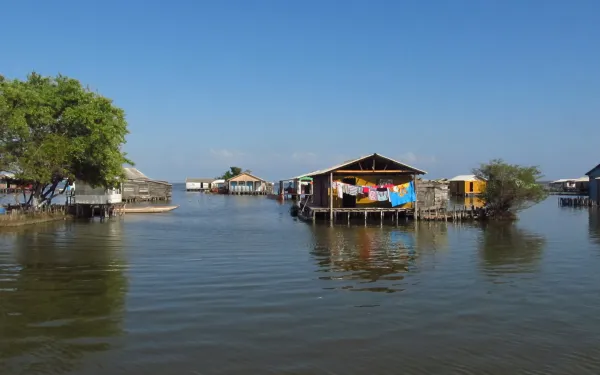
Celebrating 7 Advances to Close Out 2017
As the year comes to a close, we're happy to share with you several recent advances we've made in the name of environmental protection in Latin America. Each project we launch or case we win is a step toward a more just region, and a healthier planet for our children. Because of your support, we:1. Saved Colombia’s Largest Coastal WetlandWe successfully petitioned Colombia to list the Ciénaga Grande de Santa Marta among the world's most at-risk wetlands, opening up the resources needed for its recovery. Learn More2. Launched the Bolivian Environmental Justice NetworkWe founded a coalition of environmental and human rights organizations in Bolivia to support citizens’ efforts to defend the environment and those who depend on its health. 3. Campaigned to Protect Patagonia from Salmon FarmsWe petitioned Chile to investigate damage being done by salmon farm operations in Southern Patagonia, and launched a citizens’ campaign to raise awareness of the growing threat. Learn More4. Secured Healthcare for Victims of Toxic PollutionWe secured specialized medical care for residents of La Oroya, Peru, whose lives and health have long been affected by a heavy-polluting metal smelter that operates beside their homes.Learn More5. Protected Sea Turtles on the High SeasWe represented Latin American citizens and organizations in the development of a United Nations treaty to protect the shared parts of our ocean and the rich life within.Learn More6. Stimulated Divestment from Mining in a Protected WetlandWe convinced the World Bank to withdraw support from a gold mine in the Santurbán páramo, a protected ecosystem and water source for millions of Colombians. Learn More7. Advised Rural Town in the Lead-Up to a Mining BanWe provided legal advice and scientific analysis to the people of Cajamarca, Colombia, who then voted by a margin of 98% to ban all mining activities from their territory. Learn More
Read more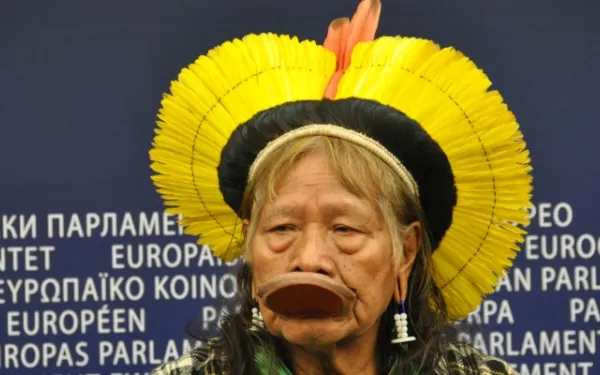
Why I’m joining the fight for justice for Belo Monte’s victims
On April 1, 2011, the Inter-American Commission on Human Rights granted protective measures to the indigenous communities affected by a large dam in the heart of the Brazilian Amazon. It was then I first heard of Belo Monte. I was working as a human rights defender in my native country of Colombia. The Commission ordered the suspension of all permits and work related to the dam until the protection of indigenous rights was guaranteed. I remember clearly the excitement generated by the decision, followed swiftly by Brazil’s rejection of it and the imposition of their diplomatic power. Other governments of the region supported Brazil’s position with unusual solidarity, questioning the competence of the international organization to grant such measures in relation to “development” projects. Due to the overwhelming pressure, the Commission, for the first time in its history, modified its decision: it said Brazil must guarantee the life and integrity of affected populations, but that construction could continue. I’ve never understood the governments’ reaction in this case. The Commission had simply fulfilled its mandate: to avoid irreparable harm to the rights of a group of people. The project had not consulted affected indigenous communities, and lacked adequate social and environmental impact studies. It has gone on, as predicted, to cause serious damage to both the environment and human health and wellbeing. The indigenous and riverside communities, which have for generations cared for the Xingu River, have been left to deal with the impacts of a project that interrupted the flow of the river, irreversibly altering their way of life and means of subsistence. The hope continues More than six years have passed since the case was taken before the Commission, which, as an organ of the Organization of American States, is called to protect human rights on the continent. Over this time, Belo Monte has progressed as planned and the threats of social and ecological harm have become a reality. The dam has: caused the forced displacement of more than 40 thousand people, aggravating poverty and social conflict in the area; saturated the health, education, and public safety systems in Altamira, the nearest city; violated the right to adequate housing for thousands of families; and increased violence against human rights defenders. It caused and continues to cause damage to the Amazon rainforest, worsening climate change and its impacts. Despite the setbacks, the hope of achieving justice for affected people has grown over time as well. In September, I became the Senior Attorney for AIDA’s Human Rights and Environment Program. As such, I’m involved with our case before the Commission. I’m honored to have joined an organization that, in alliance with local organizations, has dedicated years to ensuring that the people of the Xingu get reparation for the damages they’ve suffered, and is working to create new standards for environmental and human rights protections in the region. In 2010, AIDA and our allies requested precautionary measures from the Commission. One year later, we filed a formal complaint against Brazil regarding the human rights violations related to Belo Monte. In December 2015, the Commission opened the case for processing. On October 31 of this year, the Commission gave new impetus to the litigation process against Brazil: it decided to unite two stages that, as a rule, are processed separately. In the first, the necessary aspects regarding admissibility of the case are verified. In the second, a fundamental decision is made that analyzes whether a State failed to comply with the international obligations it undertook when signing the American Convention on Human Rights. The petitioners must present the allegations of human rights violations, and the State their responses to them. The Commission will then issue a decision on the case’s admissibility as well as its merit. Their recent exception will expedite the process of reaching that decision. We’re working for the Commission to issue recommendations to Brazil to repair the violations committed. If those recommendations are unfulfilled, the case may be referred to the Inter-American Court of Human Rights, which has the power to issue a ruling condemning Brazil and recommending reparation measures. Valuable lessons Belo Monte is, without a doubt, a lesson for the continent. The case shows that projects of this type are environmentally unviable and generate irreparable damage to human rights. Belo Monte also shows that States must rethink their energy models and turn their efforts toward promoting truly clean and sustainable energy. It’s a warning sign for financial institutions to avoid investing in projects with negative socio-environmental impacts. Finally, it’s an opportunity for the Inter-American Human Rights System to establish a valuable precedent that will hopefully help avoid a similar situation from happening again. On behalf of AIDA, I’m proud to be contributing to the fight for a healthy environment in this and many other cases. Our journey is just beginning.
Read more
When nature is your best client
AIDA’s attorneys both hail from and live in Latin America, fostering a profound respect for the region’s natural environment and those who depend so intimately on it. They’re turning their knowledge into action, and working to protect communities and ecosystems vital to their national heritage. Uniting the environmental community in Bolivia Claudia believes in environmental justice. “If people are not guaranteed quality of life and an adequate natural environment, their basic human rights are being violated,” she said. This belief led her first to study law and then to work on behalf of civil society to promote the production of healthy, pesticide-free food. Small-scale agriculture, with less environmental impact and more community benefits, is what Claudia remembers best when she thinks of her childhood in Cochabamba, Bolivia. There were gardens behind every house. From a very young age, she grew berries and always had apples, figs, guava, and other fresh fruit on hand. But with urbanization, the valley where she grew up became a city, and buildings replaced the lush green landscape. “It was a complete shock to see these changes made in the name of progress.” Claudia knows that her contribution to a better world will come from environmental law, and that she will have a greater impact by reaching more people. That’s why she joined AIDA’s Freshwater Program, where she offers free legal support to governments, communities, and local organizations. One of Claudia’s greatest achievements has been to successfully unite isolated efforts across Bolivia to confront common environmental problems. This year Claudia oversaw the formation of the Environmental Justice Network of Bolivia, a space for organizations and individuals to develop joint strategies for environmental protection. As their first big event, the Network organized a two-day forum on how to achieve justice for damages caused by mining operations. “I’ve seen the ways that Bolivia’s indigenous peoples understand the world, and how they relate with Mother Earth. In cities, nature is seen as an object; for the indigenous, it’s the common house we must care for because it provides us with everything we have. I’ve made this vision my own.” Protecting coral reefs in Mexico Camilo’s first interaction with the ocean took place in Boca del Cielo, a remote beach on the coast of Chiapas, Mexico where a stream meets the sea. There, he played in the waves and ate seafood, saw his first sea turtle, and watched the monkeys and birds play in the tall mangroves. During his childhood in San Cristobal de la Casas, his father taught him to swim against the current in the Cascadas de Agua Azul, an important natural reserve. “My father loves nature and has always transmitted that feeling to my brothers and me,” said Camilo, who now lives with his son Emiliano en La Paz, Baja California Sur. Living in a coastal city has given him a newfound appreciation for the ocean and its vital connection to our land. Camilo applies this understanding to his work as an attorney with AIDA’s Marine and Coastal Protection Program. He is working, for example, to save the Veracruz Reef System, the largest coral ecosystem in the Gulf of Mexico, which serves as a natural barrier against storms and hurricanes and is a source of livelihood for fishing communities. The site is seriously threatened by the expansion of the Port of Veracruz. Camilo is working so that the Mexican government respects the international treaties it has signed, which obligate the preservation of the site and the biodiversity found within. Camilo remembers, when he studied law in Chiapas, exploring caves in his free time, to which local farmers guided him. “Being in touch with nature often leads you to small communities who care for and revere their connection with the natural world, values you quickly come to understand and share.” Seeking the rain in Brazil If anyone knows the value of the rain, it’s the people of Paraíba State in northeast Brazil, who have for years been hit by an extreme drought. There, according to official information, the number of cities without water nearly doubled between 2016 and 2017. “The drought has shaped our customs, our eating habits, and our culture,” says Marcella, who was born in the State’s capital city of João Pessoa. Now living in Recife, she is a fellow with AIDA’s Human Rights and the Environment Program. Through her role as an environmental and human rights attorney, Marcella seeks to soften the effects of the drought in Paraíba. The way she sees it, she’s helping to do so through her work on the case of the Belo Monte Dam. “Large dams are dirty energy, and they’re damaging the Amazon rainforest, a key ecosystem that regulates climate and helps ensure it rains not just in Brazil but around the world. By working on this case, I’m fighting for the existence of rain in my State,” she explained. Last June, Marcella paid her first visit to Altamira, the city closest to Belo Monte. She spoke with people whose way of life had been destroyed by the dam. “I met someone who used to fish, grow his own food, and sell what was left in the city; because of the dam, his island was flooded and he lost everything.” For Marcella, there is no better way to understand the severity of the impacts of these inadequately implemented projects than to listen to those affected by them. “It gives me a notion of reality. Helping to get justice for these people is an obligation for me. It’s the best I can do, using the tool I know best: the law.”
Read more