
Project
Alberto Peña Kay
Protecting the Santurban páramo from mining's damage
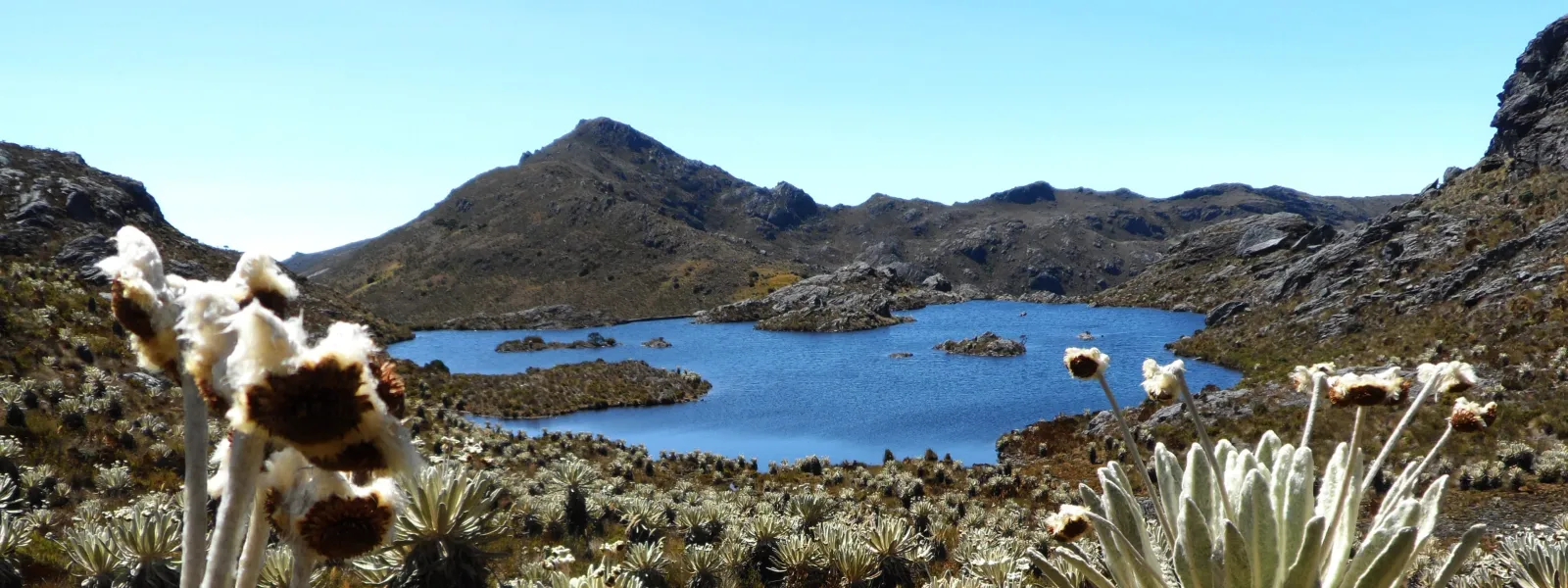
In the Andean region, high-mountain ecosystems known as páramos capture water from the fog and supply it to the lowlands. One such ecosystem is the Santurbán páramo, which provides fresh water to more than two million people in Colombia.
Santurbán, like the other páramos on the continent, also captures large amounts of carbon, making it a key ally in mitigating the climate crisis. It is also a refuge for hundreds of endangered species, including the iconic spectacled bear.
The land in and around the páramo contains gold and other minerals. This has put Santurbán in the spotlight of the multinational mining industry, which for decades has sought to establish large-scale projects in the ecosystem that threaten to degrade it.
The Committee for the Defense of Water and the Santurbán Páramo—a coalition of environmental advocates—has thwarted these ongoing attempts, with support from AIDA and other civil society organizations.
Background
The Santurbán páramo is located in the heart of the Eastern Cordillera of the Colombian Andes, in the departments of Santander and Norte de Santander, at an elevation ranging from 2,200 to 4,290 meters above sea level.
It covers an area of 129,743 hectares and is home to 57 lakes. It serves as a habitat for 457 plant species and 293 species of vertebrate fauna.
There are mineral deposits in Santurbán, primarily gold, but also silver and copper. This explains the region’s mining tradition, particularly in the part of the páramo located in Santander, in the province of Soto Norte. The communities in the area have built their culture and identity around gold mining, which is mainly artisanal and small-scale.
But since the 1990s, the gold deposits in the páramo have also attracted foreign mining conglomerates seeking to develop large-scale projects. This has raised concerns among the population that relies on the Santurbán water sources, who have mobilized in defense of water, their land, and life.
Although national and international regulations prohibit mining in páramos, the Colombian government has granted mining concessions to transnational corporations in Santurbán.
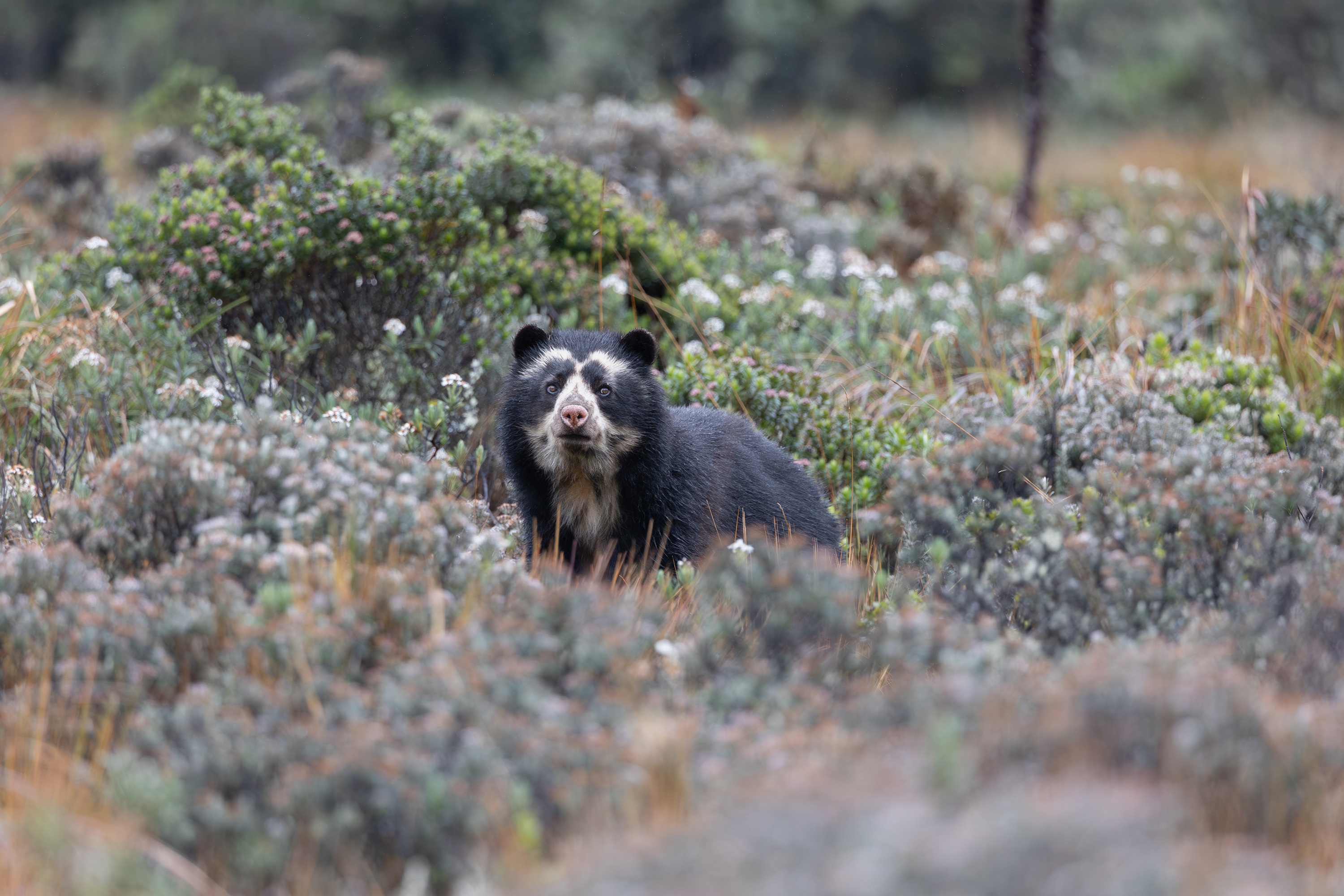
Photo: Keishpixl / Pixabay.
The long struggle to protect the páramo
One of the companies that sought to develop large-scale mining in Santurbán is Eco Oro Minerals Corp.—formerly Greystar Resources—a Canadian company that intended to establish the Angostura open-pit mine there to extract gold and silver. Between 1994 and 1995, the company acquired its mining titles and conducted exploration. And in 2010, it applied for a mining permit.
That was the year AIDA became involved in defending the ecosystem, supporting the Committee for the Defense of Water and the Santurbán Páramo. Our legal work helped convince the Colombian government to deny the mine an environmental permit in May 2011.
In January 2013, the government designated a portion of the páramo (11,700 hectares) as a Regional Natural Park. That year—together with the committee and partner organizations—we carried out a campaign and advocacy efforts to urge the government to recognize the entire Santurbán area as a páramo ecosystem through a delimitation based on scientific criteria. In December 2014, the Ministry of the Environment established a delimitation that protected 76% of the páramo (98,954 hectares).
Furthermore, as a result of a litigation supported by AIDA, in February 2016, Colombia’s highest court reaffirmed that mining in páramos is prohibited.
That same year, in December, the International Finance Corporation (IFC), the World Bank Group’s private sector arm, decided to divest from Eco Oro Minerals. This achievement was the result of a process that began in 2012, when the committee—advised and supported by AIDA and international partner organizations—filed a complaint before an independent accountability mechanism, which concluded that the IFC’s investment in the Angostura project failed to take into account the project’s social and environmental impacts, thereby contradicting the financial institution’s internal policies.
Also in 2016, Eco Oro Minerals filed an arbitration claim against the Colombian government with the International Centre for Settlement of Investment Disputes (ICSID), arguing that it had been adversely affected by government decisions aimed at protecting the country’s páramos, including the delimitation of Santurbán.
In 2017, the Constitutional Court invalidated the delimitation because the affected communities were not consulted. The high court ordered that a participatory delimitation be carried out.
And that year, a new threat to Santurbán emerged when the Canadian multinational Aris Mining applied for an environmental permit for Soto Norte, a gold mining project located near the páramo. Following citizen protests and technical objections, in October 2020, the National Environmental Licensing Authority shelved the project.
Photo: Aztlec.
Current situation
In March 2025, the Colombian government designated the western flank of the Santurbán massif as a temporary renewable natural resource reserve area, delimiting and protecting an area of 75,344.65 hectares. This resulted in a two-year suspension of the Soto Norte project. However, Aris Mining's contract to formalize Calimineros' small-scale mining activities through the purchase and processing of mineralized material remains in effect.
In addition, the Canadian mining company continues to move the project forward. In September 2025, it released its prefeasibility study, revising the mine’s original design.
Meanwhile, members of the Committee for the Defense of Water and the Santurbán Páramo face threats and stigmatization because of their work. In March 2025, UN Special Rapporteurs and the Working Group on Business and Human Rights denounced these incidents in communications sent to the governments of Colombia, Canada, and the United Arab Emirates, as well as to the companies Aris Mining and MDC Industry Holding Company LLC, the former co-owner of the Soto Norte project.
Regarding the arbitration claim filed by Eco Oro Minerals, in July 2024, ICSID ruled in favor of the Colombian government and rejected the Canadian company’s claim for USD 1.1 billion in compensation.
Concerning the delimitation of Santurbán, in July 2026, the Ministry of the Environment issued a resolution introducing the concept of "progressive delimitation." On that basis, the government proposes to progressively demarcate the páramo, covering 29,199 hectares across 19 municipalities—those where the participatory agreements required by the Constitutional Court in its 2017 ruling have already been finalized. It also proposes two measures on the creation and expansion of reserves to restrict mining in the ecosystem.
Learn more about the impacts of mining on the páramos of Latin America (in Spanish).
Partners:
Related projects
Lessons in Strength and Solidarity from the Mexico City Earthquake
Seconds before 1:15 p.m. on September 19, the Earth reminded us just how fragile life is. As soon as we felt the first movement, and the seismic alert confirmed what was happening, our Mexico City team suspended a call with team members in five countries and took to the streets. Words can’t describe the emotions that engulfed us during the next hours and days. Fear and joy, anxiety and solidarity, nervousness and hope. Just two hours before, we had participated in a simulation in honor of the victims of the devastating earthquake exactly 32 years before. While for some residents of Mexico City these exercises are a repetitive protocol, we in AIDA always follow them because our team consists of professionals from across Latin America, some who don’t have experience with earthquakes. So luckily our team knew what to do. We met at the rendezvous point, as best we could. We were relieved to learn the teams of AIDA and CEMDA—with whom we share offices—were all safe and accounted for. But the calm was short-lived, as reports came in from nearby streets: building collapses, gas leaks, the loss of power and communication. The city suspended all activities. Those who were able showed up to help. Damaged streets were flooded with volunteers. Astrid Puentes, co-director of AIDA, gave shelter to our team in her nearby home. Those who could returned to their homes at the end of the day. Unfortunately, the house where one of our interns was staying was left uninhabitable. These have been difficult days. Work was put on hold as our team joined the relief efforts. We have seen so many signs of solidarity. Despite the tragedy, the humility and confidence of the Mexican people has awakened in us a new sense of hope. Everyone could help in some way. We’ve seen therapists, lawyers, motorcyclists, cooks, blacksmiths, architects, masons, journalists, and clowns offering their knowledge and experience to one cause: helping the victims, whether they knew them or not. We won’t emerge from this situation unscathed. While AIDA’s office remains in good condition, the news of friends who have lost loved ones or their homes continues to arrive. But we’ve seen the spectacular strength and resilience of Mexico’s people; they work with their hands as well as their hearts. We know now that the reconstruction that awaits us will have its foundation in solidarity and empathy. We’re confident that the millions of people who have been awakened, who are acting as conscious and involved citizens, will continue working for our city and our country. And we return to our work this week conscious that thousands of people still need help, not just in Mexico City, but also in the states of Morelos, Puebla, Oaxaca, Veracruz, Tabasco, and Chiapas. We will work for them and for the whole continent. We will work for the Earth, which has reminded us that life is but an instant, and that it’s always worth fighting for. -- In solidarity, AIDA’s team from Mexico City: Astrid, Ava, Cecilia, Laura, Paulina, Rodrigo, and Victor. ¡#FuerzaMéxico!
Read more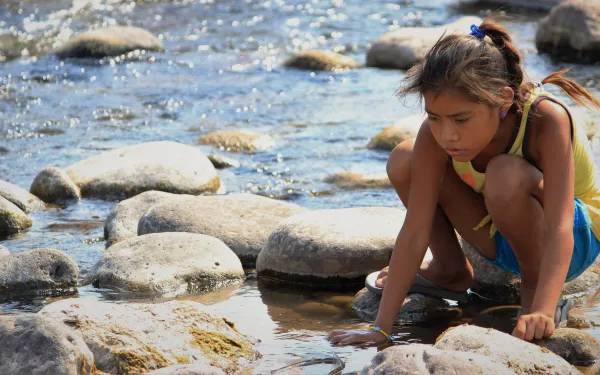
Why damming rivers, like blocking veins, risks our health
Some of my most treasured childhood memories happened in or near a river. I can still feel the cold water on my feet, and the current that pulled me smoothly past rocks and branches. I remember vacations with my cousins, throwing ourselves into the river near my aunt and uncle’s country house, leaping from the tops of rocks or swinging from the branches of a tree. I remember summer road trips, driving down seemingly endless bridges over the great rivers of southern Mexico. I’ve always thought of rivers as the veins of our planet. In their waters, the rivers and their tributaries carry nutrients to wetlands, lakes, and the sea. They carry oxygen and host thousands of species. They supply drinking water to millions of people in small towns and big cities. They give us food, entertainment, transportation, and life. Recent natural disasters have reminded us that—despite our best attempts—there are no limits, dams, dikes or pipelines that can control the water. It’s true that, properly implemented, dams can have benefits; but in many cases, particularly those of large-scale development, the damages dams do far outweigh any benefits. There are currently more than 300 large dam projects planned or in construction throughout Latin America. Many of them are underway without adequate social and environmental impacts assessments. The results are displaced communities, destroyed forests, and rivers with no fish. Blocking our veins The water flowing down our rivers is vital to the natural equilibrium of the planet and its climate. It’s like the blood circulating through your body. If your bloodflow were blocked, you’d get cardiovascular disease, maybe even a heart attack. Well, damming rivers is like intentionally blocking your veins and expecting no problems. Only one third of the world’s great rivers remain free-flowing, without dams or canals. Now I’m not a doctor, or a biologist, but I often wonder: are we heading for the collapse of our natural system by blocking, tubing, manipulating, and contaminating the veins of the Earth (which, like us, is a living organism)? And because rotting vegetation in dam reservoirs releases lots of methane (a super-potent greenhouse gas), isn’t the current climate crisis, in part, a response to the blockages in Earth’s circulatory system? A slow death The mouth of the Colorado River opens to the Sea of Cortes, in northeast Mexico. It’s an area historically rich in sea life from the Gulf of California. For eons, the flow of the Colorado brought nutrient-rich sediment to the Sea of Cortes. It kept the coastal estuary rich and healthy, along with the animals that sought shelter there. But that’s not happening anymore. The vaquita, now the world’s rarest marine mammal, teeters on the edge of extinction. Between the Colorado River’s mountain headwaters and the end of its main channel, more than 10 large dams and 80 water diversions have squeezed the river dry. Now the Gulf no longer receives the river’s nutrient-rich waters, harming not just marine life like the vaquita, but also the area’s fishermen. No one mentions that the near disappearance of the vaquita has been caused by habitat destruction due to the upstream dams on the Colorado River. Mexico’s last free-flowing river The San Pedro Mezquital River is the last undammed river in the western Sierra Madre Mountains. The river links the region’s indigenous people. It’s a source of their culture and identity. The river channel, more than 500 kilometers long, connects the forests of the highlands with the wetlands of the coast, opening into Marismas Nacionales, the largest mangrove forest in the Mexican Pacific. Marismas Nacionales, declared a wetland of international importance, is home to more than 12,000 families engaged in fishing, agriculture, and tourism. But this national treasure is at risk due to the government’s plan to build a hydroelectric dam on the San Pedro Mezquital. If the river were blocked, its contribution of nutrients downstream would be drastically reduced. The health of Marismas Nacionales, its rich biodiversity, and the region’s sustainable local economy would all be slowly starved. The reservoir would also destroy at least 14 sites sacred to local indigenous communities. But we’ve still got time to stop this plan and others like it. We can avoid the collapse of the natural world that surrounds us, on our one and only planet. By supporting AIDA, you can help keep Earth’s veins flowing free.
Read more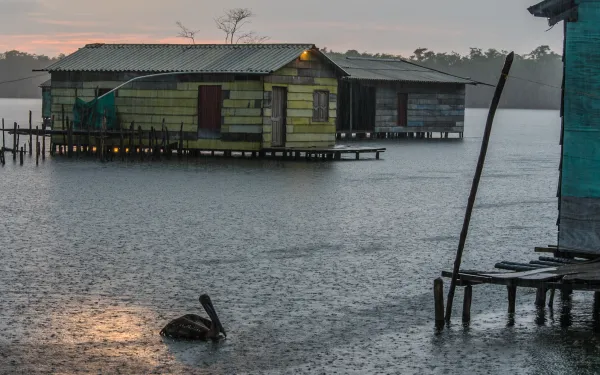
Hope for the Ciénaga, seed of Colombia’s magical realism
“We were in the great swamp, the Ciénaga Grande, another of the myths of my childhood.”– Gabriel García Márquez in Living to Tell the Tale, 2002. Today I learned that Colombia—thanks in part to AIDA’s supporters—took an unprecedented step to save an ecosystem central to Colombia’s identy: the Ciénaga Grande de Santa Marta. As a Colombian and an environmental attorney, I’m deeply moved. And so thankful to the hundreds of supporters whose petition signatures helped move the government to action. The government added the Ciénaga Grande to the Montreux Record, a global list of at-risk wetlands. This action will provide Colombia with international technical and financial support needed to save the vital ecosystem. When I heard the good news, I immediately thought of the yellow butterflies of Macondo. And I thought of Colonel Aureliano Buendía, who stood in front of a firing squad remembering the day his grandfather took him to see ice. The imagery of this magical world, masterfully created by Gabriel García Márquez in One Hundred Years of Solitude, was born from the Ciénaga Grande de Santa Marta. In the early 1900’s, after the Thousand Days’ War, Colonel Nicolás Ricardo Márquez, grandfather of Colombia’s Nobel laureate, passed through the Ciénaga to settle near Aracataca. Later, accompanied by his grandfather, the author crossed the Ciénaga Grande various times to visit his parents in Barranquilla. In 1950, he crossed it again with his mother as they were going to sell his grandparents’ house. It was there, in the Ciénaga Grande, that Márquez found the spark that would light one of the classics of modern literature. So it’s no exaggeration to say that without the Ciénaga Grande, we wouldn’t have the yellow butterflies, or Macondo, or Colonel Aureliano Buendía, embedded so deeply into our cultural memory. It was there that the seed of magical realism was planted. That’s why even a cachaca like me—what those who live in the Caribbean call those of us from the country’s interior—who has lived for many years outside her country, identifies so deeply with the Ciénaga Grande. An international treasure For that and so many other reasons, we at AIDA decided to act in defense of the Ciénaga Grande, named a Wetland of International Importance under the Ramsar Convention. It’s home to Colombia’s largest coastal lagoon, which connects the fresh waters of the mighty Magdalena River with the salt water of the Caribbean Sea. The area is home to many species of mangrove, as well as tropical and riparian forests. It shelters raccoons, howler monkeys, manatees, red herons, ducks, and migrating birds. The Ciénaga Grande also hosts one of the largest artisanal fisheries in Colombia, which supports hundreds of families throughout the area. As a coastal wetland, it’s essential for climate regulation, absorption of pollution from the atmosphere, and flood control. But the Ciénaga Grande is gravely threatened. The spread of mass agriculture and livestock farming, along with large-scale infrastructure projects, has led to deforestation and water diversion. The animals and fish and people of the area are suffering as a result. That’s why I’ve joined the efforts to conserve the Ciénaga Grande, and why every person in Colombia, in the region, and in the world, should do the same. Hope for a healthier tomorrow The addition of the Ciénaga Grande to the Montreux Record fills me with hope. Although it’s shameful such an important ecosystem is in such bad shape, having the government recognize that fact and ask for help is an important advance. Thanks to all the caring activists who’ve joined the cause, my colleagues and I are inspired to do everything we can to ensure that the Ciénaga Grande recovers its vitality. We expect the government will do the same. After all, what would Colombia, Latin America, and the world be without the yellow butterflies of Macondo, and without the magic of nature to envelope us and gives us life?
Read more