
Project
Alberto Peña Kay
Protecting the Santurban páramo from mining's damage
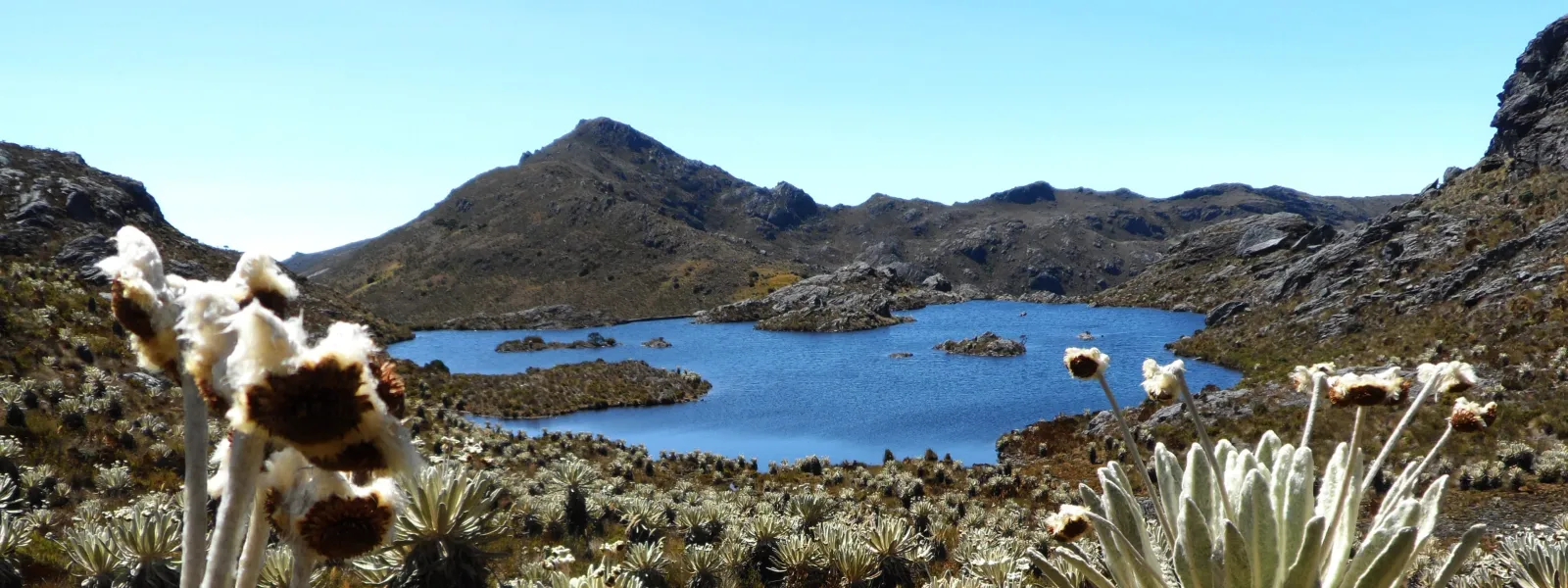
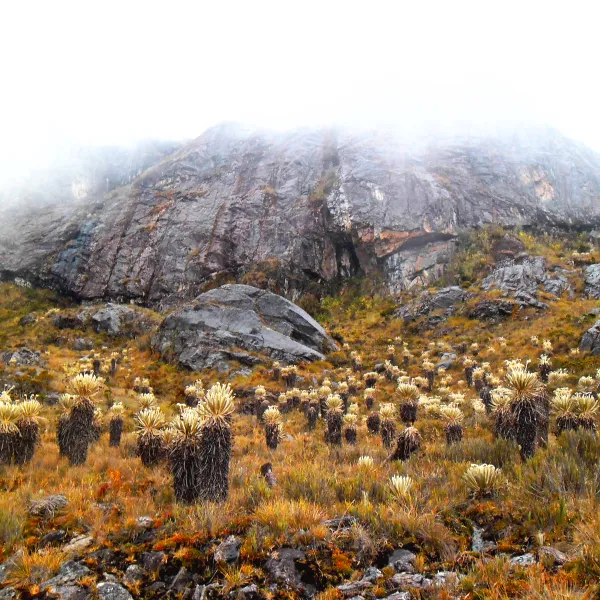
In the Andean region, high-mountain ecosystems known as páramos capture water from the fog and supply it to the lowlands. One such ecosystem is the Santurbán páramo, which provides fresh water to more than two million people in Colombia.
Santurbán, like the other páramos on the continent, also captures large amounts of carbon, making it a key ally in mitigating the climate crisis. It is also a refuge for hundreds of endangered species, including the iconic spectacled bear.
The land in and around the páramo contains gold and other minerals. This has put Santurbán in the spotlight of the multinational mining industry, which for decades has sought to establish large-scale projects in the ecosystem that threaten to degrade it.
The Committee for the Defense of Water and the Santurbán Páramo—a coalition of environmental advocates—has thwarted these ongoing attempts, with support from AIDA and other civil society organizations.
Background
The Santurbán páramo is located in the heart of the Eastern Cordillera of the Colombian Andes, in the departments of Santander and Norte de Santander, at an elevation ranging from 2,200 to 4,290 meters above sea level.
It covers an area of 129,743 hectares and is home to 57 lakes. It serves as a habitat for 457 plant species and 293 species of vertebrate fauna.
There are mineral deposits in Santurbán, primarily gold, but also silver and copper. This explains the region’s mining tradition, particularly in the part of the páramo located in Santander, in the province of Soto Norte. The communities in the area have built their culture and identity around gold mining, which is mainly artisanal and small-scale.
But since the 1990s, the gold deposits in the páramo have also attracted foreign mining conglomerates seeking to develop large-scale projects. This has raised concerns among the population that relies on the Santurbán water sources, who have mobilized in defense of water, their land, and life.
Although national and international regulations prohibit mining in páramos, the Colombian government has granted mining concessions to transnational corporations in Santurbán.
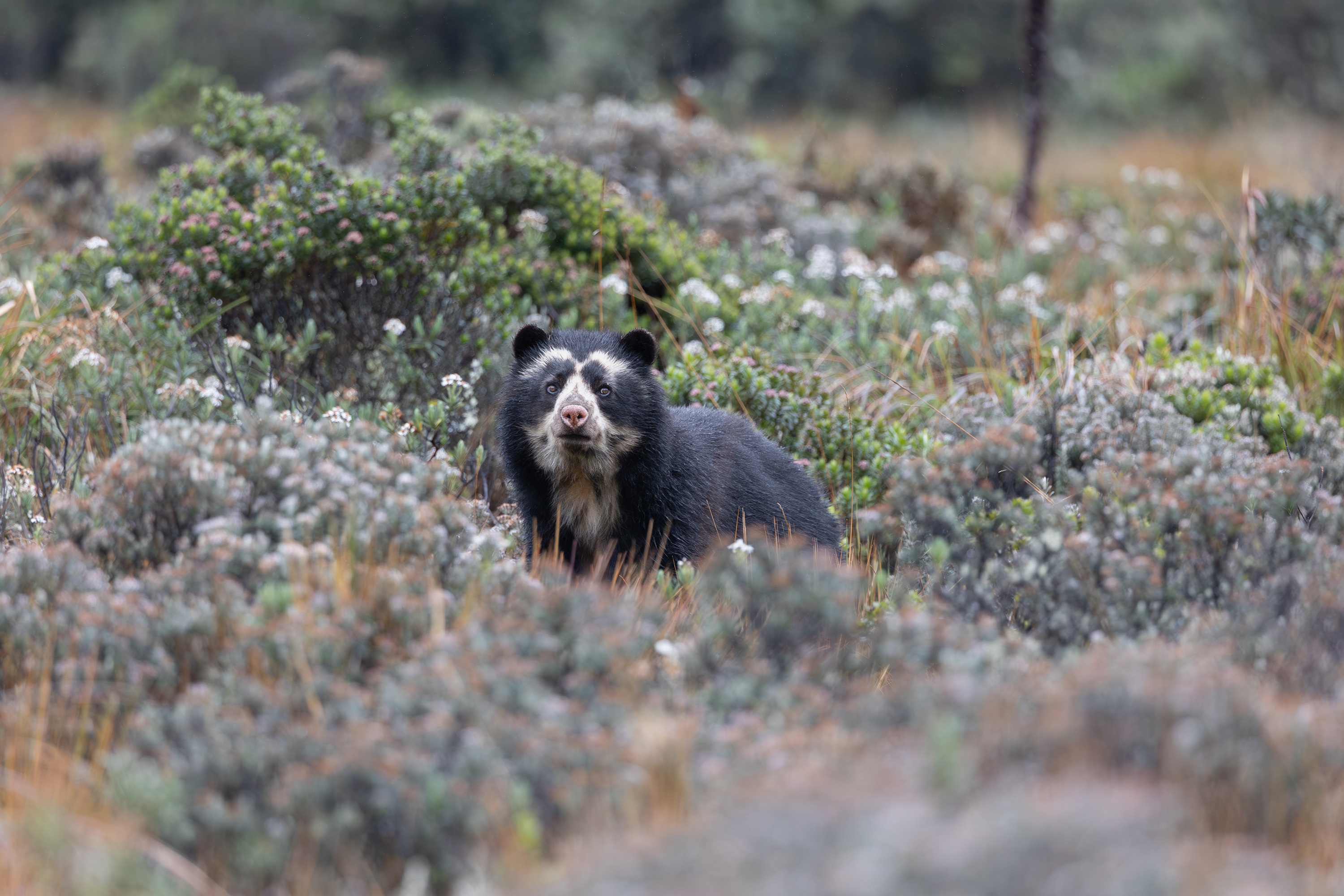
Photo: Keishpixl / Pixabay.
The long struggle to protect the páramo
One of the companies that sought to develop large-scale mining in Santurbán is Eco Oro Minerals Corp.—formerly Greystar Resources—a Canadian company that intended to establish the Angostura open-pit mine there to extract gold and silver. Between 1994 and 1995, the company acquired its mining titles and conducted exploration. And in 2010, it applied for a mining permit.
That was the year AIDA became involved in defending the ecosystem, supporting the Committee for the Defense of Water and the Santurbán Páramo. Our legal work helped convince the Colombian government to deny the mine an environmental permit in May 2011.
In January 2013, the government designated a portion of the páramo (11,700 hectares) as a Regional Natural Park. That year—together with the committee and partner organizations—we carried out a campaign and advocacy efforts to urge the government to recognize the entire Santurbán area as a páramo ecosystem through a delimitation based on scientific criteria. In December 2014, the Ministry of the Environment established a delimitation that protected 76% of the páramo (98,954 hectares).
Furthermore, as a result of a litigation supported by AIDA, in February 2016, Colombia’s highest court reaffirmed that mining in páramos is prohibited.
That same year, in December, the International Finance Corporation (IFC), the World Bank Group’s private sector arm, decided to divest from Eco Oro Minerals. This achievement was the result of a process that began in 2012, when the committee—advised and supported by AIDA and international partner organizations—filed a complaint before an independent accountability mechanism, which concluded that the IFC’s investment in the Angostura project failed to take into account the project’s social and environmental impacts, thereby contradicting the financial institution’s internal policies.
Also in 2016, Eco Oro Minerals filed an arbitration claim against the Colombian government with the International Centre for Settlement of Investment Disputes (ICSID), arguing that it had been adversely affected by government decisions aimed at protecting the country’s páramos, including the delimitation of Santurbán.
In 2017, the Constitutional Court invalidated the delimitation because the affected communities were not consulted. The high court ordered that a participatory delimitation be carried out.
And that year, a new threat to Santurbán emerged when the Canadian multinational Aris Mining applied for an environmental permit for Soto Norte, a gold mining project located near the páramo. Following citizen protests and technical objections, in October 2020, the National Environmental Licensing Authority shelved the project.
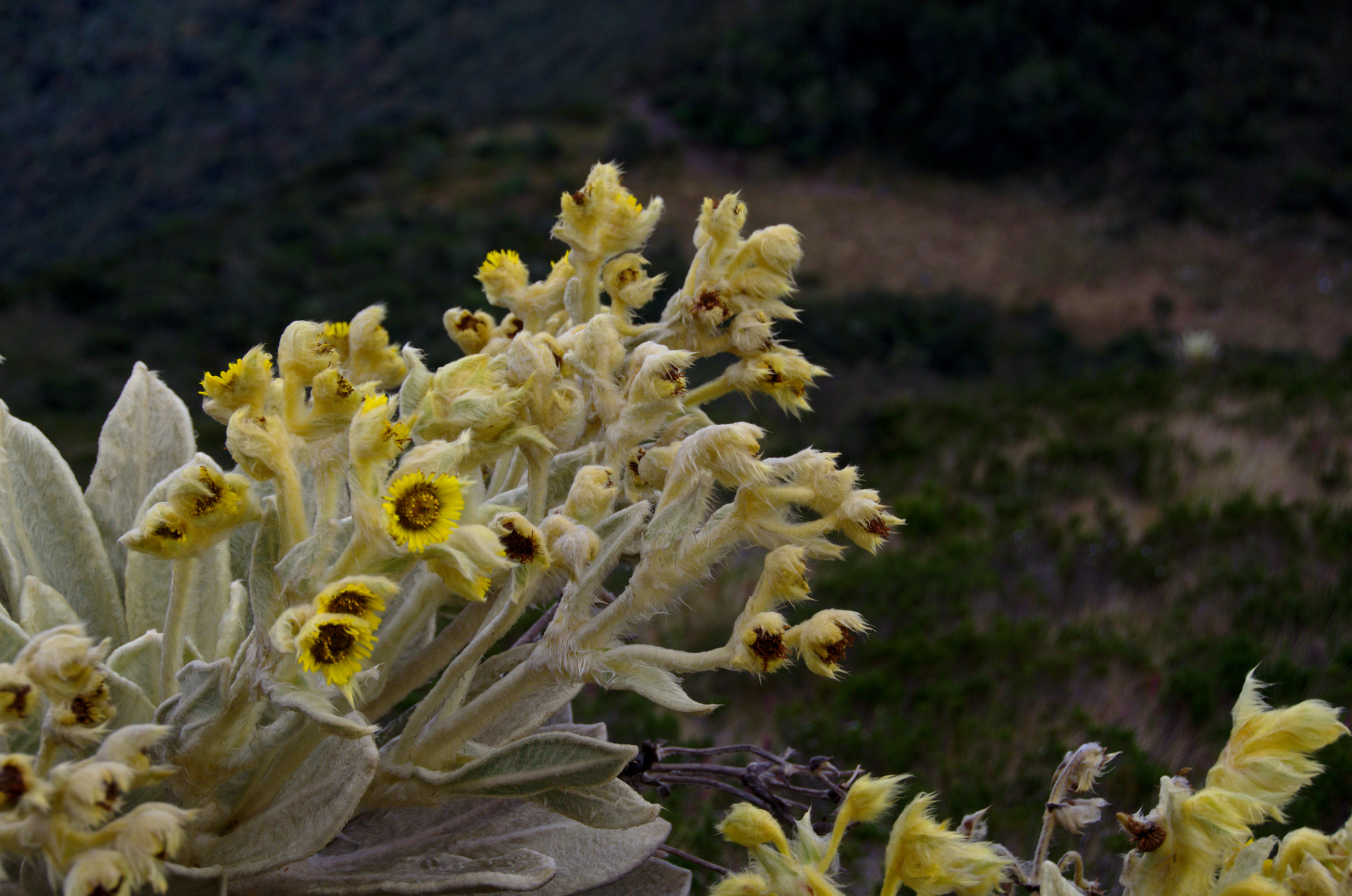
Photo: Aztlec.
Current situation
In March 2025, the Colombian government designated the western flank of the Santurbán massif as a temporary renewable natural resource reserve area, delimiting and protecting an area of 75,344.65 hectares. This resulted in a two-year suspension of the Soto Norte project. However, Aris Mining's contract to formalize Calimineros' small-scale mining activities through the purchase and processing of mineralized material remains in effect.
In addition, the Canadian mining company continues to move the project forward. In September 2025, it released its prefeasibility study, revising the mine’s original design.
Meanwhile, members of the Committee for the Defense of Water and the Santurbán Páramo face threats and stigmatization because of their work. In March 2025, UN Special Rapporteurs and the Working Group on Business and Human Rights denounced these incidents in communications sent to the governments of Colombia, Canada, and the United Arab Emirates, as well as to the companies Aris Mining and MDC Industry Holding Company LLC, the former co-owner of the Soto Norte project.
Regarding the arbitration claim filed by Eco Oro Minerals, in July 2024, ICSID ruled in favor of the Colombian government and rejected the Canadian company’s claim for USD 1.1 billion in compensation.
Concerning the delimitation of Santurbán, in July 2026, the Ministry of the Environment issued a resolution introducing the concept of "progressive delimitation." On that basis, the government proposes to progressively demarcate the páramo, covering 29,199 hectares across 19 municipalities—those where the participatory agreements required by the Constitutional Court in its 2017 ruling have already been finalized. It also proposes two measures on the creation and expansion of reserves to restrict mining in the ecosystem.
Learn more about the impacts of mining on the páramos of Latin America (in Spanish).
Partners:
Related projects
Shark conservation is at risk in Costa Rica
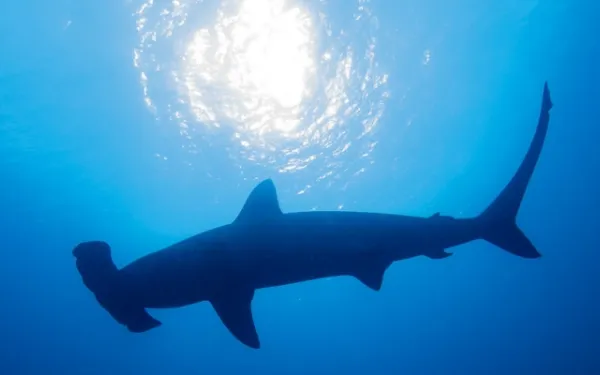
In Costa Rica, it’s now up to the government to decide the future of endangered hammerhead sharks. If the government halted the export of all hammerhead shark products in the next year, it could stave off extinction of these amazing creatures. That’s the recommendation of Costa Rica’s Scientific Advisory Council for the Convention on International Trade in Endangered Species of Wild Fauna and Flora. The Convention is an international agreement to prevent trade from threatening the survival of wild animals and plants. Of the nearly 100 species of sharks and rays in Costa Rica, 15% are in danger of extinction due to overfishing and environmental destruction or degradation. Hammerhead sharks were listed as an endangered species in 2014 and have lost up to 90% of their population. In response, the Scientific Advisory Council recommended in April 2017 that Costa Rica should prohibit export of hammerhead products for at least one year, or until the country reduces hammerhead fishing and the health of the species improves. The role of the fishing industry Shortly after the Scientific Advisory Council made its recommendation, the Costa Rican government issued an executive decree. The Costa Rican Institute of Fishing and Aquaculture (Incopesca) and the Ministry of Agriculture and Livestock were given authority over the export of products made from threatened or endangered sharks. However, both government agencies favor the fishing industry over marine conservation, according to Mario Espinoza Mendieta, researcher from the University of Costa Rica and member of the Convention’s scientific council. “This dynamic tips the balance in favor of the production sector,” Espinoza said. Incopesca’s Board of Directors represent various fishing interests across the country—a position that does not always align with the protection and sustainable use of marine resources, according to Espinoza. Recently, Incopesca was questioned because it failed to prosecute shrimping boats that were illegally fishing in protected waters. Shark commerce While exporting shark products is permitted within the regulations established by the Convention, shark finning—the practice of cutting fins and throwing the shark back into the ocean—is illegal in Costa Rica. Considered a delicacy in some Asian countries, shark fins are often valued at upwards of $100 per kilo. Last February, a Costa Rican court issued the first felony criminal sentence for shark finning against a Taiwanese businesswoman who was found in a port with illegally harvested shark fins. Using international law, AIDA and Conservation International worked with Costa Rica’s Public Prosecutor to help resolve the case. A responsible decision The governments of Colombia and Ecuador have developed campaigns to protect hammerhead sharks. But in Costa Rica, Incopesca is responsible for the future of the species and will hopefully take the Scientific Advisory Council’s recommendations into account. Because the hammerhead’s numbers are so low, it may only take one bad decision to cause their extinction. Other species, including the gray shark, are also at risk from the fishing industry. If Costa Rica wants to preserve its natural wealth for the future, it should set an example of preservation by putting principles of sustainability over economic gain.
Read more
Chilean chum: How eating salmon in the US hurts Patagonia’s coastal wildlife
After two years of vegetarianism, the Texan in me decided that an entirely plant-based diet was not going to work. The experience, however, taught me to consume meat ethically. Wherever possible, I now choose organic and sustainable “farm to table” meat and poultry. But when it comes to my favorite seafood—salmon— “farm to table” can take on a whole new meaning. Salmon is one of the most popular seafoods in the United States, and over a third of all salmon in the U.S. comes from Chilean salmon farms, which raise the carnivorous fish in off-shore enclosures along the Patagonian coast. Although salmon is healthy—it’s loaded with omega-3 fatty acids and B-vitamins—increased U.S. demand for salmon is having an unhealthy impact on Chile’s environment. These farms endanger delicate coastal ecosystems, contribute to oceanic pollution, and threaten marine life along the pristine Magallanes shoreline. Chile is the second largest global exporter of the fish, and salmon farming is one of the country’s largest industries. Today, that industry is growing. There are already over 100 salmon farms operating in the Magallanes and, as of March 2017, plans for 342 more were in the works. Driving this expansion is a booming worldwide salmon market. But even though the U.S. boasts a salmon industry of its own and wild-caught Alaskan salmon is considered some of the best in the world, U.S. consumers ate over 144,000 tons of farmed Chilean salmon in 2016, according to the National Oceanic and Atmospheric Administration. A fishy situation While fish farms are one solution to the many problems associated with overfishing, Chile’s unregulated salmon industry has serious environmental side-effects. These salmon farms disrupt their environments because overpopulated waterways create anaerobic conditions that deprive the local wildlife of oxygen. Often treated with excessive amounts antibiotics and pesticides, uneaten salmon feed and salmon feces also pollute coastal seafloors and introduce chemicals into the environment. Because they are not native to the southern hemisphere, salmon that escape their pens can disrupt local food chains. Salmon also frequently die in their enclosures, and the decomposing fish raise levels of ammonia in the water. Although research is still underway, scientists speculate that higher concentrations of ammonia, along with El Niño weather patterns and warming oceans caused by climate change, may be responsible for Chile’s recent “red tides.” These toxic red algae blooms kill coastal wildlife by the millions, inundating Chilean shores with dead fish (including salmon), birds, and whales. To fight back against this destructive industry and the harmful impacts of globalized seafood trade, AIDA filed a claim with the Chilean government expressing concern that salmon farms are harming local ecosystems. “We want to improve the way things are being done by aiming for sustainable development that will not ruin the fragile ecological balance of the Patagonian seas,” AIDA attorney Florencia Ortúzar said. AIDA also recently began a petition asking that Chile investigate the damage caused by salmon farming in the Magallanes and sanction those responsible. You can sign the petition here. New migration routes Today, the U.S. salmon industry practices catch and release: it is known for producing high quality fish, yet 80 percent of Alaskan wild salmon is traded away. So why does the U.S. produce some of the world’s best salmon, but consume some of the world’s most environmentally harmful fish? The answer, in short, is globalization. Filleting and de-boning salmon is a process too delicate to mechanize as in other meat industries. Because labor is cheaper in Asia, U.S. salmon is shipped to processing plants in China, which then re-distribute the processed fish across the region. While some of that salmon makes it back across the Pacific, the U.S. market is flooded with cheaper farmed salmon from around the world. Now, Chile’s industry “is facing competition from Canada and Norway,” according to trade analysis group Datamyne. After expressing concerns over high levels of antibiotics in Chilean fish, U.S. retail giant Costco decided in 2015 to stock Norwegian salmon instead, further muddying the waters in the U.S. salmon trade. To make matters worse, a study by conservation nonprofit Oceana concluded that nearly 43% of “wild” salmon sold in the United States was misidentified. While it is difficult to tell whether farmed salmon is mislabeled as “wild” during trade or once it shows up on the menu, lax labeling laws in the U.S. make it difficult to tell exactly where that salmon steak came from. So for seafood lovers like me, there may be few good options for eating salmon sustainably, besides taking up fly fishing. But for the sake of protecting Chile’s coastal wildlife, maybe it’s time U.S. consumers make their voice heard. If we’re going to import salmon from Chile, we should at least demand the country regulate its farms to be more environmentally friendly. Maybe it’s also time the U.S. salmon industry started keeping its catch in its own boat. Sign the petition to protect Patagonia’s Magallanes coastline here.
Read more
Ramsar Secretariat advises Colombia to add Ciénaga Grande to list of world’s most threatened wetlands
Experts at the Ramsar Convention, an international treaty for the protection of wetlands, identified “significant changes” due to human interference in the ecological characteristics of the area. They recommended, among other things, that Colombia enroll the wetlands in the Montreux Record, a register of seriously threatened wetlands requiring immediate attention. Bogotá, Colombia—Following a visit to the Ciénaga Grande de Santa Marta wetlands in August of last year, a mission of international experts from the Ramsar Convention, an inter-governmental treaty for wetland protection, released a report recommending that the Colombian government include the area in the Montreux Record—a register of gravely threatened wetlands requiring immediate attention. “Given the significant changes in the ecological characteristics of the Ciénaga Grande wetlands, we recommend including it in the Montreux Record,” said the report issued last week. These changes “require urgent action by the government of Colombia to maintain and restore the area’s ecological character, and to protect it in accordance with the objectives of the Convention,” the report said. Among changes mentioned in the report are overexploitation and contamination of the wetlands’ waters, diminished fresh water due to increased sedimentation and obstruction of waterways, “huge loss” of mangrove forests caused by road and infrastructure projects that block water flow, and declining fish populations. “Including Ciénaga Grande in the Montreux Record would allow the Ramsar Wetland Conservation Fund to provide economic assistance through grants. It would also allow Ramsar scientists to provide expert advice and recommendations on best practices for the recovery and conservation of the ecosystem,” explained Juan Pablo Sarmiento Erazo, a researcher from the Universidad del Norte. In addition, the Ramsar report recommends two other solutions to the wetlands’ rapidly degrading condition: performing effective dredging based on new plans for water management and strengthening coordination among institutions that manage the site. “The key is that the Colombian government should follow the Ramsar recommendations to the letter, implement improvements as soon as possible, and make necessary changes in the site’s management,” said Gladys Martínez, an attorney with AIDA. “The Montreux Record is far from being a blacklist. It’s an opportunity for governments to demonstrate responsible management of natural resources that demand urgent attention.” Ramsar experts visited the site from Aug. 22–26, 2016, following a 2014 petition filed with the Ramsar Secretariat by AIDA, el Universidad del Norte, and the University of Florida. Scientist Sandra Vilardy at Universidad del Magdalena also contributed. “We hope the government will make the report official,” Vilardy said. “The document mentions that it is imperative to re-establish aquatic balance in the wetlands, emphasizing the role that rivers play in feeding Ciénaga Grande.” More information on Ciénaga Grande de Santa Marta is available here. Press contacts: Gladys Martínez, AIDA Attorney, +506 8321 4263, [email protected] Carlos Lozano Acosta, AIDA Attorney, +57 300 5640282, [email protected] Juan Pablo Sarmiento, Universidad del Norte, +57 300 5514583, [email protected]
Read more