
Project
Alberto Peña Kay
Protecting the Santurban páramo from mining's damage
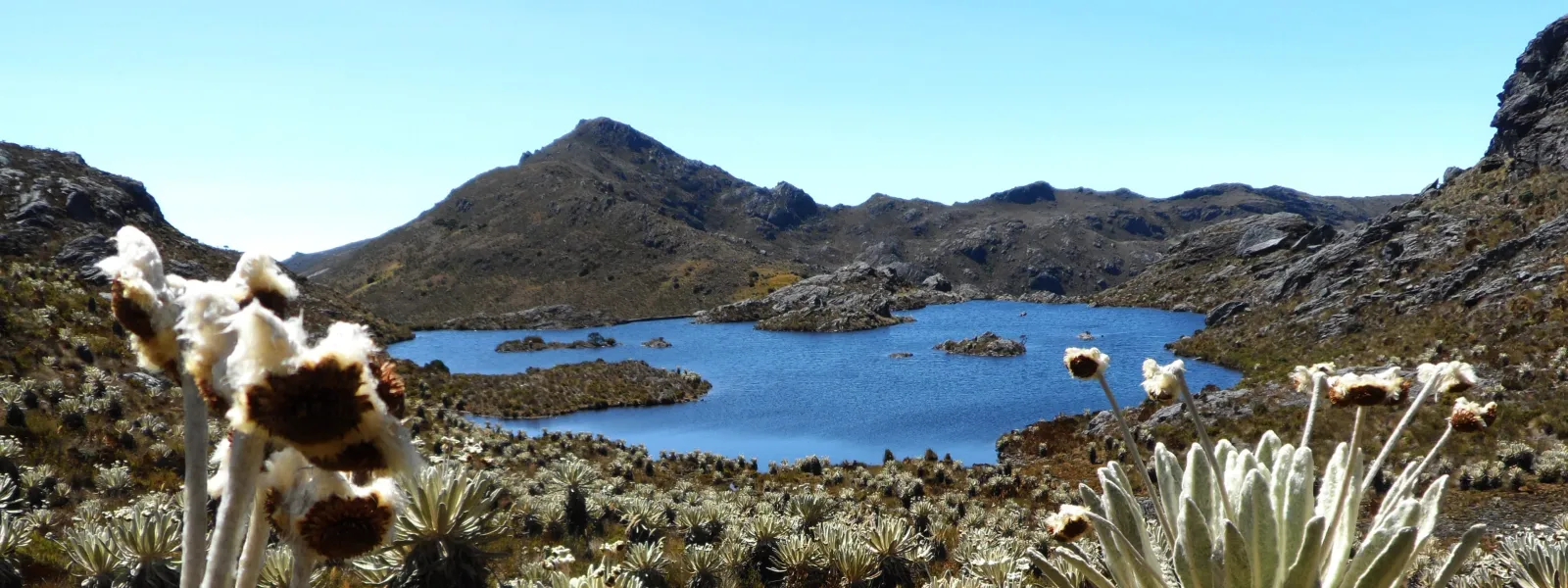
In the Andean region, high-mountain ecosystems known as páramos capture water from the fog and supply it to the lowlands. One such ecosystem is the Santurbán páramo, which provides fresh water to more than two million people in Colombia.
Santurbán, like the other páramos on the continent, also captures large amounts of carbon, making it a key ally in mitigating the climate crisis. It is also a refuge for hundreds of endangered species, including the iconic spectacled bear.
The land in and around the páramo contains gold and other minerals. This has put Santurbán in the spotlight of the multinational mining industry, which for decades has sought to establish large-scale projects in the ecosystem that threaten to degrade it.
The Committee for the Defense of Water and the Santurbán Páramo—a coalition of environmental advocates—has thwarted these ongoing attempts, with support from AIDA and other civil society organizations.
Background
The Santurbán páramo is located in the heart of the Eastern Cordillera of the Colombian Andes, in the departments of Santander and Norte de Santander, at an elevation ranging from 2,200 to 4,290 meters above sea level.
It covers an area of 129,743 hectares and is home to 57 lakes. It serves as a habitat for 457 plant species and 293 species of vertebrate fauna.
There are mineral deposits in Santurbán, primarily gold, but also silver and copper. This explains the region’s mining tradition, particularly in the part of the páramo located in Santander, in the province of Soto Norte. The communities in the area have built their culture and identity around gold mining, which is mainly artisanal and small-scale.
But since the 1990s, the gold deposits in the páramo have also attracted foreign mining conglomerates seeking to develop large-scale projects. This has raised concerns among the population that relies on the Santurbán water sources, who have mobilized in defense of water, their land, and life.
Although national and international regulations prohibit mining in páramos, the Colombian government has granted mining concessions to transnational corporations in Santurbán.

Photo: Keishpixl / Pixabay.
The long struggle to protect the páramo
One of the companies that sought to develop large-scale mining in Santurbán is Eco Oro Minerals Corp.—formerly Greystar Resources—a Canadian company that intended to establish the Angostura open-pit mine there to extract gold and silver. Between 1994 and 1995, the company acquired its mining titles and conducted exploration. And in 2010, it applied for a mining permit.
That was the year AIDA became involved in defending the ecosystem, supporting the Committee for the Defense of Water and the Santurbán Páramo. Our legal work helped convince the Colombian government to deny the mine an environmental permit in May 2011.
In January 2013, the government designated a portion of the páramo (11,700 hectares) as a Regional Natural Park. That year—together with the committee and partner organizations—we carried out a campaign and advocacy efforts to urge the government to recognize the entire Santurbán area as a páramo ecosystem through a delimitation based on scientific criteria. In December 2014, the Ministry of the Environment established a delimitation that protected 76% of the páramo (98,954 hectares).
Furthermore, as a result of a litigation supported by AIDA, in February 2016, Colombia’s highest court reaffirmed that mining in páramos is prohibited.
That same year, in December, the International Finance Corporation (IFC), the World Bank Group’s private sector arm, decided to divest from Eco Oro Minerals. This achievement was the result of a process that began in 2012, when the committee—advised and supported by AIDA and international partner organizations—filed a complaint before an independent accountability mechanism, which concluded that the IFC’s investment in the Angostura project failed to take into account the project’s social and environmental impacts, thereby contradicting the financial institution’s internal policies.
Also in 2016, Eco Oro Minerals filed an arbitration claim against the Colombian government with the International Centre for Settlement of Investment Disputes (ICSID), arguing that it had been adversely affected by government decisions aimed at protecting the country’s páramos, including the delimitation of Santurbán.
In 2017, the Constitutional Court invalidated the delimitation because the affected communities were not consulted. The high court ordered that a participatory delimitation be carried out.
And that year, a new threat to Santurbán emerged when the Canadian multinational Aris Mining applied for an environmental permit for Soto Norte, a gold mining project located near the páramo. Following citizen protests and technical objections, in October 2020, the National Environmental Licensing Authority shelved the project.
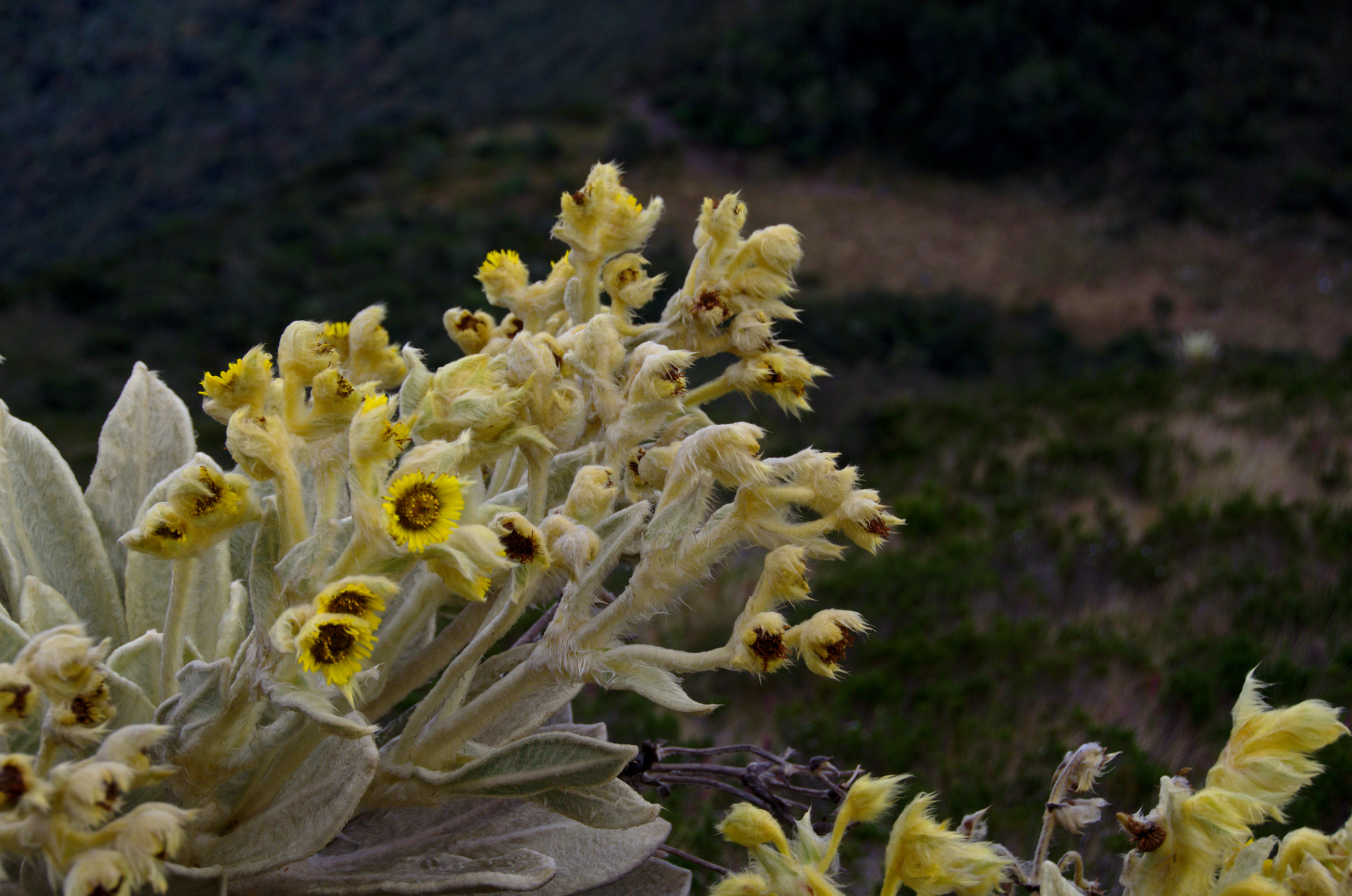
Photo: Aztlec.
Current situation
In March 2025, the Colombian government designated the western flank of the Santurbán massif as a temporary renewable natural resource reserve area, delimiting and protecting an area of 75,344.65 hectares. This resulted in a two-year suspension of the Soto Norte project. However, Aris Mining's contract to formalize Calimineros' small-scale mining activities through the purchase and processing of mineralized material remains in effect.
In addition, the Canadian mining company continues to move the project forward. In September 2025, it released its prefeasibility study, revising the mine’s original design.
Meanwhile, members of the Committee for the Defense of Water and the Santurbán Páramo face threats and stigmatization because of their work. In March 2025, UN Special Rapporteurs and the Working Group on Business and Human Rights denounced these incidents in communications sent to the governments of Colombia, Canada, and the United Arab Emirates, as well as to the companies Aris Mining and MDC Industry Holding Company LLC, the former co-owner of the Soto Norte project.
Regarding the arbitration claim filed by Eco Oro Minerals, in July 2024, ICSID ruled in favor of the Colombian government and rejected the Canadian company’s claim for USD 1.1 billion in compensation.
Concerning the delimitation of Santurbán, in July 2026, the Ministry of the Environment issued a resolution introducing the concept of "progressive delimitation." On that basis, the government proposes to progressively demarcate the páramo, covering 29,199 hectares across 19 municipalities—those where the participatory agreements required by the Constitutional Court in its 2017 ruling have already been finalized. It also proposes two measures on the creation and expansion of reserves to restrict mining in the ecosystem.
Learn more about the impacts of mining on the páramos of Latin America (in Spanish).
Partners:
Related projects
Spending climate dollars on large dams – a bad idea
During its last board meeting, the Green Climate Fund—charged with financing developing nations’ fight against climate change—approved two projects related to large dams. That means $136 million will finance large-scale hydropower, contradicting the Fund’s goal of stimulating a low-emission and climate-resilient future. We’ve said it before: large dams are not part of the paradigm shift we need. They worsen climate change and are highly vulnerable to its impacts. They also cause grave economic and socio-environmental problems that make it impossible to label them as sustainable development. dam Projects before the gcf While the two projects will exacerbate climate change, they aren’t the most destructive we’ve seen. The first is expected to generate 15 MW of electricity in the Solomon Islands, an impoverished Pacific archipelago highly vulnerable to climate change. Planned for the Tina River, the dam will be the country’s first major infrastructure project. Today, the Solomon Islands rely almost entirely on imported diesel to produce energy. It is an unreliable, highly polluting energy source for which residents must pay one of the highest rates in the region. We would have liked to see the Solomon Islands leapfrog toward a more sustainable alternative, avoiding the era of large dams altogether. But we were pleased to see the World Bank’s consultation and engagement processes with local communities, which lend legitimacy to the project. The second project will rehabilitate a dam built in the 1950’s in Tajikistan. The repairs will make the dam more resilient to weather and less subject to accidents. Since it is focused on rehabilitation, the project will not generate the socio-environmental impacts typical of ground-up dam construction. Tajikistan already gets 98 percent of its energy from hydropower, an increasingly unreliable energy source. In fact, during colder months, when more energy is needed, more than 70 percent of the population suffers cutbacks due to the malfunctioning of dams. It’s unreasonable to use climate finance to deepen a country’s energy dependency instead of diversifying its matrix and increasing its climate resiliency. Our Campaign against large dams When we learned that large dam proposals would come before the Fund, just before the 14th meeting of the Board of Directors, we drafted a letter explaining why large dams are ineligible for climate funding. Then, in anticipation of the 16th meeting, during which the projects would be discussed, we sent Board Members an informational letter on each of the projects, signed by our closest allies. Finally, during the board meeting, we circulated a statement signed by a coalition of 282 organizations, further strengthening our position against the funding of large dams. We obtained official replies from several members of the Board, the European Bank for Reconstruction and Development (in charge of the project in Tajikistan), and the Designated National Authority of the Solomon Islands. Delegates from Canada and France requested further discussion of the issue. The problems with large dams received international media attention through articles published in The Guardian and Climate Home. Advancing with Optimism Although financing was ultimately granted to both of the projects, we managed to draw international attention to the contradiction inherent in funding large dams with money designated to combat climate change. Several members of the Green Climate Fund expressed doubts about further promoting large hydropower initiatives. We’re confident they’ll raise their voices when faced with projects far more damaging than those recently approved. Cheaper, more effective, and more environmentally friendly alternatives need the support and momentum the Green Climate Fund can provide. Both solar and wind power, for example, have proved to be more efficient and less costly than large-scale hydropower. Other less-developed technologies, such as geothermal, have largely unexplored potential. As part of a coalition of civil society organizations monitoring the Fund’s decisions, AIDA will continue working to ensure that the recent decision to fund large dams does not become a precedent.
Read moreSpending climate dollars on large dams – a bad idea
During its last board meeting, the Green Climate Fund—charged with financing developing nations’ fight against climate change—approved two projects related to large dams. That means $136 million will finance large-scale hydropower, contradicting the Fund’s goal of stimulating a low-emission and climate-resilient future. We’ve said it before: large dams are not part of the paradigm shift we need. They worsen climate change and are highly vulnerable to its impacts. They also cause grave economic and socio-environmental problems that make it impossible to label them as sustainable development. dam Projects before the gcf While the two projects will exacerbate climate change, they aren’t the most destructive we’ve seen. The first is expected to generate 15 MW of electricity in the Solomon Islands, an impoverished Pacific archipelago highly vulnerable to climate change. Planned for the Tina River, the dam will be the country’s first major infrastructure project. Today, the Solomon Islands rely almost entirely on imported diesel to produce energy. It is an unreliable, highly polluting energy source for which residents must pay one of the highest rates in the region. We would have liked to see the Solomon Islands leapfrog toward a more sustainable alternative, avoiding the era of large dams altogether. But we were pleased to see the World Bank’s consultation and engagement processes with local communities, which lend legitimacy to the project. The second project will rehabilitate a dam built in the 1950’s in Tajikistan. The repairs will make the dam more resilient to weather and less subject to accidents. Since it is focused on rehabilitation, the project will not generate the socio-environmental impacts typical of ground-up dam construction. Tajikistan already gets 98 percent of its energy from hydropower, an increasingly unreliable energy source. In fact, during colder months, when more energy is needed, more than 70 percent of the population suffers cutbacks due to the malfunctioning of dams. It’s unreasonable to use climate finance to deepen a country’s energy dependency instead of diversifying its matrix and increasing its climate resiliency. Our Campaign against large dams When we learned that large dam proposals would come before the Fund, just before the 14th meeting of the Board of Directors, we drafted a letter explaining why large dams are ineligible for climate funding. Then, in anticipation of the 16th meeting, during which the projects would be discussed, we sent Board Members an informational letter on each of the projects, signed by our closest allies. Finally, during the board meeting, we circulated a statement signed by a coalition of 282 organizations, further strengthening our position against the funding of large dams. We obtained official replies from several members of the Board, the European Bank for Reconstruction and Development (in charge of the project in Tajikistan), and the Designated National Authority of the Solomon Islands. Delegates from Canada and France requested further discussion of the issue. The problems with large dams received international media attention through articles published in The Guardian and Climate Home. Advancing with Optimism Although financing was ultimately granted to both of the projects, we managed to draw international attention to the contradiction inherent in funding large dams with money designated to combat climate change. Several members of the Green Climate Fund expressed doubts about further promoting large hydropower initiatives. We’re confident they’ll raise their voices when faced with projects far more damaging than those recently approved. Cheaper, more effective, and more environmentally friendly alternatives need the support and momentum the Green Climate Fund can provide. Both solar and wind power, for example, have proved to be more efficient and less costly than large-scale hydropower. Other less-developed technologies, such as geothermal, have largely unexplored potential. As part of a coalition of civil society organizations monitoring the Fund’s decisions, AIDA will continue working to ensure that the recent decision to fund large dams does not become a precedent.
Read more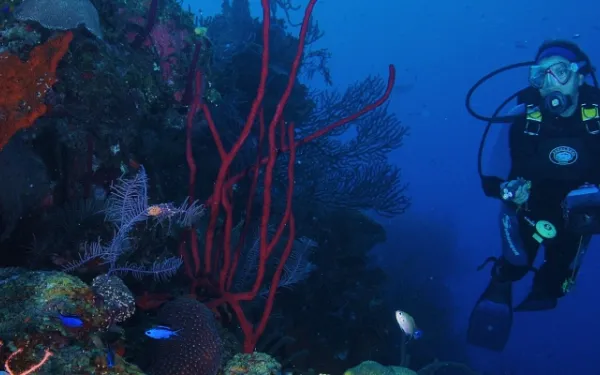
In search of legal protection for Mexico’s reefs
From the coasts of Baja California to the shallows of the Caribbean, Mexico is home to an incredible array of reefs. The coral and rocky reefs found throughout the country are sources of food and potentially life-saving genetic material. They protect people on the coasts from the impacts of storms and hurricanes, stimulate tourism, and provide shelter for a wide variety of plants and animals. Despite their inherent value, Mexico does not yet have an overarching law for reef protection. This vital task is instead governed by a variety of legislation and by international treaties that establish the country’s obligations to preserve these valuable ecosystems. Climate change is one of the most serious threats to reefs. Oceans are becoming warmer and more acidic, conditions that reduce reefs’ capacity to grow and repair themselves. In addition, warmer water disperses the algae that corals feed on, leaving the corals weakened and at risk of death. This month, the Mexican Senate’s Special Climate Change Commission decided to do something about the threats facing corals. They convened a series of meetings to promote the creation of a legislative instrument aimed exclusively at protecting the nation’s many reefs. I participated in these meetings as a representative of AIDA, alongside our colleagues from Wildcoast and scientists, academics, and community members who benefit from the services reefs provide. We drew the Senate’s attention to the serious threats facing reefs, and to the urgency of applying the precautionary principle to guarantee the human right to a healthy environment, which is at risk due to the lack of adequate regulations for reef conservation. To guarantee this right and to protect the oceans against climate change, Mexico has signed international treaties including the American Convention on Human Rights, the Paris Agreement on Climate Change, the Ramsar Convention on Wetlands, and the Inter-American Convention for the Protection and Conservation of Sea Turtles. The Veracruz Reef, an emblematic case Reefs around the country are also being threatened by inadequately planned coastal infrastructure and insufficient environmental impact assessments. This is the case with the expansion of the port of Veracruz, a project that endangers the Veracruz Reef System, the largest coral ecosystem in the Gulf of Mexico. The site was declared a Natural Protected Area in 1992, a priority region for the National Commission for the Knowledge and use of Biodiversity in 2000, a UNESCO biosphere reserve in 2006, and a Ramsar site. Even so, the government reduced the size of that area in 2013 to make way for the port project, violating international conventions such as the Ramsar Convention, under which the Veracruz reef is recognized as a Wetland of International Importance. Learn more about the case in the following video: Hope for Mexico's Marine Heritage We are confident that the Senate initiative will bear fruit and that Mexico will develop a law for the protection of its reefs, and that it will be born from a transparent and participatory process to which we will continue to contribute. To learn more about the topic, see our report The Protection of Coral Reefs in Mexico: Rescuing Marine Biodiversity and its Benefits for Humanity.
Read more