
Project
Alberto Peña Kay
Protecting the Santurban páramo from mining's damage
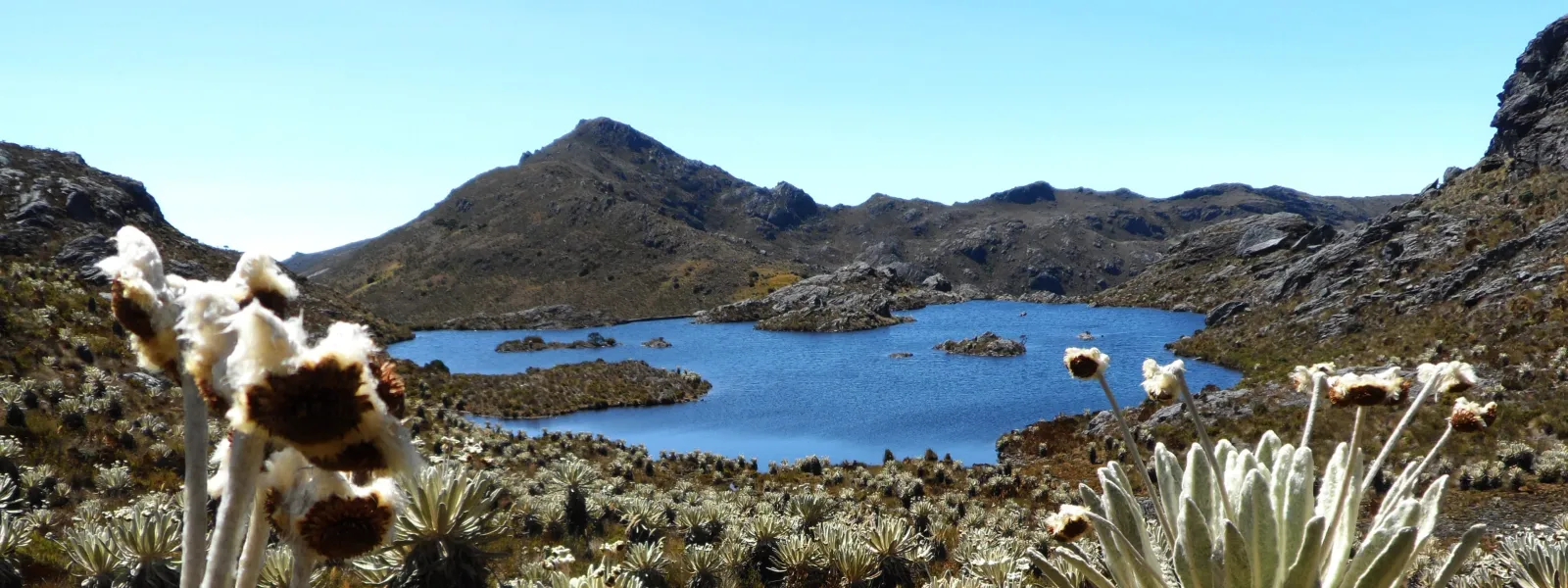
In the Andean region, high-mountain ecosystems known as páramos capture water from the fog and supply it to the lowlands. One such ecosystem is the Santurbán páramo, which provides fresh water to more than two million people in Colombia.
Santurbán, like the other páramos on the continent, also captures large amounts of carbon, making it a key ally in mitigating the climate crisis. It is also a refuge for hundreds of endangered species, including the iconic spectacled bear.
The land in and around the páramo contains gold and other minerals. This has put Santurbán in the spotlight of the multinational mining industry, which for decades has sought to establish large-scale projects in the ecosystem that threaten to degrade it.
The Committee for the Defense of Water and the Santurbán Páramo—a coalition of environmental advocates—has thwarted these ongoing attempts, with support from AIDA and other civil society organizations.
Background
The Santurbán páramo is located in the heart of the Eastern Cordillera of the Colombian Andes, in the departments of Santander and Norte de Santander, at an elevation ranging from 2,200 to 4,290 meters above sea level.
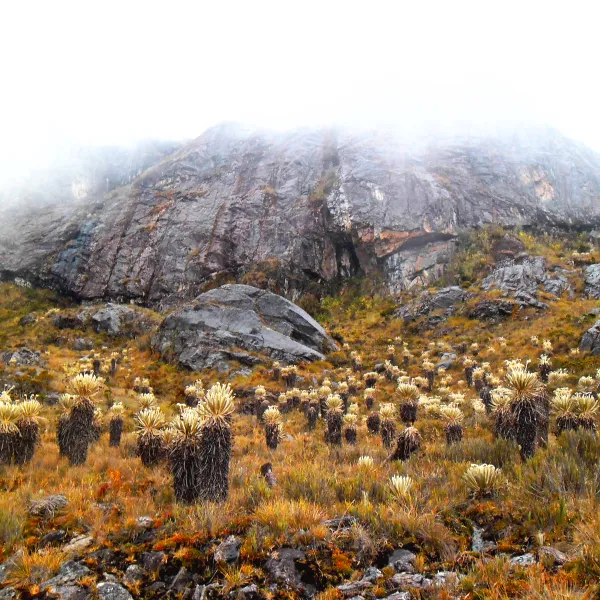
It covers an area of 129,743 hectares and is home to 57 lakes. It serves as a habitat for 457 plant species and 293 species of vertebrate fauna.
There are mineral deposits in Santurbán, primarily gold, but also silver and copper. This explains the region’s mining tradition, particularly in the part of the páramo located in Santander, in the province of Soto Norte. The communities in the area have built their culture and identity around gold mining, which is mainly artisanal and small-scale.
But since the 1990s, the gold deposits in the páramo have also attracted foreign mining conglomerates seeking to develop large-scale projects. This has raised concerns among the population that relies on the Santurbán water sources, who have mobilized in defense of water, their land, and life.
Although national and international regulations prohibit mining in páramos, the Colombian government has granted mining concessions to transnational corporations in Santurbán.
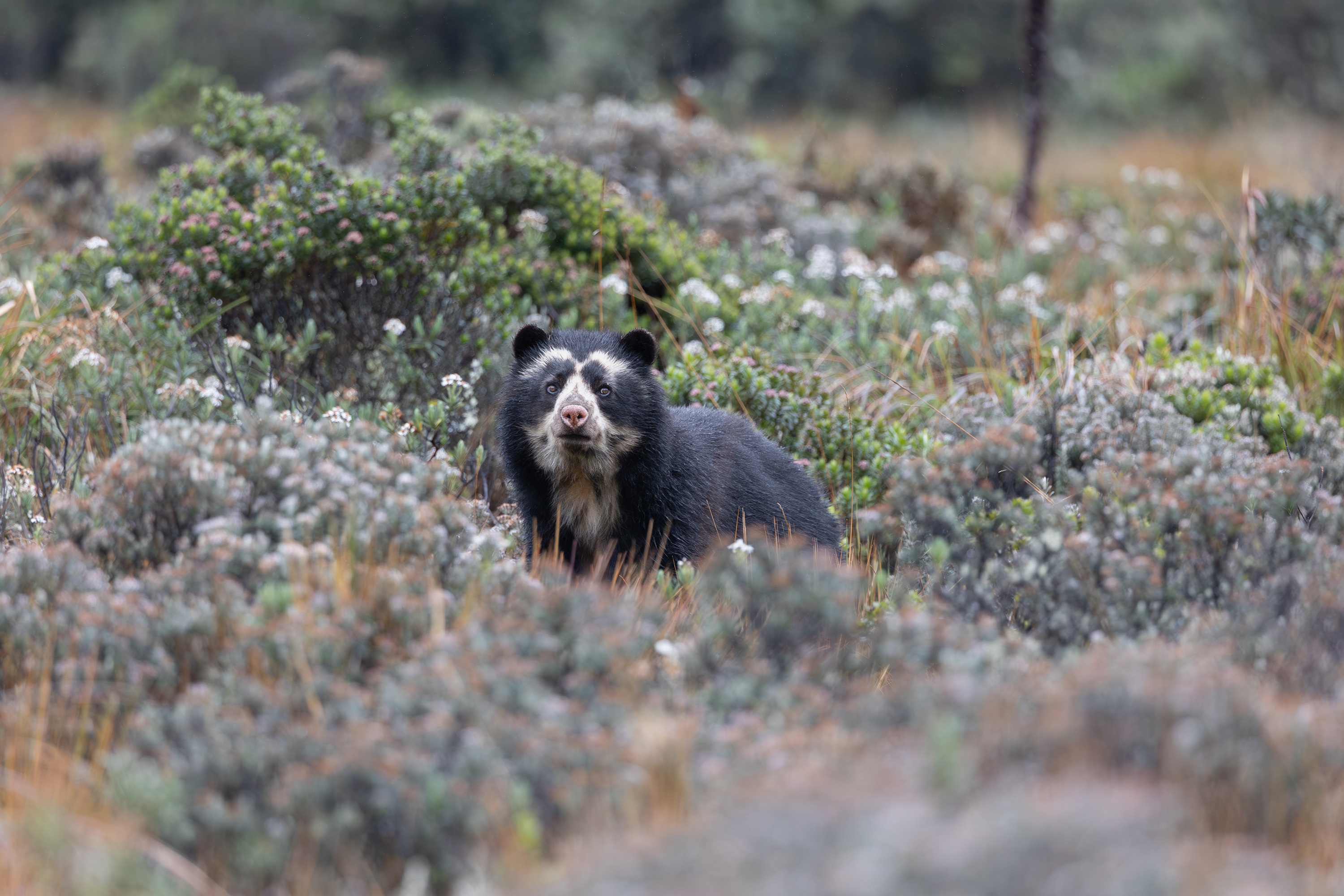
Photo: Keishpixl / Pixabay.
The long struggle to protect the páramo
One of the companies that sought to develop large-scale mining in Santurbán is Eco Oro Minerals Corp.—formerly Greystar Resources—a Canadian company that intended to establish the Angostura open-pit mine there to extract gold and silver. Between 1994 and 1995, the company acquired its mining titles and conducted exploration. And in 2010, it applied for a mining permit.
That was the year AIDA became involved in defending the ecosystem, supporting the Committee for the Defense of Water and the Santurbán Páramo. Our legal work helped convince the Colombian government to deny the mine an environmental permit in May 2011.
In January 2013, the government designated a portion of the páramo (11,700 hectares) as a Regional Natural Park. That year—together with the committee and partner organizations—we carried out a campaign and advocacy efforts to urge the government to recognize the entire Santurbán area as a páramo ecosystem through a delimitation based on scientific criteria. In December 2014, the Ministry of the Environment established a delimitation that protected 76% of the páramo (98,954 hectares).
Furthermore, as a result of a litigation supported by AIDA, in February 2016, Colombia’s highest court reaffirmed that mining in páramos is prohibited.
That same year, in December, the International Finance Corporation (IFC), the World Bank Group’s private sector arm, decided to divest from Eco Oro Minerals. This achievement was the result of a process that began in 2012, when the committee—advised and supported by AIDA and international partner organizations—filed a complaint before an independent accountability mechanism, which concluded that the IFC’s investment in the Angostura project failed to take into account the project’s social and environmental impacts, thereby contradicting the financial institution’s internal policies.
Also in 2016, Eco Oro Minerals filed an arbitration claim against the Colombian government with the International Centre for Settlement of Investment Disputes (ICSID), arguing that it had been adversely affected by government decisions aimed at protecting the country’s páramos, including the delimitation of Santurbán.
In 2017, the Constitutional Court invalidated the delimitation because the affected communities were not consulted. The high court ordered that a participatory delimitation be carried out.
And that year, a new threat to Santurbán emerged when the Canadian multinational Aris Mining applied for an environmental permit for Soto Norte, a gold mining project located near the páramo. Following citizen protests and technical objections, in October 2020, the National Environmental Licensing Authority shelved the project.
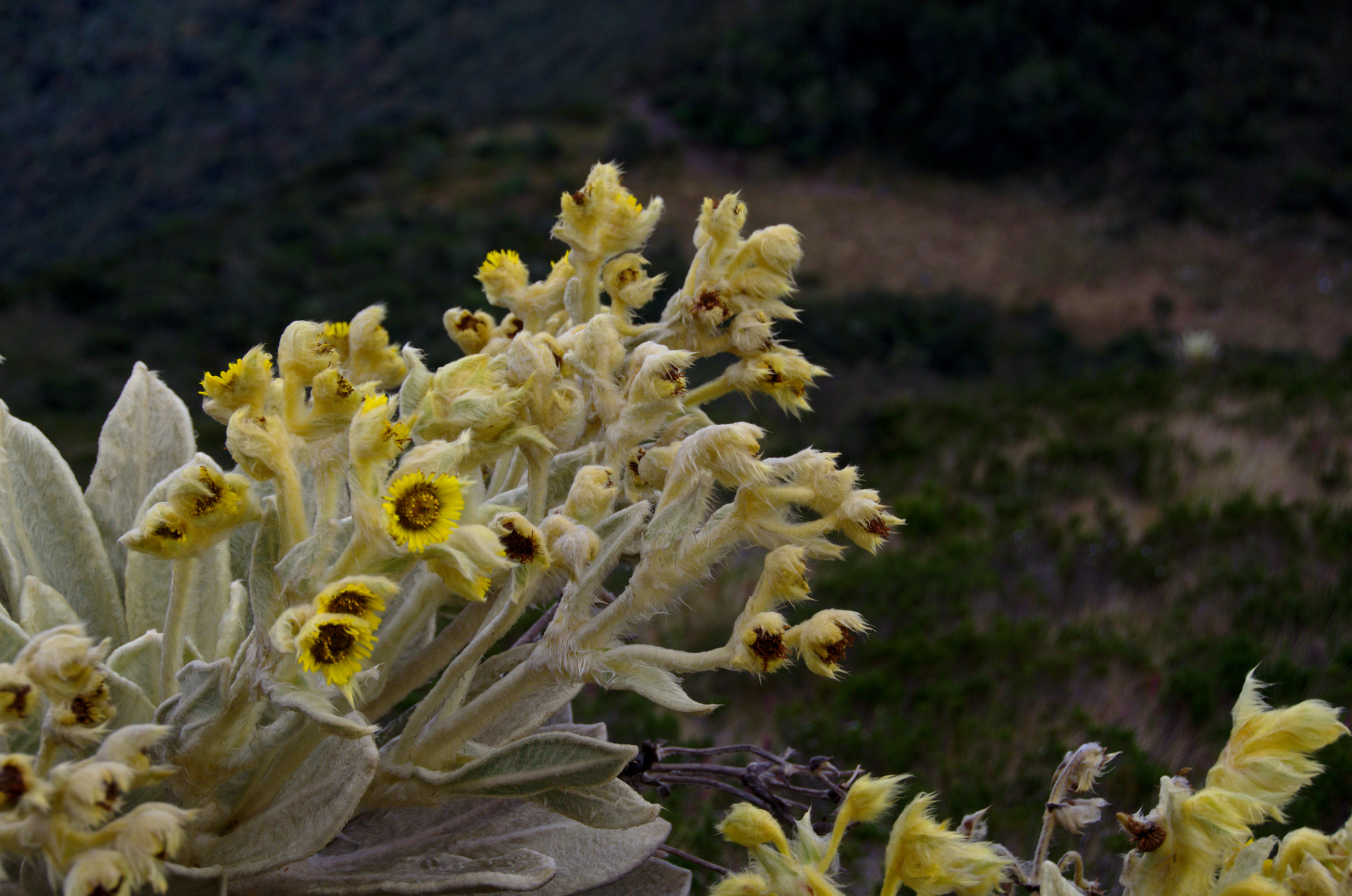
Photo: Aztlec.
Current situation
In March 2025, the Colombian government designated the western flank of the Santurbán massif as a temporary renewable natural resource reserve area, delimiting and protecting an area of 75,344.65 hectares. This resulted in a two-year suspension of the Soto Norte project. However, Aris Mining's contract to formalize Calimineros' small-scale mining activities through the purchase and processing of mineralized material remains in effect.
In addition, the Canadian mining company continues to move the project forward. In September 2025, it released its prefeasibility study, revising the mine’s original design.
Meanwhile, members of the Committee for the Defense of Water and the Santurbán Páramo face threats and stigmatization because of their work. In March 2025, UN Special Rapporteurs and the Working Group on Business and Human Rights denounced these incidents in communications sent to the governments of Colombia, Canada, and the United Arab Emirates, as well as to the companies Aris Mining and MDC Industry Holding Company LLC, the former co-owner of the Soto Norte project.
Regarding the arbitration claim filed by Eco Oro Minerals, in July 2024, ICSID ruled in favor of the Colombian government and rejected the Canadian company’s claim for USD 1.1 billion in compensation.
Concerning the delimitation of Santurbán, in July 2026, the Ministry of the Environment issued a resolution introducing the concept of "progressive delimitation." On that basis, the government proposes to progressively demarcate the páramo, covering 29,199 hectares across 19 municipalities—those where the participatory agreements required by the Constitutional Court in its 2017 ruling have already been finalized. It also proposes two measures on the creation and expansion of reserves to restrict mining in the ecosystem.
Learn more about the impacts of mining on the páramos of Latin America (in Spanish).
Partners:
Related projects
As killings increase, how can we defend the defenders?
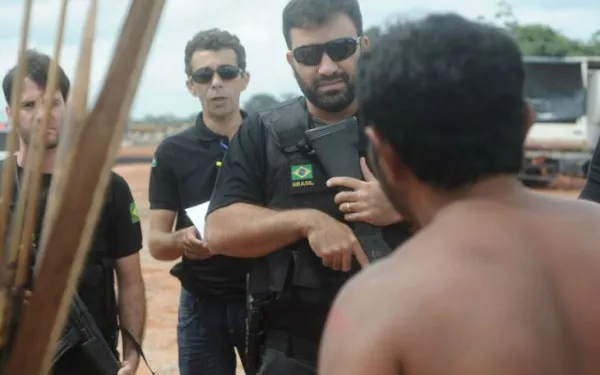
Of the 87 human rights defenders murdered in Latin America in 2016, 60 were defending rights linked to environmental destruction. That’s according to a new report from Global Witness. Worldwide, at least 200 environmental defenders were killed in 2016, making it the most dangerous year for environmentalists on record. And 60 percent of these murders occurred in Latin America. Disturbingly, these statistics likely underrepresent the problem, as many killings of defenders and activists around the world go unreported. Environmental defenders are also frequently subjected to harassment, intimidation, death threats, arrests, sexual assault, kidnapping, and lawsuits intended to silence them. “The battle to protect the planet is rapidly intensifying and the cost can be counted in human lives,” Global Witness campaigner Ben Leather said. “More people in more countries are being left with no option but to take a stand against the theft of their land or the trashing of their environment. Too often they are brutally silenced by political and business elites, while the investors that bankroll them do nothing.” The roots of the problem Why are so many activists under threat, simply for speaking out and raising awareness about environmentally destructive projects? Governments argue that mining, oil and gas extraction, logging, and dams will boost their countries’ economy. But corporations typically hire outside contractors, creating few if any local jobs. And in many situations, development projects pollute the environment, displace entire communities, and infringe human rights. Some projects, like large hydroelectric dams, also hurt biodiversity and contribute to climate change. Furthermore, governments must often rely on transnational corporations or foreign investment to fund these projects. As a result, profits from mining, oil and gas, or large dams often benefit international corporations or a country’s most-wealthy businessmen, but are not always invested into local communities. This situation produces extreme rates of economic inequality. Honduras, for example, is one of the most unequal countries in Latin America and has had the highest per capita rate of killings of environmental defenders over the last decade. Twenty percent of the wealthiest people in Honduras reap 60 percent of the national income, leaving almost two-thirds of Hondurans to live in poverty or extreme poverty, according to the Organization of American States. When activists—many of them indigenous—speak out against these environmental and economic injustices, they’re often denounced as enemies of progress. Working together, governments and corporations try to silence outspoken defenders. When censorship is not enough, the military, police, and mercenaries are called to silence the opposition with escalating threats and violence. How to defend the defenders Each year, as the problem intensifies, we’re reminded of our duty to stand up for environmental and human rights defenders, and of the need to institute adequate policies for their protection. Here are several ways governments and citizens alike can protect defenders around the world: International Law. Governments around the world are party to international treaties and conventions that obligate them to uphold certain human rights standards. When these basic rights aren’t respected, it’s up to the international community to step in and protect activists under threat by pressuring governments to enforce the law. AIDA works in this way to hold governments accountable and encourage the immediate adoption of measures to guarantee the life and integrity of at-risk activists. “States must guarantee a favorable environment in which people can safely perform their work to protect the natural world,” AIDA attorney Astrid Puentes Riaño said. “States should also investigate these instances of violence. The murders of those who bravely defend the environment must not go unpunished.” Domestic Legislation. When international pressure doesn’t work, domestic laws can help pressure States into protecting activists who speak out. In the United States, for example, legislation has been proposed that would suspend US military and police aid to Honduras until the Honduran government investigates human rights violations in the country. The bill could help protect activists there and serve as an example for other countries that would like to follow suit. Emergency Measures. Emergency visa measures or diplomatic protections to remove endangered activists from harm can be useful in relocating activists across borders or protecting them in another way. Global Solidarity Campaigns. Solidarity campaigns organized by coalitions of human rights organizations and supported by the media hold great potential. If these outlets simultaneously, consistently, and reliably raised the alarm of an activist under threat, governments and corporations might think twice before trying to silence the person at risk. This, of course, involves you too. There’s no substitution for the mobilization of community support—in the streets, on social media, in your daily life. Standing up, speaking out and raising awareness is the first step toward building a more just future. These are just some of the solutions to this growing problem, and their success depends on all of us. Showing we’re not afraid to fight for environmental justice and a future that respects everyone’s human rights is not just a good idea, it’s necessary for our survival.
Read more
Important progress made towards ocean treaty
States meeting at the United Nations in New York took an important step towards launching negotiations for a new treaty to protect the biodiversity of the high seas (areas beyond the national jurisdiction). Making up two thirds of the global ocean, marine life in the high seas is not effectively protected. A new treaty will rectify this, putting in place measures to protect the rich and globally significant biodiversity and ecosystem services of the high seas and to govern activities undertaken there sustainably. Although the wording of the recommendation did not reflect the very strong support for rapid UN action towards a treaty, it will enable the General Assembly to convene an Intergovernmental Conference. The 35 member organisations of the High Seas Alliance which have campaigned for this treaty were pleased with the recommendation to move forwards. Peggy Kalas of the High Seas Alliance said: “This is a significant step for the high seas and humanity since we are all dependent on the ocean for a healthy planet. A new treaty will bring law and governance to this most neglected and besieged part of our world and we are closer to that goal now. We are profoundly thankful to the many, many states who have worked so hard to achieve this; their determination to protect the global commons for all humankind has been inspiring.” The decision of the Preparatory Committee will now go the UN General Assembly. The overwhelming majority of states are pushing for the next step to be an Intergovernmental Conference (IGC) convened in 2018. An IGC would mean formal negotiations on the text of a new treaty would commence. "Today marks a significant step forward for the world’s ocean," said Lisa Speer, Director of international Oceans at the Natural Resources Defense Council. Sylvia Earle said: “The nations of the world took important steps towards a treaty today. The high seas are half of the world and need the rule of law. To those who have worked so hard at the UN and in support of this moment, we extend an ocean of gratitude and carry forward optimism for a high seas treaty.” Veronica Frank of Greenpeace said: “Although we hoped to see a starting date included for the negotiating conference, it was good to see such overwhelming support for moving the process forward and so many people around the world speaking up for ocean protection. It is now for the UN General Assembly to make that step forward for the ocean and for all the people that depend on it. Anything less would fall short of what is our blue planet needs to recover." Gladys Martínez, an attorney with the Interamerican Association for Environmental Defense, said: “We applaud the commitment of so many delegates to protect nearly half of our planet. We are both proud and grateful for the work of Latin American nations in this regard.” Maria Damanaki of the Nature Conservancy said: “This is a demonstration of global collaboration, and a step towards protecting half of our planet, which today is an unregulated no man's land. We join our partners in the High Seas Alliance in commending the states and organisations that have worked effortlessly to make this happen." “This represents a major step in a long journey driven by a large number of committed states. We need to continue this momentum through to the General Assembly to deliver a resolution for an Intergovernmental Conference” added Tim Packeiser of WWF. In June all States signed on to a global call to action for the ocean, of which the high seas is a major part.
Read more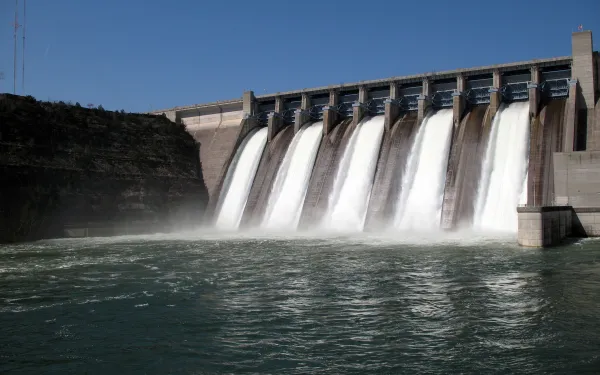
Letter to Argentine legislators on dams in Patagonia
In a letter sent to the Argentine Congress, civil society organizations expressed their concerns about the construction of large dams in Patagonia. The letter outlines recent scientific studies on the impacts of large dams on the environment, the economy, and local communities, and includes information on existing clean energy alternatives. We write out of deep concern for the crossroads facing the Argentine people: protect the immeasurable ecological heritage of Patagonia, or jeopardize Chinese funding for a significant number of infrastructure and energy projects. We understand that this is not a minor issue, and we hope that the Argentine Congress will make use of the Public Hearing on July 20, not only to evaluate in depth the Kirchner-Cepernic Hydroelectric Complex (KCHC), but also to open up a fundamental conversation for Argentina and all of Latin America: on the development of a truly clean, sovereign, and efficient energy model. We take this opportunity to share information on the negative impacts large dams have on the environment and economies of nations, as well as on affected communities; and on existing alternatives that can provide cheaper and more efficient energy. Argentina must not consider itself obliged to alter one of the last pristine areas on the planet, home of the last glacial river that runs freely from mountain peaks to the ocean. There are currently many energy options that are better than hydroelectric dams. Argentina has the opportunity to be a pioneer in the development and implementation of these renewable energy technologies. Worldwide clean energy trends demonstrate this: in 2015, the world added 63 GW of wind energy and 47 GW of solar energy, compared to just 22 GW of energy from large hydropower plants. In some parts of the world, large dams are being dismantled in recognition that their costs outweigh their benefits; and in others, private companies are discarding large dam projects because they are no longer viable or profitable. Furthermore, the United States of America has decided, as a national policy, to oppose any loan, donation, strategy, or policy to support the construction of any large hydroelectric dam. Wind and solar energy are now economically competitive, faster to build and operate, and less vulnerable to a changing climate. In addition, the falling prices of battery storage, accompanied by innovations in smart grid technology, offers ways to resolve the problem of intermittent renewables without the need to construct new large dams. Large hydropower dams are an obsolete technology. They are highly vulnerable to climate change (they can be paralyzed by droughts and may become dangerous in extreme weather events); worsen climate change by destroying carbon sinks and emitting gases from their reservoirs; harm biodiversity and local communities; cost a fortune; and take too long to become operational. Furthermore, the continued promotion of large dams by construction companies—as in the current case linked to Chinese funding—delays the implementation of available and necessary solutions towards the energy transition that our planet needs.
Read more