
Project
Alberto Peña Kay
Protecting the Santurban páramo from mining's damage
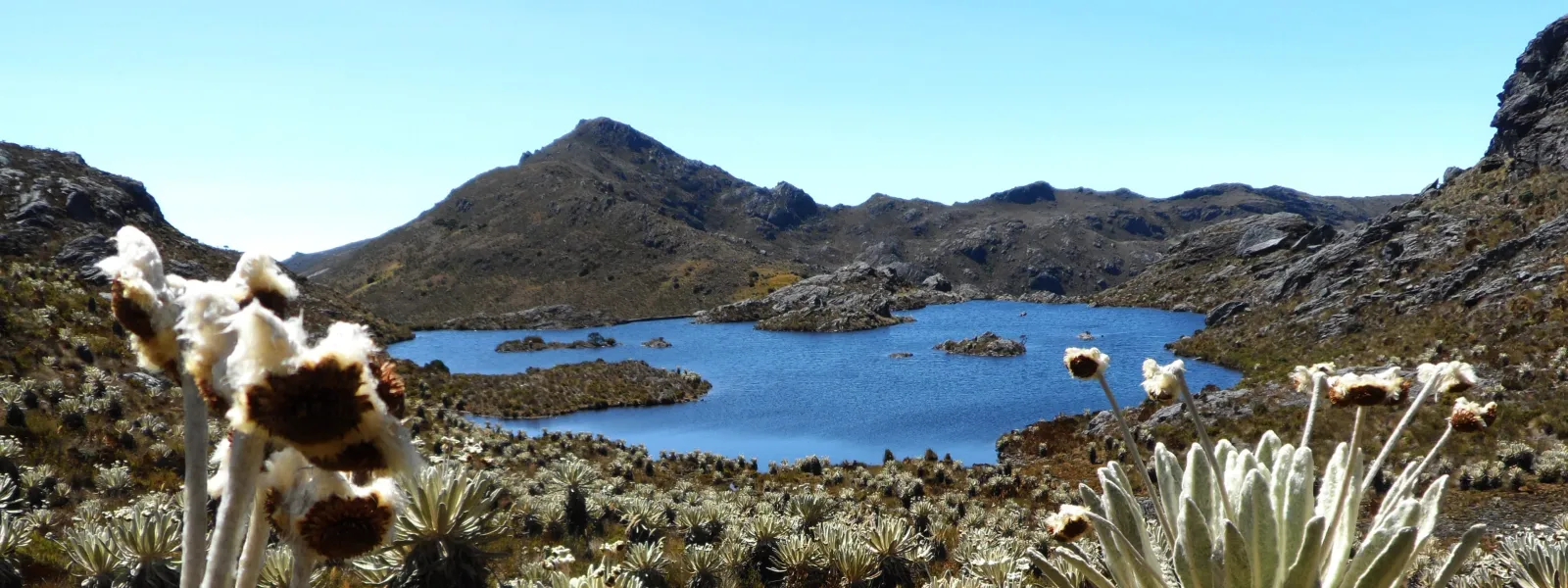
In the Andean region, high-mountain ecosystems known as páramos capture water from the fog and supply it to the lowlands. One such ecosystem is the Santurbán páramo, which provides fresh water to more than two million people in Colombia.
Santurbán, like the other páramos on the continent, also captures large amounts of carbon, making it a key ally in mitigating the climate crisis. It is also a refuge for hundreds of endangered species, including the iconic spectacled bear.
The land in and around the páramo contains gold and other minerals. This has put Santurbán in the spotlight of the multinational mining industry, which for decades has sought to establish large-scale projects in the ecosystem that threaten to degrade it.
The Committee for the Defense of Water and the Santurbán Páramo—a coalition of environmental advocates—has thwarted these ongoing attempts, with support from AIDA and other civil society organizations.
Background
The Santurbán páramo is located in the heart of the Eastern Cordillera of the Colombian Andes, in the departments of Santander and Norte de Santander, at an elevation ranging from 2,200 to 4,290 meters above sea level.
It covers an area of 129,743 hectares and is home to 57 lakes. It serves as a habitat for 457 plant species and 293 species of vertebrate fauna.
There are mineral deposits in Santurbán, primarily gold, but also silver and copper. This explains the region’s mining tradition, particularly in the part of the páramo located in Santander, in the province of Soto Norte. The communities in the area have built their culture and identity around gold mining, which is mainly artisanal and small-scale.
But since the 1990s, the gold deposits in the páramo have also attracted foreign mining conglomerates seeking to develop large-scale projects. This has raised concerns among the population that relies on the Santurbán water sources, who have mobilized in defense of water, their land, and life.
Although national and international regulations prohibit mining in páramos, the Colombian government has granted mining concessions to transnational corporations in Santurbán.
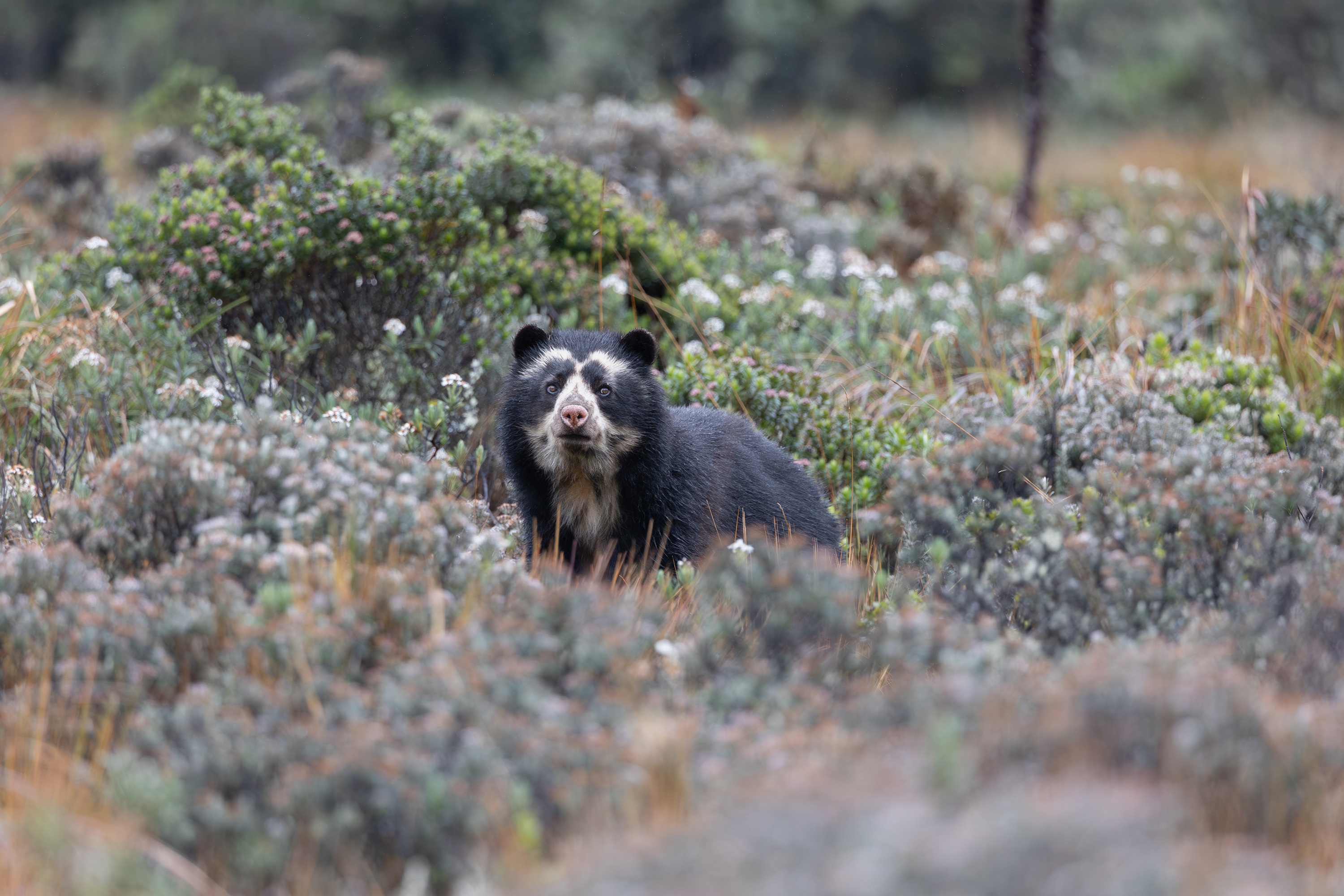
Photo: Keishpixl / Pixabay.
The long struggle to protect the páramo
One of the companies that sought to develop large-scale mining in Santurbán is Eco Oro Minerals Corp.—formerly Greystar Resources—a Canadian company that intended to establish the Angostura open-pit mine there to extract gold and silver. Between 1994 and 1995, the company acquired its mining titles and conducted exploration. And in 2010, it applied for a mining permit.
That was the year AIDA became involved in defending the ecosystem, supporting the Committee for the Defense of Water and the Santurbán Páramo. Our legal work helped convince the Colombian government to deny the mine an environmental permit in May 2011.
In January 2013, the government designated a portion of the páramo (11,700 hectares) as a Regional Natural Park. That year—together with the committee and partner organizations—we carried out a campaign and advocacy efforts to urge the government to recognize the entire Santurbán area as a páramo ecosystem through a delimitation based on scientific criteria. In December 2014, the Ministry of the Environment established a delimitation that protected 76% of the páramo (98,954 hectares).
Furthermore, as a result of a litigation supported by AIDA, in February 2016, Colombia’s highest court reaffirmed that mining in páramos is prohibited.
That same year, in December, the International Finance Corporation (IFC), the World Bank Group’s private sector arm, decided to divest from Eco Oro Minerals. This achievement was the result of a process that began in 2012, when the committee—advised and supported by AIDA and international partner organizations—filed a complaint before an independent accountability mechanism, which concluded that the IFC’s investment in the Angostura project failed to take into account the project’s social and environmental impacts, thereby contradicting the financial institution’s internal policies.
Also in 2016, Eco Oro Minerals filed an arbitration claim against the Colombian government with the International Centre for Settlement of Investment Disputes (ICSID), arguing that it had been adversely affected by government decisions aimed at protecting the country’s páramos, including the delimitation of Santurbán.
In 2017, the Constitutional Court invalidated the delimitation because the affected communities were not consulted. The high court ordered that a participatory delimitation be carried out.
And that year, a new threat to Santurbán emerged when the Canadian multinational Aris Mining applied for an environmental permit for Soto Norte, a gold mining project located near the páramo. Following citizen protests and technical objections, in October 2020, the National Environmental Licensing Authority shelved the project.
Photo: Aztlec.
Current situation
In March 2025, the Colombian government designated the western flank of the Santurbán massif as a temporary renewable natural resource reserve area, delimiting and protecting an area of 75,344.65 hectares. This resulted in a two-year suspension of the Soto Norte project. However, Aris Mining's contract to formalize Calimineros' small-scale mining activities through the purchase and processing of mineralized material remains in effect.
In addition, the Canadian mining company continues to move the project forward. In September 2025, it released its prefeasibility study, revising the mine’s original design.
Meanwhile, members of the Committee for the Defense of Water and the Santurbán Páramo face threats and stigmatization because of their work. In March 2025, UN Special Rapporteurs and the Working Group on Business and Human Rights denounced these incidents in communications sent to the governments of Colombia, Canada, and the United Arab Emirates, as well as to the companies Aris Mining and MDC Industry Holding Company LLC, the former co-owner of the Soto Norte project.
Regarding the arbitration claim filed by Eco Oro Minerals, in July 2024, ICSID ruled in favor of the Colombian government and rejected the Canadian company’s claim for USD 1.1 billion in compensation.
Concerning the delimitation of Santurbán, in July 2026, the Ministry of the Environment issued a resolution introducing the concept of "progressive delimitation." On that basis, the government proposes to progressively demarcate the páramo, covering 29,199 hectares across 19 municipalities—those where the participatory agreements required by the Constitutional Court in its 2017 ruling have already been finalized. It also proposes two measures on the creation and expansion of reserves to restrict mining in the ecosystem.
Learn more about the impacts of mining on the páramos of Latin America (in Spanish).
Partners:
Related projects
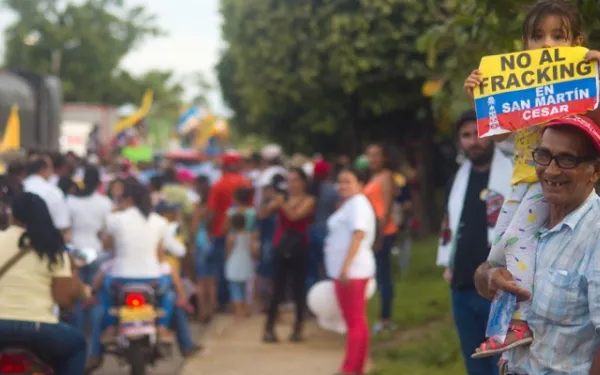
In Colombia, the power to stop fracking lies with the people
In Colombia’s fight against fracking, one tiny town is putting up a big fight. Since early 2016, the residents of San Martín, 300 miles north of Bogotá in the department of Cesar, have mobilized, protested, and peacefully resisted the government’s plans to begin fracking in their municipality. By staging marches and protests, and forcibly blocking oil company employees from accessing fracking exploration sites, concerned citizens are raising their voices against an environmentally destructive industry. But San Martín is just one municipality of many affected by the fracking fever now sweeping Colombia’s oil and gas industry. Colombia has vast reserves of unconventional fossil fuel deposits trapped in tight deposits of shale rock. Fracking breaks up that rock—using a mixture of water, sand and chemicals—and releases those deposits, which analysts say could produce 6.8 billion barrels of oil and 55 trillion cubic feet of natural gas, according to the US. Energy Information Administration. That’s enough to satisfy the country’s energy demand for decades. While operations have not yet begun in Colombia, to date 12 blocks have been reserved for fracking exploration, according to the National Hydrocarbon Agency, and one concession has been granted to a multinational corporation. These fracking sites are expected to affect municipalities all across the country. Colombia has followed the lead of other Latin American countries that have embraced fracking as a quick and dirty fix to their fossil fuel addiction, which feeds energy-hungry populations. Currently, Mexico, Argentina, and Chile are the region’s fracking powerhouses. Colombia “can’t afford not to frack,” said Juan Carlos Echeverry, the then President of Ecopetrol, Colombia’s state oil company. But San Martín’s residents—along with many other Colombians concerned about the future of their communities, their country, and the planet—have a different opinion. In support of the citizens of San Martin, CORDATEC has been organizing an on-the-ground resistance to limit fracking exploration in Cesar. Another organization, the Alianza Colombia Libre de Fracking is also fighting back: it recently signed an open letter asking President Juan Manuel Santos to pass a moratorium on fracking. While these efforts are integral to the fight against fracking, it’s also necessary to fight the battle on the local level. Wherever possible, cities and municipalities can use creative solutions like strict zoning laws or referendums to achieve fracking bans locally. This technique has seen significant success in Brazil, where more than 70 municipalities have passed fracking bans, simultaneously stalling the spread of the fossil fuel industry and protecting their environment. In the United States, states like New York, Maryland, and parts of California have also banned fracking. In partnership with organizations throughout the region, AIDA is working diligently to stop the spread of fracking in Latin America. Through the Alianza Latinoamericana Frente al Fracking and the Red por la Justicia Ambiental en Colombia, we’re focusing on local solutions with potentially regional implications. “The Alianza works to promote public debate, awareness, and education among civil society organizations in Latin America,” said Claudia Velarde, AIDA attorney. “We also support local resistance efforts against the spread of fracking in the region.” The Alianza is petitioning for a hearing before the Inter-American Commission on Human Rights, in which they’ll demonstrate the impacts fracking has on the human rights of affected communities. If our governments are committed to continuing to drill for fossil fuels, it’s time for local communities to stand up and demand a future of clean, renewable energy. By focusing our power at the grassroots level, like the people of San Martín, we too can demand a better future and push back against the fossil fuel industry.
Read more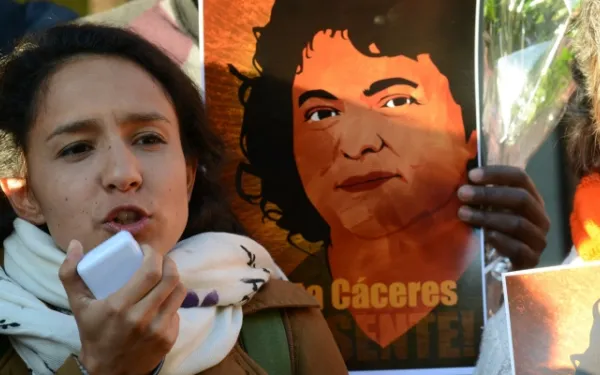
Berta lives: Keeping the struggle alive, despite the risks
On June 30, Berta Zúñiga Cáceres, the daughter of murdered Honduran environmental activist Berta Cáceres, survived an attempt on her life. She was traveling home with two colleagues when men wielding machetes stopped her car. As the men raised their weapons, Zúñiga’s driver hit the gas and swerved around the attackers, but not before one assailant hurled a large rock that struck their windshield. The attackers pursued the activists, attempting to run their car over the edge of a cliff. Fortunately, Zúñiga and her colleagues narrowly escaped. Six days later, FMO and FinnFund, two European development banks, announced their official withdrawal from the Agua Zarca dam, which Zúñiga is fighting because it would flood a site sacred to indigenous Lenca communities. “The timing of our exit announcement is not related to the attack on Ms. Berta Zúñiga Cáceres,” FMO spokesperson Christiaan Buijnsters said. “It is coincidental.” In a press release, FMO and FinnFund said the exit was “intended to reduce international and local tensions in the area.” Before she was assassinated in her home in 2016, Berta Cáceres campaigned forcefully against the dam, winning the prestigious Goldman Environmental Prize for her work. Zúñiga, 26, took over her mother’s leadership role in the Civic Council of Popular and Indigenous Organizations of Honduras (COPINH) in June 2017. Environmental activists in Honduras are still fighting the dam, but the Central American Bank for Economic Integration has yet to pull its financial support for the project. “I was born into a people of great dignity and of great strength,” Zúñiga said in an interview with independent US news outlet Democracy Now. “My mother, Berta Cáceres, instilled in us from a very young age that the struggle is rooted in dignity and that we must continue forward defending the rights of our people.” Systems of corruption and impunity The attack on Zúñiga is the latest in the world’s most dangerous region for environmental defenders. In Honduras, between 95 and 98 percent of crimes go unpunished. Collusion between governments and corporations often shields the assassins and those who hire them to stifle environmental and human rights activists. Unfortunately, families of murdered activists like Cáceres rarely see justice. But there is still hope. Following a global outcry after Cáceres’ death and demands for an investigation, nine people were arrested in connection to her murder. Some are connected to Desarrollos Enérgeticos, S.A., the company constructing the Agua Zarca dam. Court documents also suggest the assassination was planned by military intelligence specialists linked to Honduras’ US-trained Special Forces. Despite these arrests, the major orchestrators of the assassination have yet to be charged. COPINH has denounced the hearings in the case, claiming that the government’s prosecution is full of flaws and irregularities. Meanwhile, killings and attacks like the one on Zúñiga continue. “We know that in Honduras it is very easy to pay people to commit murders,” Zúñiga said to TeleSur in 2016. “But we know that those behind this are other powerful people with money and a whole apparatus that allows them to commit these crimes.” Yet Zúñiga and COPINH remain undeterred from their fight. “We are going to continue forward in our struggle,” Zúñiga said to Democracy Now. “Part of our struggle is to break this cycle of impunity.” She is motivated by her mother’s advice: “Let us wake up, humankind! We’re out of time. We must shake our conscience free of the rapacious capitalism, racism, and patriarchy that will only assure our own self-destruction… Let us build societies that are able to coexist in a dignified way, in a way that protects life. Let us come together and remain hopeful as we defend and care for the blood of this Earth and of its spirits.” If we take those words to heart, the struggle for a greener and more just world—along with the spirit of Berta Cáceres—will live on.
Read more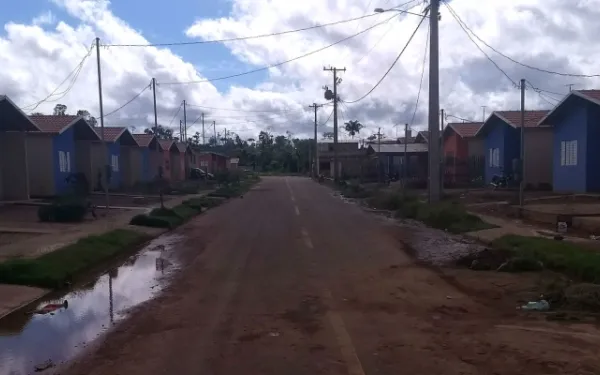
Belo Monte: Hope remains, despite failed promises
When the Belo Monte Dam builders came to this corner of the Brazilian Amazon, they came with the promise of sustainable development, particularly for Altamira, the city closest to the dam. On a recent visit to that city, it was clear to me that—six years after construction began and one year after beginning operations—Belo Monte has brought anything but. Last June, Brazil’s Institute of Applied Economics classified Altamira as the most dangerous city in Brazil. According to the study, Altamira’s rapid and disorderly growth over the last six years has had serious implications for crime in the city. In 2000, according to the Brazilian Institute of Geography and Statistics, Altamira had about 77 thousand residents. With dam construction, that figure soared to 110 thousand last year. The result: Altamira registered the country’s highest homicide rate in 2015, with 105.2 murders per 100 thousand people. A troubling context frames these numbers: Brazil is the most dangerous country in the world for environmental defenders, according to Global Witness. That’s especially true for those who dedicate their lives to defending the Amazon—16 of Brazil’s 49 murders in 2016 were related to protection of the Amazon rainforest. Unsanitary conditions In addition to generalized violence, the other big worry in Altamira is basic sanitation, which involves sources and systems of clean water, as well as waste management. During the last six years, when the dam completely altered the urban and social dynamic of the city, no one bothered to provide an adequate, basic sanitation system. And that’s despite the fact that dam construction and operation were approved on condition of building such a system. The only thing built in Altamira at that time was the massive hydroelectric dam. In April of this year, a Brazilian court ordered the dam’s operations suspended until basic sanitation is adequately provided to the resettlement districts of Altamira. But the company in charge of the dam has refused to comply with the ruling, arguing that it has permission to operate. This clearly demonstrates the government’s inability to avoid the abuses caused by this mega-project and its operating company. Questionable investment The current reality of Belo Monte is aggravated by the fact that a Chinese state-owned company, Grid Brazil Holding, won the auction to take over the second power transmission system to be fed by the dam. The company offered 988 million reales (roughly $300 million USD), which makes me question the previous statements of the Brazilian government that hydroelectric energy is cheap, as well as clean. This investment is worrying because the company has already been fined several times for failing to meet deadlines related to the first power transmission system. Worse still, Chinese companies are known for failing to protect human rights and the environment, which is why the situation in Altamira is likely to become even more complicated. Hope remains Despite this discouraging panorama, the urban population, as well as the indigenous and riverside communities, still have hope that Altamira will one day be a quiet and beautiful city again. I heard many people speak of their desire to return to the days of sitting on chairs in the street talking with neighbors, and bathing in the waters of the Xingu river; the days of collective fishing and parties in the parks. Those people have shown me that we should not be afraid or lose hope. There are many who believe in my work as a defender of the Amazon. It is for them that I will keep fighting. I will work so that institutions, like the Inter-American Commission on Human Rights, before which our case is pending, hold Brazil accountable for the human rights violations that have occurred from the construction and operation of Belo Monte. And I will ensure that the people affected by Belo Monte get justice and reparations.
Read more