
Project
Alberto Peña Kay
Protecting the Santurban páramo from mining's damage
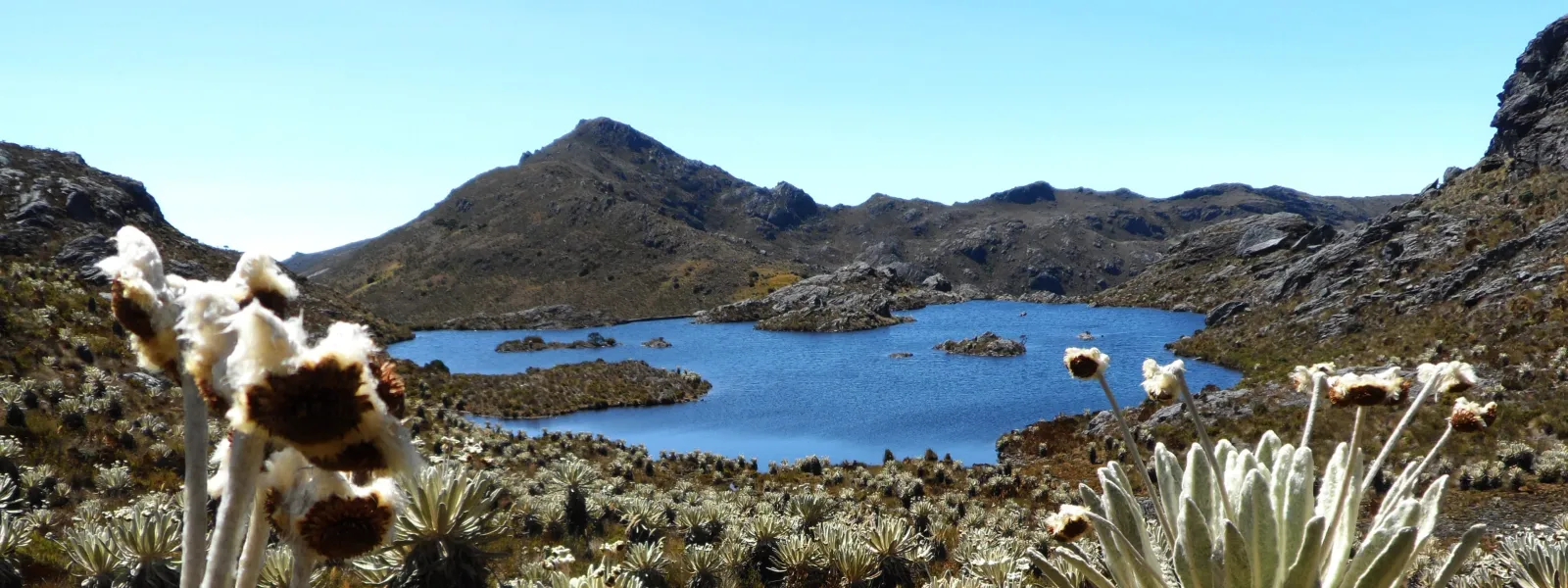
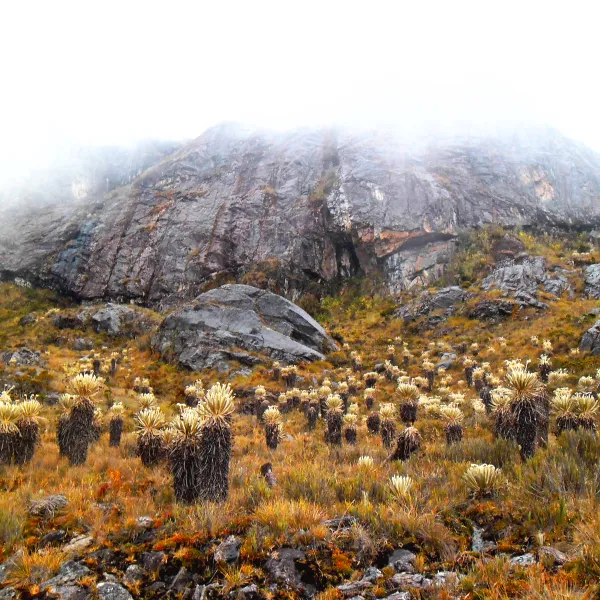
In the Andean region, high-mountain ecosystems known as páramos capture water from the fog and supply it to the lowlands. One such ecosystem is the Santurbán páramo, which provides fresh water to more than two million people in Colombia.
Santurbán, like the other páramos on the continent, also captures large amounts of carbon, making it a key ally in mitigating the climate crisis. It is also a refuge for hundreds of endangered species, including the iconic spectacled bear.
The land in and around the páramo contains gold and other minerals. This has put Santurbán in the spotlight of the multinational mining industry, which for decades has sought to establish large-scale projects in the ecosystem that threaten to degrade it.
The Committee for the Defense of Water and the Santurbán Páramo—a coalition of environmental advocates—has thwarted these ongoing attempts, with support from AIDA and other civil society organizations.
Background
The Santurbán páramo is located in the heart of the Eastern Cordillera of the Colombian Andes, in the departments of Santander and Norte de Santander, at an elevation ranging from 2,200 to 4,290 meters above sea level.
It covers an area of 129,743 hectares and is home to 57 lakes. It serves as a habitat for 457 plant species and 293 species of vertebrate fauna.
There are mineral deposits in Santurbán, primarily gold, but also silver and copper. This explains the region’s mining tradition, particularly in the part of the páramo located in Santander, in the province of Soto Norte. The communities in the area have built their culture and identity around gold mining, which is mainly artisanal and small-scale.
But since the 1990s, the gold deposits in the páramo have also attracted foreign mining conglomerates seeking to develop large-scale projects. This has raised concerns among the population that relies on the Santurbán water sources, who have mobilized in defense of water, their land, and life.
Although national and international regulations prohibit mining in páramos, the Colombian government has granted mining concessions to transnational corporations in Santurbán.
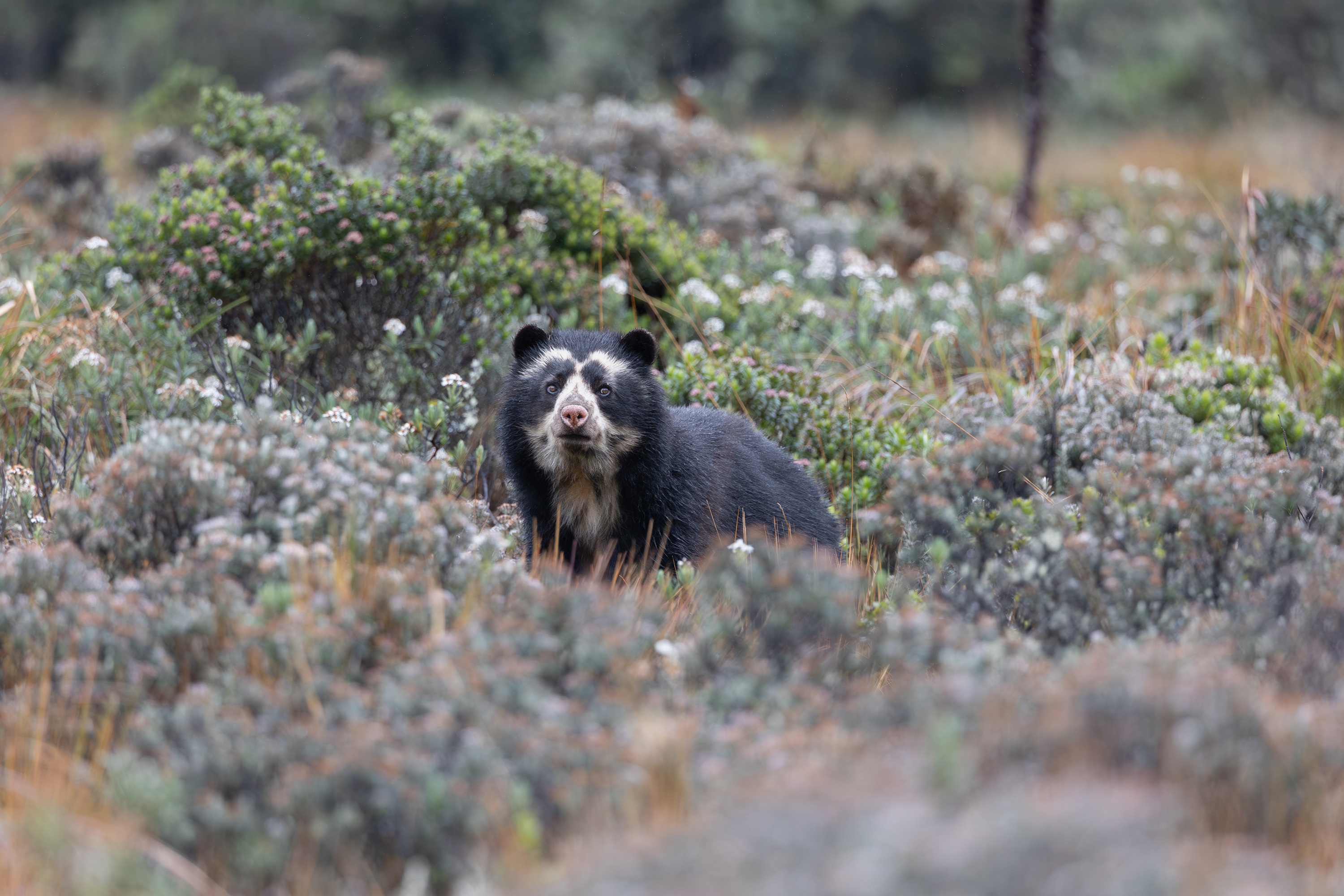
Photo: Keishpixl / Pixabay.
The long struggle to protect the páramo
One of the companies that sought to develop large-scale mining in Santurbán is Eco Oro Minerals Corp.—formerly Greystar Resources—a Canadian company that intended to establish the Angostura open-pit mine there to extract gold and silver. Between 1994 and 1995, the company acquired its mining titles and conducted exploration. And in 2010, it applied for a mining permit.
That was the year AIDA became involved in defending the ecosystem, supporting the Committee for the Defense of Water and the Santurbán Páramo. Our legal work helped convince the Colombian government to deny the mine an environmental permit in May 2011.
In January 2013, the government designated a portion of the páramo (11,700 hectares) as a Regional Natural Park. That year—together with the committee and partner organizations—we carried out a campaign and advocacy efforts to urge the government to recognize the entire Santurbán area as a páramo ecosystem through a delimitation based on scientific criteria. In December 2014, the Ministry of the Environment established a delimitation that protected 76% of the páramo (98,954 hectares).
Furthermore, as a result of a litigation supported by AIDA, in February 2016, Colombia’s highest court reaffirmed that mining in páramos is prohibited.
That same year, in December, the International Finance Corporation (IFC), the World Bank Group’s private sector arm, decided to divest from Eco Oro Minerals. This achievement was the result of a process that began in 2012, when the committee—advised and supported by AIDA and international partner organizations—filed a complaint before an independent accountability mechanism, which concluded that the IFC’s investment in the Angostura project failed to take into account the project’s social and environmental impacts, thereby contradicting the financial institution’s internal policies.
Also in 2016, Eco Oro Minerals filed an arbitration claim against the Colombian government with the International Centre for Settlement of Investment Disputes (ICSID), arguing that it had been adversely affected by government decisions aimed at protecting the country’s páramos, including the delimitation of Santurbán.
In 2017, the Constitutional Court invalidated the delimitation because the affected communities were not consulted. The high court ordered that a participatory delimitation be carried out.
And that year, a new threat to Santurbán emerged when the Canadian multinational Aris Mining applied for an environmental permit for Soto Norte, a gold mining project located near the páramo. Following citizen protests and technical objections, in October 2020, the National Environmental Licensing Authority shelved the project.
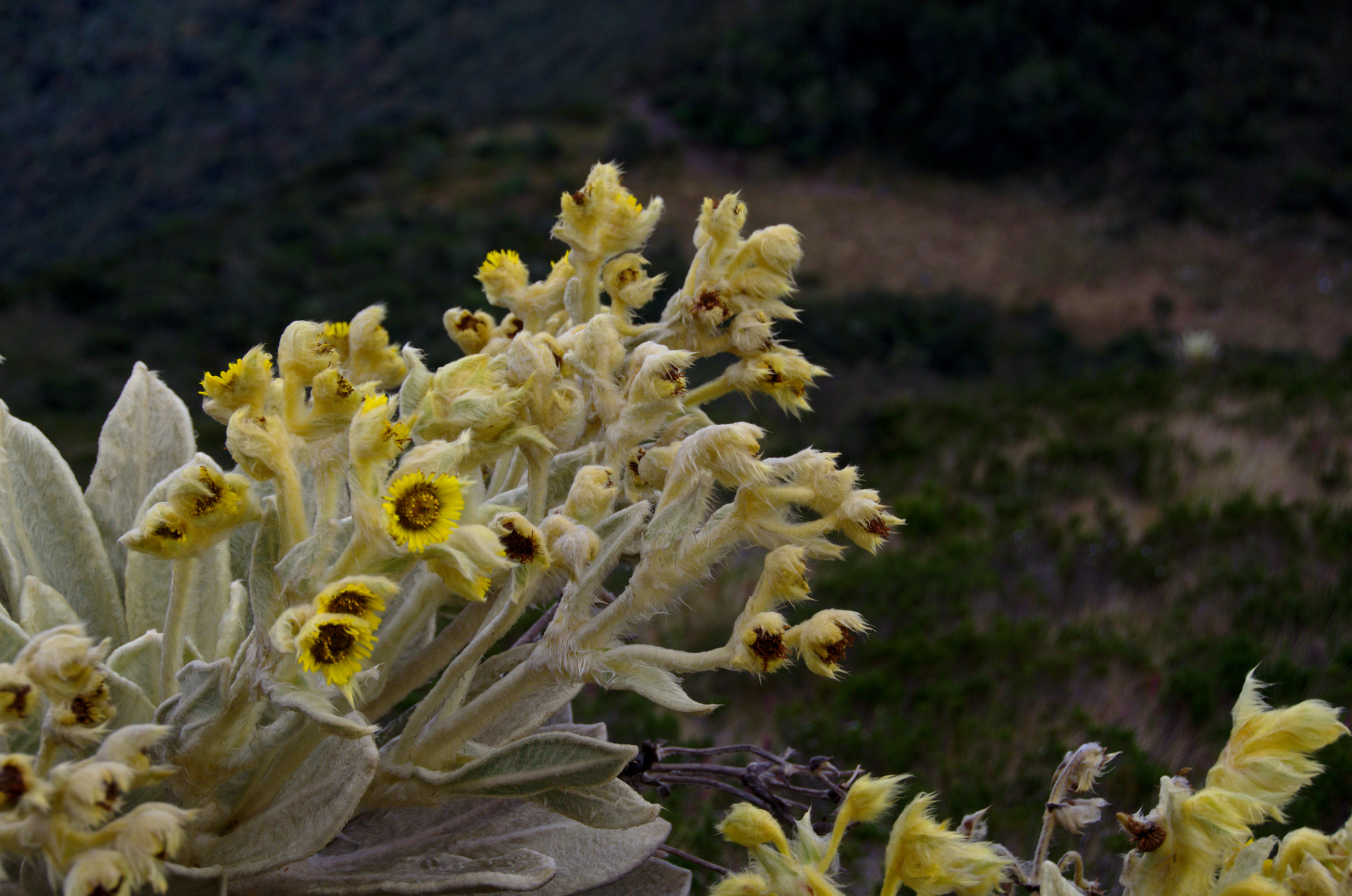
Photo: Aztlec.
Current situation
In March 2025, the Colombian government designated the western flank of the Santurbán massif as a temporary renewable natural resource reserve area, delimiting and protecting an area of 75,344.65 hectares. This resulted in a two-year suspension of the Soto Norte project. However, Aris Mining's contract to formalize Calimineros' small-scale mining activities through the purchase and processing of mineralized material remains in effect.
In addition, the Canadian mining company continues to move the project forward. In September 2025, it released its prefeasibility study, revising the mine’s original design.
Meanwhile, members of the Committee for the Defense of Water and the Santurbán Páramo face threats and stigmatization because of their work. In March 2025, UN Special Rapporteurs and the Working Group on Business and Human Rights denounced these incidents in communications sent to the governments of Colombia, Canada, and the United Arab Emirates, as well as to the companies Aris Mining and MDC Industry Holding Company LLC, the former co-owner of the Soto Norte project.
Regarding the arbitration claim filed by Eco Oro Minerals, in July 2024, ICSID ruled in favor of the Colombian government and rejected the Canadian company’s claim for USD 1.1 billion in compensation.
Concerning the delimitation of Santurbán, in July 2026, the Ministry of the Environment issued a resolution introducing the concept of "progressive delimitation." On that basis, the government proposes to progressively demarcate the páramo, covering 29,199 hectares across 19 municipalities—those where the participatory agreements required by the Constitutional Court in its 2017 ruling have already been finalized. It also proposes two measures on the creation and expansion of reserves to restrict mining in the ecosystem.
Learn more about the impacts of mining on the páramos of Latin America (in Spanish).
Partners:
Related projects

Love for my daughter and the planet
Before I became a mother, I heard the question a thousand times: “Is it a good idea to bring more human beings into the world?” I often asked it myself. Thinking logically, the most obvious answer is no. The news shows us that we live on an overpopulated planet—one with water shortages, species extinction, alarming pollution and environmental degradation. It seems to be getting ever worse. That´s why, while being a mom is always difficult, being an environmentalist as well makes it even more so. Being an environmentalist is like fighting a million-headed monster: when one problem is solved, another 10 pop up. It means learning daily of the perilous situation facing our planet: the threats, the battles lost, the people and species suffering. Faced with such news, it’s impossible to turn a blind eye. Ignorance can no longer be an excuse for our actions. “What kind of world do you want to leave your children?” This is the question I’m faced with now. Yet it seems almost obsolete. It’s more important to think about what kind of world we want our kids to live in right now. To address this, parents like me are faced with an endless array of factors to consider before deciding something as simple as what to feed our children. It’s no longer enough that the food be balanced and nutritious. Now we must know if the food is pesticide-free, non-GMO, made with only natural ingredients… the list is endless. In Mexico, where I live, few children have the privilege of playing in a river or forest, on a beach or mountainside, or simply in the greenery of a park. In addition to keeping them safe from violence and human trafficking, we must also prevent our children from being exposed to high levels of air pollution. So if the world is so bad, why do we keep having children? They say that frogs do not breed unless they know there will be rain because, without rain, they know their offspring will be in danger. In the animal world, countless species regulate their reproduction based on their close relationship with nature. If conditions are not conducive, they do not reproduce. Are we human beings, then, the only species that reproduces at all costs, regardless of environmental threats? Humans are different from other species because of our awareness, and our ability to see beyond basic survival to things like art, love, empathy, and the search for meaning. Helping to make a difference is what brings meaning to my life. As part of the AIDA team, I work alongside professionals who dedicate their lives to saving rivers, defending human rights, protecting forests, supporting environmental defenders, empowering vulnerable communities, and giving a voice to the voiceless. It’s true that the news bombards us daily with worrisome stories about our planet. But it’s what the news rarely reports that shapes my vision of the future. Every day, I see a growing number of people who are prepared, engaged, and working to build a better world. They are mothers, fathers, children, students, teachers, professionals, and volunteers; they come from every imaginable country and culture; and they are willing to do whatever is necessary to help others. Above all, I see a critical mass of people that believe we can. We can change course, generate alternative energies, lessen our footprint; we can rectify wrongdoings, empower the vulnerable, combat xenophobia and greed; we can spend our money more wisely, and find more democratic ways of doing business. I have the privilege of working alongside a diverse group of people who have committed to fighting the good fight, and who won’t let go of the divine connection to the land that has given us life. These are the people who make me think that having children today is not only feasible, but also desirable. Because we can instill our children with generosity, compassion and respect—not just for themselves and the people around them, but also for the trees, the rivers, the animals, and all living things. Still, I often wonder whether we’ll ever get it right. I wonder if my five-year-old daughter will become an adult in a world where fresh water and clean air are seen as basic human rights; or if they will be commodities within reach of only the privileged few. Though I’ve never questioned whether or not my decision to have my daughter was the right one, I do still return to the question of whether or not the world needs more people. And then I look at my daughter’s shining eyes, at her gentle hands, at her dancing legs, at her infectious smile and her tireless curiosity. In her soft embrace, I feel her generosity, her compassion, and her boundless hope. Her laughter is so deep it could wake the flowers in spring; her spirit so generous it can shine love out on all living things; and her potential so huge she just may be the one to help push our planet towards a brighter future. There is no answer, then, but YES. For my daughter, and all children who carry within the potential for a better world, we will continue working to defend our beautiful planet. Join us! AIDA is an international nonprofit organization that uses the law to protect the environment, primarily in Latin America.
Read more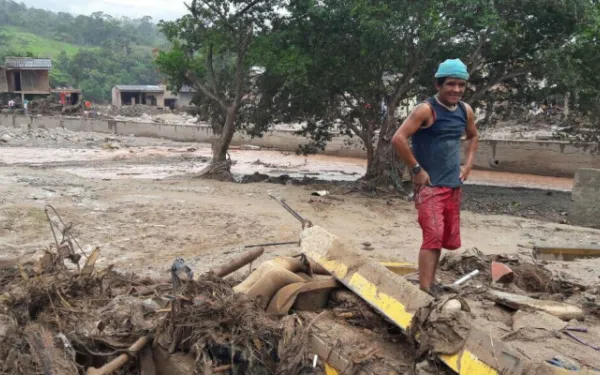
In times of climate change, we must respect nature
(Column originally published in El País) We are living now with the realities of climate change; to act otherwise would be ignorant and irresponsible. But, in case we forget, nature will surely remind us. Over the last months, severe landslides have devastated communities in Peru and Colombia. Together, they left more than 500 people dead, dozens missing, and more than 100,000 victims. Tragedies like these have some things in common: they occurred in cities and regions with high rates of deforestation and changes in land use; in both areas there was evidence of poor planning and regulation. Effectively, these disasters were foreshadowed. They make clear once again the vital need to care for our forests and riverbanks, and to avoid deforestation and erosion. Climate change means hard rains, fires, and hurricanes will become increasingly frequent and more intense. In Mocoa, Colombia, the equivalent of 10 days of rain fell in just one night, causing flash flooding that devastated much of the small town. In many cases, nature is only taken into account after tragedy strikes. But nature, when well cared for, can literally save lives. In Mocoa, a native forest helped protect one neighborhood from being washed away. That’s why environmental protection must be taken seriously, and any exploitation of natural resources must be well planned and sensible. Yet in Latin America, there remains a regional tendency towards unregulated extractivism. Over the last few years, governments across the region have been weakening environmental regulations in the name of development. Meanwhile, year after year, hundreds of people in Latin America and the Caribbean—especially children and others in vulnerable situations—die from events associated with droughts and floods. Activists, movements, mayors, and others seeking to protect land and water from extractive activities are frequently criticized, even criminalized and attacked. In the small Andean town of Cajamarca, Colombia, 98 percent of voters recently chose to ban all mining in their territory. It’s a decision that has sparked national controversy. Critics of the referendum have questioned whether the results are mandatory, despite the fact that Colombian law clearly states, “the decision of the people is mandatory.” Through their popular vote, the people of Cajamarca reminded their government of its commitment to protect their water and natural resources. Communities in Guatemala, Honduras, Costa Rica, Peru, and El Salvador have done the same. While some extraction is necessary in modern society, there must be a healthy balance. Not every project is safe, and alternative development models must be embraced and explored. It’s time to incorporate the environment into public policy and development, once and for all. Two Latin American nations have shown what is possible. In 2011, Costa Rica banned all open-pit metal mining. In March, El Salvador did the same. In both cases it’s a big yet viable change, because alternatives exist and it’s understood that protecting land and water is necessary to secure a healthy future. El Salvador has the second-highest rates of deforestation and environmental degradation, which has led to severe water scarcity. This is why the ban on metal mining passed there. It was no favor to environmentalists; it was based on years of sound analysis. Social and economic studies of the proposal concluded that the best thing for the country was to care for and restore its remaining forests and water sources. The decision prioritized environmental restoration—particularly its social and economic benefits—above the perceived benefits of mining. Environmental degradation is not a problem that exists in a vacuum. That’s why States have signed treaties and other international instruments that recognize their obligation to protect the environment. The Paris Agreement on Climate Change, signed by 34 of 35 States on the American continent, is the most recent. Now, more than ever, these commitments must be honored and fulfilled. Not all extractive projects are viable. Determining their worth must involve sound planning, coupled with policies and legal frameworks that are strong and effective. Environmental Impact Studies must be done carefully, objectively, and independently. Decisions should consider short- and long-term impacts on both local and national levels. We are living now with the realities of climate change; to act otherwise would be ignorant and irresponsible. But, in case we forget, nature will surely remind us.
Read more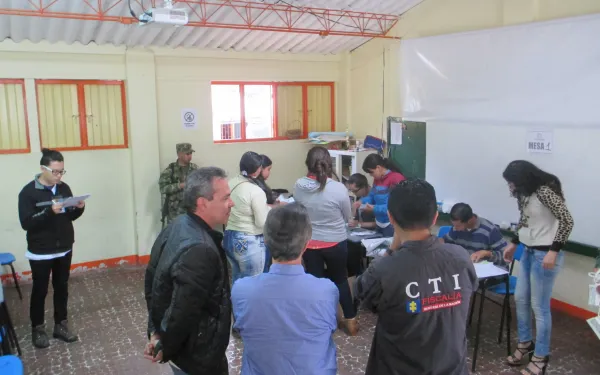
Victory in Colombia: Citizens Vote to Ban Mining in their Territory
On March 26, 2017, 98% of voters in Cajamarca, Colombia decisively rejected mining in their territory. The results of the referendum (or “popular consultation”) are binding under Colombian law. Now municipal authorities must issue regulations to implement the ban. AIDA was part of the legal team that advised the Cajamarca community and developed a strategy, including the referendum, to stop a proposed mine that threatens to pollute the water supply. AngloGold Ashanti was in the exploration phase of a project called La Colosa (the Collosus)—aptly named, because it would be among the world’s 10 largest open-pit gold mines, the second-largest in Latin America. In a country coming out of a 50-year civil war, the referendum is a victory not only for the environment, but also for democracy. Banning mining through popular consultation demonstrates a commitment to solving environmental conflicts in a peaceful and participatory manner. It also allows citizens to exercise their human right to have a voice in public issues that affect them—a key element of true democracy—and to safeguard their human right to a healthy environment.
Read more