
Project
Alberto Peña Kay
Protecting the Santurban páramo from mining's damage
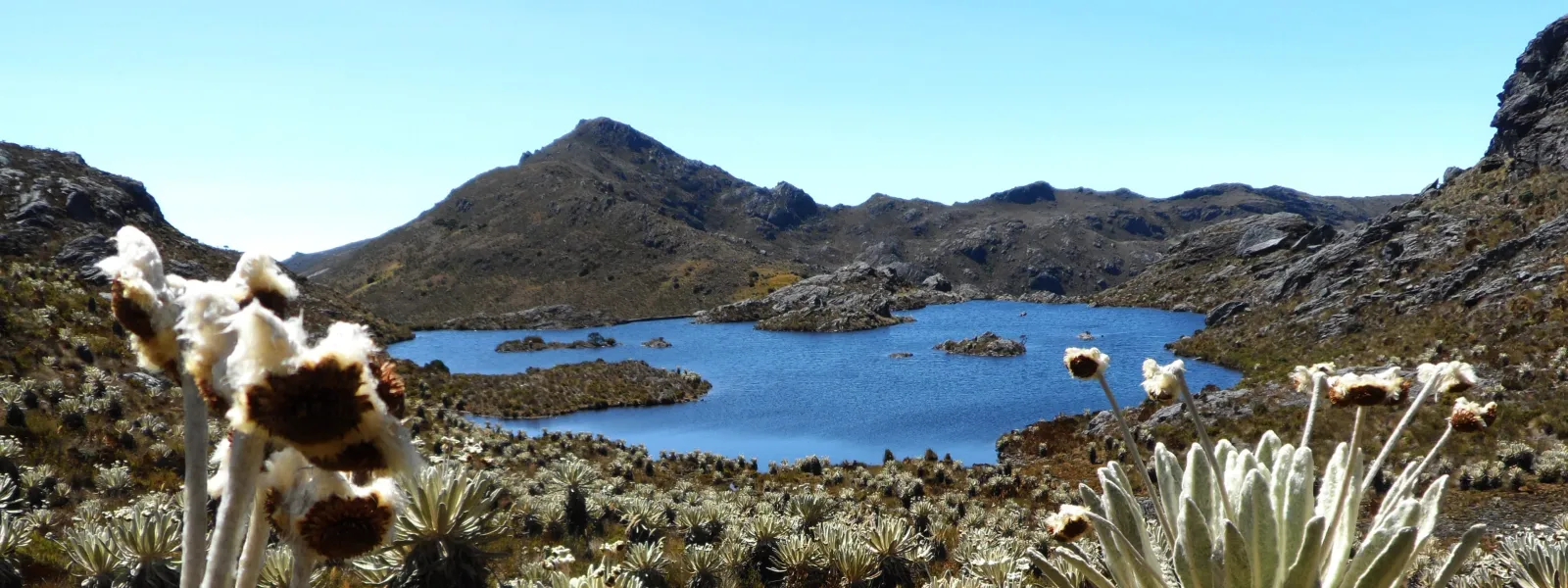
In the Andean region, high-mountain ecosystems known as páramos capture water from the fog and supply it to the lowlands. One such ecosystem is the Santurbán páramo, which provides fresh water to more than two million people in Colombia.
Santurbán, like the other páramos on the continent, also captures large amounts of carbon, making it a key ally in mitigating the climate crisis. It is also a refuge for hundreds of endangered species, including the iconic spectacled bear.
The land in and around the páramo contains gold and other minerals. This has put Santurbán in the spotlight of the multinational mining industry, which for decades has sought to establish large-scale projects in the ecosystem that threaten to degrade it.
The Committee for the Defense of Water and the Santurbán Páramo—a coalition of environmental advocates—has thwarted these ongoing attempts, with support from AIDA and other civil society organizations.
Background
The Santurbán páramo is located in the heart of the Eastern Cordillera of the Colombian Andes, in the departments of Santander and Norte de Santander, at an elevation ranging from 2,200 to 4,290 meters above sea level.
It covers an area of 129,743 hectares and is home to 57 lakes. It serves as a habitat for 457 plant species and 293 species of vertebrate fauna.
There are mineral deposits in Santurbán, primarily gold, but also silver and copper. This explains the region’s mining tradition, particularly in the part of the páramo located in Santander, in the province of Soto Norte. The communities in the area have built their culture and identity around gold mining, which is mainly artisanal and small-scale.
But since the 1990s, the gold deposits in the páramo have also attracted foreign mining conglomerates seeking to develop large-scale projects. This has raised concerns among the population that relies on the Santurbán water sources, who have mobilized in defense of water, their land, and life.
Although national and international regulations prohibit mining in páramos, the Colombian government has granted mining concessions to transnational corporations in Santurbán.

Photo: Keishpixl / Pixabay.
The long struggle to protect the páramo
One of the companies that sought to develop large-scale mining in Santurbán is Eco Oro Minerals Corp.—formerly Greystar Resources—a Canadian company that intended to establish the Angostura open-pit mine there to extract gold and silver. Between 1994 and 1995, the company acquired its mining titles and conducted exploration. And in 2010, it applied for a mining permit.
That was the year AIDA became involved in defending the ecosystem, supporting the Committee for the Defense of Water and the Santurbán Páramo. Our legal work helped convince the Colombian government to deny the mine an environmental permit in May 2011.
In January 2013, the government designated a portion of the páramo (11,700 hectares) as a Regional Natural Park. That year—together with the committee and partner organizations—we carried out a campaign and advocacy efforts to urge the government to recognize the entire Santurbán area as a páramo ecosystem through a delimitation based on scientific criteria. In December 2014, the Ministry of the Environment established a delimitation that protected 76% of the páramo (98,954 hectares).
Furthermore, as a result of a litigation supported by AIDA, in February 2016, Colombia’s highest court reaffirmed that mining in páramos is prohibited.
That same year, in December, the International Finance Corporation (IFC), the World Bank Group’s private sector arm, decided to divest from Eco Oro Minerals. This achievement was the result of a process that began in 2012, when the committee—advised and supported by AIDA and international partner organizations—filed a complaint before an independent accountability mechanism, which concluded that the IFC’s investment in the Angostura project failed to take into account the project’s social and environmental impacts, thereby contradicting the financial institution’s internal policies.
Also in 2016, Eco Oro Minerals filed an arbitration claim against the Colombian government with the International Centre for Settlement of Investment Disputes (ICSID), arguing that it had been adversely affected by government decisions aimed at protecting the country’s páramos, including the delimitation of Santurbán.
In 2017, the Constitutional Court invalidated the delimitation because the affected communities were not consulted. The high court ordered that a participatory delimitation be carried out.
And that year, a new threat to Santurbán emerged when the Canadian multinational Aris Mining applied for an environmental permit for Soto Norte, a gold mining project located near the páramo. Following citizen protests and technical objections, in October 2020, the National Environmental Licensing Authority shelved the project.
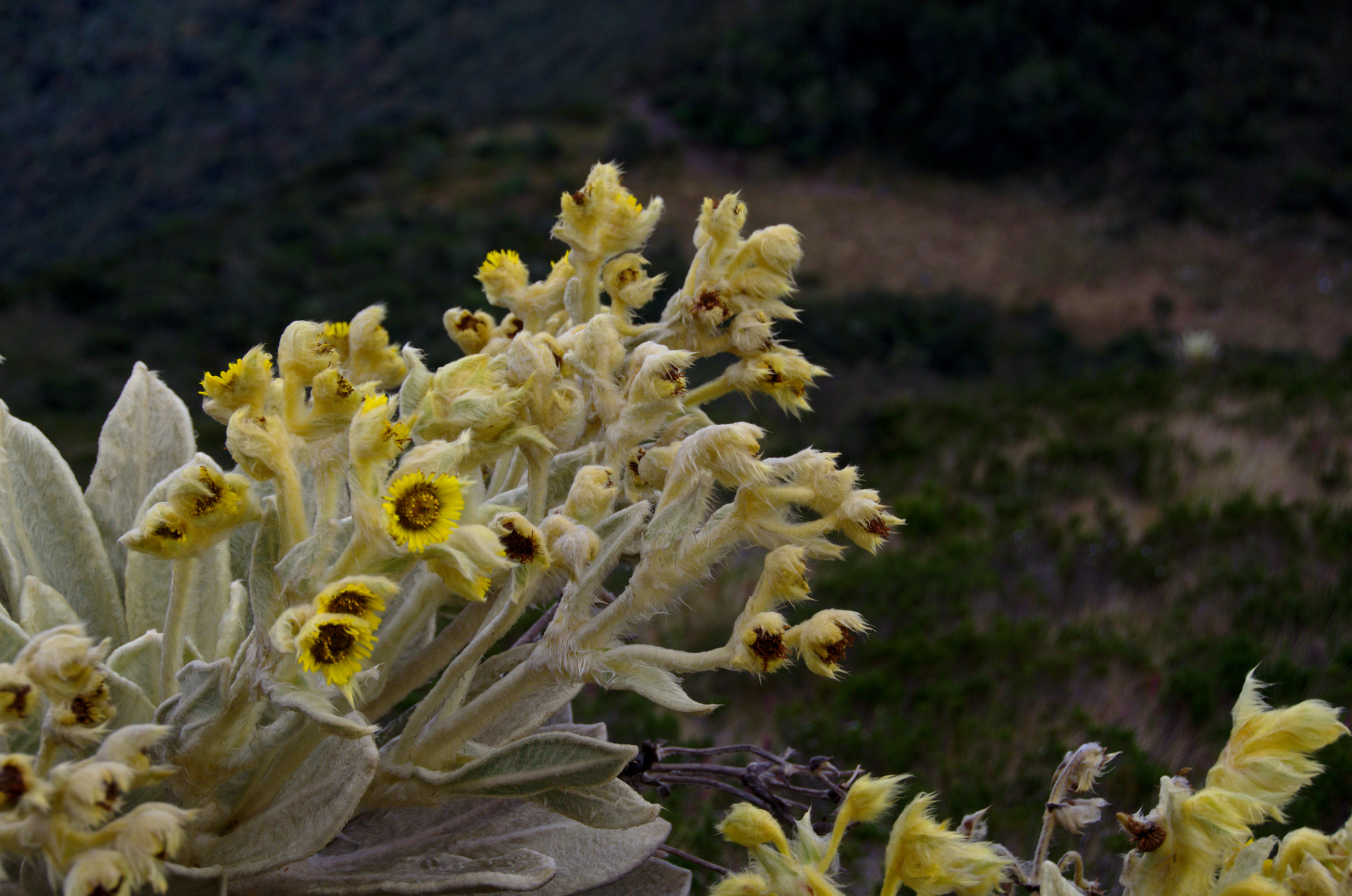
Photo: Aztlec.
Current situation
In March 2025, the Colombian government designated the western flank of the Santurbán massif as a temporary renewable natural resource reserve area, delimiting and protecting an area of 75,344.65 hectares. This resulted in a two-year suspension of the Soto Norte project. However, Aris Mining's contract to formalize Calimineros' small-scale mining activities through the purchase and processing of mineralized material remains in effect.
In addition, the Canadian mining company continues to move the project forward. In September 2025, it released its prefeasibility study, revising the mine’s original design.
Meanwhile, members of the Committee for the Defense of Water and the Santurbán Páramo face threats and stigmatization because of their work. In March 2025, UN Special Rapporteurs and the Working Group on Business and Human Rights denounced these incidents in communications sent to the governments of Colombia, Canada, and the United Arab Emirates, as well as to the companies Aris Mining and MDC Industry Holding Company LLC, the former co-owner of the Soto Norte project.
Regarding the arbitration claim filed by Eco Oro Minerals, in July 2024, ICSID ruled in favor of the Colombian government and rejected the Canadian company’s claim for USD 1.1 billion in compensation.
Concerning the delimitation of Santurbán, in July 2026, the Ministry of the Environment issued a resolution introducing the concept of "progressive delimitation." On that basis, the government proposes to progressively demarcate the páramo, covering 29,199 hectares across 19 municipalities—those where the participatory agreements required by the Constitutional Court in its 2017 ruling have already been finalized. It also proposes two measures on the creation and expansion of reserves to restrict mining in the ecosystem.
Learn more about the impacts of mining on the páramos of Latin America (in Spanish).
Partners:
Related projects
Letter to Green Climate Fund Board and Advisors: Concern regarding the use of GCF resources to support large hydropower
We write to express our concern regarding the use of GCF resources to support large hydropower in general, and in particular the following proposals in the GCF pipeline: Qairokkum Hydropower Rehabilitation, Tajikistan Upper Trishuli-1, Nepal Tina River Hydro Project, Solomon Islands Large hydropower is a non-innovative, last-century technology with dubious climate mitigation benefits and a long track record of exceedingly high financial, environmental, and social costs. Supporting such proposals would not be consistent with the Fund’s goal, to promote a paradigm shift toward lowemission, climate resilient development, in the context of sustainable development. Further, large hydropower projects would not meet the GCF’s selection criteria related to impact, paradigm shift potential, sustainable development, and efficiency and effectiveness. The reasons why the GCF should not support large hydropower are described in the annex, and briefly summarized here: Large dams are vulnerable to climate change: more frequent droughts make them inefficient and increased rainfall reduces their lifespan. Large dams exacerbate climate change: considerable amounts of greenhouse gasses, notably methane (30 times more potent than CO2), are emitted from reservoirs; and their construction damages carbon sinks, including forests and rivers. Large dams harm biodiversity, which in turn impairs communities’ capacity to adapt to a changing climate. Large dams can negatively affect local communities by impoverishing them, breaking social networks, and negatively affecting livelihoods and cultures. Large dams can become dangerous: climate change-related extreme weather events and earthquakes can cause dams to fail, jeopardizing lives and property downstream. Large dams are not economical and are ill suited to address urgent energy needs: recent studies clearly demonstrate that large dams typically suffer significant cost and time overruns. Better energy options are widely available and the GCF should play a fundamental role in promoting them.
Read moreLetter to Green Climate Fund Board and Advisors: Concern regarding the use of GCF resources to support large hydropower
We write to express our concern regarding the use of GCF resources to support large hydropower in general, and in particular the following proposals in the GCF pipeline: Qairokkum Hydropower Rehabilitation, Tajikistan Upper Trishuli-1, Nepal Tina River Hydro Project, Solomon Islands Large hydropower is a non-innovative, last-century technology with dubious climate mitigation benefits and a long track record of exceedingly high financial, environmental, and social costs. Supporting such proposals would not be consistent with the Fund’s goal, to promote a paradigm shift toward lowemission, climate resilient development, in the context of sustainable development. Further, large hydropower projects would not meet the GCF’s selection criteria related to impact, paradigm shift potential, sustainable development, and efficiency and effectiveness. The reasons why the GCF should not support large hydropower are described in the annex, and briefly summarized here: Large dams are vulnerable to climate change: more frequent droughts make them inefficient and increased rainfall reduces their lifespan. Large dams exacerbate climate change: considerable amounts of greenhouse gasses, notably methane (30 times more potent than CO2), are emitted from reservoirs; and their construction damages carbon sinks, including forests and rivers. Large dams harm biodiversity, which in turn impairs communities’ capacity to adapt to a changing climate. Large dams can negatively affect local communities by impoverishing them, breaking social networks, and negatively affecting livelihoods and cultures. Large dams can become dangerous: climate change-related extreme weather events and earthquakes can cause dams to fail, jeopardizing lives and property downstream. Large dams are not economical and are ill suited to address urgent energy needs: recent studies clearly demonstrate that large dams typically suffer significant cost and time overruns. Better energy options are widely available and the GCF should play a fundamental role in promoting them.
Read more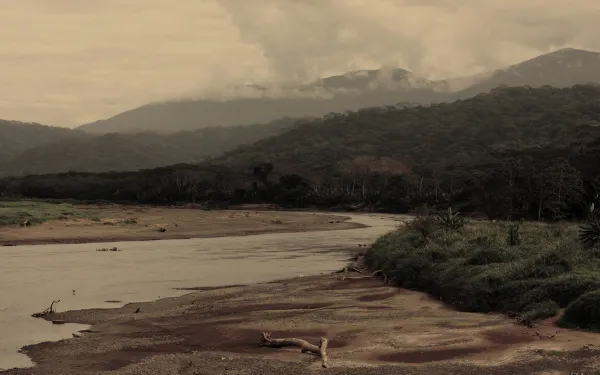
Tárcoles: The most contaminated river in Central America
The sun rises slowly over the Rio Grande de Tárcoles. Guacamayas rest on treetops, and crocodiles laze upon the shore. Hundreds of tourists stop to photograph this beautiful moment when, suddenly, a hunk of garbage floats by. This is life on the Tárcoles, the most polluted river not just in Costa Rica but also in all of Central America. While the country has made great strides in moving beyond fossil fuels for power generation, there is still much to be done in terms of waste management. The source of pollution There are two main reasons for the excessive contamination of the large river: increasing urbanization and government bureaucracy. Within the river’s enormous span—which covers 4.2 percent of the Costa Rican territory—flows all the dirty water of the small nation’s Greater Metropolitan Area. In 2012, the State of the Nation report revealed that 96 percent of the country’s wastewater was untreated before entering the river. The Tárcoles suffers the consequences of this deficiency. The river is used as a city sewer, receiving the equivalent of 100 Olympic swimming pools of untreated water, according to the Institute of Aqueducts and Sewers. Its waters have been victim to antiquated laws that have for years favored economic activity above the river’s health. Despite an established fine for discharging wastewater and pollutants into the river, enforcement is not respected. As a result, the number of illegal spills of dirty water, tech waste, and garbage into the Tárcoles remains unchanged. Thanks to all of this, the National University’s environmental analysis laboratory estimated that if more effective measures were not adopted by the year 2040, the river’s recovery would be impossible. The river has been saturated with pollution, reaching the critical situation we find it in today. Environmental wealth at risk Despite the heavy pollution, the biological wealth at the mouth of the Tárcoles River is extraordinary. In its waters lives the largest American crocodile population in the country and around 50 species of birds. The river feeds the Guacalillo mangroves, home to a huge variety of animals, and four of the five species of mangrove in Costa Rica. This rich ecosystem also contributes to fishing and tourism for the subsistence of local communities, who pride themselves on its natural beauty. What’s been done and what’s left to do Efforts have been made to mitigate the impact of pollution on the river and to rescue its great biodiversity. The Los Tajos water treatment plant was designed to clean 20 percent of the waters that reach the Tárcoles. Isolated citizens’ cleaning campaigns have also made an impressive impact. In 2007, a cleanup of the river removed approximately 1,000 tires from its waters. This spurred the government to issue a decree favoring local communities, with the intention of guaranteeing their right to a healthy environment. The decree recognizes the biological importance of the river and the deterioration it has suffered. It created the Comprehensive Management Commission for the Rio Grande de Tárcoles Basin to plan sustainable ways to protect the river. These responses are steps in the right direction. However, more significant actions are needed to ensure the full recovery of the Tárcoles, before the damage becomes irreparable. The Commission has thus far been unable to mitigate pollution significantly. It needs better organization and more resources. The Commission should be involving local communities and carrying out massive cleanups in the river basin. The Institute of Aqueducts and Sewers must act efficiently to treat wastewater properly, prevent illegal spills, clean the river to restore the health of this sick giant, and control all water entering the river. The challenge is great, but the natural beauty of the river basin makes it a worthwhile effort.
Read more