
Project
Alberto Peña Kay
Protecting the Santurban páramo from mining's damage
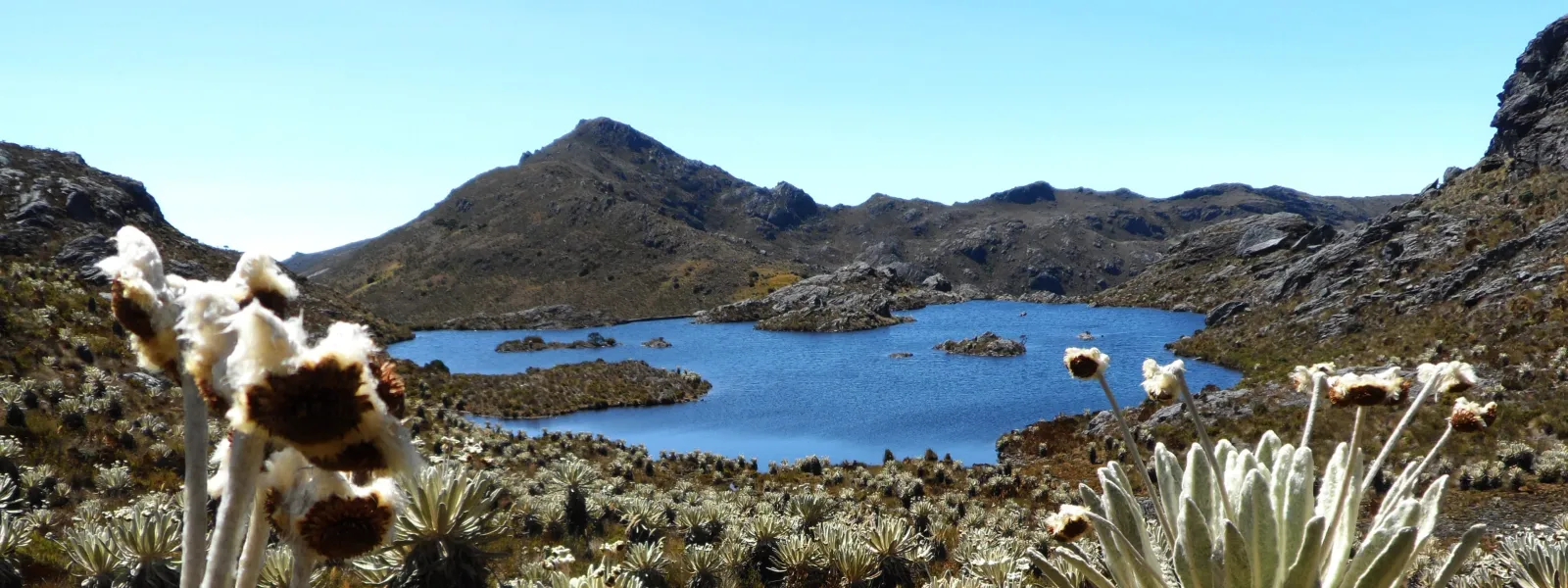
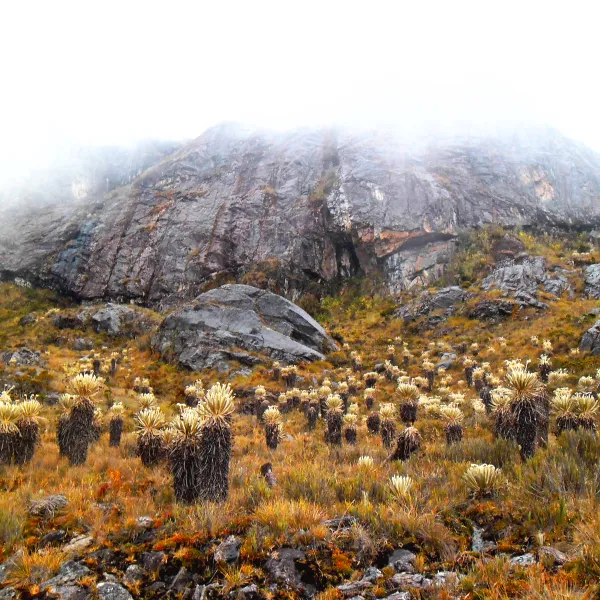
In the Andean region, high-mountain ecosystems known as páramos capture water from the fog and supply it to the lowlands. One such ecosystem is the Santurbán páramo, which provides fresh water to more than two million people in Colombia.
Santurbán, like the other páramos on the continent, also captures large amounts of carbon, making it a key ally in mitigating the climate crisis. It is also a refuge for hundreds of endangered species, including the iconic spectacled bear.
The land in and around the páramo contains gold and other minerals. This has put Santurbán in the spotlight of the multinational mining industry, which for decades has sought to establish large-scale projects in the ecosystem that threaten to degrade it.
The Committee for the Defense of Water and the Santurbán Páramo—a coalition of environmental advocates—has thwarted these ongoing attempts, with support from AIDA and other civil society organizations.
Background
The Santurbán páramo is located in the heart of the Eastern Cordillera of the Colombian Andes, in the departments of Santander and Norte de Santander, at an elevation ranging from 2,200 to 4,290 meters above sea level.
It covers an area of 129,743 hectares and is home to 57 lakes. It serves as a habitat for 457 plant species and 293 species of vertebrate fauna.
There are mineral deposits in Santurbán, primarily gold, but also silver and copper. This explains the region’s mining tradition, particularly in the part of the páramo located in Santander, in the province of Soto Norte. The communities in the area have built their culture and identity around gold mining, which is mainly artisanal and small-scale.
But since the 1990s, the gold deposits in the páramo have also attracted foreign mining conglomerates seeking to develop large-scale projects. This has raised concerns among the population that relies on the Santurbán water sources, who have mobilized in defense of water, their land, and life.
Although national and international regulations prohibit mining in páramos, the Colombian government has granted mining concessions to transnational corporations in Santurbán.
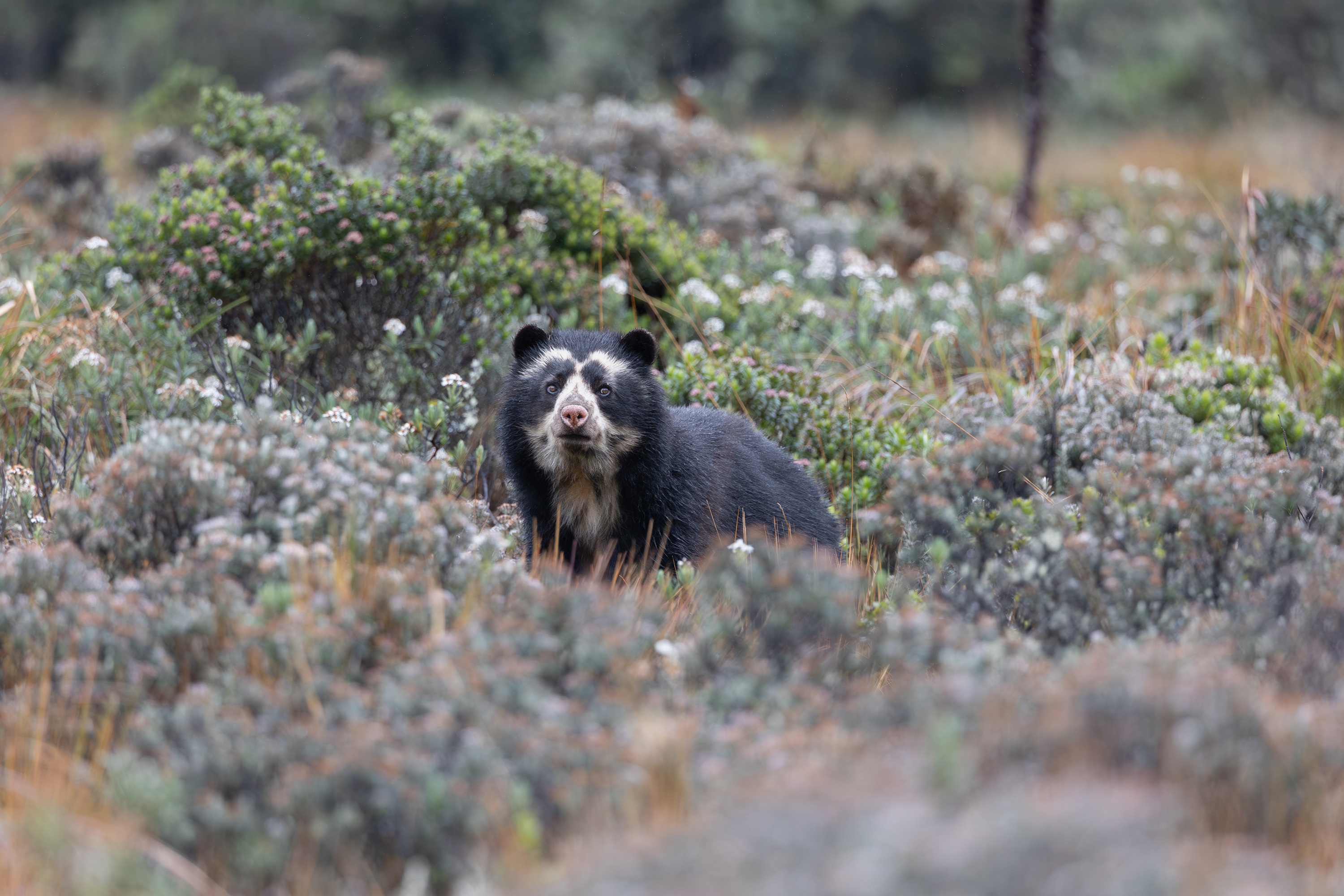
Photo: Keishpixl / Pixabay.
The long struggle to protect the páramo
One of the companies that sought to develop large-scale mining in Santurbán is Eco Oro Minerals Corp.—formerly Greystar Resources—a Canadian company that intended to establish the Angostura open-pit mine there to extract gold and silver. Between 1994 and 1995, the company acquired its mining titles and conducted exploration. And in 2010, it applied for a mining permit.
That was the year AIDA became involved in defending the ecosystem, supporting the Committee for the Defense of Water and the Santurbán Páramo. Our legal work helped convince the Colombian government to deny the mine an environmental permit in May 2011.
In January 2013, the government designated a portion of the páramo (11,700 hectares) as a Regional Natural Park. That year—together with the committee and partner organizations—we carried out a campaign and advocacy efforts to urge the government to recognize the entire Santurbán area as a páramo ecosystem through a delimitation based on scientific criteria. In December 2014, the Ministry of the Environment established a delimitation that protected 76% of the páramo (98,954 hectares).
Furthermore, as a result of a litigation supported by AIDA, in February 2016, Colombia’s highest court reaffirmed that mining in páramos is prohibited.
That same year, in December, the International Finance Corporation (IFC), the World Bank Group’s private sector arm, decided to divest from Eco Oro Minerals. This achievement was the result of a process that began in 2012, when the committee—advised and supported by AIDA and international partner organizations—filed a complaint before an independent accountability mechanism, which concluded that the IFC’s investment in the Angostura project failed to take into account the project’s social and environmental impacts, thereby contradicting the financial institution’s internal policies.
Also in 2016, Eco Oro Minerals filed an arbitration claim against the Colombian government with the International Centre for Settlement of Investment Disputes (ICSID), arguing that it had been adversely affected by government decisions aimed at protecting the country’s páramos, including the delimitation of Santurbán.
In 2017, the Constitutional Court invalidated the delimitation because the affected communities were not consulted. The high court ordered that a participatory delimitation be carried out.
And that year, a new threat to Santurbán emerged when the Canadian multinational Aris Mining applied for an environmental permit for Soto Norte, a gold mining project located near the páramo. Following citizen protests and technical objections, in October 2020, the National Environmental Licensing Authority shelved the project.
Photo: Aztlec.
Current situation
In March 2025, the Colombian government designated the western flank of the Santurbán massif as a temporary renewable natural resource reserve area, delimiting and protecting an area of 75,344.65 hectares. This resulted in a two-year suspension of the Soto Norte project. However, Aris Mining's contract to formalize Calimineros' small-scale mining activities through the purchase and processing of mineralized material remains in effect.
In addition, the Canadian mining company continues to move the project forward. In September 2025, it released its prefeasibility study, revising the mine’s original design.
Meanwhile, members of the Committee for the Defense of Water and the Santurbán Páramo face threats and stigmatization because of their work. In March 2025, UN Special Rapporteurs and the Working Group on Business and Human Rights denounced these incidents in communications sent to the governments of Colombia, Canada, and the United Arab Emirates, as well as to the companies Aris Mining and MDC Industry Holding Company LLC, the former co-owner of the Soto Norte project.
Regarding the arbitration claim filed by Eco Oro Minerals, in July 2024, ICSID ruled in favor of the Colombian government and rejected the Canadian company’s claim for USD 1.1 billion in compensation.
Concerning the delimitation of Santurbán, in July 2026, the Ministry of the Environment issued a resolution introducing the concept of "progressive delimitation." On that basis, the government proposes to progressively demarcate the páramo, covering 29,199 hectares across 19 municipalities—those where the participatory agreements required by the Constitutional Court in its 2017 ruling have already been finalized. It also proposes two measures on the creation and expansion of reserves to restrict mining in the ecosystem.
Learn more about the impacts of mining on the páramos of Latin America (in Spanish).
Partners:
Related projects
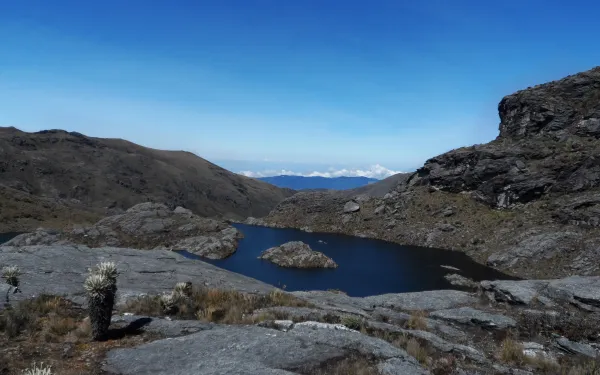
The Santurbán páramo: Closer to the sky
By Laura Yaniz The International Finance Corporation, part of the World Bank Group, said “No” to the Angostura mining project in Colombia’s Santurbán páramo. What does this decision mean? It’s one step closer to the protection of this priceless ecosytem. In Santurbán, the rocks become guardians of mirrors of water that reflect the sky. Frailejones stand watch over the remains of glaciers. Condors gaze down upon tiny visitors. The world sits closer to the sky. Santurbán is a páramo, an ecosystem only found high in the Andes Mountains. The Canadian company Eco Oro Mineral has set their sights on these lands because, as rich as they are in water, they are rich too in minerals. The IFC had invested in the company’s Angostura mining project but, at the end of 2016, they made the wise decision to withdraw that investment. It was an important victory in the ongoing fight to save Santurbán, the water source of millions of Colombians. But what exactly would be saved? And what is the allure of Santurbán? Alberto Peña Kay, a local hiker and photographer, speaks through the images he captures of the many reasons this unique ecosystem must be protected: Frailejones (espeletias) are endemic plants that, because of the extreme conditions of the high-Andean climate, have uniquely adapted to protect themselves from the cold, the high levels of UV radiation, and the lack of nutrients. Their succulent leaves absorb water from the clouds, which they then store in their trunk. Some of these plants grow just one centimeter a year. “When I first came to this páramo and photographed it, I knew I had to keep coming back. This place inspired my passion for photography.” “Many don’t see this place as I do; they look upon it with economic eyes, eyes set on mining and extraction.” “At our best, we see the potential here, and recognize that it’s something we can’t lose. There are so many reasons to conserve these lands.” Why? "First, it’s my department, the great Santander. Second, the biodiversity: here live icons like the condor, the puma and the frailejone. Third, this páramo supplies water to more than half of the people who live in Santander and Northern Santander.” "[In Santurbán], I realized I could get closer to the sky." Really, Santurbán speaks for itself. We must save this piece of heaven on Earth, it's well worth the fight!
Read more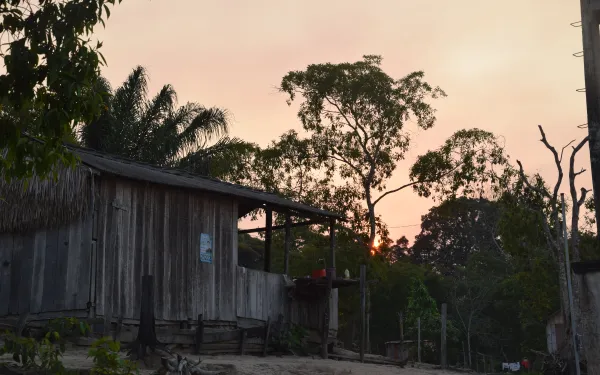
Meeting the Munduruku, sharing the lessons of Belo Monte
Beneath a thatched-roof hut along the Tapajós River, Munduruku people from communities across this region of pristine Amazon rainforest gathered for a general assembly. There were tribal elders and children, mothers and fathers, representatives from NGOs and government bodies. They came together to discuss problems, and to find solutions. They came to chart a course forward that would enable them to continue to live and grow in harmony with the natural world. October’s assembly was their first meeting since the announcement of the cancellation of the Tapajós Dam; its license was denied due to the severe environmental impacts it would cause. The rejection was a triumphant victory for the movement to protect Brazil’s Amazon, after years of disappointment and defeat caused by the nearby Belo Monte Dam. Yet, touting energy and economic gains, the Brazilian government plans to build dozens more large dams in the region. I was there because of Belo Monte: to share stories, strategies, and lessons learned from our advocacy for the people of the Xingú River who have been impacted by the dam. With me I brought a team from Climate Reality who produced a short documentary to share these stories with the world. While the fight for the people of the Xingú has been long, we remain committed to achieving justice for them. By taking their case before the Inter-American Commission on Human Rights, we intend to influence decision-making in Brazil and discourage the implementation of more large dams in the Amazon, including those planned for the Tapajós River basin. The devastation caused by Belo Monte has become a cautionary tale for neighboring tribes like the Munduruku. Because of the harm done to the people and life of the Xingú, the Munduruku understand exactly what they have to lose if the dam on the Tapajós were to happen. They would lose their homes, their sacred sites, and their connection to their ancestors. They would lose their river. Like the Xingú is to the Kayapo and Juruna people, the Tapajós is to the Munduruku. It is their highway and their supermarket; a sacred waterway, and a divine gift. They thank their gods for the bounty provided by their healthy jungle home, for the tinguejada (fish), and for all that the river gives them. It was an honor to be present to witness the strength and unity of the Munduruku people. It was humbling to join my voice with theirs. I hope that the voices of the Munduruku are heard. I hope their territory is respected, and the dam and other development projects stopped for good. And I hope the Brazilian government learns the lesson that countless indigenous people already have—large dams must stay out of the Amazon!
Read more
2016: 6 reasons to maintain hope for the environment
By Laura Yaniz 2016 was not an easy year. It was especially trying for the fight to protect the environment in Latin America. The loss of brave defenders broke our hearts. The international political environment became so tense after the US presidential election that we learned to take nothing for granted. The effects of climate change hit us hard, and then harder. But it has not all been grim. This year has also given us important reasons to keep the hope alive. Progress, good news and important victories lay a path to a brighter new year. Here are six pieces of good news to help you recharge and have hope for our natural world: 1. The World Bank said “No” to mining in the Santurbán páramo Just ten days before the end of the year, the International Finance Corporation, part of the World Bank Group, decided to divest from Canadian company Eco Oro Minerals. Their funding withdrawal includes the Angostura mining project, which has for years threatened the Santurbán páramo, a water source for millions of people in Colombia. It is a victory to which AIDA and our allies have contributed greatly. Now it’s the government’s turn—in accordance with national laws, they must deny all environmental permits for mining projects in Santurbán, and all other Colombian páramos. The fight for Santurbán isn’t over. Next year we’ll continue to closely monitor Eco Oro, who has filed an international arbitration suit against Colombia for measures the nation has taken to protect its páramos, among them, the high court decision to ban all mining in these sensitive ecosystems. 2. The Indigenous struggle gains strength, and wins! The struggle of the Sioux tribe against the Dakota Access pipeline became a global movement. The largest gathering of Native Americans in history inspired solidarity from artists, veterans, activists, and indigenous groups around the world. They won an important victory when the project was suspended. In Brazil, after years of perseverance, the Munduruku people of the Amazon also emerged victorious when the government denied the environmental license for a dam on the Tapajós River that would have threatened their culture and way of life. These important achievements give us hope. They highlight the need to uplift the voices and support the struggles of the world’s indigenous peoples who, according to the World Bank, protect 80 percent of our planet’s biodiversity. 3. A new climate accord is underway On November 4, the Paris Agreement on climate change entered into force. It happened years sooner than anticipated. The global political achievement was propelled by the ratification of the accord by Latin American and European nations, as well as by China and the United States (the two largest emitters of greenhouse gases). The validity of the agreement impels all nations, developed and developing, to make their commitments a reality. During the 22nd UN Climate Convention in Morocco, as a civil society observer, AIDA contributed to ensuring progress was made on securing funding to help developing countries confront the impacts of climate change. The additional news that the ozone is recovering—a fact made possible by the Montreal Protocol—gives us hope that global commitments like this one can actually bear fruit. 4. Our oceans are protected Important steps were made, nationally and internationally, to protect our world’s oceans and the many incredible creatures that call them home. Mexico created the largest expanse of natural protected areas in its history; the nation’s protected oceans are now nearly half the size of its landmass. In the United States, the expansion of a Hawaiian marine reserve made it one of the largest protected areas on Earth. In Ecuador, the Galapagos Islands reserve was also expanded to protect the sensitive marine life it shelters. Beyond national borders, the global community made important progress on protecting our common waters through the development of a new treaty to protect the high seas. AIDA has brought the voice of Latin America into that discussion. 5. Dam-free rivers In Chile, after decades of strong opposition, one company announced it was giving up on building large dams on five virgin rivers. In Peru, the new government announced that Amazon dams are not on their agenda. In Brazil, the government denied a dam that would have altered the course of the Tapajós River. In the United States, dam removal is well underway, enabling the return of native species and the restoration of ecosystems. Additionally, a recent scientific study confirmed that dam reservoirs are a major source of greenhouse gases, worsening climate change. The findings strengthen arguments we’ve been making for years—large dams are not a solution to climate change; they are part of the problem. 6. Your support Our work this year on behalf of Latin America’s environment would not have been possible without your support. When you write to us, donate photographs, join our team of volunteers and interns, or make a donation, you encourage us to keep fighting. These are messages of hope that remind us how important it is to keeping working for a better future for our children, for yours, and for those of the communities we support. We know that you don’t just follow our work, but bring it home and do all you can, in your daily life, to care for the planet, our collective home. Thank you for giving us hope! Happy 2017!
Read more