
Project
Alberto Peña Kay
Protecting the Santurban páramo from mining's damage
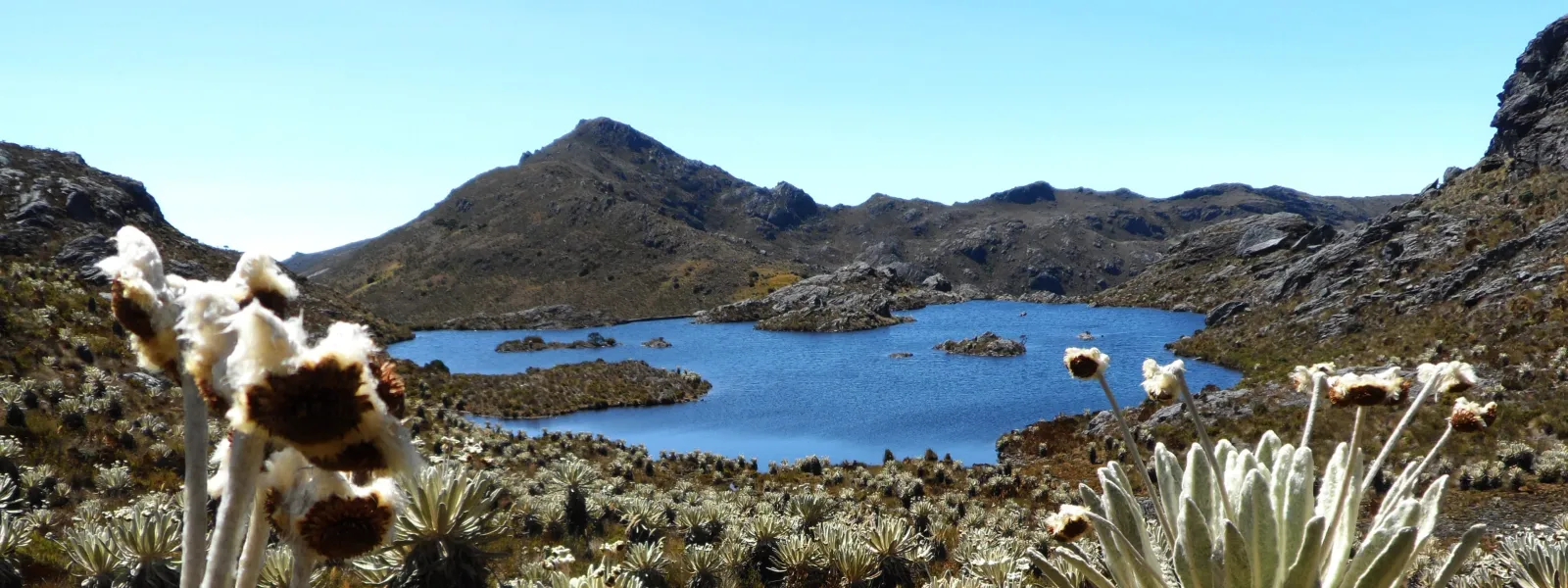
In the Andean region, high-mountain ecosystems known as páramos capture water from the fog and supply it to the lowlands. One such ecosystem is the Santurbán páramo, which provides fresh water to more than two million people in Colombia.
Santurbán, like the other páramos on the continent, also captures large amounts of carbon, making it a key ally in mitigating the climate crisis. It is also a refuge for hundreds of endangered species, including the iconic spectacled bear.
The land in and around the páramo contains gold and other minerals. This has put Santurbán in the spotlight of the multinational mining industry, which for decades has sought to establish large-scale projects in the ecosystem that threaten to degrade it.
The Committee for the Defense of Water and the Santurbán Páramo—a coalition of environmental advocates—has thwarted these ongoing attempts, with support from AIDA and other civil society organizations.
Background
The Santurbán páramo is located in the heart of the Eastern Cordillera of the Colombian Andes, in the departments of Santander and Norte de Santander, at an elevation ranging from 2,200 to 4,290 meters above sea level.
It covers an area of 129,743 hectares and is home to 57 lakes. It serves as a habitat for 457 plant species and 293 species of vertebrate fauna.
There are mineral deposits in Santurbán, primarily gold, but also silver and copper. This explains the region’s mining tradition, particularly in the part of the páramo located in Santander, in the province of Soto Norte. The communities in the area have built their culture and identity around gold mining, which is mainly artisanal and small-scale.
But since the 1990s, the gold deposits in the páramo have also attracted foreign mining conglomerates seeking to develop large-scale projects. This has raised concerns among the population that relies on the Santurbán water sources, who have mobilized in defense of water, their land, and life.
Although national and international regulations prohibit mining in páramos, the Colombian government has granted mining concessions to transnational corporations in Santurbán.

Photo: Keishpixl / Pixabay.
The long struggle to protect the páramo
One of the companies that sought to develop large-scale mining in Santurbán is Eco Oro Minerals Corp.—formerly Greystar Resources—a Canadian company that intended to establish the Angostura open-pit mine there to extract gold and silver. Between 1994 and 1995, the company acquired its mining titles and conducted exploration. And in 2010, it applied for a mining permit.
That was the year AIDA became involved in defending the ecosystem, supporting the Committee for the Defense of Water and the Santurbán Páramo. Our legal work helped convince the Colombian government to deny the mine an environmental permit in May 2011.
In January 2013, the government designated a portion of the páramo (11,700 hectares) as a Regional Natural Park. That year—together with the committee and partner organizations—we carried out a campaign and advocacy efforts to urge the government to recognize the entire Santurbán area as a páramo ecosystem through a delimitation based on scientific criteria. In December 2014, the Ministry of the Environment established a delimitation that protected 76% of the páramo (98,954 hectares).
Furthermore, as a result of a litigation supported by AIDA, in February 2016, Colombia’s highest court reaffirmed that mining in páramos is prohibited.
That same year, in December, the International Finance Corporation (IFC), the World Bank Group’s private sector arm, decided to divest from Eco Oro Minerals. This achievement was the result of a process that began in 2012, when the committee—advised and supported by AIDA and international partner organizations—filed a complaint before an independent accountability mechanism, which concluded that the IFC’s investment in the Angostura project failed to take into account the project’s social and environmental impacts, thereby contradicting the financial institution’s internal policies.
Also in 2016, Eco Oro Minerals filed an arbitration claim against the Colombian government with the International Centre for Settlement of Investment Disputes (ICSID), arguing that it had been adversely affected by government decisions aimed at protecting the country’s páramos, including the delimitation of Santurbán.
In 2017, the Constitutional Court invalidated the delimitation because the affected communities were not consulted. The high court ordered that a participatory delimitation be carried out.
And that year, a new threat to Santurbán emerged when the Canadian multinational Aris Mining applied for an environmental permit for Soto Norte, a gold mining project located near the páramo. Following citizen protests and technical objections, in October 2020, the National Environmental Licensing Authority shelved the project.
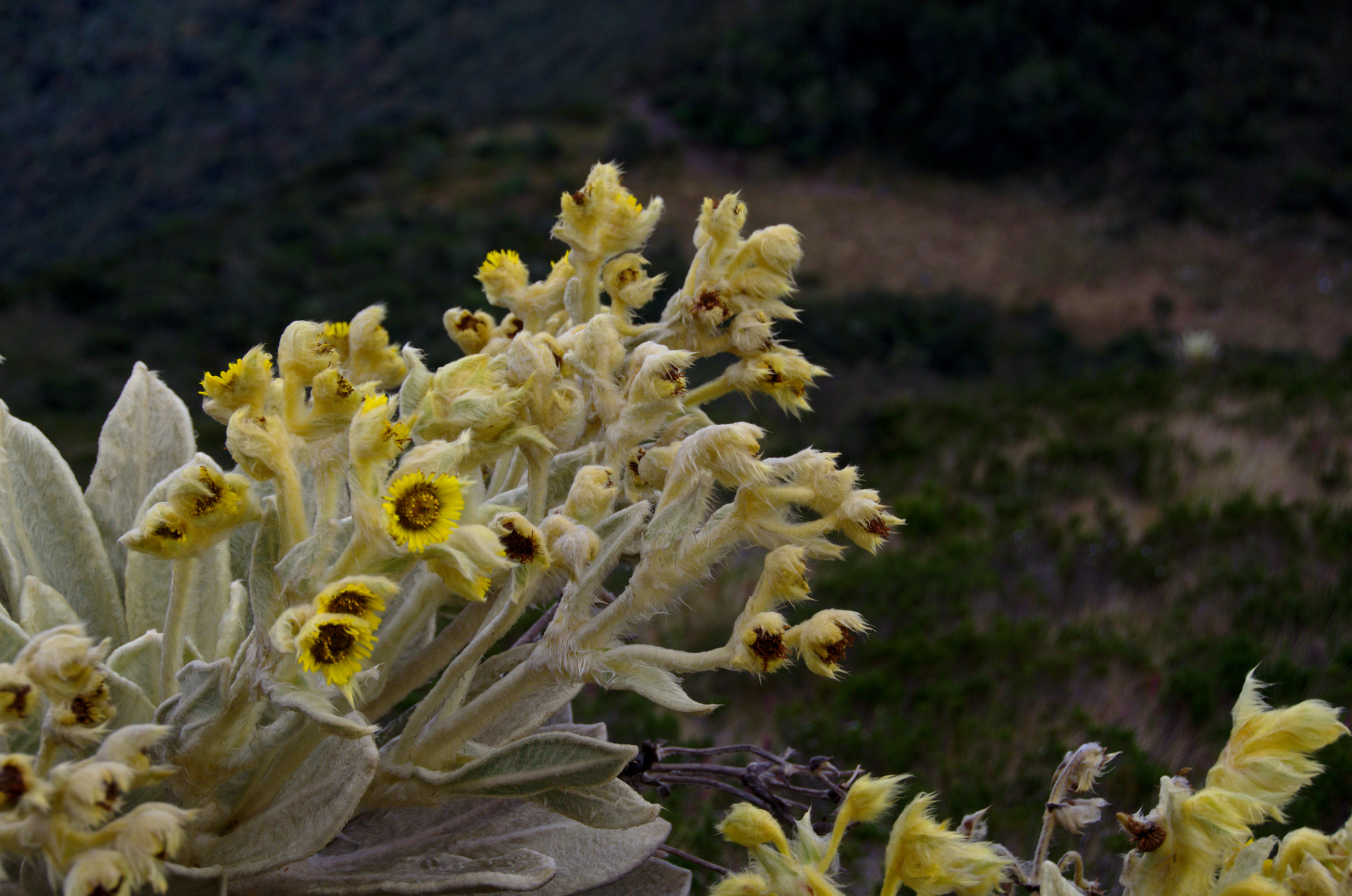
Photo: Aztlec.
Current situation
In March 2025, the Colombian government designated the western flank of the Santurbán massif as a temporary renewable natural resource reserve area, delimiting and protecting an area of 75,344.65 hectares. This resulted in a two-year suspension of the Soto Norte project. However, Aris Mining's contract to formalize Calimineros' small-scale mining activities through the purchase and processing of mineralized material remains in effect.
In addition, the Canadian mining company continues to move the project forward. In September 2025, it released its prefeasibility study, revising the mine’s original design.
Meanwhile, members of the Committee for the Defense of Water and the Santurbán Páramo face threats and stigmatization because of their work. In March 2025, UN Special Rapporteurs and the Working Group on Business and Human Rights denounced these incidents in communications sent to the governments of Colombia, Canada, and the United Arab Emirates, as well as to the companies Aris Mining and MDC Industry Holding Company LLC, the former co-owner of the Soto Norte project.
Regarding the arbitration claim filed by Eco Oro Minerals, in July 2024, ICSID ruled in favor of the Colombian government and rejected the Canadian company’s claim for USD 1.1 billion in compensation.
Concerning the delimitation of Santurbán, in July 2026, the Ministry of the Environment issued a resolution introducing the concept of "progressive delimitation." On that basis, the government proposes to progressively demarcate the páramo, covering 29,199 hectares across 19 municipalities—those where the participatory agreements required by the Constitutional Court in its 2017 ruling have already been finalized. It also proposes two measures on the creation and expansion of reserves to restrict mining in the ecosystem.
Learn more about the impacts of mining on the páramos of Latin America (in Spanish).
Partners:
Related projects
The Odebrecht Tsunami: can we restore the public trust, or just the money?
(Column originally published in El País) Corruption in Latin American and the Caribbean is no longer news. Some even consider it normal. But this too has a limit. So when we learned of the extent of corruption involved with Brazilian multinational Odebrecht, the news hit like a tsunami: the corporation not only swept away huge piles of money, it also destroyed the public trust. Now we must question whether the more than 100 infrastructure projects involved in the Odebrecht case were really in the public interest, or if they were merely an excuse to pay millions in bribes. The details of this complex and corrupt machinery came to light on December 21. That day the Department of Justice and the US Attorney’s Office published a document in which corporate executives confessed to having paid roughly $788 million in bribes to officials in 11 Latin American countries and Mozambique. According to the document, “between 2001 and 2016, Odebrecht, together with its co-conspirators, knowingly and willfully conspired and agreed with others to corruptly provide hundreds of millions of dollars… for the benefit of foreign officials, foreign political parties, foreign political party officials, and foreign political candidates… in order to obtain and retain business…” It is a confession of actions that completely betray the public trust. The executives implicated dozens of governments, including heads of state (such as Colombian President and Nobel Prize-winner Juan Manuel Santos), ministers, senators, and others who are now being investigated or have been jailed. Indignation is rampant, as are demands for justice. Although it wasn’t possible to access the complete list of projects, public information in each country accounts for the following: Argentina: gas pipelines, water purification projects, potassium extraction, and the burial of the Sarmiento railway, among others. Brazil: hundreds of projects, including extractive industries and the Belo Monte Dam, which since its planning stages has been violating human rights. Colombia: the Ruta del Sol and the navigation of the Magdalena River, the two most important engineering projects in the country. Ecuador: the Manduriacu dam and the Pacific refinery. Although the administration of Rafael Correa has stated that possible bribes occurred before 2007, the US government claims to have evidence of later bribes. Mexico: the Ethylene XXI petrochemical project (the largest in Latin America) and the Los Ramones II Norte gas pipeline. Peru: the North-South Interoceanic Highway, the Alto Piura hydroelectric project, and the Lima electric train. Dominican Republic: the Punta Catalina thermoelectric plant and the Pinalito hydroelectric plant. In all countries, the bribes involve energy or infrastructure projects that were declared essential for development by governments, international agencies, and corporations. Yet communities and organizations have for decades denounced these same projects for abridging human rights, harming the environment, and aggravating climate change. The majority of their complaints about these projects were ignored. The Belo Monte Dam, for example, began operations despite the fact that the Inter-American Commission on Human Rights requested a halt to its construction and government protection of the rights of affected indigenous communities. Requests for justice were also repressed, sometimes by the very governments that, according to the evidence, were reportedly given bribes to implement the projects. The situation is all the more serious if we consider that Latin America is the most dangerous region in the world for human rights defenders, particularly those who protect the environment and their territory. Faced with unprecedented corruption, it is vital to analyze each of the projects from the Odebrecht case to determine its true public utility. It’s likely that, in many cases, the socio-environmental costs far outweigh the benefits. In such cases, damages must be penalized. The Odebrecht case may be just the tip of the iceberg in a broader regional problem. Each State and corporation on the continent must adopt effective anti-corruption measures and re-evaluate their project planning and implementation processes. One clear lesson from this scandal is that the region needs to strengthen the independent, objective fulfillment of national and international standards for the protection of the environment and human rights. In the case of mega-projects, transparency and the participation of those affected (and those interested in protecting the public interest) must be ensured. Given that, in some cases, the investigation of corruption rests with the administrations implicated in the scandal, independent regional citizen’s oversight should be established to investigate the impacts of the mega-projects, and the best ways to compensate for damages. We must ensure, once and for all, that decision-makers are truly serving the public interest, and not their own pocketbooks. All of us citizens must contribute to making this a reality. One thing you can do to help is support AIDA – the only regional organization of Latin American experts providing free legal support to secure the wellbeing of people, places, and the planet.
Read more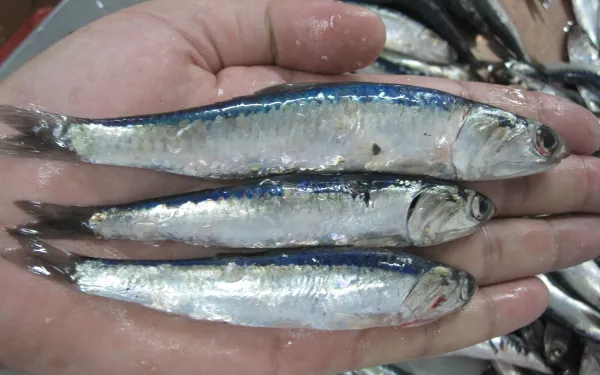
AIDA statement on the death of thousands of fish in Costa Rica
The recent mass die-off of anchovy—a species on which birds, marine mammals, and other fish depend for nutrition—must be analyzed in detail. Upon finding the cause, an integrated solution must be implemented at the national and regional levels. San José, Costa Rica. On February 15, thousands of anchovy washed onto the beaches of Puntarenas, two kilometers from the gulf of Nicoya. Experts from the National University of Costa Rica have ruled out algae-producing toxins and a red ride—which occurs from excessive proliferation of microalgae—as possible causes. At this point, authorities do not know why the fish died. The anchovy is a species that contributes greatly to the balance of the marine environment. Many species of birds and marine mammals, as well as other fish, depend on the anchovy as a vital source of nutritients and protein. Responding to the incident, Gladys Martínez, attorney with AIDA’s Marine Biodiversity and Coastal Protection Program, said: “It is vital that we analyze in detail the factors that may have caused this mass anchovy die-off. We have to determine what is affecting them and prevent a similar situation from happening again. Once the cause is found, a solution must be implemented that takes into account all components of the marine environment. “In addition, it is important that Costa Rica work both nationally and regionally on a comprehensive solution. Anchovy is a common species in the region and, although not highly migratory, it does move over short distances, warranting the involvement of surrounding nations as well.” Press contact: Gladys Martínez, AIDA, [email protected], +506 8321 4263
Read more16 Highlights of 2016: Year in Review
Thanks to the help of our partners and supporters, AIDA achieved many important advances in the defense of human rights and the environment in 2016.
Read more