
Project
Alberto Peña Kay
Protecting the Santurban páramo from mining's damage
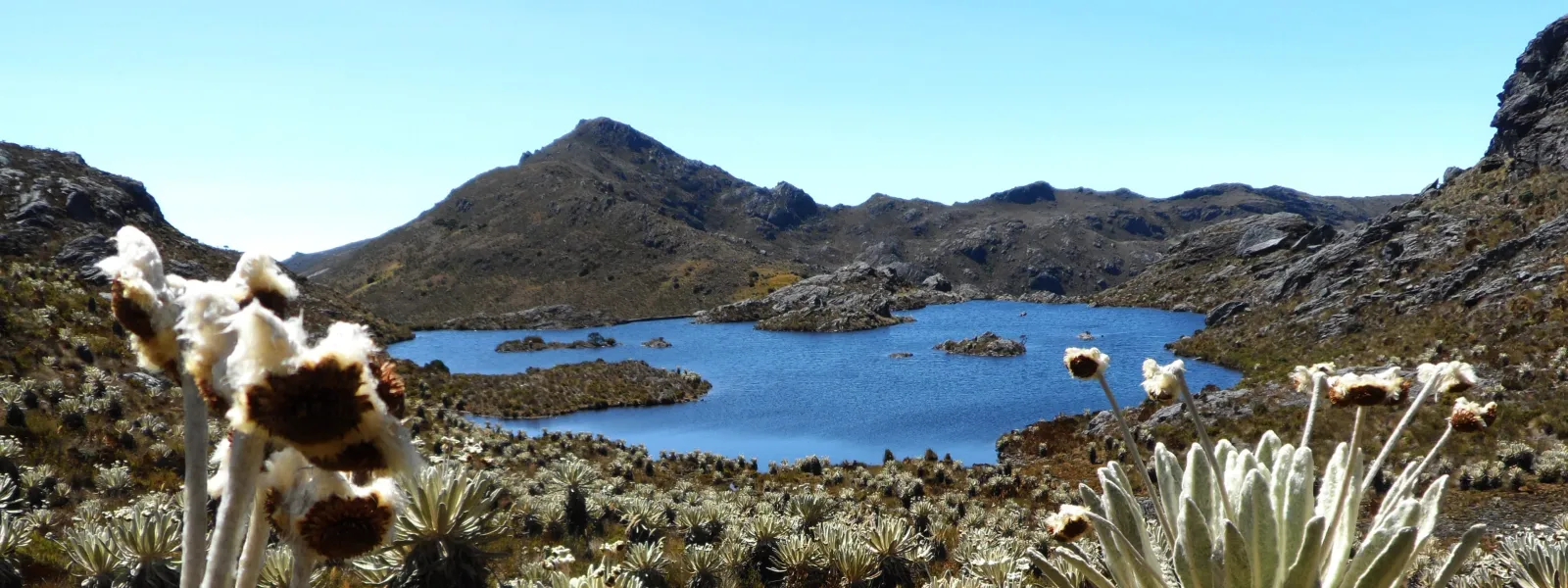
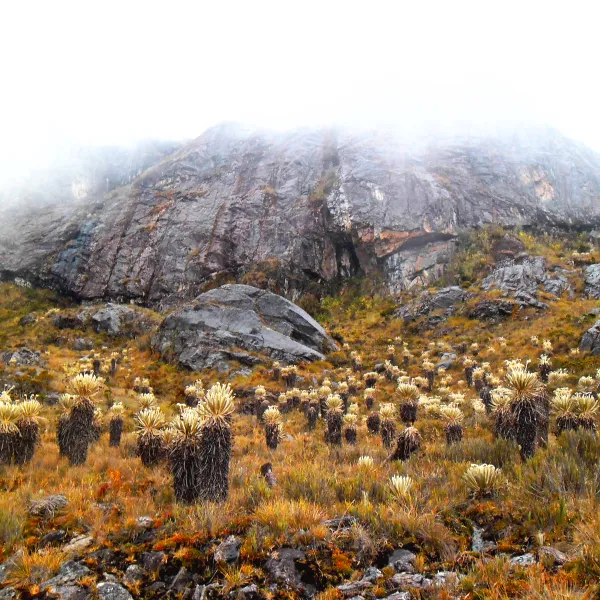
In the Andean region, high-mountain ecosystems known as páramos capture water from the fog and supply it to the lowlands. One such ecosystem is the Santurbán páramo, which provides fresh water to more than two million people in Colombia.
Santurbán, like the other páramos on the continent, also captures large amounts of carbon, making it a key ally in mitigating the climate crisis. It is also a refuge for hundreds of endangered species, including the iconic spectacled bear.
The land in and around the páramo contains gold and other minerals. This has put Santurbán in the spotlight of the multinational mining industry, which for decades has sought to establish large-scale projects in the ecosystem that threaten to degrade it.
The Committee for the Defense of Water and the Santurbán Páramo—a coalition of environmental advocates—has thwarted these ongoing attempts, with support from AIDA and other civil society organizations.
Background
The Santurbán páramo is located in the heart of the Eastern Cordillera of the Colombian Andes, in the departments of Santander and Norte de Santander, at an elevation ranging from 2,200 to 4,290 meters above sea level.
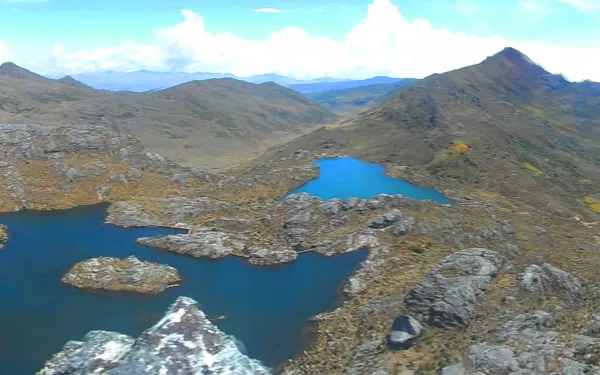
It covers an area of 129,743 hectares and is home to 57 lakes. It serves as a habitat for 457 plant species and 293 species of vertebrate fauna.
There are mineral deposits in Santurbán, primarily gold, but also silver and copper. This explains the region’s mining tradition, particularly in the part of the páramo located in Santander, in the province of Soto Norte. The communities in the area have built their culture and identity around gold mining, which is mainly artisanal and small-scale.
But since the 1990s, the gold deposits in the páramo have also attracted foreign mining conglomerates seeking to develop large-scale projects. This has raised concerns among the population that relies on the Santurbán water sources, who have mobilized in defense of water, their land, and life.
Although national and international regulations prohibit mining in páramos, the Colombian government has granted mining concessions to transnational corporations in Santurbán.
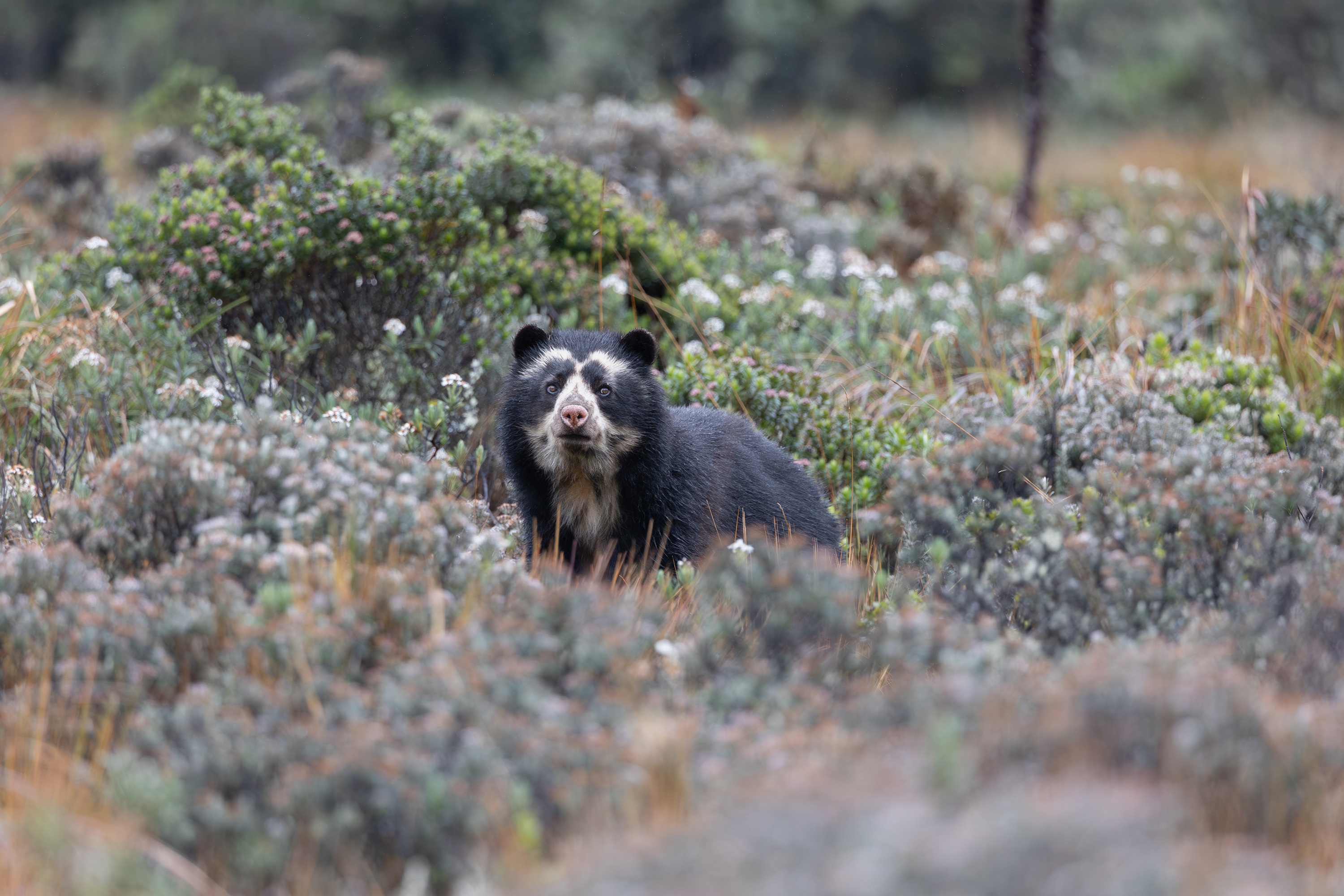
Photo: Keishpixl / Pixabay.
The long struggle to protect the páramo
One of the companies that sought to develop large-scale mining in Santurbán is Eco Oro Minerals Corp.—formerly Greystar Resources—a Canadian company that intended to establish the Angostura open-pit mine there to extract gold and silver. Between 1994 and 1995, the company acquired its mining titles and conducted exploration. And in 2010, it applied for a mining permit.
That was the year AIDA became involved in defending the ecosystem, supporting the Committee for the Defense of Water and the Santurbán Páramo. Our legal work helped convince the Colombian government to deny the mine an environmental permit in May 2011.
In January 2013, the government designated a portion of the páramo (11,700 hectares) as a Regional Natural Park. That year—together with the committee and partner organizations—we carried out a campaign and advocacy efforts to urge the government to recognize the entire Santurbán area as a páramo ecosystem through a delimitation based on scientific criteria. In December 2014, the Ministry of the Environment established a delimitation that protected 76% of the páramo (98,954 hectares).
Furthermore, as a result of a litigation supported by AIDA, in February 2016, Colombia’s highest court reaffirmed that mining in páramos is prohibited.
That same year, in December, the International Finance Corporation (IFC), the World Bank Group’s private sector arm, decided to divest from Eco Oro Minerals. This achievement was the result of a process that began in 2012, when the committee—advised and supported by AIDA and international partner organizations—filed a complaint before an independent accountability mechanism, which concluded that the IFC’s investment in the Angostura project failed to take into account the project’s social and environmental impacts, thereby contradicting the financial institution’s internal policies.
Also in 2016, Eco Oro Minerals filed an arbitration claim against the Colombian government with the International Centre for Settlement of Investment Disputes (ICSID), arguing that it had been adversely affected by government decisions aimed at protecting the country’s páramos, including the delimitation of Santurbán.
In 2017, the Constitutional Court invalidated the delimitation because the affected communities were not consulted. The high court ordered that a participatory delimitation be carried out.
And that year, a new threat to Santurbán emerged when the Canadian multinational Aris Mining applied for an environmental permit for Soto Norte, a gold mining project located near the páramo. Following citizen protests and technical objections, in October 2020, the National Environmental Licensing Authority shelved the project.
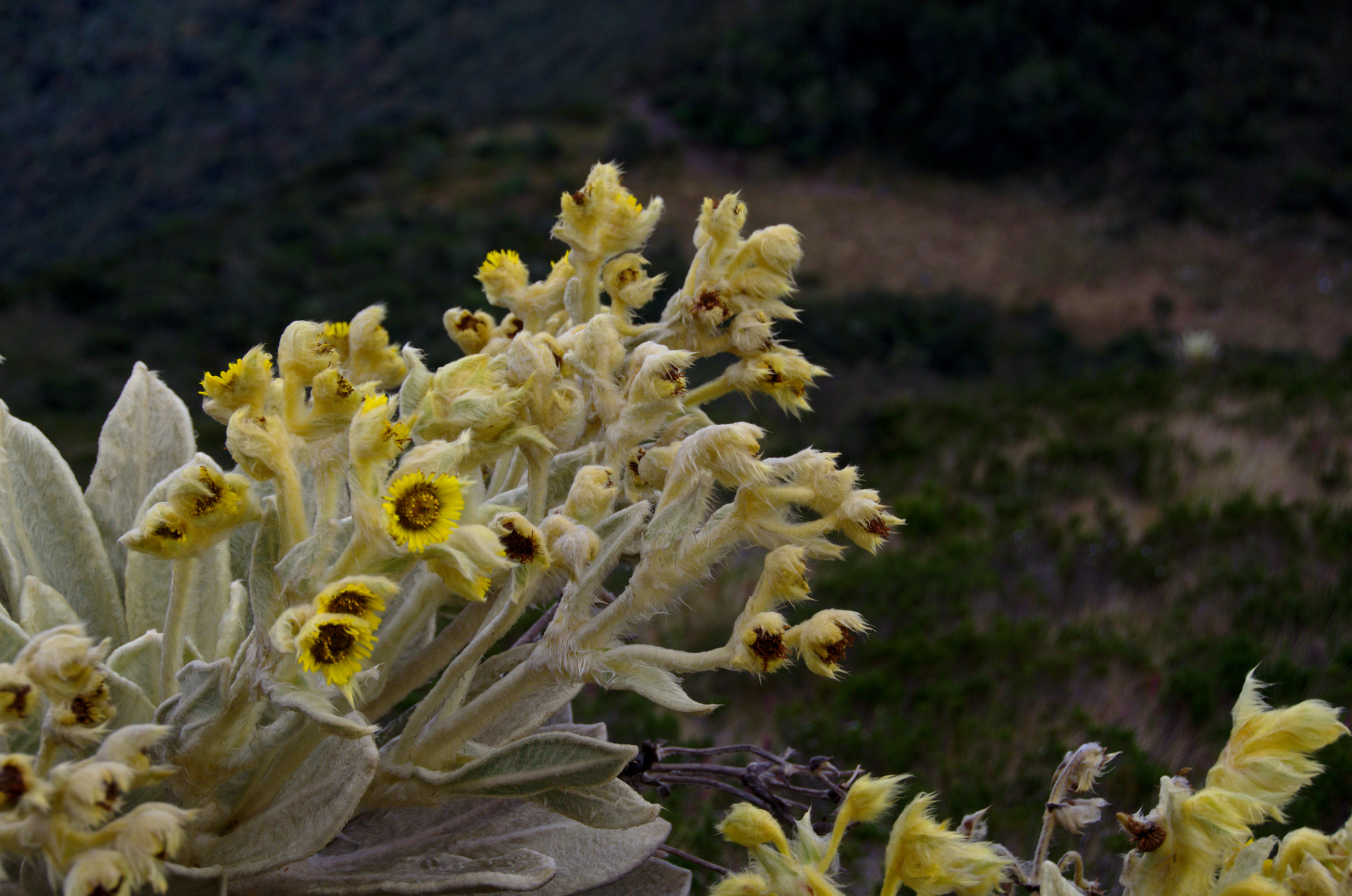
Photo: Aztlec.
Current situation
In March 2025, the Colombian government designated the western flank of the Santurbán massif as a temporary renewable natural resource reserve area, delimiting and protecting an area of 75,344.65 hectares. This resulted in a two-year suspension of the Soto Norte project. However, Aris Mining's contract to formalize Calimineros' small-scale mining activities through the purchase and processing of mineralized material remains in effect.
In addition, the Canadian mining company continues to move the project forward. In September 2025, it released its prefeasibility study, revising the mine’s original design.
Meanwhile, members of the Committee for the Defense of Water and the Santurbán Páramo face threats and stigmatization because of their work. In March 2025, UN Special Rapporteurs and the Working Group on Business and Human Rights denounced these incidents in communications sent to the governments of Colombia, Canada, and the United Arab Emirates, as well as to the companies Aris Mining and MDC Industry Holding Company LLC, the former co-owner of the Soto Norte project.
Regarding the arbitration claim filed by Eco Oro Minerals, in July 2024, ICSID ruled in favor of the Colombian government and rejected the Canadian company’s claim for USD 1.1 billion in compensation.
Concerning the delimitation of Santurbán, in July 2026, the Ministry of the Environment issued a resolution introducing the concept of "progressive delimitation." On that basis, the government proposes to progressively demarcate the páramo, covering 29,199 hectares across 19 municipalities—those where the participatory agreements required by the Constitutional Court in its 2017 ruling have already been finalized. It also proposes two measures on the creation and expansion of reserves to restrict mining in the ecosystem.
Learn more about the impacts of mining on the páramos of Latin America (in Spanish).
Partners:
Related projects
World Bank divests from Eco Oro Minerals and mining project in Colombian Páramo
In an important step for the protection of Colombia’s páramos, the International Finance Corporation (IFC) – the private lending arm of the World Bank – has decided to divest from Canadian mining company Eco Oro Minerals. The company’s Angostura gold mining project is located in the Santurbán Páramo, a protected ecosystem that provides water to millions of people. Bogota, Washington, Ottawa, Amsterdam. The International Finance Corporation (IFC), private lending arm of the World Bank Group, has decided to divest from Canadian company Eco Oro Minerals. The company’s Angostura mine is located in Colombia’s Santurbán Páramo, a protected high-altitude ecosystem that provides water to millions of people. Colombian law prohibits mining in páramos. "We applaud the Bank’s decision to side with the Committee for the Defense of Water and the Santurbán Páramo regarding the inviability of mining in the páramo," said Alix Mancilla, representative of the Committee. "We now call on the Colombian government to abstain from issuing environmental permits to any mining project which may affect Santurbán." "The IFC’s divestment is a serious political and financial blow to mining in the Santurbán páramo," said Carlos Lozano Acosta of the Interamerican Association for Environmental Defense (AIDA). "The Colombian government must now reflect on its lenient approach to large scale mining in páramos, which is illegal under national law." The IFC’s decision comes after a report issued by the Office of the Compliance Advisor Ombudsman (CAO), an independent accountability mechanism, which found that the IFC's investment did not adequately consider the environmental and social impacts of the project, breaching the financial institution's internal policies. The report was developed in response to a complaint the Committee filed before the CAO in 2012, with support from the international organizations included herein. "After intense public pressure, the IFC finally got the message and, by divesting, amplifies it further. The decision to divest strengthens the Colombian State’s ability to protect water and regulate in the public interest. We applaud this decision by the IFC, which will have an impact on Colombians everywhere," affirmed Carla Garcia Zendejas of the Center for International Environmental Law (CIEL). The IFC's decision occurs in the context of Eco Oro’s announcement that it has initiated international arbitration against Colombia, under the terms of the Canada-Colombia Free Trade Agreement at the International Centre for Settlement of Investment Disputes (ICSID), part of the World Bank. The company is filing the suit over the State’s measures to protect Colombia’s páramos. "Eco Oro Minerals' interest in Colombia is no longer about mining. Rather, it is about extorting a sovereign government for millions in taxpayer dollars and exerting pressure to weaken protections for water in Colombia. The IFC’s divestment not only extricates the Bank from a clear conflict of interest, but also highlights the presence of ill-advised mining projects in the Colombian páramo and the illegitimacy of the suit," added Garcia Zendejas of CIEL.
Read more
Clear accounting for dams and climate change
By Astrid Puentes Riaño (column originally published in El País) “Our climate is warming at an alarming, unprecedented rate and we have an urgent duty to respond,” world leaders concluded at the 22nd United Nations Climate Conference (COP22). Representatives from more than 200 nations gathered in Morocco from November 7 to 18 for the first global meeting since the Paris Agreement on climate change entered into force. We should respond with urgency, but also with intelligence. Today, thousands of large dams are being planned and built around the world. More than a million dams already block half the rivers on the planet. Hundreds of hydropower projects are planned or under construction in the Amazon alone. Many are promoted as clean energy and as solutions to climate change. But that’s just not true. Researchers at Washington State University recently concluded that dams are an important source of greenhouse gas emissions. In addition to carbon dioxide and nitrous oxide, dams release large amounts of methane, a gas that traps 34 times more heat than carbon dioxide. The findings were published in the scientific journal Bioscience. Far from being a solution, dams actually aggravate climate change. Until now, scientific evidence had suggested that dams in tropical areas emit greenhouse gases. The WSU study, however, concluded that reservoirs emit greenhouse gases regardless of their latitude or their purpose (power generation, flood control, navigation or irrigation). The researchers concluded that, globally, reservoirs emit approximately 1.3 percent of all greenhouse gas emissions generated by mankind. That’s greater than the total annual emissions of Canada. Further studies are required to quantify exactly how much dams emit and to understand how they vary according to the particular conditions of each reservoir. For now, it seems that variables such as temperature and eutrophication (increased nutrients in water that increase algae and decrease oxygen) may be the most relevant. Currently, greenhouse gas emissions from dams aren’t monitored. Yet every day, they’re released into the atmosphere, contributing to climate change. Globally, our climate accounts aren’t complete. The WSU study marks a milestone in our understanding of the true role dams play in creating climate change. It’s essential that scientific policies, programs, standards, and analyses take these emissions into account. National and international bodies—including the Intergovernmental Panel on Climate Change, the World Bank, the Inter-American Development Bank, the Green Climate Fund, and private companies—must incorporate current and future dam emissions in their assessments. Only then will be have clear accounts. Only then can we avoid, by ignoring clear evidence, continuing to make climate change worse—particularly for the most vulnerable among us. It’s worth noting that dams have severe impacts on human rights. They’re also very expensive and take decades to plan and complete. What’s more, viable alternatives to dams have already been found—cheaper, more efficient, and quicker to build. To respond to climate change with urgency, intelligence, and effectiveness, we have to be clear on its causes. We have to account for all significant contributors, including dams. We have this opportunity today. And we have no more time to lose.
Read more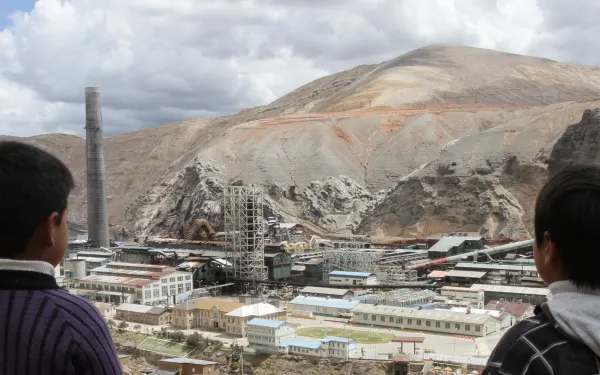
La Oroya: Over a decade’s wait for justice
From the time Isabel* was born, she has breathed toxic air.She’s had heavy metals in her blood for all 13 years of her young life.Her hometown, La Oroya, a small city in the Peruvian Andes, was labeled in 2007 as one of the world’s most polluted places. A metal smelter has been operating there for nearly a century, with little regulation and no attention to human health.Children like Isabel suffer most from toxic pollution. Their developing brains and bodies are terribly vulnerable to lead and other heavy metals, which inhibit growth and often cause permanent damage.Nearly all of La Oroya’s children have heavy metals in their blood, at concentrations many times limits established by the World Health Organization. And many residents suffer from chronic respiratory illness.Their health issues result directly from corporate leaders’ disregard for the environment and for the people who live near the smelter. The State of Peru also bears responsibility for its inaction.That’s why a group of residents joined together to fight for the their children’s health and their city’s future.Isabel’s father, Pablo, has been a vocal leader in the community’s struggle against the government and the US-owned corporation responsible for contaminating their air, their land, even their water. He sees no other way forward.“What kind of world will we leave for our children if we don’t defend our land, if we don’t defend our biodiversity?” he said in a recent interview. A group of 65 residents joined as petitioners in a case AIDA and other organizations brought before the Inter-American Commission on Human Rights 10 years ago. Since then 14 more have added their names to the complaint; four have died. Today, they still wait for justice.In 2007 the Commission recommended precautionary measures that urged the State to adopt adequate measures to diagnose the beneficiaries and treat those at risk of irreparable damage. Since then, air quality in La Oroya has improved somewhat, but the recommended health system is still woefully inadequate.The Commission has yet to file its report on the merits of the case. A finding of merit would include more forceful recommendations. If the State still doesn’t respond, AIDA will take the case to trial before the Inter-American Court of Human Rights.For now, all the petitioners can do is wait some more.Despite the years gone by, we won’t stop fighting until the people of La Oroya see justice.We believe their courage and struggle will have an impact beyond their community, setting a precedent for future cases across the Americas. Because a victory would establish in international law that damages from toxic contamination are human rights violations.And that would mean a brighter future not just for Isabel and La Oroya, but also for communities wherever shortsighted corporations dump their toxic by-products. __* Name changed to protect privacy.
Read more