
Project
Alberto Peña Kay
Protecting the Santurban páramo from mining's damage
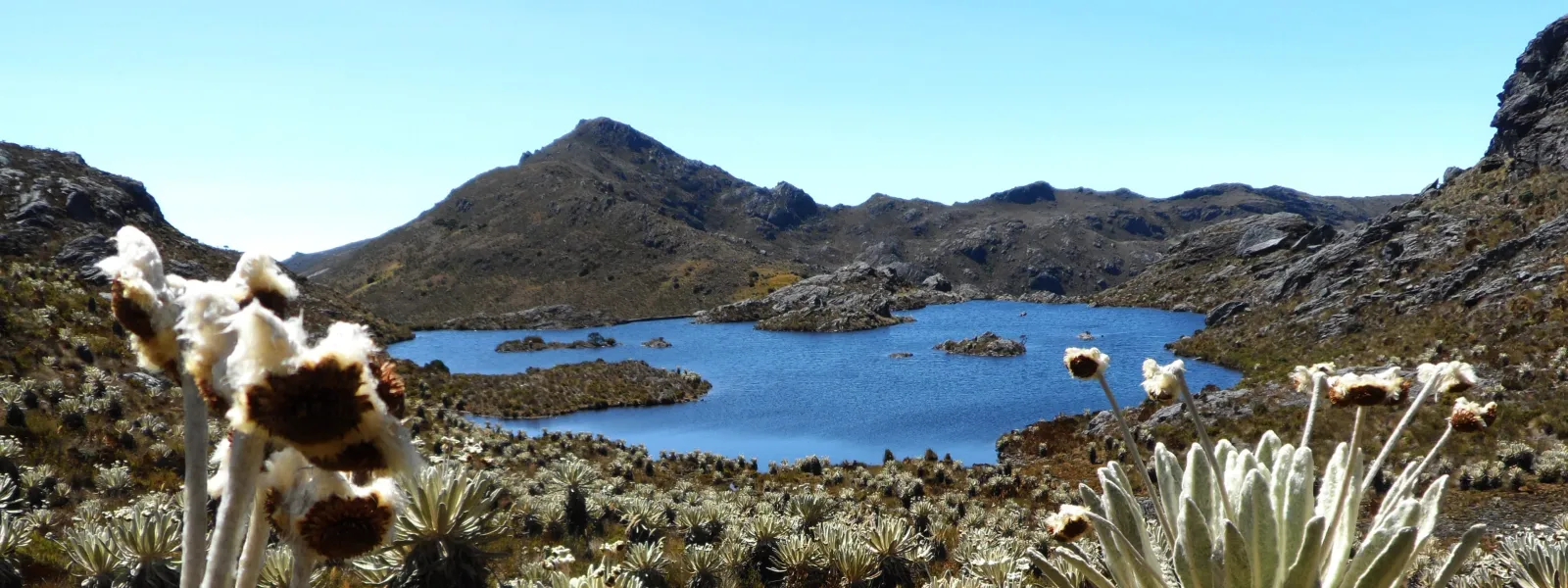
In the Andean region, high-mountain ecosystems known as páramos capture water from the fog and supply it to the lowlands. One such ecosystem is the Santurbán páramo, which provides fresh water to more than two million people in Colombia.
Santurbán, like the other páramos on the continent, also captures large amounts of carbon, making it a key ally in mitigating the climate crisis. It is also a refuge for hundreds of endangered species, including the iconic spectacled bear.
The land in and around the páramo contains gold and other minerals. This has put Santurbán in the spotlight of the multinational mining industry, which for decades has sought to establish large-scale projects in the ecosystem that threaten to degrade it.
The Committee for the Defense of Water and the Santurbán Páramo—a coalition of environmental advocates—has thwarted these ongoing attempts, with support from AIDA and other civil society organizations.
Background
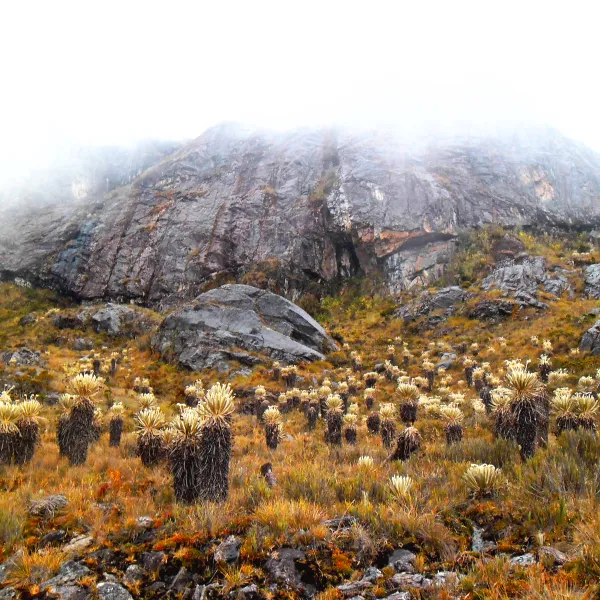
The Santurbán páramo is located in the heart of the Eastern Cordillera of the Colombian Andes, in the departments of Santander and Norte de Santander, at an elevation ranging from 2,200 to 4,290 meters above sea level.
It covers an area of 129,743 hectares and is home to 57 lakes. It serves as a habitat for 457 plant species and 293 species of vertebrate fauna.
There are mineral deposits in Santurbán, primarily gold, but also silver and copper. This explains the region’s mining tradition, particularly in the part of the páramo located in Santander, in the province of Soto Norte. The communities in the area have built their culture and identity around gold mining, which is mainly artisanal and small-scale.
But since the 1990s, the gold deposits in the páramo have also attracted foreign mining conglomerates seeking to develop large-scale projects. This has raised concerns among the population that relies on the Santurbán water sources, who have mobilized in defense of water, their land, and life.
Although national and international regulations prohibit mining in páramos, the Colombian government has granted mining concessions to transnational corporations in Santurbán.
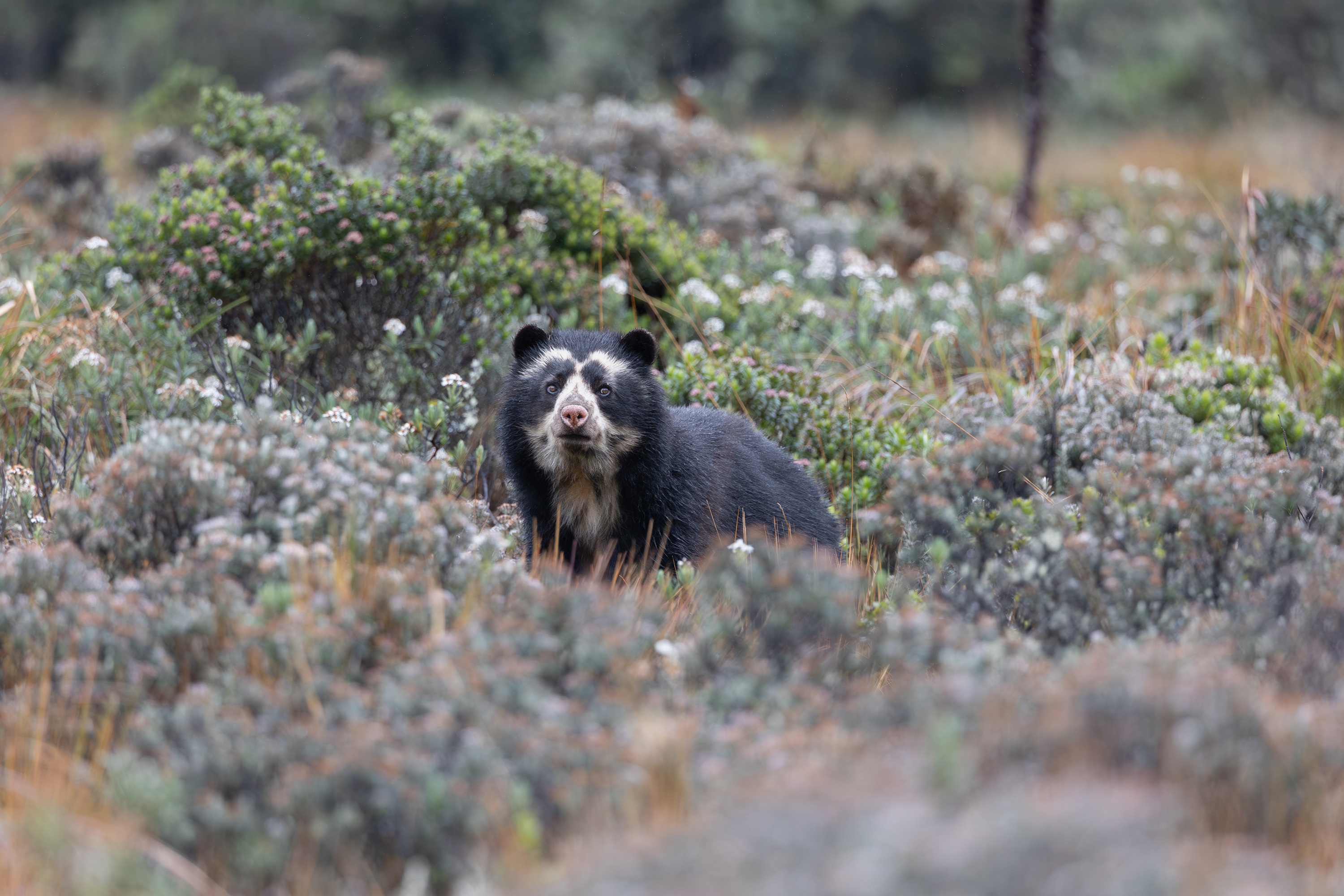
Photo: Keishpixl / Pixabay.
The long struggle to protect the páramo
One of the companies that sought to develop large-scale mining in Santurbán is Eco Oro Minerals Corp.—formerly Greystar Resources—a Canadian company that intended to establish the Angostura open-pit mine there to extract gold and silver. Between 1994 and 1995, the company acquired its mining titles and conducted exploration. And in 2010, it applied for a mining permit.
That was the year AIDA became involved in defending the ecosystem, supporting the Committee for the Defense of Water and the Santurbán Páramo. Our legal work helped convince the Colombian government to deny the mine an environmental permit in May 2011.
In January 2013, the government designated a portion of the páramo (11,700 hectares) as a Regional Natural Park. That year—together with the committee and partner organizations—we carried out a campaign and advocacy efforts to urge the government to recognize the entire Santurbán area as a páramo ecosystem through a delimitation based on scientific criteria. In December 2014, the Ministry of the Environment established a delimitation that protected 76% of the páramo (98,954 hectares).
Furthermore, as a result of a litigation supported by AIDA, in February 2016, Colombia’s highest court reaffirmed that mining in páramos is prohibited.
That same year, in December, the International Finance Corporation (IFC), the World Bank Group’s private sector arm, decided to divest from Eco Oro Minerals. This achievement was the result of a process that began in 2012, when the committee—advised and supported by AIDA and international partner organizations—filed a complaint before an independent accountability mechanism, which concluded that the IFC’s investment in the Angostura project failed to take into account the project’s social and environmental impacts, thereby contradicting the financial institution’s internal policies.
Also in 2016, Eco Oro Minerals filed an arbitration claim against the Colombian government with the International Centre for Settlement of Investment Disputes (ICSID), arguing that it had been adversely affected by government decisions aimed at protecting the country’s páramos, including the delimitation of Santurbán.
In 2017, the Constitutional Court invalidated the delimitation because the affected communities were not consulted. The high court ordered that a participatory delimitation be carried out.
And that year, a new threat to Santurbán emerged when the Canadian multinational Aris Mining applied for an environmental permit for Soto Norte, a gold mining project located near the páramo. Following citizen protests and technical objections, in October 2020, the National Environmental Licensing Authority shelved the project.
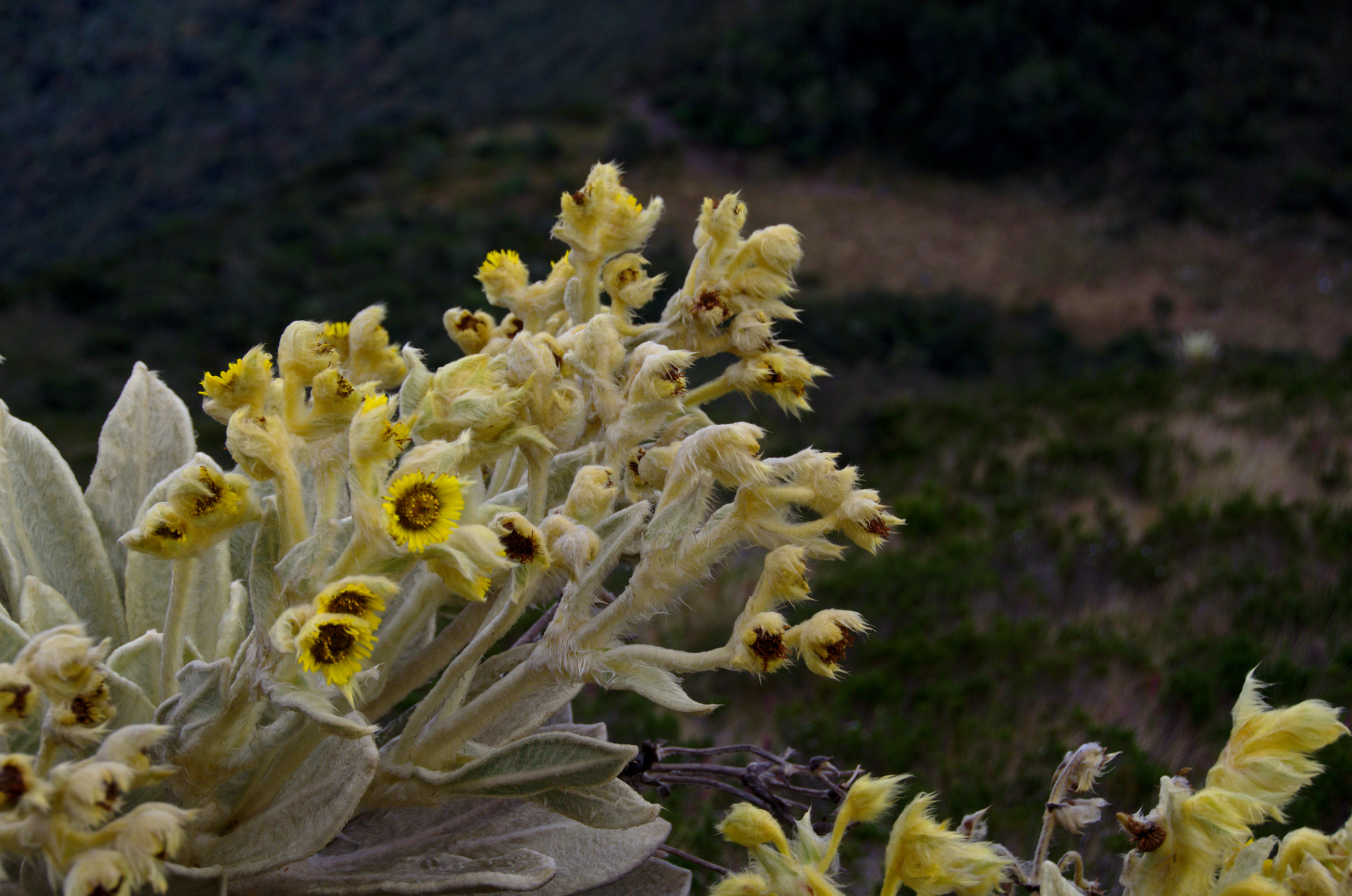
Photo: Aztlec.
Current situation
In March 2025, the Colombian government designated the western flank of the Santurbán massif as a temporary renewable natural resource reserve area, delimiting and protecting an area of 75,344.65 hectares. This resulted in a two-year suspension of the Soto Norte project. However, Aris Mining's contract to formalize Calimineros' small-scale mining activities through the purchase and processing of mineralized material remains in effect.
In addition, the Canadian mining company continues to move the project forward. In September 2025, it released its prefeasibility study, revising the mine’s original design.
Meanwhile, members of the Committee for the Defense of Water and the Santurbán Páramo face threats and stigmatization because of their work. In March 2025, UN Special Rapporteurs and the Working Group on Business and Human Rights denounced these incidents in communications sent to the governments of Colombia, Canada, and the United Arab Emirates, as well as to the companies Aris Mining and MDC Industry Holding Company LLC, the former co-owner of the Soto Norte project.
Regarding the arbitration claim filed by Eco Oro Minerals, in July 2024, ICSID ruled in favor of the Colombian government and rejected the Canadian company’s claim for USD 1.1 billion in compensation.
Concerning the delimitation of Santurbán, in July 2026, the Ministry of the Environment issued a resolution introducing the concept of "progressive delimitation." On that basis, the government proposes to progressively demarcate the páramo, covering 29,199 hectares across 19 municipalities—those where the participatory agreements required by the Constitutional Court in its 2017 ruling have already been finalized. It also proposes two measures on the creation and expansion of reserves to restrict mining in the ecosystem.
Learn more about the impacts of mining on the páramos of Latin America (in Spanish).
Partners:
Related projects
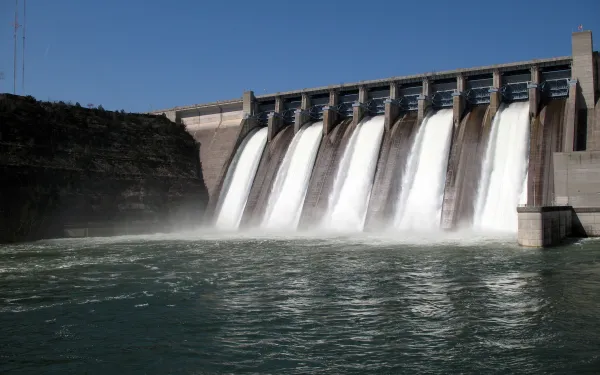
Letter: Concerning the Green Climate Fund and large hydropower
The 282 undersigned organizations write to express our significant concern regarding the use of GCF resources to support large hydropower, and, in particular, the following proposals in the GCF’s pipeline: (i) Qairokkum Hydropower Rehabilitation, Tajikistan; (ii) Upper Trishuli-1, Nepal; and (iii) Tina River Hydro Project, Solomon Islands. The GCF can and should help pay for the incremental costs of renewable energy sources, which are often less “bankable” (though less so all the time). However, we wish to highlight that large dams are different from wind, solar and other technologies because they fail to fulfill the GCF Investment Criteria. For example: (i) Impact potential: Dams emit significant amounts of greenhouse gases, particularly methane, and damage carbon sinks; (ii) Paradigm shift potential: Large hydro is a non-innovative technology that has not seen significant technical or financial breakthroughs in decades; (iii) Sustainable development: Dams have high negative co-impacts with regard to the environment, human rights, and economic cost. By interrupting rivers and flooding lands, they irreversibly harm livelihoods and ecosystems. Because they routinely cost double their estimates, large dams stretch government budgets and increase borrowing costs; (iv) Needs of the recipient: Hydropower projects are particularly vulnerable to climate change, and many countries are already alarmingly over-dependent on hydropower (as is the case with Tajikistan and Nepal). GCF should support efforts in these countries to diversify their energy mix, helping them improve their resilience and adaptive capacities; and, (v) Efficiency and effectiveness: Dams all over the world are losing generation capacity because of climate change-induced droughts. In addition, each of the dam-related projects in the GCF’s pipeline suffers significant deficiencies: Qairokkum Hydropower Rehabilitation: This funding proposal is expected at the April board meeting. The board should reject it. The project aims to extend the life of a Soviet-era dam, built in the 1950s. It is not innovative in any way, deepens Tajikistan’s already alarming overdependence on climate-vulnerable hydro, and fails to address critical environmental problems of the original dam, among other concerns. Upper Trishuli-1: Though not up for consideration at the April board meeting, Upper Trishuli has been in the project pipeline for many months and should be expeditiously removed from it. With more than 30 hydro projects either operating, in construction, or planned on the Trishuli River, the project would have no transformational impact. It faces severe climate and disaster risks, would deepen Nepal’s overdependence on climate-vulnerable hydro, and would have significant impacts on indigenous communities and the environment that have not been adequately studied or addressed. There is also no assessment of the project’s vulnerability to earthquakes, despite the area being highly seismic. Tina River Hydro Project: Expected at the April board meeting, this 15 MW project is intended to reduce the Solomon Islands’ reliance on imported diesel. The project does not include an assessment of climate vulnerability, threatens a world-class biodiversity hotspot, and is very costly. Meanwhile, Solomon Islands has considerable renewable energy potential that has not been sufficiently studied. These issues and others are detailed in a letter sent previously to the Board. Thank you for your attention to this most important matter. We look forward to working with you and the Secretariat to ensure that the GCF is a transformational institution of the highest social and environmental caliber. That cannot be accomplished if the GCF finances large hydropower.
Read moreLetter: Concerning the Green Climate Fund and large hydropower
The 282 undersigned organizations write to express our significant concern regarding the use of GCF resources to support large hydropower, and, in particular, the following proposals in the GCF’s pipeline: (i) Qairokkum Hydropower Rehabilitation, Tajikistan; (ii) Upper Trishuli-1, Nepal; and (iii) Tina River Hydro Project, Solomon Islands. The GCF can and should help pay for the incremental costs of renewable energy sources, which are often less “bankable” (though less so all the time). However, we wish to highlight that large dams are different from wind, solar and other technologies because they fail to fulfill the GCF Investment Criteria. For example: (i) Impact potential: Dams emit significant amounts of greenhouse gases, particularly methane, and damage carbon sinks; (ii) Paradigm shift potential: Large hydro is a non-innovative technology that has not seen significant technical or financial breakthroughs in decades; (iii) Sustainable development: Dams have high negative co-impacts with regard to the environment, human rights, and economic cost. By interrupting rivers and flooding lands, they irreversibly harm livelihoods and ecosystems. Because they routinely cost double their estimates, large dams stretch government budgets and increase borrowing costs; (iv) Needs of the recipient: Hydropower projects are particularly vulnerable to climate change, and many countries are already alarmingly over-dependent on hydropower (as is the case with Tajikistan and Nepal). GCF should support efforts in these countries to diversify their energy mix, helping them improve their resilience and adaptive capacities; and, (v) Efficiency and effectiveness: Dams all over the world are losing generation capacity because of climate change-induced droughts. In addition, each of the dam-related projects in the GCF’s pipeline suffers significant deficiencies: Qairokkum Hydropower Rehabilitation: This funding proposal is expected at the April board meeting. The board should reject it. The project aims to extend the life of a Soviet-era dam, built in the 1950s. It is not innovative in any way, deepens Tajikistan’s already alarming overdependence on climate-vulnerable hydro, and fails to address critical environmental problems of the original dam, among other concerns. Upper Trishuli-1: Though not up for consideration at the April board meeting, Upper Trishuli has been in the project pipeline for many months and should be expeditiously removed from it. With more than 30 hydro projects either operating, in construction, or planned on the Trishuli River, the project would have no transformational impact. It faces severe climate and disaster risks, would deepen Nepal’s overdependence on climate-vulnerable hydro, and would have significant impacts on indigenous communities and the environment that have not been adequately studied or addressed. There is also no assessment of the project’s vulnerability to earthquakes, despite the area being highly seismic. Tina River Hydro Project: Expected at the April board meeting, this 15 MW project is intended to reduce the Solomon Islands’ reliance on imported diesel. The project does not include an assessment of climate vulnerability, threatens a world-class biodiversity hotspot, and is very costly. Meanwhile, Solomon Islands has considerable renewable energy potential that has not been sufficiently studied. These issues and others are detailed in a letter sent previously to the Board. Thank you for your attention to this most important matter. We look forward to working with you and the Secretariat to ensure that the GCF is a transformational institution of the highest social and environmental caliber. That cannot be accomplished if the GCF finances large hydropower.
Read more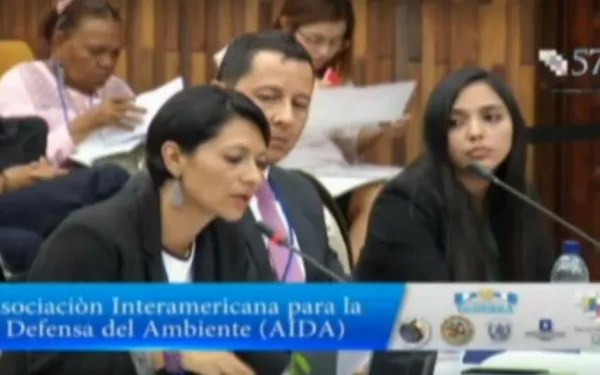
My time before the region's leading court on human rights
“Our deepest fear is not that we are inadequate. Our deepest fear is that we are powerful beyond measure. It is our light, not our darkness, that most frightens us.” - Marianne Williamson As I sat before the Court, one woman in a long line of observers, my pulse raced. For the first time in my life I was speechless, even awestruck. Towering regally over me sat six men and one woman, dressed in robes. The seven judges of the Inter-American Court on Human Rights. Public speaking is something I do regularly and with ease, but I was seriously nervous! My heart was going to explode; my throat was tight. I was acutely aware of the power of what I was about to say. I felt deep within myself the strength of my colleagues at AIDA. I sat up straight, took a deep breath, and leaned in closer to the microphone. As I began to speak, my words bore the influence of the last 20 years. I was representing AIDA in our very first intervention before the most important international human rights body in the Americas. We had been invited by the Court to comment on the consultative opinion raised by Colombian government on the link between environmental degradation and human rights; an issue reflecting the very core of our mission. The basic question to be addressed was this: If a megaproject damages the marine environment in the Greater Caribbean and, as a result, human rights are threaten or violated, should the State implementing the project be held accountable under international human rights law? When I began my career in environmental law 20 years ago, this very moment was one of my goals. I dreamt of engaging in this type of conversation before the Court; of influencing jurisprudence in the institution charged with protecting the human rights of the people of the Americas. Now, because I sit proudly as co-director of AIDA, those dreams have come true. Not just for myself, but also for all the brave and thoughtful attorneys I work alongside. The document we drafted represents countless hours of research and analysis, the contributions of human rights experts and environmental attorneys, decades of experience, lifetimes of dedication. We drafted it so the Court would recognize environmental protection as a human rights issue; that a healthy environment is essential to the enjoyment of all human rights. We hope it will show the judges of the Inter-American Human Rights System that incorporating international environmental law and standards can help them implement their mission. Remembering the months of work and the expert opinions in the document calmed me that day. The testimonies I heard were like music to my ears—more than 20 people, one after the other, from States and civil society organizations, spoke of the relationship between the environment and human rights; they spoke of the power of using international environmental law to protect people and communities. The arguments we crafted, together, made the link between the environment and human rights crystal clear. We had the historic opportunity to highlight how, in some situations, environmental degradation violates human rights. Protecting our environment, therefore, is an international obligation of all States in the Americas. When I finished speaking, I took a deep breath, and sat back in my chair. A smile broke across my face, as my phone began to light up with messages from my colleagues from every corner of the Americas. I left that day happily reflecting on the past 20 years, and wholly re-invigorated for 20 more. I left full of gratitude and pride for my team. And I left convinced of the power we have—as AIDA, as attorneys, as citizens, as human beings—to create change. It all goes to show that, while we may be small, we are not alone. Together we are powerful and, together, we are capable of building a better world. The decision is now in the hands of the Court, whose opinion has the power to influence the future of development in the Americas.
Read more