
Project
Alberto Peña Kay
Protecting the Santurban páramo from mining's damage
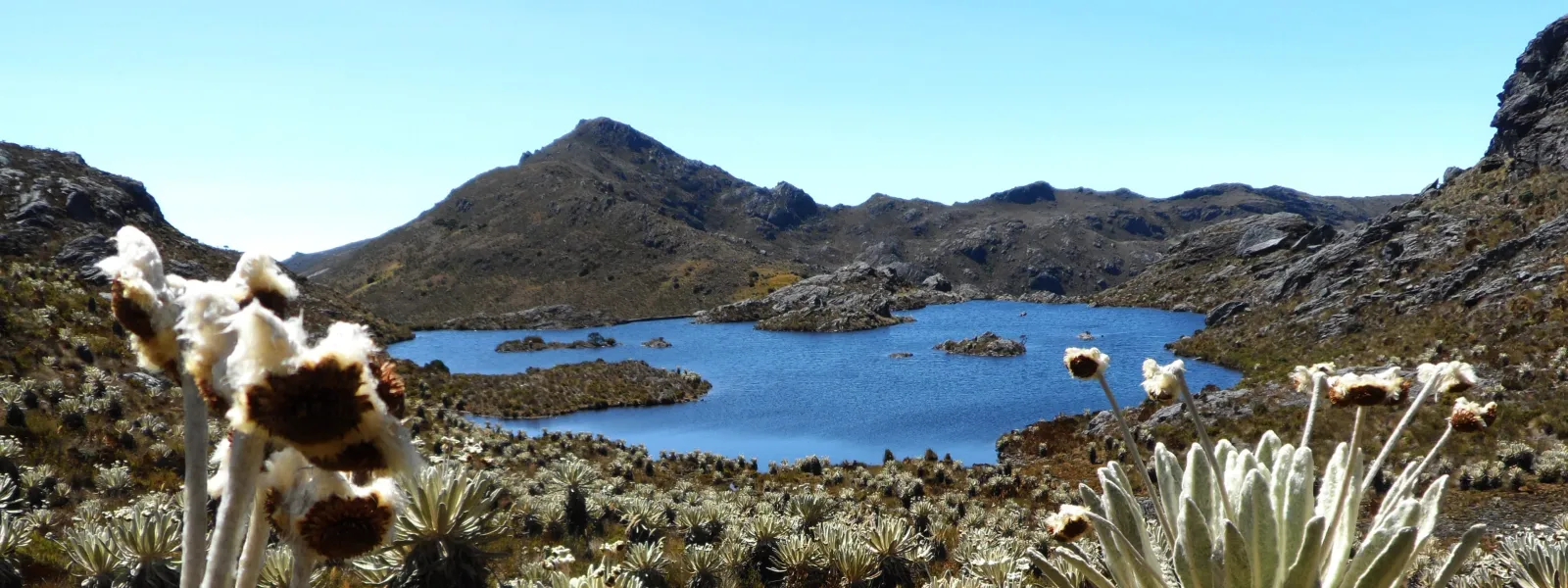
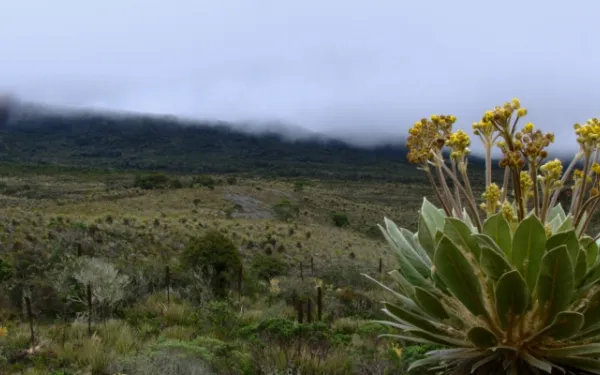
In the Andean region, high-mountain ecosystems known as páramos capture water from the fog and supply it to the lowlands. One such ecosystem is the Santurbán páramo, which provides fresh water to more than two million people in Colombia.
Santurbán, like the other páramos on the continent, also captures large amounts of carbon, making it a key ally in mitigating the climate crisis. It is also a refuge for hundreds of endangered species, including the iconic spectacled bear.
The land in and around the páramo contains gold and other minerals. This has put Santurbán in the spotlight of the multinational mining industry, which for decades has sought to establish large-scale projects in the ecosystem that threaten to degrade it.
The Committee for the Defense of Water and the Santurbán Páramo—a coalition of environmental advocates—has thwarted these ongoing attempts, with support from AIDA and other civil society organizations.
Background
The Santurbán páramo is located in the heart of the Eastern Cordillera of the Colombian Andes, in the departments of Santander and Norte de Santander, at an elevation ranging from 2,200 to 4,290 meters above sea level.
It covers an area of 129,743 hectares and is home to 57 lakes. It serves as a habitat for 457 plant species and 293 species of vertebrate fauna.
There are mineral deposits in Santurbán, primarily gold, but also silver and copper. This explains the region’s mining tradition, particularly in the part of the páramo located in Santander, in the province of Soto Norte. The communities in the area have built their culture and identity around gold mining, which is mainly artisanal and small-scale.
But since the 1990s, the gold deposits in the páramo have also attracted foreign mining conglomerates seeking to develop large-scale projects. This has raised concerns among the population that relies on the Santurbán water sources, who have mobilized in defense of water, their land, and life.
Although national and international regulations prohibit mining in páramos, the Colombian government has granted mining concessions to transnational corporations in Santurbán.
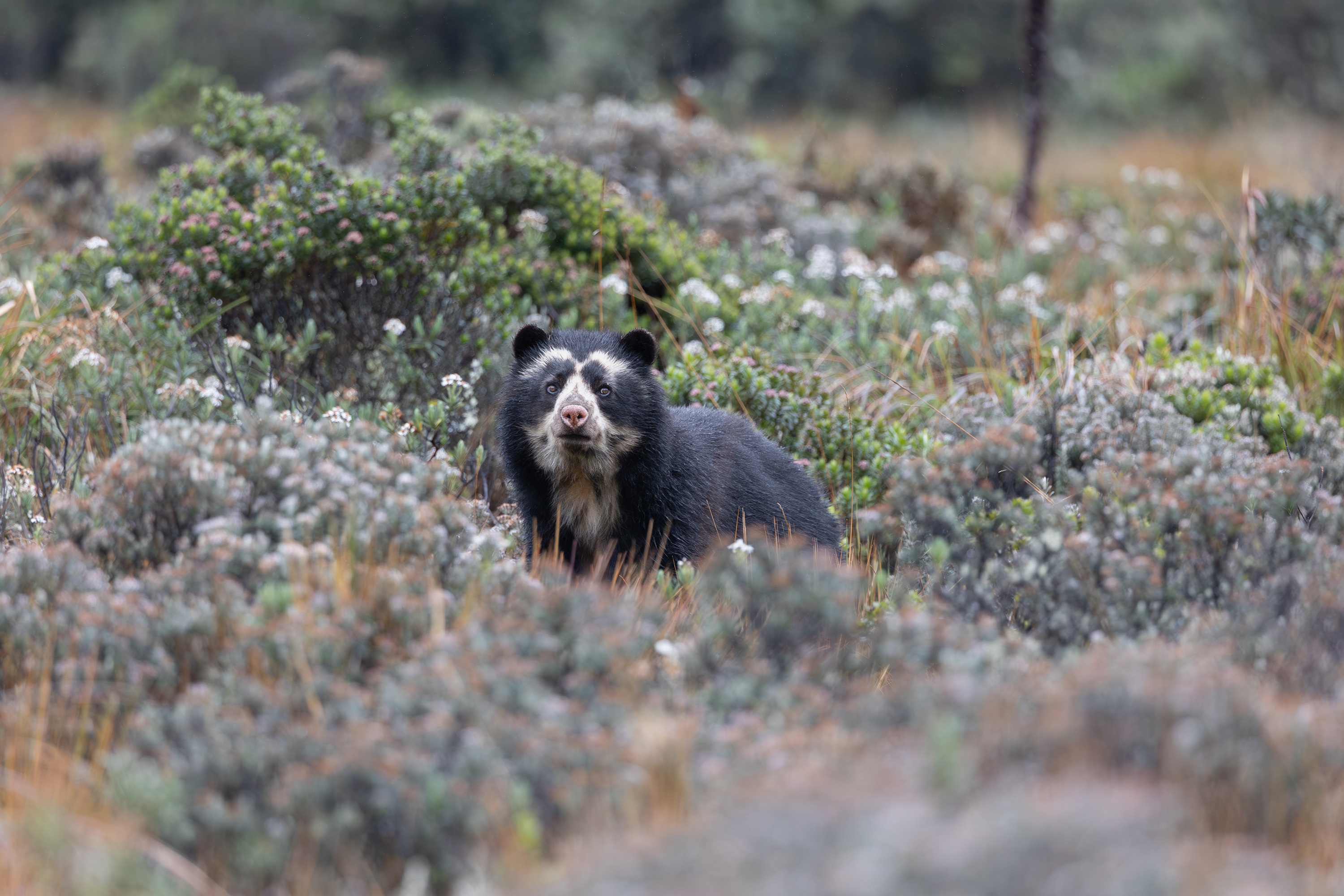
Photo: Keishpixl / Pixabay.
The long struggle to protect the páramo
One of the companies that sought to develop large-scale mining in Santurbán is Eco Oro Minerals Corp.—formerly Greystar Resources—a Canadian company that intended to establish the Angostura open-pit mine there to extract gold and silver. Between 1994 and 1995, the company acquired its mining titles and conducted exploration. And in 2010, it applied for a mining permit.
That was the year AIDA became involved in defending the ecosystem, supporting the Committee for the Defense of Water and the Santurbán Páramo. Our legal work helped convince the Colombian government to deny the mine an environmental permit in May 2011.
In January 2013, the government designated a portion of the páramo (11,700 hectares) as a Regional Natural Park. That year—together with the committee and partner organizations—we carried out a campaign and advocacy efforts to urge the government to recognize the entire Santurbán area as a páramo ecosystem through a delimitation based on scientific criteria. In December 2014, the Ministry of the Environment established a delimitation that protected 76% of the páramo (98,954 hectares).
Furthermore, as a result of a litigation supported by AIDA, in February 2016, Colombia’s highest court reaffirmed that mining in páramos is prohibited.
That same year, in December, the International Finance Corporation (IFC), the World Bank Group’s private sector arm, decided to divest from Eco Oro Minerals. This achievement was the result of a process that began in 2012, when the committee—advised and supported by AIDA and international partner organizations—filed a complaint before an independent accountability mechanism, which concluded that the IFC’s investment in the Angostura project failed to take into account the project’s social and environmental impacts, thereby contradicting the financial institution’s internal policies.
Also in 2016, Eco Oro Minerals filed an arbitration claim against the Colombian government with the International Centre for Settlement of Investment Disputes (ICSID), arguing that it had been adversely affected by government decisions aimed at protecting the country’s páramos, including the delimitation of Santurbán.
In 2017, the Constitutional Court invalidated the delimitation because the affected communities were not consulted. The high court ordered that a participatory delimitation be carried out.
And that year, a new threat to Santurbán emerged when the Canadian multinational Aris Mining applied for an environmental permit for Soto Norte, a gold mining project located near the páramo. Following citizen protests and technical objections, in October 2020, the National Environmental Licensing Authority shelved the project.
Photo: Aztlec.
Current situation
In March 2025, the Colombian government designated the western flank of the Santurbán massif as a temporary renewable natural resource reserve area, delimiting and protecting an area of 75,344.65 hectares. This resulted in a two-year suspension of the Soto Norte project. However, Aris Mining's contract to formalize Calimineros' small-scale mining activities through the purchase and processing of mineralized material remains in effect.
In addition, the Canadian mining company continues to move the project forward. In September 2025, it released its prefeasibility study, revising the mine’s original design.
Meanwhile, members of the Committee for the Defense of Water and the Santurbán Páramo face threats and stigmatization because of their work. In March 2025, UN Special Rapporteurs and the Working Group on Business and Human Rights denounced these incidents in communications sent to the governments of Colombia, Canada, and the United Arab Emirates, as well as to the companies Aris Mining and MDC Industry Holding Company LLC, the former co-owner of the Soto Norte project.
Regarding the arbitration claim filed by Eco Oro Minerals, in July 2024, ICSID ruled in favor of the Colombian government and rejected the Canadian company’s claim for USD 1.1 billion in compensation.
Concerning the delimitation of Santurbán, in July 2026, the Ministry of the Environment issued a resolution introducing the concept of "progressive delimitation." On that basis, the government proposes to progressively demarcate the páramo, covering 29,199 hectares across 19 municipalities—those where the participatory agreements required by the Constitutional Court in its 2017 ruling have already been finalized. It also proposes two measures on the creation and expansion of reserves to restrict mining in the ecosystem.
Learn more about the impacts of mining on the páramos of Latin America (in Spanish).
Partners:
Related projects
Eight key themes for Colombia’s environmental agenda in 2018
For Colombia, 2017 was a year marked by debate on the right of communities to be consulted about decisions that affect their territories and ecosystems. We saw it through the organization of popular consultations and mobilizations that questioned mining and fracking projects and, in short, the continuity of extractivism. It was also evident in the decision of the Constitutional Court, the highest court in the country, to invalidate the delimitation of the Santurbán páramo, a water source for millions, because the government’s decision did not take into account the population. On the other hand, Colombia joined the global debate on climate change and the need to promote a model of economic development free of fossil fuels. Now, in the face of the presidential elections and the implementation of the peace accord, environmental participation, territorial autonomy and fracking remain particularly important issues. What follows are eight topics key to Colombia’s environmental agenda in 2018: Environmental participation: Popular consultations, as an expression of empowered communities seeking to have a say on projects that will affect them, will continue holding a privileged place in public debate. Territorial autonomy: Although constitutionally recognized, the ability of departments and municipalities to govern themselves autonomously in various areas, including the environment, is not entirely defined. It remains to be answered: Who should decide? And about what can they decide? Indigenous authorities: Following on the heels of the above, the autonomy and decision-making ability of indigenous authorities in relation to environmental issues will give us much to discuss this year. Fracking: The key question is, faced with fracking’s expansion throughout the region, will Colombia adopt the position of social organizations on the application of the precautionary principle to avoid the health and environmental damages associated with fracking? Decarbonization: As an energy producer, will Colombia join France, the United Kingdom and Italy, nations that recently signed an alliance to close coal plants before 2030 and comply with the Paris climate agreement? La Niña: The strong winds and rains of the La Niña climate phenomenon will return to the country this year. Adequate measures to mitigate the risk will be fundamental, as will the application of lessons learned in 2010, when the phenomenon left hundreds dead and the loss of millions of pesos. Páramos: Following the decision of the Constitutional Court to invalidate the delimitation of the Santurbán páramo, this year promises to be full of controversies about the new delimitation of this important ecosystem. Also key will be the issue of community participation in the demarcation of the rest of Colombia’s páramos, a measure oriented to protect them against harmful projects like mining. Principle 10: The negotiation of a regional agreement on the access to information, to justice and to public participation on environmental issues, remains underway. The agreement seeks the application of Principle 10 of the Rio Declaration on Environment and Development, key to guaranteeing the right to a healthy and sustainable environment for present and future generations. At AIDA, and through the Network for Environmental Justice in Colombia, we will continue to promote solutions to the country’s environmental conflicts based on the effective application of national and international standards.
Read more
Sea turtle populations show sign of a comeback
Before 2008, hawksbill turtles had virtually disappeared from the Eastern Pacific. But small-scale conservation efforts enabled their return to the shores of El Salvador and Nicaragua, where researchers found them again laying eggs and slowly beginning to rebuild their population. Sea turtles are migratory animals. They spend most of their lives at sea, nesting on the beaches of various countries along their route. Among the main threats to their health are unsustainable fishing practices (they often get trapped in fishing nets) and inadequately developed projects in marine and coastal areas. The appearance of these turtles on Central American beaches, among other such events, demonstrates the success of small-scale conservation efforts, and the need for them to continue. Signs of recovery According to the recent study, Global sea turtle conservation successes, over the last decade sea turtle hatcheries have helped some populations rebound after historic declines. That’s the case of olive ridley turtles in the northeast Indian Ocean and of green turtles in the South Central Atlantic. After years of implementation, the protection of beaches, the regulation of fishing, and the creation of marine protected areas have helped improve sea turtle populations in waters around the world, according to researchers. The study also shows that, with adequate protections, even small populations of sea turtles have a chance of survival. Researchers found, for example, that in the area of Hawaii called French Frigate Shoals, the population of nesting green sea turtles increased from around 200 in 1973 – when the Endangered Species Act was created – to upwards of 2,000 in 2012. Green turtles are now considered a species of “minor concern” by the International Union for the Conservation of Nature. Our contribution Sea turtle conservation, like that of other animals and plants, requires that organizations, communities, and governments work together. Such collaboration is a main tenant of AIDA’s work. In 1998, we organized a campaign to get the signatures needed for the negotiation of an international treaty to promote the protection, conservation and recovery of sea turtle populations. We are currently working to ensure that governments who signed the treaty are operating in compliance with it. We also helped save green turtles in Costa Rica, and are currently working to protect the Veracruz Reef System in Mexico, in whose warm and shallow waters hundreds of hawksbill and Atlantic ridley turtles swim. Both species are at risk due to the expansion of the Port of Veracruz, a project that would cause serious damage to the expansive reef system. Much work remains Despite the impressive recovery of several species of turtle, there are others that remain in need of protection, as their numbers continue to decline worldwide. This is the case, according to the study, of both the leatherback turtle in the eastern and western Pacific and of the flatback turtle in Australia. A new beacon of hope for turtles can be found in the development, before the United Nations, of a treaty to protect the high seas, those international waters that belong to no country (but make up two-thirds of the world’s oceans). Sea turtles, sharks, whales and birds live in these waters or travel them as part of their migratory routes. Through our active role in the treaty’s development, we seek to create Marine Protected Areas to ensure the high seas remain a safe home for not just sea turtles, but for the many species of plants and animals that contribute to the health of the oceans and support the global food supply.
Read more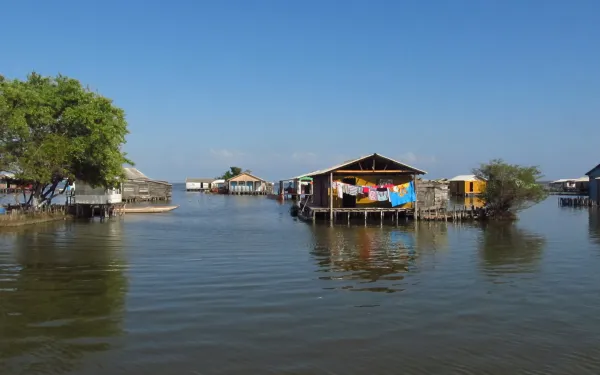
Celebrating 7 Advances to Close Out 2017
As the year comes to a close, we're happy to share with you several recent advances we've made in the name of environmental protection in Latin America. Each project we launch or case we win is a step toward a more just region, and a healthier planet for our children. Because of your support, we:1. Saved Colombia’s Largest Coastal WetlandWe successfully petitioned Colombia to list the Ciénaga Grande de Santa Marta among the world's most at-risk wetlands, opening up the resources needed for its recovery. Learn More2. Launched the Bolivian Environmental Justice NetworkWe founded a coalition of environmental and human rights organizations in Bolivia to support citizens’ efforts to defend the environment and those who depend on its health. 3. Campaigned to Protect Patagonia from Salmon FarmsWe petitioned Chile to investigate damage being done by salmon farm operations in Southern Patagonia, and launched a citizens’ campaign to raise awareness of the growing threat. Learn More4. Secured Healthcare for Victims of Toxic PollutionWe secured specialized medical care for residents of La Oroya, Peru, whose lives and health have long been affected by a heavy-polluting metal smelter that operates beside their homes.Learn More5. Protected Sea Turtles on the High SeasWe represented Latin American citizens and organizations in the development of a United Nations treaty to protect the shared parts of our ocean and the rich life within.Learn More6. Stimulated Divestment from Mining in a Protected WetlandWe convinced the World Bank to withdraw support from a gold mine in the Santurbán páramo, a protected ecosystem and water source for millions of Colombians. Learn More7. Advised Rural Town in the Lead-Up to a Mining BanWe provided legal advice and scientific analysis to the people of Cajamarca, Colombia, who then voted by a margin of 98% to ban all mining activities from their territory. Learn More
Read more