
Project
Alberto Peña Kay
Protecting the Santurban páramo from mining's damage
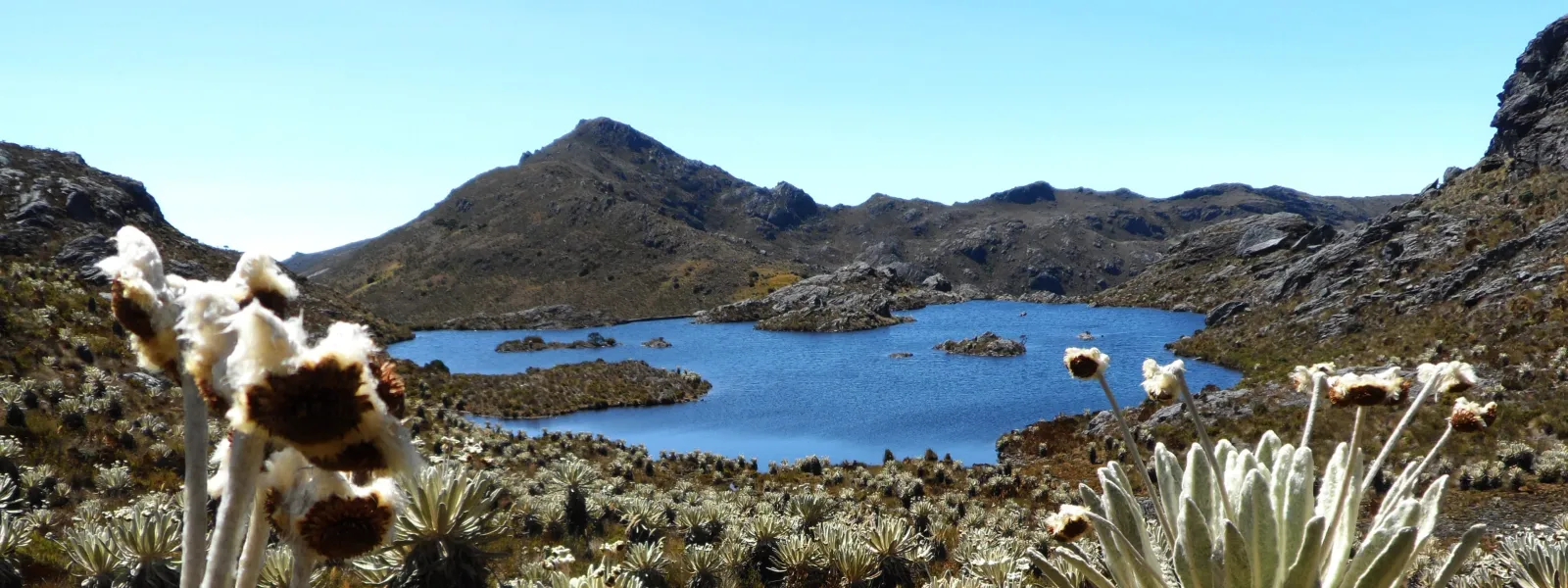
In the Andean region, high-mountain ecosystems known as páramos capture water from the fog and supply it to the lowlands. One such ecosystem is the Santurbán páramo, which provides fresh water to more than two million people in Colombia.
Santurbán, like the other páramos on the continent, also captures large amounts of carbon, making it a key ally in mitigating the climate crisis. It is also a refuge for hundreds of endangered species, including the iconic spectacled bear.
The land in and around the páramo contains gold and other minerals. This has put Santurbán in the spotlight of the multinational mining industry, which for decades has sought to establish large-scale projects in the ecosystem that threaten to degrade it.
The Committee for the Defense of Water and the Santurbán Páramo—a coalition of environmental advocates—has thwarted these ongoing attempts, with support from AIDA and other civil society organizations.
Background
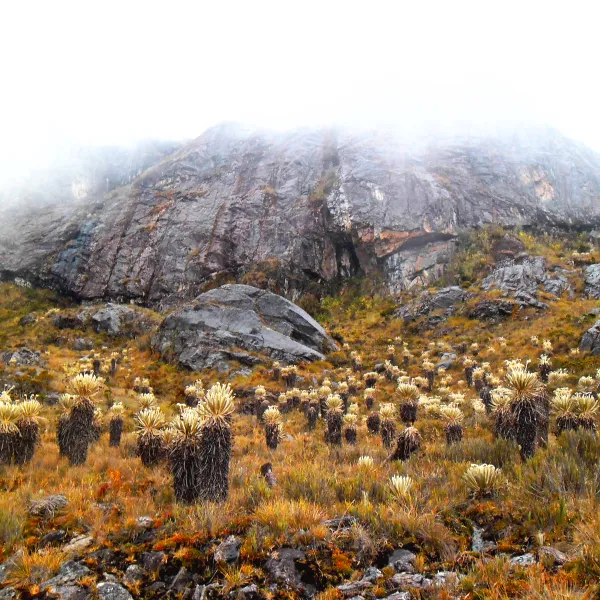
The Santurbán páramo is located in the heart of the Eastern Cordillera of the Colombian Andes, in the departments of Santander and Norte de Santander, at an elevation ranging from 2,200 to 4,290 meters above sea level.
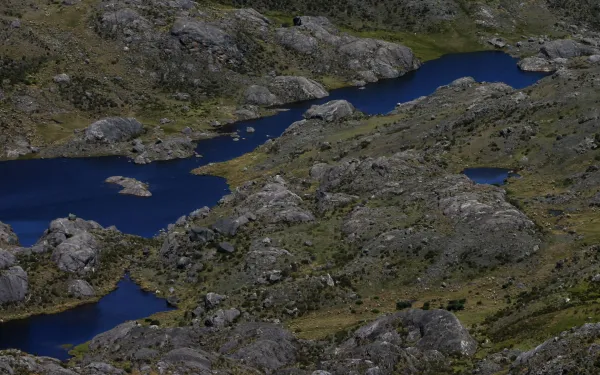
It covers an area of 129,743 hectares and is home to 57 lakes. It serves as a habitat for 457 plant species and 293 species of vertebrate fauna.
There are mineral deposits in Santurbán, primarily gold, but also silver and copper. This explains the region’s mining tradition, particularly in the part of the páramo located in Santander, in the province of Soto Norte. The communities in the area have built their culture and identity around gold mining, which is mainly artisanal and small-scale.
But since the 1990s, the gold deposits in the páramo have also attracted foreign mining conglomerates seeking to develop large-scale projects. This has raised concerns among the population that relies on the Santurbán water sources, who have mobilized in defense of water, their land, and life.
Although national and international regulations prohibit mining in páramos, the Colombian government has granted mining concessions to transnational corporations in Santurbán.

Photo: Keishpixl / Pixabay.
The long struggle to protect the páramo
One of the companies that sought to develop large-scale mining in Santurbán is Eco Oro Minerals Corp.—formerly Greystar Resources—a Canadian company that intended to establish the Angostura open-pit mine there to extract gold and silver. Between 1994 and 1995, the company acquired its mining titles and conducted exploration. And in 2010, it applied for a mining permit.
That was the year AIDA became involved in defending the ecosystem, supporting the Committee for the Defense of Water and the Santurbán Páramo. Our legal work helped convince the Colombian government to deny the mine an environmental permit in May 2011.
In January 2013, the government designated a portion of the páramo (11,700 hectares) as a Regional Natural Park. That year—together with the committee and partner organizations—we carried out a campaign and advocacy efforts to urge the government to recognize the entire Santurbán area as a páramo ecosystem through a delimitation based on scientific criteria. In December 2014, the Ministry of the Environment established a delimitation that protected 76% of the páramo (98,954 hectares).
Furthermore, as a result of a litigation supported by AIDA, in February 2016, Colombia’s highest court reaffirmed that mining in páramos is prohibited.
That same year, in December, the International Finance Corporation (IFC), the World Bank Group’s private sector arm, decided to divest from Eco Oro Minerals. This achievement was the result of a process that began in 2012, when the committee—advised and supported by AIDA and international partner organizations—filed a complaint before an independent accountability mechanism, which concluded that the IFC’s investment in the Angostura project failed to take into account the project’s social and environmental impacts, thereby contradicting the financial institution’s internal policies.
Also in 2016, Eco Oro Minerals filed an arbitration claim against the Colombian government with the International Centre for Settlement of Investment Disputes (ICSID), arguing that it had been adversely affected by government decisions aimed at protecting the country’s páramos, including the delimitation of Santurbán.
In 2017, the Constitutional Court invalidated the delimitation because the affected communities were not consulted. The high court ordered that a participatory delimitation be carried out.
And that year, a new threat to Santurbán emerged when the Canadian multinational Aris Mining applied for an environmental permit for Soto Norte, a gold mining project located near the páramo. Following citizen protests and technical objections, in October 2020, the National Environmental Licensing Authority shelved the project.
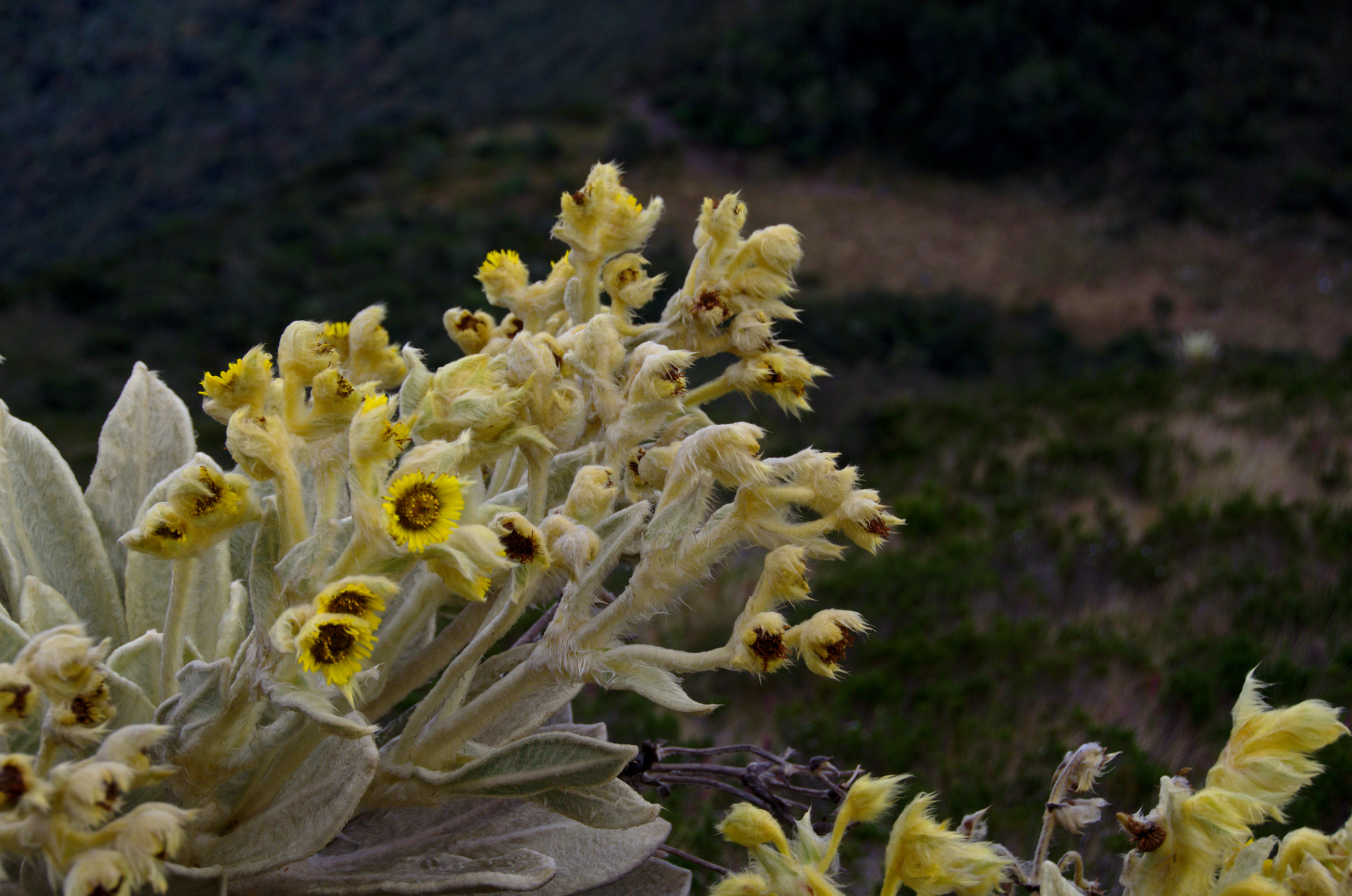
Photo: Aztlec.
Current situation
In March 2025, the Colombian government designated the western flank of the Santurbán massif as a temporary renewable natural resource reserve area, delimiting and protecting an area of 75,344.65 hectares. This resulted in a two-year suspension of the Soto Norte project. However, Aris Mining's contract to formalize Calimineros' small-scale mining activities through the purchase and processing of mineralized material remains in effect.
In addition, the Canadian mining company continues to move the project forward. In September 2025, it released its prefeasibility study, revising the mine’s original design.
Meanwhile, members of the Committee for the Defense of Water and the Santurbán Páramo face threats and stigmatization because of their work. In March 2025, UN Special Rapporteurs and the Working Group on Business and Human Rights denounced these incidents in communications sent to the governments of Colombia, Canada, and the United Arab Emirates, as well as to the companies Aris Mining and MDC Industry Holding Company LLC, the former co-owner of the Soto Norte project.
Regarding the arbitration claim filed by Eco Oro Minerals, in July 2024, ICSID ruled in favor of the Colombian government and rejected the Canadian company’s claim for USD 1.1 billion in compensation.
Concerning the delimitation of Santurbán, in July 2026, the Ministry of the Environment issued a resolution introducing the concept of "progressive delimitation." On that basis, the government proposes to progressively demarcate the páramo, covering 29,199 hectares across 19 municipalities—those where the participatory agreements required by the Constitutional Court in its 2017 ruling have already been finalized. It also proposes two measures on the creation and expansion of reserves to restrict mining in the ecosystem.
Learn more about the impacts of mining on the páramos of Latin America (in Spanish).
Partners:
Related projects
Ombudsman finds the IFC failed to comply with its investment standards in Colombia
The office of the Compliance Advisor Ombudsman found that the International Finance Corporation cannot guarantee that the Angostura mine will not have impacts on the environment. Washington/Ottawa/Bogotá/Ámsterdam. The office of the Compliance Advisor Ombudsman (CAO) has issued its final report on the complaint brought against the International Finance Corporation's (IFC) investment in Eco Oro Minerals’ Angostura mine in the high-altitude wetlands – known as páramos – of Santurbán, Colombia. The office warned that the corporation has not met all the standards required of its investments, including an assessment of potential impacts on biodiversity. The investigation was triggered by a complaint filed by the Comité por la Defensa del Agua y el Páramo de Santurbán (Committee for the Defense of Water and the Paramo de Santurban), with the support of the Center for International Environmental Law (CIEL), the Center for Research on Multinational Corporations (SOMO), the Interamerican Association for Environmental Defense (AIDA) and MiningWatch Canada. "The biodiversity of Santurbán is critical to ensuring our water supply. Therefore, any threat to its biodiversity affects the water resources of the entire metropolitan area of Bucaramanga," said Alix Mancilla, of the Santurbán Committee. The report also states that the IFC failed to assess the impacts of the entire mining project, and instead only concentrated on the impacts of the exploration stage, despite the fact that it justifies its investment on the basis of the supposed benefits that the eventual mine would bring. The CAO found that the "potential to comply with IFC’s environmental and social standards was uncertain and potentially challenging" during the extraction phase. In its conclusion, the Ombudsman points out that "one of the stated purposes of the IFC's investment was to develop the studies necessary to determine whether the project could comply with IFC's [performance standards]. " However, the company did not complete the required studies, including an Environmental and Social Impact Assessment, a biodiversity baseline study, and critical habitat assessments. Despite repeated lack of compliance by the client, the CAO found that the "IFC has not pursued a remedy, but has made subsequent investments in the company." "If the purpose of IFC's investment was to determine the viability of the project, there is no justification for the lack of studies – studies that are required to make an investment decision. You cannot greenlight a project in such a critical region for the population of Bucaramanga without assessing its actual consequences," declared Carla Garcia Zendejas of CIEL. The IFC's response to the Ombudsman’s report did not acknowledge any wrongdoing or make commitments to address its findings. Instead, the IFC merely reiterated its justification for investing in the project, claiming that the eventual mine will bring employment and revenue. The response is silent regarding its client's intent to file an investment dispute under the Canada-Colombia Free Trade Agreement. "It is very serious that despite failures in the risk assessment, the IFC has continued to invest in the Angostura mining project," added Kris Genovese, from SOMO. “It is disappointing, but not surprising, that the IFC has failed once again to respond to the findings of a CAO investigation.” AIDA attorney Carlos Lozano Acosta explained that “the project is illegal; that’s why its license was denied in 2011, and why the Constitutional Court ratified the prohibition of mining in páramos. It worries us that the IFC invested in a company whose project, from the beginning, was not viable, and who would file an international lawsuit against Colombia, one of the member states of the World Bank.” The report reveals that the IFC has an explicit policy of investing in junior mining companies with limited capacity to manage environmental and social issues, in countries where the regulatory framework is weak or not enforced. "It is time for the IFC to withdraw its investment in Eco Oro and stop investing in junior mining companies, as has been done in Colombia and elsewhere, knowing the serious social and environmental damage this entails and the context of impunity in which these companies are operating," stated Jen Moore of MiningWatch. "As communities affected by the mine, we will continue challenging the project in court, and we will use all legal means at our disposal to stop it, as we have done so far," affirmed Elizabeth Martinez from the Committee for Santurban. Currently, Colombia's Constitutional Court is considering a legal action filed by the Santurbán Committee with support from AIDA, concerning the lack of citizen participation in the demarcation of the wetland. A decision is expected soon. The IFC is the private-sector lending arm of the World Bank Group. The CAO is an independent accountability mechanism that receives complaints from people who may be affected by IFC investment projects. The CAO’s report and communiqué, including the IFC’s response can be found here: Communiqué: http://www.cao-ombudsman.org/cases/document-links/documents/CAOCommuniqueEcoOroSummaryofFindingsAugust252016.pdf Report: http://www.cao-ombudsman.org/cases/document-links/documents/CAOComplianceInvestigationReportonIFCinvestmentinEcoOroMinerals-English.pdf Response by the IFC: http://www.cao-ombudsman.org/cases/document-links/documents/EcoOro-IFCManagementResponsetoCAOInvestigationReport-5August2016.pdf
Read more
Civil society urges the United Nations to document human rights violations committed by businesses in Mexico
A group of organizations delivered their report highlighting more than 60 cases of violations across the country. Mining, infrastructure and energy projects—including hydroelectric and wind—were responsible for the greatest number of human rights violations. Mexico City, Mexico. On the occasion of the United Nations Working Group on Business and Human Rights’ official visit to Mexico, a coalition of more than 100 civil society organizations, movements and networks prepared a report outlining cases of human rights violations perpetrated by corporations in Mexico. The report highlights Mexico’s current human rights crisis, which has been recognized by various UN agencies[1] and the Inter-American Commission on Human Rights.[2] It lays out the clear dangers facing those who protect human rights, the land and their own territory.[3] Documented cases of human rights abuses involve 50 foreign, 41 national, and eight public companies. More than half the cases involved intimidation and/or attacks against human rights defenders. The most frequent violations were to the rights to: land and territory; access to information; health; a healthy environment; and consultation and free, prior and informed consent. During the Working Group’s regional visits, affected communities will show the experts the negative impacts caused by companies linked to mining, wind power, hydroelectric dams, agribusiness, infrastructure, oil and gas exploitation, real estate, tourism and maquilas (manufacturing facilities), among others. At the suggestion of civil society, the Working Group will meet with companies including: Grupo México, Grupo Higa, Grupo BAL, Bimbo, Goldcorp, TransCanada, Eólica del Sur, and CEMEX. They will also meet with the state-run production companies, Petróleos Mexicanos (Pemex) and the Federal Electricity Commission (CFE). Situations in Mexico that systematically hinder compliance with the UN Guiding Principles on Business and Human Rights include: State Capture: complicity, corruption and impunity. In many documented cases, the Mexican State, at all levels (federal, state and municipal), has served business interests above public interest. This has been evident in: the promotion of rules and regulations that benefit business interests over human rights; the use of public force against peaceful social mobilization; the support of extractive projects against community interests; the lack of inquiry and sanction by the judiciary regarding allegations of human rights abuses; and the criminalization of environmental advocates. Structural reforms that weaken the protection of human rights and support companies, such as the energy reform, which does not always consider its impacts on human rights, and does not guarantee the participation and right of access to information of affected communities. Lack of consultation and the free, prior, informed, culturally appropriate, and in good faith consent of affected communities; lack of due diligence on the part of companies; and the proliferation of megaprojects with severe impacts on human rights. Lack of access to justice and non-compliance with rules and judgments, by companies as well as the Mexican State. On multiple occasions, affected people who have reported rights violations have later been the victim of attacks. And, even if a court—including the Mexican Supreme Court— ruled in their favor, the fulfillment of that ruling was not observed. Reduction of participation mechanisms and an increase in abuses against human rights defenders. The cases illustrate an increase in murders, criminalization, threats and attacks on human rights defenders who have spoken out against mega-projects and business activities. In 2011, the United Nations Human Rights Council issued the "Guiding Principles on Business and Human Rights" in order to empower States to exercise control over business activities, ensure due diligence, and guarantee access to effective and appropriate remedial measures. In order to monitor the application of these principles, the Council established the Working Group on Business and Human Rights, whose visit Mexico from August 29th to September 7th 2016 will be their second visit to Latin America. On behalf of the organizations and communities that prepared this report, we hope that the conclusions reached by the Working Group at the close of their visit will reflect what Mexico truly needs. We urge companies operating in Mexico, as well as the Mexican State, to consider the recommendations seriously and implement them in current and future operations. For more information in social media, following along: #ONUenMX The report was created with the participation of the following organizations and human rights groups (in alphabetical order): Alianza de la Costa Verde Ambiente y Desarrollo Humano Asociación Interamericana para la Defensa del Ambiente (AIDA) Bios Iguana Campaña Nacional Sin Maíz No Hay País Cartocrítica Casa del Migrante Saltillo Centro de Derechos Humanos “Fray Bartolomé de Las Casas” Centro de Derechos Humanos “Fray Francisco de Vitoria” Centro de Derechos Humanos “Miguel Agustín Pro Juárez” (Centro Prodh) Centro de Derechos Humanos de la Montaña, Tlachinollan Centro de Derechos Humanos Toaltepeyolo Centro de Derechos Humanos Zeferino Ladrillero (CDHZL) Centro “Fray Julián Garcés” Derechos Humanos Centro de Información sobre Empresas y Derechos Humanos (CIEDH) Centro de Reflexión y Acción Laboral (CEREAL) Centro Diocesano para los Derechos Humanos “Fray Juan de Larios” Centro Mexicano de Derecho Ambiental (CEMDA) Colectivo sí a la vida No al basurero tóxico en Noria de la Sabina Comités de Cuenca Río Sonora (CCRS) Comité de Defensa Integral de Derechos Humanos Gobixha (CODIGODH) Comité de Derechos Humanos de Tabasco (CODEHUTAB) Comisión Mexicana para la Defensa y Promoción de los Derechos Humanos (CMDPDH) Consejo en Defensa de la Vida y el Territorio TiyatTlali DECA Equipo Pueblo DH Rayoactivo El Barzón Chihuahua EcoRed Feminista la Lechuza Buza Enfoque DH Estancia del Migrante en Querétaro Frente de Pueblos en Defensa de la Tierra y el Agua (FPDTA) Fundar, Centro de Análisis e Investigación Foro de Derechos Humanos y Resistencias de la Sierra de Puebla Greenpeace México Grupo de Estudios Ambientales Grupo Focal sobre Empresas y Derechos Humanos Indignación, Promoción y Defensa de los Derechos Humanos Instituto Mexicano para el Desarrollo Comunitario (IMDEC) Movimiento Ciudadano en Defensa de la Loma Movimiento Mexicano de Afectados por las Presas y en Defensa de los Ríos (MAPDER) Movimiento Mesoamericano contra el Modelo Extractivo Minero (M4) OrganicConsumersAssociation (México) Oxfam México Programa Universitario de Derechos Humanos, Programa de Incidencia, Programa de Medio Ambiente, UIA Proyecto de Derechos Económicos, Sociales y Culturales (ProDESC) Proyecto sobre Organización, Desarrollo, Educación e Investigación (PODER) Red Mexicana de Afectados por la Minería (REMA) Semillas de Vida SMR, Scalabrinianas: misión con Migrantes y Refugiados Serapaz, Servicios y Asesoría para la Paz Y la Red Nacional de Organismos Civiles de Derechos Humanos “Todos los Derechos para Todas y Todos” (conformada por 80 organizaciones en 21 estados de la República mexicana). The information was collected based on the baseline questionnaire for documenting abuses of companies prepared by the Business Information Center and Human Rights(CIEDH) and the network(DESC) https://goo.gl/YLhbSM [1] Declaration of the United Nations High Commissioner for Human Rights, ZeidRa’ad Al Hussein, done in his visit to Mexico in October 7, 2015: http://www.ohchr.org/en/NewsEvents/Pages/DisplayNews.aspx?NewsID=16578&LangID=E [2] Inter-American Commission on Human Rights. Human Rights situation in Mexico, (OAS.Official Documentation; OEA/Ser.L) ISBN I. Title. II. Series. OAS. Official Documentation; OEA/Ser.L. OEA/Ser.L/V/II.Doc. 44/15 p. 11 http://www.oas.org/es/cidh/informes/pdfs/Mexico2016-es.pdf [3] Institute for Economics & Peace, Global Peace Index 2015 Measuring peace, its causes and its economic value p. 8 http://economicsandpeace.org/wp-content/uploads/2015/06/Global-Peace-Index-Report-2015_0.pdf Mexico´s Rank 140 out of 163 http://www.visionofhumanity.org/#page/indexes/global-peace-index/2016/MEX/OVER
Read moreCivil society urges the United Nations to document human rights violations committed by businesses in Mexico
A group of organizations delivered their report highlighting more than 60 cases of violations across the country. Mining, infrastructure and energy projects—including hydroelectric and wind—were responsible for the greatest number of human rights violations. Mexico City, Mexico. On the occasion of the United Nations Working Group on Business and Human Rights’ official visit to Mexico, a coalition of more than 100 civil society organizations, movements and networks prepared a report outlining cases of human rights violations perpetrated by corporations in Mexico. The report highlights Mexico’s current human rights crisis, which has been recognized by various UN agencies[1] and the Inter-American Commission on Human Rights.[2] It lays out the clear dangers facing those who protect human rights, the land and their own territory.[3] Documented cases of human rights abuses involve 50 foreign, 41 national, and eight public companies. More than half the cases involved intimidation and/or attacks against human rights defenders. The most frequent violations were to the rights to: land and territory; access to information; health; a healthy environment; and consultation and free, prior and informed consent. During the Working Group’s regional visits, affected communities will show the experts the negative impacts caused by companies linked to mining, wind power, hydroelectric dams, agribusiness, infrastructure, oil and gas exploitation, real estate, tourism and maquilas (manufacturing facilities), among others. At the suggestion of civil society, the Working Group will meet with companies including: Grupo México, Grupo Higa, Grupo BAL, Bimbo, Goldcorp, TransCanada, Eólica del Sur, and CEMEX. They will also meet with the state-run production companies, Petróleos Mexicanos (Pemex) and the Federal Electricity Commission (CFE). Situations in Mexico that systematically hinder compliance with the UN Guiding Principles on Business and Human Rights include: State Capture: complicity, corruption and impunity. In many documented cases, the Mexican State, at all levels (federal, state and municipal), has served business interests above public interest. This has been evident in: the promotion of rules and regulations that benefit business interests over human rights; the use of public force against peaceful social mobilization; the support of extractive projects against community interests; the lack of inquiry and sanction by the judiciary regarding allegations of human rights abuses; and the criminalization of environmental advocates. Structural reforms that weaken the protection of human rights and support companies, such as the energy reform, which does not always consider its impacts on human rights, and does not guarantee the participation and right of access to information of affected communities. Lack of consultation and the free, prior, informed, culturally appropriate, and in good faith consent of affected communities; lack of due diligence on the part of companies; and the proliferation of megaprojects with severe impacts on human rights. Lack of access to justice and non-compliance with rules and judgments, by companies as well as the Mexican State. On multiple occasions, affected people who have reported rights violations have later been the victim of attacks. And, even if a court—including the Mexican Supreme Court— ruled in their favor, the fulfillment of that ruling was not observed. Reduction of participation mechanisms and an increase in abuses against human rights defenders. The cases illustrate an increase in murders, criminalization, threats and attacks on human rights defenders who have spoken out against mega-projects and business activities. In 2011, the United Nations Human Rights Council issued the "Guiding Principles on Business and Human Rights" in order to empower States to exercise control over business activities, ensure due diligence, and guarantee access to effective and appropriate remedial measures. In order to monitor the application of these principles, the Council established the Working Group on Business and Human Rights, whose visit Mexico from August 29th to September 7th 2016 will be their second visit to Latin America. On behalf of the organizations and communities that prepared this report, we hope that the conclusions reached by the Working Group at the close of their visit will reflect what Mexico truly needs. We urge companies operating in Mexico, as well as the Mexican State, to consider the recommendations seriously and implement them in current and future operations. For more information in social media, following along: #ONUenMX The report was created with the participation of the following organizations and human rights groups (in alphabetical order): Alianza de la Costa Verde Ambiente y Desarrollo Humano Asociación Interamericana para la Defensa del Ambiente (AIDA) Bios Iguana Campaña Nacional Sin Maíz No Hay País Cartocrítica Casa del Migrante Saltillo Centro de Derechos Humanos “Fray Bartolomé de Las Casas” Centro de Derechos Humanos “Fray Francisco de Vitoria” Centro de Derechos Humanos “Miguel Agustín Pro Juárez” (Centro Prodh) Centro de Derechos Humanos de la Montaña, Tlachinollan Centro de Derechos Humanos Toaltepeyolo Centro de Derechos Humanos Zeferino Ladrillero (CDHZL) Centro “Fray Julián Garcés” Derechos Humanos Centro de Información sobre Empresas y Derechos Humanos (CIEDH) Centro de Reflexión y Acción Laboral (CEREAL) Centro Diocesano para los Derechos Humanos “Fray Juan de Larios” Centro Mexicano de Derecho Ambiental (CEMDA) Colectivo sí a la vida No al basurero tóxico en Noria de la Sabina Comités de Cuenca Río Sonora (CCRS) Comité de Defensa Integral de Derechos Humanos Gobixha (CODIGODH) Comité de Derechos Humanos de Tabasco (CODEHUTAB) Comisión Mexicana para la Defensa y Promoción de los Derechos Humanos (CMDPDH) Consejo en Defensa de la Vida y el Territorio TiyatTlali DECA Equipo Pueblo DH Rayoactivo El Barzón Chihuahua EcoRed Feminista la Lechuza Buza Enfoque DH Estancia del Migrante en Querétaro Frente de Pueblos en Defensa de la Tierra y el Agua (FPDTA) Fundar, Centro de Análisis e Investigación Foro de Derechos Humanos y Resistencias de la Sierra de Puebla Greenpeace México Grupo de Estudios Ambientales Grupo Focal sobre Empresas y Derechos Humanos Indignación, Promoción y Defensa de los Derechos Humanos Instituto Mexicano para el Desarrollo Comunitario (IMDEC) Movimiento Ciudadano en Defensa de la Loma Movimiento Mexicano de Afectados por las Presas y en Defensa de los Ríos (MAPDER) Movimiento Mesoamericano contra el Modelo Extractivo Minero (M4) OrganicConsumersAssociation (México) Oxfam México Programa Universitario de Derechos Humanos, Programa de Incidencia, Programa de Medio Ambiente, UIA Proyecto de Derechos Económicos, Sociales y Culturales (ProDESC) Proyecto sobre Organización, Desarrollo, Educación e Investigación (PODER) Red Mexicana de Afectados por la Minería (REMA) Semillas de Vida SMR, Scalabrinianas: misión con Migrantes y Refugiados Serapaz, Servicios y Asesoría para la Paz Y la Red Nacional de Organismos Civiles de Derechos Humanos “Todos los Derechos para Todas y Todos” (conformada por 80 organizaciones en 21 estados de la República mexicana). The information was collected based on the baseline questionnaire for documenting abuses of companies prepared by the Business Information Center and Human Rights(CIEDH) and the network(DESC) https://goo.gl/YLhbSM [1] Declaration of the United Nations High Commissioner for Human Rights, ZeidRa’ad Al Hussein, done in his visit to Mexico in October 7, 2015: http://www.ohchr.org/en/NewsEvents/Pages/DisplayNews.aspx?NewsID=16578&LangID=E [2] Inter-American Commission on Human Rights. Human Rights situation in Mexico, (OAS.Official Documentation; OEA/Ser.L) ISBN I. Title. II. Series. OAS. Official Documentation; OEA/Ser.L. OEA/Ser.L/V/II.Doc. 44/15 p. 11 http://www.oas.org/es/cidh/informes/pdfs/Mexico2016-es.pdf [3] Institute for Economics & Peace, Global Peace Index 2015 Measuring peace, its causes and its economic value p. 8 http://economicsandpeace.org/wp-content/uploads/2015/06/Global-Peace-Index-Report-2015_0.pdf Mexico´s Rank 140 out of 163 http://www.visionofhumanity.org/#page/indexes/global-peace-index/2016/MEX/OVER
Read more