
Project
Alberto Peña Kay
Protecting the Santurban páramo from mining's damage
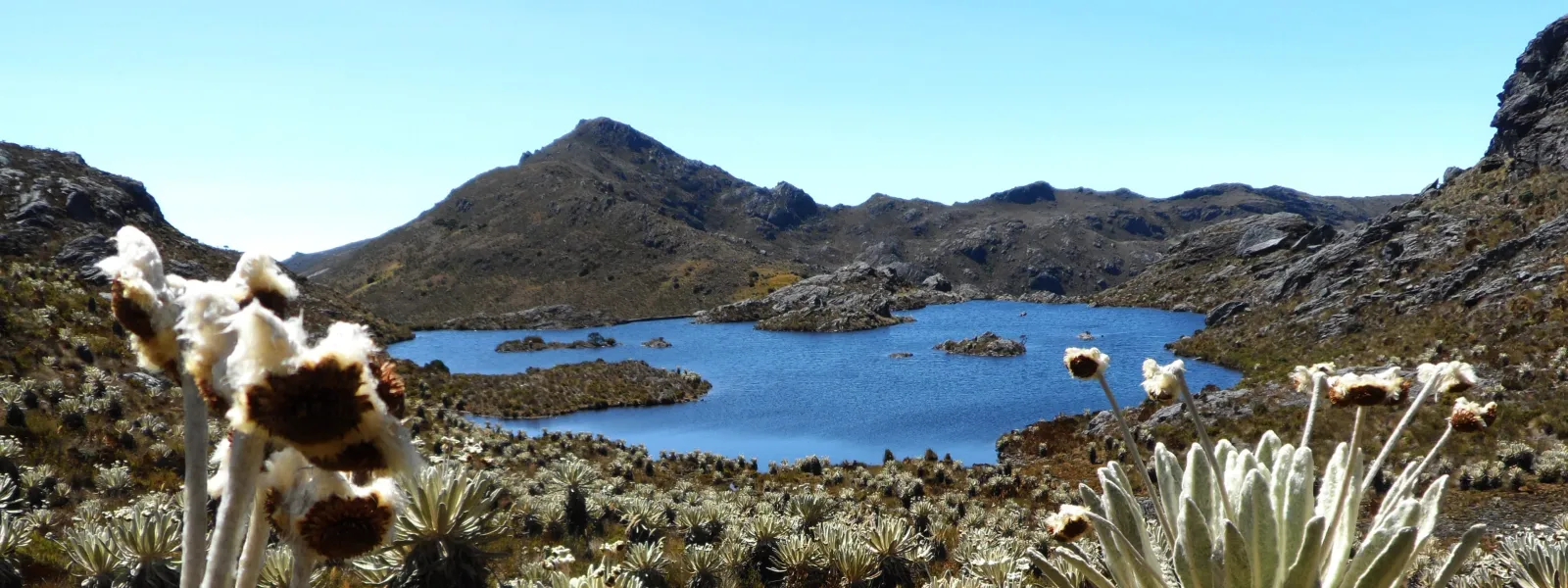
In the Andean region, high-mountain ecosystems known as páramos capture water from the fog and supply it to the lowlands. One such ecosystem is the Santurbán páramo, which provides fresh water to more than two million people in Colombia.
Santurbán, like the other páramos on the continent, also captures large amounts of carbon, making it a key ally in mitigating the climate crisis. It is also a refuge for hundreds of endangered species, including the iconic spectacled bear.
The land in and around the páramo contains gold and other minerals. This has put Santurbán in the spotlight of the multinational mining industry, which for decades has sought to establish large-scale projects in the ecosystem that threaten to degrade it.
The Committee for the Defense of Water and the Santurbán Páramo—a coalition of environmental advocates—has thwarted these ongoing attempts, with support from AIDA and other civil society organizations.
Background
The Santurbán páramo is located in the heart of the Eastern Cordillera of the Colombian Andes, in the departments of Santander and Norte de Santander, at an elevation ranging from 2,200 to 4,290 meters above sea level.
It covers an area of 129,743 hectares and is home to 57 lakes. It serves as a habitat for 457 plant species and 293 species of vertebrate fauna.
There are mineral deposits in Santurbán, primarily gold, but also silver and copper. This explains the region’s mining tradition, particularly in the part of the páramo located in Santander, in the province of Soto Norte. The communities in the area have built their culture and identity around gold mining, which is mainly artisanal and small-scale.
But since the 1990s, the gold deposits in the páramo have also attracted foreign mining conglomerates seeking to develop large-scale projects. This has raised concerns among the population that relies on the Santurbán water sources, who have mobilized in defense of water, their land, and life.
Although national and international regulations prohibit mining in páramos, the Colombian government has granted mining concessions to transnational corporations in Santurbán.
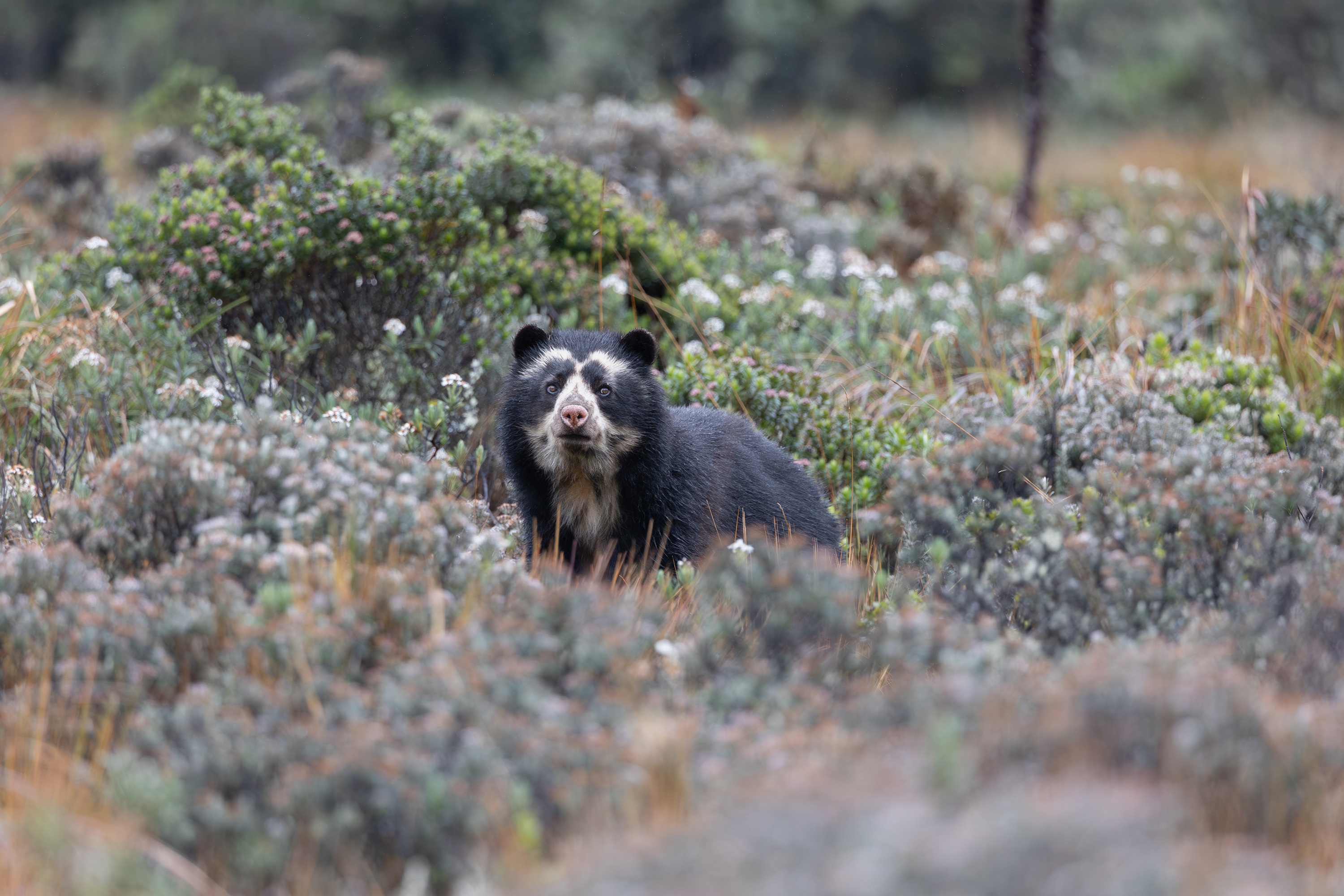
Photo: Keishpixl / Pixabay.
The long struggle to protect the páramo
One of the companies that sought to develop large-scale mining in Santurbán is Eco Oro Minerals Corp.—formerly Greystar Resources—a Canadian company that intended to establish the Angostura open-pit mine there to extract gold and silver. Between 1994 and 1995, the company acquired its mining titles and conducted exploration. And in 2010, it applied for a mining permit.
That was the year AIDA became involved in defending the ecosystem, supporting the Committee for the Defense of Water and the Santurbán Páramo. Our legal work helped convince the Colombian government to deny the mine an environmental permit in May 2011.
In January 2013, the government designated a portion of the páramo (11,700 hectares) as a Regional Natural Park. That year—together with the committee and partner organizations—we carried out a campaign and advocacy efforts to urge the government to recognize the entire Santurbán area as a páramo ecosystem through a delimitation based on scientific criteria. In December 2014, the Ministry of the Environment established a delimitation that protected 76% of the páramo (98,954 hectares).
Furthermore, as a result of a litigation supported by AIDA, in February 2016, Colombia’s highest court reaffirmed that mining in páramos is prohibited.
That same year, in December, the International Finance Corporation (IFC), the World Bank Group’s private sector arm, decided to divest from Eco Oro Minerals. This achievement was the result of a process that began in 2012, when the committee—advised and supported by AIDA and international partner organizations—filed a complaint before an independent accountability mechanism, which concluded that the IFC’s investment in the Angostura project failed to take into account the project’s social and environmental impacts, thereby contradicting the financial institution’s internal policies.
Also in 2016, Eco Oro Minerals filed an arbitration claim against the Colombian government with the International Centre for Settlement of Investment Disputes (ICSID), arguing that it had been adversely affected by government decisions aimed at protecting the country’s páramos, including the delimitation of Santurbán.
In 2017, the Constitutional Court invalidated the delimitation because the affected communities were not consulted. The high court ordered that a participatory delimitation be carried out.
And that year, a new threat to Santurbán emerged when the Canadian multinational Aris Mining applied for an environmental permit for Soto Norte, a gold mining project located near the páramo. Following citizen protests and technical objections, in October 2020, the National Environmental Licensing Authority shelved the project.
Photo: Aztlec.
Current situation
In March 2025, the Colombian government designated the western flank of the Santurbán massif as a temporary renewable natural resource reserve area, delimiting and protecting an area of 75,344.65 hectares. This resulted in a two-year suspension of the Soto Norte project. However, Aris Mining's contract to formalize Calimineros' small-scale mining activities through the purchase and processing of mineralized material remains in effect.
In addition, the Canadian mining company continues to move the project forward. In September 2025, it released its prefeasibility study, revising the mine’s original design.
Meanwhile, members of the Committee for the Defense of Water and the Santurbán Páramo face threats and stigmatization because of their work. In March 2025, UN Special Rapporteurs and the Working Group on Business and Human Rights denounced these incidents in communications sent to the governments of Colombia, Canada, and the United Arab Emirates, as well as to the companies Aris Mining and MDC Industry Holding Company LLC, the former co-owner of the Soto Norte project.
Regarding the arbitration claim filed by Eco Oro Minerals, in July 2024, ICSID ruled in favor of the Colombian government and rejected the Canadian company’s claim for USD 1.1 billion in compensation.
Concerning the delimitation of Santurbán, in July 2026, the Ministry of the Environment issued a resolution introducing the concept of "progressive delimitation." On that basis, the government proposes to progressively demarcate the páramo, covering 29,199 hectares across 19 municipalities—those where the participatory agreements required by the Constitutional Court in its 2017 ruling have already been finalized. It also proposes two measures on the creation and expansion of reserves to restrict mining in the ecosystem.
Learn more about the impacts of mining on the páramos of Latin America (in Spanish).
Partners:
Related projects
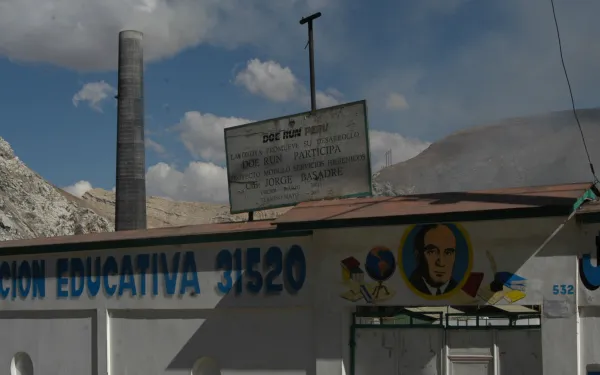
Statement from AIDA and APRODEH on the International Arbitration Ruling in La Oroya
The Peruvian government must adequately address the environmental, public health and employment situation in La Oroya. Lima, Peru. On Monday the International Center for the Settlement of Investment Disputes (ICSID) ruled in favor of the Peruvian government in a case involving the Metallurgical Complex of La Oroya. As organizations representing residents in La Oroya, the Interamerican Association for Environmental Defense (AIDA) and the Asociación Pro Derechos Humanos (APRODEH) welcome the decision, which terminates the legal proceedings against the State. The Renco Group, owner of Doe Run Peru, operator of the smelter in La Oroya, initiated arbitration after the Peruvian government claimed the company failed to comply with its environmental commitments. ICSID, a World Bank-sponsored institution, dismissed Renco’s claim due to lack of jurisdiction. While AIDA and APRODEH celebrate this positive news for the government of Peru, it is our hope that, as a result of this decision, the State concentrates its efforts on providing a sustainable solution to the vast contamination in La Oroya, and that it prioritizes the health, environment and employment situation of residents there. We also urge the government to fully comply with the precautionary measures the Inter-American Commission on Human Rights granted in 2007, and extended in 2016, in favor of a group of residents affected by the pollution. Peru also must accept its international responsibility for the human rights violations committed against the inhabitants of La Oroya in the case that is pending before the Commission. Regarding the decision, AIDA Co-Director Astrid Puentes said: “For years we have worked to dismiss the false premise that our demand for the safe and responsible operation of the Metallurgical Complex of La Oroya somehow violates the rights of workers. Doe Run Peru—or any company—can and must operate the smelter in a way that also protects and respects the basic human rights to life and health, for the workers as well as the entire population of La Oroya.”
Read more
AIDA condemns threats to environmental defenders in Tolima, Colombia
As a regional organization, we call on the Colombian government to immediately adopt measures to guarantee the life and integrity of at-risk activists. The Interamerican Association for Environmental Defense (AIDA) categorically condemns threats made against the Youth Socio-Environmental Collective of Cajamarca, Colombia (Cosajuca). On July 8, the organization—which forms part of the Environmental Committee of Cajamarca and the Network of Environmental Committees of Tolima—received a document containing death threats, only the most recent of a series of intimidations to which its members have been subject. The urgency of addressing this situation comes light of a larger problem in Colombia and across the region. In their most recent report, the international NGO Global Witness identified Colombia as the third most dangerous country in the world to be an environmental defender; 26 deaths were registered there in 2015. AIDA calls on the government of Colombia to guarantee the life, liberty and physical integrity of the members of Cosajuca. We also urge the establishment of a safe space for these environmental defenders to do their work, and a prompt investigation into the threats made against them. Freedom of expression and association are fundamental to the rule of law and a democratic society. Access to information, participation and the search for environmental justice are legitimate activities protected by the Constitution and the international legal treaties to which Colombia is a party. Cosajuca exercises those rights by promoting a popular referendum against mining contamination in the town of Cajamarca, and the department of Tolima, where large-scale gold mining operations are being planned. The harassment and murder of environmental defenders is pervasive throughout Latin America, which, according to the Global Witness report, is home to two-thirds of the world’s murdered activists and seven of the ten deadliest countries to be an environmental defender.
Read more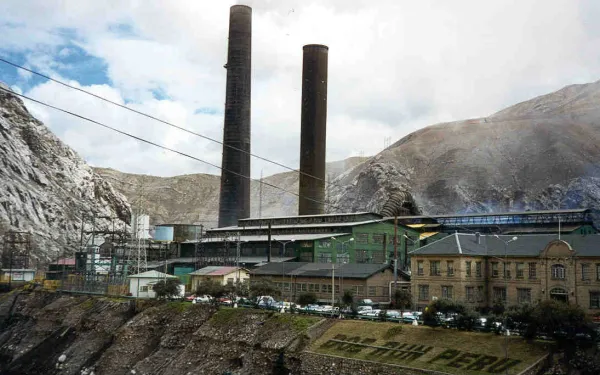
Peru must find a comprehensive and sustainable solution for La Oroya
We call on the President-elect of Peru to take into account, in any assessment of or decision about La Oroya, the rights of the population affected by the city’s severe pollution. La Oroya, Peru. On July 6, the President-elect of Peru, Pedro Pablo Kuczynski, visited the Metallurgical Complex of La Oroya (CMLO) and announced to its workers that it was necessary for the next Congress to approve a law to extend the deadline for liquidation of the Complex. This, he said, would give the company time to secure investors and finish the copper circuit. He also asked the workers and people of La Oroya to march on Congress to support his proposal. Reflecting on these public statements, the Asociación Pro Derechos Humanos (APRODEH) and the Interamerican Association for Environmental Defense would like to express the following: The city of La Oroya deserves the full attention of all levels and sectors of government to resolve in a comprehensive, specialized and sustainable way the demands of the population that, at various times in its history, has suffered, and continues to suffer, violations of their basic human rights, including the right to life, health, integrity, work and a healthy environment. Regarding the right to work, La Oroya requires a deep assessment that permits the State to propose and implement not only remedial actions, but also actions that will guarantee decent and lasting work that will sustain adequate living conditions for the entire population. No action can resolve the underlying problem in La Oroya if it does not provide a guarantee of public health for residents. In that regard, we would like to remind the President-elect that since 2007 a group of residents from La Oroya have been the beneficiaries of precautionary measures granted by the Inter-American Commission on Human Rights that safeguard their life and personal integrity before the impacts of highly polluted air, soil and water. In May 2016, the Commission extended those precautionary measures to include new beneficiaries. In the corresponding resolution, the Commission stressed that harm to the health of the beneficiaries is exacerbated due to the lack of comprehensive medical care offered by the State. Its also worth noting that a case is pending before the Commission which seeks to hold the Peruvian government responsible for the violations to the population’s basic rights to life, health, and integrity—as well as to the rights of children—due to the lack of control of pollution in La Oroya and the lack of effective medical care for those affected by it. We call on the President-elect to take into account, in any evaluation or decision on La Oroya, the rights of the population affected by the pollution. This should be done responsibly and with a comprehensive vision that guarantees the rights to life, health, work, and a healthy environment. It is inconceivable to favor the development of any economic activity over the health of the people. The incoming government faces the challenge of finding a comprehensive and sustainable solution for La Oroya, one that fully respects Peru’s national and international obligations to human rights and the environment.
Read more