
Project
Alberto Peña Kay
Protecting the Santurban páramo from mining's damage
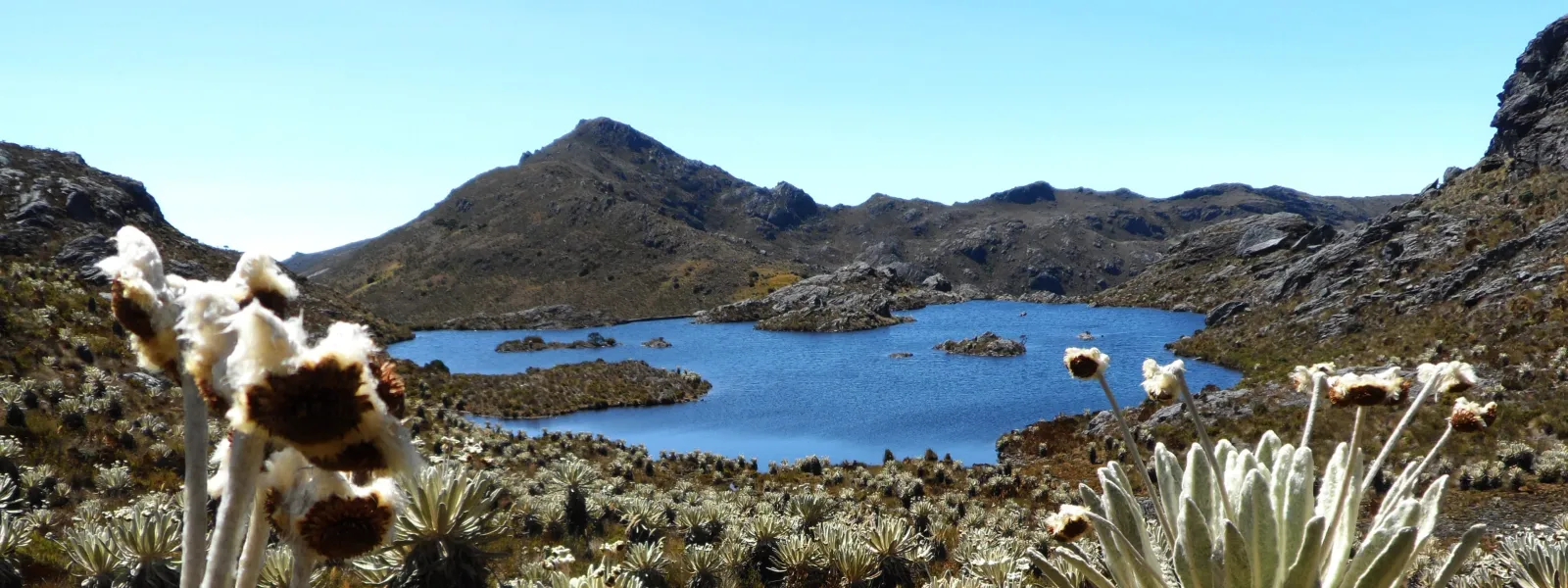
In the Andean region, high-mountain ecosystems known as páramos capture water from the fog and supply it to the lowlands. One such ecosystem is the Santurbán páramo, which provides fresh water to more than two million people in Colombia.
Santurbán, like the other páramos on the continent, also captures large amounts of carbon, making it a key ally in mitigating the climate crisis. It is also a refuge for hundreds of endangered species, including the iconic spectacled bear.
The land in and around the páramo contains gold and other minerals. This has put Santurbán in the spotlight of the multinational mining industry, which for decades has sought to establish large-scale projects in the ecosystem that threaten to degrade it.
The Committee for the Defense of Water and the Santurbán Páramo—a coalition of environmental advocates—has thwarted these ongoing attempts, with support from AIDA and other civil society organizations.
Background
The Santurbán páramo is located in the heart of the Eastern Cordillera of the Colombian Andes, in the departments of Santander and Norte de Santander, at an elevation ranging from 2,200 to 4,290 meters above sea level.
It covers an area of 129,743 hectares and is home to 57 lakes. It serves as a habitat for 457 plant species and 293 species of vertebrate fauna.
There are mineral deposits in Santurbán, primarily gold, but also silver and copper. This explains the region’s mining tradition, particularly in the part of the páramo located in Santander, in the province of Soto Norte. The communities in the area have built their culture and identity around gold mining, which is mainly artisanal and small-scale.
But since the 1990s, the gold deposits in the páramo have also attracted foreign mining conglomerates seeking to develop large-scale projects. This has raised concerns among the population that relies on the Santurbán water sources, who have mobilized in defense of water, their land, and life.
Although national and international regulations prohibit mining in páramos, the Colombian government has granted mining concessions to transnational corporations in Santurbán.
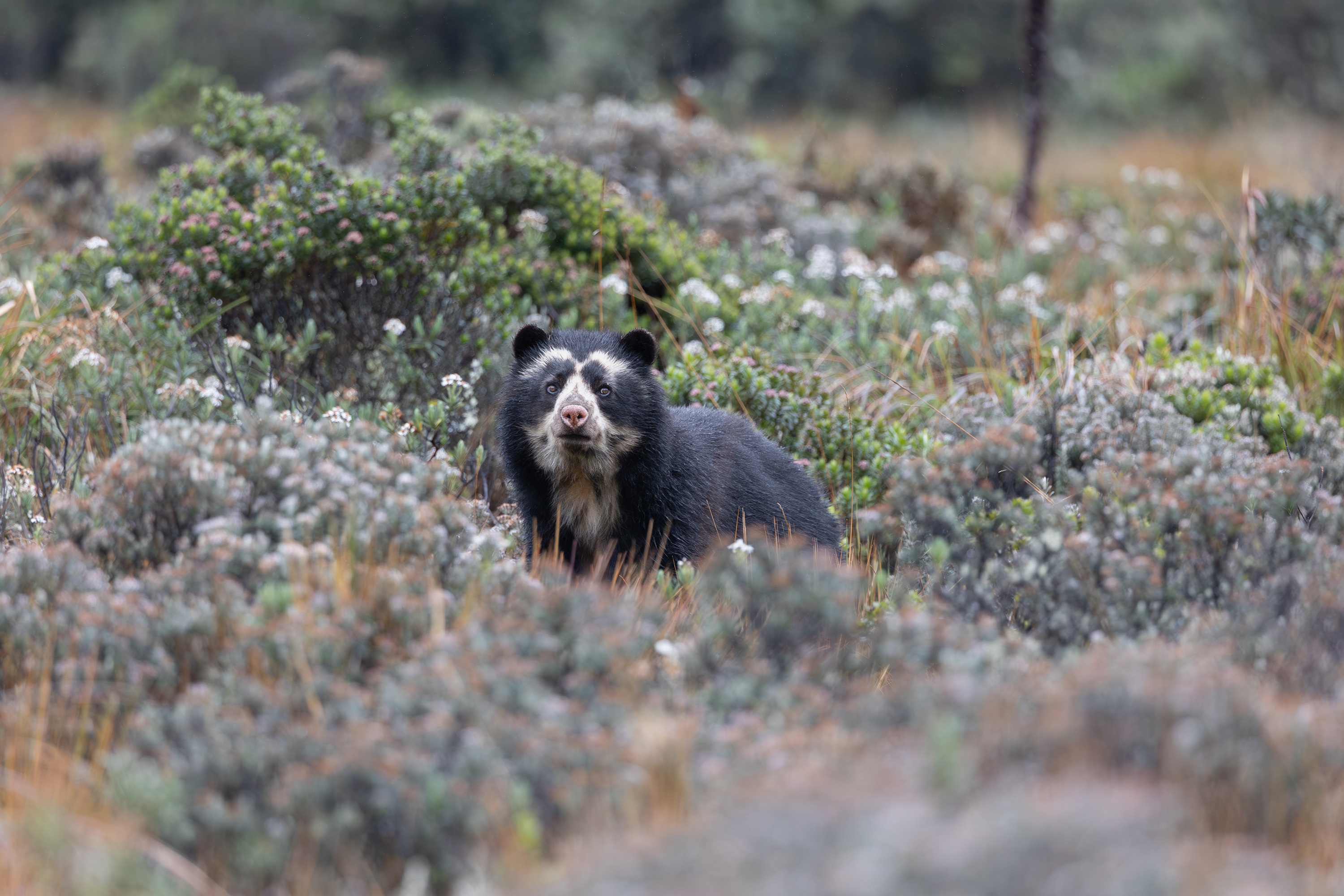
Photo: Keishpixl / Pixabay.
The long struggle to protect the páramo
One of the companies that sought to develop large-scale mining in Santurbán is Eco Oro Minerals Corp.—formerly Greystar Resources—a Canadian company that intended to establish the Angostura open-pit mine there to extract gold and silver. Between 1994 and 1995, the company acquired its mining titles and conducted exploration. And in 2010, it applied for a mining permit.
That was the year AIDA became involved in defending the ecosystem, supporting the Committee for the Defense of Water and the Santurbán Páramo. Our legal work helped convince the Colombian government to deny the mine an environmental permit in May 2011.
In January 2013, the government designated a portion of the páramo (11,700 hectares) as a Regional Natural Park. That year—together with the committee and partner organizations—we carried out a campaign and advocacy efforts to urge the government to recognize the entire Santurbán area as a páramo ecosystem through a delimitation based on scientific criteria. In December 2014, the Ministry of the Environment established a delimitation that protected 76% of the páramo (98,954 hectares).
Furthermore, as a result of a litigation supported by AIDA, in February 2016, Colombia’s highest court reaffirmed that mining in páramos is prohibited.
That same year, in December, the International Finance Corporation (IFC), the World Bank Group’s private sector arm, decided to divest from Eco Oro Minerals. This achievement was the result of a process that began in 2012, when the committee—advised and supported by AIDA and international partner organizations—filed a complaint before an independent accountability mechanism, which concluded that the IFC’s investment in the Angostura project failed to take into account the project’s social and environmental impacts, thereby contradicting the financial institution’s internal policies.
Also in 2016, Eco Oro Minerals filed an arbitration claim against the Colombian government with the International Centre for Settlement of Investment Disputes (ICSID), arguing that it had been adversely affected by government decisions aimed at protecting the country’s páramos, including the delimitation of Santurbán.
In 2017, the Constitutional Court invalidated the delimitation because the affected communities were not consulted. The high court ordered that a participatory delimitation be carried out.
And that year, a new threat to Santurbán emerged when the Canadian multinational Aris Mining applied for an environmental permit for Soto Norte, a gold mining project located near the páramo. Following citizen protests and technical objections, in October 2020, the National Environmental Licensing Authority shelved the project.
Photo: Aztlec.
Current situation
In March 2025, the Colombian government designated the western flank of the Santurbán massif as a temporary renewable natural resource reserve area, delimiting and protecting an area of 75,344.65 hectares. This resulted in a two-year suspension of the Soto Norte project. However, Aris Mining's contract to formalize Calimineros' small-scale mining activities through the purchase and processing of mineralized material remains in effect.
In addition, the Canadian mining company continues to move the project forward. In September 2025, it released its prefeasibility study, revising the mine’s original design.
Meanwhile, members of the Committee for the Defense of Water and the Santurbán Páramo face threats and stigmatization because of their work. In March 2025, UN Special Rapporteurs and the Working Group on Business and Human Rights denounced these incidents in communications sent to the governments of Colombia, Canada, and the United Arab Emirates, as well as to the companies Aris Mining and MDC Industry Holding Company LLC, the former co-owner of the Soto Norte project.
Regarding the arbitration claim filed by Eco Oro Minerals, in July 2024, ICSID ruled in favor of the Colombian government and rejected the Canadian company’s claim for USD 1.1 billion in compensation.
Concerning the delimitation of Santurbán, in July 2026, the Ministry of the Environment issued a resolution introducing the concept of "progressive delimitation." On that basis, the government proposes to progressively demarcate the páramo, covering 29,199 hectares across 19 municipalities—those where the participatory agreements required by the Constitutional Court in its 2017 ruling have already been finalized. It also proposes two measures on the creation and expansion of reserves to restrict mining in the ecosystem.
Learn more about the impacts of mining on the páramos of Latin America (in Spanish).
Partners:
Related projects
IACHR urges Peru to protect 14 additional people affected by pollution in La Oroya
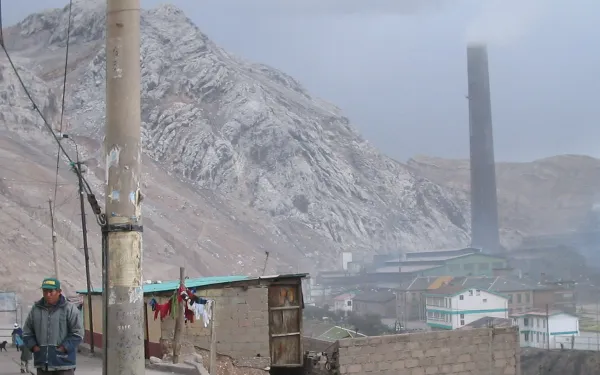
The Commission did so by extending the precautionary measures originally granted in 2007. The decision arrives six years after it was requested, and confirms the severity of health deterioration in La Oroya. It also confirms that the life and integrity of affected people are at risk, and require urgent and adequate protection by the Peruvian State. Washington DC, USA. The Inter-American Commission on Human Rights (IACHR) urged the Peruvian government to protect the life and integrity of 14 additional people affected by toxic pollution in the city of La Oroya. They join the 65 people already protected by precautionary measures granted by the international body in 2007. The decision reaffirms that the health of the beneficiaries has deteriorated severely, they continue to be at risk, and their government must provide prompt and adequate care. The Interamerican Association of Environmental Defense (AIDA)—together with the Asociación Pro Derechos Humanos (APRODEH), the Centro de Derechos Humanos y Ambiente (CEDHA) and Earthjustice—represents the victims who benefit from the precautionary measures before the Commission. We express our satisfaction with the Commission’s decision, which arrives six years after it was originally requested. A metal smelter operated by Doe Run Peru is the source of the heavy metal contamination in La Oroya. The Commission has established that the lack of integral and specialized medical care, as well as health deterioration over time, could affect the right to life and integrity of the beneficiaries of the precautionary measures, which now number 79. “The extension of the precautionary measures reaffirms the urgent and serious situation threatening the life and integrity of the people of La Oroya. We hope the State fully complies with the provisions in favor of all of the beneficiaries, providing them with adequate and specialized medical attention,” said María José Veramendi Villa, AIDA attorney. The Commission’s decision states that the government of Peru must conduct the medical evaluations necessary to determine the levels of lead, cadmium and arsenic in the blood of affected people, in order to provide them with appropriate medical care, in accordance with international standards. The government must also report on the actions taken to investigate the facts that led to the extension of the precautionary measures, in order to avoid their repetition. Our case on the human rights violations committed against the affected people remains pending the final decision of the Commission. AIDA and APRODEH expect that the report will hold the Peruvian government responsible for said violations.
Read more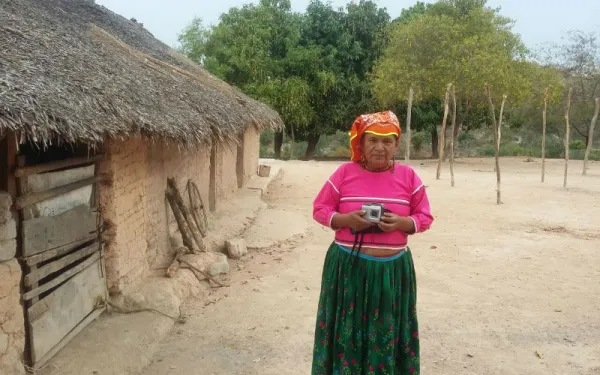
Marcelina, the voice of the San Pedro Mezquital
At 57 years old, Marcelina López has a very active life. She sews her own clothes, makes beautiful jewelry, raises chickens, sells eggs, cooks, is a midwife and organizes the women of her community; all while faithfully conserving her traditions, those of the indigenous Wixárika people. Perhaps what distinguishes Marcelina most is her great character and conviction, qualities that have rooted her deeply in a grand cause: the defense of Mexico’s San Pedro Mezquital River, threatened by Las Cruces Dam. At AIDA we’re deeply moved by the commitment of Marcelina and honored to be part of the same fight. Just like her, we want the San Pedro—the only free-flowing river left in the western Sierra Madre Mountains—to run free. We’ve been inspired to know more about this incredible woman, and to understand why she does what she does. Colors of the Sierra Madre Marcelina lives in a house made of mud, built high upon a hill, in a small community in the state of Nayarit. To go anywhere from her house, she has to walk an hour and a half through the mountains. She travels everywhere on foot. There’s no doubt Marcelina is a special woman. Everyone in the region knows her; she is unmistakable. She has the look of a wise indigenous woman, the bright colors of her clothes equal only to those of the beaded necklaces she wears each day. She herself colors the beads; they are a symbol of the importance of her culture. She often wears a head wrap, which gives her an air of certainty and connotes rich ancestral wisdom. Though her profound presence can seem serious, Marcelina is a very sweet and loving person. Over the years, Marcelina has not been immune to violence and machismo, in its many expressions. She has had to fight to have her voice recognized in agrarian assemblies, and, for a time, had to provide for her children as a single mother. Her people, the Wixárika—known in Spanish as the Huicholes—are a majority group in Nayarit. They live in the western central region of Mexico, in the Sierra Madre Mountains; they primarily populate the states of Nayarit and Jalisco, but are also represented in parts of Durange and Zacatecas. In their native tongue, belonging to the family of Uto-Aztecan languages, wixárika means “people.” For the Wixárika, ceremonies are fundamental to the social wellbeing of the group. It is through these sacred rituals that they ask for rain, give thanks for the harvest, bless its fruits, and pray for health and vitality. Their ceremonies are, in short, where they celebrate and honor life. For Marcelina and her people, the San Pedro Mezquital is the pillar of social, spiritual and economic life. Its waters support their subsistence farming and fishing activities; 14 of their sacred sites are spread along its length. What’s more, the river feeds Marismas Nacionales, one of the most important mangrove forests in all of Mexico. This important source of life and culture is threatened now by the construction of Las Cruces Dam, a project being proposed by the Federal Electricity Commission. The megaproject would be located 65 kilometers north of the city of Tepic. It would have a capacity of 240 MW, divided between three generators. The dam would effectively stand as a 188-meter high concrete curtain. Speaking for the river In her excellent Spanish, accented with clear links to her indigenous roots, Marcelina has on various occasions stood before microphones and cameras to defend the San Pedro River and the lives of those who depend upon it. “The construction of this dam will have a severe impact on our culture and our spirituality. Many of our ceremonial centers are located along this river,” she explained. “It is there that we leave our offerings of thanks; it there that we pray, not just for our own community, but for the entire world.” When asked why she decided to be part of the movement in defense of the San Pedro, Marcelina responded: “As an indigenous women, I’m hurt that they want to take away our river. What’s happening? Why didn’t they consult us indigenous people [about the project]? Where is their respect? Why are we treated this way?” Her questions remain unanswered. The construction of Las Cruces will have negative impacts on the land, its natural resources, and the way of life of the indigenous people who depend upon it. The dam will flood 4,506 hectares; the town of San Blasito, sections of communal land, at least 14 sacred sites, and one ceremonial center, will all be under water. “We are the roots of Mexico,” Marcelina concluded. “It’s not easy for us to change our sacred sites; they’re like a tree rooted deep in the soil. Down these rivers run the blood of our gods.”
Read more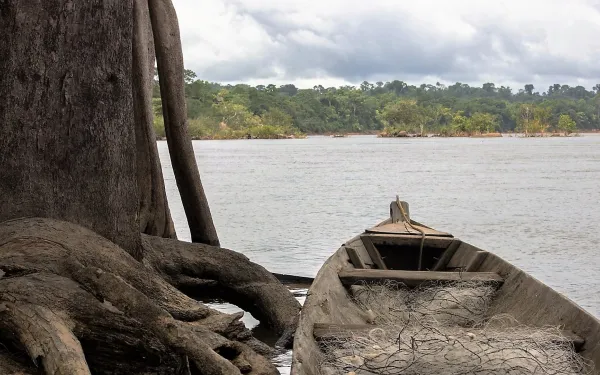
Brazil inaugurated Belo Monte: There’s nothing to celebrate!
The Brazilian government grandly inaugurated the Belo Monte Dam, which sits on the Xingu River in the midst of the Amazon. As an organization that legally represents affected indigenous and riverine communities, as well as residents of the city of Altamira, we consider there to be no reason to celebrate. The dam has been built by overlooking national and international standards that safeguard the environment and human rights. GET TO KNOW MORE about this injustice through the words of our senior attorney María José Veramendi Villa!
Read more