
Project
Alberto Peña Kay
Protecting the Santurban páramo from mining's damage
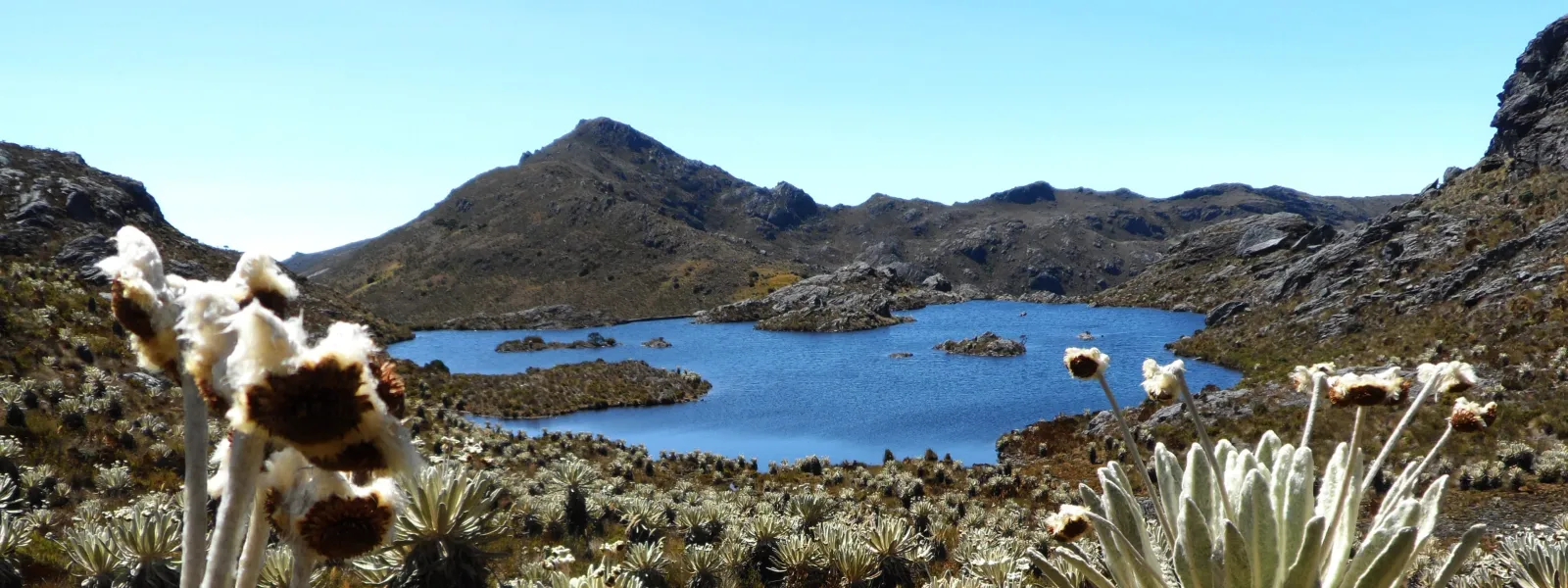
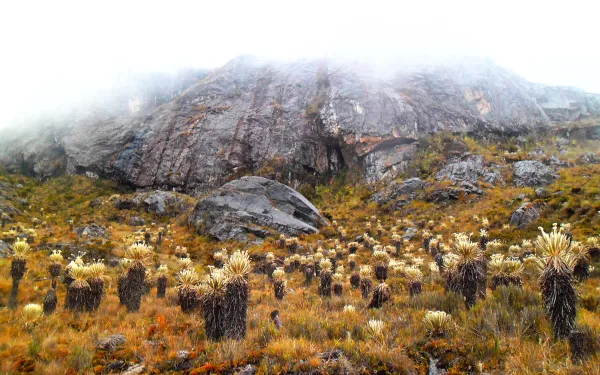
In the Andean region, high-mountain ecosystems known as páramos capture water from the fog and supply it to the lowlands. One such ecosystem is the Santurbán páramo, which provides fresh water to more than two million people in Colombia.
Santurbán, like the other páramos on the continent, also captures large amounts of carbon, making it a key ally in mitigating the climate crisis. It is also a refuge for hundreds of endangered species, including the iconic spectacled bear.
The land in and around the páramo contains gold and other minerals. This has put Santurbán in the spotlight of the multinational mining industry, which for decades has sought to establish large-scale projects in the ecosystem that threaten to degrade it.
The Committee for the Defense of Water and the Santurbán Páramo—a coalition of environmental advocates—has thwarted these ongoing attempts, with support from AIDA and other civil society organizations.
Background
The Santurbán páramo is located in the heart of the Eastern Cordillera of the Colombian Andes, in the departments of Santander and Norte de Santander, at an elevation ranging from 2,200 to 4,290 meters above sea level.
It covers an area of 129,743 hectares and is home to 57 lakes. It serves as a habitat for 457 plant species and 293 species of vertebrate fauna.
There are mineral deposits in Santurbán, primarily gold, but also silver and copper. This explains the region’s mining tradition, particularly in the part of the páramo located in Santander, in the province of Soto Norte. The communities in the area have built their culture and identity around gold mining, which is mainly artisanal and small-scale.
But since the 1990s, the gold deposits in the páramo have also attracted foreign mining conglomerates seeking to develop large-scale projects. This has raised concerns among the population that relies on the Santurbán water sources, who have mobilized in defense of water, their land, and life.
Although national and international regulations prohibit mining in páramos, the Colombian government has granted mining concessions to transnational corporations in Santurbán.
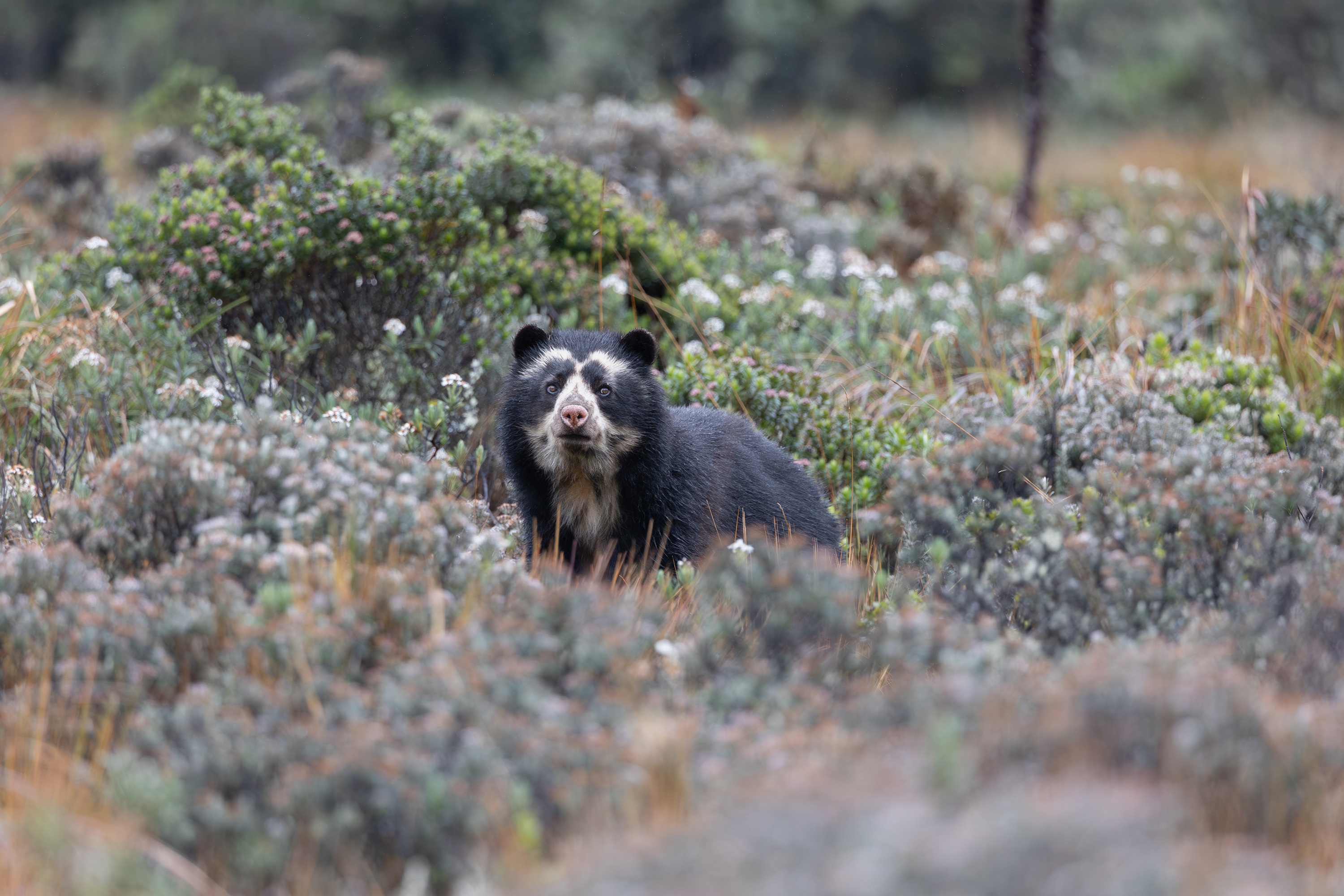
Photo: Keishpixl / Pixabay.
The long struggle to protect the páramo
One of the companies that sought to develop large-scale mining in Santurbán is Eco Oro Minerals Corp.—formerly Greystar Resources—a Canadian company that intended to establish the Angostura open-pit mine there to extract gold and silver. Between 1994 and 1995, the company acquired its mining titles and conducted exploration. And in 2010, it applied for a mining permit.
That was the year AIDA became involved in defending the ecosystem, supporting the Committee for the Defense of Water and the Santurbán Páramo. Our legal work helped convince the Colombian government to deny the mine an environmental permit in May 2011.
In January 2013, the government designated a portion of the páramo (11,700 hectares) as a Regional Natural Park. That year—together with the committee and partner organizations—we carried out a campaign and advocacy efforts to urge the government to recognize the entire Santurbán area as a páramo ecosystem through a delimitation based on scientific criteria. In December 2014, the Ministry of the Environment established a delimitation that protected 76% of the páramo (98,954 hectares).
Furthermore, as a result of a litigation supported by AIDA, in February 2016, Colombia’s highest court reaffirmed that mining in páramos is prohibited.
That same year, in December, the International Finance Corporation (IFC), the World Bank Group’s private sector arm, decided to divest from Eco Oro Minerals. This achievement was the result of a process that began in 2012, when the committee—advised and supported by AIDA and international partner organizations—filed a complaint before an independent accountability mechanism, which concluded that the IFC’s investment in the Angostura project failed to take into account the project’s social and environmental impacts, thereby contradicting the financial institution’s internal policies.
Also in 2016, Eco Oro Minerals filed an arbitration claim against the Colombian government with the International Centre for Settlement of Investment Disputes (ICSID), arguing that it had been adversely affected by government decisions aimed at protecting the country’s páramos, including the delimitation of Santurbán.
In 2017, the Constitutional Court invalidated the delimitation because the affected communities were not consulted. The high court ordered that a participatory delimitation be carried out.
And that year, a new threat to Santurbán emerged when the Canadian multinational Aris Mining applied for an environmental permit for Soto Norte, a gold mining project located near the páramo. Following citizen protests and technical objections, in October 2020, the National Environmental Licensing Authority shelved the project.
Photo: Aztlec.
Current situation
In March 2025, the Colombian government designated the western flank of the Santurbán massif as a temporary renewable natural resource reserve area, delimiting and protecting an area of 75,344.65 hectares. This resulted in a two-year suspension of the Soto Norte project. However, Aris Mining's contract to formalize Calimineros' small-scale mining activities through the purchase and processing of mineralized material remains in effect.
In addition, the Canadian mining company continues to move the project forward. In September 2025, it released its prefeasibility study, revising the mine’s original design.
Meanwhile, members of the Committee for the Defense of Water and the Santurbán Páramo face threats and stigmatization because of their work. In March 2025, UN Special Rapporteurs and the Working Group on Business and Human Rights denounced these incidents in communications sent to the governments of Colombia, Canada, and the United Arab Emirates, as well as to the companies Aris Mining and MDC Industry Holding Company LLC, the former co-owner of the Soto Norte project.
Regarding the arbitration claim filed by Eco Oro Minerals, in July 2024, ICSID ruled in favor of the Colombian government and rejected the Canadian company’s claim for USD 1.1 billion in compensation.
Concerning the delimitation of Santurbán, in July 2026, the Ministry of the Environment issued a resolution introducing the concept of "progressive delimitation." On that basis, the government proposes to progressively demarcate the páramo, covering 29,199 hectares across 19 municipalities—those where the participatory agreements required by the Constitutional Court in its 2017 ruling have already been finalized. It also proposes two measures on the creation and expansion of reserves to restrict mining in the ecosystem.
Learn more about the impacts of mining on the páramos of Latin America (in Spanish).
Partners:
Related projects
Colombian court bans oil, gas and mining operations in paramos
Colombia’s Constitutional Court has ruled against a controversial legal loophole permitting oil, gas and mining operations in the country’s paramos - high altitude eco-systems. Colombia’s paramos are the most extensive on earth and supply more than 70% of the country’s population with water, according to the Bogota-based Alexander von Humboldt Institute. The loophole is in a June 2015 law implementing Colombia’s “National Development Plan 2014-2018.” The law prohibits “agricultural activities” and the “exploration for or exploitation of non-renewable natural resources”, as well as the “construction of oil and gas refineries”, in paramos, but then states that mining operations which have contracts and environmental licenses dating to before 9 February 2010, or oil and gas operations with contracts and licenses dating to before 16 June 2011, are exempted. This was challenged by four congressmen, three lawyers and 12 representatives from a coalition called the Cumbre Agraria, Campesina, Étnica y Popular, who argued that the loophole violates rights to the environment, water and Colombia’s patrimony because of the impacts oil, gas and mining operations would have on the paramos’ vegetation, soil, sub-soil and water. On 8 February the court’s ruling, which was made public on Thursday, deemed three paragraphs relating to the loophole in the June 2015 law “unconstitutional” - or “inexequible” in Colombian Spanish. “Paramo eco-systems exist in very few places in the world and Colombia is privileged to be the country that has the highest number of paramos globally,” senator Alberto Castillo, one of the plaintiffs, told the Guardian.“Because of this, we believe that the absolute ban on natural resource extraction that we now have in Colombia is of great magnitude and should delight the world.” “It’s a ruling that will make history,” says senator Iván Cepeda, another plaintiff. “The court went further than we hoped, without a doubt. [Mining and oil and gas operations in the paramos] is a serious abuse against natural resources, especially the fundamental right to water.” “The court’s ruling is a major advance in environmental matters,” Viviana Tacha, another plaintiff and an adviser to senator Castillo, told the Guardian. “No doubt about it, it’s a victory for the entire country and for the communities resisting the imposition of a development model based on natural resource extraction which fails to take into account the environment and local people. Given global concern about climate change, the protection of the paramos by the court is one of the most important recent decisions on environmental matters.” According to a communiqué by the court issued on 8 February, the offending three paragraphs “ignore the constitutional duty to protect areas of special ecological importance [and] put at risk the fundamental rights of the entire population to access good quality water.” The communiqué says the court arrived at its decision after “analyzing the state’s power to intervene in the economy and its duty to protect areas of special ecological importance, weighing them up against economic freedom and the rights of individuals to exploit the state’s resources.” It concluded that, in this case, the former overrides the latter for three reasons: 1) the current lack of protection of paramos; 2) the “fundamental role” played by paramos in regulating the country’s drinking water cycle and providing cheap, high-quality water to 70% of the population; and 3) the particular vulnerability of paramos due to their “relative isolation”, low temperatures and low oxygen levels. Carlos Lozano-Acosta, from the Interamerican Association for Environmental Defense (AIDA), told the Guardian the court’s decision is “historic” and sets an example to other countries in the Andean region where there are paramos. “The paramos [in Colombia] are vital because they’re a source of drinking water for 70% of Colombians, strategic reserves of biodiversity, and carbon sequesters,” he says. “The court acknowledged all that in the sentence.” An ‘amicus brief’ sent to the court and written by Lozano-Acosta together with the Bogota-based NGO Asociación Ambiente y Sociedad (AAS) argued that the loophole contradicts Colombia’s constitution, international environmental law, and international treaties signed by Colombia, such as the United Nations Framework Convention on Climate Change, the Convention on Biological Diversity and the Ramsar Convention. NGO Dejusticia, also based in Bogota, is another civil society organisation which sent an ‘amicus brief’ to the court, calling the crucial three paragraphs an “unjustified regression” because mining, oil and gas operations in paramos had already been banned back in 2010 and 2011. “Before [the June 2015] law, such activities were prohibited,” the NGO stated in an interview in Colombian newspaper El Espectador. “This means that the current National Development Plan is a step backwards in protecting the paramos.” That “regression” was acknowledged by the court in its ruling, which described the offending paragraphs as “reestablishing the possibility” of oil, gas and mining operations in paramos despite them being “prohibited by Laws 1382 in 2010 and 1450 in 2011.” “The paramos are key ecosystems and water sources which are insufficiently protected,” Dejusticia’s Diana Rodriguez told the Guardian. “We’re thrilled the court has taken a stand for their immediate protection and sent a message that economic development cannot sacrifice respect for the environment.” Just how big an impact the court’s ruling could or will have isn’t immediately clear. How many oil, gas or mining operations stand to be affected? In its interview with El Espectador, Dejusticia stated that the National Mining Agency (NMA) believes approximately 500 mining titles covering over 140,000 hectares of the paramos have been issued, while senator Castillo told the Guardian the NMA states there are currently 448 mining titles in paramos - 347 of which have environmental licences. “Taking into account that this is official information, which the court itself recognized, other sources have no basis in speaking of lower numbers,” Castillo says. “The three companies who have most mining titles in the paramos are AngloGold Ashanti Colombia S.A., Eco Oro Minerales Corp and Leytah Colombia.” Senator Cepeda told the Guardian the 448 mining titles include 26 of Colombia’s 32 paramos and extend for more than 118,000 hectares, “more than 11,000 of which are [also] affected by four oil and gas projects.” According to one media report, Environment Minister Gabriel Vallejo has said he will request a clarification from the court and believes that “other sources” say up to 522 titles could be affected. “There are very different estimates about the number of titles and even more confusion related to how many have environmental licenses,” says Dejusticia’s Rodriguez. “Indeed, some mining companies didn’t wait for the [court’s] full ruling [and] already announced that they will forego their mining concessions in the paramos.” Another question is how far Colombia’s paramos extend. Although the court’s ruling cites a 2011 Humboldt Institute publication stating there are 1.9 million hectares in Colombia, Humboldt’s Carlos Sarmiento told the Guardian their current estimate is 2.9 million hectares - 2.5% of national territory. That 2.9 million figure is also used by the Ministry of Environment and Sustainable Development. But what if the government disagrees that certain areas really are paramos, and permits oil, gas or mining operations to take place there anyway? As the court’s ruling acknowledges, the paragraph immediately preceding the three offending paragraphs in the June 2015 law states that ultimately it is the Environment Ministry which, according to its own “technical, environmental, social and economic criteria”, is responsible for “delimiting” paramos. And that paragraph wasn’t challenged by the plaintiffs. “The court’s decision could result ineffective given that that part of Article 174 wasn’t part of the lawsuit and Congress has given the Environment Ministry the function of delimiting paramos, and in doing that the Ministry isn’t subject to the scientific criteria established by the Alexander von Humboldt Institute,” the court ruled. “It would be possible for the Ministry to not delimit paramos, or exclude from delimitation, certain areas where mining or hydrocarbon operations are happening or are going to happen. That would nullify [our] decision because such operations could take place in areas that have been scientifically classified as paramos, but the Ministry has excluded.” AIDA’s Lozano-Acosta says that risk exists “without a doubt.” “But the court also said that the government mustn’t ignore the Humboldt Institute’s technical recommendations,” he told the Guardian. For senator Castillo, that risk only exists “if the Ministry doesn’t closely read the court’s sentence or doesn’t want to comply with it.” “In the court’s words, delimitation must ensure the maximum degree of protection,” Castillo says. “This is absolutely crucial given that what the government wants to do is reduce to the utmost the extent of the paramos via a very restricted delimitation process and thereby pave the way for exploitation. Dispute will continue in the delimitation of each paramo, but we will continue in their defence and the court’s sentence gives us many tools to do so.” According to senator Cepeda, the court’s ruling will lead to a “profound discussion about how paramos are delimited.” He told the Guardian that the plaintiffs, together with environmental organisations and others, intend to ensure the government abides by the court’s ruling and “will seek the suspension of more than 400 mining titles.” AAS’s Margarita Florez says the court’s ruling cannot be appealed. “The decision is a constitutional sentence and therefore it is binding on the government and must be complied with,” she told the Guardian. “There is no way to appeal it.” The court’s ruling cites various definitions of paramos, including “the highest and most exposed regions of tropical Andean mountain ranges” and “neotropical mountains between the upper limit of forest vegetation (3,200-3,800 ms above sea level) and the lower limit of perpetual snows (4,400-4,700 ms) in Andean systems.” It quotes the Humboldt Institute describing them as “key sites that “harvest” rainfall and snow water stored in glacial lakes, bogs, marshes and peat soils” that are “held for a relatively long period of time and released constantly and slowly.”
Read moreBrazil mega-dam ‘disaster’ for tribes as it nears completion
Belo Monte hydroelectric plant is flouting agreements to protect indigenous communities as its builder seeks approval to start generating power, environmental lawyers have warned. The US$11 billion dam on an Amazonian tributary – set to be the third-largest producer of hydropower globally – has met just 30% of the social and environmental conditions set by government, said AIDA Americas. “It is clear that the conditions necessary for Norte Energia, the consortium in charge of the project, to receive the licence are not in place,” said a statement on Monday. The dam is 70% built. Brazil’s largest infrastructure work will divert the Xingu River, forcing the relocation of 2,000 families as pristine rainforest is flooded. Federal prosecutors have recommended the relocation be suspended. Environmental groups have petitioned the Inter-American Commission on Human Rights to oppose the government’s granting of a license, on the basis it could destroy tribes’ means of survival. “Giving free rein of operation to the dam at this time would mean completely shutting down the options available to avoid major social and humanitarian disasters in the region,” said Sandy Faidherb of SDDH, a local activist group which filed on behalf of the affected communities. The government has said Belo Monte will supply Brazilians with clean energy and develop the country’s economy. The dam has been designed to minimise damage, and will flood less than half – 478 sq km in 28-mini reservoirs – of the area affected by the Brazil’s largest Itaipu hydroplant, the Guardian reported. That comes at a cost to power output, as not shutting off entirely the river means the plant will work on average at barely 40% of its 11,200 MW capacity. The Xingu River basin in Para state is a “living symbol of Brazil’s cultural and biological diversity,” home to 25,000 indigenous people from 40 ethnic groups,according to Amazon Watch. Wildlife populations have drastically declined at another dam, Balbina, built in the 1980s, after a 3,500-island archipelago slashed habitat to roam and exposed the likes of tortoises and gamebirds to wind and wildfires.
Read more
Losing Berta Cáceres: the breaking point in the struggle against impunity
It’s been one month since the assassination of Berta Cáceres, tireless defender of the environment and human rights in Honduras. Her murder quickly gave birth to a global movement calling for justice. It has become a turning point for human rights and environmental defenders and, especially, in the fight for the rights of women and indigenous peoples in Latin America. For that, March 3 will never be forgotten. There aren’t enough words to describe adequately who Berta was, and who she will always be in our memories. She represented what it meant to be a woman, an indigenous person, an environmentalist, a mother, a daughter, a sister, a colleague and a friend. As the BBC said, she’s the Honduran woman who twisted the arm of China and the World Bank; her work led to the withdrawal of their funding for Agua Zarca, the dam Berta was so passionately fighting against. For all that she did, and all that she was, the loss of Berta has severely hurt us all. In a matter of hours, her death caused an unprecedented global outcry. Thousands of organizations, institutions and individuals from around the world have been speaking out against her murder and loudly demanding justice. Point of no return Ironically, the night Berta was murdered, I watched Selma, a film that narrates a key moment in the Civil Rights Movement. Fifty-one years ago, on March 7, 1965, a voting rights march that left Selma toward Montgomery, Alabama was violently repressed. That senseless act of violence became the catalyst for the passage of the Voting Rights Act, which aimed to overcome legal barriers that prevented African Americans from exercising their right to vote. Similarly, we must make Berta’s murder the catalyst that breaks the systematic impunity of cases like this, in Honduras and throughout the region. It’s time to ensure that our indignation, and the demands for justice and investigation made by countless organizations and international authorities, will have an impact. Like Alabama in 1965, Honduras has endured years of systematic human rights violations, linked in large part to infrastructure and mining projects. Just days before her death, Berta and COPINH, the organization she directed, reported threats received for their opposition to the Agua Zarca Dam project. It had been years since the Inter-American Commission on Human Rights first granted precautionary measures to protect Berta’s life, with which the Honduran government failed to comply. After Berta’s murder, on March 5, due to the gravity of the situation the Commission authorized precautionary measures to protect Berta’s family, her colleagues at COPINH, and Gustavo Castro, the sole witness to her death. But days later Néstor García, another member of COPINH, was also assassinated. Then, Gustavo was prevented from returning home to Mexico despite cooperating with the investigation, and despite his ability to continue doing so under the Treaty of Judicial Cooperation between Mexico and Honduras. Members of COPINH and Berta’s relatives continue to report new threats. Many international officials—including the Organization of American States, the Office of the United Nations High Commissioner for Human Rights, UN special rapporteurs, and members of the Congresses of the United States, Costa Rica and the European Union—have also demanded an objective investigation into Berta’s murder. Despite public outcry, little progress has been made thus far, evidenced by the lack of response from the Honduran government and conclusions drawn by an international observation mission. The situation in Honduras reflects the alarming reality of human rights in Latin America, particularly there and in Brazil, Colombia, Mexico and Peru. Multiple reports conclude that the region is under fire. Those who fight to protect their rights, their land, and the environment are risking their freedom, their integrity, and even their lives. Irresponsible businesses and financing Berta’s murder also underscores the responsibility of companies, financial institutions and others involved in the Agua Zarca Dam project. The project’s outright threats to the environment and human rights have been reported for many years. Those threats are the reason the World Bank and Sinohydro pulled out of the project in 2014. The FMO of Holland and Finn Fund of Finland also withdrew their support on March 16, after the assassination of Néstor García. The Central American Bank for Economic Integration (CABEI) froze funding to the project a few days ago. The situation surrounding Berta’s death clearly demonstrates one reason large dams are a bad energy solution—they create severe socioenvironmental impacts. Honduras, like the rest of Latin America, has options to produce energy in ways that truly promote development and reduce poverty. It’s time to learn from the mistakes of the past and move into the 21st century by implementing sustainable energy alternatives. The shocking loss of Berta, the uncertain situation of Gustavo and members of COPINH… it all reminds me of the words of a friend, a journalist who was driven out of his own country for what he wrote. He said that extractive industries, including large dams, are the banana republics of our century. I think he’s right. In Latin America, the uncontrolled extraction of natural resources today is akin to the reign of dictators in the 1960s. We cannot afford to let this happen again. This time will be different. What happened in Honduras must be a watershed moment—a time, finally, to enforce international standards for human rights and the environment. In Berta’s case, there must be an immediate, effective and independent investigation. It should acknowledge the responsibility of the companies involved with Agua Zarca. The hydroelectric project itself should be analyzed to find suitable alternatives. Honduras and all the States involved should implement corrective measures to ensure that what happened to Berta and Néstor does not happen again. Those of us who worked with Berta, who share her passions and principles, will continue to demand justice. Every country in the Americas needs and deserves it.
Read more