
Project
Alberto Peña Kay
Protecting the Santurban páramo from mining's damage
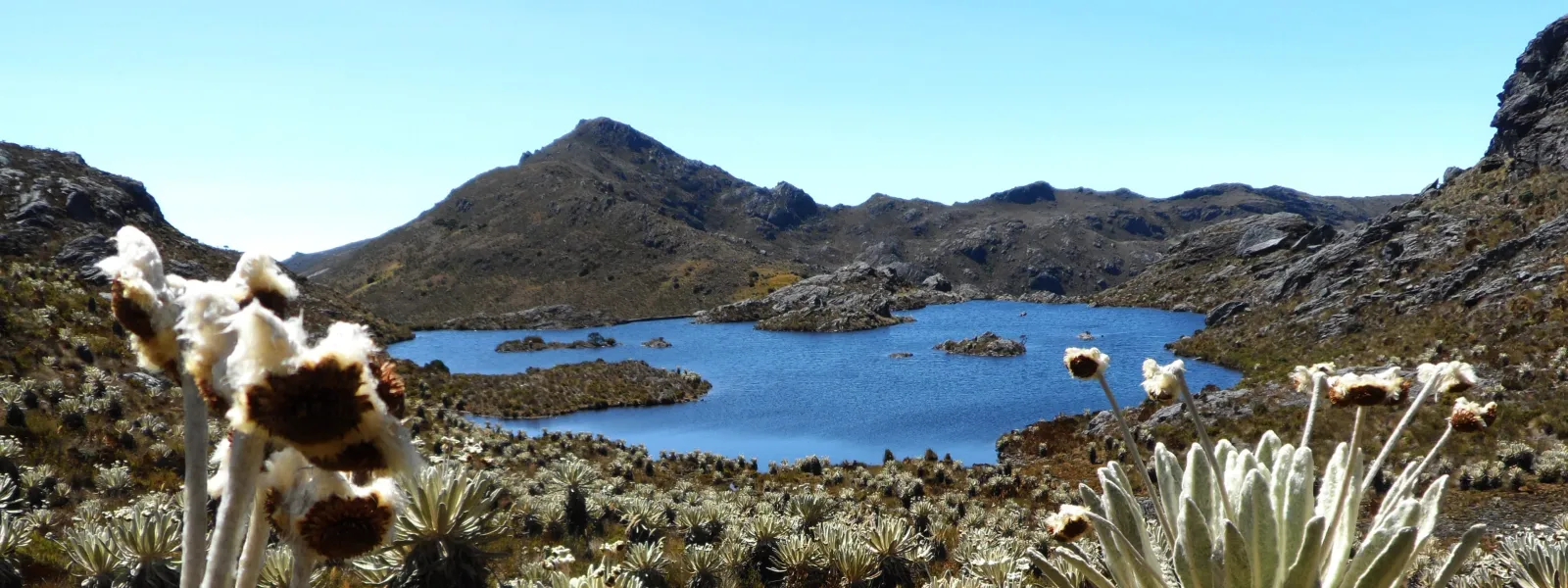
In the Andean region, high-mountain ecosystems known as páramos capture water from the fog and supply it to the lowlands. One such ecosystem is the Santurbán páramo, which provides fresh water to more than two million people in Colombia.
Santurbán, like the other páramos on the continent, also captures large amounts of carbon, making it a key ally in mitigating the climate crisis. It is also a refuge for hundreds of endangered species, including the iconic spectacled bear.
The land in and around the páramo contains gold and other minerals. This has put Santurbán in the spotlight of the multinational mining industry, which for decades has sought to establish large-scale projects in the ecosystem that threaten to degrade it.
The Committee for the Defense of Water and the Santurbán Páramo—a coalition of environmental advocates—has thwarted these ongoing attempts, with support from AIDA and other civil society organizations.
Background
The Santurbán páramo is located in the heart of the Eastern Cordillera of the Colombian Andes, in the departments of Santander and Norte de Santander, at an elevation ranging from 2,200 to 4,290 meters above sea level.
It covers an area of 129,743 hectares and is home to 57 lakes. It serves as a habitat for 457 plant species and 293 species of vertebrate fauna.
There are mineral deposits in Santurbán, primarily gold, but also silver and copper. This explains the region’s mining tradition, particularly in the part of the páramo located in Santander, in the province of Soto Norte. The communities in the area have built their culture and identity around gold mining, which is mainly artisanal and small-scale.
But since the 1990s, the gold deposits in the páramo have also attracted foreign mining conglomerates seeking to develop large-scale projects. This has raised concerns among the population that relies on the Santurbán water sources, who have mobilized in defense of water, their land, and life.
Although national and international regulations prohibit mining in páramos, the Colombian government has granted mining concessions to transnational corporations in Santurbán.
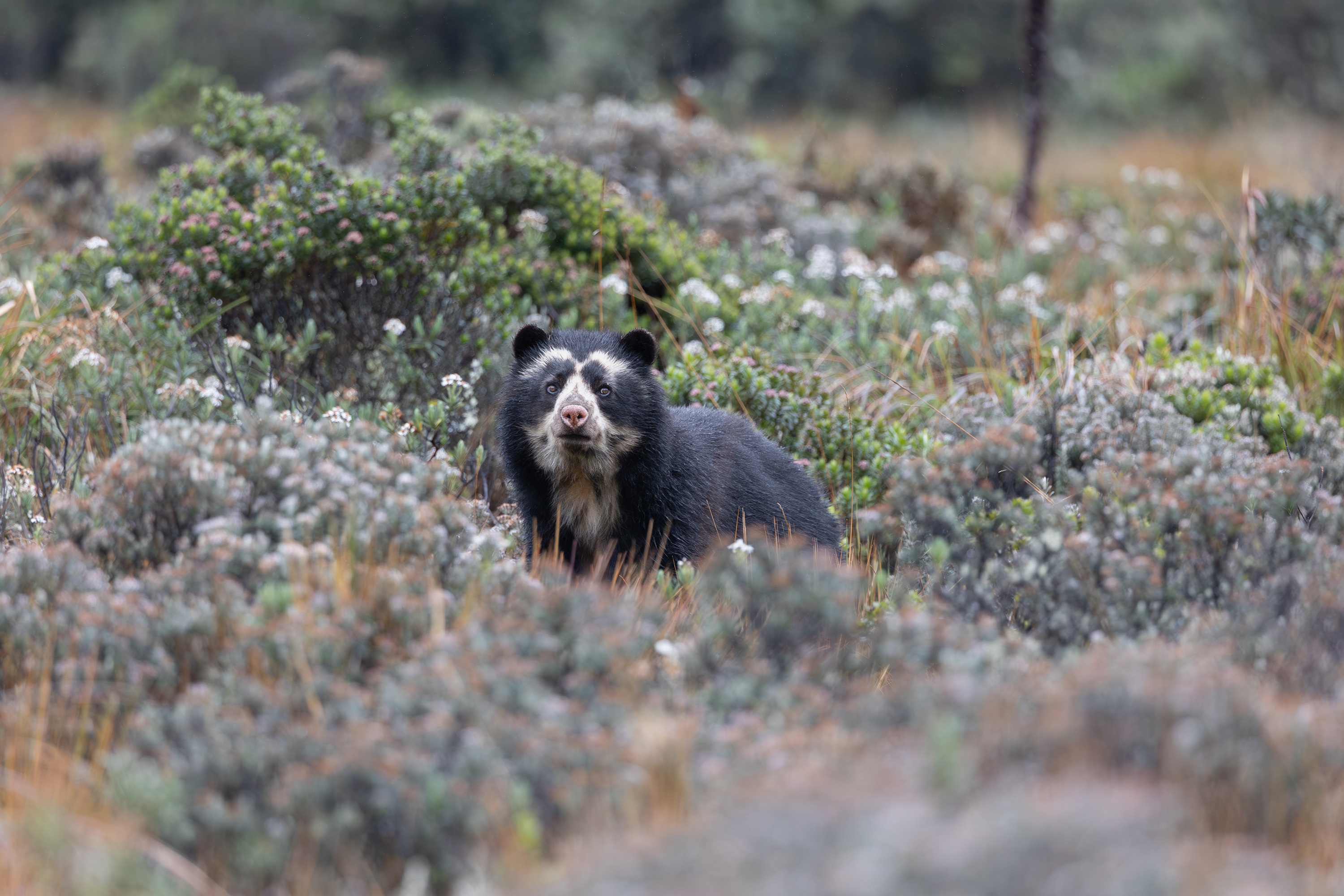
Photo: Keishpixl / Pixabay.
The long struggle to protect the páramo
One of the companies that sought to develop large-scale mining in Santurbán is Eco Oro Minerals Corp.—formerly Greystar Resources—a Canadian company that intended to establish the Angostura open-pit mine there to extract gold and silver. Between 1994 and 1995, the company acquired its mining titles and conducted exploration. And in 2010, it applied for a mining permit.
That was the year AIDA became involved in defending the ecosystem, supporting the Committee for the Defense of Water and the Santurbán Páramo. Our legal work helped convince the Colombian government to deny the mine an environmental permit in May 2011.
In January 2013, the government designated a portion of the páramo (11,700 hectares) as a Regional Natural Park. That year—together with the committee and partner organizations—we carried out a campaign and advocacy efforts to urge the government to recognize the entire Santurbán area as a páramo ecosystem through a delimitation based on scientific criteria. In December 2014, the Ministry of the Environment established a delimitation that protected 76% of the páramo (98,954 hectares).
Furthermore, as a result of a litigation supported by AIDA, in February 2016, Colombia’s highest court reaffirmed that mining in páramos is prohibited.
That same year, in December, the International Finance Corporation (IFC), the World Bank Group’s private sector arm, decided to divest from Eco Oro Minerals. This achievement was the result of a process that began in 2012, when the committee—advised and supported by AIDA and international partner organizations—filed a complaint before an independent accountability mechanism, which concluded that the IFC’s investment in the Angostura project failed to take into account the project’s social and environmental impacts, thereby contradicting the financial institution’s internal policies.
Also in 2016, Eco Oro Minerals filed an arbitration claim against the Colombian government with the International Centre for Settlement of Investment Disputes (ICSID), arguing that it had been adversely affected by government decisions aimed at protecting the country’s páramos, including the delimitation of Santurbán.
In 2017, the Constitutional Court invalidated the delimitation because the affected communities were not consulted. The high court ordered that a participatory delimitation be carried out.
And that year, a new threat to Santurbán emerged when the Canadian multinational Aris Mining applied for an environmental permit for Soto Norte, a gold mining project located near the páramo. Following citizen protests and technical objections, in October 2020, the National Environmental Licensing Authority shelved the project.
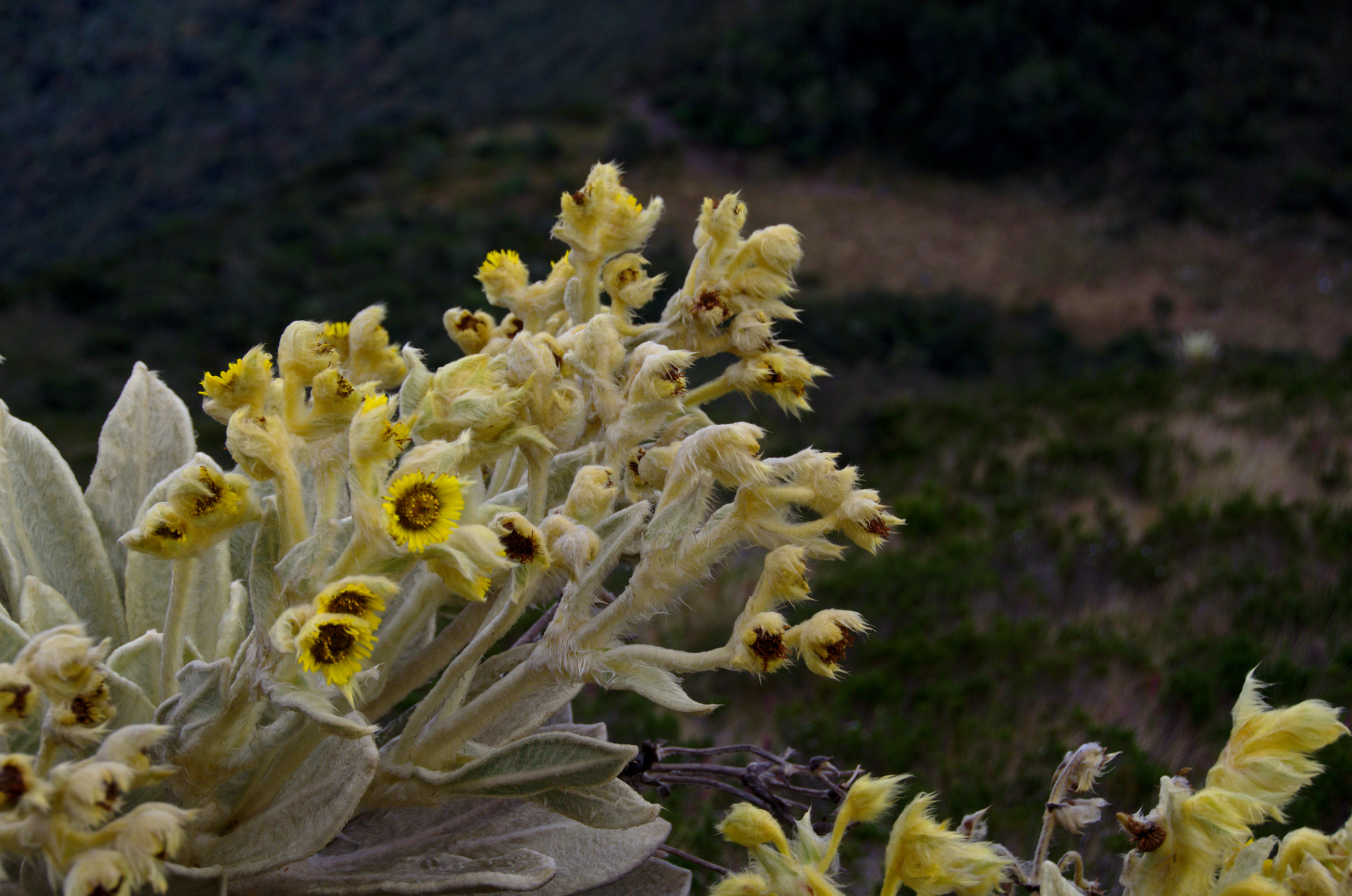
Photo: Aztlec.
Current situation
In March 2025, the Colombian government designated the western flank of the Santurbán massif as a temporary renewable natural resource reserve area, delimiting and protecting an area of 75,344.65 hectares. This resulted in a two-year suspension of the Soto Norte project. However, Aris Mining's contract to formalize Calimineros' small-scale mining activities through the purchase and processing of mineralized material remains in effect.
In addition, the Canadian mining company continues to move the project forward. In September 2025, it released its prefeasibility study, revising the mine’s original design.
Meanwhile, members of the Committee for the Defense of Water and the Santurbán Páramo face threats and stigmatization because of their work. In March 2025, UN Special Rapporteurs and the Working Group on Business and Human Rights denounced these incidents in communications sent to the governments of Colombia, Canada, and the United Arab Emirates, as well as to the companies Aris Mining and MDC Industry Holding Company LLC, the former co-owner of the Soto Norte project.
Regarding the arbitration claim filed by Eco Oro Minerals, in July 2024, ICSID ruled in favor of the Colombian government and rejected the Canadian company’s claim for USD 1.1 billion in compensation.
Concerning the delimitation of Santurbán, in July 2026, the Ministry of the Environment issued a resolution introducing the concept of "progressive delimitation." On that basis, the government proposes to progressively demarcate the páramo, covering 29,199 hectares across 19 municipalities—those where the participatory agreements required by the Constitutional Court in its 2017 ruling have already been finalized. It also proposes two measures on the creation and expansion of reserves to restrict mining in the ecosystem.
Learn more about the impacts of mining on the páramos of Latin America (in Spanish).
Partners:
Related projects

Victims of business-influenced human rights violations face obstacles to achieving justice
The asymmetry of power between companies and affected people, among other factors, makes access to justice difficult in the Americas. Organizations provided detailed information on this problem during a hearing before the Inter-American Commission on Human Rights (IACHR). Santiago, Chile. Across the Americas, people and communities whose human rights have been violated by business activities face obstacles when exercising their right to access justice and achieve reparations for damages done. They are often confronted with criminalization, harassment and threats. Among other reasons, the situation reflects the reality that, in many countries, businesses are not properly controlled and may even receive government incentives to continue operations, despite the fact that they violate human rights. In a hearing before the Inter-American Commission on Human Rights, civil society organizations[1] demonstrated, through emblematic cases in South America, that this is a problem that happens throughout the region. One of these cases occurred in Brazil on November 5, 2015, when a dam of mining waste owned by Samarco burst in the Río Doce basin. The rupture caused the worst socio-environmental disaster in the country’s history: tons of toxic sludge moved down the river, destroying homes, schools, crops and livestock on its slow and deadly path to the Atlantic Ocean. The government and the company have since closed the case on the disaster, after reaching a settlement in which the victims were not even able to participate. “I lived a quiet life. I never would have expected to see what I saw, to witness families destroyed. We need employment, but we need it responsibly, not in a way that ends up killing people. We are asking for help now, because we can’t let these companies do whatever they want. If this Commission can help us, we would be grateful,” said Antonio Gregorio Santos, a victim of the case in Brazil. In the hearing, the organizations also referred to the case of Southern Peaks Mining, financed by the British-owned Barclays Bank, in which they are accused of breaching agreements with Mala communities in Peru. Here the victims found persecution and illegal detention in their search for justice. “We have identified various barriers to access to justice for the victims. Some—such as socio-economic, cultural and linguistic barriers—were identified in the Commission’s Report on indigenous peoples, afro-descendent communities and extractive industries,” said María José Veramendi Villa, attorney at the Inter-American Association for Environmental Defense, one of the petitioning organizations at the hearing. “Many obstacles are exacerbated in disputes with companies due, in large part, to the sharp asymmetry that exists in this relationship, expressed, for example, in political interference on the part of companies and in the lack of adequate independent safeguards for judicial power in many countries of South America.” The organizations requested that the Commission remind the States of their obligation to guarantee access to justice for those who have suffered human rights violations at the hands of companies, and urge them to strengthen domestic legislation accordingly. They also requested that the Commission develop binding standards regarding business and human rights in its rulings on petitions and individual cases—as well as in its thematic reports—in particular with regards to access to redress mechanisms. Finally, they highlighted the work of those who defend human rights against the actions of companies and reminded States that they must provide adequate conditions for their operation. [1] Interamerican Association for Environmental Defense (AIDA, regional); Centro de Información sobre Empresas y Derechos Humanos (CIEDH, regional); Centro por la Justicia y el Derecho Internacional (CEJIL, regional); Centro de Derechos Humanos y Ambiente (CEDHA, Argentina); Campanha para parar o poder das Corporações (Brasil); Justiça Global (Brasil); Pensamiento y Acción Social (PAS, Colombia); Project on Organizing, Development, Education, and Research (PODER, México); Fundar Centro de Análisis e Investigación A.C (México); Proyecto de Derechos Económicos, Sociales y Culturales (ProDESC, México); Centro Mexicano de Derecho Ambiental (CEMDA, México); Código DH - Comité de Defensa Integral de Derechos Humanos Gobixha (México) y Asociación Pro Derechos Humanos (Perú).
Read more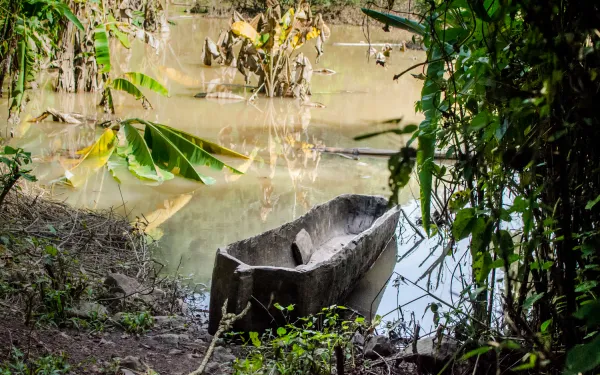
Letter to the President of Panama on Test Flooding in Barro Blanco Hydroelectric Project
AIDA and other organizations sent an open letter to Juan Carlos Varela Rodríguez, President of the Republic of Panama. We urge him to protect life and integrity of the Ngäbe communities and to immediately suspend the test flooding in the Barro Blanco Hydroelectric Power Plant Project which is violating their rights and placing them at risk of irreparable harm. Dear President Varela, We, the undersigned organizations, are deeply concerned for the personal safety and security of the Ngäbe communities, affected by the Barro Blanco Hydroelectric Power Plant Project. On May 22, Panama’s National Authority for Public Services (ASEP) announced in a press release that Barro Blanco’s reservoir would be filled[1], starting on May 24. ASEP’s press release indicated that the water would rise up to 103 meters above sea level by June 21, 2016. According to a fact finding mission led by the United Nations Development Programme in 2012[2], the Ngäbe communities of Kiad, Nuevo Palomar and Quebrada Caña will be directly impacted by the flooding. This report indicates that 6 hectares + 9816.86 m² of their lands, including 6 houses and a petroglyph located in the community of Quebrada Caña, will be under water. Furthermore, we have received reports from affected community members that floodwaters of the Barro Blanco reservoir have reached the limits of the Bakama Area (Corregimiento) of the Ngäbe-Bugle Territory (Comarca) in Western Panama. At this point, the Ngäbe communities of Quebrada Plata, Quebrada Caña, Kiad and Nuevo Palomar - as well as the Mama Tatda ceremonial sites - could be seriously harmed by the so-called test flooding this week, much ahead of the estimated June 21 peak level announced by ASEP. Contrary to what is stated by ASEP press release, and as confirmed by Milton Henriquez, Minister of Internal Affairs[3], the affected communities were not notified or consulted prior to the test flooding. This goes against international human rights standards, which stipulate that indigenous peoples have the right to consultation and free, prior and informed consent. As derived from the right to property protected under the American Convention on Human Rights and other agreements, indigenous peoples have also the right to adequate housing, to possess, use, and “freely enjoy” their traditional lands and territories, and to “not be forcibly removed” from them[4]. The Ngäbe communities are determined to stay and defend their sacred lands, regardless of the ongoing flooding. We urge you to protect their life and their integrity and to immediately suspend the test flooding which is violating their rights and placing them at risk of irreparable harm. [1] http://www.panamaamerica.com.pa/economia/asep-anuncia-el-inicio-del-periodo-de-prueba-de-central-hidroelectrica-barro-blanco-1027251 [2] http://canal-empresarias.ciudaddelsaber.org/wp-content/uploads/2015/09/0-informe-mision-verficacion-final-20121219.pdf [3] http://www.mingob.gob.pa/mingob/inside.php?artID=3246 [4] For more information, please see http://www.ciel.org/Publications/BarroBlanco_Appeal_18Feb2014.pdf
Read more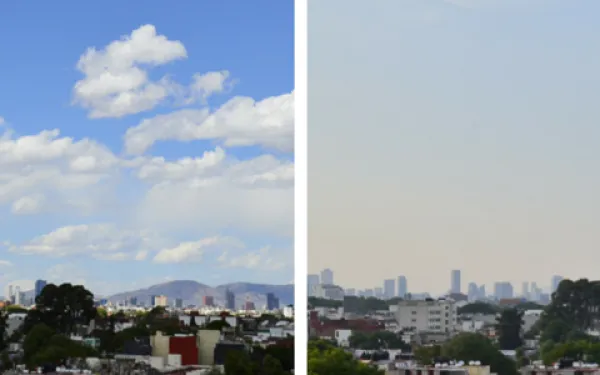
Mexico City: Air Pollution Points to Climate Solutions
By Laura Yaniz, AIDA social media manager (originally published in Animal Político) Smog causes continuous environmental alerts in Mexico City. But did you know a legal framework exists to combat the pollutants that cause it? Mexico City nearly entered into a state of emergency due to its poor air quality. The government almost closed gas stations, ordered half the city’s vehicles off the road, suspended classes, and closed government offices. If air pollution had spiked any higher, they’d have closed restaurants and reduced certain industrial operations by 60 percent. The cause of the crisis—which hasn’t been this bad in 14 years—is ground-level ozone. Along with black carbon, methane, and hydrofluorocarbons (HFCs), ground-level ozone is a short-lived climate pollutant (SLCP). The Intergovernmental Panel on Climate Change estimates that, overall, SLCPs are responsible for more than 30 percent of global warming, although recent studies calculate that it may actually be closer to 40 or 45 percent. The good news is, they have a relatively short lifespan in the atmosphere, ranging from a few days to a few decades. Reducing these emissions, in Mexico and wherever they’re found around the world, presents an immediate opportunity to achieve near-term mitigation of climate change while improving air quality and human health. Close to Extreme Mexico City’s Metropolitan Index of Air Quality measures the chemical components of air in whole numbers that are easy to understand. On May 5, ozone reached 192 points (the equivalent of 0.1929 parts per million). When the Index reaches around 200 points ozone can damage skin. The city was only 8 points away! The city has spent several months in and out of Phase 1 of the Environmental Contingency Plan, whose most famous measure is the “Doble Hoy No Circula” program, which restricts vehicles from circulating two days a week, instead of the habitual one. If Phase 2 had been declared, the extreme measure would have divided vehicles by odd and even plates and declared that half of them could not be driven. About Ground-level Ozone Ozone is a gas that exists in two different layers of the atmosphere. In the stratosphere (the highest layer), ozone absorbs ultraviolet radiation and protects us from the sun’s dangerous rays. In the troposphere (the lower atmosphere, from the ground to about 10 or 15 kilometers up), ozone acts as a greenhouse gas that contributes to global warming, harms human health, and affects the growth of agricultural crops. Tropospheric ozone is not directly emitted by any one source. Instead, it’s the result of a chemical reaction between the sun and “precursor gases,” which can occur naturally or be produced by humans. The most important precursor gases in regards to ozone are carbon monoxide (CO), nitrogen oxides (NOx) and volatile organic compounds (VOCs). The latter cover a wide range of substances, including methane, and are primarily generated at gas stations, in homes, and through the chemical industry. Ozone remains in the atmosphere only a few days or weeks, a very short time compared to other gases, such as carbon dioxide, that linger in the atmosphere for centuries, even millennia. This is precisely what makes the mitigation of ozone an interesting opportunity: if we reduce emissions, we could see the climatic and health benefits in the near and medium term. Ozone contributes to such illnesses as bronchitis, emphysema, and asthma, and can scar lung tissue permanently. According to a report from the Climate & Clean Air Coalition, an international organization dedicated to reducing short-lived climate pollutants, tropospheric ozone is responsible for roughly 150 million premature deaths each year. It also affects global food security by reducing the ability of food to absorb carbon dioxide, which reduces yield. AIDA Supports Efforts to Control Short-Lived Climate Pollutants To help governments reduce SLCP emissions, AIDA attorneys have created a report, Controlando los contaminantes climáticos de vida corta: Una oportunidad para mejorar la calidad del aire y mitigar el cambio climático. El caso de Brasil, Chile, y México (Controlling Short-lived Climate Pollutants: An Opportunity to Improve Air Quality and Mitigate Climate Change: Brazil, Chile, and Mexico). We are distributing it to key decision-makers in government agencies to help them understand the urgency of the problem and the opportunities their legal frameworks provide to facilitate emission reductions. The report reviews policies, laws, and programs on air quality and climate change as they relate to SLCPs in Brazil, Chile, and Mexico. Of the three countries studied, Mexico is currently the only one that has incorporated these contaminants into its climate change policy. The government recently went a step further by including SLCP reductions in its Intended Nationally Determined Contributions (INDCs)—the commitments made under the United Nations Framework Convention on Climate Change. As the AIDA report notes, it’s not enough to recognize the importance of reducing SLCP emissions. Greater efforts must be made to reduce emissions. Countries must improve pollutant-monitoring systems, provide sufficient funding for emission-reduction programs, and create systems to evaluate progress. Developing strategies to identify principle emissions sources and to reduce emissions should be a near-term priority not just for the Mexican capital, but also for all the governments of Latin America. AIDA is committed to supporting policymakers with legal expertise that can speed improvements in air quality, human health, and climate change.
Read more