
Project
Alberto Peña Kay
Protecting the Santurban páramo from mining's damage
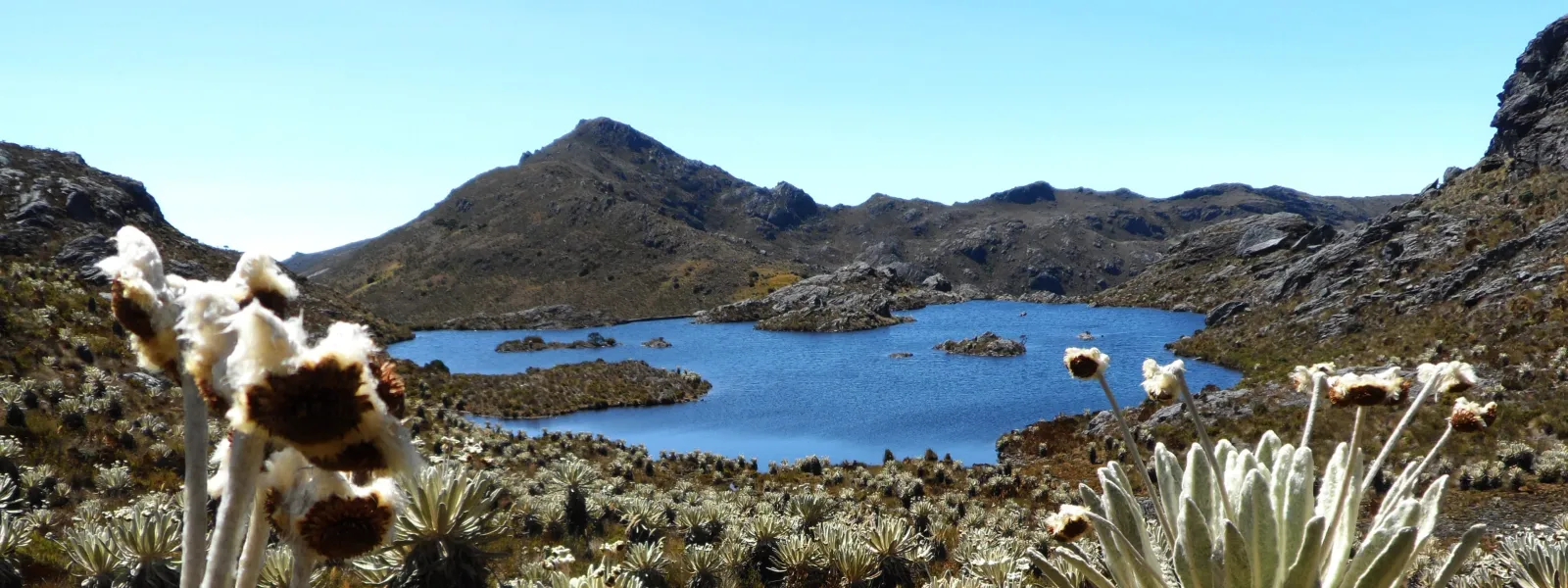
In the Andean region, high-mountain ecosystems known as páramos capture water from the fog and supply it to the lowlands. One such ecosystem is the Santurbán páramo, which provides fresh water to more than two million people in Colombia.
Santurbán, like the other páramos on the continent, also captures large amounts of carbon, making it a key ally in mitigating the climate crisis. It is also a refuge for hundreds of endangered species, including the iconic spectacled bear.
The land in and around the páramo contains gold and other minerals. This has put Santurbán in the spotlight of the multinational mining industry, which for decades has sought to establish large-scale projects in the ecosystem that threaten to degrade it.
The Committee for the Defense of Water and the Santurbán Páramo—a coalition of environmental advocates—has thwarted these ongoing attempts, with support from AIDA and other civil society organizations.
Background
The Santurbán páramo is located in the heart of the Eastern Cordillera of the Colombian Andes, in the departments of Santander and Norte de Santander, at an elevation ranging from 2,200 to 4,290 meters above sea level.
It covers an area of 129,743 hectares and is home to 57 lakes. It serves as a habitat for 457 plant species and 293 species of vertebrate fauna.
There are mineral deposits in Santurbán, primarily gold, but also silver and copper. This explains the region’s mining tradition, particularly in the part of the páramo located in Santander, in the province of Soto Norte. The communities in the area have built their culture and identity around gold mining, which is mainly artisanal and small-scale.
But since the 1990s, the gold deposits in the páramo have also attracted foreign mining conglomerates seeking to develop large-scale projects. This has raised concerns among the population that relies on the Santurbán water sources, who have mobilized in defense of water, their land, and life.
Although national and international regulations prohibit mining in páramos, the Colombian government has granted mining concessions to transnational corporations in Santurbán.
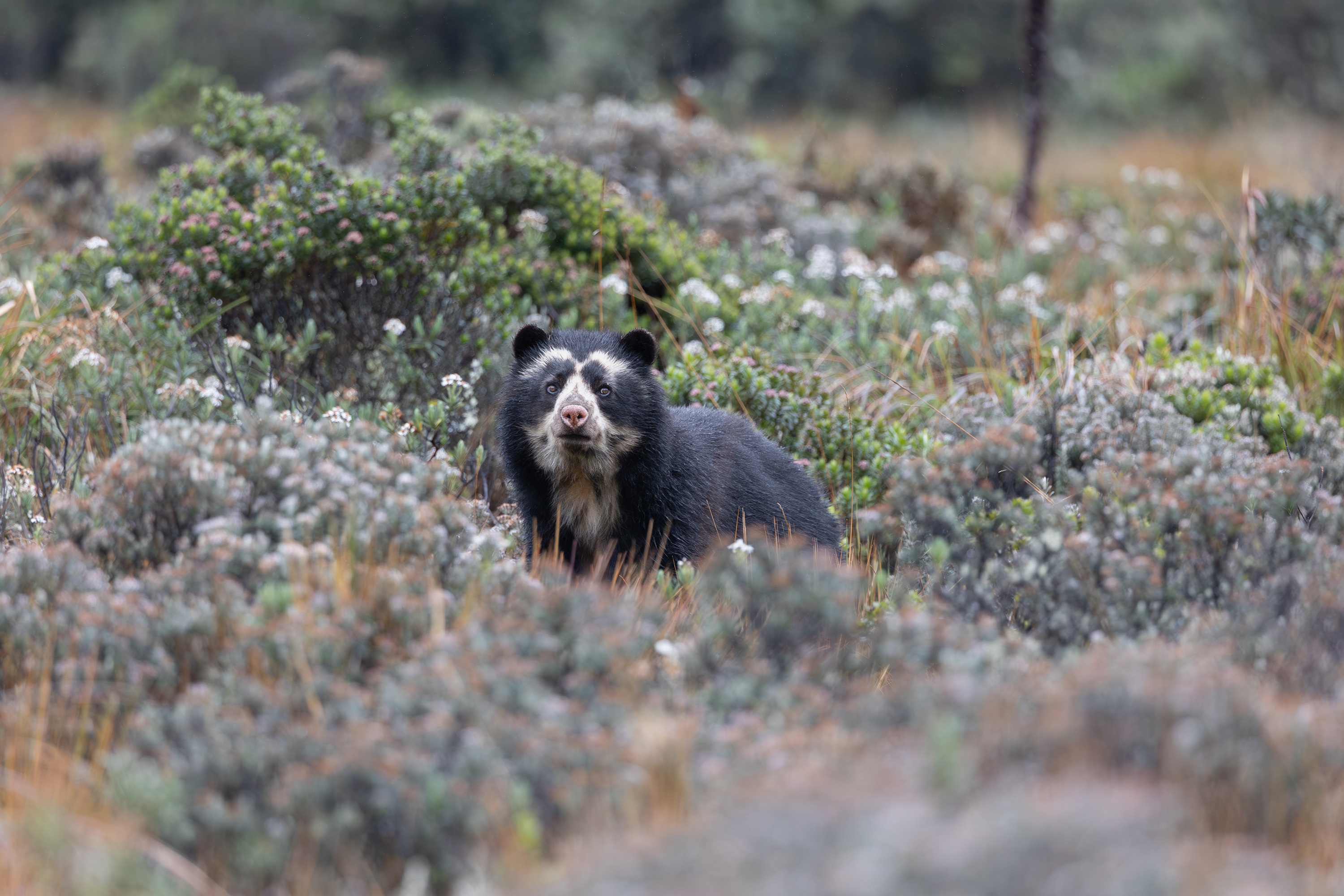
Photo: Keishpixl / Pixabay.
The long struggle to protect the páramo
One of the companies that sought to develop large-scale mining in Santurbán is Eco Oro Minerals Corp.—formerly Greystar Resources—a Canadian company that intended to establish the Angostura open-pit mine there to extract gold and silver. Between 1994 and 1995, the company acquired its mining titles and conducted exploration. And in 2010, it applied for a mining permit.
That was the year AIDA became involved in defending the ecosystem, supporting the Committee for the Defense of Water and the Santurbán Páramo. Our legal work helped convince the Colombian government to deny the mine an environmental permit in May 2011.
In January 2013, the government designated a portion of the páramo (11,700 hectares) as a Regional Natural Park. That year—together with the committee and partner organizations—we carried out a campaign and advocacy efforts to urge the government to recognize the entire Santurbán area as a páramo ecosystem through a delimitation based on scientific criteria. In December 2014, the Ministry of the Environment established a delimitation that protected 76% of the páramo (98,954 hectares).
Furthermore, as a result of a litigation supported by AIDA, in February 2016, Colombia’s highest court reaffirmed that mining in páramos is prohibited.
That same year, in December, the International Finance Corporation (IFC), the World Bank Group’s private sector arm, decided to divest from Eco Oro Minerals. This achievement was the result of a process that began in 2012, when the committee—advised and supported by AIDA and international partner organizations—filed a complaint before an independent accountability mechanism, which concluded that the IFC’s investment in the Angostura project failed to take into account the project’s social and environmental impacts, thereby contradicting the financial institution’s internal policies.
Also in 2016, Eco Oro Minerals filed an arbitration claim against the Colombian government with the International Centre for Settlement of Investment Disputes (ICSID), arguing that it had been adversely affected by government decisions aimed at protecting the country’s páramos, including the delimitation of Santurbán.
In 2017, the Constitutional Court invalidated the delimitation because the affected communities were not consulted. The high court ordered that a participatory delimitation be carried out.
And that year, a new threat to Santurbán emerged when the Canadian multinational Aris Mining applied for an environmental permit for Soto Norte, a gold mining project located near the páramo. Following citizen protests and technical objections, in October 2020, the National Environmental Licensing Authority shelved the project.
Photo: Aztlec.
Current situation
In March 2025, the Colombian government designated the western flank of the Santurbán massif as a temporary renewable natural resource reserve area, delimiting and protecting an area of 75,344.65 hectares. This resulted in a two-year suspension of the Soto Norte project. However, Aris Mining's contract to formalize Calimineros' small-scale mining activities through the purchase and processing of mineralized material remains in effect.
In addition, the Canadian mining company continues to move the project forward. In September 2025, it released its prefeasibility study, revising the mine’s original design.
Meanwhile, members of the Committee for the Defense of Water and the Santurbán Páramo face threats and stigmatization because of their work. In March 2025, UN Special Rapporteurs and the Working Group on Business and Human Rights denounced these incidents in communications sent to the governments of Colombia, Canada, and the United Arab Emirates, as well as to the companies Aris Mining and MDC Industry Holding Company LLC, the former co-owner of the Soto Norte project.
Regarding the arbitration claim filed by Eco Oro Minerals, in July 2024, ICSID ruled in favor of the Colombian government and rejected the Canadian company’s claim for USD 1.1 billion in compensation.
Concerning the delimitation of Santurbán, in July 2026, the Ministry of the Environment issued a resolution introducing the concept of "progressive delimitation." On that basis, the government proposes to progressively demarcate the páramo, covering 29,199 hectares across 19 municipalities—those where the participatory agreements required by the Constitutional Court in its 2017 ruling have already been finalized. It also proposes two measures on the creation and expansion of reserves to restrict mining in the ecosystem.
Learn more about the impacts of mining on the páramos of Latin America (in Spanish).
Partners:
Related projects

NGOs call on Mexico to protect Mayan beekeeping communities affected by cultivation of genetically modified soy
The lives, health, and integrity of indigenous people are threatened by deforestation and contamination of their land caused by the cultivation of genetically modified soy. The situation is worsening because the Mexican government has not adopted effective measures to safeguard the rights of the communities. Washington D.C., United States. Traditional Mayan beekeeping communities, alongside a coalition of national and international organizations, have denounced the cultivation of genetically modified soy in the Mexican states of Campeche and Yucatan as damaging to the lives, health, and integrity of Mayan people, and to the health of the environment on which they depend. On July 25, a coalition of organizations filed a complaint on behalf of Mayan communities with the Inter-American Commission on Human Rights (IACHR). The organizations are the Interamerican Association for Environmental Defense (AIDA); Centro Mexicano de Derecho Ambiental (CEMDA); Greenpeace Mexico; Indignación, Promoción y Defensa de los Derechos Humanos, A.C. (Indignación); and Litiga, Organización de Litigio Estratégico de Derechos Humanos A.C. (Litiga OLE). The health and way of life of affected people—especially children, pregnant women, and the elderly—are at increasing risk from deforestation and the use, during planting, of the toxic herbicide glyphosate, which has been proved to contaminate soil and water sources. The crops have been genetically modified to resist the herbicide, which leads growers to apply it in ever greater concentrations. The organizations asked the Commission to grant precautionary measures, an action that would urge the Mexican government to implement actions that protect the rights of communities and effectively halt the cultivation of genetically modified soy in Campeche and Yucatan. Leydy Pech, representative of the Mayan communities, said, “planting genetically modified soy in Mayan territory violates our rights and our culture, which has been passed down to us from our ancestors. Because of the cultivation of soy on our lands, we have lost medicinal plants, vital trees for local bee populations, and animals, and have even seen some of our archeological sites destroyed. This harms our Mayan identity and denies us the possibility of passing that knowledge on to our children; traditional knowledge that allows us to preserve the forest and generate wellbeing for our communities.” AIDA attorney María José Veramendi added, “the Mexican government has an obligation to apply the precautionary principle and take into account the health risks that come with glyphosate and the cultivation of genetically modified soy. By not doing so, the State is failing to comply with its duty to prevent violations of the rights of Mayan communities, who are exposed to the herbicide as it drifts on wind and contaminates water sources.” The affected Mayan communities live in the municipalities of Hopelchén, in the state of Campeche, and Mérida, Tekax and Teabo, in the state of Yucatan. Permits to cultivate genetically modified soy also affect other communities in the seven states of the Mexican Republic. The communities were not consulted, nor did they give their free, prior, and informed consent, before Mexico granted the permits necessary for the cultivation of genetically modified soy in their territory. Under international law, indigenous communities must be guaranteed the right to prior consultation and informed consent. What’s more, the planting has seriously affected traditional beekeeping practices, part of Mayan culture and one of the main sources of livelihood for the communities. In addition to requesting precautionary measures, the organizations filed a petition with the IACHR denouncing violations of the rights to land and communal property, to life and personal integrity, to a healthy environment, to work, and to judicial protection and access to justice. According to the organizations, the State has not taken effective measures to safeguard the rights of affected populations despite their efforts to seek justice in domestic courts. “Although the Mayan communities obtained a favorable ruling from the Second Chamber of the Supreme Court last November, the judgment did not resolve all the human rights violations,” explained Francisco Xavier Martínez Esponda, legal representative of CEMDA. “During the consultation process, authorities neither respect traditional manners of decision-making nor meet Inter-American standards for upholding this fundamental right. Since the Mexican State could not rule on all instances of rights violations or order their rectification, we have now brought the case before the Inter-American Commission on Human Rights.”
Read more
Six Colombian Wetlands of Global Importance
Colombia is blessed with sweeping mountaintops, rich jungles, and rivers that curve through the heart of it all. The country has three mountain chains, fertile volcanic soils, half of the world’s páramos (high-altitude wetlands), an equatorial climate with constant high temperatures, the Amazon forest, and the waters of the Caribbean Sea and Pacific Ocean. Colombia is first in the world in diversity of birds and orchids, second in plants and amphibians, third in reptiles and palms, and fourth in mammals. To this I would add a long and diverse et cetera. Colombia’s environmental heritage includes six Wetlands of International Importance listed under the Ramsar Convention, a treaty that protects these environments. Their listing indicates their value not only for Colombia, but also for humanity. Where are they? Why are they important? What dangers do they face? 1. Ciénaga Grande de Santa Marta, Magdalena River Delta Estuary System. In the department of Magdalena, the Ciénaga Grande de Santa Marta is Colombia’s largest wetland lagoon. Here the fresh water of the Magdalena River mixes with the salty waters of the Caribbean Sea. It’s a refuge for both migratory and endemic birds. It’s in danger due to infrastructure projects including 27 kilometers of dikes, the burning and clearing of plant life, and drought. AIDA has worked with two Colombia universities to advocate for the protection of the Ciénaga before the Ramsar Secretriat. 2. Chingaza Wetlands System. The Chingaza system of lagoons and páramos hosts many species of endangered plants and animals, such as the spectacled bear and the frailejón, a succulent shrub in the sunflower family. It also serves as a refuge for migratory birds. According to the Humboldt Institute, the Chingaza páramo provides 80 percent of Bogotá’s drinking water. At AIDA, we advocate for the protection of the páramos, unique ecosystems that cover just 1.7 percent of Colombia’s continental territory but provide more than 70 percent of the nation’s drinking water. 3. Otún Lagoon Wetlands Complex. The Otún Lagoon Complex in Los Nevados National Park, in the Central Cordillera of the Colombian Andes, includes interconnected lakes, bogs, marshes, glaciers, and páramos. The area supports 52 species of birds, many of them endangered. The livestock industry, litter, forest fires, invasive species, and illegal tourism activities all threaten the area. 4. Baudó River Delta. Originating in the Serranía del Baudó, the Baudó River runs 180 kilometers through the department of Chocó and empties into the Pacific Ocean. A relatively short river, the Baudó swells from the region’s abundant rains and flows powerfully into the Pacific. The river delta’s main threats include indiscriminate mangrove removal and overfishing. 5. Estrella Fluvial del Inírida Wetlands Complex. This complex of wetlands occupies a transition zone between the Orinoco and Amazon regions, close to the sacred indigenous site of Cerro de Mavicure. According to the Ministry of Environment, the area is home to 903 species of plants, 200 species of mammals, and 40 species of amphibians. Critically endangered species, including otters, jaguars, and pink dolphins, struggle to survive there. These wetlands face threats from the illegal mining of coltan and gold, and the accompanying mercury discharge. The buffer zone also suffers from cultivation of drug crops, the livestock industry, and deforestation. 6. La Cocha Lagoon. In the indigenous language of Quechua, cocha means lagoon. In the Department of Nariño, 2,800 meters above sea level, sits Colombia’s second-largest lagoon. On its banks live fishermen, farmers, and descendants of the indigenous Quillacinga people. Tourists come to spot unique plant and animal species on the small island of La Corota. The livestock industry, intensive agriculture, deforestation, and erosion threaten the lagoon. Valuable Characteristics The Ramsar Convention protects these sites because of their fundamental role in both regulating water cycles and providing habitat for unique plants and animals, particularly aquatic birds. Ramsar also recognizes the wetlands as important sources of fresh water, which recharge aquifers. They even mitigate climate change. The Convention calls worldwide attention to these wetlands, which have “great economic, cultural, scientific and recreational value, whose loss would be irreparable.” Despite their tremendous value, Colombia’s wetlands face a growing number of threats: overexploitation, water loss, burning, deforestation, toxic contamination, large-scale mining, large-scale agriculture, roads that disrupt the natural water cycle, and climate change, among others. In recent years, they’ve been featured in some of Colombia’s most emblematic films, including El Abrazo de la Serpiente (Estrella Fluvial del Indira) and La Sirga (Cocha Lake). It is our moral and social duty—under international environmental law and the Ramsar Convention—to care for the delicate richness of the wetlands that we are so fortunate to have in our diverse little corner of South America.
Read moreSix Colombian Wetlands of Global Importance
Colombia is blessed with sweeping mountaintops, rich jungles, and rivers that curve through the heart of it all. The country has three mountain chains, fertile volcanic soils, half of the world’s páramos (high-altitude wetlands), an equatorial climate with constant high temperatures, the Amazon forest, and the waters of the Caribbean Sea and Pacific Ocean. Colombia is first in the world in diversity of birds and orchids, second in plants and amphibians, third in reptiles and palms, and fourth in mammals. To this I would add a long and diverse et cetera. Colombia’s environmental heritage includes six Wetlands of International Importance listed under the Ramsar Convention, a treaty that protects these environments. Their listing indicates their value not only for Colombia, but also for humanity. Where are they? Why are they important? What dangers do they face? 1. Ciénaga Grande de Santa Marta, Magdalena River Delta Estuary System. In the department of Magdalena, the Ciénaga Grande de Santa Marta is Colombia’s largest wetland lagoon. Here the fresh water of the Magdalena River mixes with the salty waters of the Caribbean Sea. It’s a refuge for both migratory and endemic birds. It’s in danger due to infrastructure projects including 27 kilometers of dikes, the burning and clearing of plant life, and drought. AIDA has worked with two Colombia universities to advocate for the protection of the Ciénaga before the Ramsar Secretriat. 2. Chingaza Wetlands System. The Chingaza system of lagoons and páramos hosts many species of endangered plants and animals, such as the spectacled bear and the frailejón, a succulent shrub in the sunflower family. It also serves as a refuge for migratory birds. According to the Humboldt Institute, the Chingaza páramo provides 80 percent of Bogotá’s drinking water. At AIDA, we advocate for the protection of the páramos, unique ecosystems that cover just 1.7 percent of Colombia’s continental territory but provide more than 70 percent of the nation’s drinking water. 3. Otún Lagoon Wetlands Complex. The Otún Lagoon Complex in Los Nevados National Park, in the Central Cordillera of the Colombian Andes, includes interconnected lakes, bogs, marshes, glaciers, and páramos. The area supports 52 species of birds, many of them endangered. The livestock industry, litter, forest fires, invasive species, and illegal tourism activities all threaten the area. 4. Baudó River Delta. Originating in the Serranía del Baudó, the Baudó River runs 180 kilometers through the department of Chocó and empties into the Pacific Ocean. A relatively short river, the Baudó swells from the region’s abundant rains and flows powerfully into the Pacific. The river delta’s main threats include indiscriminate mangrove removal and overfishing. 5. Estrella Fluvial del Inírida Wetlands Complex. This complex of wetlands occupies a transition zone between the Orinoco and Amazon regions, close to the sacred indigenous site of Cerro de Mavicure. According to the Ministry of Environment, the area is home to 903 species of plants, 200 species of mammals, and 40 species of amphibians. Critically endangered species, including otters, jaguars, and pink dolphins, struggle to survive there. These wetlands face threats from the illegal mining of coltan and gold, and the accompanying mercury discharge. The buffer zone also suffers from cultivation of drug crops, the livestock industry, and deforestation. 6. La Cocha Lagoon. In the indigenous language of Quechua, cocha means lagoon. In the Department of Nariño, 2,800 meters above sea level, sits Colombia’s second-largest lagoon. On its banks live fishermen, farmers, and descendants of the indigenous Quillacinga people. Tourists come to spot unique plant and animal species on the small island of La Corota. The livestock industry, intensive agriculture, deforestation, and erosion threaten the lagoon. Valuable Characteristics The Ramsar Convention protects these sites because of their fundamental role in both regulating water cycles and providing habitat for unique plants and animals, particularly aquatic birds. Ramsar also recognizes the wetlands as important sources of fresh water, which recharge aquifers. They even mitigate climate change. The Convention calls worldwide attention to these wetlands, which have “great economic, cultural, scientific and recreational value, whose loss would be irreparable.” Despite their tremendous value, Colombia’s wetlands face a growing number of threats: overexploitation, water loss, burning, deforestation, toxic contamination, large-scale mining, large-scale agriculture, roads that disrupt the natural water cycle, and climate change, among others. In recent years, they’ve been featured in some of Colombia’s most emblematic films, including El Abrazo de la Serpiente (Estrella Fluvial del Indira) and La Sirga (Cocha Lake). It is our moral and social duty—under international environmental law and the Ramsar Convention—to care for the delicate richness of the wetlands that we are so fortunate to have in our diverse little corner of South America.
Read more