
Project
Alberto Peña Kay
Protecting the Santurban páramo from mining's damage
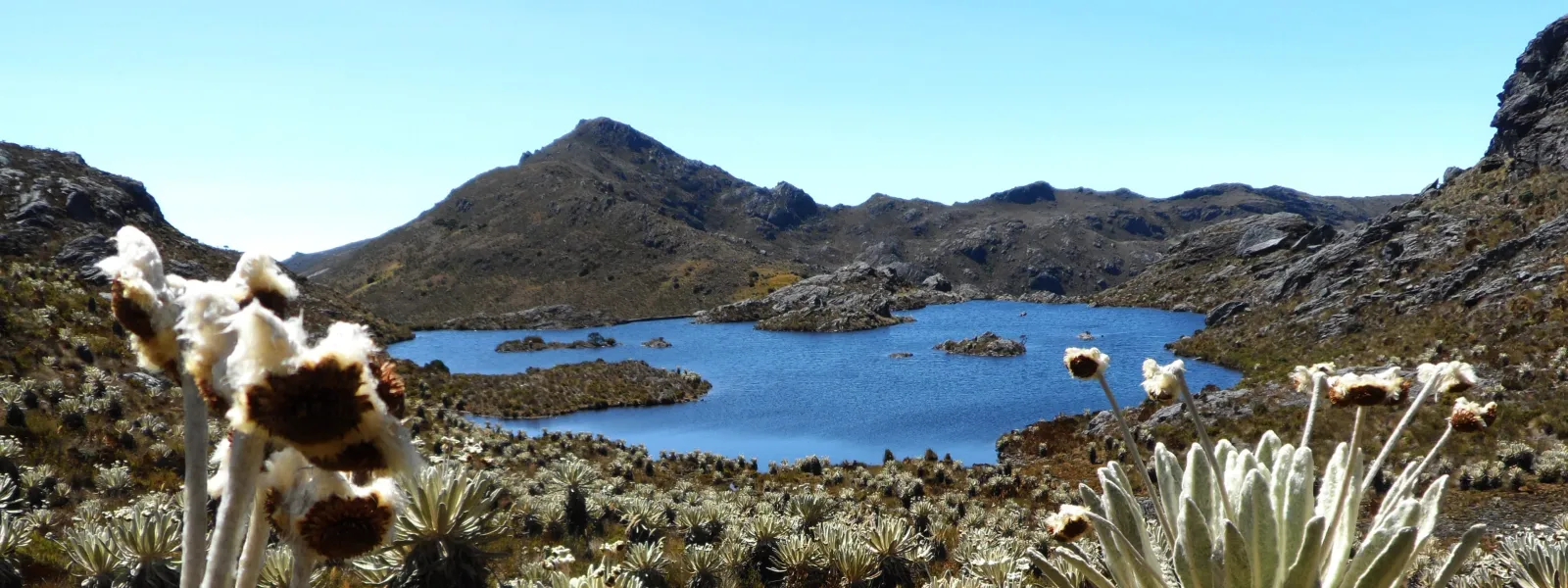
In the Andean region, high-mountain ecosystems known as páramos capture water from the fog and supply it to the lowlands. One such ecosystem is the Santurbán páramo, which provides fresh water to more than two million people in Colombia.
Santurbán, like the other páramos on the continent, also captures large amounts of carbon, making it a key ally in mitigating the climate crisis. It is also a refuge for hundreds of endangered species, including the iconic spectacled bear.
The land in and around the páramo contains gold and other minerals. This has put Santurbán in the spotlight of the multinational mining industry, which for decades has sought to establish large-scale projects in the ecosystem that threaten to degrade it.
The Committee for the Defense of Water and the Santurbán Páramo—a coalition of environmental advocates—has thwarted these ongoing attempts, with support from AIDA and other civil society organizations.
Background
The Santurbán páramo is located in the heart of the Eastern Cordillera of the Colombian Andes, in the departments of Santander and Norte de Santander, at an elevation ranging from 2,200 to 4,290 meters above sea level.
It covers an area of 129,743 hectares and is home to 57 lakes. It serves as a habitat for 457 plant species and 293 species of vertebrate fauna.
There are mineral deposits in Santurbán, primarily gold, but also silver and copper. This explains the region’s mining tradition, particularly in the part of the páramo located in Santander, in the province of Soto Norte. The communities in the area have built their culture and identity around gold mining, which is mainly artisanal and small-scale.
But since the 1990s, the gold deposits in the páramo have also attracted foreign mining conglomerates seeking to develop large-scale projects. This has raised concerns among the population that relies on the Santurbán water sources, who have mobilized in defense of water, their land, and life.
Although national and international regulations prohibit mining in páramos, the Colombian government has granted mining concessions to transnational corporations in Santurbán.
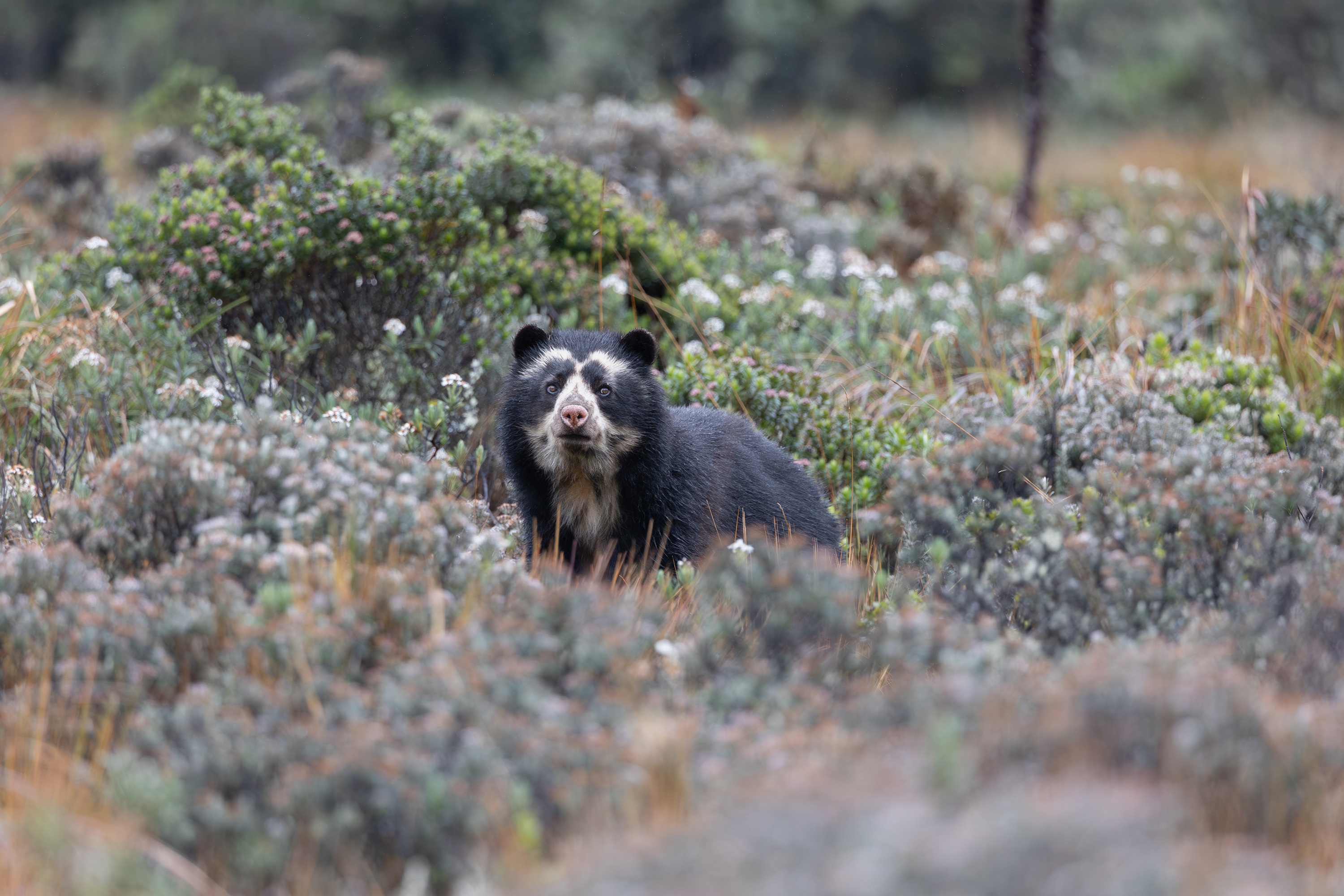
Photo: Keishpixl / Pixabay.
The long struggle to protect the páramo
One of the companies that sought to develop large-scale mining in Santurbán is Eco Oro Minerals Corp.—formerly Greystar Resources—a Canadian company that intended to establish the Angostura open-pit mine there to extract gold and silver. Between 1994 and 1995, the company acquired its mining titles and conducted exploration. And in 2010, it applied for a mining permit.
That was the year AIDA became involved in defending the ecosystem, supporting the Committee for the Defense of Water and the Santurbán Páramo. Our legal work helped convince the Colombian government to deny the mine an environmental permit in May 2011.
In January 2013, the government designated a portion of the páramo (11,700 hectares) as a Regional Natural Park. That year—together with the committee and partner organizations—we carried out a campaign and advocacy efforts to urge the government to recognize the entire Santurbán area as a páramo ecosystem through a delimitation based on scientific criteria. In December 2014, the Ministry of the Environment established a delimitation that protected 76% of the páramo (98,954 hectares).
Furthermore, as a result of a litigation supported by AIDA, in February 2016, Colombia’s highest court reaffirmed that mining in páramos is prohibited.
That same year, in December, the International Finance Corporation (IFC), the World Bank Group’s private sector arm, decided to divest from Eco Oro Minerals. This achievement was the result of a process that began in 2012, when the committee—advised and supported by AIDA and international partner organizations—filed a complaint before an independent accountability mechanism, which concluded that the IFC’s investment in the Angostura project failed to take into account the project’s social and environmental impacts, thereby contradicting the financial institution’s internal policies.
Also in 2016, Eco Oro Minerals filed an arbitration claim against the Colombian government with the International Centre for Settlement of Investment Disputes (ICSID), arguing that it had been adversely affected by government decisions aimed at protecting the country’s páramos, including the delimitation of Santurbán.
In 2017, the Constitutional Court invalidated the delimitation because the affected communities were not consulted. The high court ordered that a participatory delimitation be carried out.
And that year, a new threat to Santurbán emerged when the Canadian multinational Aris Mining applied for an environmental permit for Soto Norte, a gold mining project located near the páramo. Following citizen protests and technical objections, in October 2020, the National Environmental Licensing Authority shelved the project.
Photo: Aztlec.
Current situation
In March 2025, the Colombian government designated the western flank of the Santurbán massif as a temporary renewable natural resource reserve area, delimiting and protecting an area of 75,344.65 hectares. This resulted in a two-year suspension of the Soto Norte project. However, Aris Mining's contract to formalize Calimineros' small-scale mining activities through the purchase and processing of mineralized material remains in effect.
In addition, the Canadian mining company continues to move the project forward. In September 2025, it released its prefeasibility study, revising the mine’s original design.
Meanwhile, members of the Committee for the Defense of Water and the Santurbán Páramo face threats and stigmatization because of their work. In March 2025, UN Special Rapporteurs and the Working Group on Business and Human Rights denounced these incidents in communications sent to the governments of Colombia, Canada, and the United Arab Emirates, as well as to the companies Aris Mining and MDC Industry Holding Company LLC, the former co-owner of the Soto Norte project.
Regarding the arbitration claim filed by Eco Oro Minerals, in July 2024, ICSID ruled in favor of the Colombian government and rejected the Canadian company’s claim for USD 1.1 billion in compensation.
Concerning the delimitation of Santurbán, in July 2026, the Ministry of the Environment issued a resolution introducing the concept of "progressive delimitation." On that basis, the government proposes to progressively demarcate the páramo, covering 29,199 hectares across 19 municipalities—those where the participatory agreements required by the Constitutional Court in its 2017 ruling have already been finalized. It also proposes two measures on the creation and expansion of reserves to restrict mining in the ecosystem.
Learn more about the impacts of mining on the páramos of Latin America (in Spanish).
Partners:
Related projects

AIDA celebrates Court decision to protect Colombia's páramos
Colombia’s Constitutional Court on Monday declared unconstitutional an aspect of the country’s National Development Plan that permitted mining in páramos. Bogota, Colombia. The Interamerican Association for Environmental Defense (AIDA) celebrates the decision of Colombia’s Constitutional Court to ban mining in the country’s páramos. The ruling—which nullified an article of the 2014-2018 National Development Plan protecting previously granted mining licenses—is vital to the preservation of Colombia’s freshwater resources, and should serve as an example for other countries in the region. AIDA and partner organizations presented an amicus brief in support of the corresponding lawsuit, filed by the Cumbre Agraria, Campesina, Étnica y Popular. The court’s ruling brings justice to these important freshwater ecosystems and the many people that depend upon them. Although they occupy just 1.7 percent of the national territory, Colombia’s páramos provide 70 percent of its fresh water. The sensitive ecosystems are also strategic reserves of biodiversity, and act as carbon sinks essential to the mitigation of climate change. The high court’s decision is key to the protection of the Santurbán páramo, on which hundreds of thousands of people in the Bucaramanga metropolitan area depend. AIDA has long been working to defend Santurbán from large-scale mining and to provide support to affected communities. AIDA urges the Ministry of the Environment to promptly enact the court’s ruling and protect all the country's páramos from the impacts of large-scale mining operations.
Read more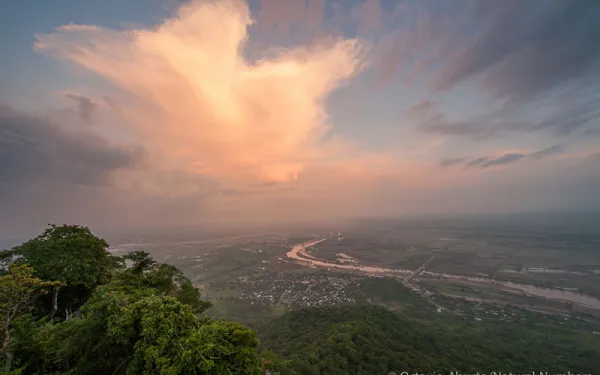
Worth Protecting: Mexico’s Marismas Nacionales
By Anna Miller, AIDA writer On Mexico’s northern Pacific coast, verdant mangroves reach their roots into the shallow soil, drink up the sweet, fresh water flowing from the mountains, and shelter the diverse, abundant life teeming below. Crabs crawl along the muddy ground, fish zig and zag along the root systems, crocodiles wait patiently in the shallows, and sea turtles feed on their way to coastal nesting grounds. This living, breathing community, extending 2,000 square kilometers through Nayarit and Sinaloa states, is the largest mangrove forest on Mexico’s Pacific coast. Despite the importance of this rich environment, the Marismas Nacionales are at risk. Their health and vitality are threatened by the proposed Las Cruces hydropower project, which would dam the Río San Pedro Mezquital, the last free-flowing river in the Sierra Madre Mountains. After the senseless destruction of the Tajamar mangroves in Cancún, Mexico must now, more than ever, live up to its responsibility to preserve vital wetlands like Marismas Nacionales. There is so much worth protecting. The San Pedro Mezquital River is born in the highest peaks of the Sierra Madre, flowing through dense green forests and across valleys before reaching the coastal plains of Nayarit, where its fresh waters feed Marismas Nacionales. Altering the natural flow of the river would increase sedimentation in the wetlands and risk suffocating the sensitive system. The vast coastal wetlands along the Gulf of California are home to as many as 20 percent of Mexico’s mangroves. A sort of biological super system harbors a diverse array fish and birds and insects and amphibians. The Marismas Nacionales are believed to constitute one of the most productive environments in Northwest Mexico. Coastal communities also live in harmony with Marismas Nacionales and depend upon the wetlands for their survival. The coastal marine environment provides a sustainable livelihood for local populations, who fish and harvest shellfish. The communities are therefore linked with the health and wellbeing of the wetlands. An avian paradise, the Marismas Nacionales are home to more than 250 species of birds, nearly half of which are migratory. The Marismas provide a critical wintering habitat for birds from the Pacific coastal region: in parts of the year, 80 percent of Pacific migratory shorebirds take shelter there. Many local species also seek out the mangroves as shelter from surrounding areas during particularly harsh weather. Without a healthy river, the life in these vast mangrove forests and coastal lagoons may be lost for good. With the construction of Las Cruces Dam, Mexico is putting at risk another of its sacred natural places. AIDA is committed to protecting Marismas Nacionales, and the health and way of life of all the living things that depend on them. We hope you’re with us. Learn about our work to stop Las Cruces Dam
Read more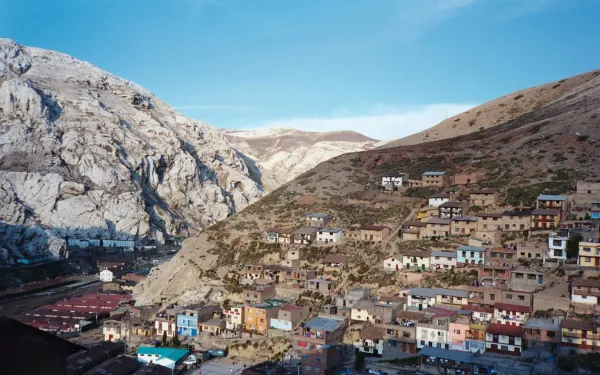
My first visit to La Oroya
By Rodrigo da Costa Sales, AIDA attorney “What do you think of La Oroya?” a local resident asked me the first time we met. Honestly, I wasn’t quite sure how to respond. Quickly sensing my discomfort, he joked, “It’s very beautiful, there’s so much biodiversity, and the sky is so blue...” Relieved, I laughed along with him and, since that moment, I’ve been searching for the words to describe La Oroya. La Oroya is a city of 33,000 people on the Mantaro River in central Peru, at an altitude of nearly 5,000 meters. This was my first time there, and I stayed only two days. The trip from Lima takes five hours, winding along painfully curvy roads with breathtaking views of the mountains all around. In La Oroya, however, the landscape changes drastically. The city is covered in a sheet of grey, with little to no natural life, streets full of trucks transporting iron and other heavy metals... and not much else of note. My greatest wish for my time in La Oroya was to meet the people we are representing in our case before the Inter-American Commission on Human Rights. After working on it for six months, I wanted finally to put faces to the names I had come to know so well on paper. Our meeting was scheduled for the evening, when residents could find time free from work and family commitments. There, we introduced them to students from Yale University, who were developing an important report on the relationship between La Oroya’s air quality and the health of city residents. Although interested in the study, and happy to hear about it, residents quickly peppered us with questions about the case. The main thing they wanted to know—an answer they have been waiting for since our petition was filed seven years ago—was when the Commission will make its decision. They explained the many offensive comments they’ve had to endure, both from workers at the metal-smelting complex and from their own neighbors, during the long wait for a ruling. They’ve suffered threats from fellow residents of La Oroya, who wrongfully believe that the purpose of the case is to close the complex, which would leave many people without jobs. In one especially disturbing instance, a “doctor” spoke on television claiming that lead contamination does not cause any health problems. He claimed the residents of La Oroya as proof that, while contaminated by lead and other heavy metals, people could still lead normal lives. We reminded them that a process before an international organism involves years of waiting, and that we sympathized with them for everything they had been through in the past few years. But the truth is that I felt such intense frustration. It was the first time that I saw, up close, such personal desire for an international decision. I understood then that a decision on paper could actually constitute a form of reparation. The long-awaited Commission report will show the world that the effects of heavy-metal pollution on a population actually violate their personal integrity and right to health. The goal of this case is not to close the metallurgical complex, but instead to force the adoption of measures that guarantee a certain quality of life for the residents of La Oroya. The Commission’s report will be the instrument in this case by which international and human rights law becomes real, effective and transformative. I returned from La Oroya almost a week ago, and I’m still searching for the words to describe such a place. Truthfully, La Oroya didn’t seem very nice at first. But I quickly came to realize that the beauty of a place comes not only from its natural and man-made attractions; it comes also, and perhaps more importantly, from the beauty of its people. In that sense, I’ve never seen a city quite as beautiful as La Oroya. This blog is dedicated all the victims of the case in La Oroya. I hope that they will achieve justice, and that because of them, a case like this is never repeated around the world. It is also dedicated to Astrid Puentes and Maria José, AIDA’s attorneys in charge of the La Oroya case, who inspire me daily to work for a more just world.
Read more