
Project
Alberto Peña Kay
Protecting the Santurban páramo from mining's damage
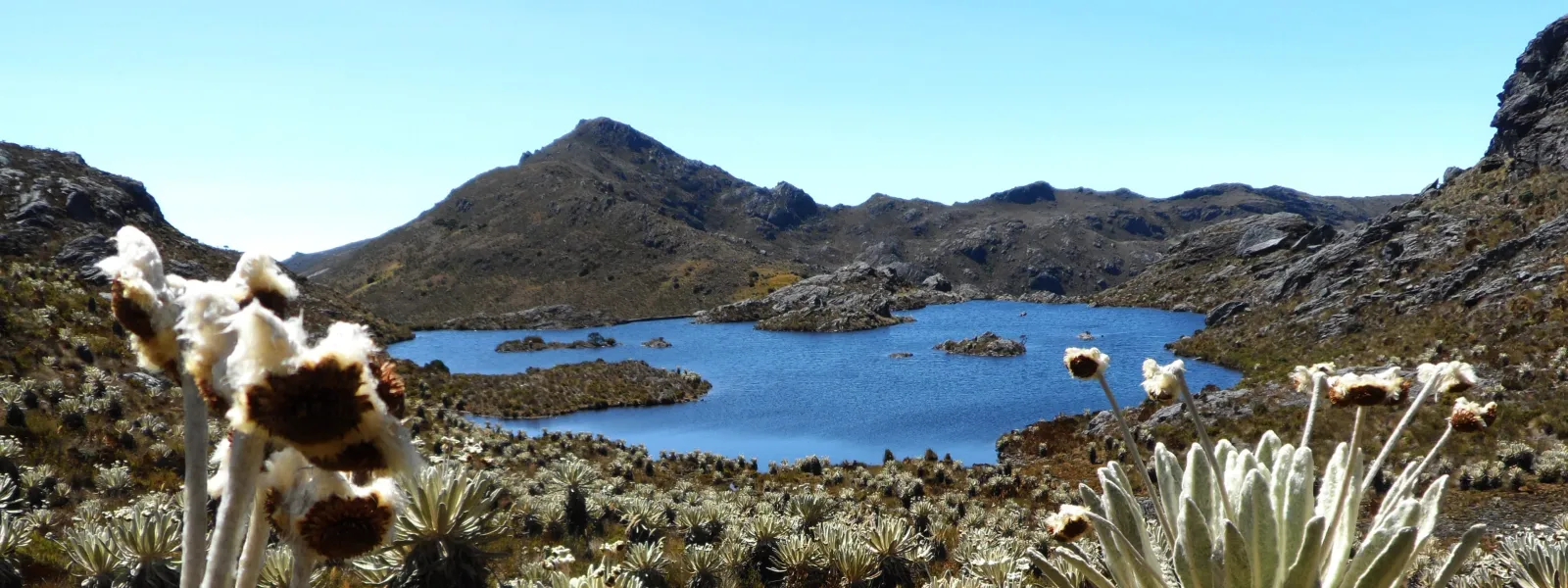
In the Andean region, high-mountain ecosystems known as páramos capture water from the fog and supply it to the lowlands. One such ecosystem is the Santurbán páramo, which provides fresh water to more than two million people in Colombia.
Santurbán, like the other páramos on the continent, also captures large amounts of carbon, making it a key ally in mitigating the climate crisis. It is also a refuge for hundreds of endangered species, including the iconic spectacled bear.
The land in and around the páramo contains gold and other minerals. This has put Santurbán in the spotlight of the multinational mining industry, which for decades has sought to establish large-scale projects in the ecosystem that threaten to degrade it.
The Committee for the Defense of Water and the Santurbán Páramo—a coalition of environmental advocates—has thwarted these ongoing attempts, with support from AIDA and other civil society organizations.
Background
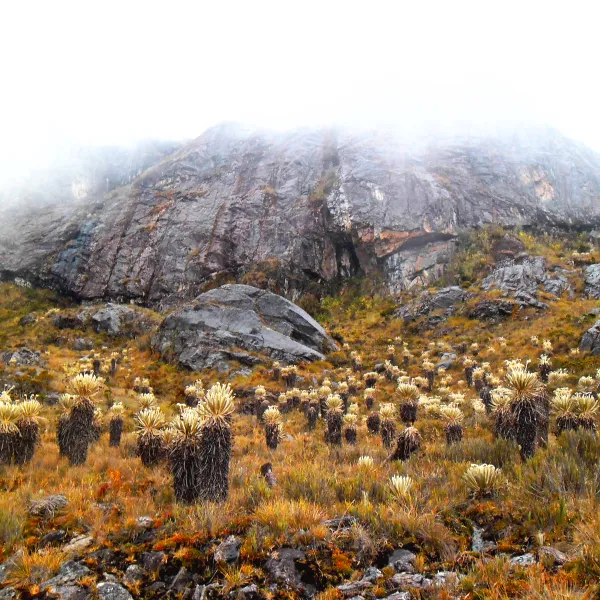
The Santurbán páramo is located in the heart of the Eastern Cordillera of the Colombian Andes, in the departments of Santander and Norte de Santander, at an elevation ranging from 2,200 to 4,290 meters above sea level.
It covers an area of 129,743 hectares and is home to 57 lakes. It serves as a habitat for 457 plant species and 293 species of vertebrate fauna.
There are mineral deposits in Santurbán, primarily gold, but also silver and copper. This explains the region’s mining tradition, particularly in the part of the páramo located in Santander, in the province of Soto Norte. The communities in the area have built their culture and identity around gold mining, which is mainly artisanal and small-scale.
But since the 1990s, the gold deposits in the páramo have also attracted foreign mining conglomerates seeking to develop large-scale projects. This has raised concerns among the population that relies on the Santurbán water sources, who have mobilized in defense of water, their land, and life.
Although national and international regulations prohibit mining in páramos, the Colombian government has granted mining concessions to transnational corporations in Santurbán.

Photo: Keishpixl / Pixabay.
The long struggle to protect the páramo
One of the companies that sought to develop large-scale mining in Santurbán is Eco Oro Minerals Corp.—formerly Greystar Resources—a Canadian company that intended to establish the Angostura open-pit mine there to extract gold and silver. Between 1994 and 1995, the company acquired its mining titles and conducted exploration. And in 2010, it applied for a mining permit.
That was the year AIDA became involved in defending the ecosystem, supporting the Committee for the Defense of Water and the Santurbán Páramo. Our legal work helped convince the Colombian government to deny the mine an environmental permit in May 2011.
In January 2013, the government designated a portion of the páramo (11,700 hectares) as a Regional Natural Park. That year—together with the committee and partner organizations—we carried out a campaign and advocacy efforts to urge the government to recognize the entire Santurbán area as a páramo ecosystem through a delimitation based on scientific criteria. In December 2014, the Ministry of the Environment established a delimitation that protected 76% of the páramo (98,954 hectares).
Furthermore, as a result of a litigation supported by AIDA, in February 2016, Colombia’s highest court reaffirmed that mining in páramos is prohibited.
That same year, in December, the International Finance Corporation (IFC), the World Bank Group’s private sector arm, decided to divest from Eco Oro Minerals. This achievement was the result of a process that began in 2012, when the committee—advised and supported by AIDA and international partner organizations—filed a complaint before an independent accountability mechanism, which concluded that the IFC’s investment in the Angostura project failed to take into account the project’s social and environmental impacts, thereby contradicting the financial institution’s internal policies.
Also in 2016, Eco Oro Minerals filed an arbitration claim against the Colombian government with the International Centre for Settlement of Investment Disputes (ICSID), arguing that it had been adversely affected by government decisions aimed at protecting the country’s páramos, including the delimitation of Santurbán.
In 2017, the Constitutional Court invalidated the delimitation because the affected communities were not consulted. The high court ordered that a participatory delimitation be carried out.
And that year, a new threat to Santurbán emerged when the Canadian multinational Aris Mining applied for an environmental permit for Soto Norte, a gold mining project located near the páramo. Following citizen protests and technical objections, in October 2020, the National Environmental Licensing Authority shelved the project.
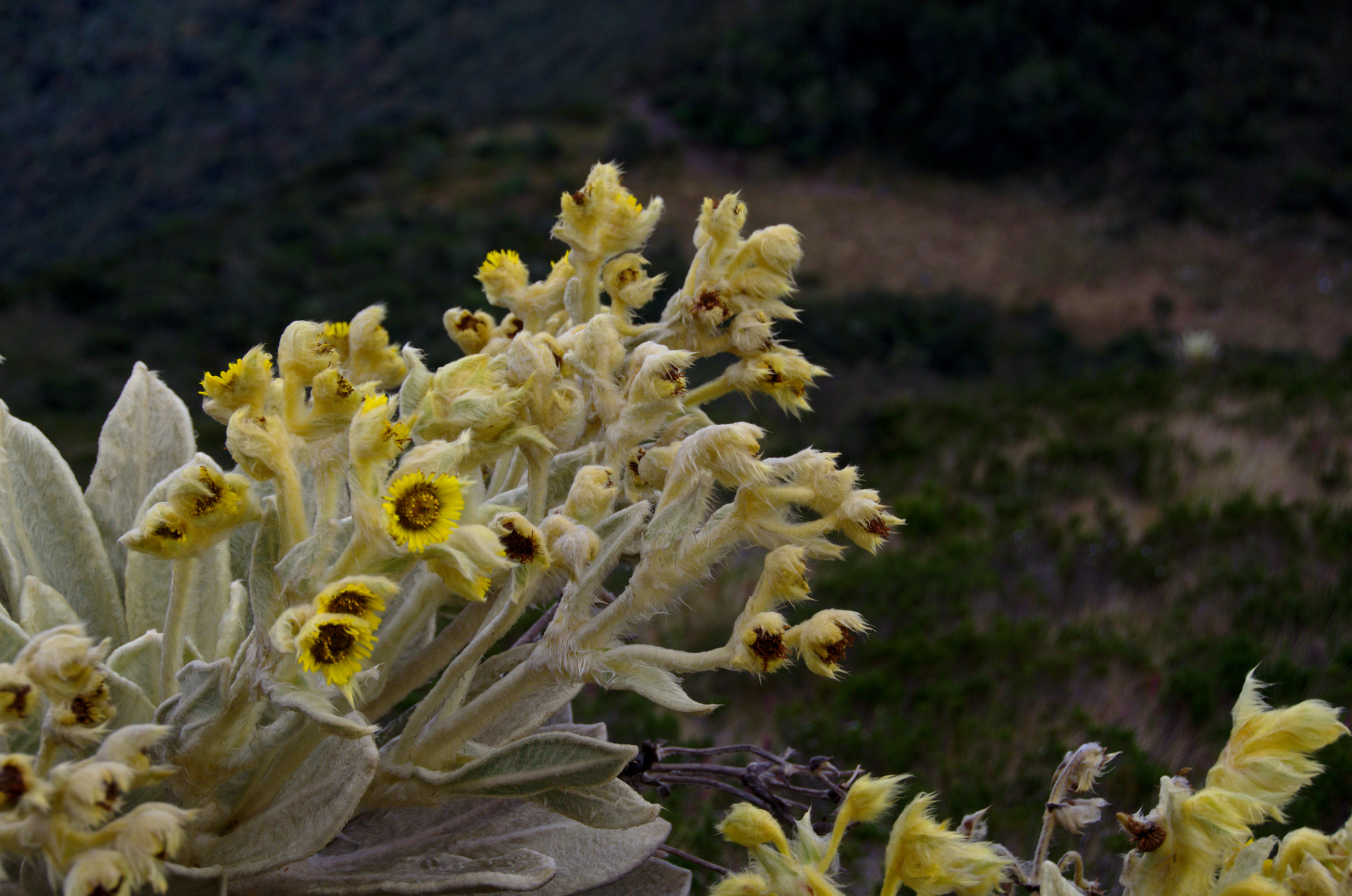
Photo: Aztlec.
Current situation
In March 2025, the Colombian government designated the western flank of the Santurbán massif as a temporary renewable natural resource reserve area, delimiting and protecting an area of 75,344.65 hectares. This resulted in a two-year suspension of the Soto Norte project. However, Aris Mining's contract to formalize Calimineros' small-scale mining activities through the purchase and processing of mineralized material remains in effect.
In addition, the Canadian mining company continues to move the project forward. In September 2025, it released its prefeasibility study, revising the mine’s original design.
Meanwhile, members of the Committee for the Defense of Water and the Santurbán Páramo face threats and stigmatization because of their work. In March 2025, UN Special Rapporteurs and the Working Group on Business and Human Rights denounced these incidents in communications sent to the governments of Colombia, Canada, and the United Arab Emirates, as well as to the companies Aris Mining and MDC Industry Holding Company LLC, the former co-owner of the Soto Norte project.
Regarding the arbitration claim filed by Eco Oro Minerals, in July 2024, ICSID ruled in favor of the Colombian government and rejected the Canadian company’s claim for USD 1.1 billion in compensation.
Concerning the delimitation of Santurbán, in July 2026, the Ministry of the Environment issued a resolution introducing the concept of "progressive delimitation." On that basis, the government proposes to progressively demarcate the páramo, covering 29,199 hectares across 19 municipalities—those where the participatory agreements required by the Constitutional Court in its 2017 ruling have already been finalized. It also proposes two measures on the creation and expansion of reserves to restrict mining in the ecosystem.
Learn more about the impacts of mining on the páramos of Latin America (in Spanish).
Partners:
Related projects

COP21: Mainstreaming Climate Change within Financial Institutions
Financial institutions are crucial players in the global fight against climate change. In order for countries around the world to successfully pursue low-carbon and climate-resilient development, significant sums of finance will need to be harnessed. The Paris Agreement – set to be finalized this week at the close of COP21 – will surely catalyze climate finance around the world. But climate finance will only represent a small percentage of overall global financial flows. Therefore, the extent to which climate change considerations are more broadly mainstreamed within financial institutions will have an important effect on the speed of the global economy’s transformation in response to climate change. AIDA co-director Astrid Puentes Riaño was part of a panel that addressed this reality on December 7 during a COP21 side event titled Mainstreaming Climate Change Within Financial Institutions. The event began with a presentation unveiling the Five Voluntary Principles that had been agreed to this year by 26 financial institutions on four continents, which collectively manage $11 trillion USD. These voluntary principles included commitments to manage climate risks, improve climate performance, account for climate action, adhere to climate change strategies, and promote climate smart objectives. Following introductory remarks by the CEO of the French Development Agency and the Vice President of the World Bank Group, the main group of five panelists was invited to discuss their actions and views related to the initiative. The importance of Puentes Riaño’s presence on the panel was immediately apparent – she was not only the only woman, but also the only voice representing civil society. Other panelists included representatives from major public and private financial institutions, such as the Development Bank of Latin America, the Vicepresident of the European Investment Bank and the head of the Ministry of the Environment and Tourism in Namibia. The presentations on behalf of the financial institutions were brief, but to a certain extent heartening. Representatives lauded the billions of dollars they were committing to the fight against climate change, as well as other steps they were taking to reduce the climate impact of their investments. The European Investment Bank Representative, for example, highlighted their new emissions performance standard for investment in new energy development, which he said didn’t discriminate against any particular energy source, but effectively excluded coal. There was also discussion about the importance of working together and building information-sharing platforms, such as a website to host information gathered by the financial institutions. The representative from the commercial banking sector said that his company had committed to investing $2 billion USD in green bonds, wouldn’t be funding any new coal plants, and would be increasing investments in renewable energy. The Minister from Namibia stressed the devastating effect climate change is already having, and will continue to have, on his country. He explained that although climate change is a priority for his government, there is a lack of resources available to address the various needs that can arise at any time. Speaking on behalf of civil society, Puentes Riaño welcomed the initiative as a good start, which projected a positive image of the financial sector. Recognizing that the effort was still in its nascent stages, she offered some recommendations regarding its implementation. First, she called for consideration of human rights and social risk to be included in project assessments. This, Puentes Riaño explained, would facilitate the selection of the right kinds of projects to invest in. Secondly, she called for an effort to ensure that there was consideration of, and agreement among financial institutions about key definitions, for example “renewable energy” and “sustainable development”, as well as thought given to which options should be excluded as false solutions. Finally, she called on these funding institutions to focus on how this initiative would be implemented. She recommended having a clear, transparent, and participatory road map that was ambitious enough to put the world on a 1.5 degrees C path. During discussions like these, it’s easy to see how important it is for civil society organizations to be present and doing their best to contribute to the dialogue. In this case, AIDA was able to join the conversation and use our position at the table to help increase awareness about and advocate for access to information, transparency and accountability, public participation, and human rights.
Read more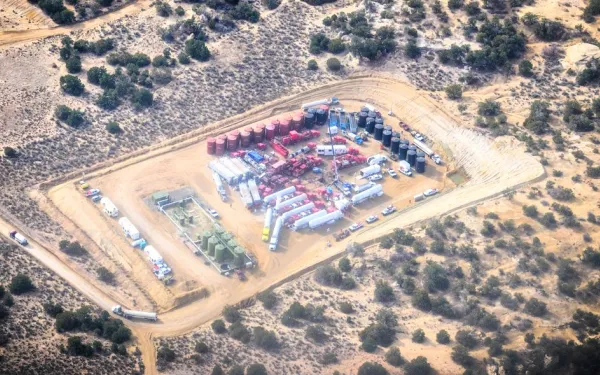
To cool the planet, fracking must be prohibited, organizations say
In the framework of COP21, a coalition of Latin American civil society organizations is urging world leaders meeting in Paris to ban fracking in their countries. By emitting large quantities of greenhouse gases, the process itself goes against the central objective of the climate negotiations: stopping global warming. Paris, France. In a public statement directed at Member States of the United Nations Framework Convention on Climate Change, organizations and allies of the Latin American Alliance On Fracking asked that all fracking activities be banned due to the fact that, among other impacts, hydraulic fracturing emits greenhouse gases that contribute to global warming. During the cycle of extracting, processing, storing, transferring, and distributing unconventional hydrocarbons using fracking, methane gas is released into the atmosphere. Methane is 87 times more powerful than carbon dioxide as an agent of global warming, the group explained in their statement. The document will be presented this Friday December 11 at 10 a.m. (local time) at the Climate Action Zone by: Alianza Mexicana contra el Fracking; Asociación Ambiente y Sociedad; the Inter-American Association for Environmental Defense (AIDA); Food & Water Watch; Freshwater Action Network Mexico; the Heinrich Böll Foundation – Mexico, Central America and the Caribbean; Instituto Brasileiro de Analises Socias e Economicas (IBASE); and Observatorio Petrolero Sur (OpSur). The organizations discuss the current state of hydraulic fracturing in Latin America. Although the use of the experimental technique is contrary to national and international commitments to reduce emissions, several countries in the region – among them Mexico, Colombia, Argentina, Chile and Bolivia – have begun exploration or exploitation of unconventional hydrocarbons through fracking. “Fracking is advancing blindly in Latin America, with no comprehensive long-term studies on the risks and serious damage that it could cause to the health of people and the environment,” said Ariel Pérez Castellón, attorney at AIDA. “Operations of this kind in the region have failed to respect fundamental human rights, including the right to consultation and free, prior and informed consent; the right to participation and social control; and the right to information,” added Milena Bernal, attorney with the Asociación Ambiente y Sociedad. According to the organizations, fracking is advancing quickly into indigenous and rural communities, urban neighborhoods, and even Natural Protected Areas. It has caused the displacement both of people and of productive activities such as farming and agriculture, because their coexistence with this technique is impossible. Rejection of fracking has grown in parallel with its spread in operations. “The proof of this resistance are the national and international networks opposing this technique, including more than 50 municipalities that have banned it in Argentina, Brazil and Uruguay,” said Diego di Risio, researcher at Observatorio Petrolero Sur. “As part of our statement, we urge the Member Parties of the Convention to: sign a binding agreement that quickly and effectively reduces greenhouse gases and incorporates human rights into the legal text; apply the precautionary principle to ban fracking; and promote renewable energies and disincentivize the extraction of fossil fuels,” stated Claudia Campero Arena, researcher at Food & Water Watch, and Moema Miranda, director of Ibase. Read the full statement from the Latin American Alliance on Fracking here. Event “The fight against fracking in Latin America: experiences in Argentina, Bolivia, Colombia, Brazil and Mexico” Simultaneous translation in English and French Friday December 11, 2015 Climate Action Zone Centquatre, 5 rue Curial, Paris (Métro Riquet)
Read moreCOP21's International Human Rights Day
Programme of Events - December 10, 2015 10:00 - 10:30 Press Conference (Le Bourget, Hall 5, Press Conf. Room 2). Hosted by Office of the High Commissioner on Human Rights. 11:00 - 12:30 Side Event: Fight Climate Change, Eradicate Poverty and Ensure Access to Rights—The Challenge of a Truly Just Transition (Espace Générations Climat, Room 4). Hosted by Secours Catholique - Caritas France and ATD Quart Monde. 11:30 - 13:00 Side Event: Climate Change: One of the Greatest Human Rights Challenges of Our Time (Le Bourget, Hall 4, Observer Room 12). Hosted by the Human Rights & Climate Change Working Group, Geneva Climate Change Concertation Group, CARE International, Center for International Environmental Law, Earthjustice, Franciscans International, Friedrich-Ebert-Stiftung and Human Rights Watch. 13:00 - 13:30 Civil Society Action: Stand Up for Human Rights (Le Bourget, TBD). 13:00 - 14:30 Side Event: Climate Change and Human Rights: Focus on Urban Life, Human Rights and Adaptation to Climate Change (Espace Générations Climat, Room 4). Hosted by European Association of Geographers. 15:45 - 17:00 Photo Exhibition and Film Screening: There Is No Time Left: Climate Change and Human Rights in Turkana County, Kenya (Espaces Générations Climat, Round House and Stand A28). Hosted by Human Rights Watch. 17:30 - 19:00 Side Event: Agir Contre le Climat et Promouvoir les Droits Humains: Solutions Pratiques (Espace Générations Climat, Room 1). Hosted by the Human Rights & Climate Change Working Group and Réseau Climat & Développement. 18:30 - 21:00 Human Rights Day Celebration (Point Ephemere, 200 quai de Valmy 75010 Paris). Hosted by the Tri-Caucus, Accra Caucus, Geneva Group, Human Rights & Climate Change Working Group, Indigenous Peoples Caucus, and REDD+ Safeguards Working Group.
Read more