
Project
Alberto Peña Kay
Protecting the Santurban páramo from mining's damage
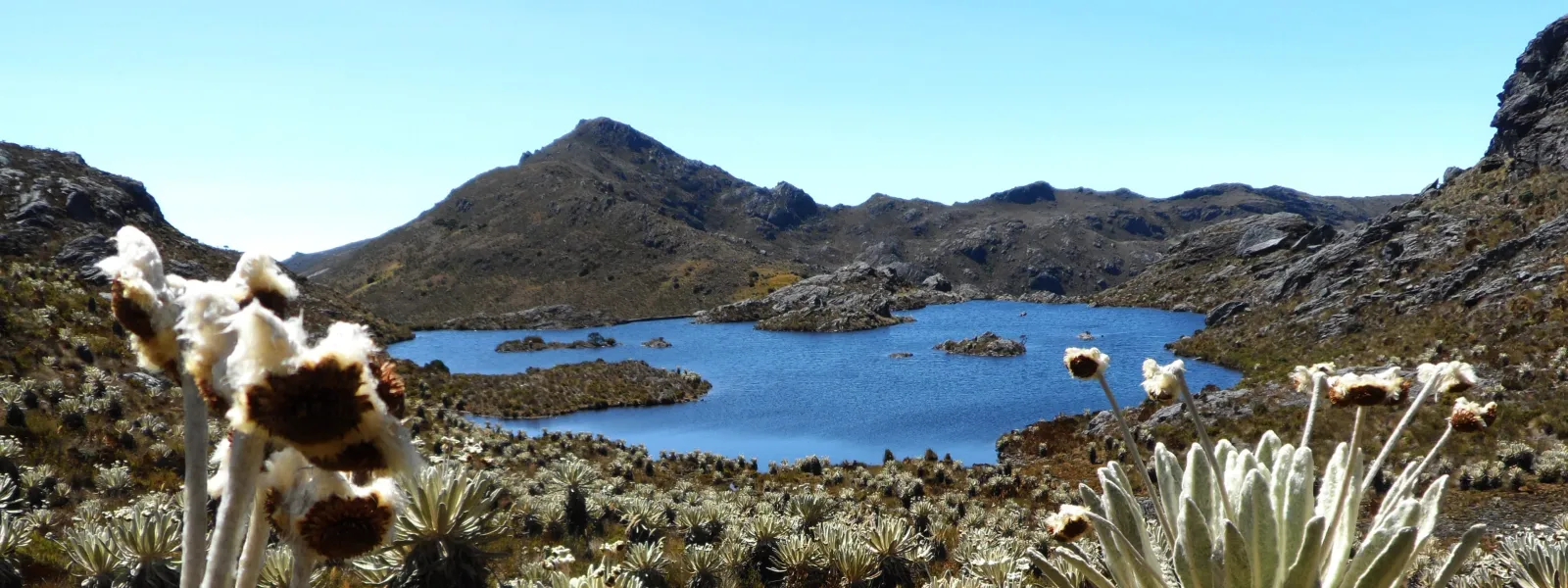
In the Andean region, high-mountain ecosystems known as páramos capture water from the fog and supply it to the lowlands. One such ecosystem is the Santurbán páramo, which provides fresh water to more than two million people in Colombia.
Santurbán, like the other páramos on the continent, also captures large amounts of carbon, making it a key ally in mitigating the climate crisis. It is also a refuge for hundreds of endangered species, including the iconic spectacled bear.
The land in and around the páramo contains gold and other minerals. This has put Santurbán in the spotlight of the multinational mining industry, which for decades has sought to establish large-scale projects in the ecosystem that threaten to degrade it.
The Committee for the Defense of Water and the Santurbán Páramo—a coalition of environmental advocates—has thwarted these ongoing attempts, with support from AIDA and other civil society organizations.
Background
The Santurbán páramo is located in the heart of the Eastern Cordillera of the Colombian Andes, in the departments of Santander and Norte de Santander, at an elevation ranging from 2,200 to 4,290 meters above sea level.
It covers an area of 129,743 hectares and is home to 57 lakes. It serves as a habitat for 457 plant species and 293 species of vertebrate fauna.
There are mineral deposits in Santurbán, primarily gold, but also silver and copper. This explains the region’s mining tradition, particularly in the part of the páramo located in Santander, in the province of Soto Norte. The communities in the area have built their culture and identity around gold mining, which is mainly artisanal and small-scale.
But since the 1990s, the gold deposits in the páramo have also attracted foreign mining conglomerates seeking to develop large-scale projects. This has raised concerns among the population that relies on the Santurbán water sources, who have mobilized in defense of water, their land, and life.
Although national and international regulations prohibit mining in páramos, the Colombian government has granted mining concessions to transnational corporations in Santurbán.

Photo: Keishpixl / Pixabay.
The long struggle to protect the páramo
One of the companies that sought to develop large-scale mining in Santurbán is Eco Oro Minerals Corp.—formerly Greystar Resources—a Canadian company that intended to establish the Angostura open-pit mine there to extract gold and silver. Between 1994 and 1995, the company acquired its mining titles and conducted exploration. And in 2010, it applied for a mining permit.
That was the year AIDA became involved in defending the ecosystem, supporting the Committee for the Defense of Water and the Santurbán Páramo. Our legal work helped convince the Colombian government to deny the mine an environmental permit in May 2011.
In January 2013, the government designated a portion of the páramo (11,700 hectares) as a Regional Natural Park. That year—together with the committee and partner organizations—we carried out a campaign and advocacy efforts to urge the government to recognize the entire Santurbán area as a páramo ecosystem through a delimitation based on scientific criteria. In December 2014, the Ministry of the Environment established a delimitation that protected 76% of the páramo (98,954 hectares).
Furthermore, as a result of a litigation supported by AIDA, in February 2016, Colombia’s highest court reaffirmed that mining in páramos is prohibited.
That same year, in December, the International Finance Corporation (IFC), the World Bank Group’s private sector arm, decided to divest from Eco Oro Minerals. This achievement was the result of a process that began in 2012, when the committee—advised and supported by AIDA and international partner organizations—filed a complaint before an independent accountability mechanism, which concluded that the IFC’s investment in the Angostura project failed to take into account the project’s social and environmental impacts, thereby contradicting the financial institution’s internal policies.
Also in 2016, Eco Oro Minerals filed an arbitration claim against the Colombian government with the International Centre for Settlement of Investment Disputes (ICSID), arguing that it had been adversely affected by government decisions aimed at protecting the country’s páramos, including the delimitation of Santurbán.
In 2017, the Constitutional Court invalidated the delimitation because the affected communities were not consulted. The high court ordered that a participatory delimitation be carried out.
And that year, a new threat to Santurbán emerged when the Canadian multinational Aris Mining applied for an environmental permit for Soto Norte, a gold mining project located near the páramo. Following citizen protests and technical objections, in October 2020, the National Environmental Licensing Authority shelved the project.
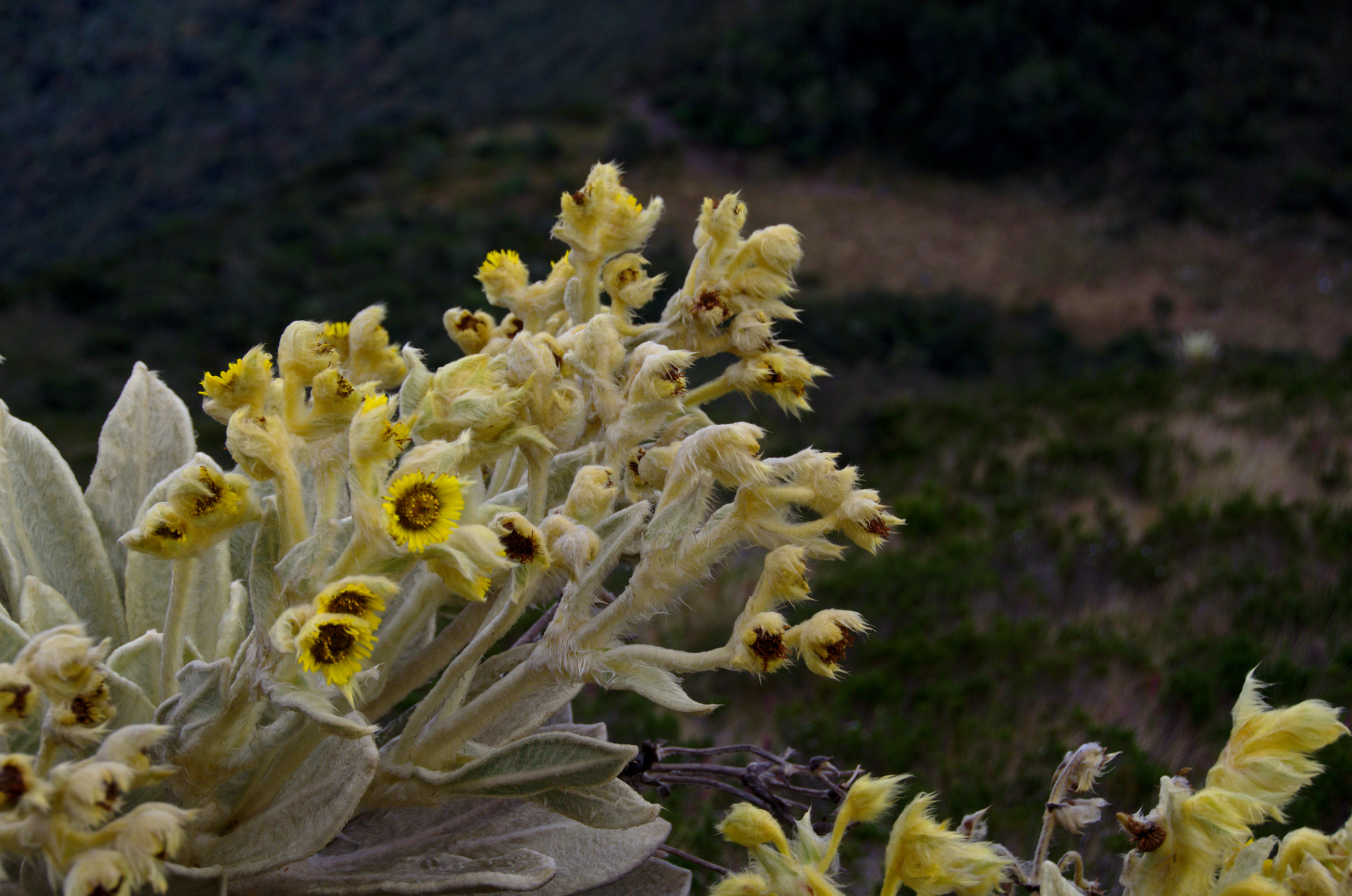
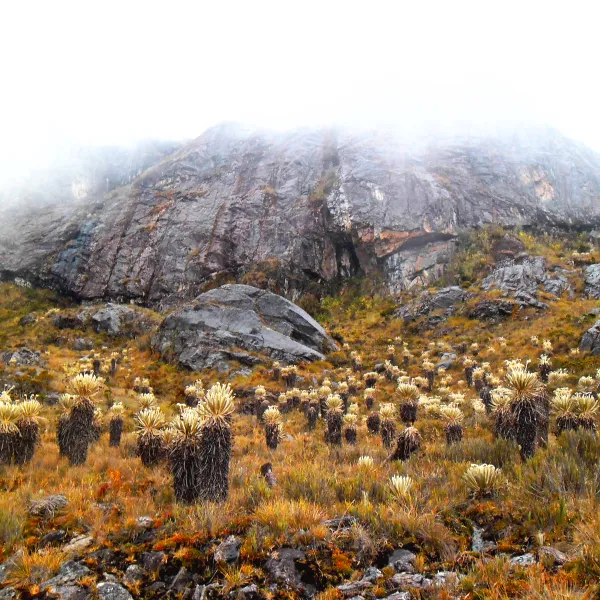
Photo: Aztlec.
Current situation
In March 2025, the Colombian government designated the western flank of the Santurbán massif as a temporary renewable natural resource reserve area, delimiting and protecting an area of 75,344.65 hectares. This resulted in a two-year suspension of the Soto Norte project. However, Aris Mining's contract to formalize Calimineros' small-scale mining activities through the purchase and processing of mineralized material remains in effect.
In addition, the Canadian mining company continues to move the project forward. In September 2025, it released its prefeasibility study, revising the mine’s original design.
Meanwhile, members of the Committee for the Defense of Water and the Santurbán Páramo face threats and stigmatization because of their work. In March 2025, UN Special Rapporteurs and the Working Group on Business and Human Rights denounced these incidents in communications sent to the governments of Colombia, Canada, and the United Arab Emirates, as well as to the companies Aris Mining and MDC Industry Holding Company LLC, the former co-owner of the Soto Norte project.
Regarding the arbitration claim filed by Eco Oro Minerals, in July 2024, ICSID ruled in favor of the Colombian government and rejected the Canadian company’s claim for USD 1.1 billion in compensation.
Concerning the delimitation of Santurbán, in July 2026, the Ministry of the Environment issued a resolution introducing the concept of "progressive delimitation." On that basis, the government proposes to progressively demarcate the páramo, covering 29,199 hectares across 19 municipalities—those where the participatory agreements required by the Constitutional Court in its 2017 ruling have already been finalized. It also proposes two measures on the creation and expansion of reserves to restrict mining in the ecosystem.
Learn more about the impacts of mining on the páramos of Latin America (in Spanish).
Partners:
Related projects
How can we save coral reefs?
By Haydée Rodríguez When I tell people I live in Costa Rica, they imagine my home on the beach, facing the ocean, waves rolling in from the endless horizon. In reality, I live in a city like any other, one hour from the Pacific coast and three from the Caribbean. Although my life hasn’t exactly been a tropical vision of paradise, I’ve been in love with the ocean since I was a girl. That love has only deepened the more I came to understand the mysteries of the sea, the services it provides and the marvelous creatures that call it home. Of all the species that live in the sea, corals are among my favorites. Thanks to my career at AIDA, I have been able to both learn a lot about these tiny animals, and work to identify effective ways to protect them. Many people don’t know about the incredible connection we have with corals. It’s a connection that exists even for those of us who don’t have the privilege of living by the sea. What are corals and what do they do for us? Although at first glance they look like large rocks, corals are actually living organisms with an exoskeleton. They have a mutualistic relationship with photosynthetic algae called zooxanthellae, which are responsible for their brilliant coloring. The algae use sunlight to produce food and some of the nutrients that the corals need to survive. In exchange, the corals provide the algae with a protected environment. A group of corals forms a reef, a highly biodiverse ecosystem, widely known as the jungle of the sea. Coral reefs provide many benefits to humanity: Reefs are spawning grounds for many varieties of fish—the fish you eat are linked, in one way or another, with a coral reef. Reefs are natural shock absorbers that protect coastal communities from storms and hurricanes. Reefs are tourist destinations that generate important national income: one square kilometer of coral reef provides services valued at up to $600,000 a year, according to the United Nations. The bad news is that these benefits could be lost if we don’t act now to preserve coral reefs. It’s estimated that 60 percent of the world’s coral reefs could disappear by 2030. That would mean that our children may enjoy them for only a brief time, and our grandchildren may know them only from photographs in their science and history books. What are the threats and how can we help fight them? Unsustainable fishing methods, such as trawling, which destroys any coral in its path. Before eating or buying seafood, it’s worth asking how it was fished. Becoming responsible consumers is our right and our obligation. We must demand in restaurants and grocery stores products that have been taken from the sea without harming corals or other species of importance. Inadequate tourism practices harm coral reefs. When exploring the wondrous corals reefs, snorkelers and divers must avoid touching or stepping on them at all costs. We must remember that corals are living creatures, which our weight and the equipment we carry into the sea can harm. When we buy souvenirs like necklaces and crafts, we should reject products that use or incorporate corals. We do not need corals to decorate our homes or bodies, but the ocean needs them to maintain its equilibrium. A recent study found that, when they come into contact with the ocean, sunscreens that contain oxybenzone (a chemical compound) could, even in low concentrations, damage the DNA of corals, deforming them and eventually causing death. We must avoid using this type of product, and instead use safe sunscreens and clothing to protect us from the sun. Here is a list of sunscreens that are safe for corals. The fertilizers used on crops leech into rivers and eventually reach the ocean, severely harming corals by increasing the production of algae, which in large quantities block the sun and prevent corals from receiving nutrients. We must opt for fruits and vegetables grown organically and demand responsible agriculture. Improving legal protection of coral reefs Another important way of saving coral reefs is by seeking change in our countries. We must urge our governments to improve the laws protecting these sensitive creatures. At AIDA, we have recently published A Guide to International Regulatory Best Practices for Coral Reef Protection. The document contains ideas to strengthen laws and promote the conservation of coral reefs around the world. I invite you to share the guide with decision-makers in your country. Or if you prefer, send me ([email protected]) the contact information of people who may be interested in implementing the recommendations contained within, and I will send them the guide directly. Corals play a more important role in our lives than many of us understand, and their future is in our hands. We must save coral reefs to ensure that our children and our grandchildren can enjoy the many benefits of these wondrous creatures.
Read moreHow can we save coral reefs?
By Haydée Rodríguez When I tell people I live in Costa Rica, they imagine my home on the beach, facing the ocean, waves rolling in from the endless horizon. In reality, I live in a city like any other, one hour from the Pacific coast and three from the Caribbean. Although my life hasn’t exactly been a tropical vision of paradise, I’ve been in love with the ocean since I was a girl. That love has only deepened the more I came to understand the mysteries of the sea, the services it provides and the marvelous creatures that call it home. Of all the species that live in the sea, corals are among my favorites. Thanks to my career at AIDA, I have been able to both learn a lot about these tiny animals, and work to identify effective ways to protect them. Many people don’t know about the incredible connection we have with corals. It’s a connection that exists even for those of us who don’t have the privilege of living by the sea. What are corals and what do they do for us? Although at first glance they look like large rocks, corals are actually living organisms with an exoskeleton. They have a mutualistic relationship with photosynthetic algae called zooxanthellae, which are responsible for their brilliant coloring. The algae use sunlight to produce food and some of the nutrients that the corals need to survive. In exchange, the corals provide the algae with a protected environment. A group of corals forms a reef, a highly biodiverse ecosystem, widely known as the jungle of the sea. Coral reefs provide many benefits to humanity: Reefs are spawning grounds for many varieties of fish—the fish you eat are linked, in one way or another, with a coral reef. Reefs are natural shock absorbers that protect coastal communities from storms and hurricanes. Reefs are tourist destinations that generate important national income: one square kilometer of coral reef provides services valued at up to $600,000 a year, according to the United Nations. The bad news is that these benefits could be lost if we don’t act now to preserve coral reefs. It’s estimated that 60 percent of the world’s coral reefs could disappear by 2030. That would mean that our children may enjoy them for only a brief time, and our grandchildren may know them only from photographs in their science and history books. What are the threats and how can we help fight them? Unsustainable fishing methods, such as trawling, which destroys any coral in its path. Before eating or buying seafood, it’s worth asking how it was fished. Becoming responsible consumers is our right and our obligation. We must demand in restaurants and grocery stores products that have been taken from the sea without harming corals or other species of importance. Inadequate tourism practices harm coral reefs. When exploring the wondrous corals reefs, snorkelers and divers must avoid touching or stepping on them at all costs. We must remember that corals are living creatures, which our weight and the equipment we carry into the sea can harm. When we buy souvenirs like necklaces and crafts, we should reject products that use or incorporate corals. We do not need corals to decorate our homes or bodies, but the ocean needs them to maintain its equilibrium. A recent study found that, when they come into contact with the ocean, sunscreens that contain oxybenzone (a chemical compound) could, even in low concentrations, damage the DNA of corals, deforming them and eventually causing death. We must avoid using this type of product, and instead use safe sunscreens and clothing to protect us from the sun. Here is a list of sunscreens that are safe for corals. The fertilizers used on crops leech into rivers and eventually reach the ocean, severely harming corals by increasing the production of algae, which in large quantities block the sun and prevent corals from receiving nutrients. We must opt for fruits and vegetables grown organically and demand responsible agriculture. Improving legal protection of coral reefs Another important way of saving coral reefs is by seeking change in our countries. We must urge our governments to improve the laws protecting these sensitive creatures. At AIDA, we have recently published A Guide to International Regulatory Best Practices for Coral Reef Protection. The document contains ideas to strengthen laws and promote the conservation of coral reefs around the world. I invite you to share the guide with decision-makers in your country. Or if you prefer, send me ([email protected]) the contact information of people who may be interested in implementing the recommendations contained within, and I will send them the guide directly. Corals play a more important role in our lives than many of us understand, and their future is in our hands. We must save coral reefs to ensure that our children and our grandchildren can enjoy the many benefits of these wondrous creatures.
Read more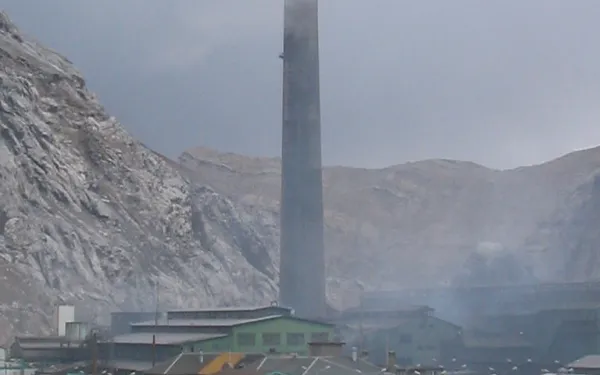
Still Waiting for Justice in La Oroya
Part 1 of a 2-Part Series on the Human Rights Situation in La Oroya, Peru. By María José Veramendi Villa Juana[1] is tired. She and her neighbors have been waiting eight years for a ruling; eight years for a decision that could better their lives, clean their air, attend to their sick children and families. What began as a courageous and hopeful quest for justice has become a discouraging waiting game. Since 2007, a group of residents in La Oroya, Peru, has acted as petitioner in a case before the Inter-American Commission on Human Rights, Community of La Oroya v. Peru. For nearly a century, their city has been contaminated by the operation of a metallurgical complex (smelter) within its borders. The smelter has blackened the air, poisoned their bodies, and released toxic chemicals into the land and water. La Oroya was once identified as one of the most polluted cities in the world. The severe contamination has, and continues to have, grave impacts on the health of the city’s residents. Realities of La Oroya When AIDA’s co-executive director Anna Cederstav first arrived in La Oroya in 1997, women were walking around with scarves covering their faces, a vain attempt to ease the pain of breathing. Juana explained that she had felt the steady burning in her eyes and throat—the effects of contamination—since she could remember, but didn’t pay it any mind. Like most of the population, she thought it was normal. She didn’t really know what clean air was because she’d never experienced it. AIDA has worked for nearly two decades with the community of La Oroya. In 2002, we published the report La Oroya Cannot Wait with the Peruvian Society for Environmental Law. That report began to reveal to the community the severity of the pollution and health risks they were facing on a daily basis. The community realized they had to do something. Juana said it was in 2003, more than 80 years after the smelter began operating, that she became aware of the contamination. Through work with her parish, she was able to access information and learn about what was happening in her city. From there, she connected the dots—the respiratory problems in her family were, in fact, a result of her city’s extreme contamination. The quest for justice Residents submitted their case before the Inter-American Commission after their attempts at justice within Peru produced no remedy. A 2006 ruling by Peru’s Constitutional Tribunal against the State ordered it to adopt measures to protect the health of the community, but the State took no such action. In 2007, the Commission urged the Peruvian state to carry out precautionary measures—a specialized diagnosis of 65 residents and treatment for those who showed irreversible damage to their lives or personal integrity. Juana said receiving news of the precautionary measures was a happy moment because “we knew that we were winning something. At the beginning, everything went well and we believed that everything would be fixed, (but) with the passing of months—years—there were no answers.” Then, in 2009, the Commission issued a report admitting AIDA’s petition, declaring that the State’s omissions in the face of pollution could, if proven, represent human rights violations. But still, nearly a decade after the petition was first filed, the victims await a decision, the precautionary measures have yet to be enforced, and the State’s responsibility for the acts have yet to be established. “It’s taking a really long time, and not all of us have the patience or desire to keep waiting,” Juana said. Time affects the victims, wearing them out until they begin to waver and give up fighting for their right to justice. They become even more vulnerable as they face a city hostile to anyone who fights for their rights to life and health, a state that denies its responsibility and looks for any excuse to avoid assuming responsibility, and a company that wants to polish its reputation and use its economic power to manipulate the government. Where is the law in these cases? Where is justice? Juana explained that leaving La Oroya would be impossible for her family, because there they have work. She remains committed to achieving change with the lawsuit. But that’s not the case for everyone. La Oroya contains thousands of stories of families whose lives were radically changed due to the city’s contamination and the subsequent damages to their health and lives. There are those who had to abandon their homes because they did not see a future in the city, and those who have been unable to leave La Oroya because their entire lives and family are there. Then there are those who have suffered painful attacks and insults from their own neighbors in a community worried about losing jobs, but who march forward with the conviction that, one day, change will come and La Oroya will be a better and fairer place for them, their children, and their grandchildren. I trust and hope that the law will deliver justice to salvage those years of waiting. [1] The name has been changed to protect the client. This blog is based on a longer article Maria José wrote on the case entitled La Oroya: A Painful Wait for Justice. It was published as Chapter 8 of DeJusticia’s book, Human Rights in Minefields: Extractive Economies, Environmental Conflicts and Social Justice in the Global South. Read the full account here.
Read more