
Project
Alberto Peña Kay
Protecting the Santurban páramo from mining's damage
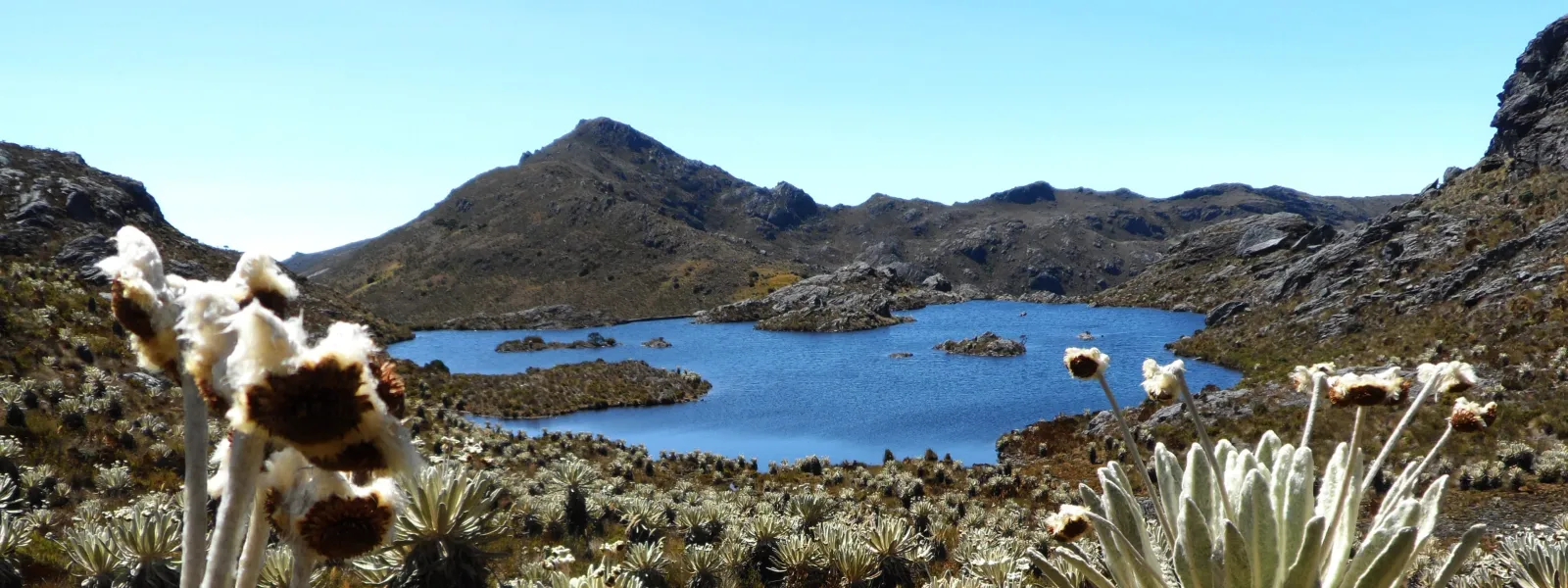
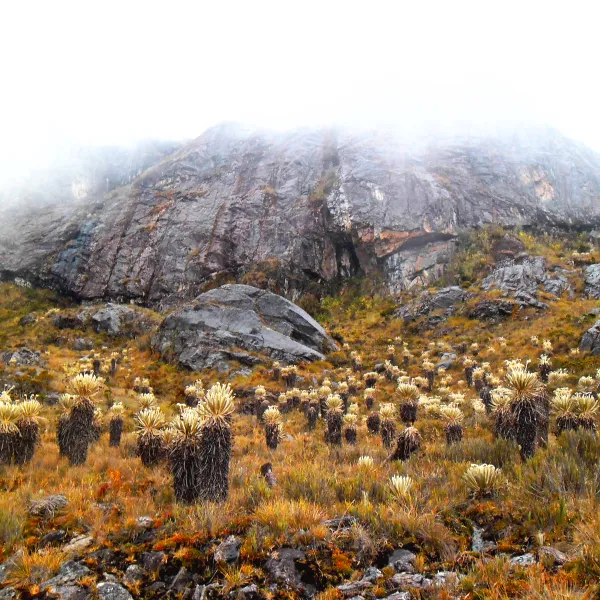
In the Andean region, high-mountain ecosystems known as páramos capture water from the fog and supply it to the lowlands. One such ecosystem is the Santurbán páramo, which provides fresh water to more than two million people in Colombia.
Santurbán, like the other páramos on the continent, also captures large amounts of carbon, making it a key ally in mitigating the climate crisis. It is also a refuge for hundreds of endangered species, including the iconic spectacled bear.
The land in and around the páramo contains gold and other minerals. This has put Santurbán in the spotlight of the multinational mining industry, which for decades has sought to establish large-scale projects in the ecosystem that threaten to degrade it.
The Committee for the Defense of Water and the Santurbán Páramo—a coalition of environmental advocates—has thwarted these ongoing attempts, with support from AIDA and other civil society organizations.
Background
The Santurbán páramo is located in the heart of the Eastern Cordillera of the Colombian Andes, in the departments of Santander and Norte de Santander, at an elevation ranging from 2,200 to 4,290 meters above sea level.
It covers an area of 129,743 hectares and is home to 57 lakes. It serves as a habitat for 457 plant species and 293 species of vertebrate fauna.
There are mineral deposits in Santurbán, primarily gold, but also silver and copper. This explains the region’s mining tradition, particularly in the part of the páramo located in Santander, in the province of Soto Norte. The communities in the area have built their culture and identity around gold mining, which is mainly artisanal and small-scale.
But since the 1990s, the gold deposits in the páramo have also attracted foreign mining conglomerates seeking to develop large-scale projects. This has raised concerns among the population that relies on the Santurbán water sources, who have mobilized in defense of water, their land, and life.
Although national and international regulations prohibit mining in páramos, the Colombian government has granted mining concessions to transnational corporations in Santurbán.
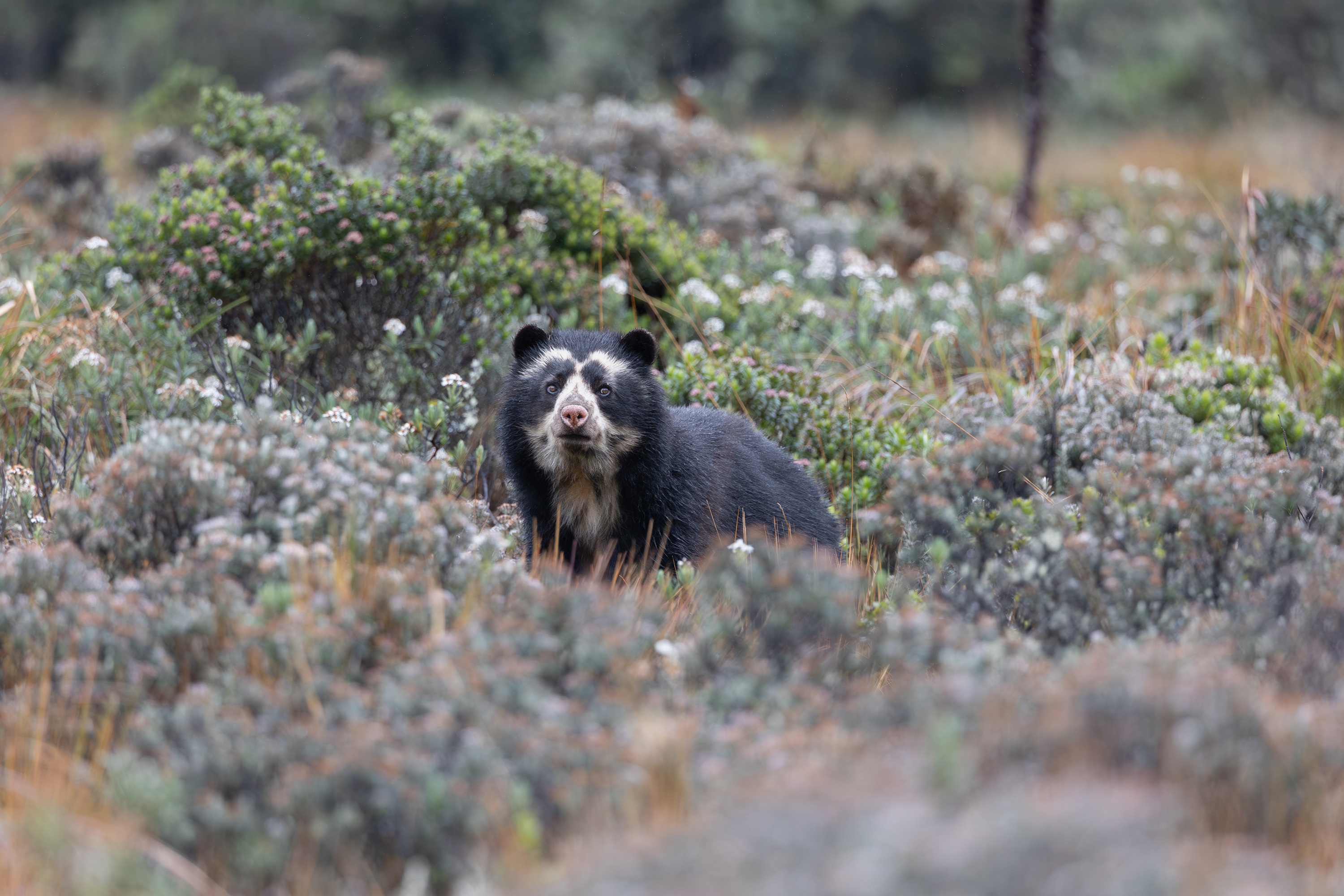
Photo: Keishpixl / Pixabay.
The long struggle to protect the páramo
One of the companies that sought to develop large-scale mining in Santurbán is Eco Oro Minerals Corp.—formerly Greystar Resources—a Canadian company that intended to establish the Angostura open-pit mine there to extract gold and silver. Between 1994 and 1995, the company acquired its mining titles and conducted exploration. And in 2010, it applied for a mining permit.
That was the year AIDA became involved in defending the ecosystem, supporting the Committee for the Defense of Water and the Santurbán Páramo. Our legal work helped convince the Colombian government to deny the mine an environmental permit in May 2011.
In January 2013, the government designated a portion of the páramo (11,700 hectares) as a Regional Natural Park. That year—together with the committee and partner organizations—we carried out a campaign and advocacy efforts to urge the government to recognize the entire Santurbán area as a páramo ecosystem through a delimitation based on scientific criteria. In December 2014, the Ministry of the Environment established a delimitation that protected 76% of the páramo (98,954 hectares).
Furthermore, as a result of a litigation supported by AIDA, in February 2016, Colombia’s highest court reaffirmed that mining in páramos is prohibited.
That same year, in December, the International Finance Corporation (IFC), the World Bank Group’s private sector arm, decided to divest from Eco Oro Minerals. This achievement was the result of a process that began in 2012, when the committee—advised and supported by AIDA and international partner organizations—filed a complaint before an independent accountability mechanism, which concluded that the IFC’s investment in the Angostura project failed to take into account the project’s social and environmental impacts, thereby contradicting the financial institution’s internal policies.
Also in 2016, Eco Oro Minerals filed an arbitration claim against the Colombian government with the International Centre for Settlement of Investment Disputes (ICSID), arguing that it had been adversely affected by government decisions aimed at protecting the country’s páramos, including the delimitation of Santurbán.
In 2017, the Constitutional Court invalidated the delimitation because the affected communities were not consulted. The high court ordered that a participatory delimitation be carried out.
And that year, a new threat to Santurbán emerged when the Canadian multinational Aris Mining applied for an environmental permit for Soto Norte, a gold mining project located near the páramo. Following citizen protests and technical objections, in October 2020, the National Environmental Licensing Authority shelved the project.
Photo: Aztlec.
Current situation
In March 2025, the Colombian government designated the western flank of the Santurbán massif as a temporary renewable natural resource reserve area, delimiting and protecting an area of 75,344.65 hectares. This resulted in a two-year suspension of the Soto Norte project. However, Aris Mining's contract to formalize Calimineros' small-scale mining activities through the purchase and processing of mineralized material remains in effect.
In addition, the Canadian mining company continues to move the project forward. In September 2025, it released its prefeasibility study, revising the mine’s original design.
Meanwhile, members of the Committee for the Defense of Water and the Santurbán Páramo face threats and stigmatization because of their work. In March 2025, UN Special Rapporteurs and the Working Group on Business and Human Rights denounced these incidents in communications sent to the governments of Colombia, Canada, and the United Arab Emirates, as well as to the companies Aris Mining and MDC Industry Holding Company LLC, the former co-owner of the Soto Norte project.
Regarding the arbitration claim filed by Eco Oro Minerals, in July 2024, ICSID ruled in favor of the Colombian government and rejected the Canadian company’s claim for USD 1.1 billion in compensation.
Concerning the delimitation of Santurbán, in July 2026, the Ministry of the Environment issued a resolution introducing the concept of "progressive delimitation." On that basis, the government proposes to progressively demarcate the páramo, covering 29,199 hectares across 19 municipalities—those where the participatory agreements required by the Constitutional Court in its 2017 ruling have already been finalized. It also proposes two measures on the creation and expansion of reserves to restrict mining in the ecosystem.
Learn more about the impacts of mining on the páramos of Latin America (in Spanish).
Partners:
Related projects
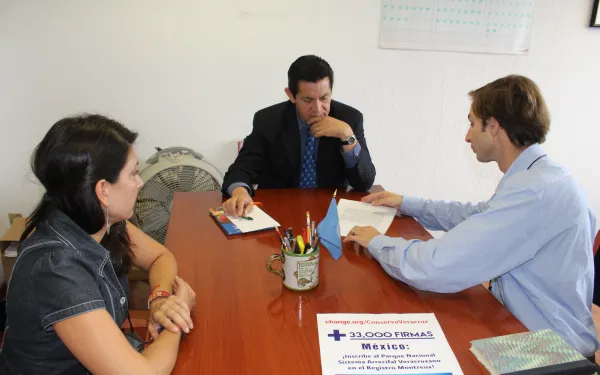
Nearly 37,000 people urge SEMARNAT to protect Mexico’s natural treasures
The Los Tuxtlas Biosphere Reserve and the Veracruz Reef System are at risk from the expansion of the Port of Veracruz, authorized by SEMARNAT. Signatures to protect the important natural sites were collected on a citizens’ petition at change.org/saveveracruz A coalition of organizations has alerted the Scientific Committee of the Inter-American Commission for the Protection of Sea Turtles of the threat the project poses to sea turtles. Yesterday civil society organizations delivered more than 36,000 signatures urging Mexico’s Secretary of Environment and Natural Resources (SEMARNAT) to revoke an environmental permit granted for the extraction of basaltic rock from Los Tuxtlas Biosphere Reserve for the expansion of the Port of Veracruz. The highly successful citizens’ petition was delivered to José Luis Juan Bravo Soto, the Director of Citizen Services at SEMARNAT, and David Gutiérrez Carbonell, the Director General of Conservation Development at CONANP. The authorization granted to the Port Authority of Veracruz by the government in June 2014 would increase the damage the port has historically cause to the surrounding coral reef ecosystem, and put in danger two of the most important natural treasures in Mexico: the Los Tuxtlas Biosphere Reserve and the Veracruz Reef System. The Interamerican Association for Environmental Defense (AIDA), the Centro Mexicano de Derecho Ambiental, A.C. (CEMDA) and the organizations Resistencia Organizada por la Conservación Ambiental (La Roca) and the Asamblea Veracruzana de Iniciativas y Defensa Ambiental (LAVIDA) stated in a press conference that the Veracruz Reef System is already in grave danger due to SEMARNAT’s approval, without sufficient technical and scientific information, of a plan to modify the borders of the Veracruz Reef System National Park in order to expand the Port of Veracruz. Permission granted for the extraction of basaltic rock from Los Tuxtlas Biosphere Reserve for construction of the port’s new jetties conflicts with the Reserve’s management program, which expressly prohibits the use of explosives in the area. This region contains one of the last rainforests in Mexico, serves as a natural barrier against hurricanes and tropical storms, provides a refuge to millions of plant and animal species, and is home to many communities. In addition to actions taken so far, on September 22 AIDA and CEMDA presented a report before the Scientific Committee of the Inter-American Convention for the Protection and Conservation of Sea Turtles (IAC), detailing the direct and indirect impacts that the expansion of the Port of Veracruz would have on sea turtles and their habitat. The Veracruz Reef System is the largest coral ecosystem in the Gulf of Mexico. It works as a natural barrier against waves and storms; in 2010 it protected the city of Veracruz from Hurricane Karl. It is also home to a large variety of flora and fauna. The coasts of Veracruz, including the reef system, receive at different times of year five species of neotropical sea turtles. The Port Authority said in its environmental impact statement that the project “will never have a direct effect on protected species.” The statement, however, failed to provide protection measures for sea turtles, particularly for the hawksbill turtle, listed as a threatened species under both the Sea Turtle Convention and Mexican law. This species is found in the Veracruz Reef System National Park and has migration routes throughout the Gulf of Mexico. SEMARNAT authorized the expansion project in December 2013, without requiring a special management plan for the conservation of the hawksbill sea turtle. The authorization, therefore, runs contrary to the obligation of the Mexican government to promote the protection, conservation and recovery of sea turtle populations and the habitat on which they depend, particularly spawning and feeding grounds. It does nothing to restrict human activities that could affect the turtles, particularly during periods of breeding and incubation. The Veracruz Reef System was declared a Natural Protected Area in 1992 and was registered, in 2004, as a Wetland of International Importance in accordance with the characteristics established by the Ramsar Convention. The authorization granted by the environmental authority therefore contravenes national and international standards and does not properly consider the cumulative impacts that the project would have on the ecosystem. It also ignores the Mexican government’s responsibility to protect the biodiversity found within its territory, and disregards the National Biodiversity Strategy and provisions of the Convention on Biological Diversity. Sign the petition at: change.org/saveveracruz Photos of the delivery of signatures: http://www.cemda.org.mx/?p=4555
Read more
A World Without Ozone
By Laura Yaniz In Mexico, on September 16th, people rest from a night of partying, and so does the sky. In that country, Independence Day begins contaminated by the excessive fireworks used in patriotic celebrations. The irony is that, worldwide, that same day is reserved to celebrate the preservation of the ozone layer. What would have happened had we not decided to care for the ozone? Each 16th of September, Mexico City wakes up with its air hanging thick and dirty. Although the streets are nearly empty, the government maintains a “Don’t Drive Today” program and sanctions distracted drivers whose plate numbers are forbidden from driving that day. I call them “distracted” because on holidays, the government often suspends the “Don’t Drive Today” program, but not on September 16th. On this day, everyone must recover from his or her hangover, including the sky. This is a result of September 15th, when Mexico celebrates its “motherland night.” In cities across the country, thousands of fireworks are launched from plazas packed full of partiers. And so, the next day, the sky hangs even greyer than usual. It’s a bit ironic that September 16th is International Day for the Preservation of the Ozone Layer. More ironic still is that a Mexican named Mario Molina was part of the group of scientists who discovered what was causing the hole in the ozone layer: chemicals expelled into the air by human beings. The discovery became a turning point in the war against gases that damage our atmosphere. It led to diplomatic actions worldwide: the Montreal Protocol was signed with the specific purpose of protecting the ozone, prohibiting the use of chlorofluorocarbons (CFCs, commonly known as Freon) and spurring the elimination of other harmful substances. “My first environmental panic,” is how Florencia Ortúzar, AIDA climate change attorney, remembers it. And why not? Destroying the ozone meant weakening protection against the UV rays that cause skin cancer and cataracts, not to mention the fact that extremely dangerous radiation could cause drastic changes in the ecosystems we rely upon in our own lives. We’ve had 40 years of scientific investigation into the effects of chemicals on the ozone, and 30 years of global and political actions to confront them. Have they mattered at all? Yes. The world we avoided NASA published a simulation that explains the world that might have been had we not acted so quickly to protect our ozone: By 2020, 17 percent of all ozone would have disappeared on a global level. By 2040, UV radiation would have reached an index of 15 in mid-latitudes. An index of 10 is considered extreme and can cause burns within 10 minutes. By 2065, we would have lost two-thirds of the ozone, causing never-before-seen UV radiation levels, which could cause burns in only 5 minutes of exposure. Would we have reached 2100? NASA didn’t say. The hope: What we can do Richard Stolarski, a scientific pioneer in ozone studies and the co-author of NASA’s simulation, expressed his admiration for the global work to confront the problem: “I didn’t think the Montreal Protocol would work, it was very naïve in terms of politics. Now it is a remarkable international agreement and should be studied by all those involved in seeking a global agreement on global warming.“ Certainly, what was achieved was inspirational, because a catastrophic situation was avoided. But we can’t let down our guard just yet. When the Montreal Protocol prohibited chlorofluorocarbons, industry replaced them with hydrofluorocarbons. Like the CFCs they replaced, HFCs are potent greenhouse gases. As part of our Climate Change program, we work to reduce emissions of short-lived climate pollutants, which include hydrofluorocarbons. Although they represent only a small percentage of greenhouse gases, their production and use are growing and will continue to increase if action is not taken. That’s why at AIDA we are working to identify ways to strengthen regulations that reduce emissions of short-lived climate pollutants. Because these pollutants persist in the atmosphere only briefly, reducing their concentrations can provide near-term climate benefit, giving us more time to implement renewable energy and efficiency programs that lessen the severity of climate change. Are you with us?
Read more
The new climate agreement should help nations meet existing commitments!
The governments of the world are working on the negotiating text of a new global agreement to combat climate change. It will be signed in December, during the Paris Conference of the United Nations Framework Convention on Climate Change, and will take effect in 2020. AIDA is advocating for the new climate agreement to be a tool that adequately addresses the effects of extreme changes in climate, especially in the most vulnerable countries. "We want the new climate agreement to help implement existing agreements effectively and strengthen national commitments made through the United Nations Framework Convention on Climate Change; we cannot start from scratch and the new agreement should not replace the Convention, but rather improve its implementation, "said Andrea Rodriguez, AIDA senior attorney. With a view to the Paris Conference, delegates from various countries are meeting to work on the elements that will form the basis of the "Paris package." The package includes a new climate agreement (overarching commitments) and a decision (provisions likely to change over time) that spell out commitments made under the Convention. The next meeting will be held in Bonn, Germany, from August 31 to September 4. To contribute positively to the draft negotiating texts of the agreement and decision, AIDA prepared remarks for the negotiators aimed at strengthening two key issues: the financing of activities to combat climate change, and protection of human rights in carrying out such activities. On climate financing, the comments emphasize the need for the new climate agreement to help mobilize sufficient, adequate and predictable financial resources effectively, establishing concrete commitments, such as terms of responsibilities and timeframes. On the second point, the comments ask the Paris agreement countries to commit themselves to protecting human rights in all actions related to climate change, a commitment already made in the Cancun Agreements of 2010 that needs to be reaffirmed in the new legally binding climate change agreement in order to ensure compliance. Countries have already committed to provide 100 billion dollars to the fight against climate change, beginning in 2020. "The Paris decision on climate finance must provide assurance that countries will make every effort to ensure that commitment from 2020 on; then we will be able to trust that the new climate agreement will actually work," Rodriguez said. Learn more about our comments on climate finance and human rights for the new climate deal!
Read more