
Project
Alberto Peña Kay
Protecting the Santurban páramo from mining's damage
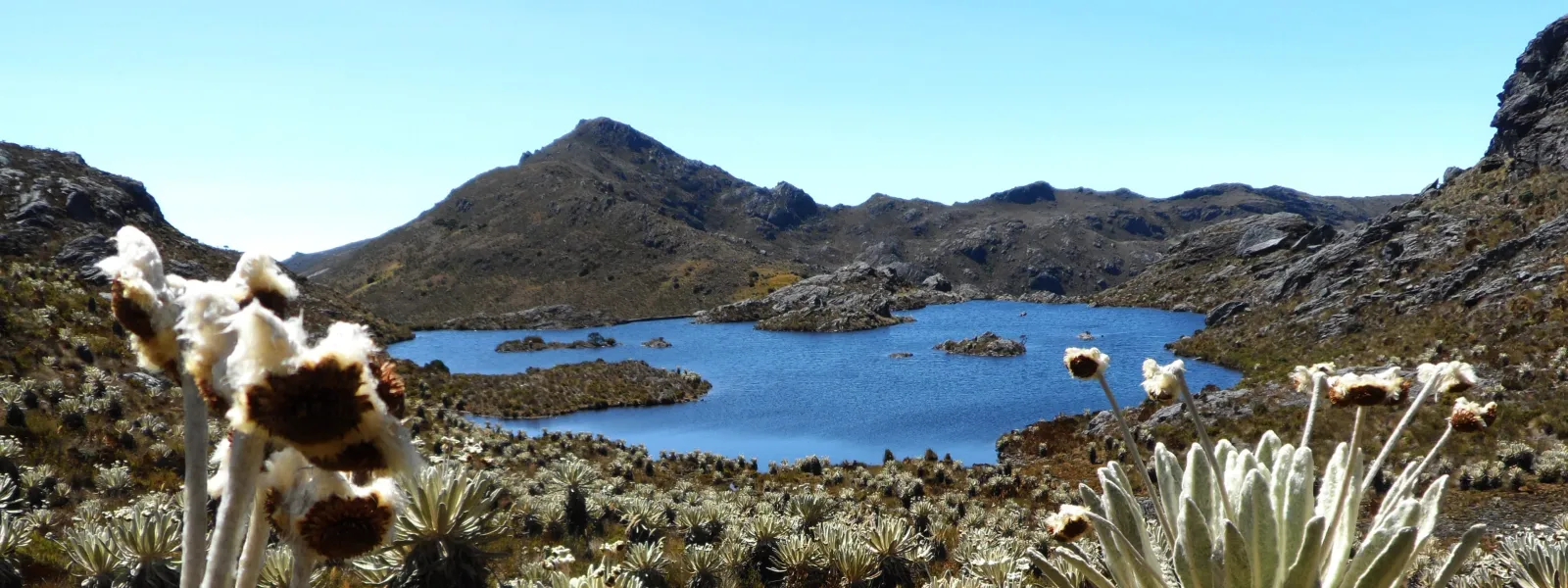
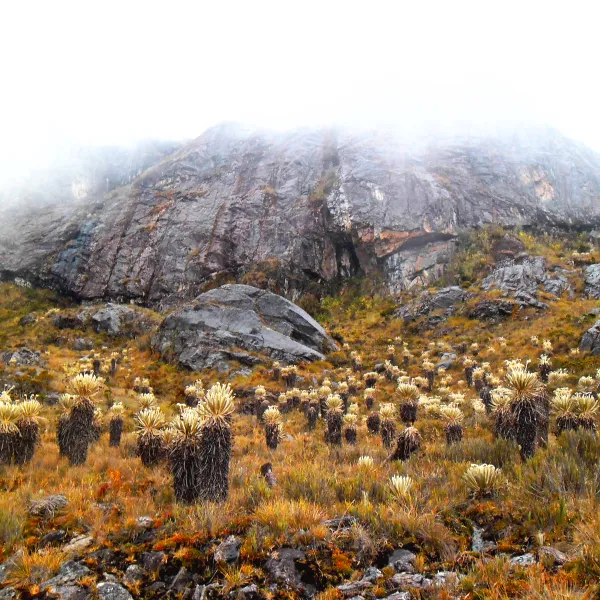
In the Andean region, high-mountain ecosystems known as páramos capture water from the fog and supply it to the lowlands. One such ecosystem is the Santurbán páramo, which provides fresh water to more than two million people in Colombia.
Santurbán, like the other páramos on the continent, also captures large amounts of carbon, making it a key ally in mitigating the climate crisis. It is also a refuge for hundreds of endangered species, including the iconic spectacled bear.
The land in and around the páramo contains gold and other minerals. This has put Santurbán in the spotlight of the multinational mining industry, which for decades has sought to establish large-scale projects in the ecosystem that threaten to degrade it.
The Committee for the Defense of Water and the Santurbán Páramo—a coalition of environmental advocates—has thwarted these ongoing attempts, with support from AIDA and other civil society organizations.
Background
The Santurbán páramo is located in the heart of the Eastern Cordillera of the Colombian Andes, in the departments of Santander and Norte de Santander, at an elevation ranging from 2,200 to 4,290 meters above sea level.
It covers an area of 129,743 hectares and is home to 57 lakes. It serves as a habitat for 457 plant species and 293 species of vertebrate fauna.
There are mineral deposits in Santurbán, primarily gold, but also silver and copper. This explains the region’s mining tradition, particularly in the part of the páramo located in Santander, in the province of Soto Norte. The communities in the area have built their culture and identity around gold mining, which is mainly artisanal and small-scale.
But since the 1990s, the gold deposits in the páramo have also attracted foreign mining conglomerates seeking to develop large-scale projects. This has raised concerns among the population that relies on the Santurbán water sources, who have mobilized in defense of water, their land, and life.
Although national and international regulations prohibit mining in páramos, the Colombian government has granted mining concessions to transnational corporations in Santurbán.
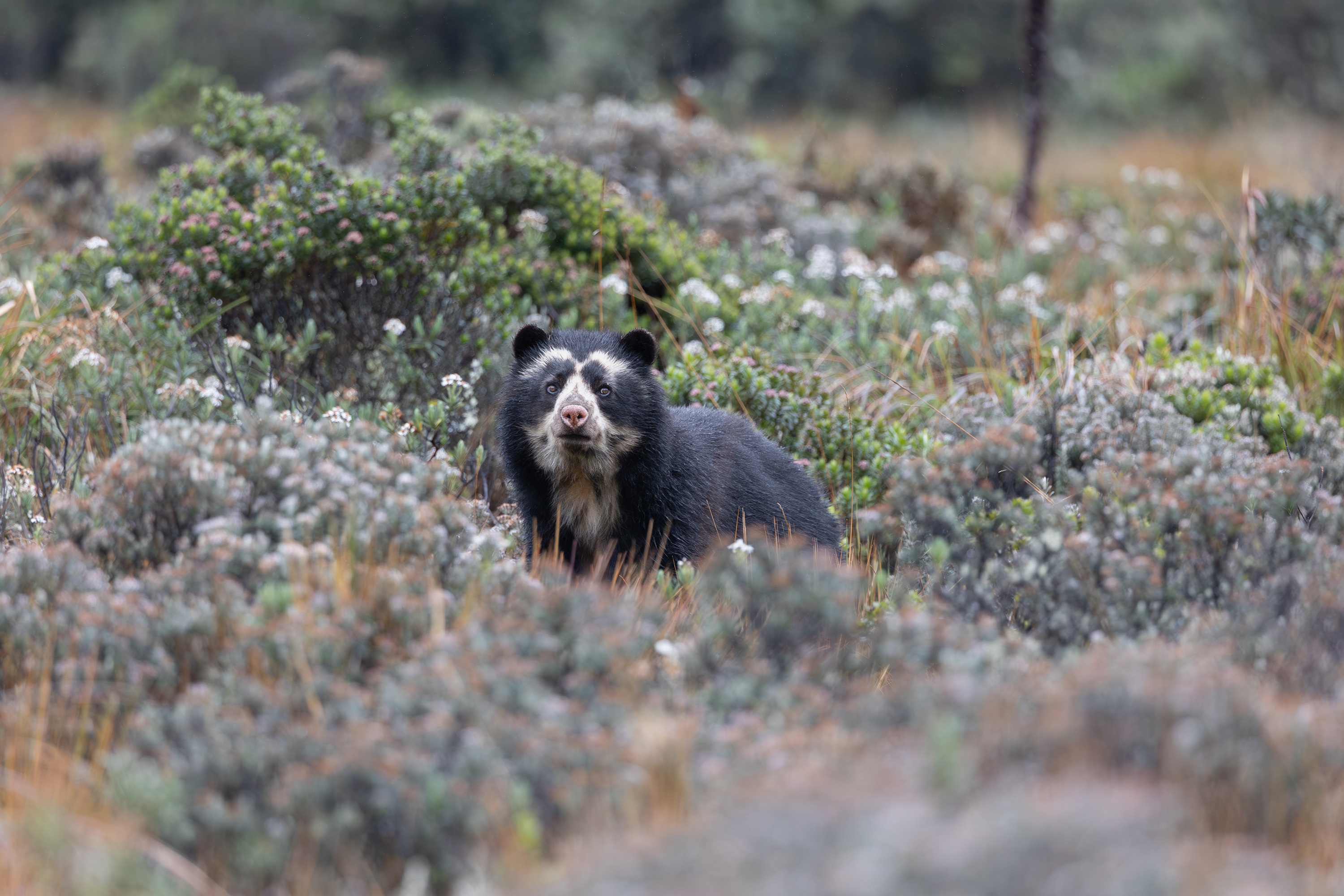
Photo: Keishpixl / Pixabay.
The long struggle to protect the páramo
One of the companies that sought to develop large-scale mining in Santurbán is Eco Oro Minerals Corp.—formerly Greystar Resources—a Canadian company that intended to establish the Angostura open-pit mine there to extract gold and silver. Between 1994 and 1995, the company acquired its mining titles and conducted exploration. And in 2010, it applied for a mining permit.
That was the year AIDA became involved in defending the ecosystem, supporting the Committee for the Defense of Water and the Santurbán Páramo. Our legal work helped convince the Colombian government to deny the mine an environmental permit in May 2011.
In January 2013, the government designated a portion of the páramo (11,700 hectares) as a Regional Natural Park. That year—together with the committee and partner organizations—we carried out a campaign and advocacy efforts to urge the government to recognize the entire Santurbán area as a páramo ecosystem through a delimitation based on scientific criteria. In December 2014, the Ministry of the Environment established a delimitation that protected 76% of the páramo (98,954 hectares).
Furthermore, as a result of a litigation supported by AIDA, in February 2016, Colombia’s highest court reaffirmed that mining in páramos is prohibited.
That same year, in December, the International Finance Corporation (IFC), the World Bank Group’s private sector arm, decided to divest from Eco Oro Minerals. This achievement was the result of a process that began in 2012, when the committee—advised and supported by AIDA and international partner organizations—filed a complaint before an independent accountability mechanism, which concluded that the IFC’s investment in the Angostura project failed to take into account the project’s social and environmental impacts, thereby contradicting the financial institution’s internal policies.
Also in 2016, Eco Oro Minerals filed an arbitration claim against the Colombian government with the International Centre for Settlement of Investment Disputes (ICSID), arguing that it had been adversely affected by government decisions aimed at protecting the country’s páramos, including the delimitation of Santurbán.
In 2017, the Constitutional Court invalidated the delimitation because the affected communities were not consulted. The high court ordered that a participatory delimitation be carried out.
And that year, a new threat to Santurbán emerged when the Canadian multinational Aris Mining applied for an environmental permit for Soto Norte, a gold mining project located near the páramo. Following citizen protests and technical objections, in October 2020, the National Environmental Licensing Authority shelved the project.
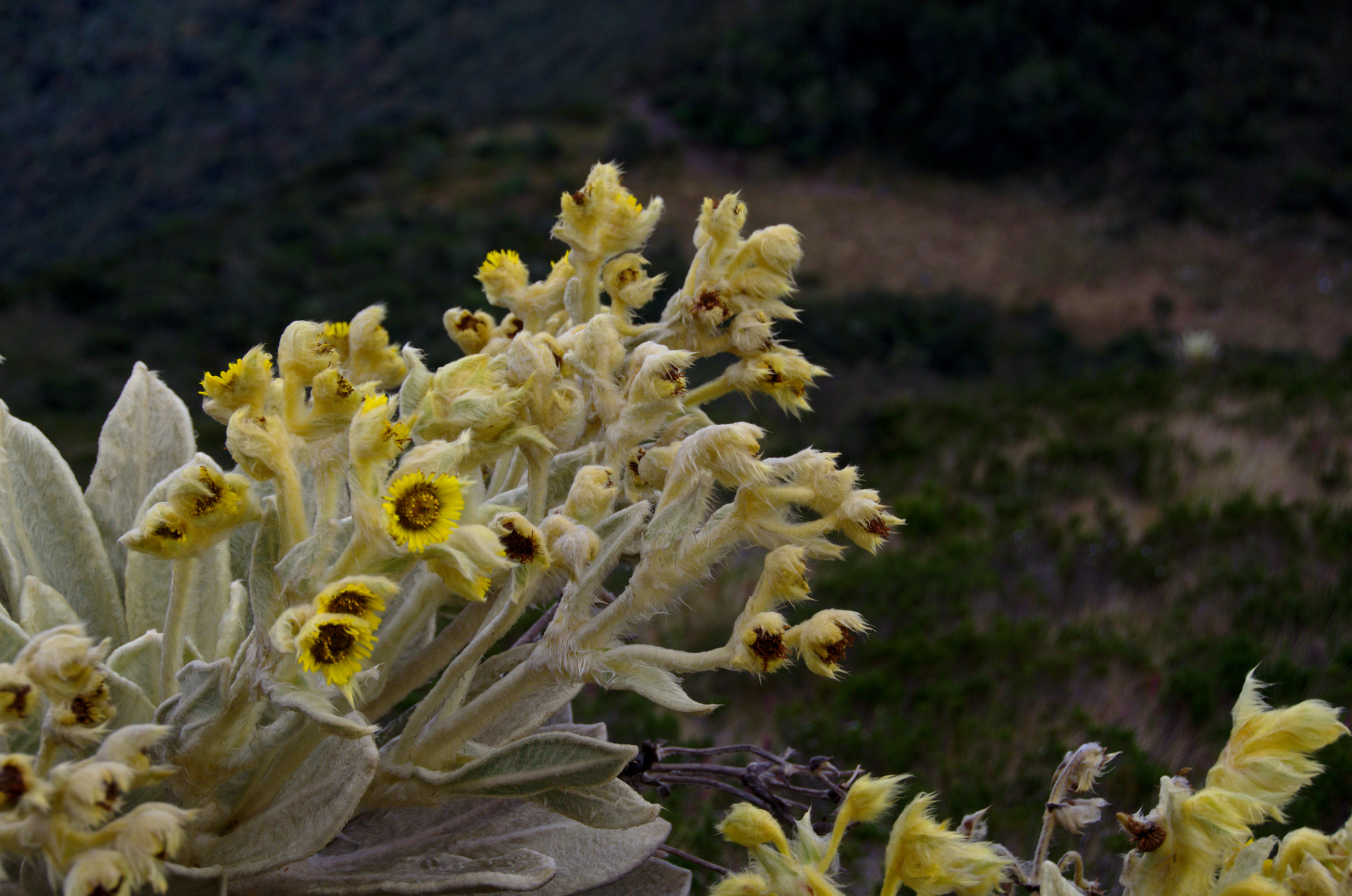
Photo: Aztlec.
Current situation
In March 2025, the Colombian government designated the western flank of the Santurbán massif as a temporary renewable natural resource reserve area, delimiting and protecting an area of 75,344.65 hectares. This resulted in a two-year suspension of the Soto Norte project. However, Aris Mining's contract to formalize Calimineros' small-scale mining activities through the purchase and processing of mineralized material remains in effect.
In addition, the Canadian mining company continues to move the project forward. In September 2025, it released its prefeasibility study, revising the mine’s original design.
Meanwhile, members of the Committee for the Defense of Water and the Santurbán Páramo face threats and stigmatization because of their work. In March 2025, UN Special Rapporteurs and the Working Group on Business and Human Rights denounced these incidents in communications sent to the governments of Colombia, Canada, and the United Arab Emirates, as well as to the companies Aris Mining and MDC Industry Holding Company LLC, the former co-owner of the Soto Norte project.
Regarding the arbitration claim filed by Eco Oro Minerals, in July 2024, ICSID ruled in favor of the Colombian government and rejected the Canadian company’s claim for USD 1.1 billion in compensation.
Concerning the delimitation of Santurbán, in July 2026, the Ministry of the Environment issued a resolution introducing the concept of "progressive delimitation." On that basis, the government proposes to progressively demarcate the páramo, covering 29,199 hectares across 19 municipalities—those where the participatory agreements required by the Constitutional Court in its 2017 ruling have already been finalized. It also proposes two measures on the creation and expansion of reserves to restrict mining in the ecosystem.
Learn more about the impacts of mining on the páramos of Latin America (in Spanish).
Partners:
Related projects

5 Major AIDA Achievements of the Past 6 Months
1. Colombia Suspends Aerial Spraying of Glyphosate In May 2015, Colombia announced its intentions to suspend the aerial spraying of a toxic herbicide containing glyphosate, the main ingredient in RoundUp, which has been used for more than 20 years to eradicate coca and poppy crops. The decision was made final on September 30, when the environmental management plan allowing such spraying was suspended. Pressure on the government mounted with a couple of key court decisions after AIDA and allies in Colombia and the U.S. launched an online petition. Together we collected almost 25,000 signatures from people calling on President Juan Manuel Santos and the Minister of Justice to end the spraying. Colombia’s spraying has doused homes, farms, forests, and water in vast rural areas, wreaking havoc in sensitive ecosystems, and damaging water sources and food crops in one of the most biodiverse nations on our planet. It has even forced families, including some in indigenous communities, off their lands. AIDA has worked to end the spraying over a period spanning 17 years. When the Minister of Health recently recommended suspending the program over fears that the chemical causes cancer, AIDA worked with the media and organized partners to generate and participate in a national debate. 2. Panamanian Congress Protects Panama Bay Wetland Wildlife Refuge After years of legal wrangling, Panama passed a law on February 2, 2015—World Wetlands Day—that grants permanent protection to the ecologically critical Panama Bay. The law staves off proposed tourist resorts that would harm mangrove forests essential for wildlife, coastal protection, the local fishing industry, and climate change mitigation. AIDA’s collaboration with its local partner, CIAM (the Center for Environmental Defense), ensured that this law is strong enough to guarantee rational uses of wetland resources throughout the country. Panama Bay is one of the world’s most important nesting sites for migratory birds and provides a home for endangered loggerhead turtles and jaguars. Mangroves in the bay buffer increasingly strong storm surges and capture 50 times more carbon than tropical forests. Under the Ramsar Convention, an international treaty for wetland conservation, the Bay is listed as a Wetland of International Importance. AIDA’s work is helping protect all the ecosystem services that this critical area provides. 3. Colombian Government Protects 76% of the Santurbán Páramo AIDA joined with local organizations to build public support for protection of Colombia’s páramos, high-altitude wetlands unique to Latin America. Our work garnered 20,000 petition signatures and generated significant media attention. The Colombian government’s decision to enlarge the protected area of the páramo known as the Santurbán is an important victory for the people of Colombia. The Santurbán supplies fresh water to nearly two million people and provides habitat for threatened species. It also captures large amounts of carbon, mitigating climate change. Several years ago, Colombia passed a law that protects páramos—an important step, because the land in and around the Santurbán contains gold and other minerals that international corporations are eager to mine. To implement the law and truly protect the Santurbán, Colombia had to establish the borders of the protected area. The boundaries initially proposed included only a small fraction of the páramo. Now most of it is protected. 4. Major Reference Reports Published One of the key services AIDA provides—producing Spanish-language reports based on legal research and analysis—benefits government officials, journalists, civil society groups and industry decision makers who are striving to protect our shared environment. We compile extensive information about threats to natural resources and best practices for environmental protection. Our reports fill gaps in knowledge among key Latin American policymakers and advocates. Recent AIDA publications that can help guide efforts toward environmental protection include: International Regulatory Best Practices For Coral Reef Protection. Protecting Coral Reefs in Mexico: Rescuing Marine Biodiversity and Its Benefits for Humankind. Basic Guidelines for the Environmental Impact Assessment of Mining Projects: Recommended Terms of Reference. 5. Regional Fracking Group Established: 30 Organizations in Seven Nations In Latin America, many countries are opening their doors to fracking—the practice of injecting water, sand and chemicals at high pressure to shatter rocks and release natural gas from deep underground. Governments are doing so with little or no understanding of the environmental and health impacts of this technology, and with the absence of adequate processes to inform, consult, and engage affected communities. With AIDA’s help, the Regional Group on Fracking was formed to raise awareness, generate public debate, and prevent risks associated with fracking. The group seeks to ensure that the rights to life, public health, and a healthy environment are respected in Latin America. The Group consists of civil society organizations and academic institutions mainly from Argentina, Brazil, Bolivia, Colombia, and Mexico, collaborating to: Identify affected communities and fracking operations in the region, and document impacts; Advance strategies to stop harmful projects and slow the spread of fracking; and Organize seminars and provide educational materials about the risks and impacts of fracking to ensure that a precautionary approach is taken.
Read more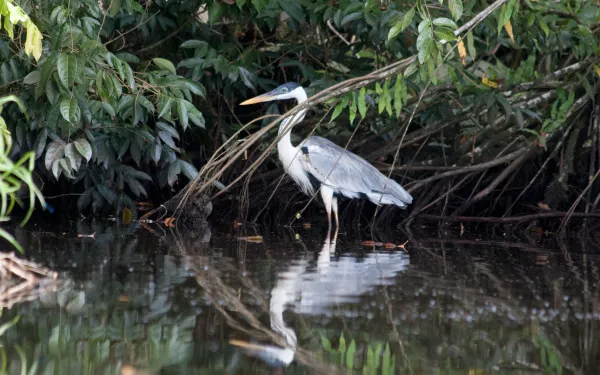
NGOs celebrate suspension of aerial spraying, advance in Colombian environmental law
They highlight the application of the precautionary principle in the resolution to suspend spraying, and pledge to stay alert to the threat posed by the potential manual use of glyphosate or its replacement with another chemical. Bogota, Colombia. Civil society organizations finally celebrate the temporary and preventive suspension of aerial spraying with glyphosate as an advance in the protection of public health and the right to a healthy environment in Colombia. They note that the National Environmental Licensing Agency (ANLA) applied the precautionary principle in the resolution, which ordered the suspension of a technique employed for more than two decades to eradicate coca and poppy crops considered of illicit use. On May 29, Colombia’s National Narcotics Council decided to suspend aerial spraying with glyphosate (Resolution 006). For the measure to be effective, ANLA had to suspend or revoke the Environmental Management Plan of the Program for Illicit Crop Eradication Using Aerial Spraying with Glyphosate (ICEPG). That suspension occurred on September 30 with Resolution 1214. The resolution is founded on the precautionary principle, and follows the recommendations of the Ministry of Health and the National Narcotics Council, both of which were based, in turn, on the opinion of the International Agency for Research on Cancer, which has concluded that glyphosate is a “probable carcinogen" to humans. The Interamerican Association for Environmental Defense (AIDA) considers the application of the precautionary principle an important advance for Colombian environmental law. “Today we can finally celebrate the suspension of the sprayings, after decades of evidence of harm to human health and the environment, and of the program’s inefficiency,” said Astrid Puentes Riaño, co-director of AIDA. For Yamile Salinas Abdala, investigator with the Institute for Studies of Development and Peace (INDEPAZ), “it’s necessary to draw attention to the power the Narcotics Council gave ANLA to resume spraying with glyphosate and employ the use of other herbicides, under certain conditions and through the prior consent of competent authorities, without specifying who those authorities are.” Pedro Arenas, coordinator of the Observatory of Crops and Growers Declared Illicit, said, “In the face of the decision of the President of the Republic and the National Narcotics Council, it was untenable to continue spraying with glyphosate. However, it’s inexplicable that the Director of the Colombian National Police wants to continue using it manually, and that the Ministry of Defense threatened to replace it with another substance to continue aerial spraying. For these reasons, we must remain vigilant.” In May, AIDA and INDEPAZ delivered more than 24,000 signatures to the Colombian Ministry of Justice on a petition launched through the platform Change.org to solicit an end to aerial spraying with glyphosate in Colombia. This month, 10 civil society organizations solicited the National Council for Pesticides and the National Narcotics Council to revoke the eradication program, and advised against the use of other herbicides. The organizations are the Washington Office on Latin America, the Latin America Working Group, AIDA, the Centro de Investigación y Educación Popular, Comisión Colombiana de Juristas, Grupo Semillas, Planeta Paz, Mamacoca, Red de Justicia Ambiental and Proceso de Comunidades Negras (PCN). That request reflected the decisions adopted by the Constitutional Court (Auto 073 of 2014) and the State Council (Rad. 2004-00227-01 of 2013), as well as the recommendations of the Advisory Committee for Drug Policy in the report “Guidelines for a New Approach to Drug Policy in Colombia,” published in May 2015.
Read more6 Things You Should Know About The Paris Climate Talks
Across Latin America, and the world, communities are facing the severe effects of a changing climate. As floods destroy ancestral homes, and droughts threaten livelihoods, the urgency with which world leaders must act is becoming increasingly apparent. It is in this critical global climate that world leaders will meet this December in Paris for a pivotal meeting of the United Nations Framework Convention for Climate Change (UNFCCC), also known as COP21. The conference is expected to produce a new global agreement on climate change, which we hope will set the stage for the transition to a low carbon, climate resilient economy. AIDA’s lead Climate Change attorney Andrea Rodríguez has been monitoring key elements of the ongoing climate negotiations and bringing information and analysis to policy makers and NGOs throughout the Americas. To prepare you for the barrage of news that will come out of COP21, we’ve asked Rodríguez some questions we thought you’d like to know the answers to: What is the COP21? The meeting in Paris will be the 21st yearly session of the Conference of Parties to the global climate change convention, also known as the UNFCCC. World leaders will convene in Paris with the goal of signing a new global agreement on climate change. The primary goal of the agreement will be to reduce greenhouse gas emissions and limit global temperature increase to 2° C above pre-industrial levels, so we can adapt to the new changes in climate. Why is the conference so important? Climate change is a global problem that requires global solutions. No matter what governments do, if they don’t work together and take collaborative actions, we are never going to succeed at providing an effective solution. That’s why a global space that coordinates what countries do to tackle the problem is crucial for finding a way forward. The global treaty on climate change has been established for more than 20 years. What we need from COP21 is further guidance to ensure its effective implementation. If we don’t provide clarity on exactly how we’re going to achieve reduced emissions in a timely manner, we’re putting at risk the future of the planet. What are the key issues AIDA is following? AIDA is following two key components in the development of the new climate accord: climate finance and the protection of human rights in climate related activities. Climate finance entails providing money for developing countries—which are generally the least responsible for and the most impacted by climate change—to implement climate related actions effectively. COP21 needs to provide clarity on the specifics of that support—when and how will it arrive, and where will the money come from? A baseline of $100 billion per year by 2020 has already been agreed upon. But how do we make sure that goal is reached, and that is continues to grow? And, once resources are distributed, there must be mechanisms in place to ensure those resources are used properly and effectively. AIDA is pushing governments to incorporate human rights protections into the agreement, because climate change directly affects human rights. We need to create a broad consciousness of the human rights dimensions of climate change. That includes incorporating specific language to ensure the protection of human rights in all climate actions. When governments or institutions are planning climate-focused projects, programs, plans and strategies, they must also think about how those projects will affect people and the realization of their human rights. What will the agreement mean for governments? Governments of the world need to start looking within. They must do an internal analysis to see what they have, and what they need, to ensure they can strategically implement the agreement. In order for a nation to commit to taking action, it must first make sure it has the institutional capacity and the means to succeed. What will it mean for the average person? The climate agreement is a political commitment, but it will certainly have repercussions at the local level. It will influence national policies. If leaders create an effective agreement, you will see your government shifting to low-emission, climate-resilient development. There will be better local regulations, and you will begin to see policy improvements, and eventually more climate resilient actions taken in your own communities. You will be less vulnerable to the effects of climate change. How can the average person engage on this issue? You can begin by demanding more of your government. Climate change is a political fight, and your voice can help influence outcomes. Learn what your government wants and what their expectations are—you can start now by familiarizing yourself with their INDC. Then get organized and push your government to take a more proactive stance. Familiarize yourself with climate finance, follow the negotiations, and help inform others by sharing our work. It is our duty as citizens to hold our governments responsible, and to do our part to protect and defend this beautiful planet as best we can.
Read more