
Project
Alberto Peña Kay
Protecting the Santurban páramo from mining's damage
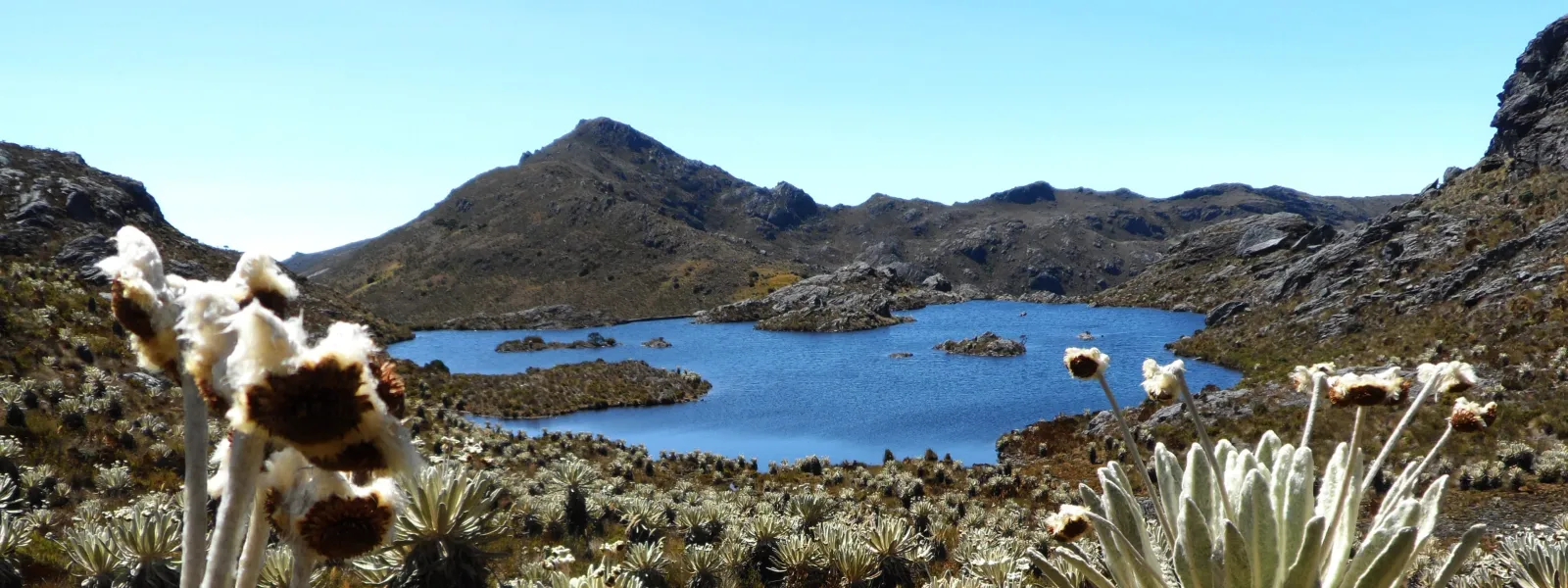
In the Andean region, high-mountain ecosystems known as páramos capture water from the fog and supply it to the lowlands. One such ecosystem is the Santurbán páramo, which provides fresh water to more than two million people in Colombia.
Santurbán, like the other páramos on the continent, also captures large amounts of carbon, making it a key ally in mitigating the climate crisis. It is also a refuge for hundreds of endangered species, including the iconic spectacled bear.
The land in and around the páramo contains gold and other minerals. This has put Santurbán in the spotlight of the multinational mining industry, which for decades has sought to establish large-scale projects in the ecosystem that threaten to degrade it.
The Committee for the Defense of Water and the Santurbán Páramo—a coalition of environmental advocates—has thwarted these ongoing attempts, with support from AIDA and other civil society organizations.
Background
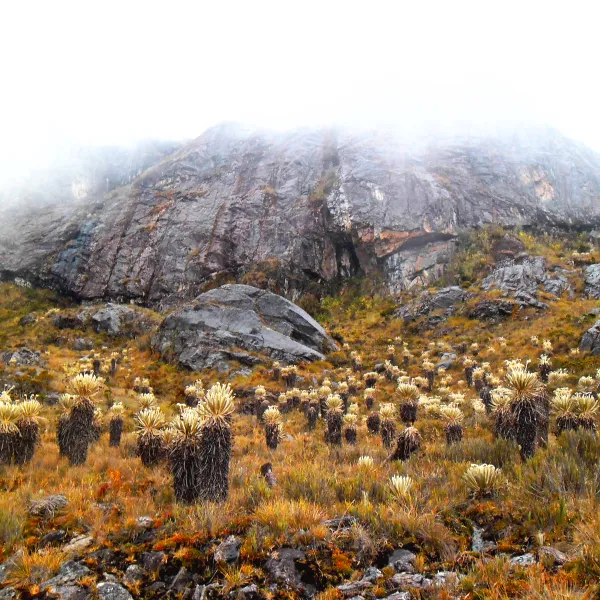
The Santurbán páramo is located in the heart of the Eastern Cordillera of the Colombian Andes, in the departments of Santander and Norte de Santander, at an elevation ranging from 2,200 to 4,290 meters above sea level.
It covers an area of 129,743 hectares and is home to 57 lakes. It serves as a habitat for 457 plant species and 293 species of vertebrate fauna.
There are mineral deposits in Santurbán, primarily gold, but also silver and copper. This explains the region’s mining tradition, particularly in the part of the páramo located in Santander, in the province of Soto Norte. The communities in the area have built their culture and identity around gold mining, which is mainly artisanal and small-scale.
But since the 1990s, the gold deposits in the páramo have also attracted foreign mining conglomerates seeking to develop large-scale projects. This has raised concerns among the population that relies on the Santurbán water sources, who have mobilized in defense of water, their land, and life.
Although national and international regulations prohibit mining in páramos, the Colombian government has granted mining concessions to transnational corporations in Santurbán.

Photo: Keishpixl / Pixabay.
The long struggle to protect the páramo
One of the companies that sought to develop large-scale mining in Santurbán is Eco Oro Minerals Corp.—formerly Greystar Resources—a Canadian company that intended to establish the Angostura open-pit mine there to extract gold and silver. Between 1994 and 1995, the company acquired its mining titles and conducted exploration. And in 2010, it applied for a mining permit.
That was the year AIDA became involved in defending the ecosystem, supporting the Committee for the Defense of Water and the Santurbán Páramo. Our legal work helped convince the Colombian government to deny the mine an environmental permit in May 2011.
In January 2013, the government designated a portion of the páramo (11,700 hectares) as a Regional Natural Park. That year—together with the committee and partner organizations—we carried out a campaign and advocacy efforts to urge the government to recognize the entire Santurbán area as a páramo ecosystem through a delimitation based on scientific criteria. In December 2014, the Ministry of the Environment established a delimitation that protected 76% of the páramo (98,954 hectares).
Furthermore, as a result of a litigation supported by AIDA, in February 2016, Colombia’s highest court reaffirmed that mining in páramos is prohibited.
That same year, in December, the International Finance Corporation (IFC), the World Bank Group’s private sector arm, decided to divest from Eco Oro Minerals. This achievement was the result of a process that began in 2012, when the committee—advised and supported by AIDA and international partner organizations—filed a complaint before an independent accountability mechanism, which concluded that the IFC’s investment in the Angostura project failed to take into account the project’s social and environmental impacts, thereby contradicting the financial institution’s internal policies.
Also in 2016, Eco Oro Minerals filed an arbitration claim against the Colombian government with the International Centre for Settlement of Investment Disputes (ICSID), arguing that it had been adversely affected by government decisions aimed at protecting the country’s páramos, including the delimitation of Santurbán.
In 2017, the Constitutional Court invalidated the delimitation because the affected communities were not consulted. The high court ordered that a participatory delimitation be carried out.
And that year, a new threat to Santurbán emerged when the Canadian multinational Aris Mining applied for an environmental permit for Soto Norte, a gold mining project located near the páramo. Following citizen protests and technical objections, in October 2020, the National Environmental Licensing Authority shelved the project.
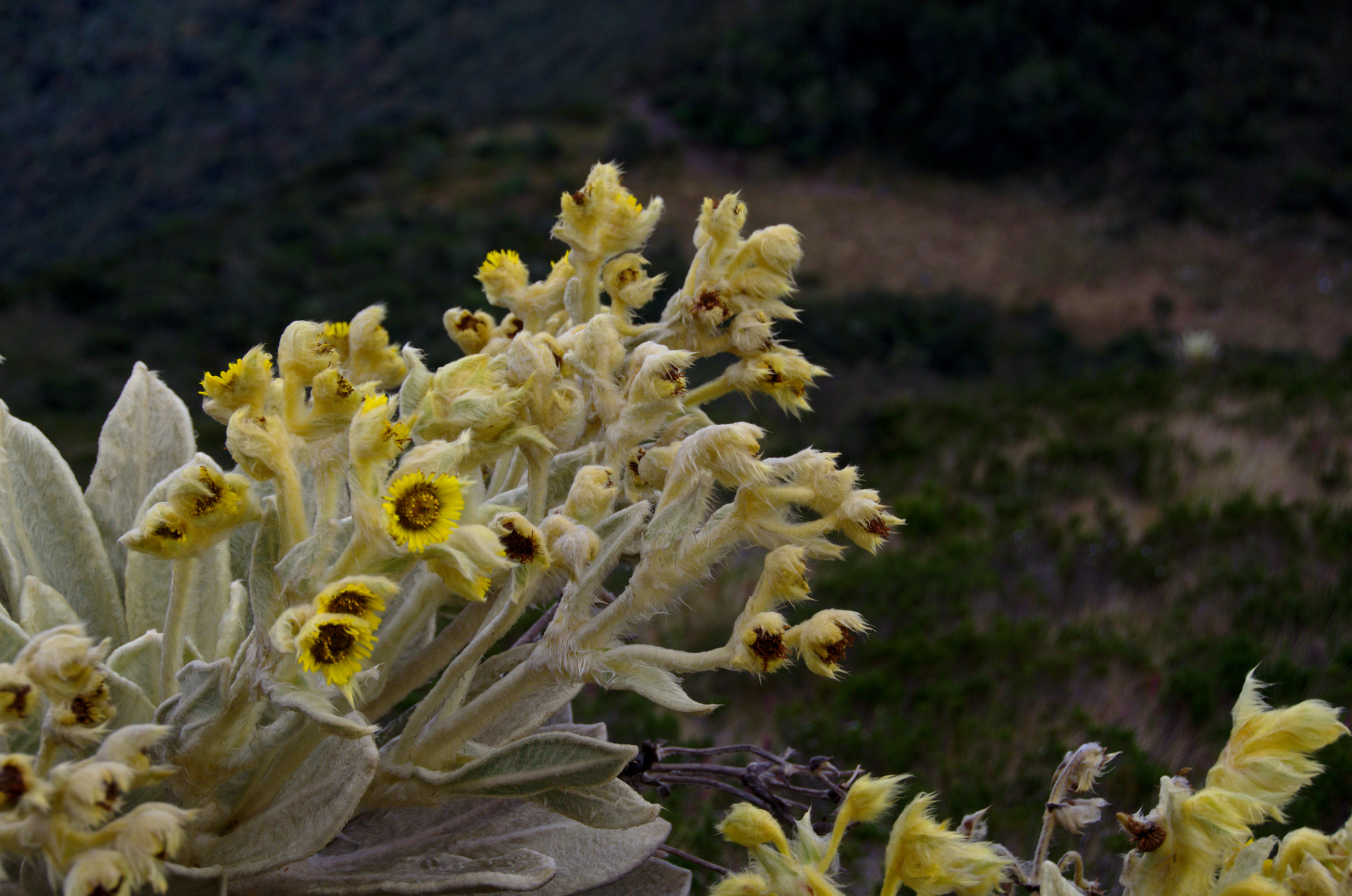
Photo: Aztlec.
Current situation
In March 2025, the Colombian government designated the western flank of the Santurbán massif as a temporary renewable natural resource reserve area, delimiting and protecting an area of 75,344.65 hectares. This resulted in a two-year suspension of the Soto Norte project. However, Aris Mining's contract to formalize Calimineros' small-scale mining activities through the purchase and processing of mineralized material remains in effect.
In addition, the Canadian mining company continues to move the project forward. In September 2025, it released its prefeasibility study, revising the mine’s original design.
Meanwhile, members of the Committee for the Defense of Water and the Santurbán Páramo face threats and stigmatization because of their work. In March 2025, UN Special Rapporteurs and the Working Group on Business and Human Rights denounced these incidents in communications sent to the governments of Colombia, Canada, and the United Arab Emirates, as well as to the companies Aris Mining and MDC Industry Holding Company LLC, the former co-owner of the Soto Norte project.
Regarding the arbitration claim filed by Eco Oro Minerals, in July 2024, ICSID ruled in favor of the Colombian government and rejected the Canadian company’s claim for USD 1.1 billion in compensation.
Concerning the delimitation of Santurbán, in July 2026, the Ministry of the Environment issued a resolution introducing the concept of "progressive delimitation." On that basis, the government proposes to progressively demarcate the páramo, covering 29,199 hectares across 19 municipalities—those where the participatory agreements required by the Constitutional Court in its 2017 ruling have already been finalized. It also proposes two measures on the creation and expansion of reserves to restrict mining in the ecosystem.
Learn more about the impacts of mining on the páramos of Latin America (in Spanish).
Partners:
Related projects
COP21 Begins, as Climate Hope Grows Stronger
Hundreds of world leaders gathered in Paris today to officially kick off the highly anticipated global climate talks. This is a critical moment for the future our life here on Earth. The conference is expected to produce a new and binding global climate accord, which could shape the ways in which we live, govern, create energy, and adapt to a changing climate. The expectations are set high for this 21st Conference of Parties (COP21) of the United Nations Framework Convention on Climate Change – because they have to be. In the next two weeks, States will have the opportunity to show their commitment to combating climate change. At the close of the negotiations, if all goes well, governments from around the world will adopt the measures necessary to ensure a better planet for present and future generations. The task at hand for this Conference is finalizing the Paris climate package, which includes a final draft of the new climate agreement and a series of decisions to be adopted by Member Parties. Both are vital to the proper implementation of the Convention. Though it has been successful in elevating climate change in policy discussions worldwide, the Convention still requires States to adopt clear and concrete actions to ensure compliance. What do we hope to achieve in Paris? There are two key tasks that AIDA will press Conference negotiators to achieve: Clarify the commitments related to climate financing after 2020. Include language requiring the respect, guarantee, protection, and promotion of human rights in all climate actions in both the preamble and the operating text of the Paris Agreement. Focus On: Climate Finance Climate finance is fundamental to ensuring that the commitments established in the Paris Agreement, as well as in the Convention itself, become a reality. Concerning climate finance, the new agreement should include the following key elements: Clarity on which countries should mobilize new and additional resources after 2020. It’s also important to reevaluate the role of developing countries that, though they have no obligation to provide financing, may be in a position do to so. Clear commitments to increase climate finance to achieve the desired outcomes. Clarity on sources of financing, ensuring that those sources implement clear and transparent methods that allow for their accounting and effective use. Collective short-term goals that demonstrate clear advances. Clarity on the institutional arrangements needed to channel resources. It will be important to strengthen the Green Climate Fund’s role in ensuring that finance supports projects and programs that are low-carbon and climate-resilient. Cycles of financial contributions, and their corresponding verification periods. Climate finance is a critical component of progress on the climate agenda. Providing clarity on this matter is essential to achieving goals and paradigm shifts in the short, medium, and long term. Focus On: Human Rights The protection and promotion of human rights is vital in the fight against climate change. The very success of the Paris Agreement depends on this element being integrated into the text and, particularly, into its objectives. A climate agreement featuring language to protect human rights will help to: Increase the ambition of the Agreement and strengthen its goals, encouraging better implementation, given that the human rights perspective may remind States of obligations that they already have. Clarify the responsibilities of States and other actors in the fight against climate change, and increase understanding of public policies related to it. This provides us the opportunity to advance and provide lessons learned, avoiding the duplication or creation of new obligations. Define a clear and acceptable pattern to prevent further socioenvironmental conflicts in the future. Having a uniform legal framework for the recognition of human rights would make it possible to improve the management of water, food, and land, which have particular resonance in Latin America. The Paris Conference is a historic opportunity for AIDA to strengthen the substantial progress made to date in the fight against climate change. Follow Along With Us!
Read more
Brazil authorizes operation of the Belo Monte Dam, disregarding the rights of affected communities
The environmental authority granted the project’s operating license, ignoring evidence of noncompliance with conditions necessary to guarantee the life, health and integrity of indigenous and other affected populations. Altamira, Brazil. The Brazilian Institute of Environment and Renewable Natural Resources (IBAMA) today authorized the Belo Monte Dam’s operating license, which allows the dam’s reservoirs to be filled. The authorization was granted despite clear noncompliance with conditions necessary to guarantee the life, health and integrity of affected communities; the same conditions that IBAMA called essential in its technical report of September 22. IBAMA’s decision makes no reference to conditions needed to protect affected indigenous peoples. “We can’t believe it,” said Antonia Melo, leader of Movimiento Xingú Vivo para Siempre, who was displaced by the dam’s construction. “This is a crime. Granting the license for this monster was an irresponsible decision on the part of the government and IBAMA. The president of IBAMA was in Altamira on November 5 and received a large variety of complaints. Everyone – riverside residents, indigenous representatives, fishermen, and members of the movement – talked about the negative impacts we’re living with. And now they grant the license with more conditions, which will only continue to be violated.” In an official letter to IBAMA on November 12, the president of the National Indian Foundation (FUNAI) concluded that conditions necessary for the protection of affected indigenous communities had clearly not been met. However, he gave free reign for the environmental authority to grant the operating license “if deemed appropriate.” “The authorization clearly violates Brazil’s international human rights commitments, especially with respect to the indigenous communities of the Xingú River basin. Those affected populations are protected by precautionary measures granted in 2011 by the Inter-American Commission on Human Rights, which the Brazilian government continues to ignore,” said María José Veramendi, attorney with the Interamerican Association for Environmental Defense (AIDA). The license allows for the filling of two of the dam’s reservoirs on the Xingú River, an Amazon tributary. It is valid for six years and is subject to compliance with certain conditions; progress will be monitored through semiannual reports. Such conditions should have been met before the dam’s license was even considered, let alone granted. “Environmental licensing is a way to mitigate the effects, control damage and minimize the risks that the dam’s operation entails for the community and the environment. By disrespecting and making flexible the licensing procedures, the government is allowing economic interests to prevail and ignoring its duty to protect the public interest,” said Raphaela Lopes, attorney with Justiça Global. AIDA, Justiça Global, and the Para Society of Defense of Human Rights have argued on both national and international levels that the conditions needed for Belo Monte to obtain permission to operate have not been met. The project must still guarantee affected and displaced populations access to essential services such as clean water, sanitation, health services and other basic human rights. “The authorization of Belo Monte, a project involved in widespread corruption scandals, contradicts President Rousseff’s recent statement before the United Nations, in which she declared that Brazil would not tolerate corruption, and would instead aspire to be a country where leaders behave in strict accordance with their duties. We hope that the Brazilian government comes to its senses, and begins to align its actions with its words,” said Astrid Puentes Riaño, co-director of AIDA. The green light for Belo Monte couldn’t have come at a worse moment. On November 5th, two dams impounding mine waste—owned by Samarco, a company jointly overseen by Vale and BHP Billiton—broke in the city of Mariana, Minas Gerais, causing one of the greatest environmental disasters in the country’s history. A slow-moving flood of mud and toxic chemicals wiped out a village, left 11 dead and 12 missing, and affected the water supply of the entire region, destroying flora and fauna for hundreds of miles around. The toxic flood has since reached the sea. The company’s operating licenses had expired two years ago. Approval of Belo Monte’s operating license comes just six days before the start of the Paris climate talks, the most important meeting of the United Nations Framework Convention on Climate Change in recent history. Once in operation, Belo Monte will emit greenhouse gases including carbon dioxide and methane; as the world’s third-largest dam, it will become a significant contributor to climate change. By authorizing Belo Monte, the government of Brazil is sending a terrible message to the world. Ignoring its international commitments to protect human rights and mitigate the effects of climate change, the government is instead providing an example of how energy should not be produced in the 21st Century.
Read more
For the life and health of my children: We MUST include Human Rights in the New Climate Accord
By Astrid Puentes Riaño (@astridpuentes) Originally published by IntLawGrrls We humans have caused climate change, a real threat to humanity thus it requires human solutions. We also have lost precious time on eternal discussions about the existence of climate change, despite imminent evidence. Our efforts to deliver solutions must be inclusive and ambitious if they are to ensure that the lives and livelihoods of all people are protected. If and how to include human rights protections in new climate accord was one of the primary issues discussed during October’s Bonn Climate Conference. These protections were notably left out of the no-text presented by the co-chairs, and then added back in at the insistence of several countries, many from the Global South, and hundreds of civil society organizations. I could write a long list of legal, political, ethical, and economic arguments as to why human rights must be included in the Paris Agreement. In my opinion, however, they can all be distilled into two primary and powerful arguments: my children! At 4 and nearly 2 years old, they are already experiencing the realities of a changing climate. Some days, for example, they cannot go to the park because of increased air and climate pollution levels in Mexico City, be it black carbon or ozone, or both. Unfortunately, the worst is yet to come, as hurricanes, droughts, floods, glacier loss, and fires are all increasing. Now the question for my kids is not whether they will suffer from climate change, but to what extent. Some may say I’m exaggerating, and that my kids aren’t among the most affected. They’re right. Many others are suffering, and will continue to suffer, far worse consequences, such as: the Kunas in Panama, who are loosing their land due to sea-level rise; the 62 million people living on 52 small island states, including Tuvalu and Barbados; the 70 million people in the Andes, all of whom depend on water from glaciers and paramos, which are expected to dissapear within a few decades. Despite the evident urgency, official responses have been shamefully slow. The United Nations recently announced that current national commitments aren’t enough to prevent world temperatures from surpassing 2oC by 2100, when my children will be 89 and 87 years old. How, then, can we speed up agreements, increase ambition, and close the gap between what is needed and what is promised by States? Human Rights are an important part of this answer. If implemented, they can help to: Recognize the realities of climate change and its impact on the enjoyment of human rights of all peoples, particularly those in vulnerable situations. Remind States of their existing obligations to protect and respect human rights, obligations which are fundamentally shared by corporations and other international entities. Incorporating human rights in the climate change agreement will not create new obligations; it will instead allow us to be consistent and comply with preexisting commitments. Avoid increased threats to world stability that have been linked to climate change due to impacts such as: local resource competition, livelihood insecurity, migration, extreme weather events and disasters, volatile food prices, transboundary water management, sea-level rise, coastal degradation, and the unintended effects of climate policies. Spur effective solutions, such as the rethinking of energy. These kinds of solutions haven’t yet been achieved due to a lack of ambition and political will. For my son and daughter, and the millions of children of the world, we must accept that climate change is a human rights issue. For the health of future generations, and that of those already suffering from its impacts, we must do all we can to create effective solutions. The new climate accord, which will be signed in Paris this December, must include human rights protections in its Preamble, as well as in its operative text. Only then, with an overarching respect for the rights of all people, can begin to see the results we need in the fight against climate change. We must take the climate crisis seriously. If not, we will be trapped in short-sighted negotiations that won’t provide my children the hope of a dignified and healthy life. They will be left inside, unable to play in the park, to enjoy the world beyond our doorstep. And those in more vulnerable situations may be left with nowhere at all to find the shelter they seek.
Read more