
Project
Alberto Peña Kay
Protecting the Santurban páramo from mining's damage
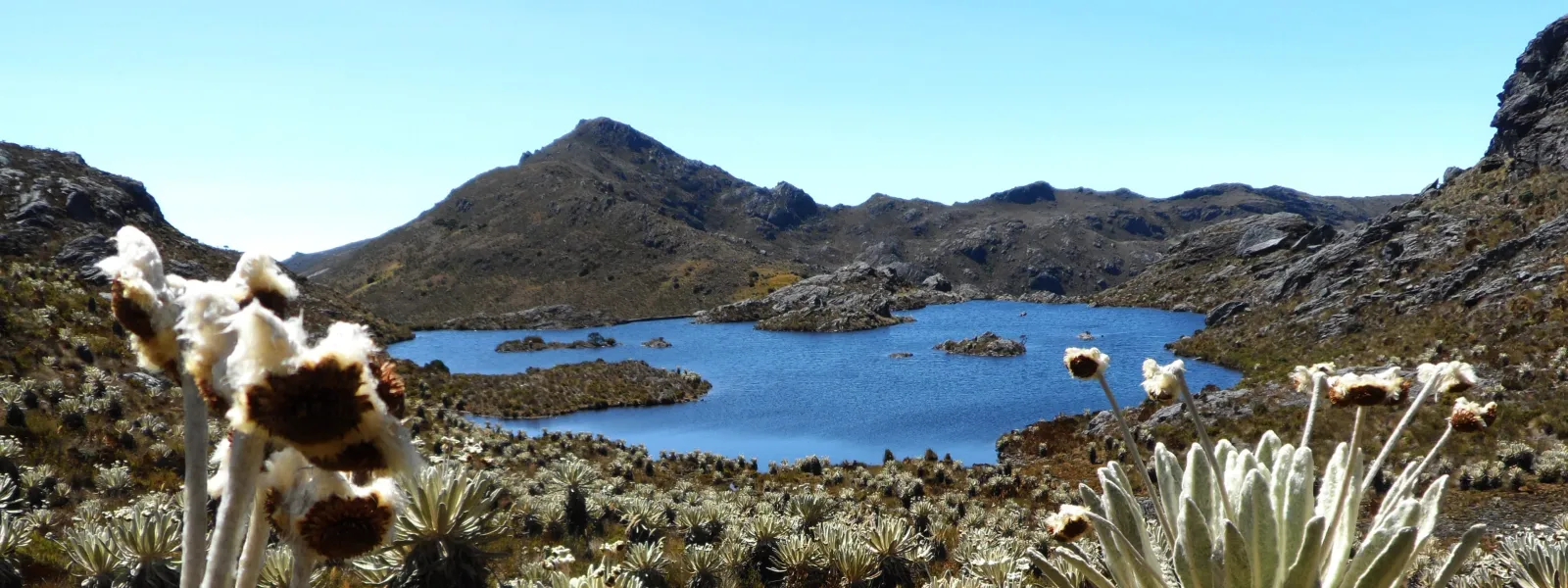
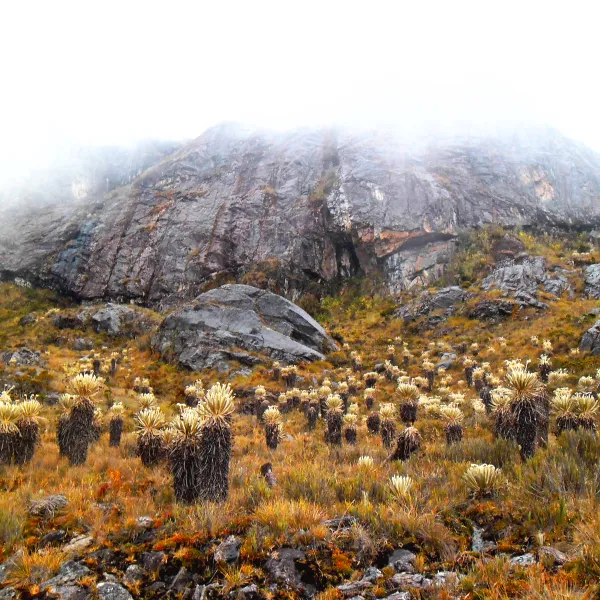
In the Andean region, high-mountain ecosystems known as páramos capture water from the fog and supply it to the lowlands. One such ecosystem is the Santurbán páramo, which provides fresh water to more than two million people in Colombia.
Santurbán, like the other páramos on the continent, also captures large amounts of carbon, making it a key ally in mitigating the climate crisis. It is also a refuge for hundreds of endangered species, including the iconic spectacled bear.
The land in and around the páramo contains gold and other minerals. This has put Santurbán in the spotlight of the multinational mining industry, which for decades has sought to establish large-scale projects in the ecosystem that threaten to degrade it.
The Committee for the Defense of Water and the Santurbán Páramo—a coalition of environmental advocates—has thwarted these ongoing attempts, with support from AIDA and other civil society organizations.
Background
The Santurbán páramo is located in the heart of the Eastern Cordillera of the Colombian Andes, in the departments of Santander and Norte de Santander, at an elevation ranging from 2,200 to 4,290 meters above sea level.
It covers an area of 129,743 hectares and is home to 57 lakes. It serves as a habitat for 457 plant species and 293 species of vertebrate fauna.
There are mineral deposits in Santurbán, primarily gold, but also silver and copper. This explains the region’s mining tradition, particularly in the part of the páramo located in Santander, in the province of Soto Norte. The communities in the area have built their culture and identity around gold mining, which is mainly artisanal and small-scale.
But since the 1990s, the gold deposits in the páramo have also attracted foreign mining conglomerates seeking to develop large-scale projects. This has raised concerns among the population that relies on the Santurbán water sources, who have mobilized in defense of water, their land, and life.
Although national and international regulations prohibit mining in páramos, the Colombian government has granted mining concessions to transnational corporations in Santurbán.

Photo: Keishpixl / Pixabay.
The long struggle to protect the páramo
One of the companies that sought to develop large-scale mining in Santurbán is Eco Oro Minerals Corp.—formerly Greystar Resources—a Canadian company that intended to establish the Angostura open-pit mine there to extract gold and silver. Between 1994 and 1995, the company acquired its mining titles and conducted exploration. And in 2010, it applied for a mining permit.
That was the year AIDA became involved in defending the ecosystem, supporting the Committee for the Defense of Water and the Santurbán Páramo. Our legal work helped convince the Colombian government to deny the mine an environmental permit in May 2011.
In January 2013, the government designated a portion of the páramo (11,700 hectares) as a Regional Natural Park. That year—together with the committee and partner organizations—we carried out a campaign and advocacy efforts to urge the government to recognize the entire Santurbán area as a páramo ecosystem through a delimitation based on scientific criteria. In December 2014, the Ministry of the Environment established a delimitation that protected 76% of the páramo (98,954 hectares).
Furthermore, as a result of a litigation supported by AIDA, in February 2016, Colombia’s highest court reaffirmed that mining in páramos is prohibited.
That same year, in December, the International Finance Corporation (IFC), the World Bank Group’s private sector arm, decided to divest from Eco Oro Minerals. This achievement was the result of a process that began in 2012, when the committee—advised and supported by AIDA and international partner organizations—filed a complaint before an independent accountability mechanism, which concluded that the IFC’s investment in the Angostura project failed to take into account the project’s social and environmental impacts, thereby contradicting the financial institution’s internal policies.
Also in 2016, Eco Oro Minerals filed an arbitration claim against the Colombian government with the International Centre for Settlement of Investment Disputes (ICSID), arguing that it had been adversely affected by government decisions aimed at protecting the country’s páramos, including the delimitation of Santurbán.
In 2017, the Constitutional Court invalidated the delimitation because the affected communities were not consulted. The high court ordered that a participatory delimitation be carried out.
And that year, a new threat to Santurbán emerged when the Canadian multinational Aris Mining applied for an environmental permit for Soto Norte, a gold mining project located near the páramo. Following citizen protests and technical objections, in October 2020, the National Environmental Licensing Authority shelved the project.
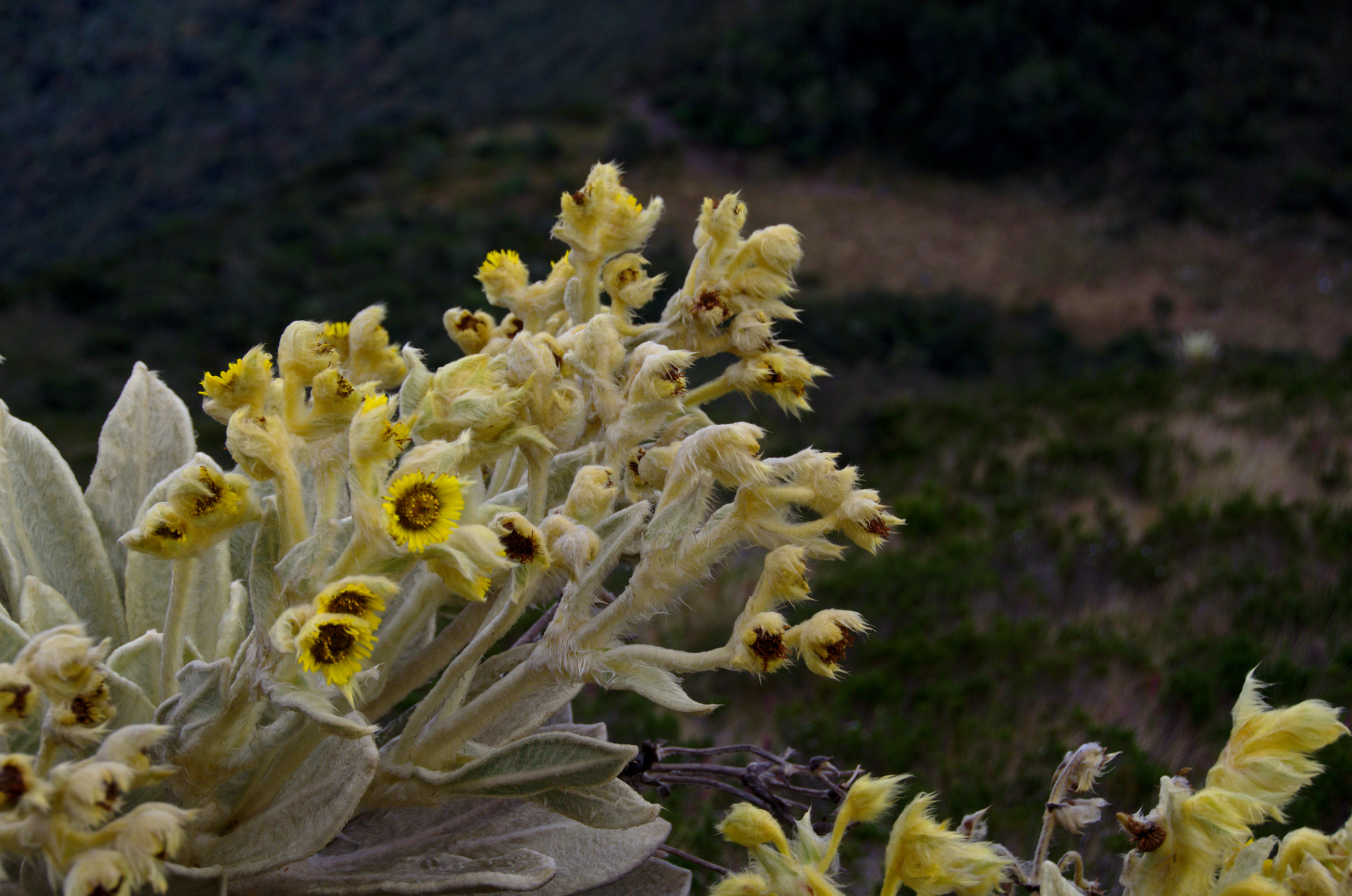
Photo: Aztlec.
Current situation
In March 2025, the Colombian government designated the western flank of the Santurbán massif as a temporary renewable natural resource reserve area, delimiting and protecting an area of 75,344.65 hectares. This resulted in a two-year suspension of the Soto Norte project. However, Aris Mining's contract to formalize Calimineros' small-scale mining activities through the purchase and processing of mineralized material remains in effect.
In addition, the Canadian mining company continues to move the project forward. In September 2025, it released its prefeasibility study, revising the mine’s original design.
Meanwhile, members of the Committee for the Defense of Water and the Santurbán Páramo face threats and stigmatization because of their work. In March 2025, UN Special Rapporteurs and the Working Group on Business and Human Rights denounced these incidents in communications sent to the governments of Colombia, Canada, and the United Arab Emirates, as well as to the companies Aris Mining and MDC Industry Holding Company LLC, the former co-owner of the Soto Norte project.
Regarding the arbitration claim filed by Eco Oro Minerals, in July 2024, ICSID ruled in favor of the Colombian government and rejected the Canadian company’s claim for USD 1.1 billion in compensation.
Concerning the delimitation of Santurbán, in July 2026, the Ministry of the Environment issued a resolution introducing the concept of "progressive delimitation." On that basis, the government proposes to progressively demarcate the páramo, covering 29,199 hectares across 19 municipalities—those where the participatory agreements required by the Constitutional Court in its 2017 ruling have already been finalized. It also proposes two measures on the creation and expansion of reserves to restrict mining in the ecosystem.
Learn more about the impacts of mining on the páramos of Latin America (in Spanish).
Partners:
Related projects

Two Texts That Will Reconnect You With the Earth
There are two texts you should read because you live on this planet, two texts that will reconnect you with the Earth. You should read them because the Earth is protected not just by law and science, but also by heart and spirit; and because, like it or not, we share this home with everyone. They are Laudato Si, the recently published encyclical by Pope Francis, and Falling in Love with the Earth, an essay by Zen Master Thich Nhat Hanh. As the Zen Master says, “we and the Earth are one.” The texts concern all people, regardless of their religion, beliefs, politics or understanding of the planet’s environmental realities. It is not my intent to summarize these publications, or to deter you from reading and experiencing them firsthand. My intention is to encourage you to know them, because each allows us to better understand the realities of our planet, and sheds light on how to make our time on Earth positive. What is at stake is, as the Pope would say, “our dignity.” We must be mindful of the kind of planet we want to leave for the future. Laudato Si: The Papal Encyclical Pope Francis’ encyclical is an extensive document that, with the help of science, analyzes both the reasons behind the planet’s grave environmental situation and its possible solutions. I was pleasantly surprised by the level of scientific detail included in the text, and by the recognition that climate change is the responsibility of human beings. By reminding us of the urgent need to move from fossil fuels to sustainable energy sources, and to control atmospheric pollution, the text illuminates the path to Paris. At the end of the year, the French capital will host the 21st United Nations Climate Change Conference, set to usher in a new and binding global climate accord. It was heartening to see the Pope emphasize the social inequalities of the planet, particularly by explaining the relationship between environmental degradation and the communities it affects—primarily poor and indigenous peoples. But still, the encyclical is not perfect. One point it misses is how women suffer more from climate impacts, so the historical debt the Catholic Church has with us is still pending. The Pope states that those with the most power—corporations, countries and elites—are the primary responsible parties, though they’re certainly not the only ones. The powerful, therefore, are obligated to develop solutions. It is encouraging to read this since the Vatican has not exactly been characterized by its vows of poverty, and especially since I’m Latin American and work in this region, the most unequal in the world. The encyclical concludes that an “ecological conversion” is necessary because “living our vocation to be protectors of God’s handiwork is essential to a life of virtue; it is not an optional or a secondary aspect of our Christian experience.” This applies to everyone, as the work of protecting nature is the essence of being a virtuous person. A Time to Act In reading both the encyclical and the essay, you may notice that their conclusions are not new. The Pope is quite reminiscent of his namesake, St. Francis of Assisi, who first spoke in the 13th Century of the need to protect “our Sister Earth.” Thus, the Pope and the Zen Master continue the urgent call to analyze our way of life, our consumption and our treatment of the Earth. So, why don’t we care for the planet, as we should? Why do we need their reminders? Why does it still seem we’re going from bad to worse? I don’t have the answers. But neither do the Zen Master or the Pope. “Sadly, many efforts to find concrete solutions to the environmental crisis have proven ineffective, due not only to powerful opposition, but also to a general lack of interest,” Pope Francis said. Trending topics on social networks are a hard reminder of this reality. Cities, countries and what seems like the entire world are paralyzed during the World Cup, the Olympics, and even during beauty contests. Paying attention to these events is not bad, but the little attention we give to environmental problems and inequality is. The apathy must stop TODAY. Therein lies the relevance of these documents. We need to get involved, strive to understand their content, act on our understanding and show results, not make excuses. The Pope acknowledges that “politics and business are slow to react, far from living up to global challenges.” Judging from the current situation, I would say we’ve all reacted slowly. Let’s change that now. I’m sure we all have something we could improve, and something we could contribute. Regardless of specifics, simply because we live on Earth, we have a responsibility we must acknowledge. As Zen Master Thich Nhat Hanh says, caring for and honoring the Earth “is not an obligation. It is a matter of happiness, of personal and collective survival.”
Read more
France’s Fracking Ban: Lessons for Latin America
By Eugenia D’Angelo, former AIDA intern, @DangeloEugenia Hydraulic fracturing, or fracking—the process of drilling into rock and injecting a mixture of water, chemicals, and sand under high pressure to fracture it and release oil and gas—is making headway around the world, causing increasing damage to the environment and human health. Even so, social movements have been effective at slowing governments and corporations interested in expanding the practice. One of the best examples can be found in France. The first country to ban fracking, it did so thanks to the pressure applied by French citizens. Having lived in France for four years, I can attest first-hand to the strength and importance of social movements throughout the process. The Legal Process The ‘Jacob Law’ (named for Minister Christian Jacob, who presented it) was approved[1] in 2011, during Nicolas Sarkozy’s presidency. It prohibits fracking for exploration and exploitation of hydrocarbons. Later, taking advantage of division in the Socialist Party, oil companies found the help necessary to present a constitutional challenge to the fracking ban. On October 11, 2011, however, the Constitutional Council reaffirmed the validity of the ‘Jacob Law,’ stating that it complies with all constitutional principles. France became the first country in the world to turn its back on the controversial practice. Making A Difference Civil society and green political parties played a paramount role in France. French citizens overwhelmingly said “No!” to fracking,[2] with more than 80% voicing their opposition[3] (this compares to 47% in the United States, according to the latest Pew Research Center poll[4]). In France, movements are grouped together in social collectives that unite the populations of different departments. These groups were organized to be present in every part of the country where energy companies had permits for the exploration and exploitation of shale gas and oil. They remained there for the entire legal and political battle, until the prohibition on fracking finally became reality. Some of the actions taken by the “No Fracking France” association include: During the famous and highly publicized Tour de France, they carried an anti-oil-and-shale-gas banner signed by thousands of people. In the final stretch of the Tour de France, they sent a climber to hoist the banner to the top of Mont Blanc. They held a press conference on the matter in the National Assembly. They organised various informative and scientific seminars for the mayors of affected communities. They produced a video explaining fracking to the deaf-mute community. They took their complaints to the members of Parliament. Resistance in Latin America In contrast, various countries in Latin America are opening their doors to fracking. In response to this troubling trend, AIDA is helping to facilitate and coordinate a regional group, made up of civil society organizations and academic institutions, created to generate information, stimulate debate, and join forces to prevent and stop the negative impacts of fracking in Latin America. At AIDA we consider it necessary for governments and civil society to apply the precautionary principle. Within the framework of this principle and its constitutional obligations, States of the region should adopt effective measures to prevent the risks and severe damage to the environment and human health that fracking can bring about. As long as there isn’t a guarantee that the risks and impacts of fracking can be effectively prevented and mitigated, this type of activity should not be permitted. Raising awareness amongst citizens and social movements is key. Countries in Latin America are obligated to generate public, truthful and impartial information about the characteristics, process and components of fracking, and about its long-term impacts. Our authorities must create plural and adequate spaces for civil society in the decision-making process about the future of fracking in our territories. If they don’t, we as citizens have the right and the obligation to engage and mobilize ourselves so that those who resist can hear us. [1] It was a closed vote in the senate with 176 votes in favour and 151 against. “Gaz de schiste: le Parlement interdit l’utilisation de la fracturation hydraulique”, Le Monde, 30/06/2011. Available at: http://www.lemonde.fr/planete/article/2011/06/30/gaz-de-schiste-le-parlement-interdit-l-utilisation-de-la-fracturation-hydraulique_1543252_3244.html [2] The Collectif 07 Stop Shale Gas and Oil said: “ …we should be proud of the efficiency of public mobilization which, although it has not won the war, has clearly won the battle. The commitment of millions of citizens, in our department and in the whole of France, that they demonstrated every day, resisted, informed, organized themselves, mobilized themselves…sometimes with the participation of the mayors…has borne fruit. It is a test that gives hope for the fight to come…” See: “Gaz de schiste: la mobilisation citoyenne a gagné une victoire, mais pas la guerre.” Bourg Socialisme avenir. Available at: http://www.bsavenir.fr/2011/10/01/gaz-de-schiste-la-mobilisation-citoyenne-a-gagne-une-victoire-mais-pas-la-guerre/ [3] This percentage is higher than that against nuclear energy (the primary source of energy in France) according to: Chu, Henry. “Pressure builds against France’s ban on fracking,” Los Angeles Times, 22/06/2014. Available at: http://www.latimes.com/world/europe/la-fg-france-fracking-20140622-story.html#page=1 [4] http://thinkprogress.org/climate/2014/11/13/3591891/pew-poll-voters-oppose-fracking/
Read more
Report from the Ramsar Conference
It’s a worrying and undeniable fact: 76 percent of the world’s wetlands have been destroyed in the last 40 years. In Latin America, these sensitive ecosystems suffer degradation from extractive industries, tourist activities, real estate projects, and other human causes. AIDA helped ensure that these threats were recognized as a priority concern of the Secretariat of the Ramsar Convention, an intergovernmental treaty for the protection of wetlands, during its 12th Conference of Parties. The Conference took place from June 2-9 in Punta del Este, Uruguay. AIDA and other civil society organizations included the risks in a public declaration presented before representatives of the various governments. The Ramsar Secretariat incorporated these threats into the Convention’s Strategic Plan 2016-2024. “This recognition opens the way for investigations to be made and guidelines established to combat the problem,” said Sandra Moguel, an AIDA attorney who attended the Conference. “By contributing to the identification of causes for the deterioration of wetlands, we’ve laid the base for the adoption of regulations and other effective measures to conserve these important ecosystems.” Alongside local organizations, AIDA also presented a petition to alert the Ramsar Secretariat that the Colombian government has failed to fulfill its obligation to protect the country’s páramos, high Andean wetlands. In the petition, we call attention to the impacts that activities such as large-scale mining have on páramos—the source of more than 70 percent of the water in Colombia—and ask the Secretariat to monitor the situation and take action according to their abilities. The Strategic Plan also recognizes the need to have better synergy with other international environmental treaties—such as the Convention on Biological Diversity and the United Nations Framework Convention on Climate Change—so that the sustainable use and conservation of wetlands attains greater relevance and is carried out more effectively. This correlation is key. “One of the greatest challenges of the Convention is to appropriately and effectively link the implementation of the treaty with the fight against climate change,” said Carlos Lozano Acosta, an AIDA attorney who also participated in the Conference. Lozano Acosta reported that one resolution was approved that calls on countries to reserve the quantity of water necessary for the preservation of their wetlands, and another that links the protection of these ecosystems with the mitigation of natural disasters, since wetlands are a natural barrier against hurricanes and storms. But Lozano Acosta lamented the fact that the Conference remained without sufficient and adequate space for civil society participation. For Moguel, it was a success that—thanks to the efforts of Latin American representatives—all resolutions adopted at the Conference recognized and included in their text the wetlands management done by indigenous people based on their traditional knowledge. Finally, in a parallel event organized by the International Coral Reef Initiative, AIDA attorneys presented their work defending reefs in the Americas. Particularly, they shared our Guide to Best Practices for Coral Reef Protection and emphasized the cases of Cabo Pulmo and the Veracruz Reef System, both sites in Mexico at risk from tourism and port development, respectively.
Read more