
Project
Alberto Peña Kay
Protecting the Santurban páramo from mining's damage
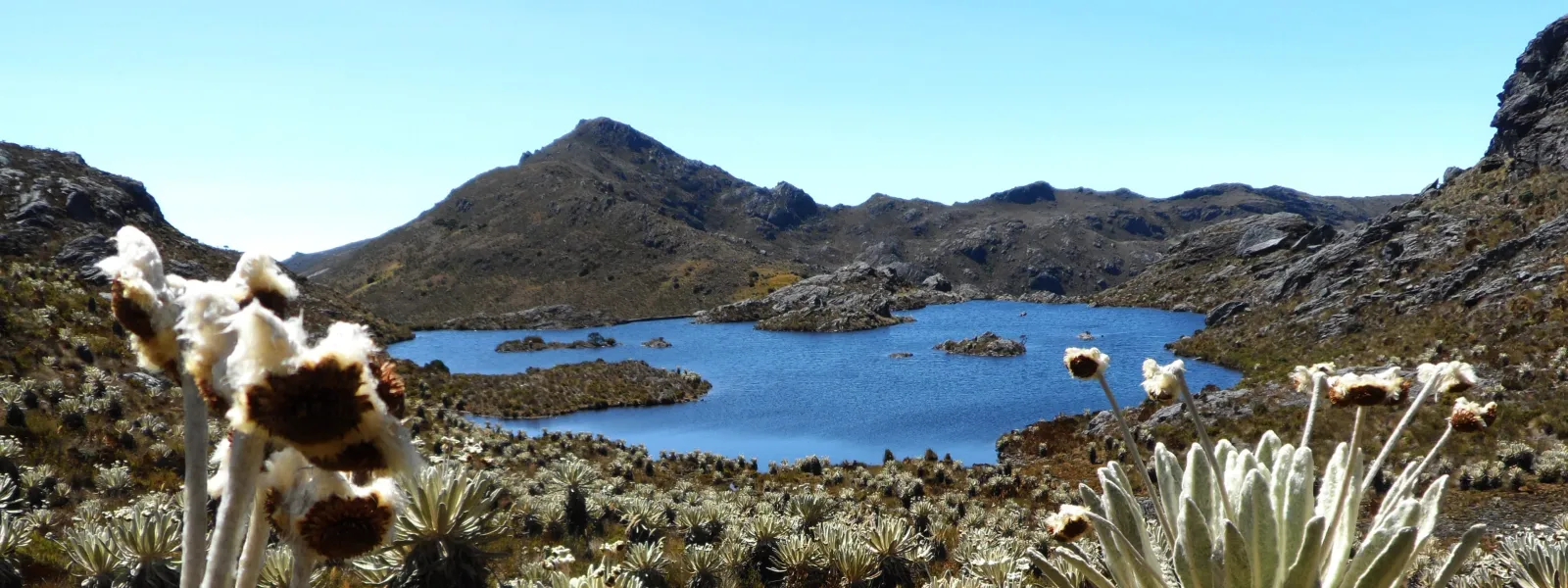
In the Andean region, high-mountain ecosystems known as páramos capture water from the fog and supply it to the lowlands. One such ecosystem is the Santurbán páramo, which provides fresh water to more than two million people in Colombia.
Santurbán, like the other páramos on the continent, also captures large amounts of carbon, making it a key ally in mitigating the climate crisis. It is also a refuge for hundreds of endangered species, including the iconic spectacled bear.
The land in and around the páramo contains gold and other minerals. This has put Santurbán in the spotlight of the multinational mining industry, which for decades has sought to establish large-scale projects in the ecosystem that threaten to degrade it.
The Committee for the Defense of Water and the Santurbán Páramo—a coalition of environmental advocates—has thwarted these ongoing attempts, with support from AIDA and other civil society organizations.
Background
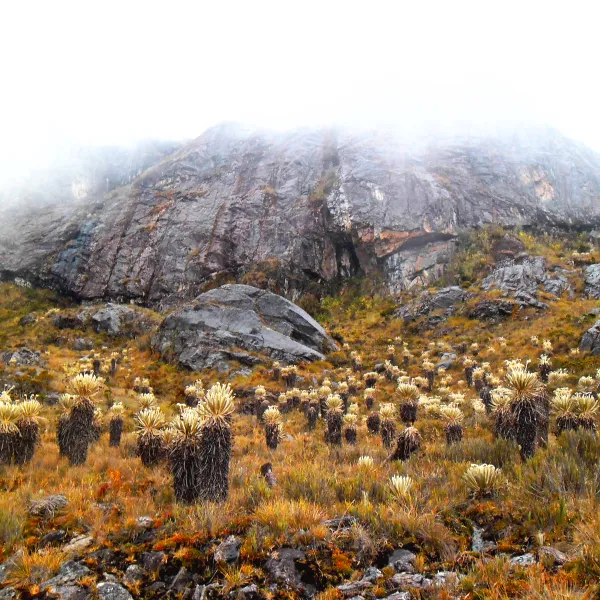
The Santurbán páramo is located in the heart of the Eastern Cordillera of the Colombian Andes, in the departments of Santander and Norte de Santander, at an elevation ranging from 2,200 to 4,290 meters above sea level.
It covers an area of 129,743 hectares and is home to 57 lakes. It serves as a habitat for 457 plant species and 293 species of vertebrate fauna.
There are mineral deposits in Santurbán, primarily gold, but also silver and copper. This explains the region’s mining tradition, particularly in the part of the páramo located in Santander, in the province of Soto Norte. The communities in the area have built their culture and identity around gold mining, which is mainly artisanal and small-scale.
But since the 1990s, the gold deposits in the páramo have also attracted foreign mining conglomerates seeking to develop large-scale projects. This has raised concerns among the population that relies on the Santurbán water sources, who have mobilized in defense of water, their land, and life.
Although national and international regulations prohibit mining in páramos, the Colombian government has granted mining concessions to transnational corporations in Santurbán.

Photo: Keishpixl / Pixabay.
The long struggle to protect the páramo
One of the companies that sought to develop large-scale mining in Santurbán is Eco Oro Minerals Corp.—formerly Greystar Resources—a Canadian company that intended to establish the Angostura open-pit mine there to extract gold and silver. Between 1994 and 1995, the company acquired its mining titles and conducted exploration. And in 2010, it applied for a mining permit.
That was the year AIDA became involved in defending the ecosystem, supporting the Committee for the Defense of Water and the Santurbán Páramo. Our legal work helped convince the Colombian government to deny the mine an environmental permit in May 2011.
In January 2013, the government designated a portion of the páramo (11,700 hectares) as a Regional Natural Park. That year—together with the committee and partner organizations—we carried out a campaign and advocacy efforts to urge the government to recognize the entire Santurbán area as a páramo ecosystem through a delimitation based on scientific criteria. In December 2014, the Ministry of the Environment established a delimitation that protected 76% of the páramo (98,954 hectares).
Furthermore, as a result of a litigation supported by AIDA, in February 2016, Colombia’s highest court reaffirmed that mining in páramos is prohibited.
That same year, in December, the International Finance Corporation (IFC), the World Bank Group’s private sector arm, decided to divest from Eco Oro Minerals. This achievement was the result of a process that began in 2012, when the committee—advised and supported by AIDA and international partner organizations—filed a complaint before an independent accountability mechanism, which concluded that the IFC’s investment in the Angostura project failed to take into account the project’s social and environmental impacts, thereby contradicting the financial institution’s internal policies.
Also in 2016, Eco Oro Minerals filed an arbitration claim against the Colombian government with the International Centre for Settlement of Investment Disputes (ICSID), arguing that it had been adversely affected by government decisions aimed at protecting the country’s páramos, including the delimitation of Santurbán.
In 2017, the Constitutional Court invalidated the delimitation because the affected communities were not consulted. The high court ordered that a participatory delimitation be carried out.
And that year, a new threat to Santurbán emerged when the Canadian multinational Aris Mining applied for an environmental permit for Soto Norte, a gold mining project located near the páramo. Following citizen protests and technical objections, in October 2020, the National Environmental Licensing Authority shelved the project.
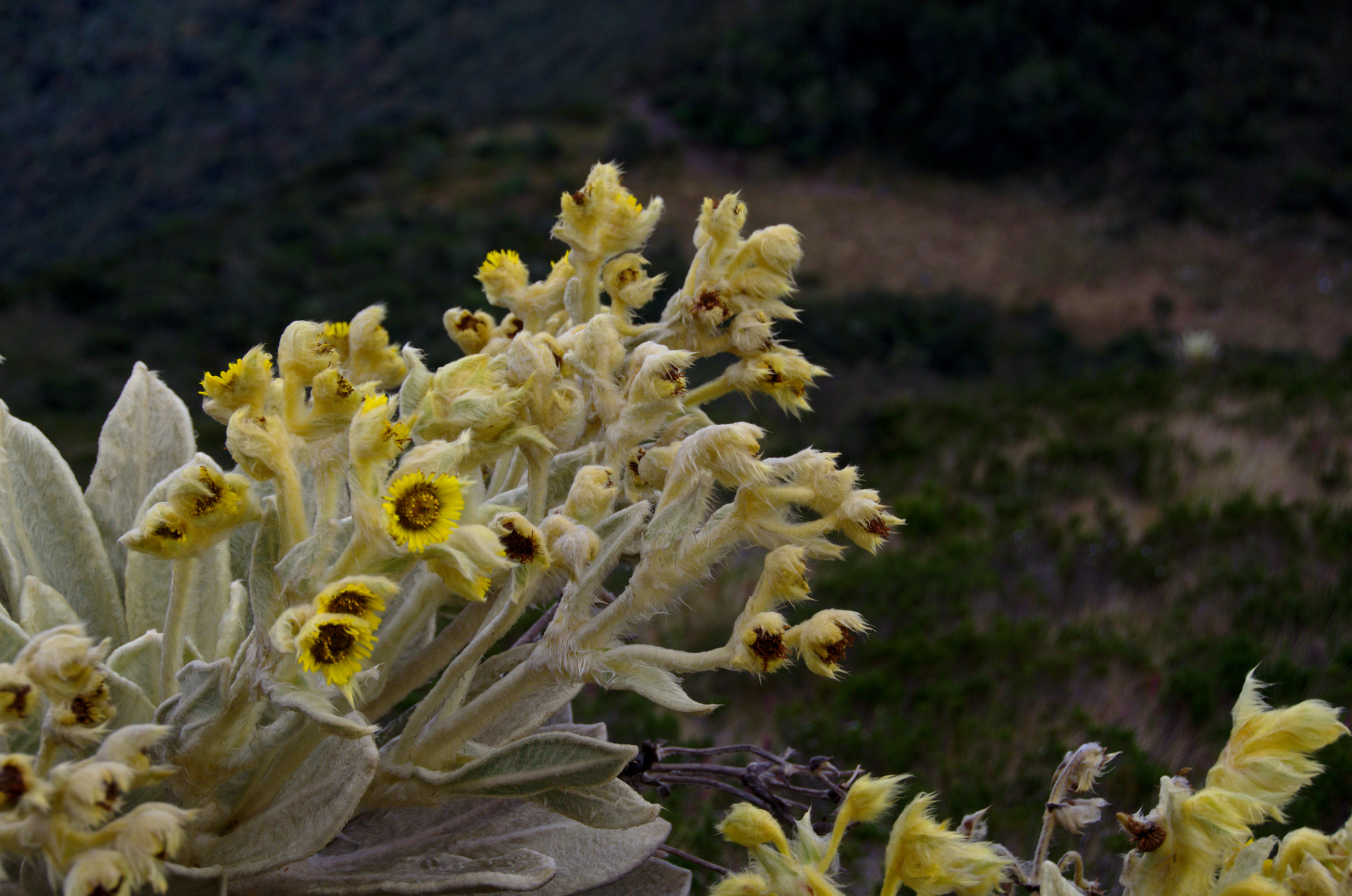
Photo: Aztlec.
Current situation
In March 2025, the Colombian government designated the western flank of the Santurbán massif as a temporary renewable natural resource reserve area, delimiting and protecting an area of 75,344.65 hectares. This resulted in a two-year suspension of the Soto Norte project. However, Aris Mining's contract to formalize Calimineros' small-scale mining activities through the purchase and processing of mineralized material remains in effect.
In addition, the Canadian mining company continues to move the project forward. In September 2025, it released its prefeasibility study, revising the mine’s original design.
Meanwhile, members of the Committee for the Defense of Water and the Santurbán Páramo face threats and stigmatization because of their work. In March 2025, UN Special Rapporteurs and the Working Group on Business and Human Rights denounced these incidents in communications sent to the governments of Colombia, Canada, and the United Arab Emirates, as well as to the companies Aris Mining and MDC Industry Holding Company LLC, the former co-owner of the Soto Norte project.
Regarding the arbitration claim filed by Eco Oro Minerals, in July 2024, ICSID ruled in favor of the Colombian government and rejected the Canadian company’s claim for USD 1.1 billion in compensation.
Concerning the delimitation of Santurbán, in July 2026, the Ministry of the Environment issued a resolution introducing the concept of "progressive delimitation." On that basis, the government proposes to progressively demarcate the páramo, covering 29,199 hectares across 19 municipalities—those where the participatory agreements required by the Constitutional Court in its 2017 ruling have already been finalized. It also proposes two measures on the creation and expansion of reserves to restrict mining in the ecosystem.
Learn more about the impacts of mining on the páramos of Latin America (in Spanish).
Partners:
Related projects

Short-lived climate pollutants: An opportunity to reduce emissions
AIDA together with CEDHA, CEMDA and RedRacc have produced a briefing paper on short-lived climate pollutants (SLCPs) for presentation at the 19th Conference of the Parties (COP19) on climate change, which is running November 11 to 22 in Warsaw, Poland. SLCPs are agents that contribute to global warming and have a relatively short lifetime in the atmosphere, from a few days to a few decades. That’s different from CO2, which remains in the atmosphere for centuries or millennia after emission. CO2 contributes an estimated 55% to 60% to global warming, while the remaining 40-45% comes from the emission of SLCPs. The latter seriously affect human health and ecosystems, meaning that any reduction in their emissions also brings significant social benefits. The fact that these contaminants remain so little time in the atmosphere means that their mitigation brings short-term benefits, in particular to the most vulnerable regions of the world already suffering the impacts of climate change. We must seize the opportunity to reduce SLCPs in the fight against the effects of this global challenge. Our paper explains what SLCPs are, which are the most relevant ones, and what are the reasons we should work to regulate and reduce their emissions. The paper also provides recommendations for taking on the challenge. Read the Fact Sheet (in Spanish)
Read more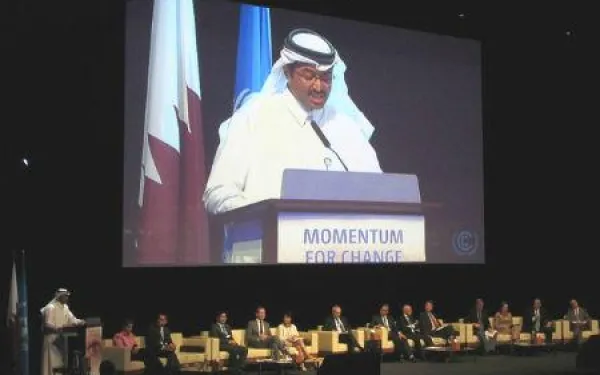
Can COP19 move the Green Climate Fund closer to reality?
By Andrea Rodríguez, AIDA's legal advisor, and Marcus Pearson, AIDA's volunteer (article published in Respond/RTCC Magazine) The Green Climate Fund was created as an effective response to the impacts of climate change by channeling financial resources from developed to developing countries. Will this happen? The Conference of the Parties in November will provide an opportunity for developing countries to lobby for significant financial commitments from the developed world to ensure the long-term viability of the GCF. The Green Climate Fund (GCF) was created in 2010 at the 16th Conference of the Parties (COP16) to the United Nations Framework Convention on Climate Change (UNFCCC). Its mission is to channel public and private financial resources to developing countries to help them mitigate and adapt to the impacts of climate change through low-emission and climate-resilient programs. But nearly four years later, the GCF has yet to disburse any funds. The GCF board has held four meetings with only limited results. At the first meeting in Geneva in August 2012, the board selected two interim co-chairs: Mr. Zaheer Fakir of South Africa and Mr. Ewen McDonald of Australia. It also formed committees, designated the World Bank as Interim Trustee, and agreed to invite observer organizations to participate, albeit in a restricted capacity. A lack of consensus stalled decisions at the October 2012 meeting in South Korea, where the only notable motion was making Songdo, South Korea the GCF’s headquarters. More advances came at the February 2013 meeting in Berlin. The board adopted procedural rules to govern its actions, regulate board member selection and define the participation and role of civil society observers. This laid the groundwork for the GCF to carry out its mission. At the June 2013 meeting in South Korea, the board then discussed the GCF’s business model framework (BMF) and the policies, guidelines and organizational structures needed to commence operations. The board also chose the governance structure of the private sector facility (PSF) [i] and appointed Ms. Hela Cheikhrouhou of Tunisia as executive director of the GCF Secretariat. The fifth meeting in Paris could address the many outstanding issues still needed to bring the GCF into effective operation. To do so, the Board must overcome its perceived ineffectiveness. Civil society concerns Civil society organizations (CSOs) are concerned about the GCF’s decision-making process and future. Perhaps the greatest issue is the uncertainty of funding. The GCF board has started to identify project areas and define criteria to allocate resources, but developed countries have yet to pledge meaningful funds. Concrete commitments are essential to ensuring the availability of predictable resources needed to achieve long-term results to mitigate and protect against the impacts of climate change. CSOs also fear that a lack of transparency and accountability will hamstring the GCF. Transparency does not seem to be a priority for the board. For example, the board has decided against webcasting its meetings even though the UNFCCC commonly does so, helping to cut costs and carbon emissions associated with travel. If the GCF already broadcasts meetings to observers in an overflow room, why not webcast? CSOs fear the board does not want to make its meetings open to the public. Lack of public accountability remains a concern particularly because of the small opportunity given to civil society to participate in the decision- making process. The GCF will mobilize financial resources from both public and private sectors, and civil society oversight is needed to ensure that policies do not respond to the investment interests of the private sector but to the needs of the most vulnerable. Moreover, the board is not granting CSOs meaningful opportunities for participation. The GCF publishes documents before meetings without sufficient time for many CSOs to review and comment on proposals[ii]. Meanwhile, only two CSO representatives may actively participate at board meetings in person and even so may not be allowed to talk or approach board members[iii]. These practices call into question the GCF’s legitimacy. Globally, CSOs play a vital role in developing climate change policy by informing decision makers about local issues and needs, and by providing examples of best practices for resource allocation. Given that the GCF stresses accountability in its mandate, CSOs should have access to government representatives and information in open and transparent meetings. COP19: An opportunity for the GCF? The COP19 this November in Warsaw will show the world whether the GCF can become an effective engine for climate change funding in developing countries. At this conference, developing countries must seek firm financial commitments for climate adaptation and mitigation. Only guaranteed funding will enable the board to make effective decisions regarding resource distribution or provide developing nations with a clear picture of how much funding is available. The GCF Board must also seek -- and receive -- guidance because many COP attendees will benefit from GCF resources. Countries can use the COP to provide advice on GCF policies, share their priority needs for funding, and recommend criteria to guarantee access to resources. The COP will also give CSO representatives a chance to raise questions and highlight counterproductive practices. Conclusions The COP presents a prime opportunity for developed nations to commit to the GCF’s stated goals and pledge desperately needed financing. Parties and CSOs must use the COP – GCF’s monitoring body – as a tool to improve GCF accountability, inclusivity and transparency so that the GCF can truly work to benefit vulnerable populations in developing countries. The COP should be a benchmark for advancing the GCF rather than just another event for developed countries to congratulate themselves on timorous steps forward. [i] The PSF will enable the GCF to directly and indirectly finance private sector mitigation and adaptation activities at the national, regional and international level. [ii] For the June meeting in South Korea, documents were published less than two weeks before the meeting, rather than 21 days as outlined in the additional rules of procedure decision taken in Berlin. [iii] As was the case on the last day of the meeting in Songdo.
Read moreCan COP19 move the Green Climate Fund closer to reality?
By Andrea Rodríguez, AIDA's legal advisor, and Marcus Pearson, AIDA's volunteer (article published in Respond/RTCC Magazine) The Green Climate Fund was created as an effective response to the impacts of climate change by channeling financial resources from developed to developing countries. Will this happen? The Conference of the Parties in November will provide an opportunity for developing countries to lobby for significant financial commitments from the developed world to ensure the long-term viability of the GCF. The Green Climate Fund (GCF) was created in 2010 at the 16th Conference of the Parties (COP16) to the United Nations Framework Convention on Climate Change (UNFCCC). Its mission is to channel public and private financial resources to developing countries to help them mitigate and adapt to the impacts of climate change through low-emission and climate-resilient programs. But nearly four years later, the GCF has yet to disburse any funds. The GCF board has held four meetings with only limited results. At the first meeting in Geneva in August 2012, the board selected two interim co-chairs: Mr. Zaheer Fakir of South Africa and Mr. Ewen McDonald of Australia. It also formed committees, designated the World Bank as Interim Trustee, and agreed to invite observer organizations to participate, albeit in a restricted capacity. A lack of consensus stalled decisions at the October 2012 meeting in South Korea, where the only notable motion was making Songdo, South Korea the GCF’s headquarters. More advances came at the February 2013 meeting in Berlin. The board adopted procedural rules to govern its actions, regulate board member selection and define the participation and role of civil society observers. This laid the groundwork for the GCF to carry out its mission. At the June 2013 meeting in South Korea, the board then discussed the GCF’s business model framework (BMF) and the policies, guidelines and organizational structures needed to commence operations. The board also chose the governance structure of the private sector facility (PSF) [i] and appointed Ms. Hela Cheikhrouhou of Tunisia as executive director of the GCF Secretariat. The fifth meeting in Paris could address the many outstanding issues still needed to bring the GCF into effective operation. To do so, the Board must overcome its perceived ineffectiveness. Civil society concerns Civil society organizations (CSOs) are concerned about the GCF’s decision-making process and future. Perhaps the greatest issue is the uncertainty of funding. The GCF board has started to identify project areas and define criteria to allocate resources, but developed countries have yet to pledge meaningful funds. Concrete commitments are essential to ensuring the availability of predictable resources needed to achieve long-term results to mitigate and protect against the impacts of climate change. CSOs also fear that a lack of transparency and accountability will hamstring the GCF. Transparency does not seem to be a priority for the board. For example, the board has decided against webcasting its meetings even though the UNFCCC commonly does so, helping to cut costs and carbon emissions associated with travel. If the GCF already broadcasts meetings to observers in an overflow room, why not webcast? CSOs fear the board does not want to make its meetings open to the public. Lack of public accountability remains a concern particularly because of the small opportunity given to civil society to participate in the decision- making process. The GCF will mobilize financial resources from both public and private sectors, and civil society oversight is needed to ensure that policies do not respond to the investment interests of the private sector but to the needs of the most vulnerable. Moreover, the board is not granting CSOs meaningful opportunities for participation. The GCF publishes documents before meetings without sufficient time for many CSOs to review and comment on proposals[ii]. Meanwhile, only two CSO representatives may actively participate at board meetings in person and even so may not be allowed to talk or approach board members[iii]. These practices call into question the GCF’s legitimacy. Globally, CSOs play a vital role in developing climate change policy by informing decision makers about local issues and needs, and by providing examples of best practices for resource allocation. Given that the GCF stresses accountability in its mandate, CSOs should have access to government representatives and information in open and transparent meetings. COP19: An opportunity for the GCF? The COP19 this November in Warsaw will show the world whether the GCF can become an effective engine for climate change funding in developing countries. At this conference, developing countries must seek firm financial commitments for climate adaptation and mitigation. Only guaranteed funding will enable the board to make effective decisions regarding resource distribution or provide developing nations with a clear picture of how much funding is available. The GCF Board must also seek -- and receive -- guidance because many COP attendees will benefit from GCF resources. Countries can use the COP to provide advice on GCF policies, share their priority needs for funding, and recommend criteria to guarantee access to resources. The COP will also give CSO representatives a chance to raise questions and highlight counterproductive practices. Conclusions The COP presents a prime opportunity for developed nations to commit to the GCF’s stated goals and pledge desperately needed financing. Parties and CSOs must use the COP – GCF’s monitoring body – as a tool to improve GCF accountability, inclusivity and transparency so that the GCF can truly work to benefit vulnerable populations in developing countries. The COP should be a benchmark for advancing the GCF rather than just another event for developed countries to congratulate themselves on timorous steps forward. [i] The PSF will enable the GCF to directly and indirectly finance private sector mitigation and adaptation activities at the national, regional and international level. [ii] For the June meeting in South Korea, documents were published less than two weeks before the meeting, rather than 21 days as outlined in the additional rules of procedure decision taken in Berlin. [iii] As was the case on the last day of the meeting in Songdo.
Read more