
Project
Alberto Peña Kay
Protecting the Santurban páramo from mining's damage
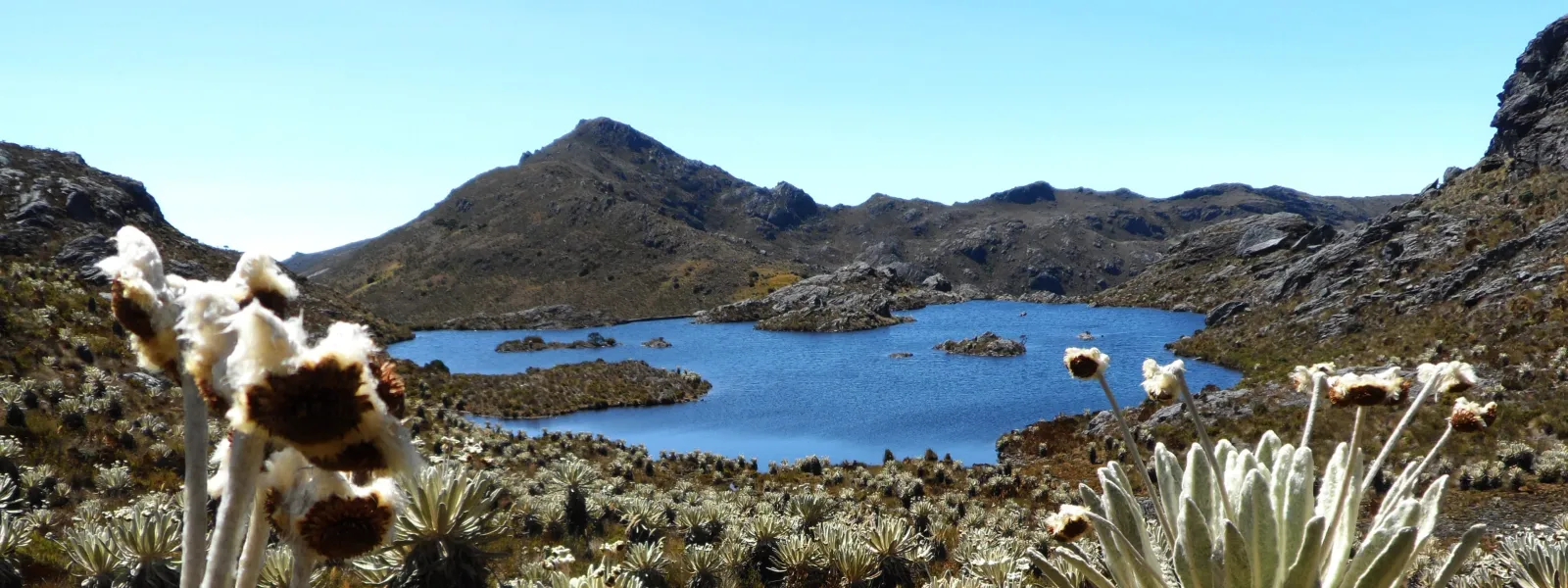
In the Andean region, high-mountain ecosystems known as páramos capture water from the fog and supply it to the lowlands. One such ecosystem is the Santurbán páramo, which provides fresh water to more than two million people in Colombia.
Santurbán, like the other páramos on the continent, also captures large amounts of carbon, making it a key ally in mitigating the climate crisis. It is also a refuge for hundreds of endangered species, including the iconic spectacled bear.
The land in and around the páramo contains gold and other minerals. This has put Santurbán in the spotlight of the multinational mining industry, which for decades has sought to establish large-scale projects in the ecosystem that threaten to degrade it.
The Committee for the Defense of Water and the Santurbán Páramo—a coalition of environmental advocates—has thwarted these ongoing attempts, with support from AIDA and other civil society organizations.
Background
The Santurbán páramo is located in the heart of the Eastern Cordillera of the Colombian Andes, in the departments of Santander and Norte de Santander, at an elevation ranging from 2,200 to 4,290 meters above sea level.
It covers an area of 129,743 hectares and is home to 57 lakes. It serves as a habitat for 457 plant species and 293 species of vertebrate fauna.
There are mineral deposits in Santurbán, primarily gold, but also silver and copper. This explains the region’s mining tradition, particularly in the part of the páramo located in Santander, in the province of Soto Norte. The communities in the area have built their culture and identity around gold mining, which is mainly artisanal and small-scale.
But since the 1990s, the gold deposits in the páramo have also attracted foreign mining conglomerates seeking to develop large-scale projects. This has raised concerns among the population that relies on the Santurbán water sources, who have mobilized in defense of water, their land, and life.
Although national and international regulations prohibit mining in páramos, the Colombian government has granted mining concessions to transnational corporations in Santurbán.

Photo: Keishpixl / Pixabay.
The long struggle to protect the páramo
One of the companies that sought to develop large-scale mining in Santurbán is Eco Oro Minerals Corp.—formerly Greystar Resources—a Canadian company that intended to establish the Angostura open-pit mine there to extract gold and silver. Between 1994 and 1995, the company acquired its mining titles and conducted exploration. And in 2010, it applied for a mining permit.
That was the year AIDA became involved in defending the ecosystem, supporting the Committee for the Defense of Water and the Santurbán Páramo. Our legal work helped convince the Colombian government to deny the mine an environmental permit in May 2011.
In January 2013, the government designated a portion of the páramo (11,700 hectares) as a Regional Natural Park. That year—together with the committee and partner organizations—we carried out a campaign and advocacy efforts to urge the government to recognize the entire Santurbán area as a páramo ecosystem through a delimitation based on scientific criteria. In December 2014, the Ministry of the Environment established a delimitation that protected 76% of the páramo (98,954 hectares).
Furthermore, as a result of a litigation supported by AIDA, in February 2016, Colombia’s highest court reaffirmed that mining in páramos is prohibited.
That same year, in December, the International Finance Corporation (IFC), the World Bank Group’s private sector arm, decided to divest from Eco Oro Minerals. This achievement was the result of a process that began in 2012, when the committee—advised and supported by AIDA and international partner organizations—filed a complaint before an independent accountability mechanism, which concluded that the IFC’s investment in the Angostura project failed to take into account the project’s social and environmental impacts, thereby contradicting the financial institution’s internal policies.
Also in 2016, Eco Oro Minerals filed an arbitration claim against the Colombian government with the International Centre for Settlement of Investment Disputes (ICSID), arguing that it had been adversely affected by government decisions aimed at protecting the country’s páramos, including the delimitation of Santurbán.
In 2017, the Constitutional Court invalidated the delimitation because the affected communities were not consulted. The high court ordered that a participatory delimitation be carried out.
And that year, a new threat to Santurbán emerged when the Canadian multinational Aris Mining applied for an environmental permit for Soto Norte, a gold mining project located near the páramo. Following citizen protests and technical objections, in October 2020, the National Environmental Licensing Authority shelved the project.
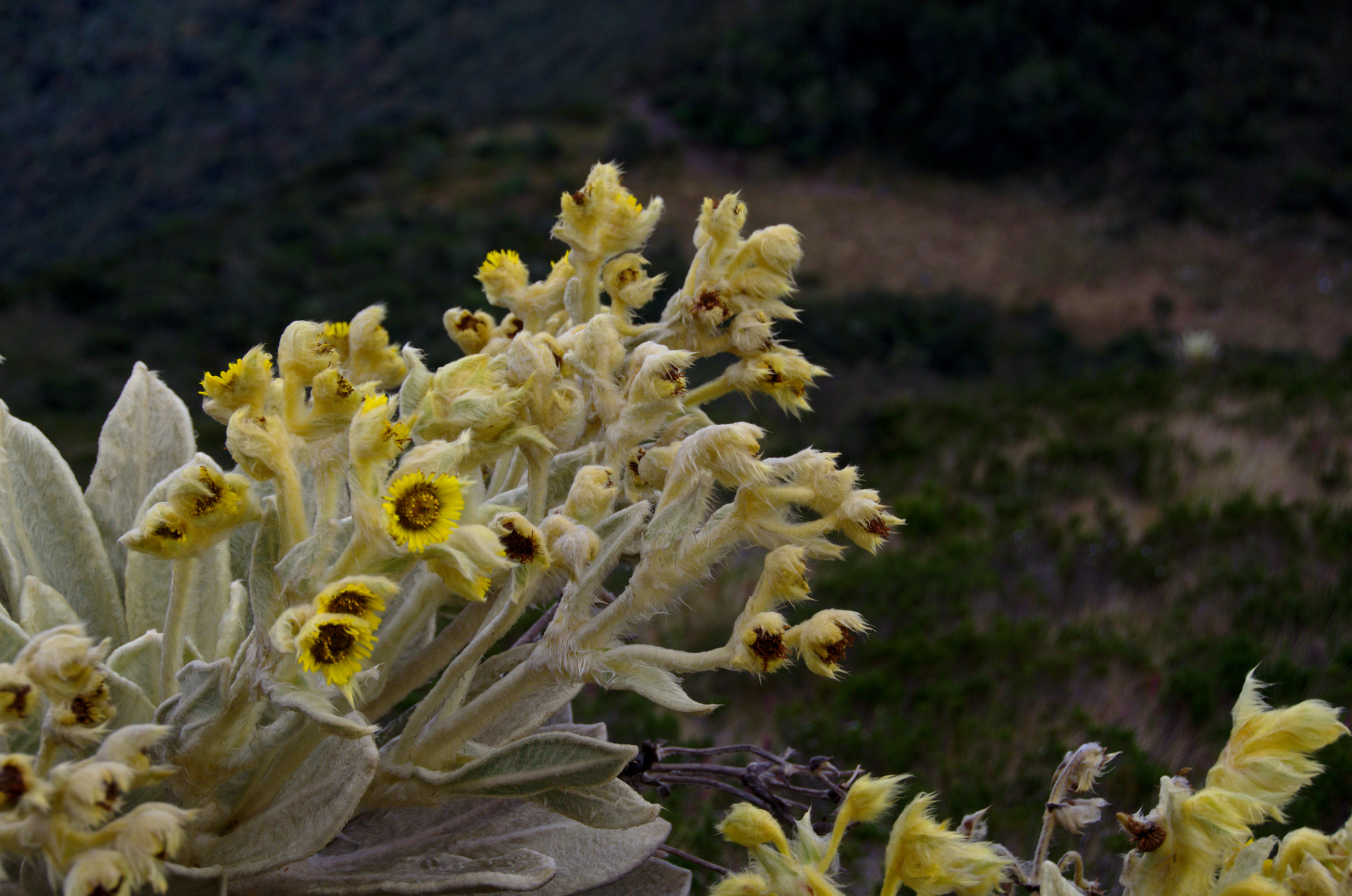
Photo: Aztlec.
Current situation
In March 2025, the Colombian government designated the western flank of the Santurbán massif as a temporary renewable natural resource reserve area, delimiting and protecting an area of 75,344.65 hectares. This resulted in a two-year suspension of the Soto Norte project. However, Aris Mining's contract to formalize Calimineros' small-scale mining activities through the purchase and processing of mineralized material remains in effect.
In addition, the Canadian mining company continues to move the project forward. In September 2025, it released its prefeasibility study, revising the mine’s original design.
Meanwhile, members of the Committee for the Defense of Water and the Santurbán Páramo face threats and stigmatization because of their work. In March 2025, UN Special Rapporteurs and the Working Group on Business and Human Rights denounced these incidents in communications sent to the governments of Colombia, Canada, and the United Arab Emirates, as well as to the companies Aris Mining and MDC Industry Holding Company LLC, the former co-owner of the Soto Norte project.
Regarding the arbitration claim filed by Eco Oro Minerals, in July 2024, ICSID ruled in favor of the Colombian government and rejected the Canadian company’s claim for USD 1.1 billion in compensation.
Concerning the delimitation of Santurbán, in July 2026, the Ministry of the Environment issued a resolution introducing the concept of "progressive delimitation." On that basis, the government proposes to progressively demarcate the páramo, covering 29,199 hectares across 19 municipalities—those where the participatory agreements required by the Constitutional Court in its 2017 ruling have already been finalized. It also proposes two measures on the creation and expansion of reserves to restrict mining in the ecosystem.
Learn more about the impacts of mining on the páramos of Latin America (in Spanish).
Partners:
Related projects
Climate change funding: Needs and expectations
By Andrea Rodríguez, legal advisor, AIDA, @arodriguezosuna, and Mónica Valtierra, AIDA volunteer Warsaw, Poland. In the discussions about the financial resources needed to tackle climate change, the plenary session of the Conference of the Parties (COP 19) in Warsaw focused on three topics: long-term financing, a report by the Standing Committee on Finance, and another report of the Green Climate Fund (GCF) of the COP. Long-term financing The Philippines. The Philippine representative said long-term financing is crucialfor developing countries and that the outcome of the agreements reached in 2015 will depend on how far those countries are willing to go to see them through. He said: “There needs to be clarity on the specific amount [of resources required] and which projects will receive the finances. But until now the situation can only be described as disastrous.” Egypt. The Egyptian delegate, on behalf of an African group of nations, said: “The agreements will depend on the climate fund’s progress in realizing its goals, the ability of countries to keep the global temperature from rising at less than 2°C this century, and mobilizing US$100 billion. These are the urgent issues. European Union. The EU reaffirmed its commitment to mobilize climate change finances with the expectation that the Green Climate Fund will increase its funding in the area of adaptation. Malpes. The Malpes’ delegate spoke about the need to strike a balance between the funding granted for global warming mitigation and what is put toward climate change adaptation. It is an essential issue for developing countries, he said. Colombia. Colombia’s delegate called for continued efforts to secure climate change funding because up until now there has been very little action taken in this regard. The commitment of US$100 billion in funding for climate change mitigation and adaptation is another a pressing task, he added. The Standing Committee report The Philippines. The Standing Committee has a great deal of work to do, especially with regard to the issues of transparency and access to information, the delegate said on behalf of the G77. “We need to strengthen the mechanisms in place for monitoring, verification and reporting purposes before 2015,” and fully address the issue of additional financing, he said. Egypt. Along the same vein of the Philippines, this delegation emphasized the urgent need to provide support for the verification, monitoring and reporting mechanisms. Bolivia. The Bolivian delegate spoke about access to funds, which he said is “the cornerstone of addressing the impact of climate change.” It requires the support of all countries, he added. Green Climate Fund (GCF) report to the COP The co-chairs of the GCF said the organization must be ambitious and have ever-increasing efforts. They repeated earlier calls to strike a balance between the funds put toward mitigation and adaptation to climate change, and to mobilize financial resources before mid-2014. On this topic, the countries said the following: The Philippines. There are high expectations for the GCF, said the delegate. But three years after the COP meeting in Cancun, Mexico, it is time to start moving the money. Egypt. The mobilization of funds should be optimized as soon as possible and the Fund must concentrate on sustainable financing for climate change, this delegation said. India. According to this delegation, the agreements to be reached in 2015 depend on the climate funding that exists at that time. He reiterated the idea of finding an equilibrium between the resources for mitigation and adaptation of the Fund. Zambia. “Fifty percent of the funds should be put toward adaptation measures,” which will also support programs set up to reduce poverty in vulnerable groups, said the Zambian delegate. Malpes. On the importance of mobilizing financial resources promptly, this delegate called for the funds to be available before the COP 20 in Lima. Uganda. This delegate reminded the audience that climate change is not waiting for the mobilization of resources to begin.
Read moreAlmost 16,000 people urge Colombian President Santos to demarcate the Santurbán páramo
In a petition to the Presidency and the Ministry of Environment, thousands of people are calling on the government to define the boundaries of this fragile ecosystem at a scale of 1:25,000 as required by Colombian legislation. Bogota, Colombia—The Interamerican Association for Environmental Defense (AIDA) sent to Colombian President Juan Manuel Santos and his minister of environment and sustainable development, Luz Helena Sarmiento, the signatures of 15,901 individuals calling for the demarcation of the Santurbán páramo to be based on proper scientific criteria at a scale of 1:25,000. The Santurbán páramo, located in the Colombian departments of Santander and Norte de Santander, provides water to nearly two million people, mainly in the cities of Bucaramanga and Cúcuta. The signatures collected over Change.org, the world’s largest petition platform, follow a previous request (in Spanish) by AIDA and prestigious Colombian environmentalists for the government to properly define the borders of the páramo in compliance with national legislation and international standards. This would prevent harmful activities such as large-scale mining from irreversibly damaging this fragile high-altitude wetland ecosystem. Páramos are "water factories" that contain a unique biodiversity and help mitigate climate change. In Colombia, home to the greatest number of páramos in the world, delimitation of this ecosystem is required under national law. That makes this petition even more important because the delimitation of the rest of the country’s páramos could depend on the outcome of the Santurbán decision. The petition promoted by AIDA includes a letter to President Santos and Minister Sarmiento. In the letter, the signatories call on the minister to recognize the entire páramo (more than 82,000 hectares) in the definition of its borders, not just the fraction (11,000 hectares) declared as a Regional Natural Park. For this to happen, the petition calls on the government to apply the parameters already established by Colombian scientists and provides legal arguments to support this requirement. Together with the signatures, AIDA has included a document that analyzes the legal reasons why the government should fully delimit this area (Available in Spanish, here). “Heeding the call of the thousands of signatories in the hemisphere is urgently needed because the risk to the páramos from mining is imminent," said Astrid Puentes Riaño, AIDA co-executive director. "Delineating Santurbán to a scale other than the ratio of 1:25,000 prescribed by the National Development Plan goes against the law. If the minister delimits the moor at a less detailed scale, the decision could be challenged in court.” AIDA's action comes as the Committee for the Defense of Santurbán Páramo holds a protest to protect this valuable ecosystem on November 15 in Bucaramanga. The petition and letter can be read at Change.org.
Read more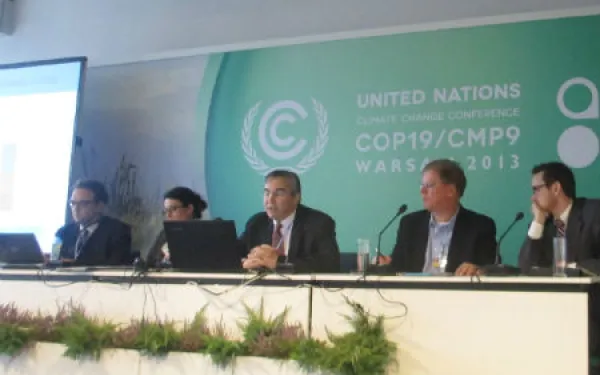
The reduction of HFCs and methane emissions
By Andrea Rodríguez, legal advisor, AIDA, @arodriguezosuna, and Mónica Valtierra, AIDA volunteer Warsaw, Poland - The reduction of hydrofluorocarbons (HFCs) and methane gas emissions has enormous potential to help in the fight against climate change under the framework of the Montreal Protocol and through the development of clean technologies designed to reduce greenhouse gas emissions from refrigerants, air conditioners and vehicles. Mark W. Roberts, a senior counsel and international policy advisor at the Environmental Investigation Agency (EIA), made this point during Catalyzing Pre-2020 Mitigation Action – Phasing down HFCs and Reducing Methane Emissions event at the 19th Conference of the Parties (C0P19) to the United Nations Framework Convention on Climate Change (UNFCCC) in Warsaw, Poland. He reminded listeners that short-lived climate pollutants (SLCPs), which include HFCs and methane, may have a relatively short lifespan in the atmosphere but they have a global-warming potential (GWP)much greater than CO2. This means that action to reduce these particular pollutants will have substantial short-term climate benefits. Among the activities to reduce of HFCs we have the use of ammoniums, hydrocarbons, methyl formats and other technologies that involve the sustainable use of CO2. He also suggested the implementation of alternative manufacturing processes for aerosols and fiber materials, the use of dry powder for asthma inhalers and the use of solar energy for refrigeration and air conditioners. Roberts said the scope of the Montreal Protocol includes the reduction of 8 billion tonnes of CO2 since 1980, five times more than the goal established in the Kyoto Protocol between 2008 and 2012. The United States and Canada have proposed amendments to the Montreal Protocol that would help to dramatically reduce the consumption of HFCs, he added. Along the same vein, the representative of the United Nations Industrial Development Organization (UNIDO) mentioned the importance of implementing the Montreal Protocol for the global reduction of HFCs. With regard to financing mechanisms, he said the Global Environment Facility (GEF) could be an alternative for developing countries without access to the Multilateral Fund for the Implementation of the Montreal Protocol. He also highlighted UNIDO’s role in promoting new technologies based on ozone-friendly chemicals and improvements in manufacturing processes in developing countries. As an example of the latter, he cited a project in which 10 companies in the Philippines had reduced their use of HFCs by 10%. He also mentioned the recent launch of the Climate and Clean Air Coalition, which seeks to reduce HFCs emissions and put the reduction of SLCPs on the agenda. At the same time, Markus Kurdziel, a consultant for BMZ in Germany, spoke about projects the German government is working on with public agencies and the private sector for refrigerants, air conditioning and foam production. These projects are part of Proklima, a program supported by 40 countries with the following areas of action: political consulting, technology transfer, research, subsidies development, technological adaptation, emissions reduction and the implementation of bilateral strategies. As an example, Kurdziel mentioned projects in China and India where the governments there helped private companies in the manufacturing of air conditioners with 15% greater efficiency. In Brazil, the initiative implemented a program to recover and recycle refrigerators. Also at the event, representatives of the International United Steelworkers Union said U.S. natural gas networks were leaking a combined total of around 6 million cubic feet of gas because of old and deteriorated pipes. In response, David Foster of the Blue Green Alliance called for greater efforts to repair the pipes to prevent methane gas from escaping into the atmosphere, a project that he said would create millions of jobs in the United States. The event closed with a message. We must take action to reduce methane and HFCs emissions -- and we must do it now. For more information, see the document (in Spanish) about short-lived climate pollutants that AIDA, CEDHA, CEMDA and RedRacc presented at COP19.
Read more