
Project
Alberto Peña Kay
Protecting the Santurban páramo from mining's damage
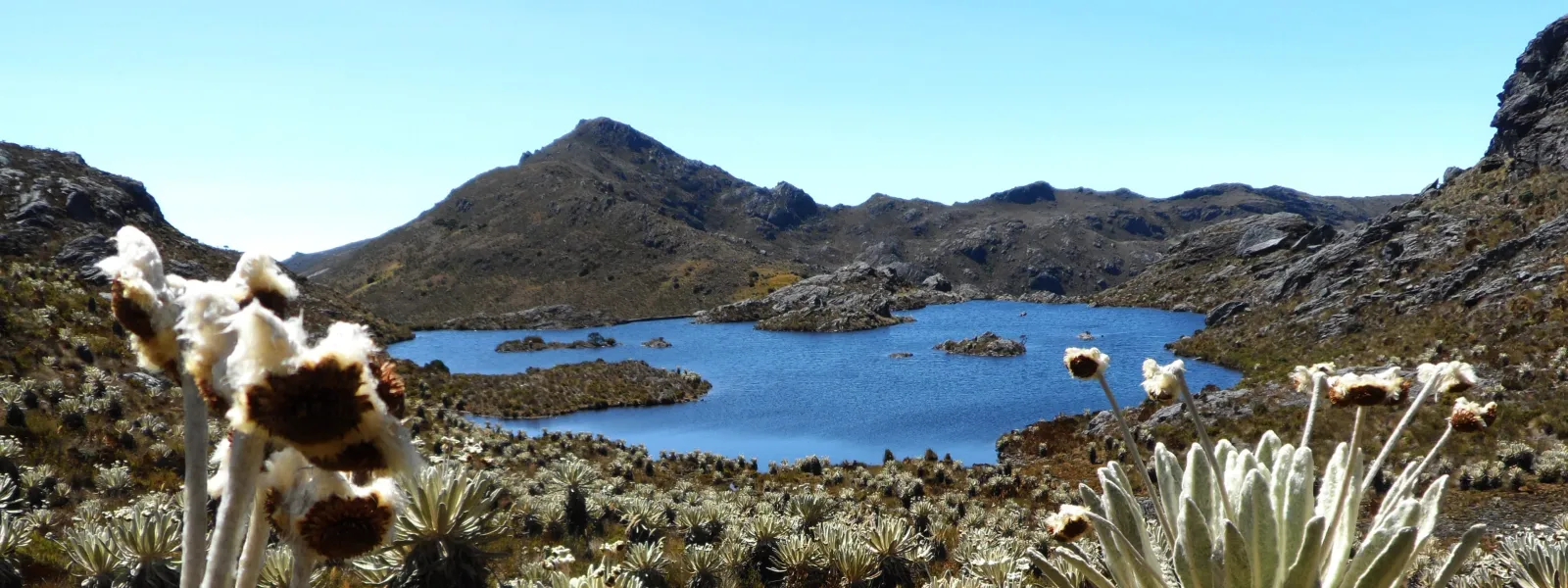
In the Andean region, high-mountain ecosystems known as páramos capture water from the fog and supply it to the lowlands. One such ecosystem is the Santurbán páramo, which provides fresh water to more than two million people in Colombia.
Santurbán, like the other páramos on the continent, also captures large amounts of carbon, making it a key ally in mitigating the climate crisis. It is also a refuge for hundreds of endangered species, including the iconic spectacled bear.
The land in and around the páramo contains gold and other minerals. This has put Santurbán in the spotlight of the multinational mining industry, which for decades has sought to establish large-scale projects in the ecosystem that threaten to degrade it.
The Committee for the Defense of Water and the Santurbán Páramo—a coalition of environmental advocates—has thwarted these ongoing attempts, with support from AIDA and other civil society organizations.
Background
The Santurbán páramo is located in the heart of the Eastern Cordillera of the Colombian Andes, in the departments of Santander and Norte de Santander, at an elevation ranging from 2,200 to 4,290 meters above sea level.
It covers an area of 129,743 hectares and is home to 57 lakes. It serves as a habitat for 457 plant species and 293 species of vertebrate fauna.
There are mineral deposits in Santurbán, primarily gold, but also silver and copper. This explains the region’s mining tradition, particularly in the part of the páramo located in Santander, in the province of Soto Norte. The communities in the area have built their culture and identity around gold mining, which is mainly artisanal and small-scale.
But since the 1990s, the gold deposits in the páramo have also attracted foreign mining conglomerates seeking to develop large-scale projects. This has raised concerns among the population that relies on the Santurbán water sources, who have mobilized in defense of water, their land, and life.
Although national and international regulations prohibit mining in páramos, the Colombian government has granted mining concessions to transnational corporations in Santurbán.
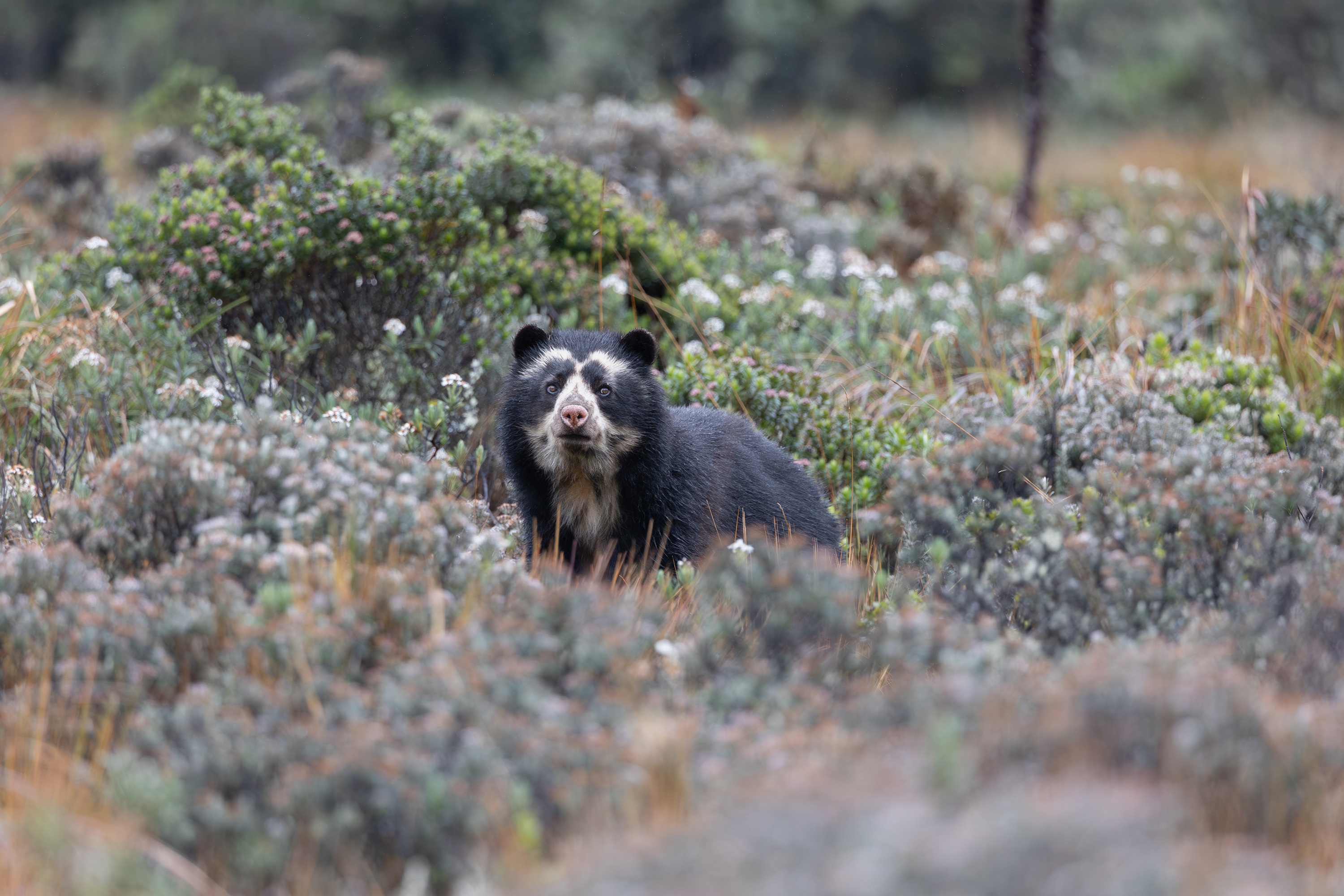
Photo: Keishpixl / Pixabay.
The long struggle to protect the páramo
One of the companies that sought to develop large-scale mining in Santurbán is Eco Oro Minerals Corp.—formerly Greystar Resources—a Canadian company that intended to establish the Angostura open-pit mine there to extract gold and silver. Between 1994 and 1995, the company acquired its mining titles and conducted exploration. And in 2010, it applied for a mining permit.
That was the year AIDA became involved in defending the ecosystem, supporting the Committee for the Defense of Water and the Santurbán Páramo. Our legal work helped convince the Colombian government to deny the mine an environmental permit in May 2011.
In January 2013, the government designated a portion of the páramo (11,700 hectares) as a Regional Natural Park. That year—together with the committee and partner organizations—we carried out a campaign and advocacy efforts to urge the government to recognize the entire Santurbán area as a páramo ecosystem through a delimitation based on scientific criteria. In December 2014, the Ministry of the Environment established a delimitation that protected 76% of the páramo (98,954 hectares).
Furthermore, as a result of a litigation supported by AIDA, in February 2016, Colombia’s highest court reaffirmed that mining in páramos is prohibited.
That same year, in December, the International Finance Corporation (IFC), the World Bank Group’s private sector arm, decided to divest from Eco Oro Minerals. This achievement was the result of a process that began in 2012, when the committee—advised and supported by AIDA and international partner organizations—filed a complaint before an independent accountability mechanism, which concluded that the IFC’s investment in the Angostura project failed to take into account the project’s social and environmental impacts, thereby contradicting the financial institution’s internal policies.
Also in 2016, Eco Oro Minerals filed an arbitration claim against the Colombian government with the International Centre for Settlement of Investment Disputes (ICSID), arguing that it had been adversely affected by government decisions aimed at protecting the country’s páramos, including the delimitation of Santurbán.
In 2017, the Constitutional Court invalidated the delimitation because the affected communities were not consulted. The high court ordered that a participatory delimitation be carried out.
And that year, a new threat to Santurbán emerged when the Canadian multinational Aris Mining applied for an environmental permit for Soto Norte, a gold mining project located near the páramo. Following citizen protests and technical objections, in October 2020, the National Environmental Licensing Authority shelved the project.
Photo: Aztlec.
Current situation
In March 2025, the Colombian government designated the western flank of the Santurbán massif as a temporary renewable natural resource reserve area, delimiting and protecting an area of 75,344.65 hectares. This resulted in a two-year suspension of the Soto Norte project. However, Aris Mining's contract to formalize Calimineros' small-scale mining activities through the purchase and processing of mineralized material remains in effect.
In addition, the Canadian mining company continues to move the project forward. In September 2025, it released its prefeasibility study, revising the mine’s original design.
Meanwhile, members of the Committee for the Defense of Water and the Santurbán Páramo face threats and stigmatization because of their work. In March 2025, UN Special Rapporteurs and the Working Group on Business and Human Rights denounced these incidents in communications sent to the governments of Colombia, Canada, and the United Arab Emirates, as well as to the companies Aris Mining and MDC Industry Holding Company LLC, the former co-owner of the Soto Norte project.
Regarding the arbitration claim filed by Eco Oro Minerals, in July 2024, ICSID ruled in favor of the Colombian government and rejected the Canadian company’s claim for USD 1.1 billion in compensation.
Concerning the delimitation of Santurbán, in July 2026, the Ministry of the Environment issued a resolution introducing the concept of "progressive delimitation." On that basis, the government proposes to progressively demarcate the páramo, covering 29,199 hectares across 19 municipalities—those where the participatory agreements required by the Constitutional Court in its 2017 ruling have already been finalized. It also proposes two measures on the creation and expansion of reserves to restrict mining in the ecosystem.
Learn more about the impacts of mining on the páramos of Latin America (in Spanish).
Partners:
Related projects
Air pollution in Latin America and its effect on our health and climate
By Héctor Herrera, AIDA legal advisor and coordinator of the Network for Environmental Justice in Colombia, @RJAColombia According to the latest report from the Clean Air Institute, Monterrey, Guadalajara and Mexico City (Mexico), Cochabamba (Bolivia), Santiago (Chile), Lima (Peru), Bogota and Medellin (Colombia), Montevideo (Uruguay) and San Salvador (El Salvador) are 10 most polluted cities in Latin America. In all of them, the level of air pollution exceeds World Health Organization recommendations. The scene is similar in big cities across the region: buses and trucks spew out black smoke as people walk under grey skies. This is the backdrop in The Sound of Things Falling, an award-winning novel by Colombia’s Juan Gabriel Vásquez in which descriptions like this abound: “On the corner of Carrera Cuarta, the heavy afternoon traffic was moving slowly, in single file, toward the exit on to Avenida Jiménez. I found the gap in the traffic I needed to cross in front of a small bus whose recently illuminated headlights were catching the dust from the street, the smoke from exhaust pipes and the beginnings of a light drizzle.” Vásquez is writing about Bogota. But he could just as easily have been describing Monterrey or San Salvador. Residents of Latin America’s big cities live enveloped in smog. They breathe in the microparticles of black carbon, ozone, nitrogen dioxide and sulphur dioxide that comes with the air polluted by urban transport, industry and power plants. We can get riled up when a passing truck spits a cloud of smoke in our face. But our outrage fades almost as soon when we think that making these vehicles more environmentally friendly is not our responsibility. Those decisions lie out of our reach in the hands of politicians and bureaucrats. Even so, we must understand that air pollution is a problem that affects all of us and so it is important to be aware of the associated health risks. THE Clean Air Institute's report explains how breathing in air containing a high concentration of pollutants can reduce our quality of life and lead to illness or premature death. Thankfully, the report also makes recommendations on how to avoid this. Worryingly, public health is not the only casualty of air pollution. Another is a faster pace of climate change Black carbon and ozone are short-lived climate pollutants (SLCPs) that remain in the atmosphere from days to decades. While that is nothing compared with carbon dioxide, which remains in the atmosphere for more than a century, SLCPs contribute more to climate change than carbon dioxide. This means that if we were to significantly reduce SLCP emissions, we would get quick results in slowing climate change. You can find more information on AIDA’s page on SLCPs, including descriptions of the main pollutants and the steps being taken to encourage a reduction in their emission. All of what has been said here becomes particularly pertinent when you consider that the population and number of vehicles in Latin America is growing steadily, which unfortunately is not the case for the number of measures being introduced to reduce the level of air pollutants. Whatever our motives – whether this is to improve public health, slow climate change, protect our lungs or those of future generations, or even to simply enjoy a picturesque sunset without a wall of harmful gases blocking our view of the sea or the mountains, one thing is imperative. We must work so that the air in our cities across the Americas is clean and fresh.
Read moreGroups appeal to UN to halt imminent forced evictions of indigenous Ngöbe families
Appeal to the UN seeks to stop eviction of Panamanian community. Panama, Washington D.C., San Francisco, Lima. Environmental and human rights organizations submitted an urgent appeal to United Nations Special Rapporteurs on behalf of members of the indigenous Ngöbe community - the community faces imminent forced eviction from their land for the Barro Blanco hydroelectric dam project in western Panama. The eviction would force Ngöbe communities from their land, which provides their primary sources of food and water, means of subsistence, and culture. The urgent appeal, submitted by the Ngöbe organization Movimiento 10 de Abril para la Defensa del Rio Tabasará (M10) and three international NGOs, the Interamerican Association for Environmental Defense (AIDA), the Center for International Environmental Law (CIEL), and Earthjustice, asks the Special Rapporteurs to call upon the State of Panama to suspend the eviction process and dam construction until it complies with its obligations under international law. Given that the project is financed by the German and Dutch development banks (DEG and FMO, respectively) and the Central American Bank for Economic Integration (CABEI), the groups also urge the Special Rapporteurs to call on Germany, the Netherlands, and the member States of CABEI to suspend financing until each country has taken measures to remedy and prevent further violations of the Ngöbe's human rights. The forced evictions of the Ngöbe are the most recent threat arising from the Barro Blanco project. These evictions raise imminent violations of their human rights to adequate housing; property, including free, prior and informed consent; food, water and means of subsistence; culture; and education. "Our lands and natural resources are the most important aspects of our culture. Every day, we fear we will be forced from our home,"said Weni Bagama of the M10. The appeal highlights the fact that the Ngöbe were never consulted, nor gave consent to leave their land. "Panama must respect the rights of the Ngöbe indigenous peoples and refrain from evicting them. Executing these forced evictions will constitute a violation of international human rights law," said María José Veramendi Villa of AIDA. Also central to the appeal is the role of governments whose banks are funding the dam. "Under international law, States must ensure that their development banks do not finance projects that violate human rights, including extraterritorially. Forced eviction of the Ngöbe without their consent is reason enough to suspend financing of this project," said Abby Rubinson of Earthjustice. Barro Blanco's registration under the Kyoto Protocol's Clean Development Mechanism (CDM) is another point of concern. "Panama's failure to protect the Ngöbe from being forcibly displaced from their land without their consent casts serious doubt on the CDM's ability to ensure respect for human rights under international law," said Alyssa Johl of CIEL. "CDM projects must be designed and implemented in a manner that respects human rights obligations."
Read more
Mandela: lessons in tribal leadership to effectively protect the environment
“It always seems impossible until it becomes reality.” —Nelson Mandela Nelson Mandela died one month ago. Much has been written about him since then, and he has been globally honored like none other. Despite possible year-end amnesia and at the risk of sounding cliché, I am writing this post in his honor. I’m particularly interested in highlighting four leadership qualities Mandela possessed, and pointing out how those same qualities can help us be more effective environment defenders. Nelson Rolihlahla Mandela was born in Qunu, a Xhosa community in the state of Transkei, in the southeastern part of South Africa. Mandela’s birth name Rolihlahla means “troublemaker,” in the Xhosa language. But a schoolteacher began calling him Nelson, according to the custom of calling children by their English, rather than African, names. Another of Mandela’s names—Dalibunga (or founder of the bunga)—was given to him during a traditional initiation ceremony at the age of 16. He was also called Madiba, a name given by his tribe in honor of a Tembu chief who ruled during the 18th Century. According to tradition, Mandela was destined to be an advisor to the Tembu king. But he ended up being a leader far beyond the borders of the Transkei region, and changed the world even beyond South Africa. He was a leader of reconciliation and compromise. He had an enormous capacity for forgiveness and an ability work peacefully with, rather than seek revenge against, those who oppressed his people for centuries, and imprisoned him for 27 years. In what follows, I’d like to discuss four characteristics that Mandela exemplified. If we emulate these qualities, we can, like Mandela, help make the world a freer and more just place. 1. Values and a common cause as an absolute guide to decisions “There is no easy walk to freedom anywhere, and many of us will have to pass through the valley of the shadow of death again and again before we reach the mountaintop of our desires.” Mandela lived according to his values. He had the goal of ending apartheid and securing freedom for himself and his people. His desire for freedom guided each of his actions, including after he succeeded in ending apartheid in his country. Over the decades of his struggle, including more than a quarter century in prison, there were undoubtedly moments of despair and fear in which other people would have given up hope. Mandela and his colleagues, however, persisted. The cause that united them was greater than their individual will, and stronger than even Mandela himself. Although we cannot compare our work to the struggle against apartheid, we have indeed made important progress by rallying behind a common cause. One recent victory, in 2011, was a change in the Mexican Constitution in favor human rights. It would not have been possible without the joint work of our partner organizations, academia, and the Office of the High Commissioner of Mexico. 2. Conscientious, disciplined, committed and coherent “Running taught me valuable lessons. In cross-country competitions, training counted more than intrinsic ability, and I could compensate for a lack of natural aptitude with diligence and discipline. I applied this in everything I did.” Persistence and discipline were qualities that made a big difference for Mandela in reaching his goals. His commitment to every challenge, his clarity, and even his limitless stubbornness still manage to surprise us. His success was not achieved through supernatural powers, nor was there a single moment in which everything magically changed. On the contrary, Mandela’s achievements were a consequence of a life dedicated to study, work, and learning. He was constantly listening to others, building strategies, and rethinking them in order to achieve his goals. He made mistakes and bad decisions, but also had successes that collectively helped achieve his dream of freedom. Sometimes we feel that the results are impossible. In fact, they are, if we’re trying to reach them immediately. At AIDA, we have learned this in the case of La Oroya, in which we have had to be persistent and disciplined in order to achieve lasting results. With the people of La Oroya we have worked for change for 15 years, and we will continue until we achieve it. 3. All on the same side — there is no good vs. bad “If you want to make peace with your enemy, you should work with your enemy. Then he will become your partner.” I often wonder where South Africa would be if Mandela and his colleagues had not reached small agreements, if they had not overcome their many differences and moved forward. Moreover, what would have happened in that country if they had not been able to transcend hatred toward their oppressors in order to find peaceful and coordinated solutions? Surely, the outcome would have been a civil war with unimaginable consequences. One element that avoided such a catastrophe was Mandela’s constant ability to find solutions, reach agreements, maintain dialogue, and demand concrete results toward real change. No doubt, the process was not easy, quick, or smooth. But perseverance, clear goals, a desire to reach consensus, and the ability to find interlocutors made even the most complicated situations possible. When I think of our job of protecting the environment, I realize how much we lack and the great opportunity that lies before us. For example, instead of competing with colleagues at other organizations, or trying to defeat governments or corporations, we should remember that we are all working toward solutions to a common goal. The lure of “winning” and seeing others lose is powerful. But, surely, we will gain more if we work with our “enemies” and become partners instead. 4. A step back in celebration, a step forward in times of peril “It is better to lead from behind, and put others to the front, especially in celebration when good things occur. You step forward when there is danger. Then, people will appreciate your leadership.” Leadership is very different from being a dictator or a strongman. A person who is a true leader allows and encourages others to grow, develop and evolve in order to reach a common goal, even if they shine more than their bosses. Mandela was conscious of being a symbol so that everyone in South Africa could be free and treated as equals. Many times, he put that role above his own self-interest. On more than one occasion, Mandela had the possibility of improving his prison conditions or of obtaining early release. Instead, he chose to stay imprisoned because he believed that the conditions to dismantle apartheid were not met, and that the unjust system would not change if he were released. “Real leaders must be ready to sacrifice everything for the freedom of their people.” Sadly, contrary to what Mandela said, many “leaders” jump at the chance to receive medals, but have difficulty taking responsibility for the mistakes or shortcomings of their team. We must remember that the type of leadership that Mandela embodied can accomplish miracles. It translates into actions that allow changes no one would have thought possible—the fall of apartheid, for example, or a simple handshake between President Obama and Raul Castro, a symbol of reconciliation that took place at Mandela’s funeral. So, dear leaders, have a happy 2014! I invite you to consider these leadership skills and put them into practice. For your success, and for the survival of our planet!
Read more