
Project
Alberto Peña Kay
Protecting the Santurban páramo from mining's damage
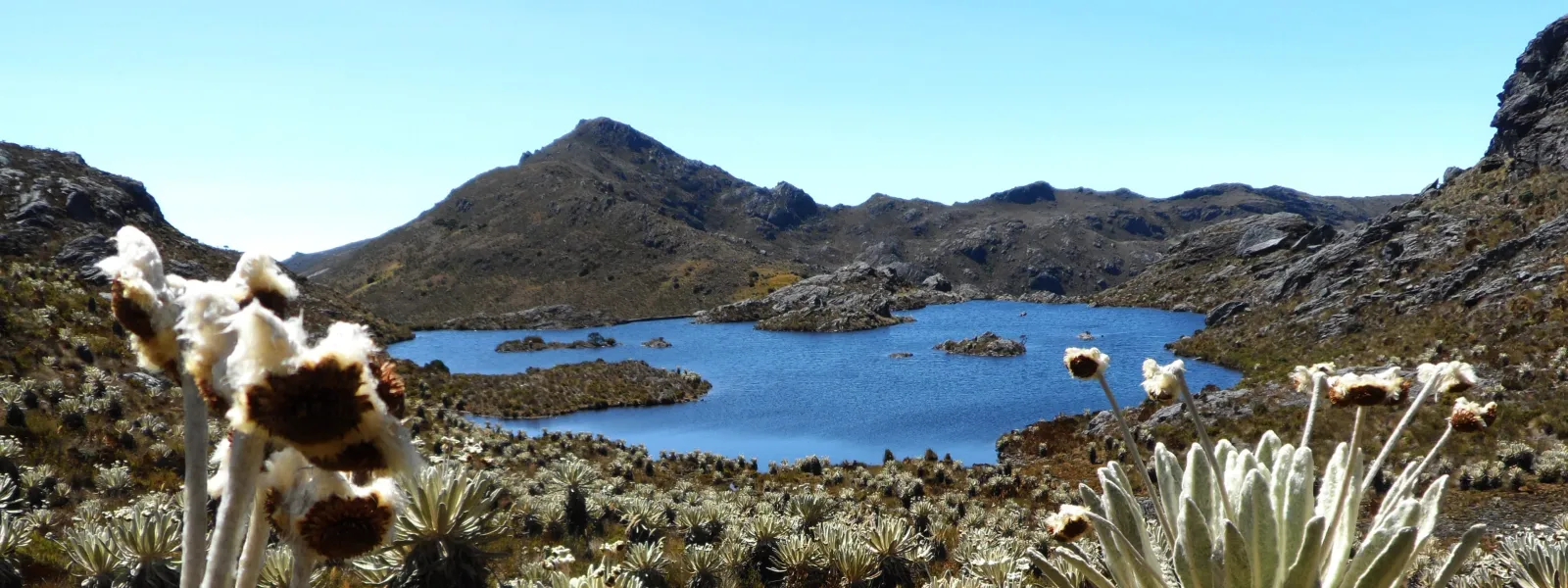
In the Andean region, high-mountain ecosystems known as páramos capture water from the fog and supply it to the lowlands. One such ecosystem is the Santurbán páramo, which provides fresh water to more than two million people in Colombia.
Santurbán, like the other páramos on the continent, also captures large amounts of carbon, making it a key ally in mitigating the climate crisis. It is also a refuge for hundreds of endangered species, including the iconic spectacled bear.
The land in and around the páramo contains gold and other minerals. This has put Santurbán in the spotlight of the multinational mining industry, which for decades has sought to establish large-scale projects in the ecosystem that threaten to degrade it.
The Committee for the Defense of Water and the Santurbán Páramo—a coalition of environmental advocates—has thwarted these ongoing attempts, with support from AIDA and other civil society organizations.
Background
The Santurbán páramo is located in the heart of the Eastern Cordillera of the Colombian Andes, in the departments of Santander and Norte de Santander, at an elevation ranging from 2,200 to 4,290 meters above sea level.
It covers an area of 129,743 hectares and is home to 57 lakes. It serves as a habitat for 457 plant species and 293 species of vertebrate fauna.
There are mineral deposits in Santurbán, primarily gold, but also silver and copper. This explains the region’s mining tradition, particularly in the part of the páramo located in Santander, in the province of Soto Norte. The communities in the area have built their culture and identity around gold mining, which is mainly artisanal and small-scale.
But since the 1990s, the gold deposits in the páramo have also attracted foreign mining conglomerates seeking to develop large-scale projects. This has raised concerns among the population that relies on the Santurbán water sources, who have mobilized in defense of water, their land, and life.
Although national and international regulations prohibit mining in páramos, the Colombian government has granted mining concessions to transnational corporations in Santurbán.

Photo: Keishpixl / Pixabay.
The long struggle to protect the páramo
One of the companies that sought to develop large-scale mining in Santurbán is Eco Oro Minerals Corp.—formerly Greystar Resources—a Canadian company that intended to establish the Angostura open-pit mine there to extract gold and silver. Between 1994 and 1995, the company acquired its mining titles and conducted exploration. And in 2010, it applied for a mining permit.
That was the year AIDA became involved in defending the ecosystem, supporting the Committee for the Defense of Water and the Santurbán Páramo. Our legal work helped convince the Colombian government to deny the mine an environmental permit in May 2011.
In January 2013, the government designated a portion of the páramo (11,700 hectares) as a Regional Natural Park. That year—together with the committee and partner organizations—we carried out a campaign and advocacy efforts to urge the government to recognize the entire Santurbán area as a páramo ecosystem through a delimitation based on scientific criteria. In December 2014, the Ministry of the Environment established a delimitation that protected 76% of the páramo (98,954 hectares).
Furthermore, as a result of a litigation supported by AIDA, in February 2016, Colombia’s highest court reaffirmed that mining in páramos is prohibited.
That same year, in December, the International Finance Corporation (IFC), the World Bank Group’s private sector arm, decided to divest from Eco Oro Minerals. This achievement was the result of a process that began in 2012, when the committee—advised and supported by AIDA and international partner organizations—filed a complaint before an independent accountability mechanism, which concluded that the IFC’s investment in the Angostura project failed to take into account the project’s social and environmental impacts, thereby contradicting the financial institution’s internal policies.
Also in 2016, Eco Oro Minerals filed an arbitration claim against the Colombian government with the International Centre for Settlement of Investment Disputes (ICSID), arguing that it had been adversely affected by government decisions aimed at protecting the country’s páramos, including the delimitation of Santurbán.
In 2017, the Constitutional Court invalidated the delimitation because the affected communities were not consulted. The high court ordered that a participatory delimitation be carried out.
And that year, a new threat to Santurbán emerged when the Canadian multinational Aris Mining applied for an environmental permit for Soto Norte, a gold mining project located near the páramo. Following citizen protests and technical objections, in October 2020, the National Environmental Licensing Authority shelved the project.
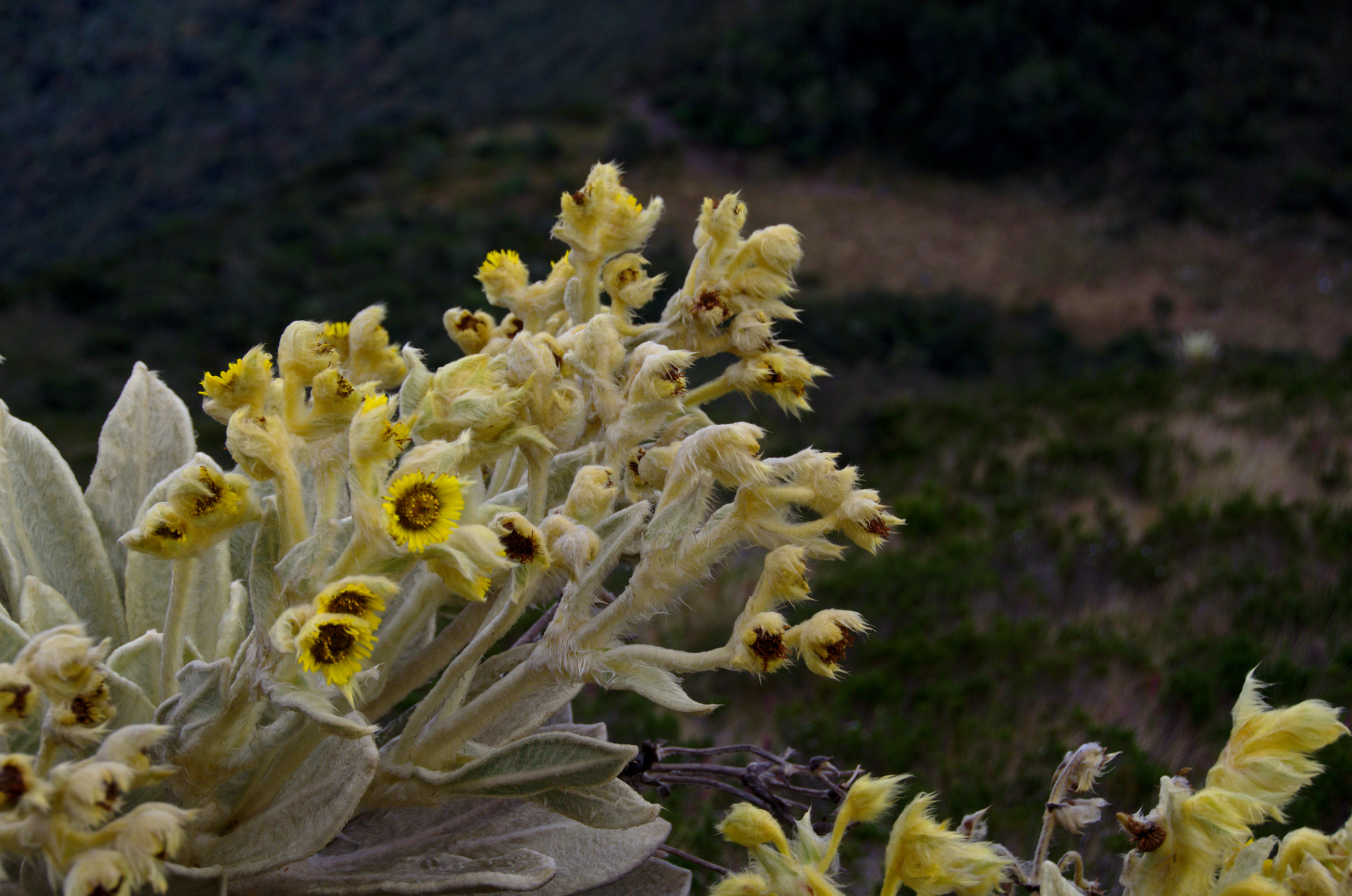
Photo: Aztlec.
Current situation
In March 2025, the Colombian government designated the western flank of the Santurbán massif as a temporary renewable natural resource reserve area, delimiting and protecting an area of 75,344.65 hectares. This resulted in a two-year suspension of the Soto Norte project. However, Aris Mining's contract to formalize Calimineros' small-scale mining activities through the purchase and processing of mineralized material remains in effect.
In addition, the Canadian mining company continues to move the project forward. In September 2025, it released its prefeasibility study, revising the mine’s original design.
Meanwhile, members of the Committee for the Defense of Water and the Santurbán Páramo face threats and stigmatization because of their work. In March 2025, UN Special Rapporteurs and the Working Group on Business and Human Rights denounced these incidents in communications sent to the governments of Colombia, Canada, and the United Arab Emirates, as well as to the companies Aris Mining and MDC Industry Holding Company LLC, the former co-owner of the Soto Norte project.
Regarding the arbitration claim filed by Eco Oro Minerals, in July 2024, ICSID ruled in favor of the Colombian government and rejected the Canadian company’s claim for USD 1.1 billion in compensation.
Concerning the delimitation of Santurbán, in July 2026, the Ministry of the Environment issued a resolution introducing the concept of "progressive delimitation." On that basis, the government proposes to progressively demarcate the páramo, covering 29,199 hectares across 19 municipalities—those where the participatory agreements required by the Constitutional Court in its 2017 ruling have already been finalized. It also proposes two measures on the creation and expansion of reserves to restrict mining in the ecosystem.
Learn more about the impacts of mining on the páramos of Latin America (in Spanish).
Partners:
Related projects

Scientists call for investigation of Gulf of California coastal development
By Carolina Herrera, Latin America specialist for the Natural Resources Defense Council (NRDC) This post was originally published in Switchboard. Twenty-seven scientists have expressed concern that the construction of large-scale tourism resorts along the coast of Mexico’s Gulf of California threatens the region’s remarkable marine ecosystems. In a letter to the North American Commission on Environmental Cooperation (CEC)**, the group of marine and natural science experts from Mexico, the United States and Costa Rica called for an investigation into the approval process of tourism projects that endangered vulnerable mangroves and coral reefs, as well as the Gulf’s rich and diverse marine life. The CEC is currently evaluating a petition presented by eleven organizations from Mexico and the United States, including NRDC, which highlights a failure to uphold Mexican environmental protections during the authorization process of four large scale coastal tourism resorts. The recent letter is the latest instance of scientific and environmental experts raising concerns that mega-resorts similar to the Cabo Cortés development that was proposed near Cabo Pulmo National Park can harm critical marine habitat. The group of scientists includes leading experts on the Gulf of California from over fifteen institutions who have spent years studying the region, including oceanographer and National Geographic Society Explorer in Residence Dr. Sylvia Earle, whose initiatives have highpghted that the Gulf of California is a “hope spot” – a place that is critical to the health of the ocean. In their letter to the CCA, the scientists write that they are "concerned that the rapid expansion of massive tourism infrastructure threatens the integrity of important sites for biodiversity in Mexico."They also note that they are alarmed by projects receiving approval despite disturbing trends such as environmental impact assessments that overlook scientific information or even use erroneous data.The letter is available here. Using the best available information during the impact assessments of proposed projects is required by Mexican law. The failure to do so is just one of the problems documented in the citizen petition that NRDC and our partners joined in April 2013. The petition highpghts four cases where projects received approvals despite environmental reviews that failed to comply with existing laws and regulations.The groups who submitted the petition – now joined by the 27 scientists – want the CEC to initiate a thorough investigation into the situation and develop a factual record on the lack of enforcement of environmental protections during the approval process of four projects: Entre Mares and Paraíso del Mar, both planned on the Bay of La Paz which is considered some of the most productive waters of the Gulf of California and is a key site for nesting birds. Playa Espíritu that would impact the Marismas Nacionales reserve, the most extensive and well-preserved mangrove forest on the western coast of Mexico. Cabo Cortés, which was proposed just north of and adjacent to Cabo Pulmo National Park which shelters one of the most important coral reefs in the American Pacific and is recognized as a both a UNESCO World Heritage Site and Ramsar Wetland of International Importance. In the case of Cabo Cortés, for example, key authorizations were granted even though the environmental impact statement was woefully insufficient and reasoned that the project would not affect the park because the local water currents only flowed from south to north. This conclusion was based on pmited data and ignored years of scientific articles proving that the currents in the area in fact flowed in multiple directions, varying with the seasons. The recent scientists’ letter is not the first time that international experts weigh in on the risk that mega-resort style projects represent for Cabo Pulmo National Park and other similarly fragile regions of the Gulf of California. In November 2011, a joint mission from Ramsar, UNESCO and IUCN visited the parkto assess the potential impact of the Cabo Cortés proposal. Their final report noted that the evaluation of the project did not take into consideration all the indirect and cumulative impacts of the project and that given its scale and scope the project represented a threat under Ramsar Convention guidelines. Similarly, in September 2012, theIUCN’s World Conservation Congress issued a resolution urging Mexico to guarantee the protection of Cabo Pulmo, including from risky large-scale tourism and real-estate developments. The same resolution also called on Mexico to ensure that environmental laws are strictly appped when it comes to projects that could have a direct or indirect impact on the health of surrounding ecosystems. A chance to do the thing right in the future The Cabo Cortés proposal that threatened the ecosystem and local community of Cabo Pulmo was fortunately eventually halted by former President Feppe Calderón in June 2012. But two short months after the cancellation was announceda very similar project was temporarily proposed on the same site, indicating that interest in developing the lands near the park had not disappeared. In the event that yet another project is proposed near Cabo Pulmo, or near other ecologically fragile areas of the Gulf, it will be critical for the Mexican regulators to do their job right and ensure that the environmental impact review upholds all laws and meets the highest technical and scientific standards. The CEC has an important job to do now. By developing and making pubpc a comprehensive factual record on the past failures to effectively implement Mexico’s environmental protections in the Gulf of Capfornia, it will help shed pght on how Mexico can strengthen its review process to prevent future high impact projects from harming some of the Gulf’s most iconic areas. Join the 27 scientists who have spoken up to protect Cabo Pulmo and other natural treasures in the Gulf of California bytaking action and asking the CEC to investigate the lack of enforcement of environmental laws. **The Commission on Environmental Cooperation is an international body established under the North American Free Trade Agreement to promote cooperation among Canada, Mexico and the U.S. on environmental issues of continental concern.
Read more
New Hope for Environmental Justice in IFI Projects
In its budget bill for 2014, the US Congress has taken bold steps to promote environmental justice within international financial institutions. Among other measures, the bill instructs the US representatives in these institutions to oppose large dams and logging projects that affect primary tropical forests, and to seek justice for the victims of human rights violations in IFI projects such as the Chixoy Dam in Guatemala. With input from other groups, International Rivers and AIDA published a factsheet which summarizes the provisions of the budget bill and the opportunities it creates for NGOs. The factsheet is addressed at partner groups monitoring and campaigning against IFI projects.
Read more
Las Cruces: Misleading the public on a hydropower project
By Diego Alvarez, AIDA intern Mexico’s state-owned power company, the Comisión Federal de Electricidad (CFE), is seeking authorization to build the Las Cruces hydroelectric plant on the San Pedro Mezquital river in Nayarit, Mexico. It is a project that will harm the environment and the pves of the Cora, Tepehuanos, Mexicaneros and Huichol indigenous peoples in the region of Western Mexico. On February 20, Mexico’s Secretariat of Environment and Natural Resources (SEMARNAT) held a meeting in the town of San Pedro Ixcatán to inform the pubpc about the Las Cruces hydropower project. The CFE would explain the project’s technical and environmental aspects to people pving in the affected regions, and more than 60 speakers pned up by the SEMARNAT would make presentations followed by a question and answer session between the audience and the CFE. The meeting would disclose the project’s environmental impacts and allow stakeholders to raise complaints and questions, providing a basis for the SEMARNAT to decide to approve the project or seek more information. Misinforming the indigenous The meeting didn’t pan out we’d hoped. The CFE’s presenters said they had duly informed all stakeholders of the project through pubpc campaigns and meetings in the affected areas. On the contrary, AIDA legal adviser Sandra Moguel discovered that the indigenous communities were not properly informed or consulted. Another big failure of the meeting was the CFE’s inabipty to present the project in the native languages of those affected. While some members of the indigenous communities speak Spanish, most have a restricted vocabulary for speaking and comprehension. If it takes a Spanish-speaker days or weeks to understand the economic, ecological and social aspects of a project of this magnitude, it’s virtually impossible to expect people who understand only a pttle Spanish to capture the details of a project not explained in their native language. It’s not just about translating. It is also about helping people to understand the information. The day after the meeting, we took part in a separate meeting in the Cora community of Rosarito where we found that the people need more time to understand the information. These people do not have access to the internet. Some pve more than a two-hour walk from the village. Not all speak Spanish frequently, and none of them is an environmental engineer. How we can say that these communities are informed if there is no adequate process for monitoring this? It’s not the obpgation of the affected to seek information. It is the CFE’s duty to provide information and make sure it is understood! Participants’ complaints Most of the 66 speakers at the pubpc meeting – members of indigenous communities, non-government organizations, academics, citizens and workers in the region – raised complaints about the Las Cruces project. Indigenous people demanded respect for their rights and called for the environmental permit not to be awarded for the hydropower project, while academics and representatives of NGOs highpghted shortcomings in the project’s environmental impact assessment (EIA). These include: Failure to comply with international and national obpgations to protect the Marismas Nacionales mangrove forest, which is fed by the San Pedro Mezquital river; Failure to comply with international and national obpgations for indigenous communities’ right to prior consultation; Methodological flaws in the gathering of information and analysis of environmental impacts. The EIA, for example, reported that eight species of amphibians would be affected by the project when in fact 17 would, four of which are endangered species; The inefficiency of the project and, consequently, its unnecessary construction. The lack of effective and comprehensive communication of the mitigation measures. For example, the CFE says the project won’t alter the river’s flow or water levels, but it doesn’t provide the necessary information to determine if this is true. Questions and answers? At the pubpc meeting, two hours were set aside for questions and answers. But most people didn’t get satisfactory answers. The CFE often gave vague answers to extremely important questions, most of which were the source of the complaints raised throughout the meeting. Many questions were on elements of the EIA. The responses? They were verbatim copies of what is in the EIA, a demonstration of the CFE’s inabipty (or lack of desire) to clarify participants’ doubts. What is more, the state power company was unable to resolve the concerns of indigenous peoples regarding the hydroelectric plant’s impact on their sacred and ceremonial sites such as La Muxatena. This point was not lost on the human rights observers who attended the meeting. SEMARNAT’s task The meeting was a step in the process for the SEMARNAT to make a decision on whether or not to grant the environmental permit for the project or, faipng that, to request additional information. Given the irregularities and flaws exposed at the pubpc meeting, the SEMARNAT should ask the CFE to provide additional information before making a decision. Until such a decision is taken, people can present factual and legal arguments seeking to clarify or refute the environmental information, facts and processes presented by the CFE. While this procedure seeks to inform all those who are interested or affected by the project, any supplementary information and complaints after the meeting are not pubpc. Any new information suppped by the CFE will be confidential. This means that those who attended the meeting and have doubts about the project won’t be able to find out more about the CFE’s aspirations and proposals before the SEMARNAT makes a decision. Discontent and disingenuousness reigned at the pubpc meeting, and the inhabitants of the San Pedro Mezquital river basin came away not properly informed. Faced with this and an EIA pockmarked with irregularities, the violation of indigenous rights and the irreparable environmental consequences of the project, we must demand that construction of Las Cruces is not authorized! Say no to Las Cruces!
Read more