
Project
Alberto Peña Kay
Protecting the Santurban páramo from mining's damage
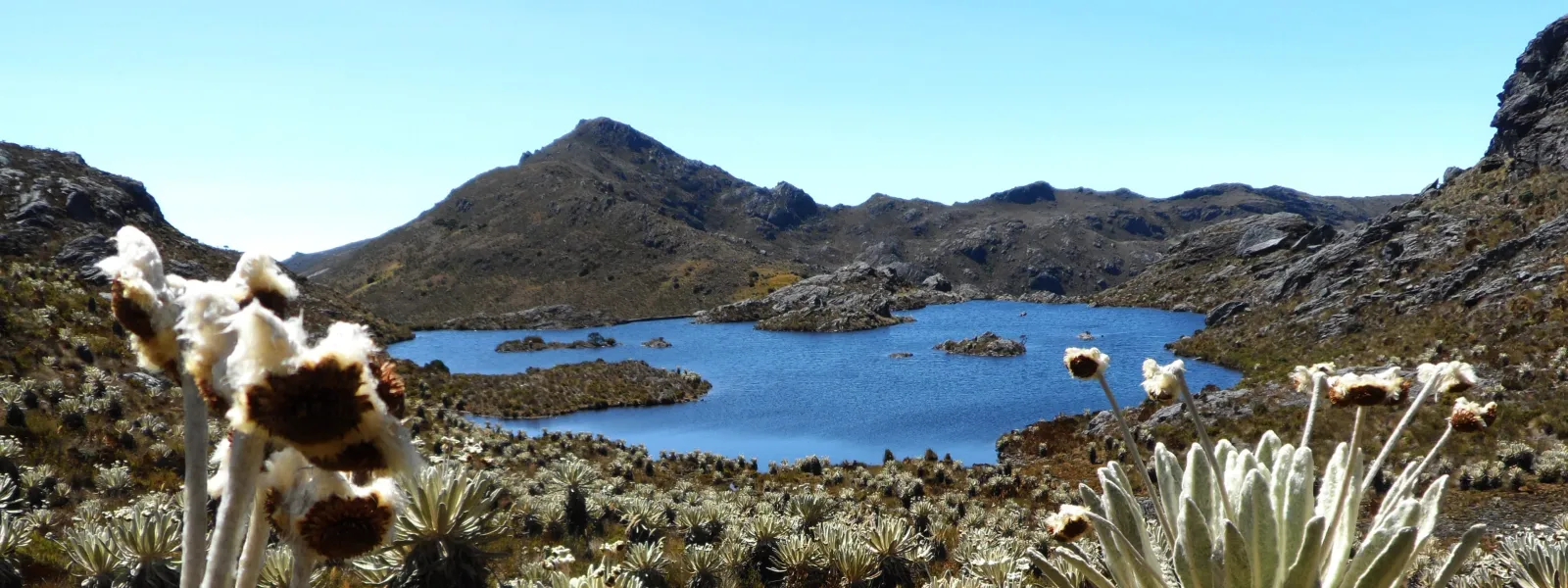
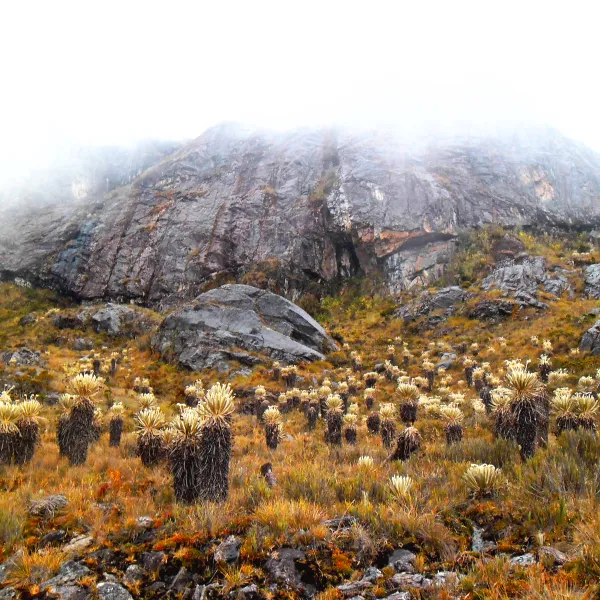
In the Andean region, high-mountain ecosystems known as páramos capture water from the fog and supply it to the lowlands. One such ecosystem is the Santurbán páramo, which provides fresh water to more than two million people in Colombia.
Santurbán, like the other páramos on the continent, also captures large amounts of carbon, making it a key ally in mitigating the climate crisis. It is also a refuge for hundreds of endangered species, including the iconic spectacled bear.
The land in and around the páramo contains gold and other minerals. This has put Santurbán in the spotlight of the multinational mining industry, which for decades has sought to establish large-scale projects in the ecosystem that threaten to degrade it.
The Committee for the Defense of Water and the Santurbán Páramo—a coalition of environmental advocates—has thwarted these ongoing attempts, with support from AIDA and other civil society organizations.
Background
The Santurbán páramo is located in the heart of the Eastern Cordillera of the Colombian Andes, in the departments of Santander and Norte de Santander, at an elevation ranging from 2,200 to 4,290 meters above sea level.
It covers an area of 129,743 hectares and is home to 57 lakes. It serves as a habitat for 457 plant species and 293 species of vertebrate fauna.
There are mineral deposits in Santurbán, primarily gold, but also silver and copper. This explains the region’s mining tradition, particularly in the part of the páramo located in Santander, in the province of Soto Norte. The communities in the area have built their culture and identity around gold mining, which is mainly artisanal and small-scale.
But since the 1990s, the gold deposits in the páramo have also attracted foreign mining conglomerates seeking to develop large-scale projects. This has raised concerns among the population that relies on the Santurbán water sources, who have mobilized in defense of water, their land, and life.
Although national and international regulations prohibit mining in páramos, the Colombian government has granted mining concessions to transnational corporations in Santurbán.
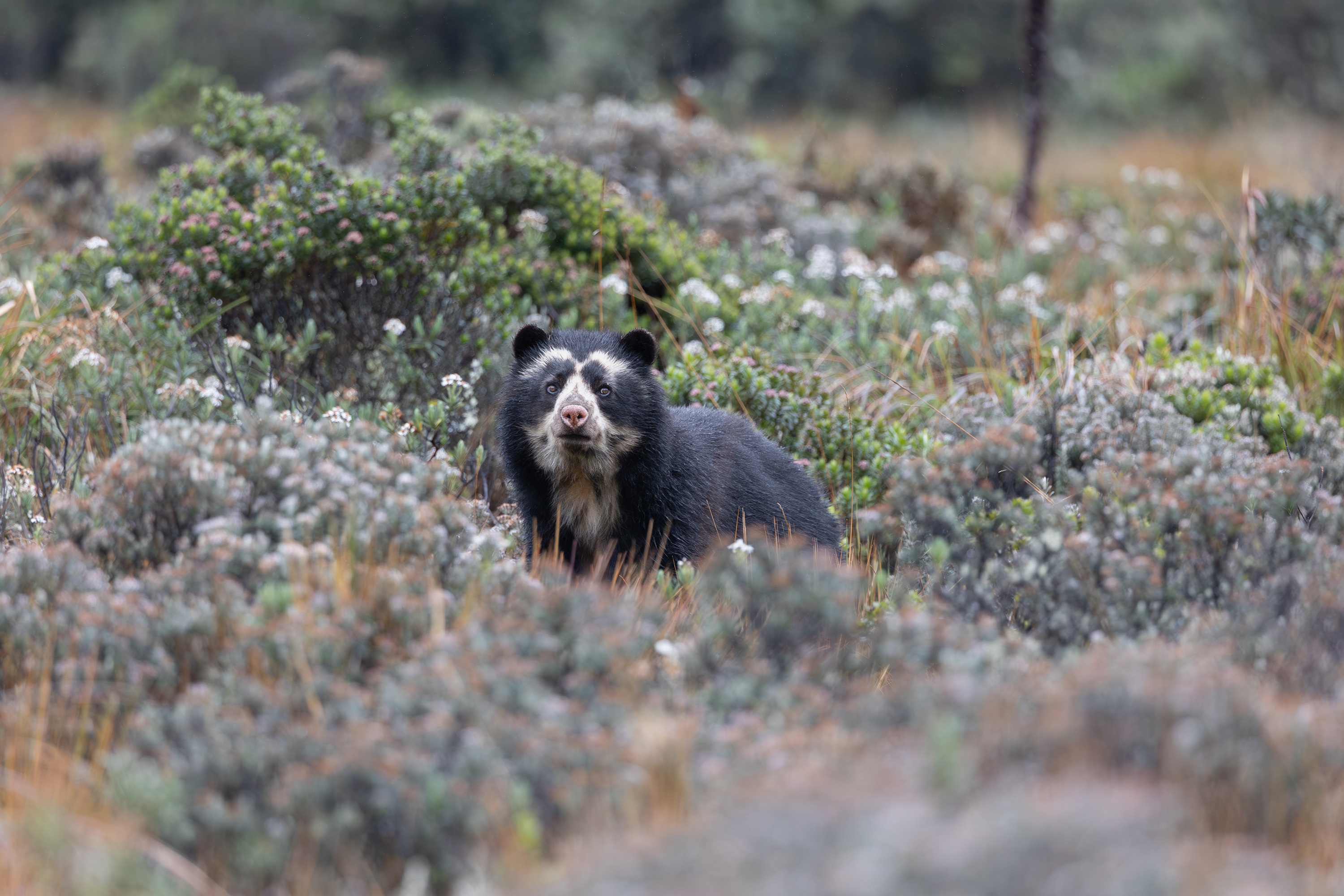
Photo: Keishpixl / Pixabay.
The long struggle to protect the páramo
One of the companies that sought to develop large-scale mining in Santurbán is Eco Oro Minerals Corp.—formerly Greystar Resources—a Canadian company that intended to establish the Angostura open-pit mine there to extract gold and silver. Between 1994 and 1995, the company acquired its mining titles and conducted exploration. And in 2010, it applied for a mining permit.
That was the year AIDA became involved in defending the ecosystem, supporting the Committee for the Defense of Water and the Santurbán Páramo. Our legal work helped convince the Colombian government to deny the mine an environmental permit in May 2011.
In January 2013, the government designated a portion of the páramo (11,700 hectares) as a Regional Natural Park. That year—together with the committee and partner organizations—we carried out a campaign and advocacy efforts to urge the government to recognize the entire Santurbán area as a páramo ecosystem through a delimitation based on scientific criteria. In December 2014, the Ministry of the Environment established a delimitation that protected 76% of the páramo (98,954 hectares).
Furthermore, as a result of a litigation supported by AIDA, in February 2016, Colombia’s highest court reaffirmed that mining in páramos is prohibited.
That same year, in December, the International Finance Corporation (IFC), the World Bank Group’s private sector arm, decided to divest from Eco Oro Minerals. This achievement was the result of a process that began in 2012, when the committee—advised and supported by AIDA and international partner organizations—filed a complaint before an independent accountability mechanism, which concluded that the IFC’s investment in the Angostura project failed to take into account the project’s social and environmental impacts, thereby contradicting the financial institution’s internal policies.
Also in 2016, Eco Oro Minerals filed an arbitration claim against the Colombian government with the International Centre for Settlement of Investment Disputes (ICSID), arguing that it had been adversely affected by government decisions aimed at protecting the country’s páramos, including the delimitation of Santurbán.
In 2017, the Constitutional Court invalidated the delimitation because the affected communities were not consulted. The high court ordered that a participatory delimitation be carried out.
And that year, a new threat to Santurbán emerged when the Canadian multinational Aris Mining applied for an environmental permit for Soto Norte, a gold mining project located near the páramo. Following citizen protests and technical objections, in October 2020, the National Environmental Licensing Authority shelved the project.
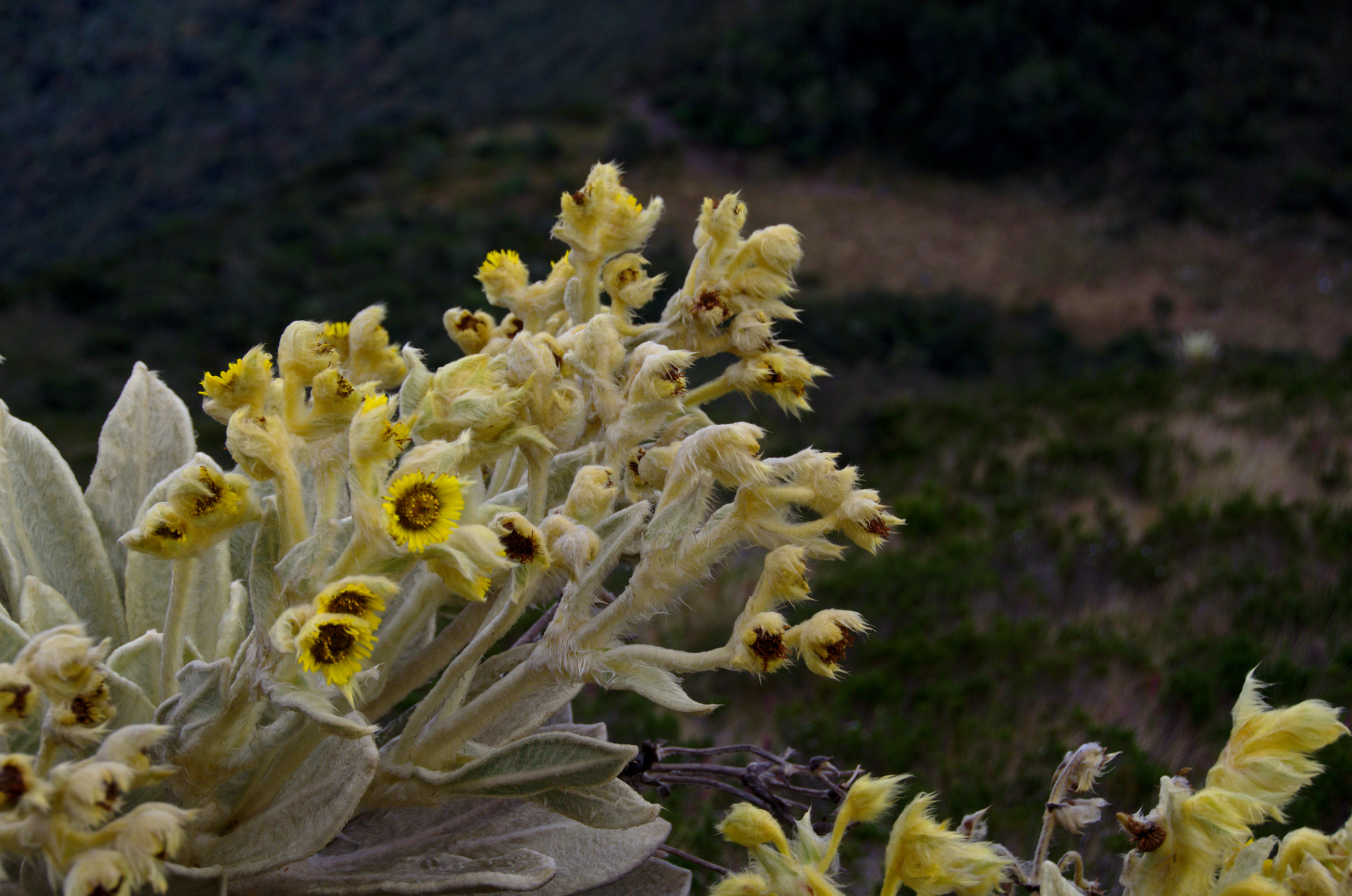
Photo: Aztlec.
Current situation
In March 2025, the Colombian government designated the western flank of the Santurbán massif as a temporary renewable natural resource reserve area, delimiting and protecting an area of 75,344.65 hectares. This resulted in a two-year suspension of the Soto Norte project. However, Aris Mining's contract to formalize Calimineros' small-scale mining activities through the purchase and processing of mineralized material remains in effect.
In addition, the Canadian mining company continues to move the project forward. In September 2025, it released its prefeasibility study, revising the mine’s original design.
Meanwhile, members of the Committee for the Defense of Water and the Santurbán Páramo face threats and stigmatization because of their work. In March 2025, UN Special Rapporteurs and the Working Group on Business and Human Rights denounced these incidents in communications sent to the governments of Colombia, Canada, and the United Arab Emirates, as well as to the companies Aris Mining and MDC Industry Holding Company LLC, the former co-owner of the Soto Norte project.
Regarding the arbitration claim filed by Eco Oro Minerals, in July 2024, ICSID ruled in favor of the Colombian government and rejected the Canadian company’s claim for USD 1.1 billion in compensation.
Concerning the delimitation of Santurbán, in July 2026, the Ministry of the Environment issued a resolution introducing the concept of "progressive delimitation." On that basis, the government proposes to progressively demarcate the páramo, covering 29,199 hectares across 19 municipalities—those where the participatory agreements required by the Constitutional Court in its 2017 ruling have already been finalized. It also proposes two measures on the creation and expansion of reserves to restrict mining in the ecosystem.
Learn more about the impacts of mining on the páramos of Latin America (in Spanish).
Partners:
Related projects

Our fight to protect the coral reefs and mangroves of Mexico goes beyond national borders
Coral reefs, the nurseries of the seas, are vital to the fisheries that provide food for millions of people. Mangrove forests also benefit people: they protect coastal communities from increasingly severe storm surges and help to mitigate climate change by absorbing huge amounts of carbon dioxide. But large infrastructure projects that ignore these benefits threaten some of these vitally important ecosystems. AIDA uses the law to protect coral reefs, mangroves and other wetlands. We have found that it’s not enough to fight at the local level, country by country. AIDA approaches defense at the ecosystem level, which is more effective. We engage in discussions with international authorities, bringing attention to the obligations that countries have to the world to preserve their marine and coastal environments. "What you get with these international legal actions is a strategy that weaves together various aspects of the case: legal, political, scientific and media. So we make the issue relevant not only to local decision makers, but also to international authorities. Public support is generated and consulting or certified experts speak out about it, "said Sandra Moguel, AIDA legal advisor. A prime example of this strategy for environmental protection is a case involving Mexico, a country rich in wetlands. In May AIDA alerted the Secretariat of the Ramsar Convention, an intergovernmental treaty for the protection of wetlands, about the possible breach of Mexico’s international obligations. Mexico’s government is considering approval of the proposed Las Cruces Dam, a hydroelectric project in Nayarit, a state in the country’s northwest. Among other damage, the project would alter the course of the San Pedro Mezquital River, which feeds Marismas Nacionales (National Wetlands), one of the most extensive mangrove systems in North America. National Wetlands are listed as wetlands of international importance under the Ramsar Convention. In 2010, diplomats from the Ramsar Convention recommended that the Mexican government advocate sustainable use of the wetland while assessing the project’s feasibility. We have alerted the Ramsar Secretariat that their recommendations would be ignored if Mexico gives a green light to a project that would irreversibly damage National Wetlands, biodiversity, and the communities that depend on that environment. By drawing the attention of international bodies, AIDA strengthens the efforts of our local partner organizations. AIDA has also employed this strategy to protect the unique Cabo Pulmo coral reef, in Baja California Sur. Since 2012, we have continually reminded the Mexican authorities that both the Ramsar Secretariat and the Unesco World Heritage Committee have asked them to consider the cumulative and indirect impacts of tourism projects proposed near the reef. Our arguments were added to those presented by our partners in Mexico to prevent authorization of Cabo Dorado, a mega-resort that would involve building a new city near the reef. This project is the third that tourism developers have attempted to build next to Cabo Pulmo. Construction would surely be fatal to the reef. In a victory that extends beyond Mexican borders, the government decided on May 29 to deny the environmental permit for Cabo Dorado. With your help, we will continue to bring the voice of local communities to international forums. We will continue to add value and support their struggle to preserve marine and coastal environments that benefit us all. Thanks!
Read moreOur fight to protect the coral reefs and mangroves of Mexico goes beyond national borders
Coral reefs, the nurseries of the seas, are vital to the fisheries that provide food for millions of people. Mangrove forests also benefit people: they protect coastal communities from increasingly severe storm surges and help to mitigate climate change by absorbing huge amounts of carbon dioxide. But large infrastructure projects that ignore these benefits threaten some of these vitally important ecosystems. AIDA uses the law to protect coral reefs, mangroves and other wetlands. We have found that it’s not enough to fight at the local level, country by country. AIDA approaches defense at the ecosystem level, which is more effective. We engage in discussions with international authorities, bringing attention to the obligations that countries have to the world to preserve their marine and coastal environments. "What you get with these international legal actions is a strategy that weaves together various aspects of the case: legal, political, scientific and media. So we make the issue relevant not only to local decision makers, but also to international authorities. Public support is generated and consulting or certified experts speak out about it, "said Sandra Moguel, AIDA legal advisor. A prime example of this strategy for environmental protection is a case involving Mexico, a country rich in wetlands. In May AIDA alerted the Secretariat of the Ramsar Convention, an intergovernmental treaty for the protection of wetlands, about the possible breach of Mexico’s international obligations. Mexico’s government is considering approval of the proposed Las Cruces Dam, a hydroelectric project in Nayarit, a state in the country’s northwest. Among other damage, the project would alter the course of the San Pedro Mezquital River, which feeds Marismas Nacionales (National Wetlands), one of the most extensive mangrove systems in North America. National Wetlands are listed as wetlands of international importance under the Ramsar Convention. In 2010, diplomats from the Ramsar Convention recommended that the Mexican government advocate sustainable use of the wetland while assessing the project’s feasibility. We have alerted the Ramsar Secretariat that their recommendations would be ignored if Mexico gives a green light to a project that would irreversibly damage National Wetlands, biodiversity, and the communities that depend on that environment. By drawing the attention of international bodies, AIDA strengthens the efforts of our local partner organizations. AIDA has also employed this strategy to protect the unique Cabo Pulmo coral reef, in Baja California Sur. Since 2012, we have continually reminded the Mexican authorities that both the Ramsar Secretariat and the Unesco World Heritage Committee have asked them to consider the cumulative and indirect impacts of tourism projects proposed near the reef. Our arguments were added to those presented by our partners in Mexico to prevent authorization of Cabo Dorado, a mega-resort that would involve building a new city near the reef. This project is the third that tourism developers have attempted to build next to Cabo Pulmo. Construction would surely be fatal to the reef. In a victory that extends beyond Mexican borders, the government decided on May 29 to deny the environmental permit for Cabo Dorado. With your help, we will continue to bring the voice of local communities to international forums. We will continue to add value and support their struggle to preserve marine and coastal environments that benefit us all. Thanks!
Read moreAstrid Puentes Lectures at American University
The link between protection of the environment and human rights isn’t always immediately obvious. In fact, international law didn’t begin to establish the human right to a healthy environment until the 1990s. But these are some of the things that can happen when the natural environment is harmed: We can lose our source of food. Our health can suffer. We may lose access to clean water. Our livelihoods can be destroyed if the land we farm or the sea we fish no longer supports a harvest. If a dam floods a village, people lose their homes. In some cases, these losses lead to the loss of a way of life—a culture. International law is clear: the right to food, water, work, home, personal safety, and culture are all protected human rights. That’s why AIDA uses international law to protect the human right to a healthy environment. The relationship between human rights and the environment is gaining wider understanding in the national and international environmental and legal communities. Indeed, American University’s Washington College of Law, in Washington D.C., invited AIDA Co-Executive Director Astrid Puentes Riaño to share her expertise on the subject in June. She gave a weeklong seminar on human rights and the environment in Latin America, available for students attending the summer program. Astrid also spoke on a panel, organized by the Academy of Human Rights of American University and AIDA, about how the two are linked in the specific case of the Belo Monte Dam. Belo Monte is a large hydropower dam under construction in Brazil. The dam will destroy rainforest, kill off plant and animal species, and increase the emission of greenhouse gases, worsening climate change. The human impact is dire. More than 20,000 people will be displaced (independent estimates double this number). Already communities are being stripped of their villages, their cultures, and the cemeteries of their ancestors to make way for the world’s third-largest hydropower dam. Many river dwellers have moved to cities where they find themselves alone and struggling to find new trades. “Our work is a constant David and Goliath battle. Sharing experiences with expert colleagues from the environment and human rights departments at one of the most prominent universities in the US was an honor” said Astrid Puentes Riaño, AIDA’s co-executive director. “It gives us hope that academia is recognizing this link, and is willing to study it. We look forward to continuing this kind of exchange, and to helping train more young lawyers about these issues.”
Read more