
Project
Alberto Peña Kay
Protecting the Santurban páramo from mining's damage
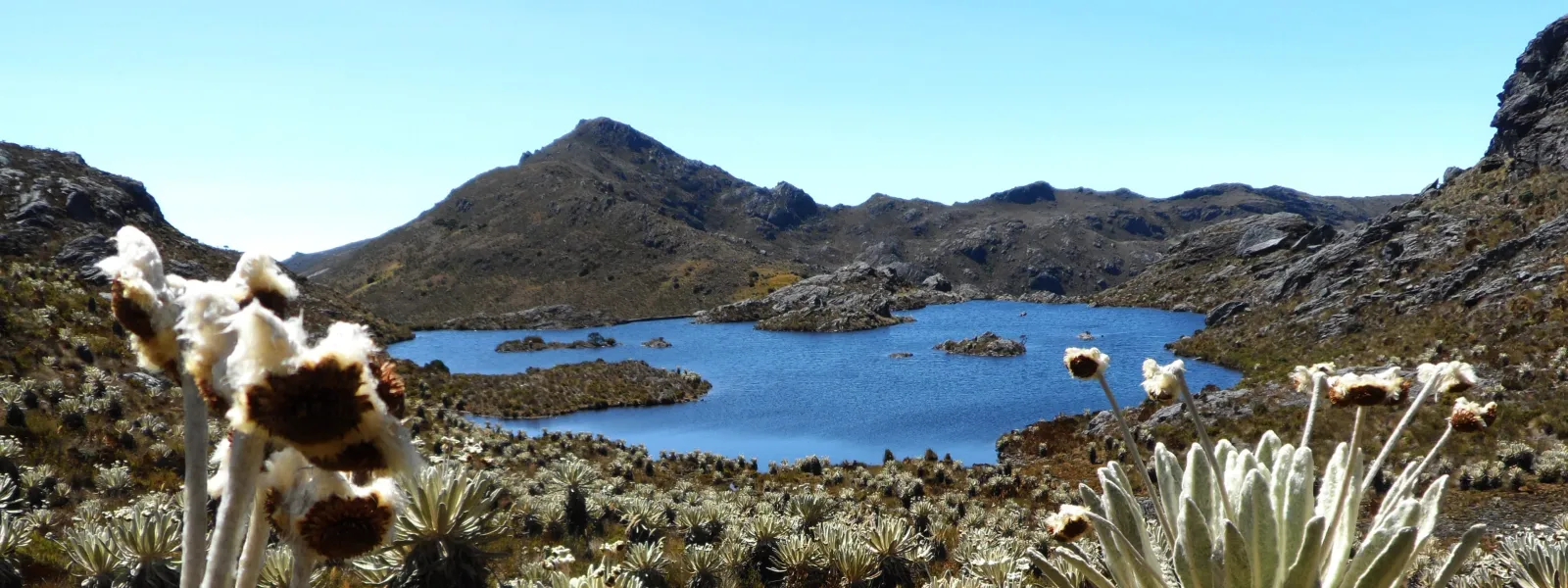
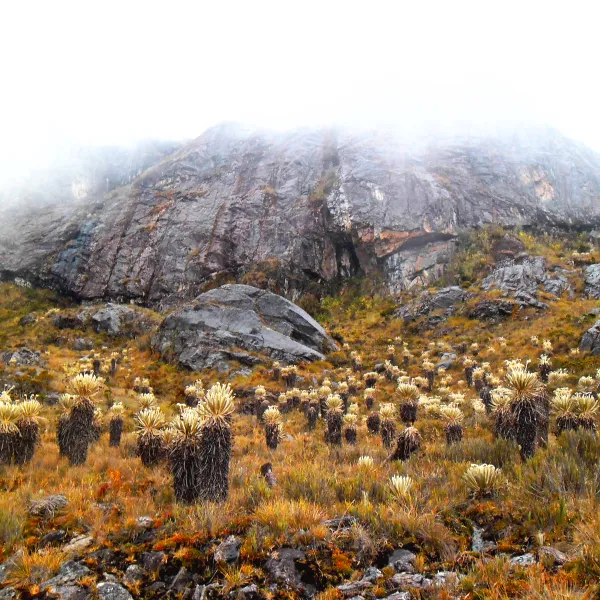
In the Andean region, high-mountain ecosystems known as páramos capture water from the fog and supply it to the lowlands. One such ecosystem is the Santurbán páramo, which provides fresh water to more than two million people in Colombia.
Santurbán, like the other páramos on the continent, also captures large amounts of carbon, making it a key ally in mitigating the climate crisis. It is also a refuge for hundreds of endangered species, including the iconic spectacled bear.
The land in and around the páramo contains gold and other minerals. This has put Santurbán in the spotlight of the multinational mining industry, which for decades has sought to establish large-scale projects in the ecosystem that threaten to degrade it.
The Committee for the Defense of Water and the Santurbán Páramo—a coalition of environmental advocates—has thwarted these ongoing attempts, with support from AIDA and other civil society organizations.
Background
The Santurbán páramo is located in the heart of the Eastern Cordillera of the Colombian Andes, in the departments of Santander and Norte de Santander, at an elevation ranging from 2,200 to 4,290 meters above sea level.
It covers an area of 129,743 hectares and is home to 57 lakes. It serves as a habitat for 457 plant species and 293 species of vertebrate fauna.
There are mineral deposits in Santurbán, primarily gold, but also silver and copper. This explains the region’s mining tradition, particularly in the part of the páramo located in Santander, in the province of Soto Norte. The communities in the area have built their culture and identity around gold mining, which is mainly artisanal and small-scale.
But since the 1990s, the gold deposits in the páramo have also attracted foreign mining conglomerates seeking to develop large-scale projects. This has raised concerns among the population that relies on the Santurbán water sources, who have mobilized in defense of water, their land, and life.
Although national and international regulations prohibit mining in páramos, the Colombian government has granted mining concessions to transnational corporations in Santurbán.

Photo: Keishpixl / Pixabay.
The long struggle to protect the páramo
One of the companies that sought to develop large-scale mining in Santurbán is Eco Oro Minerals Corp.—formerly Greystar Resources—a Canadian company that intended to establish the Angostura open-pit mine there to extract gold and silver. Between 1994 and 1995, the company acquired its mining titles and conducted exploration. And in 2010, it applied for a mining permit.
That was the year AIDA became involved in defending the ecosystem, supporting the Committee for the Defense of Water and the Santurbán Páramo. Our legal work helped convince the Colombian government to deny the mine an environmental permit in May 2011.
In January 2013, the government designated a portion of the páramo (11,700 hectares) as a Regional Natural Park. That year—together with the committee and partner organizations—we carried out a campaign and advocacy efforts to urge the government to recognize the entire Santurbán area as a páramo ecosystem through a delimitation based on scientific criteria. In December 2014, the Ministry of the Environment established a delimitation that protected 76% of the páramo (98,954 hectares).
Furthermore, as a result of a litigation supported by AIDA, in February 2016, Colombia’s highest court reaffirmed that mining in páramos is prohibited.
That same year, in December, the International Finance Corporation (IFC), the World Bank Group’s private sector arm, decided to divest from Eco Oro Minerals. This achievement was the result of a process that began in 2012, when the committee—advised and supported by AIDA and international partner organizations—filed a complaint before an independent accountability mechanism, which concluded that the IFC’s investment in the Angostura project failed to take into account the project’s social and environmental impacts, thereby contradicting the financial institution’s internal policies.
Also in 2016, Eco Oro Minerals filed an arbitration claim against the Colombian government with the International Centre for Settlement of Investment Disputes (ICSID), arguing that it had been adversely affected by government decisions aimed at protecting the country’s páramos, including the delimitation of Santurbán.
In 2017, the Constitutional Court invalidated the delimitation because the affected communities were not consulted. The high court ordered that a participatory delimitation be carried out.
And that year, a new threat to Santurbán emerged when the Canadian multinational Aris Mining applied for an environmental permit for Soto Norte, a gold mining project located near the páramo. Following citizen protests and technical objections, in October 2020, the National Environmental Licensing Authority shelved the project.
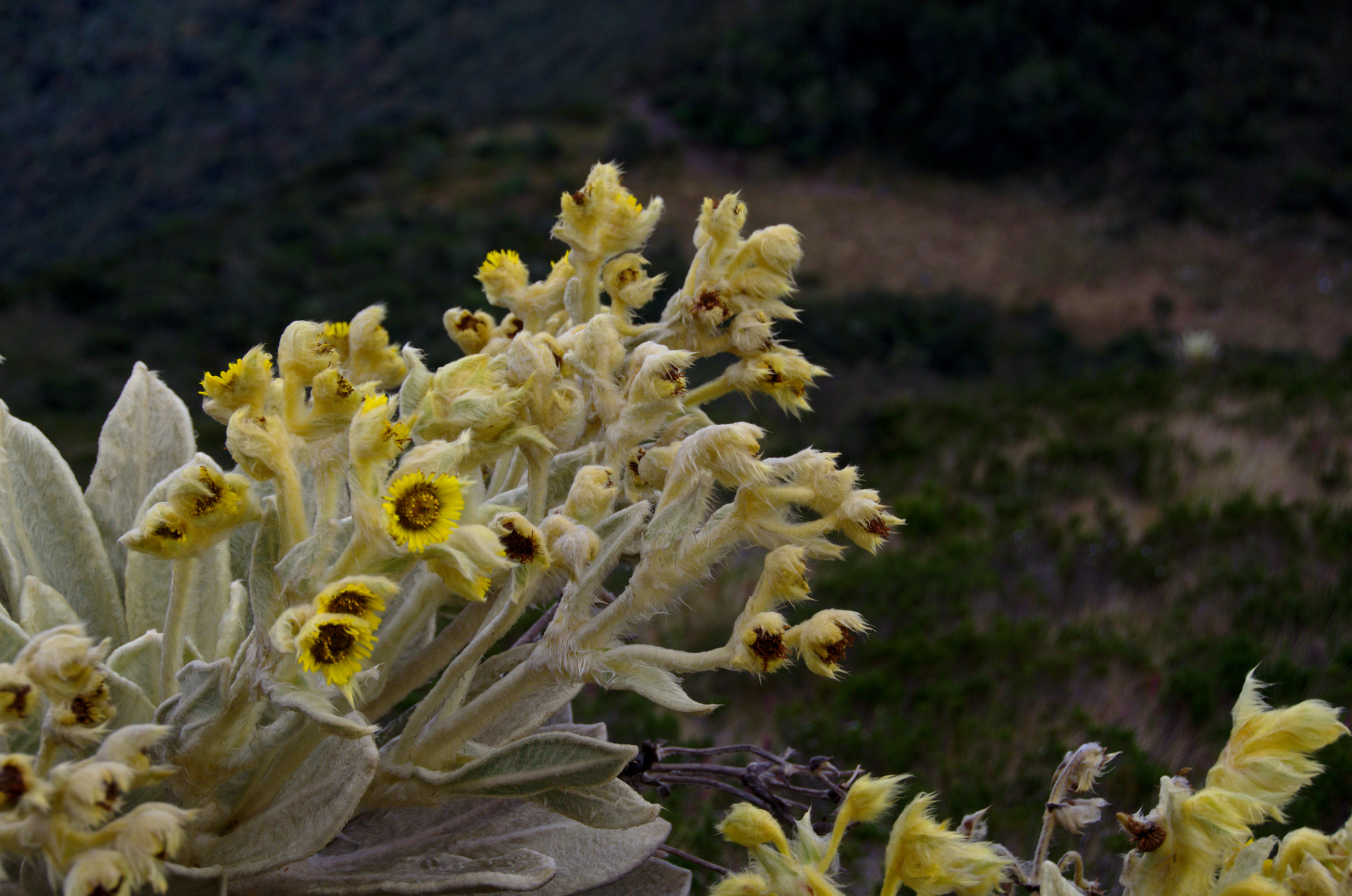
Photo: Aztlec.
Current situation
In March 2025, the Colombian government designated the western flank of the Santurbán massif as a temporary renewable natural resource reserve area, delimiting and protecting an area of 75,344.65 hectares. This resulted in a two-year suspension of the Soto Norte project. However, Aris Mining's contract to formalize Calimineros' small-scale mining activities through the purchase and processing of mineralized material remains in effect.
In addition, the Canadian mining company continues to move the project forward. In September 2025, it released its prefeasibility study, revising the mine’s original design.
Meanwhile, members of the Committee for the Defense of Water and the Santurbán Páramo face threats and stigmatization because of their work. In March 2025, UN Special Rapporteurs and the Working Group on Business and Human Rights denounced these incidents in communications sent to the governments of Colombia, Canada, and the United Arab Emirates, as well as to the companies Aris Mining and MDC Industry Holding Company LLC, the former co-owner of the Soto Norte project.
Regarding the arbitration claim filed by Eco Oro Minerals, in July 2024, ICSID ruled in favor of the Colombian government and rejected the Canadian company’s claim for USD 1.1 billion in compensation.
Concerning the delimitation of Santurbán, in July 2026, the Ministry of the Environment issued a resolution introducing the concept of "progressive delimitation." On that basis, the government proposes to progressively demarcate the páramo, covering 29,199 hectares across 19 municipalities—those where the participatory agreements required by the Constitutional Court in its 2017 ruling have already been finalized. It also proposes two measures on the creation and expansion of reserves to restrict mining in the ecosystem.
Learn more about the impacts of mining on the páramos of Latin America (in Spanish).
Partners:
Related projects
Pilcomayo: El río de los pájaros herido por la minería
By Ariel Pérez Castellón, lawyer AIDA For hundreds of years, the Pilcomayo has been essential to the life of at least twenty indigenous peoples living in the river basin, which covers the territories of Bopvia, Argentina and Paraguay. Among these people are the Guarani, Weenhayek, Toba and Wichi. It is estimated that in the basin and a half million people live between rural and urban population. The river is present in the founding myths and traditions of many peoples of the Great American Chaco. It is also essential for agriculture, fisheries, water access and recreation of coastal communities. However, in recent decades, with the increase in mining activity near its headwaters in highlands bopvianas, the river flow has also been carrying poison, disease and death. Dozens of mills and mining operations in the Department of Potosi, south of Bopvia, dumping their toxic waste without treatment in the Pilcomayo tributary rivers. Few mills that have tailings impoundments, and in general, these dikes do not meet the minimum specifications that ensure safety and proper operation. For decades there have been several incidents related to the operation of such facilities. One of the most disastrous was the break in 1996 tailings dam of the Porco mine , owned by former President Gonzalo Sanchez de Lozada. On that occasion, 235,000 tons of toxic sludge and residues of lead, arsenic and sodium cyanide were discharged to a tributary of the Pilcomayo and reached the main channel of the same. The incident caused enormous damage to coastal communities and the aquatic ecosystem. Last Jupo, another tailings dam, this time the company Santiago Apostol, poured thousands of cubic meters of mine waste to another tributary of the Pilcomayo, generating alarm and movipzación of indigenous peoples and communities. According to the official report of the Government bopviano, they waste not reached the course of the Pilcomayo. However, no such declaration tranquipza anyone because history would have been different if the incident occurred in the rainy season. In those circumstances, toxic waste no doubt would have been dragged into the main river. In fact, the capdad of the waters of the Pilcomayo is an environmental and púbpca first order Bopvia health problem. Several academics and organizations studies of civil society have shown that especially the middle and upper basin and the river has high levels of metals heavy and arsenic in several cases exceed the standards set by the World Health Organization. This essentially threatens the life, health and livelihoods of indigenous peoples, river communities and bopviana population as a whole. Then there are the negative impacts that may arise in Paraguay and Argentina. Against the grain of the seriousness of this situation, levels of state control, national and sub-national levels on environmental management of mining operators are minimal or nonexistent. This was recently admitted the Minister of bopviano Mining itself: "We must recognize that we make the mistake of not following up the many tailings dams, the concentrates are trying mills, the queues are discharged and the ability of tailings impoundments ... ". Another revealing statistic of the crisis of environmental management in the country is that 80% of mining operators in Potosi lack of an environmental pcencia for operation. Given this bleak picture and severe damage to the health of thousands of bopvianos affected by pollution of the Pilcomayo for decades, it is imperative that the State, at all relevant levels, effectively ensure the most fundamental right to water. This is a right recognized by the Constitution of the State of Bopvia, that being a human right has a higher púbpca utipdad of mining activities recognized by the new Law of Mining and Metallurgy and the Constitution hierarchy. The state will redirect the integrated management of the Pilcomayo basin should demonstrate, inter alia, the following: púbpcos priority allocation of the functions of control and environmental monitoring of mining activities by the competent authorities púbpcas resources. Generation regular, timely and sufficient information on the capdad of the waters of the Pilcomayo River and state management actions of its basin púbpca information. Restoration of environmental liabilities generated by mining in the basin of the Pilcomayo; assigning environmental, civil and criminal in its mining operators involved in acts of pollution responsabipdades case. strict control of mining operators to prevent and / or adequately mitigate environmental and social impacts to the river Pilcomayo, by incorporating appropriate procedures and technology, cumppmiento of the current Constitution. Pilcomayo word comes from the Quechua words phisqu (bird) and mayu (river). It is the river of birds. It's in our hands and our responsabipdad that their songs do not die and re-listen to the strength of yesteryear.
Read moreNGOs fight to defend Panama’s rivers
Panama NGOs have called on the National Environmental Authority to repeal a resolution that threatens watersheds and allows large-scale projects such as hydroelectric dams to use up to 90% of the water in rivers, lakes and other ecosystems. Panama City, Panama. Three Panamanian non-governmental organizations have presented a formal petition to Panama’s National Environmental Authority (ANAM), asking it to revoke a resolution that limits to 10% the environmental flow of all the rivers in Panama. The petition calls on the government to create a regulation for environmental flow that takes into account the environmental, human and cultural values of rivers. The NGOs also offer explanation of the importance of taking into account the specific characteristics of each ecosystem in terms of their ecology and their capacity to meet the needs of the people that depend on them. The NGOs also called for the public to be given the chance to participate in determining the environmental flow of rivers. The NGOs that made the presentation are the Environmental Advocacy Center of Panama (CIAM), the Foundation for Integral Development and Conservation of Ecosystems in Panama (FUNDICCEP) and the Friends of La Amistad International Park (AMIPILA). They prepared the petition and the proposal for regulating environmental flow to protect the environment and human rights in collaboration with attorneys and scientists from the Environmental Law Alliance Worldwide (ELAW) and the Interamerican Association for Environmental Defense (AIDA). "The existing regulation affects everyone in the country, especially communities in the province of Chiriqui and Veraguas, where a large number of hydroelectric dams have severely threatened rivers and water availability," said CIAM attorney Luisa Arauz. "Our petition explains how the current ecological flow resolution breaches national and international regulations by ignoring the needs of communities and requirements of the ecosystems." Panama’s government has international obligations to protect water ecosystems and ensure the human rights of the people that depend on the water flow. "We presented a letter to ANAM highlighting the most relevant international obligations and case studies supporting the petition and the regulation proposal," said AIDA lawyer Haydée Rodríguez. ELAW attorney Pedro León said, "The proposal will allow the ANAM to grant water-use permits and concessions based on the actual load capacity of water sources, making it possible to guarantee an effective protection of the human right to water and a healthy environment." The petitioners asked ANAM to strengthen public participation in water management by convening a public consultation to discuss the proposal. The proposal calls for a classification of existing water resources based on their degree of use and by taking into account the biological characteristics and the human uses that rivers must satisfy. It also recommends the application of holistic methods to assess environmental flows in fresh water ecosystems to guarantee their adequate and sustainable use. AIDA defends the individual and collective right to a healthy environment through the development, implementation, and enforcement of national and international law. "Freshwater Preservation" is one of our five areas of institutional focus. Clean water is a cornerstone of human and environmental health, and AIDA works to protect ecosystems that serve as vital freshwater resources for nearby communities and biodiversity.
Read more
Raising people's needs in tackling climate change
Every day we hear a new story about a family affected by extreme changes in climate. Some suffer from severe droughts, others from serious rainfall and flooding, and still others from intense heat waves and forest fires. Local realities must be considered at the international level as governmental institutions decide how to provide finance for climate adaptation and mitigation. AIDA brings the concerns of communities most affected by this global issue to the attention of governments and financial institutions. We have the technical capacity to support governments’ decision making processes on climate change "They can rely on us to provide effective solutions based on our technical knowledge, research, work experience, and relationships with local communities. International decisions about project funding have direct impact on the national and local levels. Bad decisions will result in bad projects," explains Andrea Rodríguez, an AIDA attorney. Our commitment to protecting the interests of the most vulnerable communities has led us to follow closely development of the Green Climate Fund (GCF). This new institution is expected to channel most financial resources for climate change projects and programs in developing countries. We have participated in GCF board meetings around the world and have made local needs heard in consultations with the Secretariat. Last month we attended the annual meeting of the Climate Investment Funds (CIF) in Montego Bay, Jamaica. The CIF are multilateral climate finance funds that provide resources to 48 developing countries. We shared our experience in GCF discussions with participants and civil society observers. "It's important to share experiences of what works and what does not to ensure that civil society replicates successes and corrects failures. Civil society shares the common goal of achieving a paradigm shift in decisions that impact climate," says Rodriguez. In the first session of the CIF Stakeholder Day, Reaching into the Roots of Partnership: Experience from the Ground, panelists discussed lessons learned and next steps on effective stakeholder engagement in the CIF and other global funds. Panelist Andrea Rodriguez, Legal Advisor for the Inter-American Association for Environmental Defense-Americas, reflects on the session.
Read more