Project
Alberto Peña Kay
Protecting the Santurban páramo from mining's damage
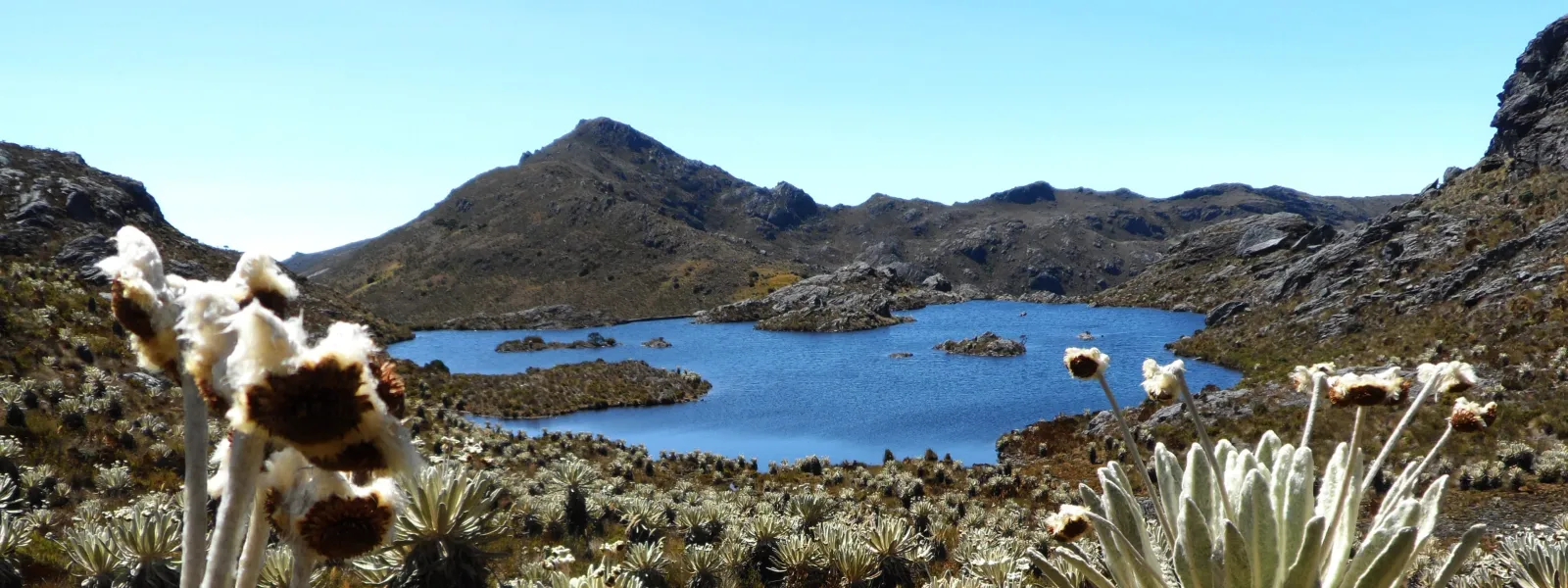
In the Andean region, high-mountain ecosystems known as páramos capture water from the fog and supply it to the lowlands. One such ecosystem is the Santurbán páramo, which provides fresh water to more than two million people in Colombia.
Santurbán, like the other páramos on the continent, also captures large amounts of carbon, making it a key ally in mitigating the climate crisis. It is also a refuge for hundreds of endangered species, including the iconic spectacled bear.
The land in and around the páramo contains gold and other minerals. This has put Santurbán in the spotlight of the multinational mining industry, which for decades has sought to establish large-scale projects in the ecosystem that threaten to degrade it.
The Committee for the Defense of Water and the Santurbán Páramo—a coalition of environmental advocates—has thwarted these ongoing attempts, with support from AIDA and other civil society organizations.
Background
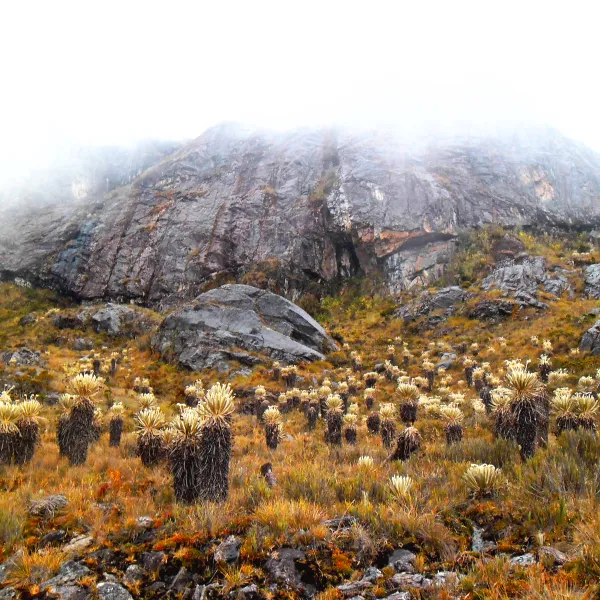
The Santurbán páramo is located in the heart of the Eastern Cordillera of the Colombian Andes, in the departments of Santander and Norte de Santander, at an elevation ranging from 2,200 to 4,290 meters above sea level.
It covers an area of 129,743 hectares and is home to 57 lakes. It serves as a habitat for 457 plant species and 293 species of vertebrate fauna.
There are mineral deposits in Santurbán, primarily gold, but also silver and copper. This explains the region’s mining tradition, particularly in the part of the páramo located in Santander, in the province of Soto Norte. The communities in the area have built their culture and identity around gold mining, which is mainly artisanal and small-scale.
But since the 1990s, the gold deposits in the páramo have also attracted foreign mining conglomerates seeking to develop large-scale projects. This has raised concerns among the population that relies on the Santurbán water sources, who have mobilized in defense of water, their land, and life.
Although national and international regulations prohibit mining in páramos, the Colombian government has granted mining concessions to transnational corporations in Santurbán.

Photo: Keishpixl / Pixabay.
The long struggle to protect the páramo
One of the companies that sought to develop large-scale mining in Santurbán is Eco Oro Minerals Corp.—formerly Greystar Resources—a Canadian company that intended to establish the Angostura open-pit mine there to extract gold and silver. Between 1994 and 1995, the company acquired its mining titles and conducted exploration. And in 2010, it applied for a mining permit.
That was the year AIDA became involved in defending the ecosystem, supporting the Committee for the Defense of Water and the Santurbán Páramo. Our legal work helped convince the Colombian government to deny the mine an environmental permit in May 2011.
In January 2013, the government designated a portion of the páramo (11,700 hectares) as a Regional Natural Park. That year—together with the committee and partner organizations—we carried out a campaign and advocacy efforts to urge the government to recognize the entire Santurbán area as a páramo ecosystem through a delimitation based on scientific criteria. In December 2014, the Ministry of the Environment established a delimitation that protected 76% of the páramo (98,954 hectares).
Furthermore, as a result of a litigation supported by AIDA, in February 2016, Colombia’s highest court reaffirmed that mining in páramos is prohibited.
That same year, in December, the International Finance Corporation (IFC), the World Bank Group’s private sector arm, decided to divest from Eco Oro Minerals. This achievement was the result of a process that began in 2012, when the committee—advised and supported by AIDA and international partner organizations—filed a complaint before an independent accountability mechanism, which concluded that the IFC’s investment in the Angostura project failed to take into account the project’s social and environmental impacts, thereby contradicting the financial institution’s internal policies.
Also in 2016, Eco Oro Minerals filed an arbitration claim against the Colombian government with the International Centre for Settlement of Investment Disputes (ICSID), arguing that it had been adversely affected by government decisions aimed at protecting the country’s páramos, including the delimitation of Santurbán.
In 2017, the Constitutional Court invalidated the delimitation because the affected communities were not consulted. The high court ordered that a participatory delimitation be carried out.
And that year, a new threat to Santurbán emerged when the Canadian multinational Aris Mining applied for an environmental permit for Soto Norte, a gold mining project located near the páramo. Following citizen protests and technical objections, in October 2020, the National Environmental Licensing Authority shelved the project.
Photo: Aztlec.
Current situation
In March 2025, the Colombian government designated the western flank of the Santurbán massif as a temporary renewable natural resource reserve area, delimiting and protecting an area of 75,344.65 hectares. This resulted in a two-year suspension of the Soto Norte project. However, Aris Mining's contract to formalize Calimineros' small-scale mining activities through the purchase and processing of mineralized material remains in effect.
In addition, the Canadian mining company continues to move the project forward. In September 2025, it released its prefeasibility study, revising the mine’s original design.
Meanwhile, members of the Committee for the Defense of Water and the Santurbán Páramo face threats and stigmatization because of their work. In March 2025, UN Special Rapporteurs and the Working Group on Business and Human Rights denounced these incidents in communications sent to the governments of Colombia, Canada, and the United Arab Emirates, as well as to the companies Aris Mining and MDC Industry Holding Company LLC, the former co-owner of the Soto Norte project.
Regarding the arbitration claim filed by Eco Oro Minerals, in July 2024, ICSID ruled in favor of the Colombian government and rejected the Canadian company’s claim for USD 1.1 billion in compensation.
Concerning the delimitation of Santurbán, in July 2026, the Ministry of the Environment issued a resolution introducing the concept of "progressive delimitation." On that basis, the government proposes to progressively demarcate the páramo, covering 29,199 hectares across 19 municipalities—those where the participatory agreements required by the Constitutional Court in its 2017 ruling have already been finalized. It also proposes two measures on the creation and expansion of reserves to restrict mining in the ecosystem.
Learn more about the impacts of mining on the páramos of Latin America (in Spanish).
Partners:
Related projects
Climate Marchers to Global Leaders: No dirty energy in the Green Climate Fund
New York, NY – As world leaders prepared to announce pledges of climate action and money for the Green Climate Fund, thousands of people flooded the streets of New York City yesterday demanding a financial commitment to clean energy and climate-resilient solutions. Heads of state are gathering at the United Nations tomorrow, at the invitation of UN Secretary General Ban Ki-Moon, in an attempt to jump-start negotiations for a new global climate deal. According to Janet Redman, climate policy director at the Institute for Policy Studies, “Reaching an agreement to stabilize the climate rests on developed countries making good on their promises. Contributions to the Green Climate Fund are past due. We need to see serious commitments from our governments to deliver financing for low-carbon, climate-friendly development now.” Andrea Rodríguez, Mexico-based legal advisor for the climate change program of the Interamerican Association for Environmental Defense (AIDA), added, “Billions of people still lack access to energy. The Green Climate Fund should support communities to meet that need through truly clean, decentralized, sustainable renewable energy. Despite the interest from various sectors in promoting carbon capture, natural gas, and large dams as climate solutions, this institution should not provide financial support for any project that emits greenhouse gas pollution.” The policies established by the Fund's 24 board members, from both developed and developing countries, have so far not excluded any energy sector from receiving finance, increasing the risk that dirty projects could ultimately receive support. “Dirty energy is more than fossil fuels,” noted Zachary Hurwitz, a consultant for International Rivers. “Hydropower dams can release methane, they can destroy carbon-sequestering forests, and they can displace thousands of people. And there’s nothing clean about the human rights violations that all too often result.” Lidy Nacpil, director of Jubilee South Asia Pacific Movement on Debt and Development, based in the Philippines, said, “In my country, we’re already facing the devastation of climate change. Wealthy industrialized countries have a legal and moral obligation to repay their climate debt and support adaptation through the Green Climate Fund. But that’s not enough. The fund must not exacerbate climate change and its impacts by financing dirty energy.” Additional information: Read the latest commentary from the Institute for Policy Studies on the Green Climate Fund. Read the Global South Position Statement on the Green Climate Fund. Read the open letter to governments, international institutions and financial mechanisms to stop considering large dams as clean energy and to implement real solutions to climate change.
Read more
"We want the Green Climate Fund to follow the rules of procedure it has adopted"
AIDA attended the Latin American Carbon Forum 2014 in Bogotá, Colombia. There, our lawyer Andrea Rodríguez participated as a representative of civil society in a panel on the Green Climate Fund (GCF), a mechanism that will mobilize large amounts of resources to support adaptation and mitigation of climate change. Andrea answers a series of questions about the current situation and prospects of the GCF. - What are civil society’s expectations for the Fund? - We have the same expectations as the Fund. We want it to be a transparent, inclusive institution that is constant learning, as stated in Article 3 of its governing instrument. Its focus has to be driven by each country’s determination of what priorities should be funded. It must balance funding for adaptation and mitigation of climate change. We expect the Fund to promote social, environmental, economic, and development co-benefits and taking a gender sensitive approach; men and women are affected to the same degree by climate change. In short, we want the Green Climate Fund to follow the rules of procedure it has adopted. - How can a balance in funding for mitigation and adaptation be ensured? - Financing is given mostly for mitigation projects, despite the great need to fund projects for adaptation to climate change. In Bali, Indonesia, during the penultimate meeting of the Fund’s Board, it was decided that 50% of the funding will go to mitigation and 50% for adaptation. That decision was made and we must ensure that it is followed. Furthermore, in Latin America, development plans and climate change strategies that have been advanced have set adaptation financing as a priority. - How should civil society involve itself in the Fund? - We must go beyond design to implementation. The Fund's governing instrument provides in Article 71 that the Board needs to develop mechanisms to promote the participation of all stakeholders (vulnerable groups, women, civil society and indigenous groups) in the design, development and implementation of projects and programs financed by the Green Climate Fund. There is a mandate for civil society in all stages. The issue is relevant because the Fund will become operational soon and will have to create these participatory mechanisms at the national level, particularly when countries begin to name their national designated authorities (those that collateralize the projects or activities financed by the Fund). It needs to institutionalize these participatory processes. - How can one measure the effectiveness of a project to be funded? - The definition of indicators will be among the topics discussed at the next meeting of the GCF Board, but some are particularly important. In adaptation, we need to consider whether a project can help reduce the vulnerability of a community to climate change. As for mitigation, you have to measure the amount of emissions reduced. But the most important aspect is to measure co-benefits that a project or activity can generate: if it creates jobs, improves people’s quality of life, etc. This is because the Green Climate Fund aims to contribute to a paradigm shift that promotes sustainable development. Helping to improve quality of life is a change of this nature. Many times, projects that have positive climate benefits generate social, environmental, and economic problems. So it is essential that additional benefits are evident in social, environmental, and economic terms.
Read morePeople harmed by environmental contamination in La Oroya have been waiting for seven years for the State to guarantee their rights
In 2007, the Inter-American Commission on Human Rights (IACHR) asked the Peruvian State to provide medical care and institute environmental controls. These measures have yet to be implemented fully and the health of the affected people continues to deteriorate. The IACHR has yet to reach a final decision in the case. La Oroya, Peru. Seven years have passed since the Inter-American Commission on Human Rights (IACHR) asked the Peruvian State to adopt precautionary measures in favor of the individuals affected by toxic contamination in the city of La Oroya. Those affected, including boys and girls, still have not received the medical attention they require and their health continues to deteriorate. On August 31, 2007, the IACHR granted precautionary measures in favor of 65 inhabitants of La Oroya who were poisoned by air, water, and soil contaminated by lead, arsenic, cadmium, and sulfur dioxide coming from the metallurgical complex of the Doe Run Perú Corporation. In light of the gravity and urgency of the situation, the Commission asked the Peruvian State to take actions necessary to diagnose and provide specialized medical treatment to affected persons whose personal integrity or lives were at risk of irreparable harm. Although some medical attention was provided, the required comprehensive, specialized care has not. Now there are dire risks of setbacks. To date, the Health Strategy for Attending to Persons Affected by Contamination with Heavy Metals and Other Chemical Substances, which is operating in the La Oroya Health Center, does not have an assured budget starting in September and for the remainder of the year. The Strategy is essential for complying with the precautionary measures, given that the diagnosis and specialized medical treatment for the beneficiaries depend on it. Without a budget, the continuity of the medical personnel attending not only to the beneficiaries but also to the entire population of La Oroya will become unviable. "The precautionary measures continue to be in force; after seven years, there has not been full compliance with them. Nonetheless, the State insists on requesting that they be lifted, despite the fact that the health of the population is deteriorating and constant risk [exists]," declared María José Veramendi Villa, attorney for the Inter-American Association for Environmental Defense (AIDA). On a related note, the IACHR continues to study the suit filed in 2006 for violations of the human rights of the same group of affected persons. The case is based on the failure of the Peuvian State to adequately control the activities of the metallurgical complex and protect the health and other rights of the affected persons. Regrettably, these individuals’ situation is worsening, and five years after accepting the suit, the IACHR has yet to reach a final decision. "Delay affects us more and more all the time. Our maladies are worsening. During this time, we have lost many of our fellows and seen our children fall ill," declared one of the affected individuals whose name is being withheld for reasons of security. Currently the metallurgical complex is undergoing a process of liquidation, but its operations will continue during the process of being sold. However, in May the complex had to suspend its operations because its suppliers stopped providing it with concentrates due to the company’s financial problems. "Although operations have been suspended, the violations of the individuals’ human rights have already occurred. Therefore, the Peruvian State must comply with its human rights obligations and guarantee that the company and its new owners comply with their obligations to protect the environment and human health," stated Jorge Abrego, attorney for the Asociación Pro Derechos Humanos [Association in Favor of Human Rights] (APRODEH).
Read more