
Project
Alberto Peña Kay
Protecting the Santurban páramo from mining's damage
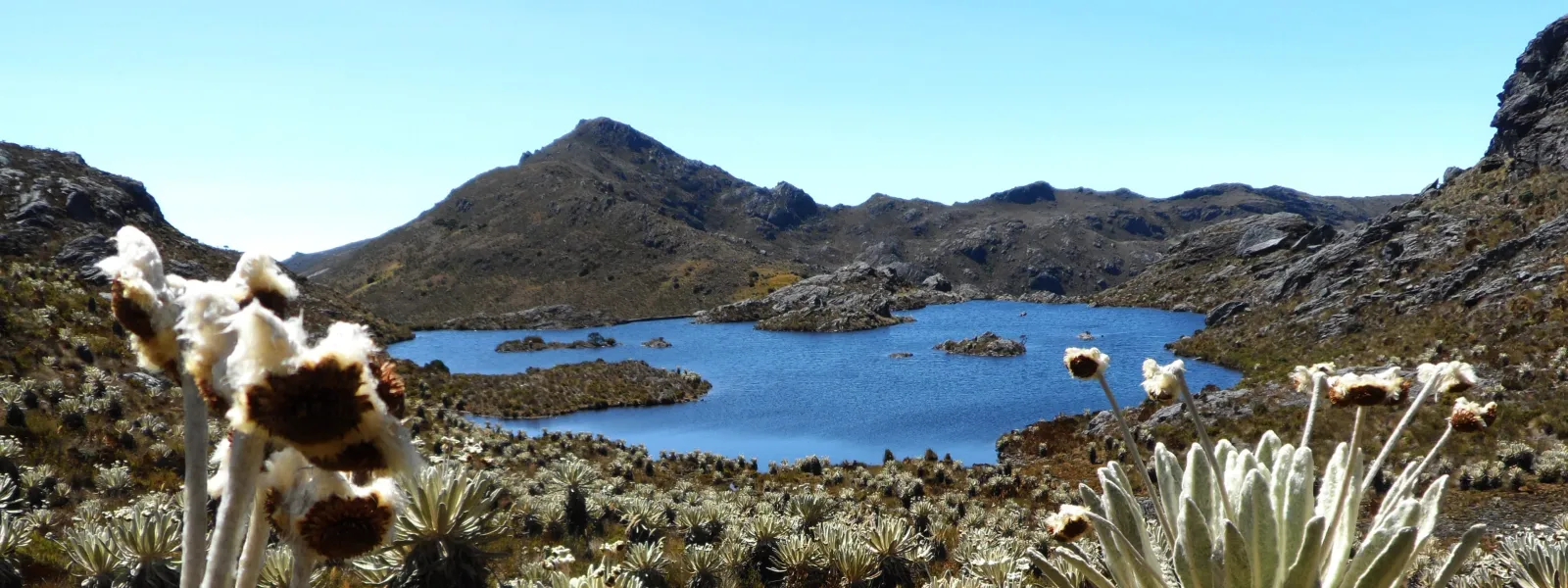
In the Andean region, high-mountain ecosystems known as páramos capture water from the fog and supply it to the lowlands. One such ecosystem is the Santurbán páramo, which provides fresh water to more than two million people in Colombia.
Santurbán, like the other páramos on the continent, also captures large amounts of carbon, making it a key ally in mitigating the climate crisis. It is also a refuge for hundreds of endangered species, including the iconic spectacled bear.
The land in and around the páramo contains gold and other minerals. This has put Santurbán in the spotlight of the multinational mining industry, which for decades has sought to establish large-scale projects in the ecosystem that threaten to degrade it.
The Committee for the Defense of Water and the Santurbán Páramo—a coalition of environmental advocates—has thwarted these ongoing attempts, with support from AIDA and other civil society organizations.
Background
The Santurbán páramo is located in the heart of the Eastern Cordillera of the Colombian Andes, in the departments of Santander and Norte de Santander, at an elevation ranging from 2,200 to 4,290 meters above sea level.
It covers an area of 129,743 hectares and is home to 57 lakes. It serves as a habitat for 457 plant species and 293 species of vertebrate fauna.
There are mineral deposits in Santurbán, primarily gold, but also silver and copper. This explains the region’s mining tradition, particularly in the part of the páramo located in Santander, in the province of Soto Norte. The communities in the area have built their culture and identity around gold mining, which is mainly artisanal and small-scale.
But since the 1990s, the gold deposits in the páramo have also attracted foreign mining conglomerates seeking to develop large-scale projects. This has raised concerns among the population that relies on the Santurbán water sources, who have mobilized in defense of water, their land, and life.
Although national and international regulations prohibit mining in páramos, the Colombian government has granted mining concessions to transnational corporations in Santurbán.

Photo: Keishpixl / Pixabay.
The long struggle to protect the páramo
One of the companies that sought to develop large-scale mining in Santurbán is Eco Oro Minerals Corp.—formerly Greystar Resources—a Canadian company that intended to establish the Angostura open-pit mine there to extract gold and silver. Between 1994 and 1995, the company acquired its mining titles and conducted exploration. And in 2010, it applied for a mining permit.
That was the year AIDA became involved in defending the ecosystem, supporting the Committee for the Defense of Water and the Santurbán Páramo. Our legal work helped convince the Colombian government to deny the mine an environmental permit in May 2011.
In January 2013, the government designated a portion of the páramo (11,700 hectares) as a Regional Natural Park. That year—together with the committee and partner organizations—we carried out a campaign and advocacy efforts to urge the government to recognize the entire Santurbán area as a páramo ecosystem through a delimitation based on scientific criteria. In December 2014, the Ministry of the Environment established a delimitation that protected 76% of the páramo (98,954 hectares).
Furthermore, as a result of a litigation supported by AIDA, in February 2016, Colombia’s highest court reaffirmed that mining in páramos is prohibited.
That same year, in December, the International Finance Corporation (IFC), the World Bank Group’s private sector arm, decided to divest from Eco Oro Minerals. This achievement was the result of a process that began in 2012, when the committee—advised and supported by AIDA and international partner organizations—filed a complaint before an independent accountability mechanism, which concluded that the IFC’s investment in the Angostura project failed to take into account the project’s social and environmental impacts, thereby contradicting the financial institution’s internal policies.
Also in 2016, Eco Oro Minerals filed an arbitration claim against the Colombian government with the International Centre for Settlement of Investment Disputes (ICSID), arguing that it had been adversely affected by government decisions aimed at protecting the country’s páramos, including the delimitation of Santurbán.
In 2017, the Constitutional Court invalidated the delimitation because the affected communities were not consulted. The high court ordered that a participatory delimitation be carried out.
And that year, a new threat to Santurbán emerged when the Canadian multinational Aris Mining applied for an environmental permit for Soto Norte, a gold mining project located near the páramo. Following citizen protests and technical objections, in October 2020, the National Environmental Licensing Authority shelved the project.
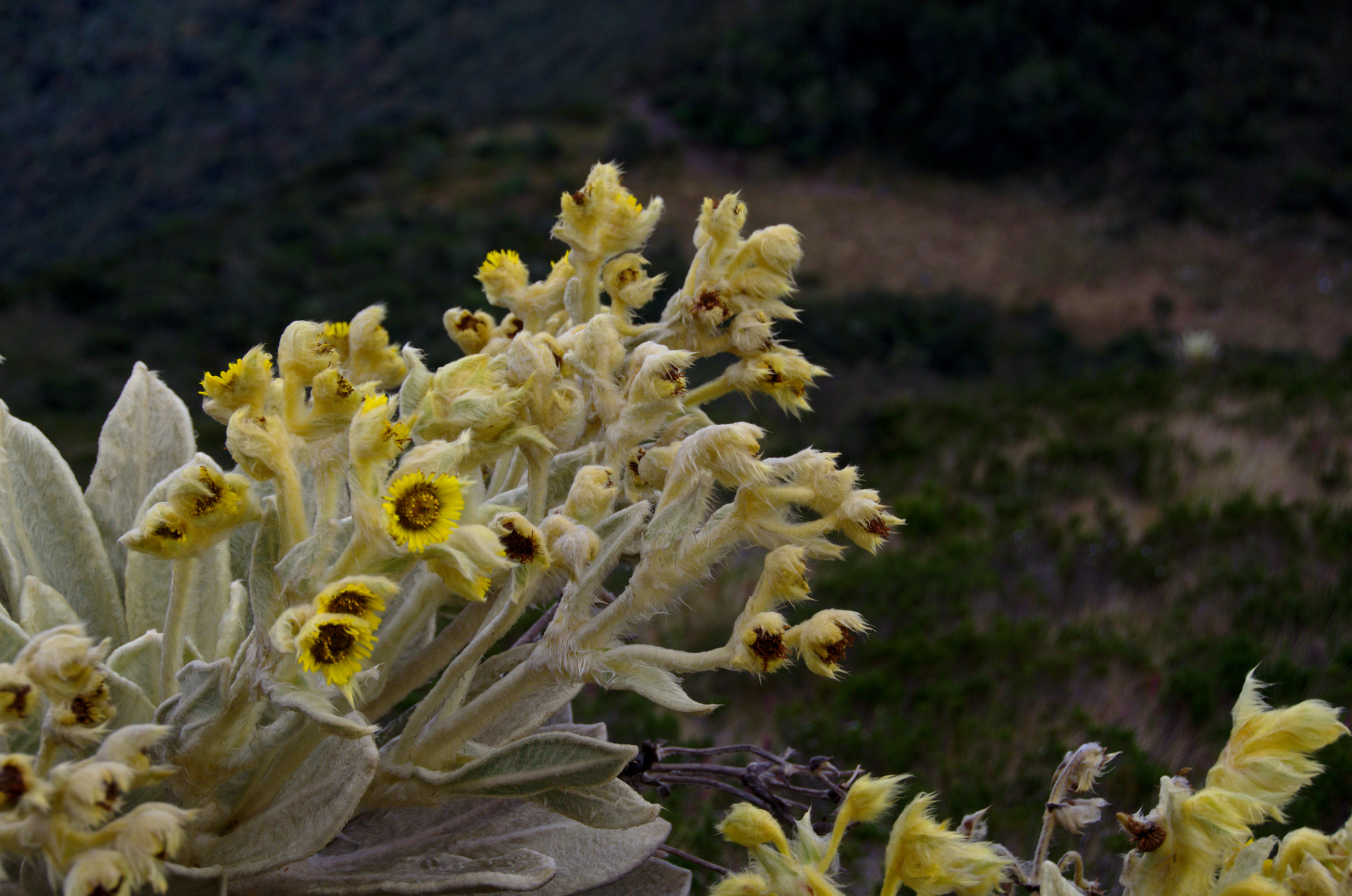
Photo: Aztlec.
Current situation
In March 2025, the Colombian government designated the western flank of the Santurbán massif as a temporary renewable natural resource reserve area, delimiting and protecting an area of 75,344.65 hectares. This resulted in a two-year suspension of the Soto Norte project. However, Aris Mining's contract to formalize Calimineros' small-scale mining activities through the purchase and processing of mineralized material remains in effect.
In addition, the Canadian mining company continues to move the project forward. In September 2025, it released its prefeasibility study, revising the mine’s original design.
Meanwhile, members of the Committee for the Defense of Water and the Santurbán Páramo face threats and stigmatization because of their work. In March 2025, UN Special Rapporteurs and the Working Group on Business and Human Rights denounced these incidents in communications sent to the governments of Colombia, Canada, and the United Arab Emirates, as well as to the companies Aris Mining and MDC Industry Holding Company LLC, the former co-owner of the Soto Norte project.
Regarding the arbitration claim filed by Eco Oro Minerals, in July 2024, ICSID ruled in favor of the Colombian government and rejected the Canadian company’s claim for USD 1.1 billion in compensation.
Concerning the delimitation of Santurbán, in July 2026, the Ministry of the Environment issued a resolution introducing the concept of "progressive delimitation." On that basis, the government proposes to progressively demarcate the páramo, covering 29,199 hectares across 19 municipalities—those where the participatory agreements required by the Constitutional Court in its 2017 ruling have already been finalized. It also proposes two measures on the creation and expansion of reserves to restrict mining in the ecosystem.
Learn more about the impacts of mining on the páramos of Latin America (in Spanish).
Partners:
Related projects

Seeking Solutions at the UN Climate Conference
The most important global meeting on climate change is nearing, and expectations are high. The United Nations Climate Change Conference (COP20), in Lima December 1-12, is expected to conclude with a draft of a new global agreement on climate change, which will be signed in 2015. The conference also provides a key opportunity to hold nations to the financial commitments they made at prior conferences. AIDA is attending the conference with two main objectives. First, we will advocate full funding of the Green Climate Fund. Second, we will contribute to the conversation to ensure that the new climate agreement takes into account the impact of climate change on human rights. The UN Framework Convention on Climate Change established the Green Climate Fund to finance programs and projects for climate change adaptation and mitigation. Countries most vulnerable to climate change will be given investment priority. “We want specific commitments to be made, with clarity about the road map that develop countries should follow so that their fight against climate change has sustainable financial assistance,” said Andrea Rodriguez, senior attorney at AIDA. To date, the Green Climate Fund has received $9.6 billion in pledges. At the Lima conference, we aim to generate additional commitments that raise the total to $15 billion. We will also work with governments to ensure that they live up to their commitment to contribute $100 billion a year, starting in 2020, to ensure that resources are predictable and sustainable. AIDA will work with global networks like Climate Action Network International (CAN-I) to monitor financial contributions. AIDA, together with partner organizations is organizing a Latin America and the Caribbean Climate Finance Day on Saturday the 6th of December. This event will convene stakeholders from various sectors to facilitate dialogue and build capacity on key climate finance issues affecting the region. One of the sessions will address the role of the Green Climate fund in contributing to transformational change in Latin America. “Leveraging the context of climate talks, we would like to remind the decision makers that methods of mitigating climate change must be truly sustainable and efficient,” Rodriguez stated. “Mitigation efforts should not promote projects like large dams, which have been considered a source of clean energy, despite the fact that they emit large amounts of climate-forcing methane, especially in the tropics.” The conference will provide an opportunity for AIDA to work with negotiators to ensure that human rights considerations, which were recognized in previous climate agreements, make it into the next agreement. Alongside COP20, we will participate in the People’s Summit on Climate Change, a major alternative gathering of civil society organizations. In this meeting, AIDA will discuss hydraulic fracturing, or fracking, and its implications for the environment of Latin America and for global climate. We will be posting updates throughout the conference on our website, Facebook and Twitter. Follow along!! #RoadToCOP20
Read more
Mexico has an opportunity to protect its environment
By Sandra Moguel, AIDA attorney, @sandra_moguel The pirinola is a traditional Mexican die with six flat sides, each of which carries an instruction, used in various countries in Latin America to play games and make bets. After being spun, the pirinola stops on one of its sides and shows the player what he must do with the chips he has: GIVE 1, GIVE 2, TAKE 1, TAKE 2, GIVE ALL, TAKE ALL. As a country, Mexico goes through moments of collective despondency, when all seems lost. But it isn't. As in a game with the pirinola, there is always hope with another spin. In terms of the protection of its environment, Mexico still has an opportunity to correctly decide the fate of their natural heritage and to pursue sustainable development. GIVE ALL: The Uncomfortable Story of Paraíso del Mar Paraíso del Mar is a tourism project on the barrier sand bar known as El Mogote, in the Bay of La Paz, Baja California Sur. Project developers have proposed construction of a major resort with 2,050 hotel rooms, 4,000 homes, golf courses, and a marina. In early 2013, a Mexican court ruled definitively that the environmental permit the Secretariat of Environment and Natural Resources (SEMARNAT) had authorized for the project was illegal. The ruling held that SEMARNAT did not enforce environmental laws requiring evaluation of the environmental impact of Paraíso del Mar. However, before the ruling, some parts of the project had already been constructed. As a result, mangroves in the area have disappeared almost entirely, and the scenery and coastline have been modified. With an authorization of environmental impact that is both irresponsible and illegal, everyone loses: Just think of the destruction that happened when Hurricane Odile hit Los Cabos last year. Aspects of climate change and extreme weather events should also be considered when evaluating tourism projects in this region. In this case, they were not. Who will compensate the businesses that have invested in the project? Who will repair the damages? Who will restore the landscape? Society as a whole has been affected. An Environmental Impact Assessment reviews the effects of human activities on the environment. Its objective is to identify whether the effects on ecosystems can be mitigated or compensated for. Unfortunately, the laws that regulate the manner in which the environmental authority performs these assessments seem like a pretense, and assessment becomes a mere formality, which ends up harming both society and the biodiversity zones. TAKE 1: Contributing to a Solution The Interamerican Association for Environmental Defense (AIDA) and our partner organization Earthjustice, representing organizations from civil society, have presented a citizen submission to the Commission on Environmental Cooperation (CEC). The Commission is an international organization created under the North American Agreement on Environmental Cooperation, formed between Mexico, Canada, and the United States. Our petition asks the Commission to open an investigation into the authorizations of Paraíso del Mar and other similar projects in the Gulf of California. The petition states that the Mexican government failed to enforce its environmental laws when it didn’t assess the environmental impact of projects in coastal wetlands of the Gulf. The CEC Secretariat recommended the development of a factual record (a detailed investigation) last September. GIVE 2: The Decision Depends on at Least Two Governments In the coming days, at least two of the three environment ministers of the United States, Canada, and Mexico must vote in favor of carrying out such an investigation. This vote is an opportunity to promote transparency and public participation in environmental issues. It’s the perfect occasion for the Mexican government to establish credibility, trust, and the opportunity for dialogue that citizens are clamoring for. A factual record does not contain a rating on the arguments of the petitioners, nor does it contain recommendations from the Commission to resolve the problem. It is, rather, a detailed examination that becomes a source of feedback for SEMARNAT about the concerns of civil society. It is noteworthy that of the 41 citizen petitions that have been filed against Mexico with the Commission, 19 have to do with the Environmental Impact Assessment. This means that citizens are questioning the discretion with which this tool is used, and how the environmental impacts of these projects are being determined. TAKE ALL: What Can We Conclude? Echoing the observation of Paola Zavala, social movements must be accompanied by an agenda of specific needs that are shared by members of civil society. More than a chance to scream and let off steam in the streets, such movements are forums for constructive citizen participation. In the case of the Gulf of California, the petitioners, supported by civil society organizations and academics, demand that SEMARNAT implement environmental laws. It should approve projects based on the best available descriptions of work to be completed, which outline the total cumulative and residual impacts of the project. Such projects should in no way violate international treaties or norms on threatened species or on the protection of the mangroves. The factual record is not a panacea for Mexico’s environmental woes. But if it generates awareness and an agenda for dialogue between public officials, business people, and civil society about the importance of the Environmental Impact Assessment, it will be a major step on the road to decision-making that guarantees sustainable development in Mexico.
Read more
CONSISTENCY: The Most Urgent Action Against Climate Change
By Astrid Puentes Riaño, Co-Executive Director, AIDA, @astridpuentes This post is also pubpshed at IntLawGrrls During the first two weeks of December, world leaders will lay the foundation for a new global agreement on cpmate change at the 20th Conference of the Parties (COP20) of the United Nations Framework Convention on Cpmate Change in pma, Peru. Its focus will be creating a draft agreement that, at next year’s COP in Paris, will replace the 1997 Kyoto Protocol. This time, as stated by Manuel Pulgar-Vidal, Peru’s Environment Minister and next President of the Conference, "the world will not accept another failure." Not without reason. Each year we are both witnesses to and victims of the worsening impacts of cpmate change. And our role in the problem is conspicuous: "Human influence on the cpmate system is clear, and recent anthropogenic emissions of greenhouse gases are the highest in history," the Intergovernmental Panel on Cpmate Change concluded in their fifth report. With COP20 nearing and recognition of the problem growing, world leaders are increasingly giving speeches, promising action and making hopeful commitments. One recent example is the unprecedented agreement between China and the United States, which estabpshed pmits and objectives for the reduction of emissions. In Latin America we, too, have taken effective steps to confront the greatest threat to the human race. Despite this progress, however, there remain in practice many popcies that both created the problem and make it worse. In particular, the repance of our economies on fossil fuels, which generate 57 percent of the global emissions of carbon dioxide. In the search for alternatives, we have boosted hydroelectric power from large dams. But dams are not clean energy. They generate significant amounts of greenhouse gases, such as carbon dioxide and methane, particularly in tropical regions. These and the other negative impacts of dams are often ignored, resulting in rudimentary solutions to cpmate change. Consistency, then, becomes critical. What follows are examples of the lack of it in our own countries. Let’s take them into account as an effort to make adjustments, apgn objectives, and not erase with one hand what was written by the other: Brazil is a key player in the region, and has demonstrated its will to achieve positive results on cpmate change. Proof of this is the historic decpne of deforestation in the country, 79 percent in the last decade, as announced by Brazil’s President at the Cpmate Summit. However, Brazil continues to focus its development on fossil fuels, mining and large dams, particularly in the Amazon Basin. Under the influence of Brazil, 254 new dams are either under construction or in planning phases in the Amazon Basin, including the massive Belo Monte Dam on the Xingú River. Chile has made positive signs by deciding, for example, that it would not allow the HidroAysén dams in Patagonia. The country recently presented its Mitigation Action Plans & Scenarios (MAPS Chile) to combat cpmate change, with an emphasis on energy efficiency in high-emitter sectors such as mining. However, it also estabpshed as a priority the implementation of large dams, actually the same dams in Aysen, and the import or exploitation of shale gas in the Magallanes basin. The extraction of shale gas is done by fracking, a major source of CO2 and methane. Ecuador recognized the Rights of Nature in its Constitution in 2008 and created the Ministry of Good pving in 2013, promoting the “respect of all beings of Nature” and sustainable development. At the same time, the country continued to base its economy on the exploitation of fossil fuels without considering low-carbon alternatives, in the short or long term. The decision to start extracting oil in Yasuni National Park, where indigenous communities pve in voluntary isolation, is inconsistent with the Constitution, and with cpmate change required actions. Mexico has been a leader in global negotiations on cpmate change. The country has shown a wilpngness to implement adequate popcy measures, legal frameworks and financial instruments. Earper this year Mexico was a pioneer in committing financial contributions to the Green Cpmate Fund, setting an example for the many countries with greater cpmate responsibipties that have not yet announced their commitments. However, Mexico is also pushing energy reform that prioritizes hydrocarbon extraction, undermining progress on cpmate popcy. This "reform" is locking the country into continued dependence on fossil fuels. Peru, host of COP20, also must resolve huge popcy inconsistencies. The country’s leadership in cpmate negotiations has been remarkable, as have its internal efforts to promote adaptation to cpmate change by incorporating traditional knowledge. But still, lack of consistency between talk and action has resulted in widespread promotion of mining and hydroelectric activities. These decisions have been made without considering environmental impacts or clean alternatives. Bopvia, Colombia, Guatemala, Panama, Argentina and the rest of the countries of the region are not exempt from the massive inconsistencies that compromise the effectiveness of the cpmate actions they champion. It’s worth noting that the development of mining, hydropower and fracking on the continent contribute gravely to the effects of cpmate change. The need for development in the region, and a single country’s relatively smaller contribution to global emissions, are not excuses. There exist opportunities for economic development and energy production that could be more efficient than continued dependence on fossil fuels. Cpmate change is a global issue that can’t be solved with patches here and there. Cpmate change affects the planet, and Latin America is one of the most vulnerable regions. But as long as the popcies and actions of the States do not consider cpmate change a central issue, we will continue moving forward one step and backwards three. It is our responsibipty and in our interest to act consistently. We must apgn our talk with our actions to accomppsh quick and effective steps to combat cpmate change. The time is NOW!
Read more