
Project
Alberto Peña Kay
Protecting the Santurban páramo from mining's damage
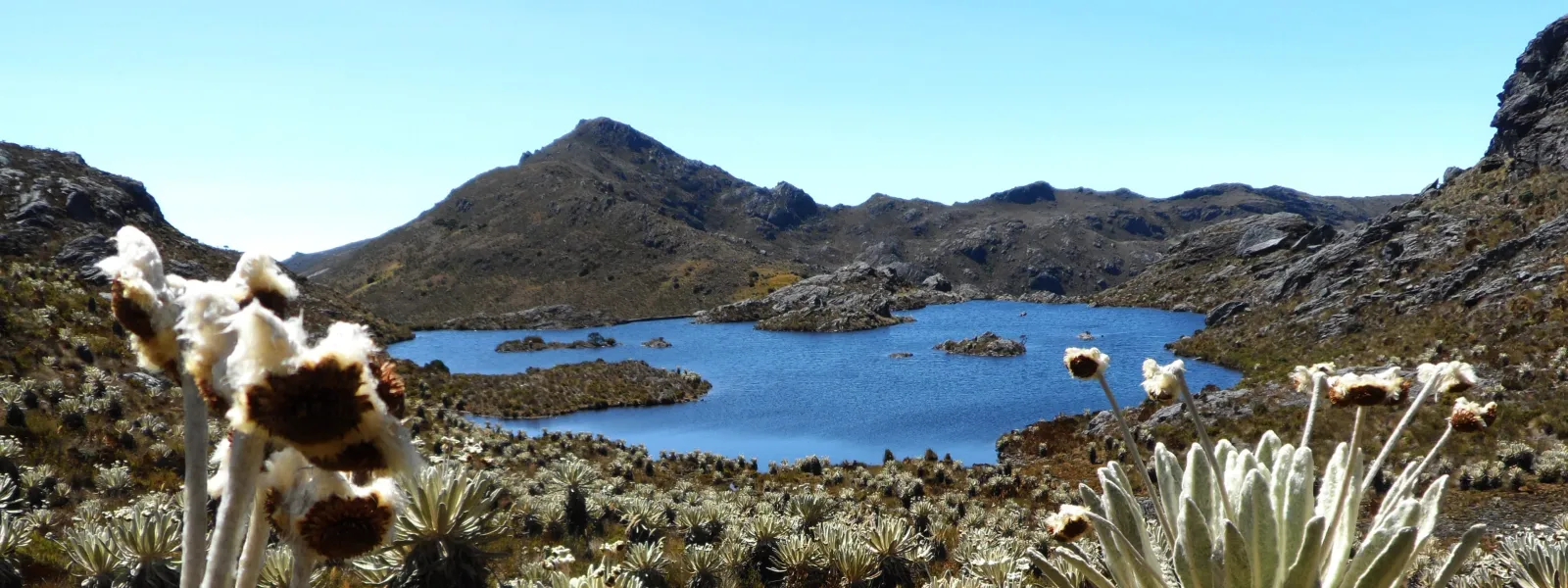
In the Andean region, high-mountain ecosystems known as páramos capture water from the fog and supply it to the lowlands. One such ecosystem is the Santurbán páramo, which provides fresh water to more than two million people in Colombia.
Santurbán, like the other páramos on the continent, also captures large amounts of carbon, making it a key ally in mitigating the climate crisis. It is also a refuge for hundreds of endangered species, including the iconic spectacled bear.
The land in and around the páramo contains gold and other minerals. This has put Santurbán in the spotlight of the multinational mining industry, which for decades has sought to establish large-scale projects in the ecosystem that threaten to degrade it.
The Committee for the Defense of Water and the Santurbán Páramo—a coalition of environmental advocates—has thwarted these ongoing attempts, with support from AIDA and other civil society organizations.
Background
The Santurbán páramo is located in the heart of the Eastern Cordillera of the Colombian Andes, in the departments of Santander and Norte de Santander, at an elevation ranging from 2,200 to 4,290 meters above sea level.
It covers an area of 129,743 hectares and is home to 57 lakes. It serves as a habitat for 457 plant species and 293 species of vertebrate fauna.
There are mineral deposits in Santurbán, primarily gold, but also silver and copper. This explains the region’s mining tradition, particularly in the part of the páramo located in Santander, in the province of Soto Norte. The communities in the area have built their culture and identity around gold mining, which is mainly artisanal and small-scale.
But since the 1990s, the gold deposits in the páramo have also attracted foreign mining conglomerates seeking to develop large-scale projects. This has raised concerns among the population that relies on the Santurbán water sources, who have mobilized in defense of water, their land, and life.
Although national and international regulations prohibit mining in páramos, the Colombian government has granted mining concessions to transnational corporations in Santurbán.

Photo: Keishpixl / Pixabay.
The long struggle to protect the páramo
One of the companies that sought to develop large-scale mining in Santurbán is Eco Oro Minerals Corp.—formerly Greystar Resources—a Canadian company that intended to establish the Angostura open-pit mine there to extract gold and silver. Between 1994 and 1995, the company acquired its mining titles and conducted exploration. And in 2010, it applied for a mining permit.
That was the year AIDA became involved in defending the ecosystem, supporting the Committee for the Defense of Water and the Santurbán Páramo. Our legal work helped convince the Colombian government to deny the mine an environmental permit in May 2011.
In January 2013, the government designated a portion of the páramo (11,700 hectares) as a Regional Natural Park. That year—together with the committee and partner organizations—we carried out a campaign and advocacy efforts to urge the government to recognize the entire Santurbán area as a páramo ecosystem through a delimitation based on scientific criteria. In December 2014, the Ministry of the Environment established a delimitation that protected 76% of the páramo (98,954 hectares).
Furthermore, as a result of a litigation supported by AIDA, in February 2016, Colombia’s highest court reaffirmed that mining in páramos is prohibited.
That same year, in December, the International Finance Corporation (IFC), the World Bank Group’s private sector arm, decided to divest from Eco Oro Minerals. This achievement was the result of a process that began in 2012, when the committee—advised and supported by AIDA and international partner organizations—filed a complaint before an independent accountability mechanism, which concluded that the IFC’s investment in the Angostura project failed to take into account the project’s social and environmental impacts, thereby contradicting the financial institution’s internal policies.
Also in 2016, Eco Oro Minerals filed an arbitration claim against the Colombian government with the International Centre for Settlement of Investment Disputes (ICSID), arguing that it had been adversely affected by government decisions aimed at protecting the country’s páramos, including the delimitation of Santurbán.
In 2017, the Constitutional Court invalidated the delimitation because the affected communities were not consulted. The high court ordered that a participatory delimitation be carried out.
And that year, a new threat to Santurbán emerged when the Canadian multinational Aris Mining applied for an environmental permit for Soto Norte, a gold mining project located near the páramo. Following citizen protests and technical objections, in October 2020, the National Environmental Licensing Authority shelved the project.
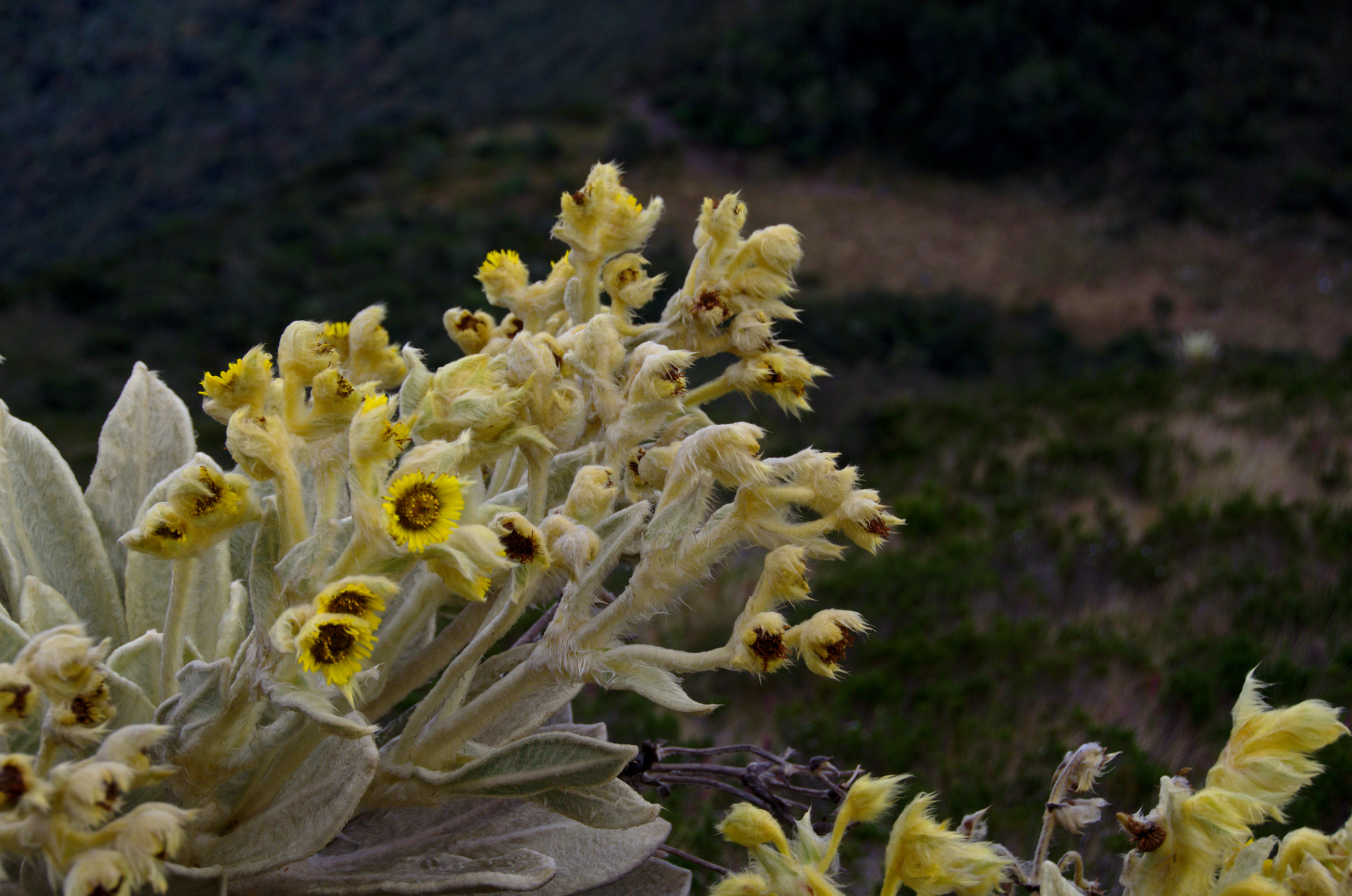
Photo: Aztlec.
Current situation
In March 2025, the Colombian government designated the western flank of the Santurbán massif as a temporary renewable natural resource reserve area, delimiting and protecting an area of 75,344.65 hectares. This resulted in a two-year suspension of the Soto Norte project. However, Aris Mining's contract to formalize Calimineros' small-scale mining activities through the purchase and processing of mineralized material remains in effect.
In addition, the Canadian mining company continues to move the project forward. In September 2025, it released its prefeasibility study, revising the mine’s original design.
Meanwhile, members of the Committee for the Defense of Water and the Santurbán Páramo face threats and stigmatization because of their work. In March 2025, UN Special Rapporteurs and the Working Group on Business and Human Rights denounced these incidents in communications sent to the governments of Colombia, Canada, and the United Arab Emirates, as well as to the companies Aris Mining and MDC Industry Holding Company LLC, the former co-owner of the Soto Norte project.
Regarding the arbitration claim filed by Eco Oro Minerals, in July 2024, ICSID ruled in favor of the Colombian government and rejected the Canadian company’s claim for USD 1.1 billion in compensation.
Concerning the delimitation of Santurbán, in July 2026, the Ministry of the Environment issued a resolution introducing the concept of "progressive delimitation." On that basis, the government proposes to progressively demarcate the páramo, covering 29,199 hectares across 19 municipalities—those where the participatory agreements required by the Constitutional Court in its 2017 ruling have already been finalized. It also proposes two measures on the creation and expansion of reserves to restrict mining in the ecosystem.
Learn more about the impacts of mining on the páramos of Latin America (in Spanish).
Partners:
Related projects

Working to protect coral reefs in Mexico and throughout Latin America
In the Gulf of Mexico, 27 coral reefs form a submarine mountain range that runs between six islands in an area stretching for miles. Hundreds of colorful fish species, sea urchins, starfish, and sea grasses share the reef with an abundance of other life forms. This is the magnificent Veracruz Reef, the largest coral ecosystem in the Gulf. Unfortunately, planned expansion of the Port of Veracruz, recently approved by the Mexican government, will damage the reef and harm the creatures that depend on it for survival. The project will also harm the nearby Los Tuxtlas Biosphere Reserve, a jewel of Mexico’s Emerald Coast, because developers will mine it for rock to use in port construction. The environmental authority approved the port development in 2013, even though Mexico declared the Veracruz Reef System a National Protected Area in 1992. What’s more, Mexico is a party to the Ramsar Convention, an international treaty for the protection of wetlands of international importance—which includes the Veracruz Reef. Despite the reef’s recognized significance, the government has officially reduced the size of the protected area to make way for the larger port. "Now is a good time to call the attention of world leaders and diplomats to Mexico’s unsustainable actions," said AIDA legal advisor Sandra Moguel. Mexico is preparing to host the December 2016 Conference of Parties to the Convention on Biological Diversity, an international treaty to sustain the rich diversity of life on Earth. AIDA and the Mexican Center for Environmental Law (CEMDA), representing 13 organizations and individuals, have sent a letter (in Spanish) to the Secretariat of the Convention on Biological Diversity. (The Secretariat is a neutral organization staffed by international civil servants, accountable to the Conference of Parties and its subsidiary bodies, and linked to the United Nations Environment Program.) The letter requests two things of the Secretariat: assess the harms that the expansion will cause, and ask Mexico to revoke project authorization because of the serious impact it will have on the diversity of life on the reef. "The manner in which the government has authorized this development project worries us," Moguel said. "Mexico has breached their international commitment to protect the rich biodiversity within its borders, particularly when it falls within natural protected areas." AIDA’s marine team has been working on similar cases in Mexico and throughout the region, gaining expertise in national and international laws that enable the protection of coral reefs. They have produced a report that synthesizes knowledge gained through years of such work, The Protection of Coral Reefs in Mexico: Rescuing Biodiversity and its Benefits to Mankind (in Spanish). "We want to interest and inform people working in wetlands protection," Moguel said. "There is a diverse array of legal tools at their disposal, which they may not be aware of," Moguel said. "In addition to describing our own legal work on this issue, we discuss the power of international treaties and commitments that nations must abide by." The report outlines the importance of coral reefs in the world—in Mexico in particular—explores case studies, outlines relevant international treaties and obligations, and looks to best practices from nations around the region for inspiration. AIDA Marine Senior Attorney Gladys Martínez said that reports such as these are intended to raise awareness of the legal means available to protect wetlands and to highlight the different methods that decision-makers can use. "AIDA selects emblematic cases like these of Mexico, to illustrate environmental problems that recur throughout the hemisphere," said Gladys Martínez. "The threats to the Veracruz Reef System are a sign of the urgent need for nations to take effective measures to protect coral reefs and comply with their international obligations." AIDA has launched a campaign to fund the marine program’s continued efforts to protect corals in the region. Our work will provide advocates and decision-makers with the practical resources, recommendations, and tools needed to improve coral reef protection. Your donation will directly support this work, and provide a brighter future for the brilliant array of life on the coral reefs of Latin America.
Read moreFracking prohibited in New York, but promoted in Colombia
Hydraulic fracturing, or fracking, is an unconventional form of extracting oil and gas. The technique requires drilling first vertically and then horizontally, and injecting a high-pressure mix of water, sand, and toxic chemicals. The injection fractures subsurface layers of shale, releasing the oil and gas contained within. Fracking has severe impacts on both the environment and human health: it contaminates surface and ground water sources, causes earthquakes and air pollution, and releases greenhouse gases, among other things. These effects have been documented in studies by the German Ministry of Environment, the US Government Accountability Office, the Canadian Council of Academies, and Anthony Ingraffea, a professor at Cornell University. On December 17, 2014 the Governor of New York announced the prohibition of fracking in the State because of the "significant health risks" posed by the practice.This argument stems from a two-year study conducted by the New York State Department of Environmental Conservation, which analyzed the impacts of fracking on human health and on air and water quality in communities throughout the state. The decision has been celebrated by environmental advocates and criticized by some investors who claim that it is denying the State economic benefits from the extractive industry. The debate over whether or not to permit fracking has been going on in other latitudes as well. In France, fracking was banned in 2011 by national law. After an oil company sued the government, the Constitutional Court upheld the ban in 2013. Bulgaria banned fracking in 2012, and Germany maintains a moratorium on the technique. Bans or moratoriums have also been issued by municipalities in the United States, Canada, Spain, Argentina, Switzerland, Italy, Ireland, the Netherlands, and Australia. Despite this international precedent, the Colombian government has promoted fracking. In 2008, the National Hydrocarbons Agency issued a study to identify the potential in unconventional hydrocarbons in the country. In 2012, the National Environmental Licensing Authority authorized a hydraulic fracturing project in Boyacá. That year, the Comptroller General of the Republic issued just one warning recommending that companies "take into account the precautionary principle regarding the latent risk hydraulic fracturing poses to environmental heritage through the possible contamination of groundwater and surface water sources, geological risk, and the risk to public health and nearby urban centers." In January 2015, in a special performance-monitoring warning, the Comptroller found that the State had not adopted the necessary measures. By the end of 2012, the Colombian government began creating a regulatory framework for fracking in Colombia. They contracted international experts to regulate and identify the impacts of the technique. An investigation by independent news site La Silla Vacía has found that several of these experts are linked to the oil industry. The Ministry of Mines and the National Hydrocarbons Agency then issued legal instruments that would serve as the framework for the start of fracking in the country. Francisco José Lloreda, president of the Colombian Petroleum Association, publicly stated that without fracking “we would have a fiscal catastrophe” within six or seven years. And the Minister of Mines, Tomás González, said that fracking is needed to finance the country’s peace process. Even before fracking began in Colombia, various sectors issued warnings. In August 2014, AIDA publicly urged (in Spanish) the government to apply the precautionary principle and prevent the serious and irreversible consequences of fracking. Later, in September, the National Environmental Forum and other organizations requested a conditional moratorium on fracking in Colombia. Additionally, Housing Minister Luis Felipe Henao voiced concern about the effect fracking would have on the water supply. He said, "To me, as Minister of Water, fracking scares me.… When you see what is happening in Santa Marta, you realize that one can invest a lot in pipes, but if you don’t have clean water supplies, you won’t do much more than carry air through them." From all these arguments, the obvious question arises: Why is fracking – which has been prohibited or restricted in various countries and municipalities – being promoted by the Colombian government? The most apparent response is that it will increase extraction of hydrocarbons and, as a consequence, the revenues of government and private industry. What government and industry do not see is that no amount of revenue is great enough to offset the social and environmental impacts of fracking, or of the possible new conflicts that may arise because of its effects on water resources. We have seen nationally (Guajira and Arauca) and internationally (Los Angeles and San Paulo) that without drinkable water, a successful economy,and even life itself are not feasible.
Read more
Towards Ecosystem Management of the Peruvian Anchoveta Fishery (in Spanish)
The report, created with the financial support of the Pew Charitable Trusts, contains recommendations for the legal and institutional reforms needed to manage the fishery while caring for the needs of the ecosystem as a whole. The recommendations are designed to ensure that the fishery is managed to provide enough anchoveta for both the commercial fishing industry and the rest of the marine life that depends on it. Download the report (IN SPANISH)
Read more