
Project
Alberto Peña Kay
Protecting the Santurban páramo from mining's damage
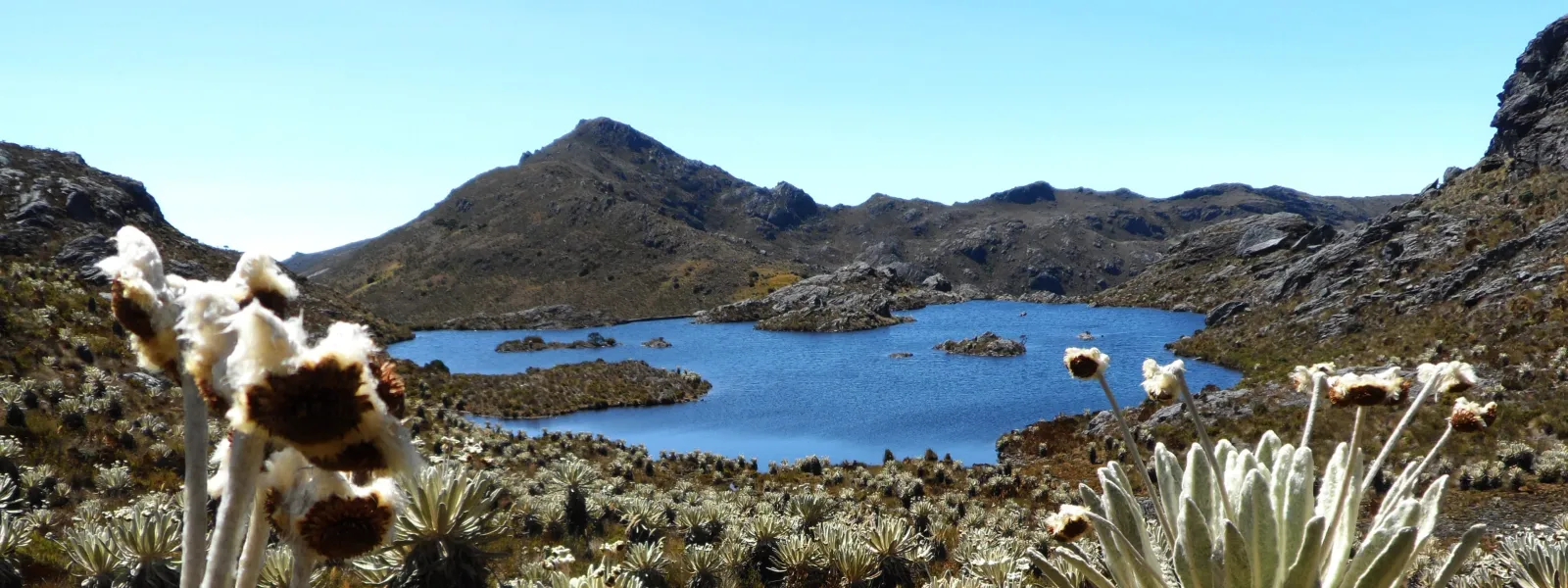
In the Andean region, high-mountain ecosystems known as páramos capture water from the fog and supply it to the lowlands. One such ecosystem is the Santurbán páramo, which provides fresh water to more than two million people in Colombia.
Santurbán, like the other páramos on the continent, also captures large amounts of carbon, making it a key ally in mitigating the climate crisis. It is also a refuge for hundreds of endangered species, including the iconic spectacled bear.
The land in and around the páramo contains gold and other minerals. This has put Santurbán in the spotlight of the multinational mining industry, which for decades has sought to establish large-scale projects in the ecosystem that threaten to degrade it.
The Committee for the Defense of Water and the Santurbán Páramo—a coalition of environmental advocates—has thwarted these ongoing attempts, with support from AIDA and other civil society organizations.
Background
The Santurbán páramo is located in the heart of the Eastern Cordillera of the Colombian Andes, in the departments of Santander and Norte de Santander, at an elevation ranging from 2,200 to 4,290 meters above sea level.
It covers an area of 129,743 hectares and is home to 57 lakes. It serves as a habitat for 457 plant species and 293 species of vertebrate fauna.
There are mineral deposits in Santurbán, primarily gold, but also silver and copper. This explains the region’s mining tradition, particularly in the part of the páramo located in Santander, in the province of Soto Norte. The communities in the area have built their culture and identity around gold mining, which is mainly artisanal and small-scale.
But since the 1990s, the gold deposits in the páramo have also attracted foreign mining conglomerates seeking to develop large-scale projects. This has raised concerns among the population that relies on the Santurbán water sources, who have mobilized in defense of water, their land, and life.
Although national and international regulations prohibit mining in páramos, the Colombian government has granted mining concessions to transnational corporations in Santurbán.
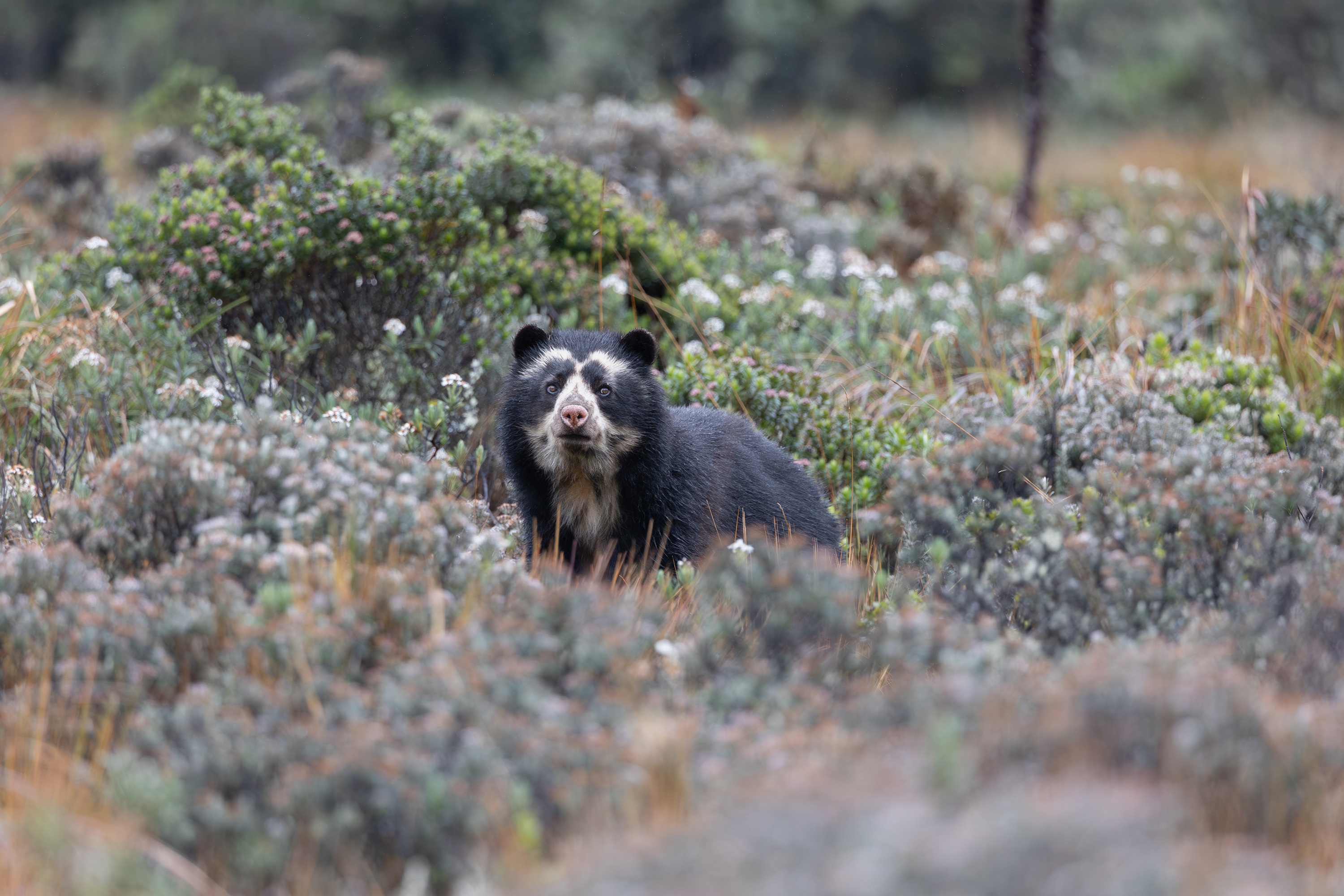
Photo: Keishpixl / Pixabay.
The long struggle to protect the páramo
One of the companies that sought to develop large-scale mining in Santurbán is Eco Oro Minerals Corp.—formerly Greystar Resources—a Canadian company that intended to establish the Angostura open-pit mine there to extract gold and silver. Between 1994 and 1995, the company acquired its mining titles and conducted exploration. And in 2010, it applied for a mining permit.
That was the year AIDA became involved in defending the ecosystem, supporting the Committee for the Defense of Water and the Santurbán Páramo. Our legal work helped convince the Colombian government to deny the mine an environmental permit in May 2011.
In January 2013, the government designated a portion of the páramo (11,700 hectares) as a Regional Natural Park. That year—together with the committee and partner organizations—we carried out a campaign and advocacy efforts to urge the government to recognize the entire Santurbán area as a páramo ecosystem through a delimitation based on scientific criteria. In December 2014, the Ministry of the Environment established a delimitation that protected 76% of the páramo (98,954 hectares).
Furthermore, as a result of a litigation supported by AIDA, in February 2016, Colombia’s highest court reaffirmed that mining in páramos is prohibited.
That same year, in December, the International Finance Corporation (IFC), the World Bank Group’s private sector arm, decided to divest from Eco Oro Minerals. This achievement was the result of a process that began in 2012, when the committee—advised and supported by AIDA and international partner organizations—filed a complaint before an independent accountability mechanism, which concluded that the IFC’s investment in the Angostura project failed to take into account the project’s social and environmental impacts, thereby contradicting the financial institution’s internal policies.
Also in 2016, Eco Oro Minerals filed an arbitration claim against the Colombian government with the International Centre for Settlement of Investment Disputes (ICSID), arguing that it had been adversely affected by government decisions aimed at protecting the country’s páramos, including the delimitation of Santurbán.
In 2017, the Constitutional Court invalidated the delimitation because the affected communities were not consulted. The high court ordered that a participatory delimitation be carried out.
And that year, a new threat to Santurbán emerged when the Canadian multinational Aris Mining applied for an environmental permit for Soto Norte, a gold mining project located near the páramo. Following citizen protests and technical objections, in October 2020, the National Environmental Licensing Authority shelved the project.
Photo: Aztlec.
Current situation
In March 2025, the Colombian government designated the western flank of the Santurbán massif as a temporary renewable natural resource reserve area, delimiting and protecting an area of 75,344.65 hectares. This resulted in a two-year suspension of the Soto Norte project. However, Aris Mining's contract to formalize Calimineros' small-scale mining activities through the purchase and processing of mineralized material remains in effect.
In addition, the Canadian mining company continues to move the project forward. In September 2025, it released its prefeasibility study, revising the mine’s original design.
Meanwhile, members of the Committee for the Defense of Water and the Santurbán Páramo face threats and stigmatization because of their work. In March 2025, UN Special Rapporteurs and the Working Group on Business and Human Rights denounced these incidents in communications sent to the governments of Colombia, Canada, and the United Arab Emirates, as well as to the companies Aris Mining and MDC Industry Holding Company LLC, the former co-owner of the Soto Norte project.
Regarding the arbitration claim filed by Eco Oro Minerals, in July 2024, ICSID ruled in favor of the Colombian government and rejected the Canadian company’s claim for USD 1.1 billion in compensation.
Concerning the delimitation of Santurbán, in July 2026, the Ministry of the Environment issued a resolution introducing the concept of "progressive delimitation." On that basis, the government proposes to progressively demarcate the páramo, covering 29,199 hectares across 19 municipalities—those where the participatory agreements required by the Constitutional Court in its 2017 ruling have already been finalized. It also proposes two measures on the creation and expansion of reserves to restrict mining in the ecosystem.
Learn more about the impacts of mining on the páramos of Latin America (in Spanish).
Partners:
Related projects

5 Reasons to Donate to AIDA
We all must leave a legacy, my grandfather said. For him – beyond being loving husbands and wives, committed parents, responsible children, faithful friends and fulfilled workers – that means contributing something to the benefit of humankind. The wise words of my grandfather guide my professional life. In nine years of working with AIDA, I have had the great pleasure of seeing progress made on cases we’ve worked on throughout Latin America. These successes give me the energy to go the extra mile whenever necessary. Many times, however, I’ve felt the frustration of seeing so many people and places that need our help, and not having the financial or human resources to do so. If you agree that there is nothing more valuable than contributing to building a better world, and a more habitable place for future generations, then I have a suggestion for you: Please support AIDA’s work by making a donation! 5 Reasons to Support Our Work To enable you to make an informed decision, here are five reasons why supporting our work is an excellent idea: We are an international nonprofit organization with more than 15 years of experience in service to one fundamental mission: to use the law to protect the environment of the Americas, with a focus on Latin America. "Protecting our right to a healthy environment" is the motto that guides our actions. We are a group of Latin American attorneys who work with commitment. Our experience enables us to develop strategies before international bodies and organizations to ensure that the States comply with their environmental and human rights obligations. We work in partnership with national organizations, strengthening and complimenting their efforts. We firmly believe in public participation and capacity building to achieve greater impact and results over the long term. We share our knowledge with the partners and communities with whom we closely work. We take the great care when investing our funds. We work efficiently and effectively. We carefully select cases that will set a legal precedent and serve as an example for environmental defense in the countries of the region. Our work has a global impact, today and in the future. We work for the common good of all people: protecting vital resources like clean air and clean water. We consider our donors an integral part of our team. Without your contribution, it would not be possible for us to provide free legal assistance to communities fighting to defend their natural environment and protect their basic rights. With your support We will continue ensuring the protection of marine and coastal resources, the preservation of fresh water, effective responses to climate change, and the human right to a healthy environment. Helping us is simple and safe: You can do it right here! THANK YOU for believing in our work!
Read more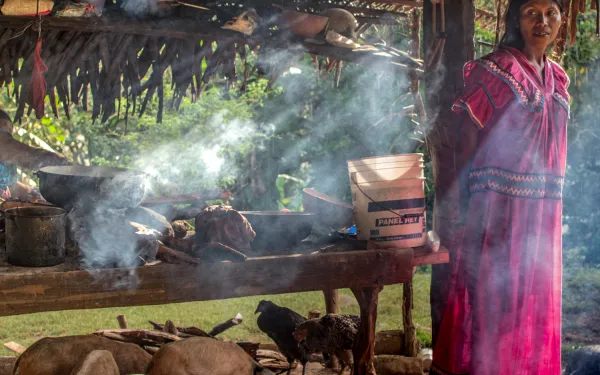
UN registered Barro Blanco Hydroelectric Dam temporarily suspended over non-compliance with Environmental Impact Assessment
Panama City, Panama and Geneva, Switzerland. In a landmark decision, Panama’s National Environmental Authority (ANAM) temporarily suspended the construction of the Barro Blanco hydroelectric dam yesterday over non-compliance with its Environmental Impact Assessment (EIA). The dam was approved by the UN Clean Development Mechanism (CDM) despite risks of flooding to the territory of the indigenous Ngäbe Bugle communities. With delegates currently meeting in Geneva to draft negotiating text for a new global climate agreement, ANAM’s decision illustrates why the agreement must include human rights protections, including the rights of indigenous peoples. In Geneva, several nations have already insisted on the need for climate measures to respect, protect, promote, and fulfil human rights for all. "Panama has taken a critical first step toward protecting the rights of the Ngäbe communities, which have not been adequately consulted on the Barro Blanco CDM project. But much more work is needed," said Alyssa Johl, Senior Attorney at the Center for International Environmental Law (CIEL). "As an urgent matter, Panama should recognize its obligations to protect human rights in climate actions, such as Barro Blanco, by supporting the call for human rights protections in the UN climate regime." Current climate mechanisms, such as the UN’s Clean Development Mechanism, neither provide incentives for the sustainable implementation of climate actions nor offer recourse in the case of adverse impacts. "The CDM Board approved Barro Blanco when it was clear that the dam would flood the homes of numerous indigenous families. This decision is a warning signal that safeguards must be introduced to protect human rights, including robust stakeholder consultations and a grievance mechanism," said Eva Filzmoser, Director of Carbon Market Watch. ANAM’s decision was triggered by an administrative investigation that found non-compliance with the project’s environmental impact assessment, including shortcomings in the agreements with affected indigenous communities, deficiencies in negotiation processes, the absence of an archaeological management plan for the protection of petroglyphs and other archaeological findings, repeated failures to manage sedimentation and erosion, poor management of solid and hazardous waste, and logging without permission. The Environmental Advocacy Center of Panamá (CIAM) considers it appropriate for ANAM to have taken effective and immediate measures to suspend the project. "This suspension reflects inadequate environmental management on the part of the company that requires an investigation and an exemplary sanction". "During 15 years of opposition to the Barro Blanco project, we have exposed violations of our human rights and irregularities in the environmental proceedings. Those claims were never heard," said Weni Bagama from the Movimiento 10 de Abril (M-10). "Today we are satisfied to see that the national authorities have recognized them and have suspended the project, as a first step towards dialogue. Nevertheless, we continue to uphold the communities’ position that the cancelation of this project is the only way to protect our human rights and our territory. We hope that this sets an example for the international community and for other hydroelectric projects, not only in Panama but worldwide." "Any dialogue between the affected communities, the Government and the company has to be transparent, in good faith, respectful of the communities’ rights, and include guarantees so that the communities can participate equally and the agreements are fully respected," explained María José Veramendi Villa, Senior Attorney at the Interamerican Association for Environmental Defense (AIDA). "In this dialogue, the State must take into account all human rights violations that have been denounced by the communities since the project was approved." Environmental groups around the world are celebrating the suspension of the Barro Blanco Dam, following years of efforts in support of the indigenous populations in the Ngäbe Bugle comarca, which have been faced with oppression and numerous rights violations. Eyes are now watching for the reactions of the banks involved in financing the Barro Blanco project, including the German development bank, DEG, and the Dutch development bank, FMO, against whom the M10 movement, which represents the indigenous communities, had filed a complaint. "We urge the banks to halt disbursement of any remaining funds until all problems are solved and the affected indigenous communities agree to the project," said Kathrin Petz of Urgewald.
Read more
Five Reasons to Protect the Peruvian Anchoveta
The anchoveta (Engraulis ringens), a wide-eyed fish 12 to 15 centimeters long, is prevalent in the Pacific coastal waters of Peru. When I first heard of this little fish, I had no idea how important it was for both the environment and the Peruvian population. Commercially, the anchoveta is used to produce fishmeal for animal feed and, to a lesser extent, for human consumption. But it’s also an important source of nutrition for the fish, mammals and birds of the Humboldt Current, one of the most biodiverse cold-water ocean currents in the world. Two years ago, AIDA began collaborating with the Peruvian Society for Environmental Law and Earthjustice to recommend changes to Peruvian law that would ensure sustainable management of the anchoveta fishery. We’ve recently released a report in which we stress the importance of ecosystem management. Decisions about how much anchoveta to catch, and when, should take into account both the commercial fishing industry and the health of the Humboldt Current ecosystem. Here are the five most important reasons to promote ecosystem management of the Peruvian anchoveta fishery: 1. Species of mammals, fish and birds depend on the anchoveta for nourishment. Most marine predators of the Humboldt Current depend, to some extent, on the anchoveta. The small fish is food to Humboldt Penguins and other birds, marine mammals like sea lions, and other commercial fish, such as hake, horse mackerel and mackerel. Fishery management that considers the ecosystem as a whole will help to save not just the anchoveta, but the many species that depend on it as well. 2. The anchoveta population is at risk. The Peruvian anchoveta fishery has been on the verge of collapse. It has had to be closed twice: once in the early-1970s and once in the late-1990s. The lack of an adequate ecosystem management plan creates fluctuations in the anchoveta population. Continuing this way in a year with reduced populations could mean the collapse of the fishery. 3. More and better controls over what can be fished are needed. The demand for fish implies, increasingly, that more juvenile anchoveta are being captured before they have reached the age of reproduction. As a result, the anchoveta cannot replenish its population fast enough to keep up with harvests. 4. Comprehensive fisheries management plans do not exist. The laws that regulate the anchoveta fishery differ depending on whether the fish is for human consumption or will be used to produce by-products such as fishmeal and fish oils. A management plan that integrates both uses must be established to create a truly sustainable fishery that also takes into account the anchoveta’s relationship with other species. 5. Ecosystem management of the Peruvian anchoveta would set an example for other countries. The Peruvian anchoveta fishery is the largest in the world. Implementing institutional and regulatory reform to promote ecosystem management of the species would set a precedent for other countries in the region to improve their standards. Learn more I invite you to review the report (in Spanish). Now is the time to care for the little species that do a big job in our seas! The ocean knows no bounds and its relationships are complex. Ecosystem management of the anchoveta fishery will ensure that there will be enough fish to feed the needs of industry and maintain the ecological balance of the Humboldt Current.
Read more